


Rendering on the web
Architectures
Rendering on the web
1. Performance
2. Architecture/Cost
3. development Experience
Rendering on the web
Performance
Rendering on the web
Performance
Time to First Byte (TTFB)
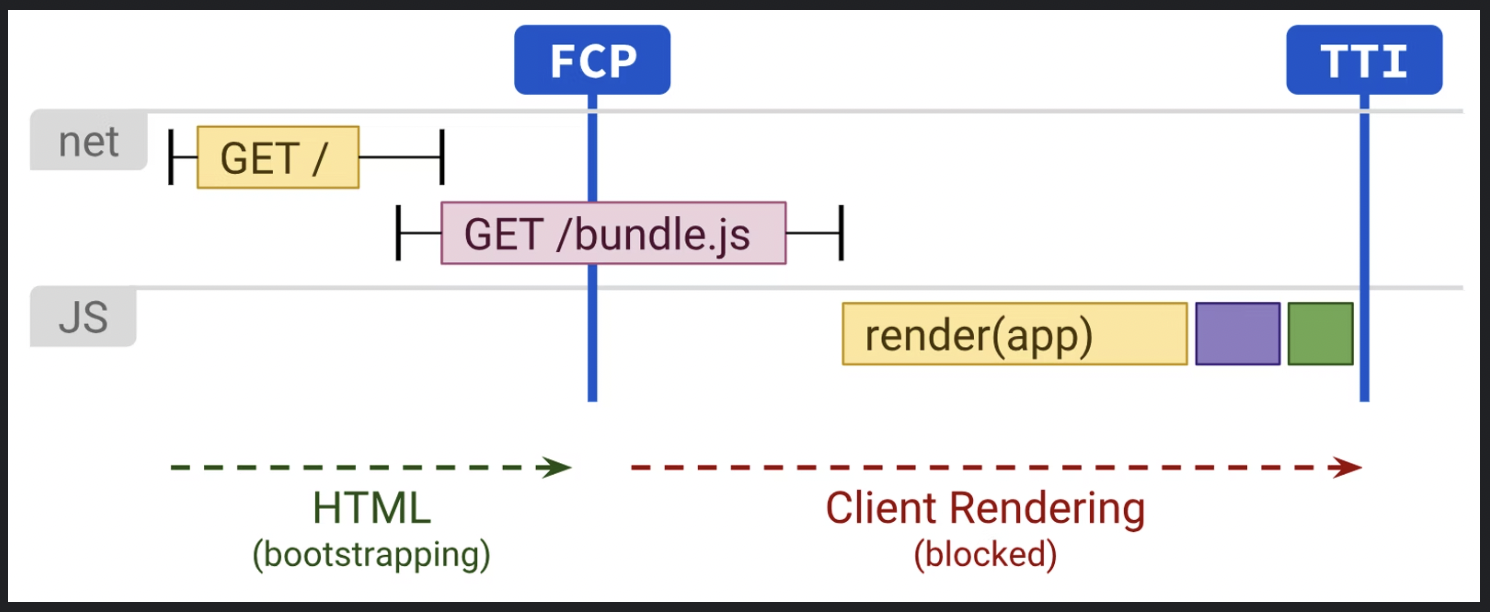
First Contentful Paint (FCP), First Meaningful Paint (FMP)
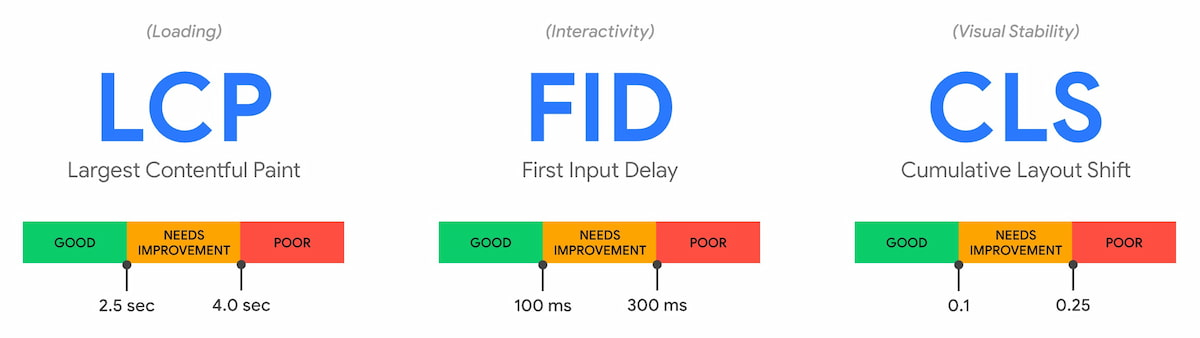
Largest Contentful Paint (LCP)
Time to Interaction (TTI), Total Blocking Time (TBT)
First Input Delay (FID)
Cumulative Layout Shift (CLS)
Rendering on the web
Performance
Rendering on the web
architectures
1
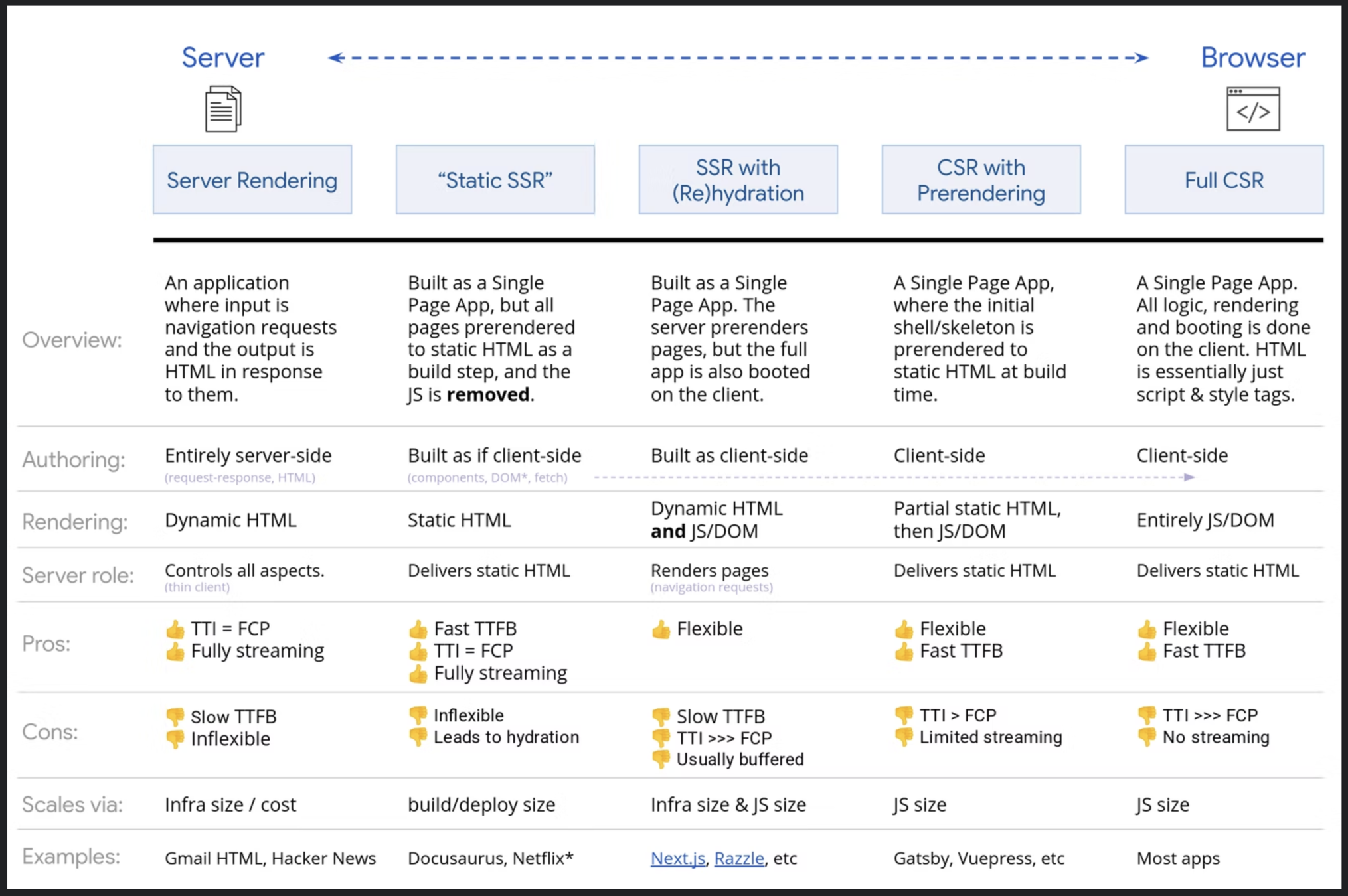
Full Client-Side Rendering
2
Client-Side Rendering w/ Prerendering
3
Server-Side Rendering w/ Rehydration
5
Static Site Gerneration
4
Incremental Static Site Regeneration
6
Server-Side Rendering w/ template engines
client
server
1. Full Client-Side Rendering (CSR)
Regular Single-Page Application
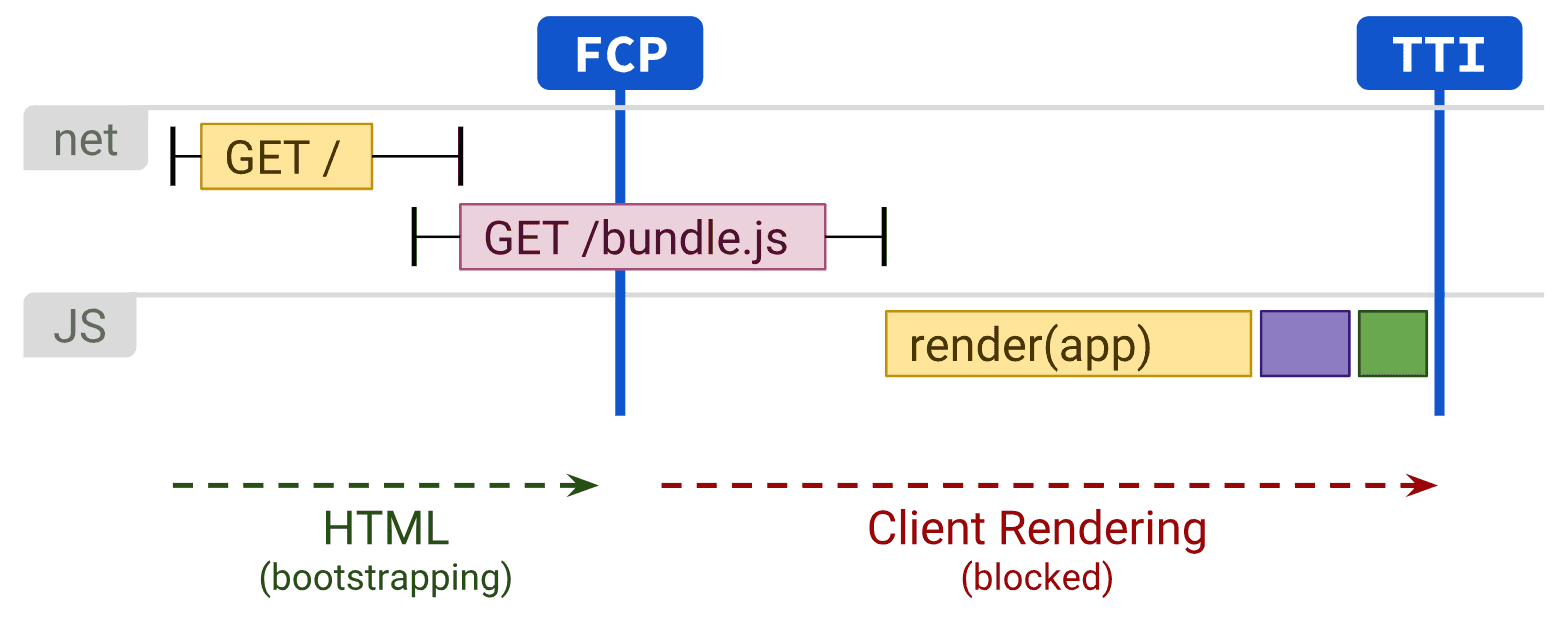
1. Full Client-Side Rendering (CSR)
Regular Single-Page Application
Serve only static files and fetch data through AJAX
Architecture
Bad, Cost more in indexing (running JS, potential wrong results)
SEO
Fastest TTFB (leveraging CDN)
performance
Blank page in the first loading (TTI >>> FCP)
2. CSR w/ Pre-rendering
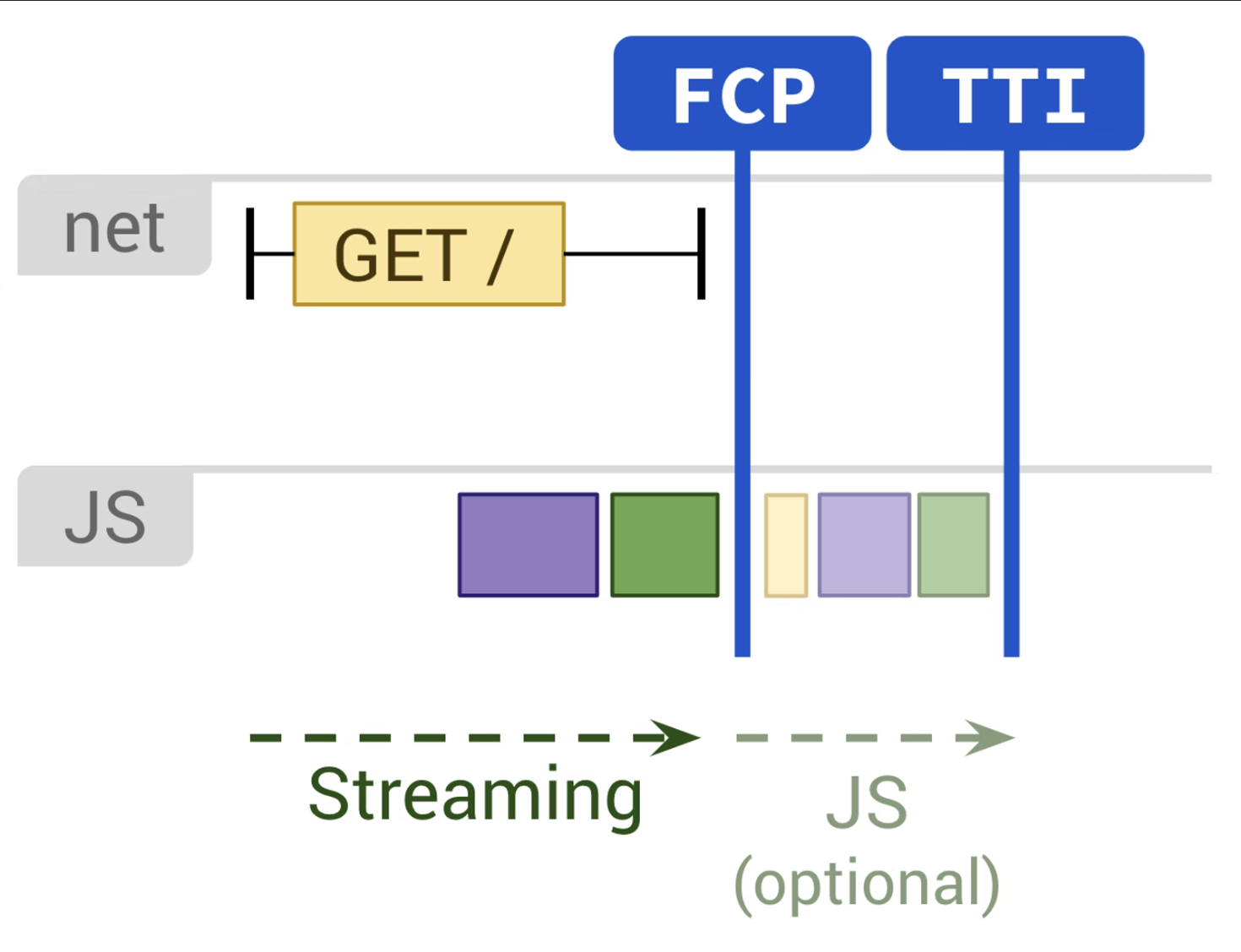
(Build-time
prerendering)
JS
2-1. CSR w/ Pre-rendering (Var 1.)
Var 1. generates pre-rendered static HTML for each page and runs as a SPA once a page is loaded.
Longer build-time process
Architecture
Inflexible for building more content
Static resources that may require more space to place
2-1. CSR w/ Pre-rendering (Var 1.)
Not flexible. Works only in a given framework environment
Development Experience
TTI = FCP, Fast like static pages
performance
Gatsby, VitePress
FRAmework
2-2. CSR w/ Pre-rendering (Var 2.)
Var 1. generates only the app's shell and serves as a SPA.
Same as Full CSR, but leveraging the static layouts
Architecture
hack the UX w/ App shell (PWA) (FCP → LCP)
performance
3. Server-Side Rendering w/ Rehydration (SSR)
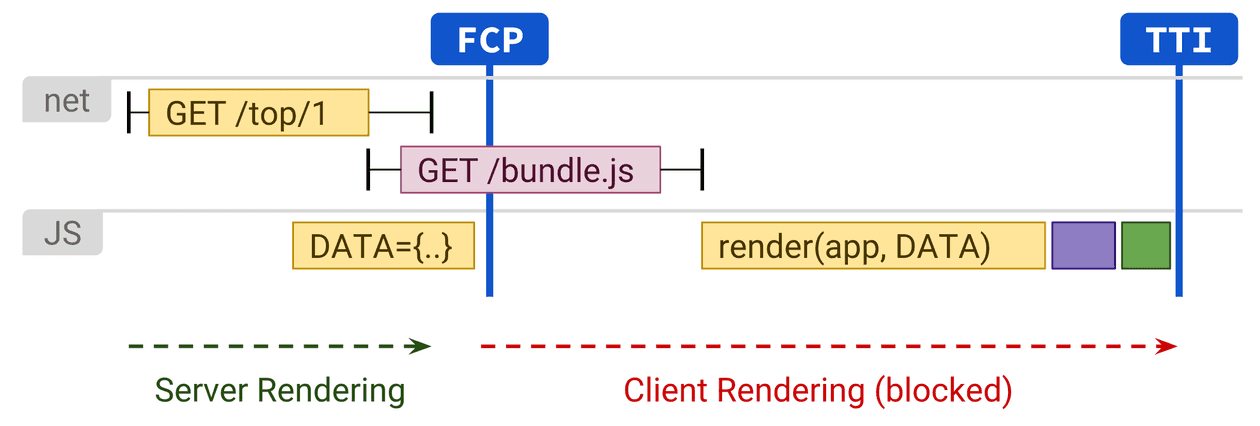
Rehydration = server-side + client-side rendering
provide whole static HTML at the first landing, and runs SPA in coming navigations
3. Server-Side Rendering w/ Rehydration (SSR)
Cost Big: Cost more resources for running JS and rendering contents on server-side
Architecture
e.g. Browser -> CDN & Render Server (Node.js) -> API Server
Most flexible → leverage all possible solutions for rendering (acts as a real server. e.g. layered cache, runtime purging, throttling...)
3. Server-Side Rendering w/ Rehydration (SSR)
e.g. Different APIs, Debugging, API calls, Memory Leak...
Development Experience
Complex: One code runs in two environment (Browser, Node.js)
Framework
Next.js, Nuxt.js
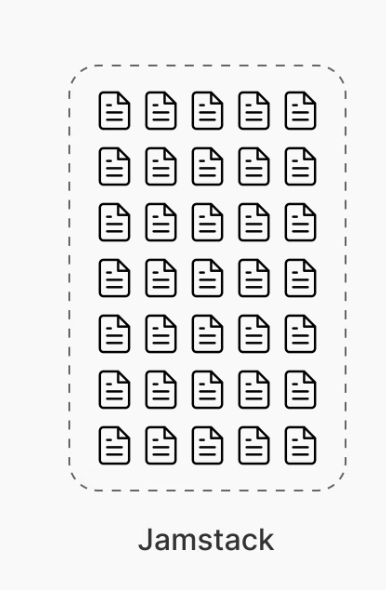
5. Static site generation
(Build-time
prerendering)
5. Static site generation
Serve only static files
Architecture
theoretically The Best
Performance, SEO
functionality
Inflexible for building dynamic content
build-time JS for rendering, runtime JS as the add-ons
More JS could be added
6. Server-side rendering w/ template engine
Simple. could combine rendering & API server as one
Architecture
e.g. Django = rendering server, API server, JS build-time bundling
Server need to render and serve documents
6. Server-side rendering w/ template engine
Development Experience
Coupled with UI and Data (No Separation of Concerns)
Skew. JS Components are more flexible than template engines
--> should consider SPA
6. Server-side rendering w/ template engine
philosophy of less js
Could have no build-time through deployments
e.g. DHH built Hey with fewer JS bundling (https://world.hey.com/dhh/hey-is-running-its-javascript-off-import-maps-2abcf203)
4. Incremental Static Regeneration

4. Incremental Static Regeneration
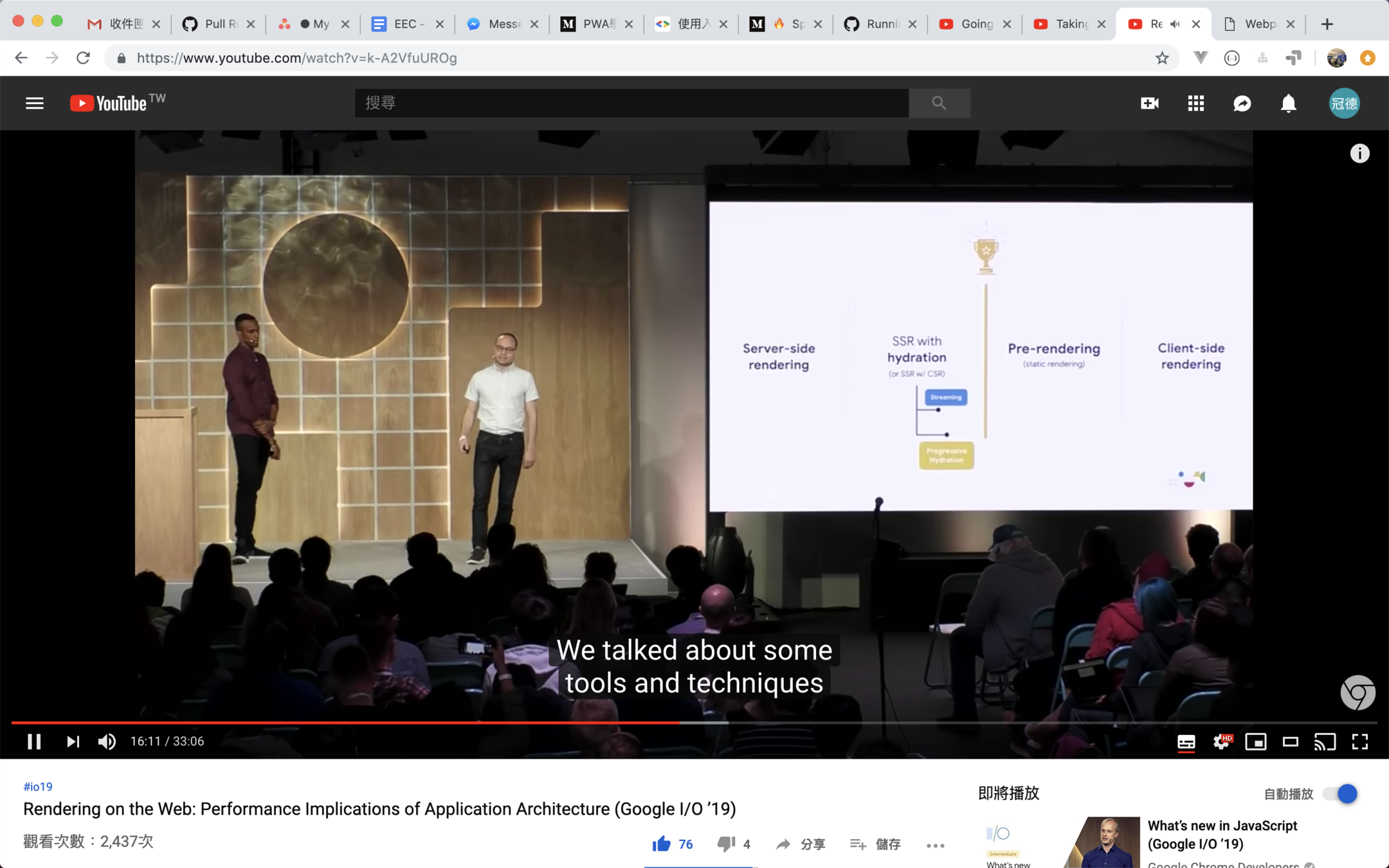
4. Incremental Static Regeneration
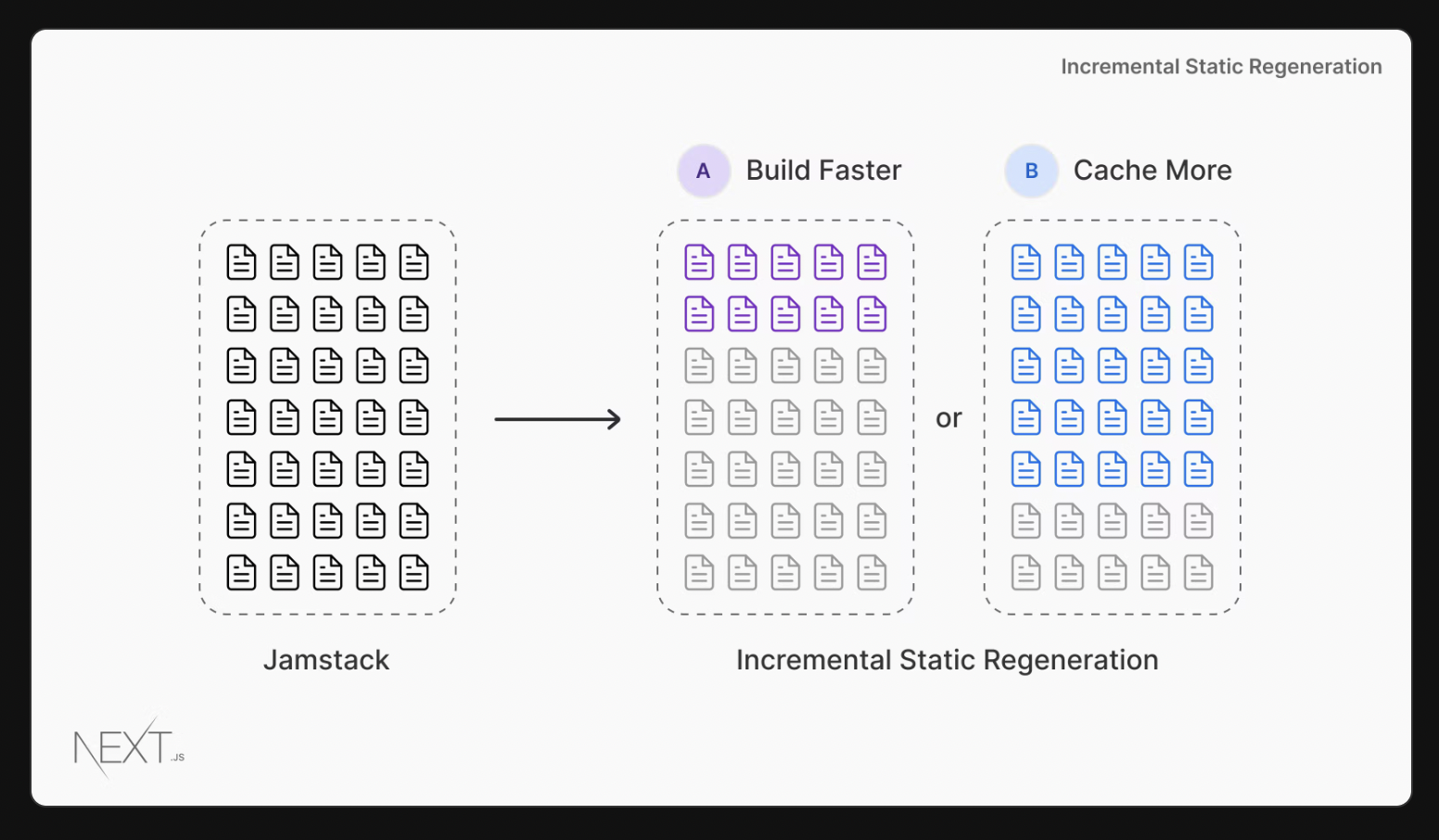
4. Incremental Static Regeneration
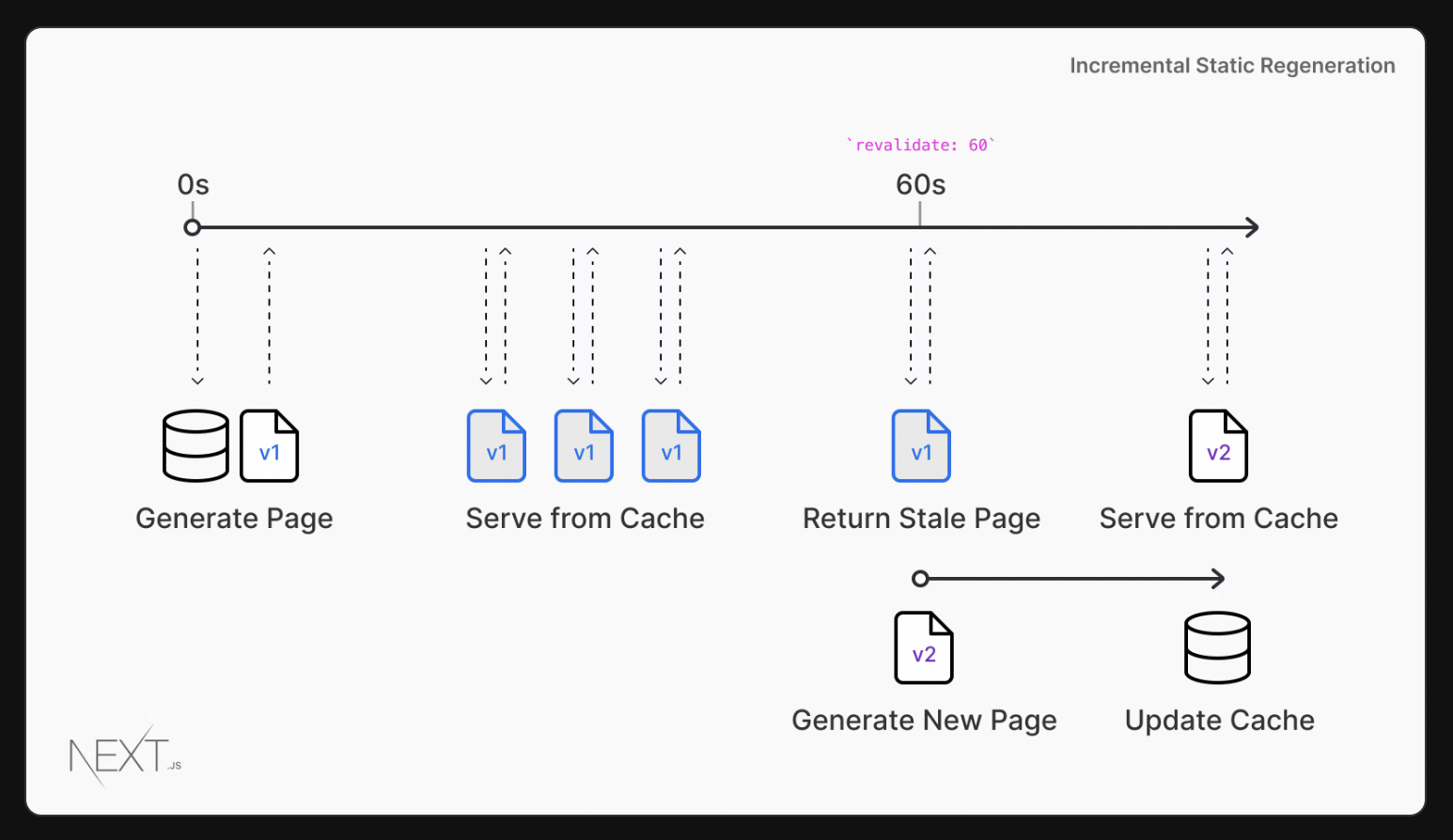
4. Incremental Static Regeneration (ISR)
Flexible as SSR Rehydration
features
Serve as static pages at first loads
Cache Revalidation (no thundering herd problem)
Purge cache on demand (event-driven)
Based on Server-Side Rendering w/ Hydration
4. Incremental Static Regeneration (ISR)
3 advantages in one which no one did before:
3. Minimize the API call & rendering cost
2. Ability to keep everything updated / dynamic
1. Instant Performance
4. Incremental Static Regeneration
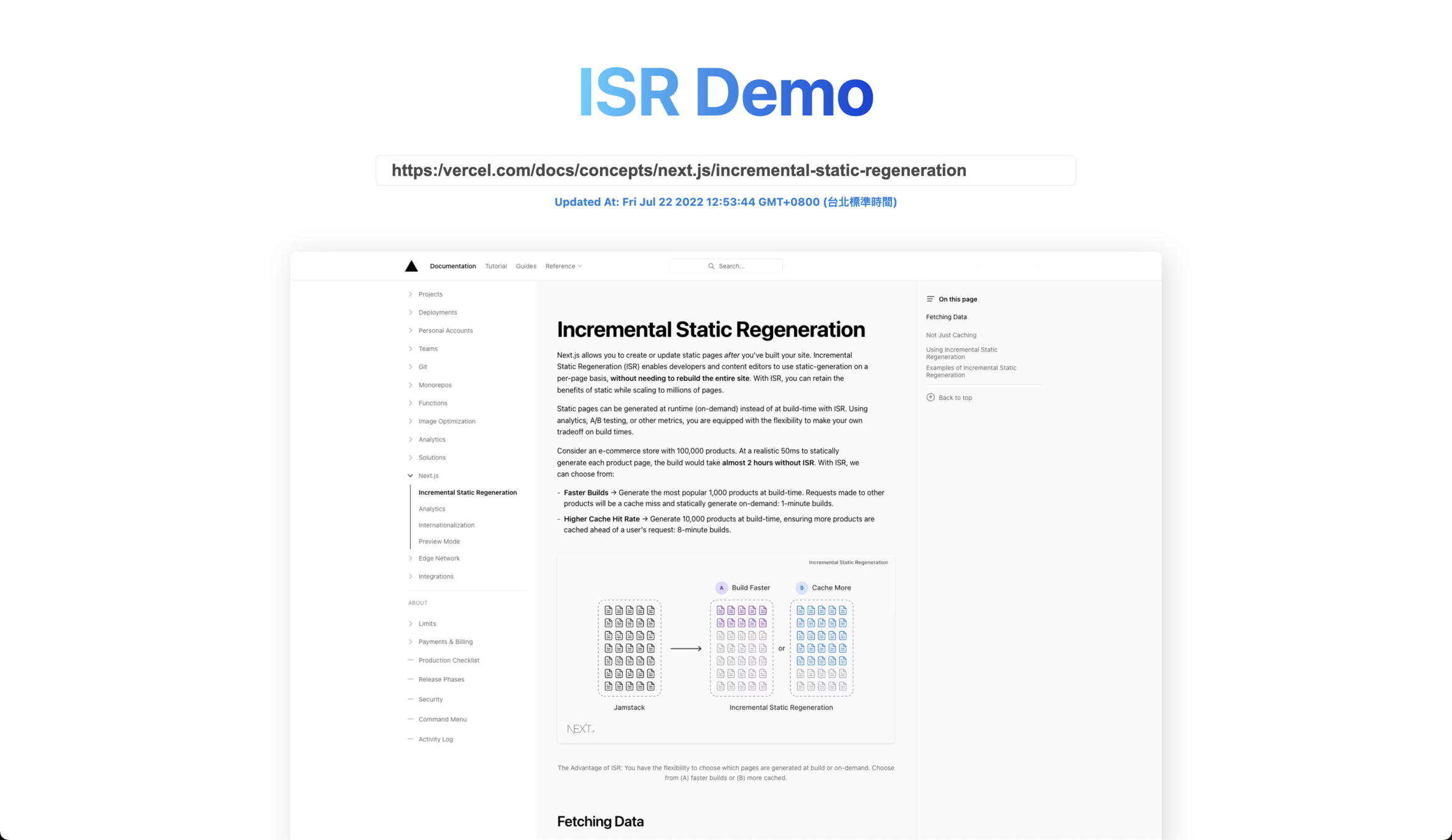
Minimal
By guansunyata