Containerization
presented by:
[Hamid Salehian]
Familiar with Virtualization?
Virtualization: what is?
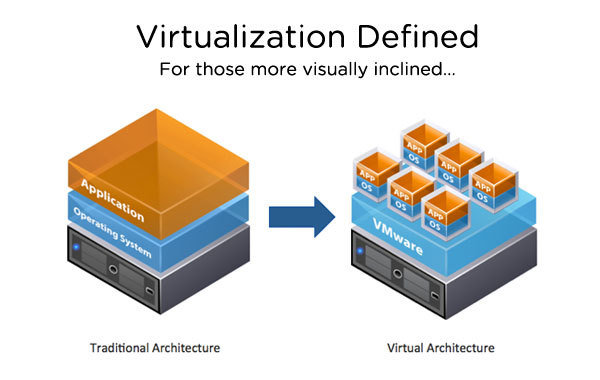
Software that manipulates hardware.
Virtualization: what is?
- The Kernel no longer gets direct access to hardware
- A hypervisor gets access instead
- A Specialized SW called as hypervisor emulates the PC’s CPU, Memory, HDD, network and other resources completely, enabling virtual machine to share the resources.
Type 1 vs Type 2:
Hardware
Hardware
VMM (Hypervisor)
VMM (Hypervisor)
Host
OS
Guest OS
Guest OS
Guest OS
Guest OS
Guest OS
Application
Application
Application
Application
Application
Type-1
Type-2
Bare metal architecture
Xen, VMware ESX server, Hyper-V
Mostly for server, but not limited
OS-independent VMM
Hosted architecture
VMware Workstation, VirtualBox
Mostly for client devices, but not limited
OS-dependent VMM
bin/libs
bin/libs
bin/libs
bin/libs
bin/libs
Linux Container
Container
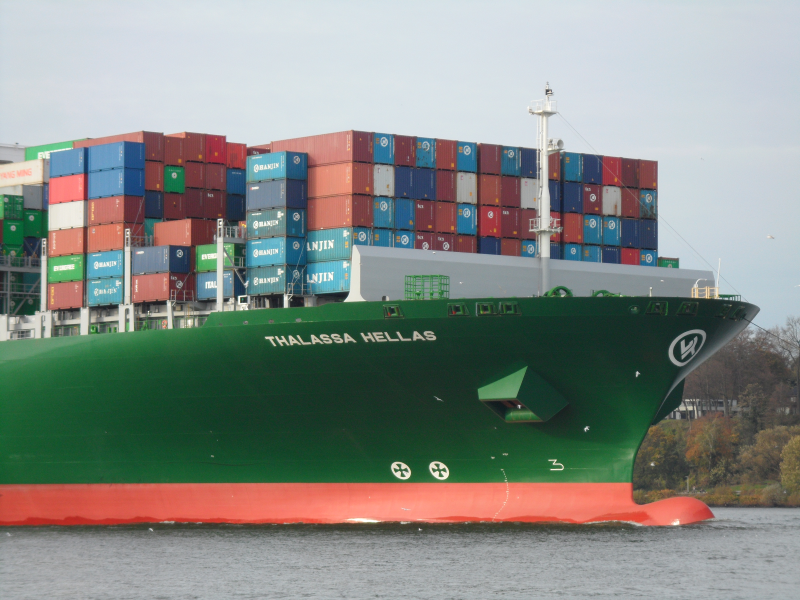
- Lightweight virtualization.
- OS-level virtualization
- Allow single host to operate multiple isolated & resource-controlled Linux instances
UNIX V7 1997
Developed chroot system call, which provided process isolation. Chroot was added to BSD in 1982
FREEBSD JAILS 2000
Introduced jails, early container technology
LINUX VSERVER 2001
Operating System virtualization implemented by patching the Linux kernel
ORACLE SOLARIS ZONES 2004
Similar to jails, but Zones were able to leverage features like snapshots and cloning from ZFS.
OPEN VIRTUZZO (OPENVZ) 2005
Released by Parallels (formerly SWsoft), code was not released as part of the official Linux kernel, but offered a wide array of features include resource managements and live migration.
PROCESS CONTAINERS 2006
Developed by Google (primarily Paul Menage and Rohit Seth) to aggregate processes within the Linux kernel for resource management.
HISTORY
-
started by Google in 2006
-
merged into kernel version 2.6 in 2007
-
many improvements since
-
stable since kernel version 3.8 in 2013
Goal
- offer the same level of isolation and control as a VM
- without the downside of running a guest OS
Linux Container
Hardware
VMM (Hypervisor)
Host OS
Application
Application
Application
Hardware
VMM (Hypervisor)
Host OS
Guest OS
Guest OS
Application
Application
bin/libs
bin/libs
Guest OS
Application
bin/libs
bin/libs
• From the inside it looks like a VM
• From the outside, it looks like normal processes
Linux Container
- LXC (LinuX Containers) let you run a Linux system within another Linux system.
- A container is a group of processes on a Linux box, put together in an isolated environment.
- This is "chroot() on steroids"
How it Works?
How it Works?
Hardware
Linux Kernel
Containers
Containers
Containers
Containers
Containers
SELinux
cgroups
namespaces
Drivers
Management Interface
- namespace
- cgroups
- SELinux
namespaceS
Isolate processes from one another
- process
- filesystem
- networking
1
2
3
4
5
6
7,1
8
8,2
9,3
10,4
namespace
Cgroups
(control group)
Control resource allocation to processes
2
- I/O: limit reads / writes
- CPU: limit CPU usage
- Memory: limit total memory available
SElinux
Security-Enhanced Linux (SELinux) provides
secure separation of containers by applying
SELinux policy and labels.
2
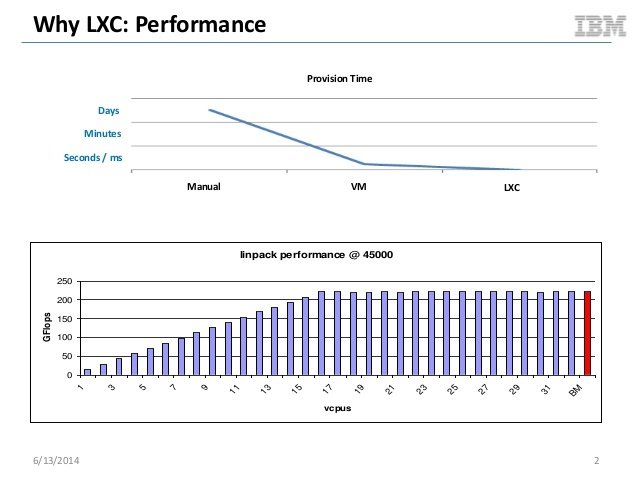
- Containers are more lightweight
- No need to install guest OS
- Less CPU, RAM,
Storage needed
- More containers
per machine than VM
Container vs VM
Docker
dOCKER: What IS?
Docker is a platform for developing, shipping & running application using container based virtualization technology.
Lets Get Hands Dirty
Question!?
Thanks
powered by: slides.com
see more: https://slides.com/hsarena
LXC
By Hamid Salehian
LXC
Linux Container