JavaEE workshop #3
Kuba Hejda
(Lombok, JPA, spring-data-jpa, DTO)

Previous workshop
- IoC/DI
- Bean, Configuration
- Multitier architecture
- JSON, REST - Statelessness, Operations, HttpStatus
Content
- Little more on beans, autowiring and lifecycle
- JPA
- spring-data-jpa
- Lombok
- DTO
Beans
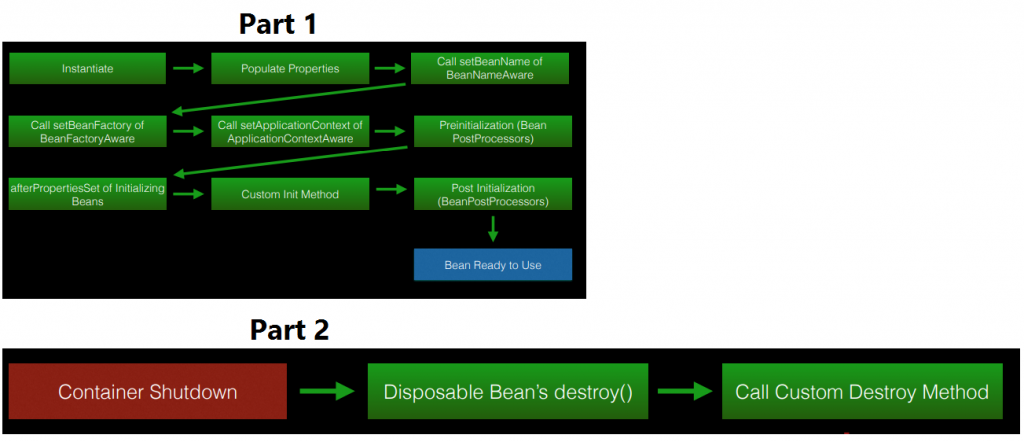
- Their lifecycle is being operated by the container
- Custom functionality can be injected around the initialization and destruction of the bean
- Next to the other beans we can let Spring populate property values from config file
Beans
- DI can be done via 3 mechanisms:
- Injection to property
- Injection via setter
- Injection via constructor
-
Beans can be autowired
- byType
- byName
- byConstructor
- Default autowiring type is byType, when more than 1 bean of the type is found, then @Qualifier annotation helps distinguish which one we want to inject
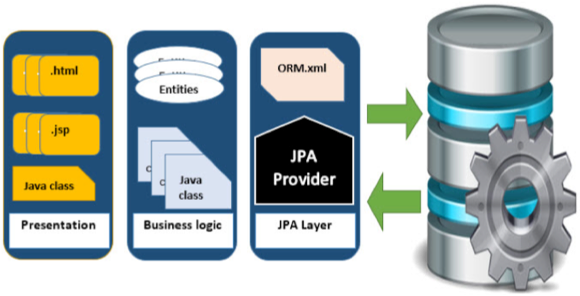
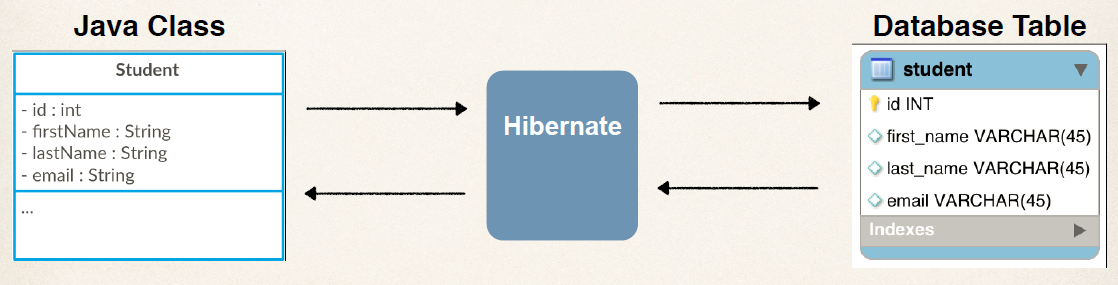
- object/relational mapping facility for managing relational data in Java application
-
consists of four areas:
-
The Java Persistence API
-
The query language
-
The Java Persistence Criteria API
-
Object/relational mapping metadata
-
JPA Providers
- JPA is open source API
- Hibernate, Eclipselink, Toplink, OpenJpa etc.
- Spring Data JPA - not JPA provider but framework over JPA
JPA architecture
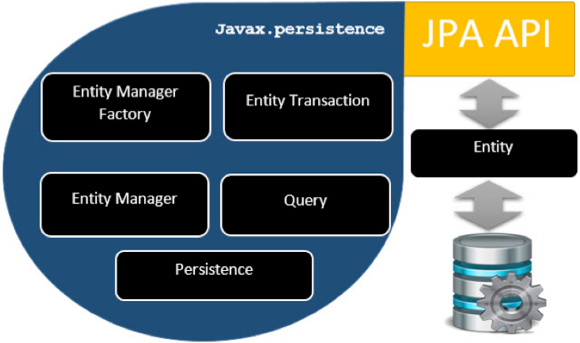
JPA Architecture
| EntityManagerFactory | This is a factory class of EntityManager. It creates and manages multiple EntityManager instances. |
| EntityManager | It is an Interface, it manages the persistence operations on objects. It works like factory for Query instance. |
| Entity | Entities are the persistence objects, stores as records in the database. |
| EntityTransaction | It has one-to-one relationship with EntityManager. For each EntityManager, operations are maintained by EntityTransaction class. |
| Persistence | This class contain static methods to obtain EntityManagerFactory instance. |
| Query | This interface is implemented by each JPA vendor to obtain relational objects that meet the criteria. |
JPA mapping - annotations
| @Entity | Specifies to declare the class as entity or a table. |
| @Table | Specifies to declare table name. |
| @Basic | Specifies non constraint fields explicitly. |
| @Embedded | Specifies the properties of class or an entity whose value instance of an embeddable class. |
| @Id | Specifies the property, use for identity (primary key of a table) of the class. |
| @GeneratedValue | Specifies, how the identity attribute can be initialized such as Automatic, manual, or value taken from sequence table. |
| @Transient | Specifies the property which in not persistent i.e. the value is never stored into database. |
JPA mapping - annotations
| @Column | Used to specify column or attribute for persistence property. |
| @SequenceGenerator | used to define the value for the property which is specified in @GeneratedValue annotation. It creates a sequence. |
| @TableGenerator | Used to specify the value generator for property specified in @GeneratedValue annotation. It creates a table for value generation. |
| @AccessType | Used to set the access type. If you set @AccessType(FIELD) then Field wise access will occur. If you set @AccessType(PROPERTY) then Property wise assess will occur. |
| @JoinColumn | Used to specify an entity association or entity collection. This is used in many- to-one and one-to-many associations. |
JPA mapping - annotations
| @UniqueConstraint | Used to specify the field, unique constraint for primary or secondary table. |
| @ColumnResult | References the name of a column in the SQL query using select clause. |
| @ManyToMany, @ManyToOne, @OneToMany, @OneToOne |
Used to define a many-to-many relationship between the join Tables. |
| @NamedQueries | Used for specifying list of named queries. |
| @NamedQuery | Used for specifying a Query using static name. |
Java bean validation - JSR-303
- constraints in the form of annotations placed on a field, method, or class
- Hibernate validator - reference implementation 1.1
public class Car {

   @NotNull
   private String manufacturer;

   @NotNull
   @Size(min = 2, max = 14)
   private String licensePlate;

   @Min(2)
   private int seatCount;

   // ...
}
JPA - bean conventions
-
Bean contains the default constructor.
-
Non-Boolean property contains getter and setter methods.
-
Boolean property contain setter and is method.
-
Getter method of any property should start with small lettered ‘get’ (java method convention).
-
Setter method of any property should start with small lettered ‘set’ (java method convention).
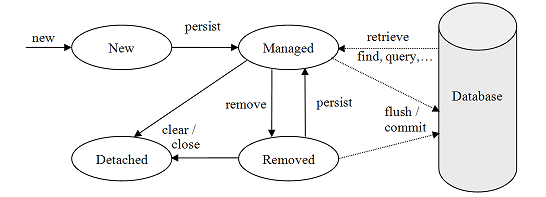
JPA Entity Lifecycle
- managed vs detached
- entity updates in active transaction are persisted
- lazy loading works only in active transaction
JPA - JPQL
- Java Persistence Query Language defined in JPA specification.
- based on SQL syntax
- won’t affect the database directly
- SQL works directly against relational database tables, JPQL works with Java classes and instances
- aggregate functions (COUNT, SUM, AVG, MIN, MAX)
- BETWEEN, LIKE
Query query = entitymanager.createQuery("Select UPPER(e.ename) from Employee e ORDER BY e.ename ASC");
List<String> list = query.getResultList();
JPA - criteria API
- alternative way for defining JPA queries
- useful for building dynamic queries
EntityManager em = ...;
CriteriaBuilder cb = em.getCriteriaBuilder();
CriteriaQuery<Country> cq = cb.createQuery(Country.class);
Root<Country> country = cq.from(Country.class);
cq.select(country);
TypedQuery<Cuntry> q = em.createQuery(cq);
List<Country> allCountries = q.getResultList()
JPA links
- http://docs.oracle.com/javaee/7/tutorial/partpersist.htm
- http://www.tutorialspoint.com/jpa/
- http://www.java2s.com/Tutorials/Java/JPA/index.htm
- http://www.slideshare.net/thjanssen/performance-tuning-with-jpa-21-and-hibernate-geecon-prague-2015
- http://www.slideshare.net/osa_ora/jpa-21-performance-tuning-tips
- https://blogs.oracle.com/theaquarium/entry/jpa_2_1_entity_graphs
- http://www.cs.au.dk/~csj/files/dDB/slides/Hibernate%20and%20ORM%20overview.pdf
- https://docs.oracle.com/javaee/7/tutorial/persistence-cache001.htm#GKJIO
- http://www.thoughts-on-java.org/jpa-21-entity-graph-part-1-named-entity/
- http://www.radcortez.com/jpa-entity-graphs/
- provides repository support for JPA
- Uses Hibernate underhood
- tutorial 1
- tutorial 2
Spring boot + data-jpa
<!-- https://mvnrepository.com/artifact/org.springframework.boot
             /spring-boot-starter-data-jpa -->
<dependency>
    <groupId>org.springframework.boot</groupId>
    <artifactId>spring-boot-starter-data-jpa</artifactId>
</dependency>

<!-- https://mvnrepository.com/artifact/org.postgresql/postgresql -->
<dependency>
    <groupId>org.postgresql</groupId>
    <artifactId>postgresql</artifactId>
    <version>42.4.0</version>
</dependency>
#application.properties

#spring.jpa.show-sql=true
spring.jpa.hibernate.ddl-auto=update

spring.datasource.url=jdbc:postgresql://localhost/ita2022
spring.datasource.username=ita2022
spring.datasource.password=ita2022- data layer of n-tier architecture
- Interface extends Repository or any child e.g. JpaRepository
- can be extended
Lombok
- Widely used 3rd party library for generating the boiler-plate code
- Helps create more readable and smaller code
- Website
- @Getter, @Setter, @AllArgsConstructor, @RequiredArgsConstructor, @EqualsAndHashCode, @ToString, @Builder, ...
- Every annotation has various settings
- Data transfer object
- Represent input and output of exposed API
- Why ?
- security
- clear cut of transaction
- different data representation
- split representation logic from internal domain (entity)
- How ?
- Spring Converter interface
- mapstruct
- ...
- Where ?
- service layer
DTO
Proxy pattern
- Used to wrap existing behavior with the custom one
- Very very very widely used in Spring
Q & A
ITA 08 - Workshop 03
By IT-absolvent
ITA 08 - Workshop 03
Workshop #3