A proposal on the origin of monotheism
What is “monotheism”?
When did it happen?
Why did it happen?
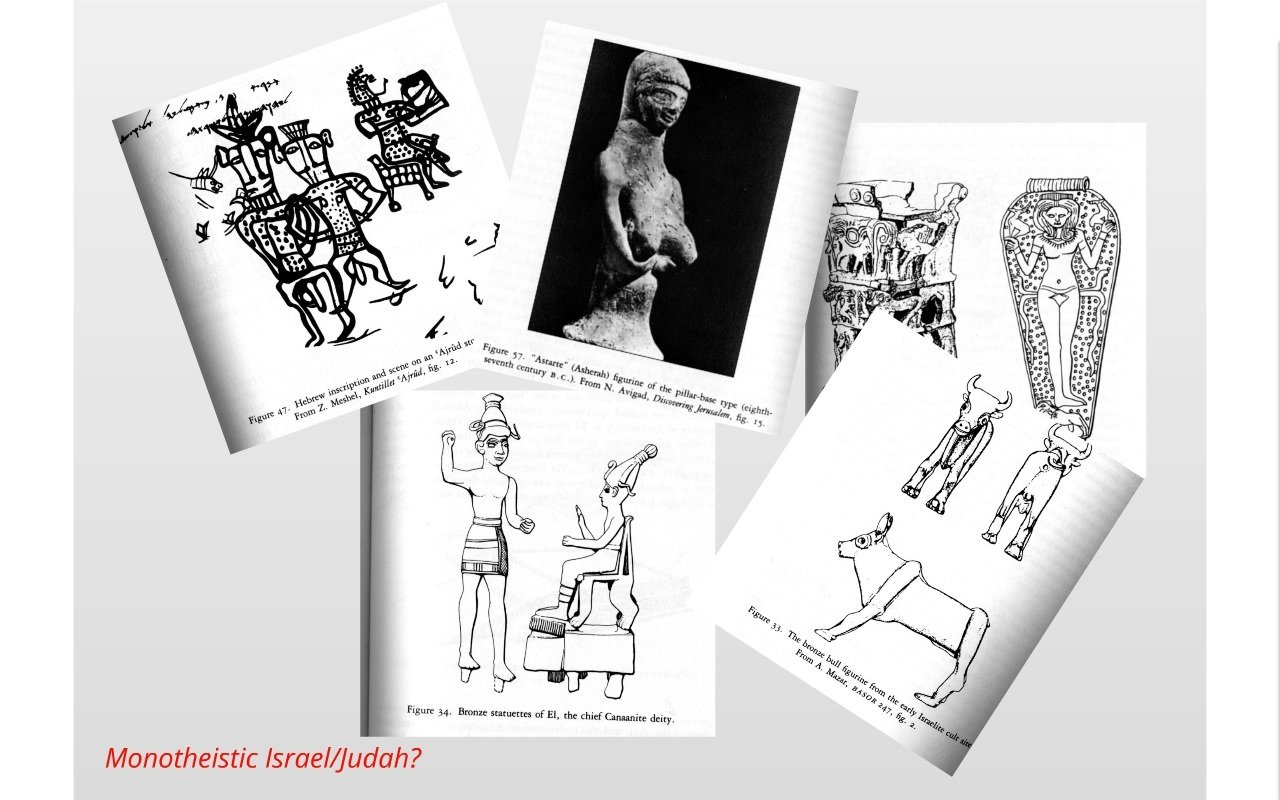
Archaeological and textual evidence indicate Israel = polytheistic prior to the 6th century BCE. So how monotheism?
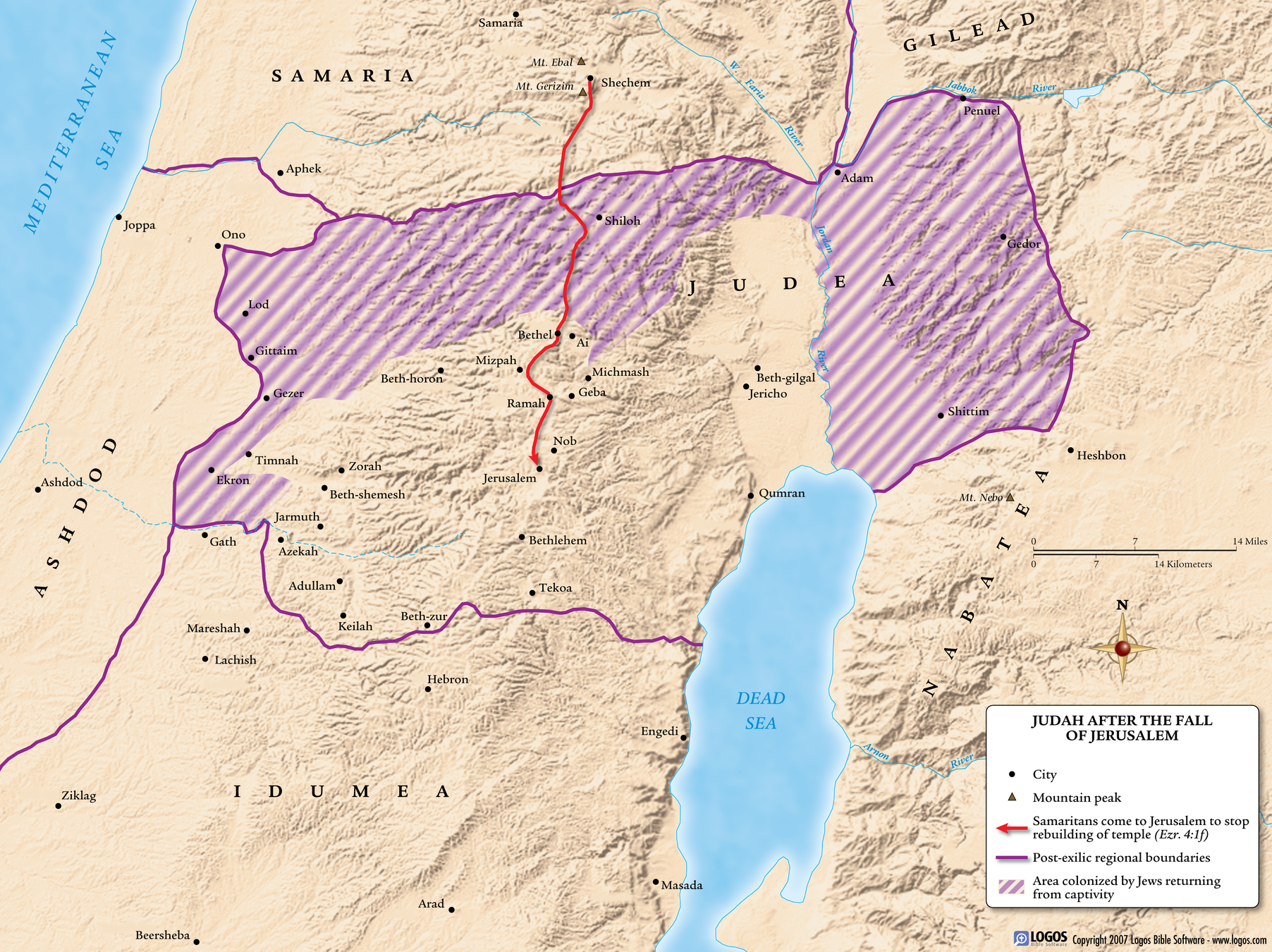
- Building sociopolitical identity!
- Rebuilding the walls of Jerusalem and its temple
- Repopulating the city of Jerusalem
- Establishing the Mosaic law as the law of the land (basis of a common identity)
- Forced divorces of foreign women
- Genealogy of members
Ezra-Nehemiah is often attributed with (re-)enforcing monotheism
We'll explore themes in Genesis, a book we've been studying, later.
Two proposals
- Proposal 1: 6th century BCE (Neo-Babylonian Empire) Judah/Israel

- No monarchy!
- Religion/Culture = framework for common identity and hierarchy of authority.
- Priests appointed as local "judges" by Greek rulers
- Governed local affairs
- Continued under Romans (note the Sanhedrin)
- Conflict between Pharisees and Sadducees began over (relative) political authority
Meager province = stalled restoration
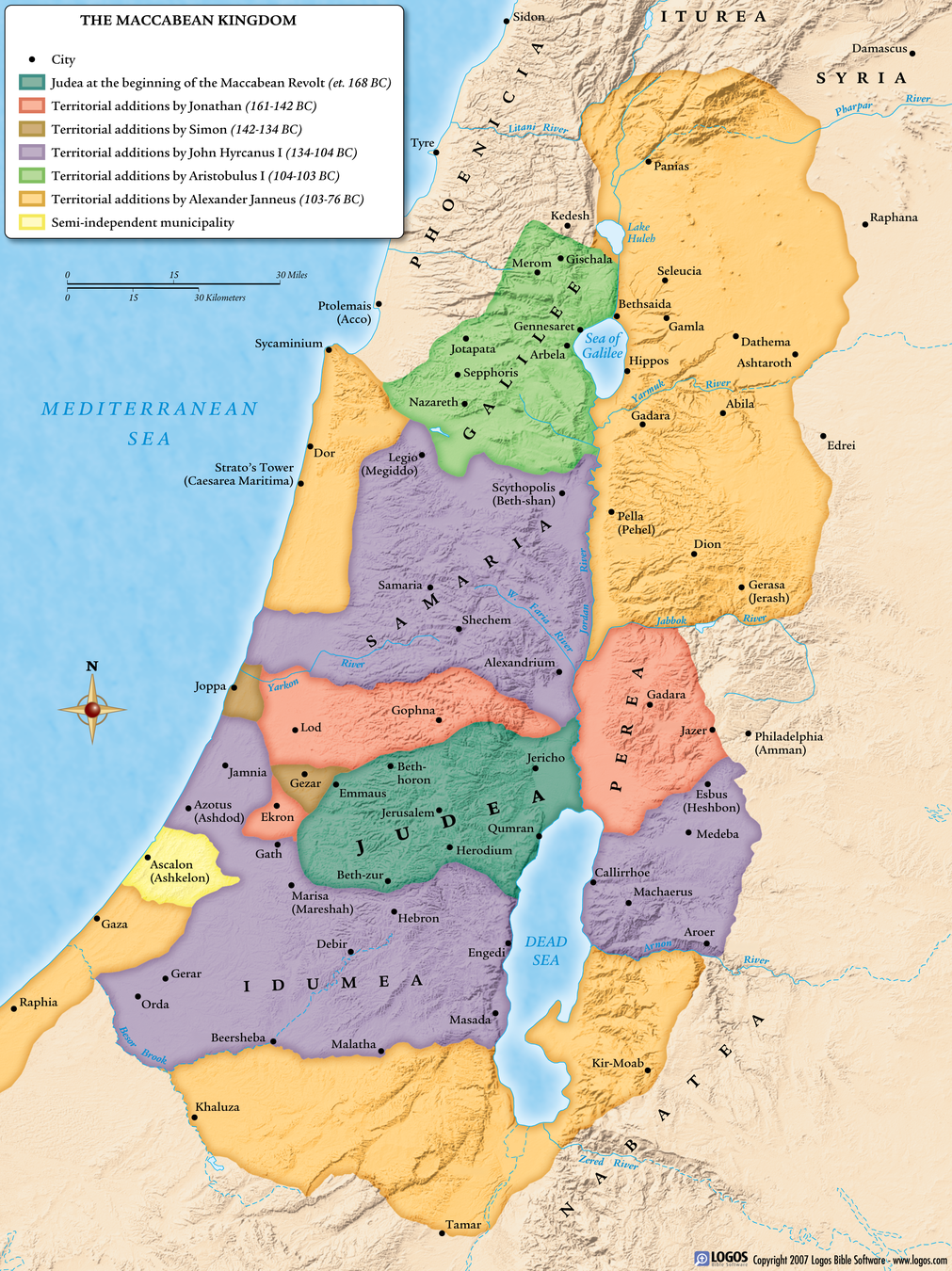
- Proposal 2: 2nd century BCE (Maccabean Kingdom / Hasmonean Dynasty)

The success of the Maccabean Revolt and the rapid expansion of the kingdom necessitated a sociopolitical framework to unify the different localities under Hasmonean rule.
"We need social and political control!"
Some scholars date texts such as Ezra-Nehemiah, Chronicles, portions of Genesis, to this time.
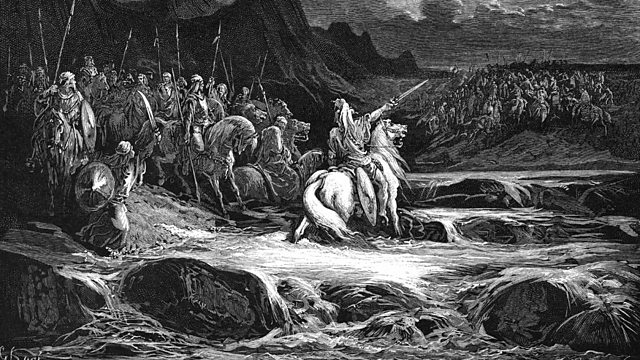
J. Maccabeaus by G. Doré
Maccabean Revolt (167-60 BCE)
- Roman took control of the territory in 63 BCE
- This led to a number of revolts against the Roman authorities (the biggest in 66-71 CE)
Without political rule or a military to regain its autonomy, Judeans turned to the ideals of God, (religious) law, and community as the means through which to preserve their shared cultural identity in the presence of foreign imperial power.
A kingdom in waiting? Maybe, but why a "religious" law?
Proposals 1 + 2: Early monotheism = strategy of social and political resistance and self-preservation.
How does the Bible match up to either of these proposals (1 or 2)?
Genesis as a case study.
- Texts such as Genesis can be interpreted as a response to Babylonian authority.
- They serve as a foil against which to imagine a restored Israel.
- Genesis is a mythic account that draws out the contours of a specific people.
- The Tower of Babel (Gen 11) may be the Temple of Bel/Babel in Babylon.
- Ziggurats often had temples at the top, which illustrated the meeting point between heaven and earth.
- Yahweh, the Israelite god, “comes down to see what’s going on” (Gen 11:5)--political statement?
- “Single language” may refer to the spread of imperial Babylonian as the “common language.”

Temple of Bel/Babel
- The flood story (Gen 6-9) has obvious parallels to Babylonian flood stories (Epic of Gilgamesh, Enuma Elish).
- Differences: Noah vs. Utanapishtim; dove (= Yahweh; compare Matt 3:16?) vs. raven (= Adad?)
- Cain, who murdered his brother Abel (Gen 4), settled east of Eden (in Babylonia?).
- Abraham (cf. Gen 11:31; Neh 9:7) was from Ur of the Chaldeans (Babylonia).
- Texts such as Genesis may be best read as political statements against Babylonian rule and culture.
- The theme of Babylon as the antithesis to Israel/Yahweh can be seen in a number of biblical texts (e.g., Daniel, Revelation).
- Under the Roman Empire, "Babylon" becomes a codeword to refer to the Roman Empire.
Some final thoughts:
Proposal on the origin of monotheism
By Jeremiah Cataldo
Proposal on the origin of monotheism
- 493