Snakemake in 2026
Johannes Köster
University of Duisburg-Essen
2025
- check computational validity
- apply same analysis to new data
- check methodological validity
- understand analysis
Data analysis
Reproducibility
Transparency
- modify analysis
- extend analysis
Adaptability
>1.6 million downloads since 2015
>3000 citations
>14 citations per week in 2024



dataset
results
dataset
dataset
dataset
dataset
dataset
Define workflows
in terms of rules
Define workflows
in terms of rules
rule mytask:
    input:
        "path/to/{dataset}.txt"
    output:
        "result/{dataset}.txt"
    script:
        "scripts/myscript.R"


rule myfiltration:
     input:
        "result/{dataset}.txt"
     output:
        "result/{dataset}.filtered.txt"
     shell:
        "mycommand {input} > {output}"


rule aggregate:
    input:
        "results/dataset1.filtered.txt",
        "results/dataset2.filtered.txt"
    output:
        "plots/myplot.pdf"
    script:
        "scripts/myplot.R"
Define workflows
in terms of rules
Define workflows
in terms of rules
rule mytask:
    input:
        "data/{sample}.txt"
    output:
        "result/{sample}.txt"
    shell:
        "some-tool {input} > {output}"
rule name
how to create output from input
define
- input
- output
- log files
- parameters
- resources
rule mytask:
    input:
        "path/to/{dataset}.txt"
    output:
        "result/{dataset}.txt"
    script:
        "scripts/myscript.R"


rule myfiltration:
     input:
        "result/{dataset}.txt"
     output:
        "result/{dataset}.filtered.txt"
     shell:
        "mycommand {input} > {output}"


rule aggregate:
    input:
        "results/dataset1.filtered.txt",
        "results/dataset2.filtered.txt"
    output:
        "plots/myplot.pdf"
    script:
        "scripts/myplot.R"
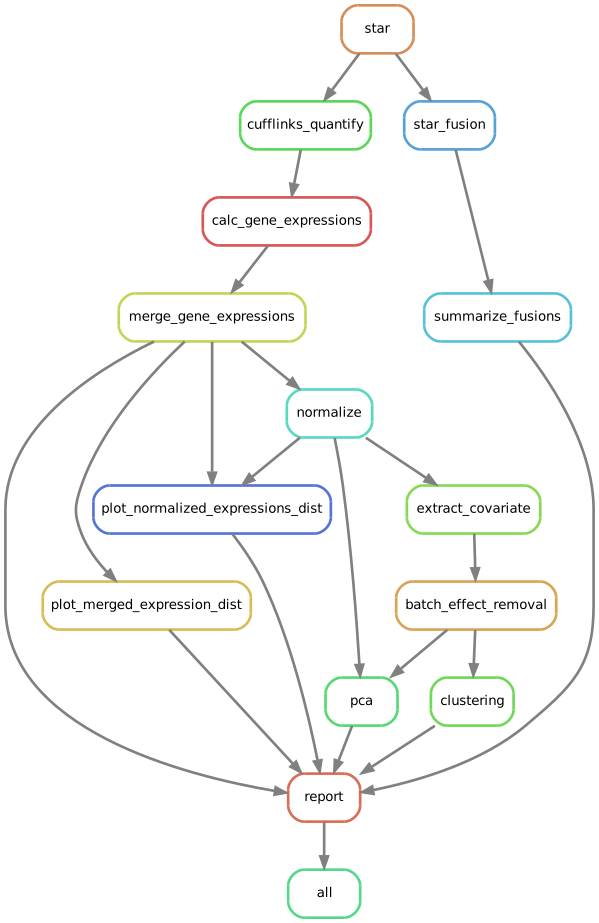
Automatic inference of DAG of jobs
Boilerplate-free integration of scripts
rule mytask:
    input:
        "data/{sample}.txt"
    output:
        "result/{sample}.txt"
    script:
        "scripts/myscript.py"
reusable scripts:
- Python
- R
- Julia
- Rust
- Bash
- Xonsh
- Hy
import pandas as pd

data = pd.read_table(snakemake.input[0])
data = data.sort_values("id")
data.to_csv(snakemake.output[0], sep="\t")
Python:
data <- read.table(snakemake@input[[1]])
data <- data[order(data$id),]
write.table(data, file = snakemake@output[[1]])
Boilerplate-free integration of scripts
R:
import polar as pl

pl.read_csv(&snakemake.input[0])
  .sort()
  .to_csv(&snakemake.output[0])
Rust:
$XONSH_TRACEBACK_LOGFILE = snakemake.log[0]

xsv sort -s id @(snakemake.input[0]) > @(snakemake.output[0])
Xonsh:
(import pandas :as pd)

(setv data (pd.read_table (get snakemake.input 0)))
(setv data (.sort_values data "id"))
(.to_csv data (get snakemake.output 0) :sep "\t")
Hy:
#!/usr/bin/env bash
exec 2> "${snakemake_log[0]}"

xsv sort -s id ${snakemake_input[0]} > ${snakemake_output[0]}
Bash:
new!
new!
Reusable wrappers
rule map_reads:
    input:
        "{sample}.bam"
    output:
        "{sample}.sorted.bam"
    wrapper:
        "0.22.0/bio/samtools/sort"
reuseable wrappers from central repository
Reusable wrappers
\max U_t \cdot 2S \cdot \sum_{j \in J} x_j \cdot p_j
+ 2S \cdot \sum_{j \in J} x_j \cdot (u_{t,j})
+ S \cdot \sum_{f \in F} \gamma_f \cdot S_f\\
+ \sum_{f \in F} \delta_f \cdot S_f
\sum_{j \in J} x_j \cdot u_{r,j} \leq U_r \quad \forall r \in R
\delta_f \leq \frac{\sum_{j \in J} x_j \cdot z_{f,j}}{\sum_{j \in J} z_{f,j}} \quad\forall f \in F
\text{subject to:}
job selection
job resource usage
free resources
job temp file consumption
temp file lifetime fraction
job priority
job thread usage
Scheduling
temp file size
temp file deletion
\gamma_f \leq \delta_f \quad\forall f \in F
\gamma_f \in \{0,1\}
\delta_f \in [0,1]
x_f \in \{0,1\}
DAG partitioning
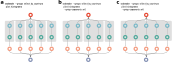
--groups a=g1 b=g1
--groups a=g1 b=g1
--group-components g1=2
--groups a=g1 b=g1
--group-components g1=5
Resource handling
snakemake --default-resources --jobs 100mem_mb="min(max(2*input.size_mb, 1000), 8000)"
disk_mb="max(2*input.size_mb, 1000) if input else 50000"snakemake --default-resources mem_mb=... --jobs 100Specifiy defaults:
Use builtin defaults:
Store in profile:
# /etc/xdg/snakemake/default/config.yaml:
default-resources:
  mem_mb: "min(max(2*input.size_mb, 1000), 8000)"
  ...
Define per rule:
# profiles/default/config.yaml:
set-resources:
  mytask:
    mem_mb: 16000
  ...
Scalable to any platform
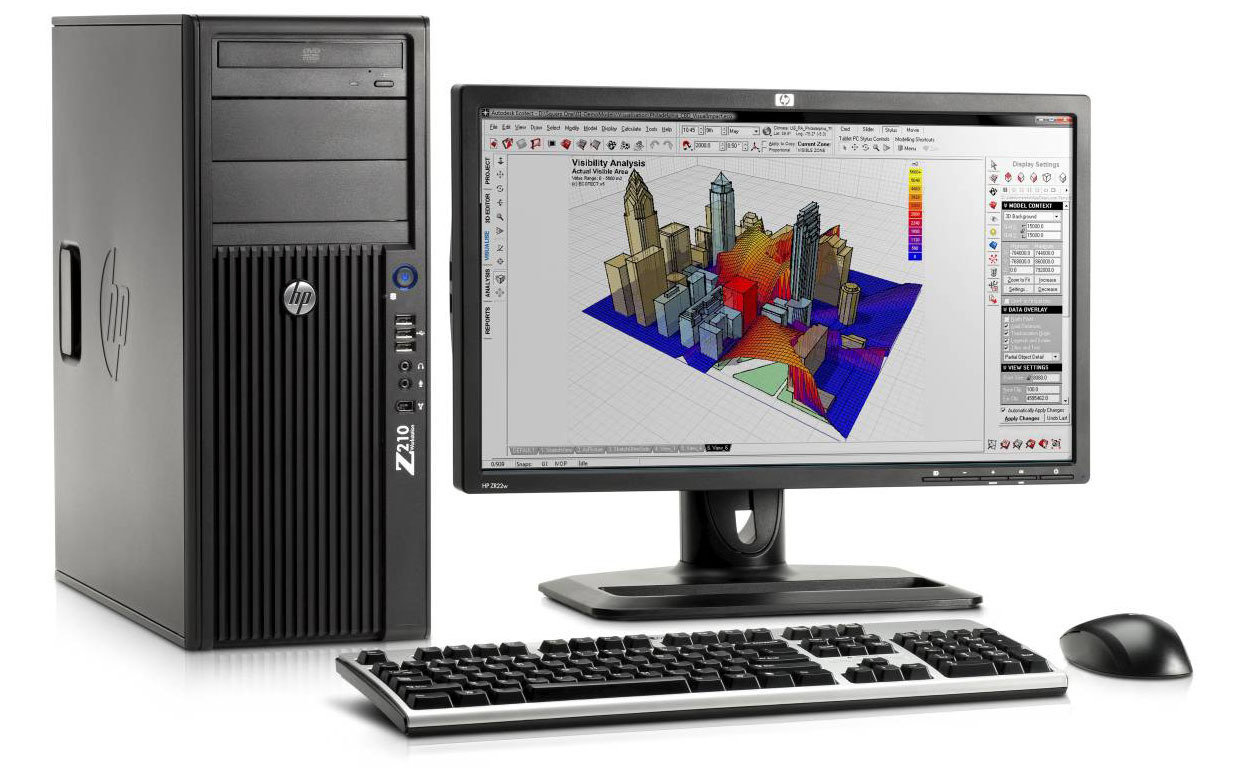

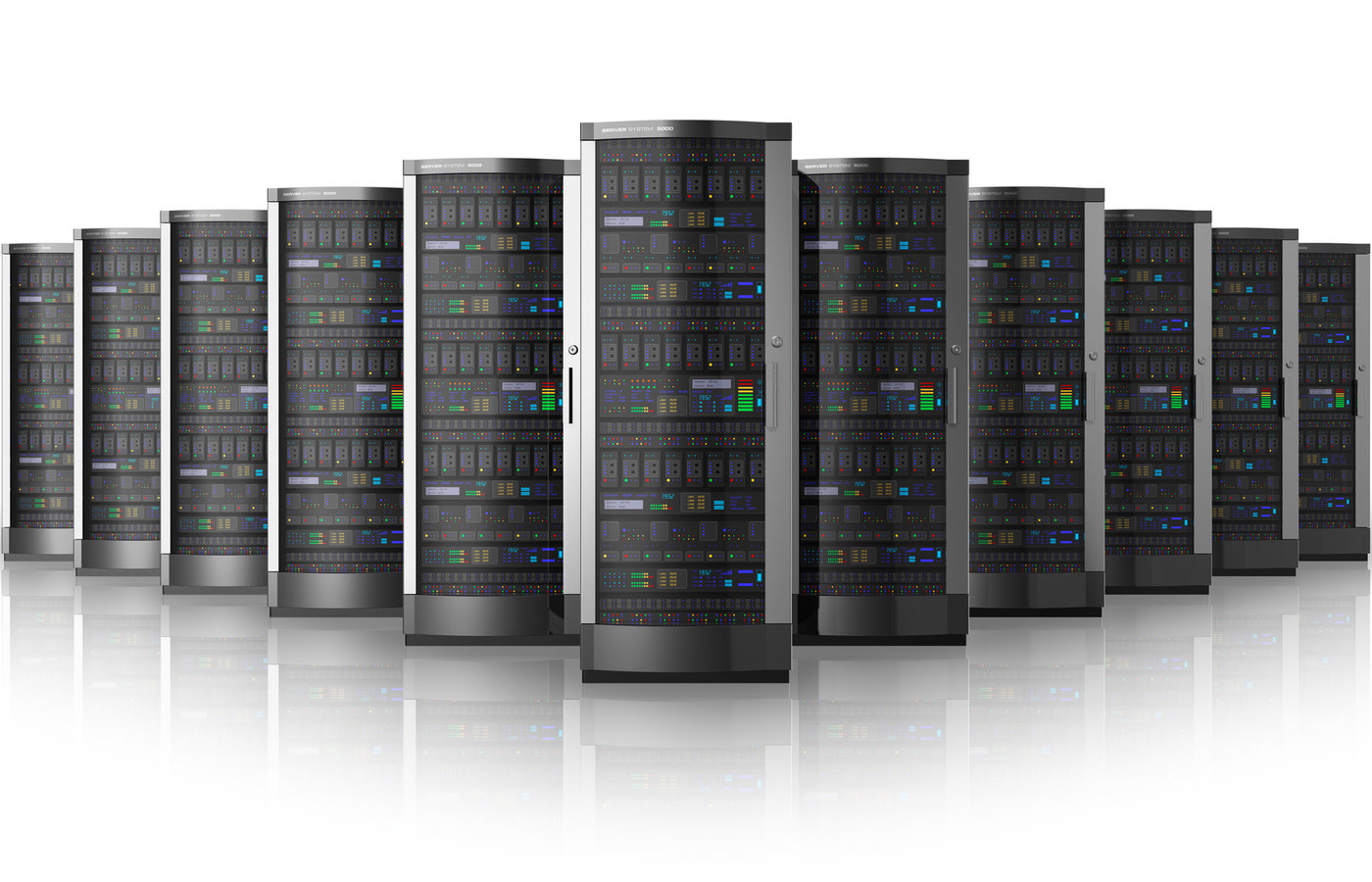
workstation
compute server
cluster
grid computing
cloud computing



rule mytask:
    input:
        "path/to/{dataset}.txt"
    output:
        "result/{dataset}.txt"
    conda:
        "envs/some-tool.yaml"
    shell:
        "some-tool {input} > {output}"
Conda integration
channels:
 - conda-forge
dependencies:
  - some-tool =2.3.1
  - some-lib =1.1.2
Container integration
rule mytask:
    input:
        "path/to/{dataset}.txt"
    output:
        "result/{dataset}.txt"
    container:
        "docker://biocontainers/some-tool:2.3.1"
    shell:
        "some-tool {input} > {output}"
Self-contained HTML reports
Interoperability with other WMS
rule chipseq_pipeline:
    input:
        input="design.csv",
        fasta="data/genome.fasta",
        gtf="data/genome.gtf",
        # any --<argname> pipeline file arguments can be given here as <argname>=<path>
    output:
        report="results/multiqc/broadPeak/multiqc_report.html",
    params:
        pipeline="nf-core/chipseq",
        revision="2.0.0",
        profile=["test", "docker"],
        outdir=subpath(output.report, ancestor=2),
        # any --<argname> pipeline arguments can be given here as <argname>=<value>
    handover: True
    wrapper:
        "v7.2.0/utils/nextflow"
Lookup in config
rule mytask:
    input:
        "path/to/{dataset}.txt"
    output:
        "result/{dataset}.txt"
    params:
        some_threshold=lookup(
            dpath="some_tool/thresholds/{dataset}",
            within=config,
            default=0.1
        )
    shell:
        "some-tool {input} > {output}"
new!
Lookup in sheet
rule mytask:
    input:
        "path/to/{dataset}.txt"
    output:
        "result/{dataset}.txt"
    params:
        some_threshold=lookup(
            query="dataset == '{dataset}'",
            cols="threshold",
            within=sheet
        )
    shell:
        "some-tool {input} > {output}"
new!
Branching
rule mytask:
    input:
        branch(
            lookup(dpath="prefilter/activate", within=config),
            then="results/preprocessed/{dataset}",
            otherwise="path/to/{dataset}"
        )
    output:
        "result/{dataset}.txt"
    shell:
        "some-tool {input} > {output}"
new!
Rule item access and subpaths
rule mytask:
    input:
        branch(
            lookup(dpath="prefilter/activate", within=config),
            then="results/preprocessed/{dataset}",
            otherwise="path/to/{dataset}"
        )
    output:
        foo="result/{dataset}.txt"
    params:
        outdir=subpath(output.foo, parent=True)
    shell:
        "some-tool {input} -o {params.outdir}"
new!
Rule item access and subpaths
rule mytask:
    input:
        branch(
            lookup(dpath="prefilter/activate", within=config),
            then="results/preprocessed/{dataset}",
            otherwise="path/to/{dataset}"
        )
    output:
        foo="result/{dataset}.txt"
    params:
        prefix=subpath(output.foo, strip_suffix=".txt")
    shell:
        "some-tool {input} -o {params.prefix}"
new!
Pathvars
rule mytask:
    input:
        "<resources>/{dataset}.txt"
    output:
        "<results>/{dataset}.txt"
    shell:
        "some-tool {input} > {output}"
new!
# config.yaml

pathvars:
  results: some/custom/path/results
  resources: some/custom/path/resources
Pathvars
module star_arriba:
    meta_wrapper: "v9.0.1/meta/bio/star_arriba"
    pathvars:
        results="...", # Path to results directory
        resources="...", # Path to resources directory
        logs="...", # Path to logs directory
        genome_sequence="...", # Path to FASTA file with genome sequence
        genome_annotation="...", # Path to GTF file with genome annotation
        reads_r1="...", # Path/pattern for FASTQ files with R1 reads
        reads_r2="...", # Path/pattern for FASTQ files with R2 reads
        per="...", # Pattern for sample identifiers, e.g. ``"{sample}"``


use rule * from star_arriba as star_arriba_*
new!
Access pattern annotation
inputflags:
    access.sequential


rule mytask:
    input:
        access.random("<resources>/{dataset}.txt")
    output:
        "<results>/{dataset}.txt"
    shell:
        "some-tool {input} > {output}"
new!
Many more features
- dynamic DAG rewiring
- service jobs (providing sockets, loading databases, or ramdisks)
- semantic helper functions for minimizing boilerplate code
- fallible rules
- caching of shared results across workflows
- transparent handling of remote storage
Extensible architecture

from dataclasses import dataclass, field

from snakemake_interface_common.exceptions import WorkflowError
from snakemake_interface_report_plugins.reporter import ReporterBase
from snakemake_interface_report_plugins.settings import ReportSettingsBase


# Optional:
# Define additional settings for your reporter.
# They will occur in the Snakemake CLI as --report-<reporter-name>-<param-name>
# Omit this class if you don't need any.
# Make sure that all defined fields are Optional (or bool) and specify a default value
# of None (or False) or anything else that makes sense in your case.
@dataclass
class ReportSettings(ReportSettingsBase):
    myparam: Optional[int] = field(
        default=None,
        metadata={
            "help": "Some help text",
            # Optionally request that setting is also available for specification
            # via an environment variable. The variable will be named automatically as
            # SNAKEMAKE_REPORT_<reporter-name>_<param-name>, all upper case.
            # This mechanism should ONLY be used for passwords and usernames.
            # For other items, we rather recommend to let people use a profile
            # for setting defaults
            # (https://snakemake.readthedocs.io/en/stable/executing/cli.html#profiles).
            "env_var": False,
            # Optionally specify a function that parses the value given by the user.
            # This is useful to create complex types from the user input.
            "parse_func": ...,
            # If a parse_func is specified, you also have to specify an unparse_func
            # that converts the parsed value back to a string.
            "unparse_func": ...,
            # Optionally specify that setting is required when the reporter is in use.
            "required": True,
            # Optionally specify multiple args with "nargs": True
        },
    )


# Required:
# Implementation of your reporter
class Reporter(ReporterBase):
    def __post_init__(self):
        # initialize additional attributes
        # Do not overwrite the __init__ method as this is kept in control of the base
        # class in order to simplify the update process.
        # In particular, the settings of above ReportSettings class are accessible via
        # self.settings.

    def render(self):
        # Render the report, using attributes of the base class.
        ...
Extensible architecture
Extensible architecture
Conclusion
Snakemake covers all aspects of fully reproducible, transparent, and adaptable data analysis, offering
- maximum readability
- ad-hoc integration with scripting and high performance languages
- an extensible architecture
- a plethora of advanced features
https://snakemake.github.io

Notes
- filenames: use directory hierarchies, not everything has to be encoded into the filename
- https://snakemake.readthedocs.io/en/stable/snakefiles/rules.html#parameter-space-exploration
- dashboard (WIP): https://github.com/cademirch/snkmt
Outlook
- structured wildcards (dataclasses as wildcard values, auto-encoded into directory hierarchy)
- development of Rust-based core has started
- interactive TUI
- more plugins
- minimize metadata footprint
- rattler-based conda plugin:
- smart caching
- admin-provided hardware-optimized local builds
Snakemake workflow catalog
snakemake-intro-updates-2026
By Johannes Köster