Different Sources Essential Oils: Let’s Find Out
Essential oils are obtained from a variety of plant sources, exhibit strong aromatic and therapeutic characteristics. Currently, there exists a diverse assortment of essential oils that possess distinct compositions and potential applications. This post aims to examine various origins of essential oils and their respective attributes.
Citrus fruits: Essential oils are derived from the peels of fruits such as lemon, orange, and grapefruit. These peels possess notable attributes that are associated with invigorating and revitalizing effects. Herbal Plants: Essential oils can be extracted from a variety of botanical sources, such as peppermint (Menthapiperita), eucalyptus (Eucalyptus spp.), tea tree (Melaleucaalternifolia), and basil (Ocimumbasilicum). These oils are widely recognized for their stimulating, antimicrobial, and respiratory-enhancing characteristics, rendering them highly favored options for the practice of aromatherapy and the utilization of natural remedies.
Spices and culinary herbs are known to yield numerous essential oils, including those derived from cinnamon, ginger, clove, and thyme. The aforementioned oils are recognized for their properties that promote warmth, stimulation, and enhancement of the immune system. They are frequently employed in culinary applications, as well as in the formulation of massage oils and the creation of aromatherapy blends.
Trees and Wood: Essential oils obtained from arboreal sources, including cedarwood, sandalwood, and pine, exhibit inherent qualities of grounding and equilibrium. These oils are frequently employed in the practice of meditation, for skincare purposes, and as alternative insect repellents.
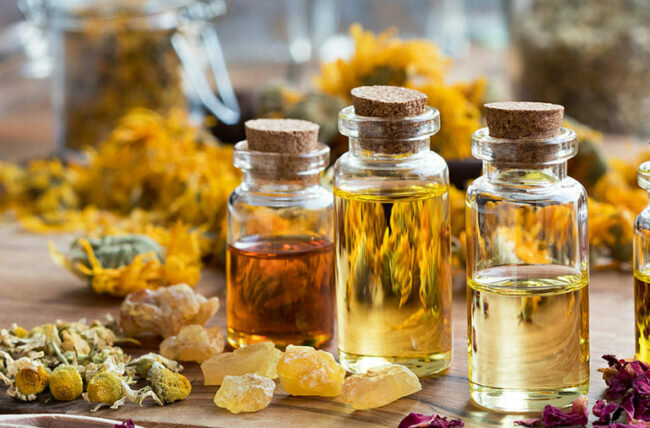
Resins and gums serve as sources for the extraction of specific essential oils, including frankincense and myrrh. These oils are widely recognized for their ability to enhance spiritual well-being and promote a meditative state. They are frequently employed in religious ceremonies, skincare routines, and the creation of perfumes.
Roots and rhizomes, such as ginger, vetiver, and turmeric, are highly esteemed for their inherent properties of grounding and providing warmth, which are manifested through the extraction of oils. These substances are frequently employed in the context of aromatherapy, massage oils, and skincare formulations.
Leaves and stems of plants are common sources of numerous essential oils. Some examples of essential oils are peppermint, lemongrass, and rosemary oils. These oils are recognized for their invigorating, revitalizing, and cognitive enhancing properties, frequently employed in the practice of aromatherapy, hair maintenance, and as eco-friendly cleaning solutions.
It is imperative to acknowledge that although essential oils possess a multitude of potential advantages, their usage should be approached with prudence. In order to ensure safe and effective topical application, it is recommended to dilute concentrated substances and exercise moderation in their usage. Moreover, it is advisable for individuals with specific health conditions or sensitivities to seek guidance from a healthcare professional prior to utilizing essential oils gotten from reputable sources such as in Melaleuca.
In summary, essential oils provide a diverse range of olfactory and medicinal advantages, wherein each oil possesses unique characteristics. Essential oils, obtained from a variety of sources such as citrus fruits, flowers, herbs, spices, trees, resins, roots, or leaves, have become integrated into diverse domains of human existence, encompassing aromatherapy, skincare, natural remedies, and household products. The investigation of various origins of essential oils enables individuals to leverage the inherent properties of natural substances and encounter their potential benefits for well-being.
Different Sources Essential Oils: Let’s Find Out
By Kaiambrose