STARS AND SUPERNOVAS
Shilpa Khichar
Karolina Drewnik
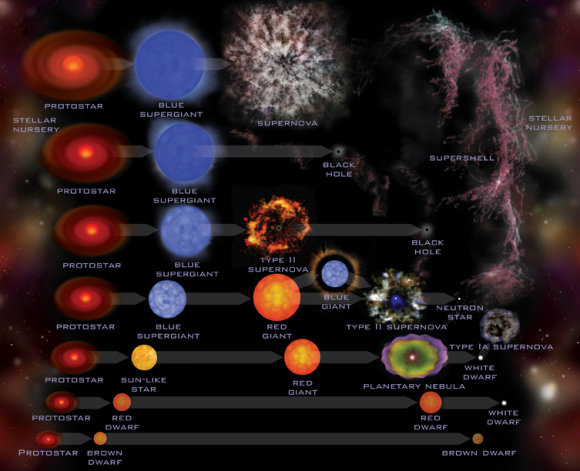
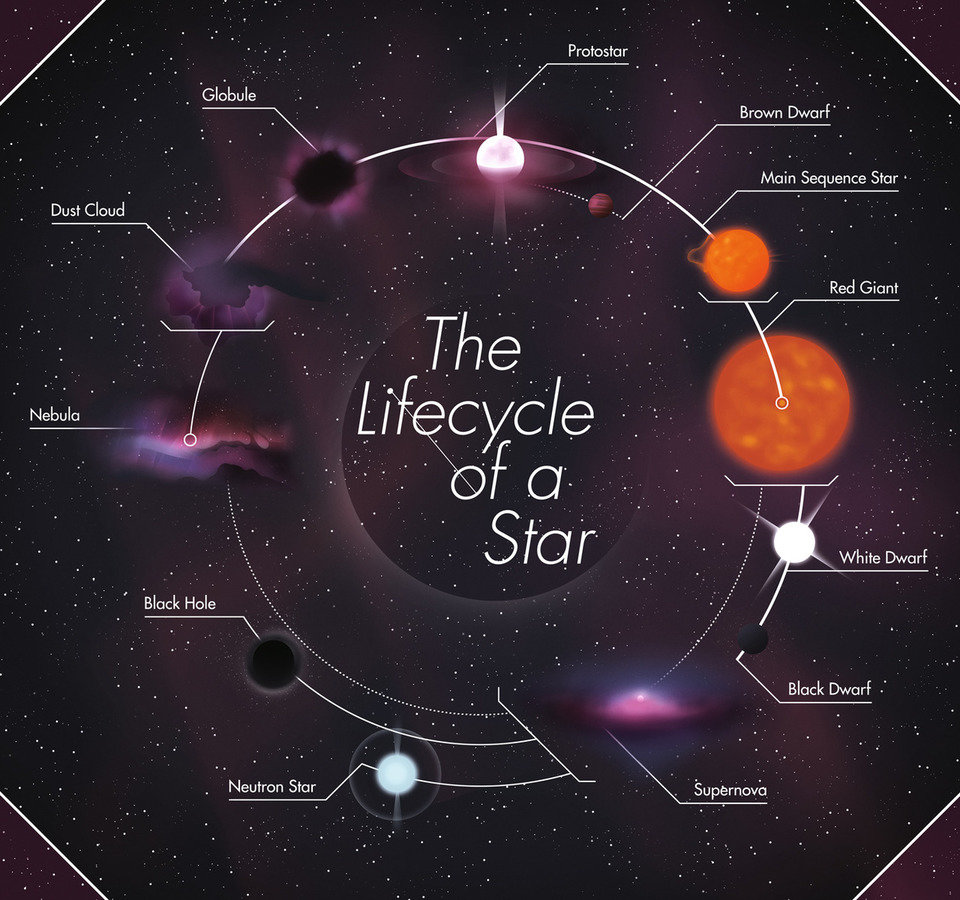
STAGE 1:
NEBULA
SPACE IS FILLED WITH THINLY SPREAD GAS AND DUST
- gas and dust is called interstellar medium.
- the atoms of gas are mostly hydrogen (H2)
- the gas atoms are typically about a centimeter apart
- the dust is mostly microscopic grains and comprises only a few percent of the matter between stars
- the dust is mostly carbon and silicon
In some places, this interstellar medium is collected into a big cloud of dust and gas known as a nebula. This is the birthplace of stars because the gas and dust is what makes up a star. In fact, our sun was probably born in a nebula nearly 5 billion years ago.
LIGHT-YEAR-LONG KNOT OF INTERSTELLAR GAS AND DUST
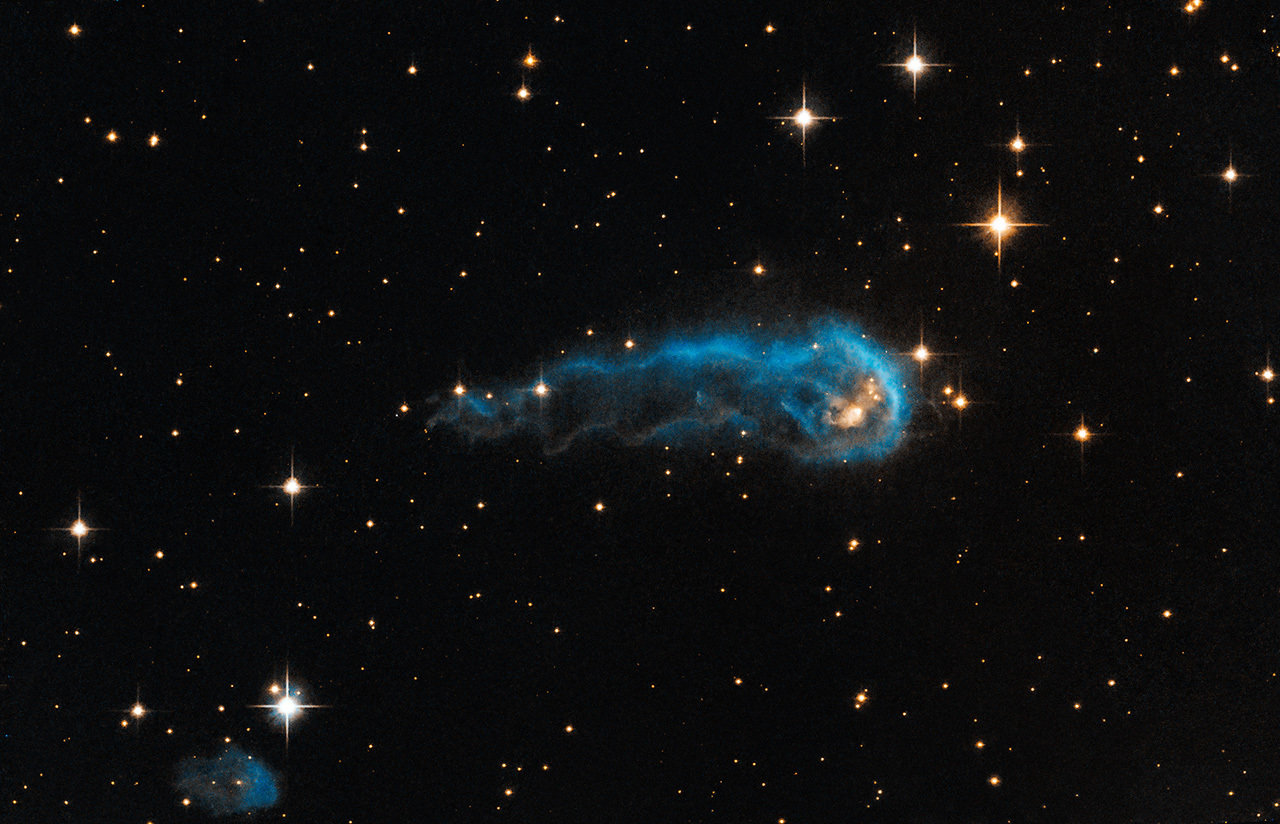
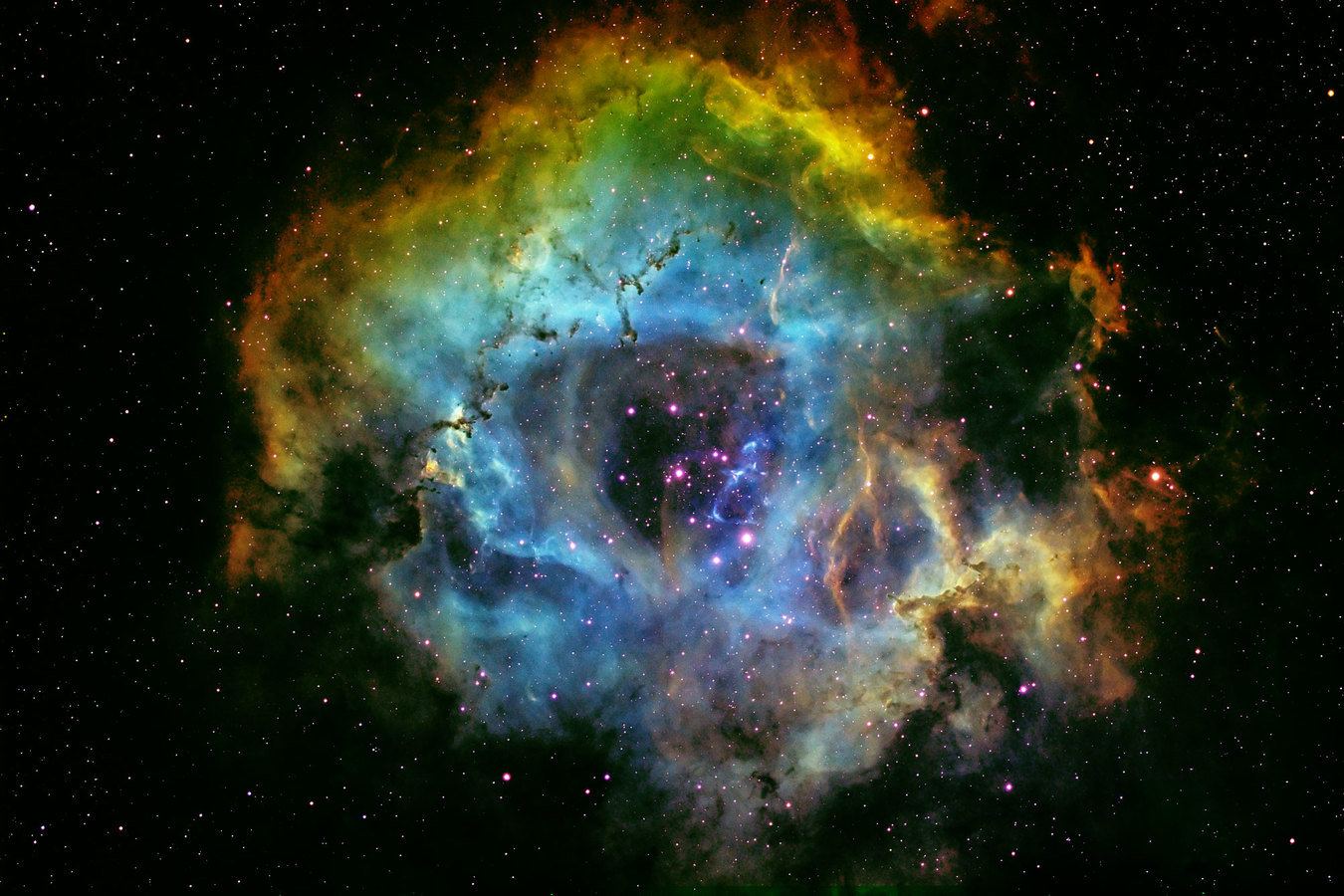
NEBULA
STAGE 2:
PROTOSTAR
PROTOSTAR
- stars begin to form from clouds of gas in space
- the cold temperatures and high densities of these clouds allow gravity to overcome thermal pressure and start the gravitational collapse that will form a star
- looks like a star but its core is not yet hot enough for fusion to take place
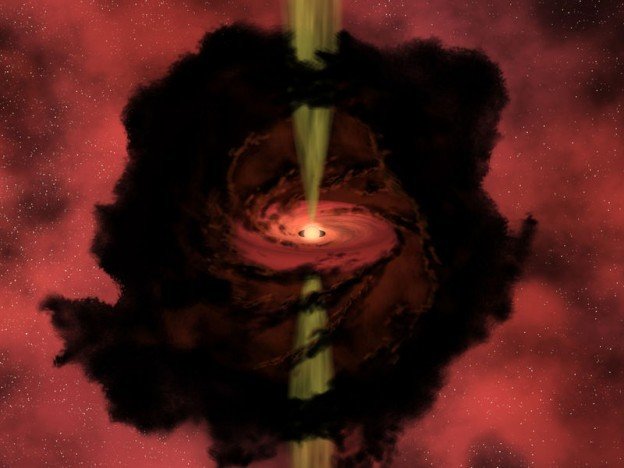
The protostar phase of stellar evolution lasts about 100,000 years.
STAGE 3:
T TAURI STAR
T TAURI STAR
-
begins when material stops falling onto the protostar, and it’s releasing a tremendous amount of energy
-
may be bright, but this all comes its gravitational energy from the collapsing material
-
the central temperature of a T Tauri star isn’t enough to support fusion at its core
-
can appear as bright as main sequence stars
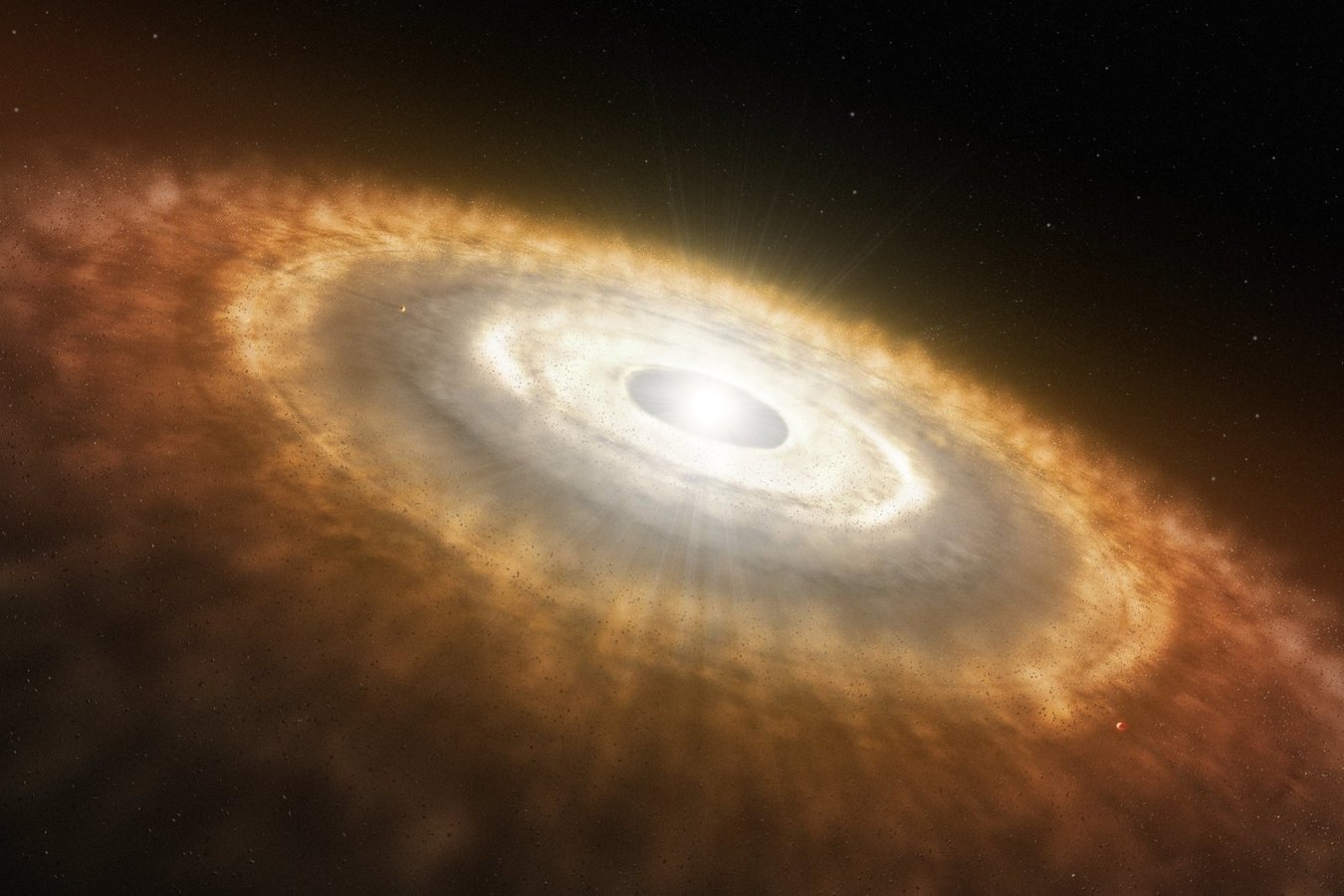
The T Tauri phase lasts for about 100 million years.
STAGE 4:
MAIN SEQUENCE
EQUILIBRIUM
- MAIN SEQUENCE BURNING
STEP 1:
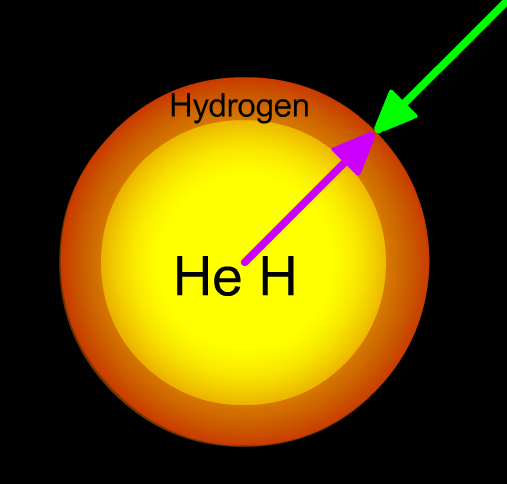
Nuclear fusion. The fuel for fusion is hydrogen, and it is fused into helium. Gravity is constant and pulls atoms inward, and gas pressure from the outer shell and from the gases fusing the core resist gravity (push out). The gas pressure largely depends upon temperature, so as long as the core of the star is hot enough, the gas pressure can resist gravity.
Step 2:
The star has achieved equilibrium, the gas pressure is balanced with force of gravity.
EQUILIBRIUM
- MAIN SEQUENCE BURNING
Step 3:
Fusion stops, and core temperature drops.
Nearly all of the hydrogen has been converted to helium.
Without hydrogen fusing into helium, the core temperature of the star will drop.
Gas pressure cannot resist gravity anymore.
EQUILIBRIUM
- MAIN SEQUENCE BURNING
Step 4:
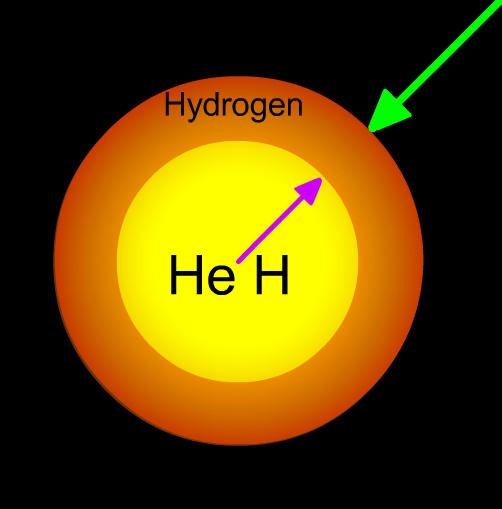
The core contracts.
Gravity is winning the battle aganist gas pressure, so the core will contract.
As the core "shrinks", the atoms in the core become more tighitly packed together (dense).
The denser the core becomes, the more the temperature increases.
EQUILIBRIUM
- MAIN SEQUENCE BURNING
Step 5:
As the temperature increases, there are more atoms and thus more atomic collisions.
With increasing temperature and density, the core can rise to a hot enough temperature to begin nuclear fusion again. the cycle continues until the hydrogen fuel is gone.
EQUILIBRIUM
- MAIN SEQUENCE BURNING
The stars main goal in life is to achieve stability, or equilibrium. The term equilibrium does not mean that there isnt any change in the star. It just means that there is not a net overall change in the star.
In a stable star, the gas pressure pushing out from the center is equal with the gravity pulling atoms inward to the center when these forces are equal, the star is at equilibrium.
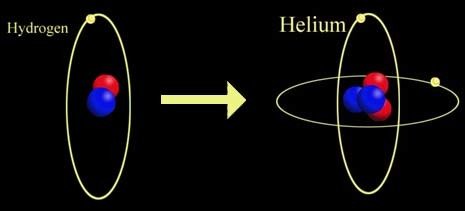
Once a star reaches equilibrium for the first time, it will start burning (fusing) hydrogen into helium.
-
it depends on the mass of the star
- the least massive stars, like red dwarfs with half the mass of the Sun, can sip away at their fuel for hundreds of billions and even trillions of years
- larger stars, like our Sun will typically sit in the main sequence phase for 10-15 billion years
- the largest stars have the shortest lives, and can last a few billion, and even just a few million years.
HOW LONG MAIN SEQUENCE LASTS?
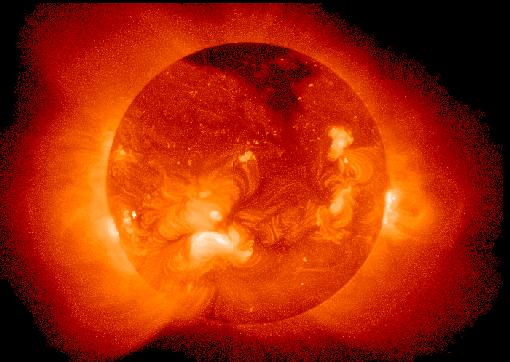
THE SUN: NEAREST MAIN SEQUENCE STAR TO THE EARTH
This is an X-ray image from the Yohkoh satelite.
STAGE 5:
RED GIANT
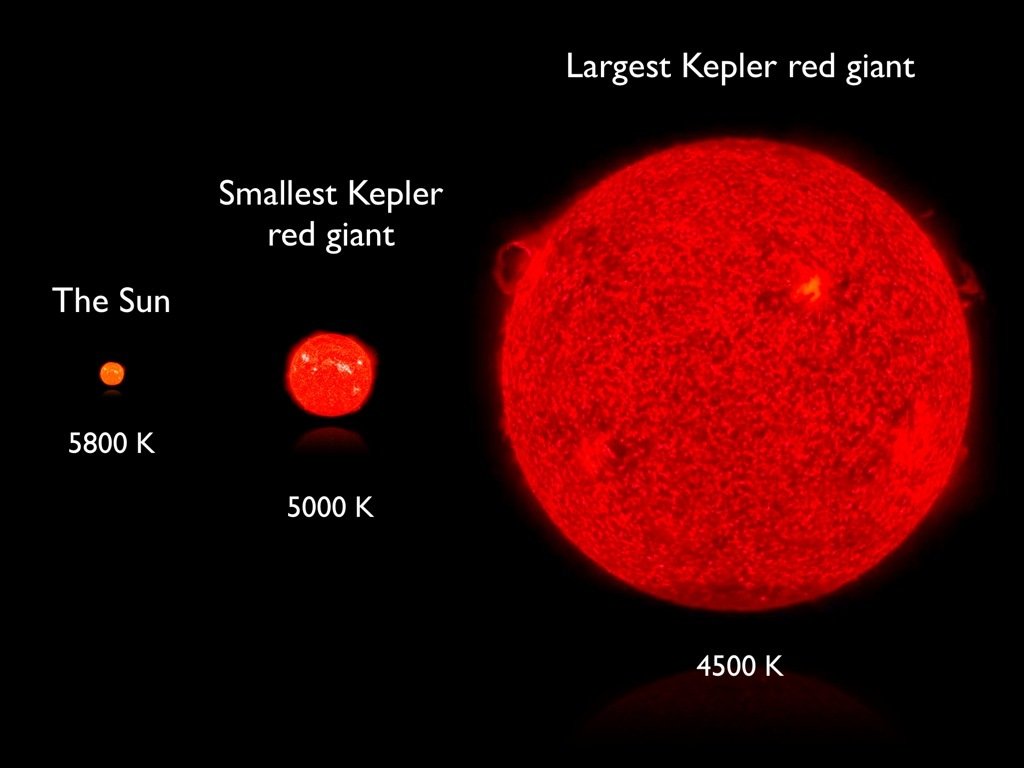
- once a star exhausts this fuel source, it no longer has the outward light pressure to counteract the gravity pulling in on itself
- the star begins to collapse
- before the star can collapse too far, though, this contraction heats up a shell of hydrogen around the core of the star to the point that it can support nuclear fusion
- the higher temperatures lead to increasing reaction rates, and the star’s energy output increases by a factor of 1000 to 1000x
- this new extreme light pressure pushes out the star’s outer layers beginning its life as a red giant star
RED GIANT STAR
STAGE 6:
WHITE DWARF
- a star with the mass of our Sun doesn’t have the gravitational pressure to fuse carbon, so once it runs out of helium at its core, it’s effectively dead
- the star will eject its outer layers into space, and then contract down, eventually becoming a white dwarf
- this stellar remanant might start out hot, but it has no fusion reactions taking place inside it anymore
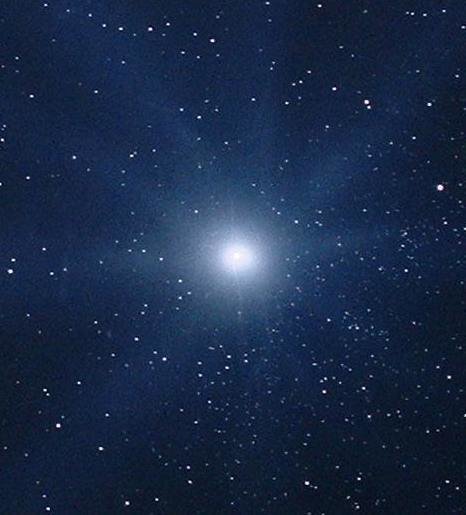
it will cool down over hundreds of billions of years, eventually becoming the background temperature of the Universe
WHITE DWARF STAR
STAGE 7:
SUPERNOVA
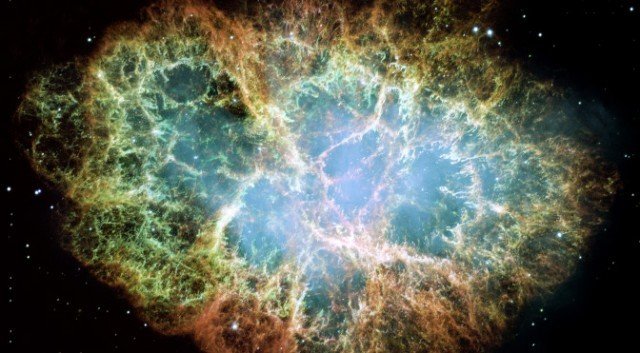
The sun is a single star, but it does not have enough mass to become a supernova
SUPERNOVA IS EXPLOSION OF THE STAR
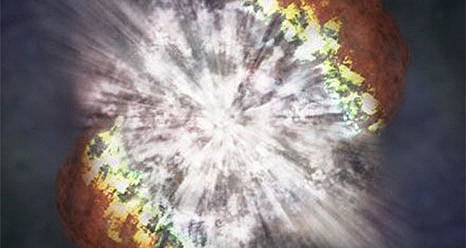
In 1604, Johannes Kepler discovered the last observed supernova in the Milky Way. NASA’s Chandra telescope discovered the remains of a more recent supernova. It exploded in the Milky Way more than a hundred years ago.
WHAT CAUSES SUPERNOVAS?
- happens in binary star systems
- binary stars are two stars that orbit the same point
- one of the stars, a carbon-oxygen white dwarf, steals matter from its companion star
- eventually, the white dwarf accumulates too much matter
- having too much matter causes the star to explode, resulting in a supernova
- the end of a single star’s lifetime
- the star runs out of nuclear fuel, some of its mass flows into its core
- the core is so heavy that it cannot withstand its own gravitational force
- the core collapses, which results in the giant explosion of a supernova
Change in the center
Change in the core
WHY DOES SCIENTISTS STUDY SUPERNOVAS
- supernova burns for only a short period of time, but it can tell scientists a lot about the universe
- one kind of supernova has shown scientists that we live in an expanding universe, one that is growing at an ever increasing rate
- supernovas play a key role in distributing elements throughout the universe. When the star explodes, it shoots elements and debris into space. Many of the elements we find here on Earth are made in the core of stars. These elements travel on to form new stars, planets and everything else in the universe.
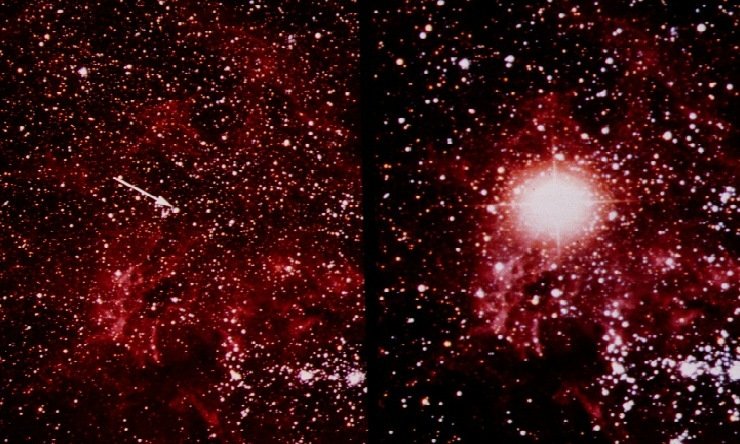
On the right is Supernova 1987A after the star has exploded. On the left is the star before it exploded.
STAGE 8:
BLACK HOLE
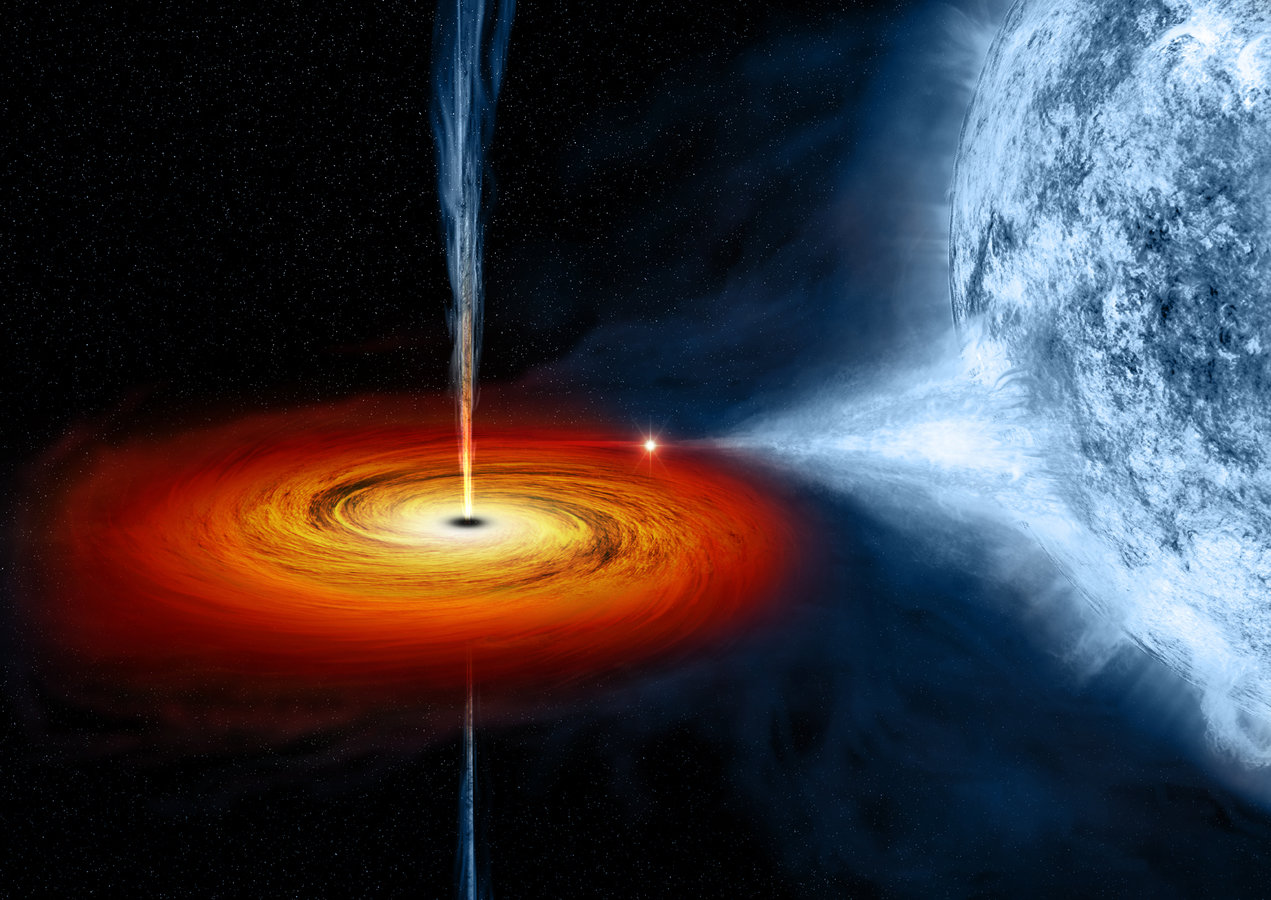
- black hole is a region in space where the pulling force of gravity is so strong that light is not able to escape
- strong gravity occurs because matter has been pressed into a tiny space
- this compression can take place at the end of a star's life
- some black holes are a result of dying stars
- because no light can escape, black holes are invisible
- space telescopes with special instruments can help find black holes
WHAT IS BLACK HOLE
HOW DO BLACK HOLES FORM
- primordial black holes are thought to have formed in the early universe, soon after the big bang
- stellar black holes form when the center of a very massive star collapses in upon itself. This collapse also causes a supernova, or an exploding star, that blasts part of the star into space
- scientists think supermassive black holes formed at the same time as the galaxy they are in. The size of the supermassive black hole is related to the size and mass of the galaxy it is in.
An artist's drawing a black hole named Cygnus X-1. It formed when a large star caved in. This black hole pulls matter from blue star beside it.
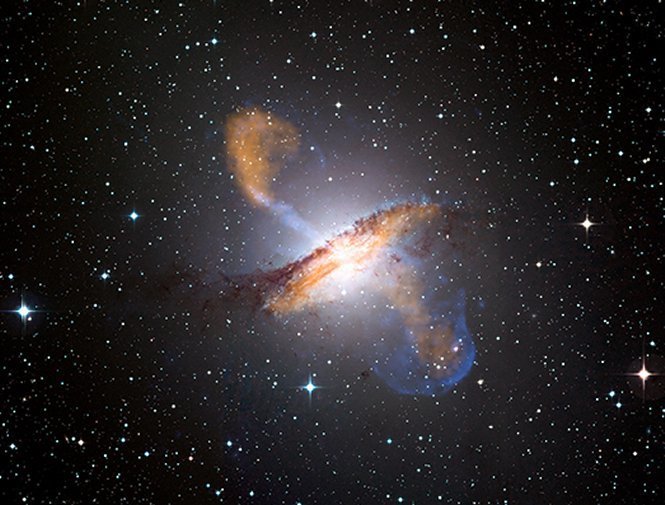
A Black Hole Overflows from galaxy Centaurus A
HOW THE SUN WILL DIE?
https://www.youtube.com/watch?v=iauIP8swfBY
THANK YOU!
Stars and Supernovas
By lubiewarzywa