Hybrid App Development
Patrick Brückner
March 24, 2015
Agenda
- Issues with native app development
- Can hybrid apps be a solution
- Conclusions
1) Issues with Native App Development

Android OS
iOS
Windows Phone
Java
Objective C
or Swift
C# (.NET)
10,000$
10,000$
10,000$
Hard to find experts in all the required programming languages
2) Solution: Hybrid App Development
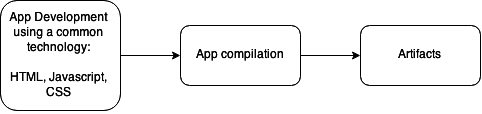
- App is developed in one programming language for multiple platforms
-
Different approaches:
- native transpilation (e.g. NativeScript, RoboVM)
- non-native wrapping (e.g. Cordova)
- Downside: Development and Performance overhead
Apache Cordova
- Oldest hybrid concept, first published in 2009
- Supports Android, iOS, Windows Phone, Symbian, Bada, Blackberry, WebOS, Tizen, Ubuntu Touch and Firefox OS
- Implements a browser window inside the application that has access to hardware (such as sensors etc).
- Ionic (still beta) offers nice-looking UI framework for Cordova
RoboVM
published March 10, 2015
- Java Programming Language
- Separation of UI and logic using common MVC patterns
- Create separate UI for Android/iOS
- Share logic modules in both
NativeScript
published March 6, 2015
- JavaScript Programming Language
- Code is partially transpiled into native code and then compiled
- Native UI
Remaining issues
- Hardware access can be tricky (file system, sensors)
- Compatibility between the various systems
- Most solutions target Android/iOS, other systems still not supported
Conclusion
- App development is required due to high diversification of operating systems in use
- Solutions to make App development more cost-effective are blooming and we should make use of them
Thank you
Hypothesis
Conventional computers will slowly but gradually disappear, first from private households, a bit later from businesses aswell.
Developing Apps for mobile devices should be focused on, whether the target is private or business use.
Hybrid App Development
By Patrick