Python Night
A Presentation By The Computer Science Department
print "Hello World"Installing Python
Mac
Windows
Go here: https://www.python.org/downloads/release/python-350a1/
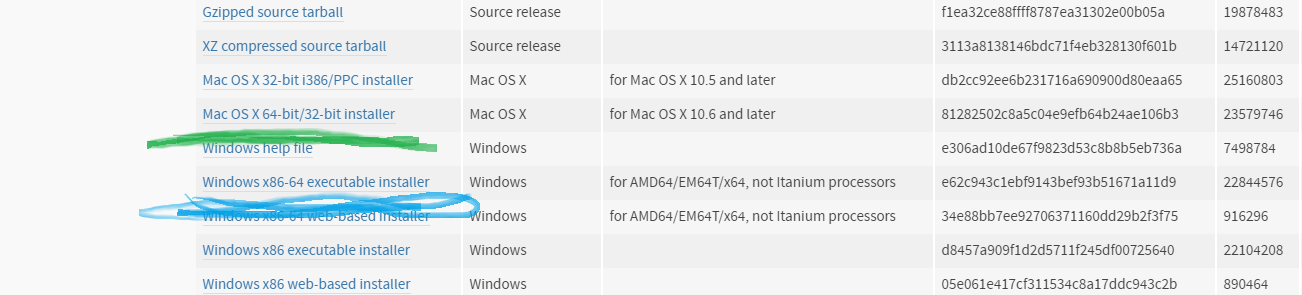
Click One of These:
Let us know when done installing
Loading
Ready
Run...
Pycharm would be the next get.
Language
Compiler
IDE
What's the difference?
What are they for?
What is what for our purposes?
Getting Started
__author__ = "Foo Getch"

print ("Hello World")
Numbers
4 + 5 # This will return 9

4.3 + 5.1 # This will return 9.4
I heard you like Math?
6 * 5

4/3 # Whole numbers only

4.0/3 # Decimals too

6 % 2
Not the Show
- First programmers were math people
- Python removes some of that.
- % returns the remainder
Words
'a'+'b'           # 'ab'

s = 'Python'      # s[0] = 'P'
s[:2] + [2:]      # = 'Python'


s[-1]             # 'n'

len(s)            # 6
With Friends
Strings are immutable
No out of bounds errors
Much nicer than in other languages
Some Little Practice
'Strings?'
'a'+'b'

'apples' == 'oranges'

'apples' < 'oranges'
# If you haven't guessed
# These are Comments
# Compiler Skips these
# Want people to understand your code
# Use Comments
(1,4) # tuple
(1,4,9) # triple
4 += 2 # 6
8 *= 2 # 16
x = 'apple' y = 'oranges'
x < y #true
True > False # TrueComparisons are True/False
Assignments
A single = sign
Comparisons
It's useful to be able to compare things.
x = 3

y = 6

6 = z # This won't work
All LValues are RValues
RValues are not LValues
# All comparisons return a
# Boolean Value

4 <= 1
5 >= 1

x = True
y = False

x > y

x == Y

x != y

x is x

[] is []
If
Elif
Else
If blah then do this
Else if blah then do this
If all else fails do this
Blah is one of those True/False things
Conditionals and You
print 'I am an automated division program, I only know how to divide'
print 'Do not divide by zero though because it makes me break'

num = input('Divide this number')
den = input('By this number, just dont let it be zero pls')

if den == 0:
    print 'WHY DID YOU DO THIS TO ME YOU MONSTER'

elif den == 1:
    print 'Ha easy ', num, 'divided by', den, 'equals ', num/den

elif den == 2:
    print 'Dont you have anything harder, the answer is ', num/den

elif den < 0:
    print 'You can't fool me! The answer is ', num/den

else:
    print 'I wonder if I will ever learn to love ', num/den
While
For
Range
While blah do this
For blah times do this
We'll need these
Meanwhile
i = 1
while i < 10:
    print i
    i+=1

x = 'a'

while i > 0:
    i-=1
    print "I speak for the trees \n"

    while i != 'aeeee':
        x += 'e'
        print x
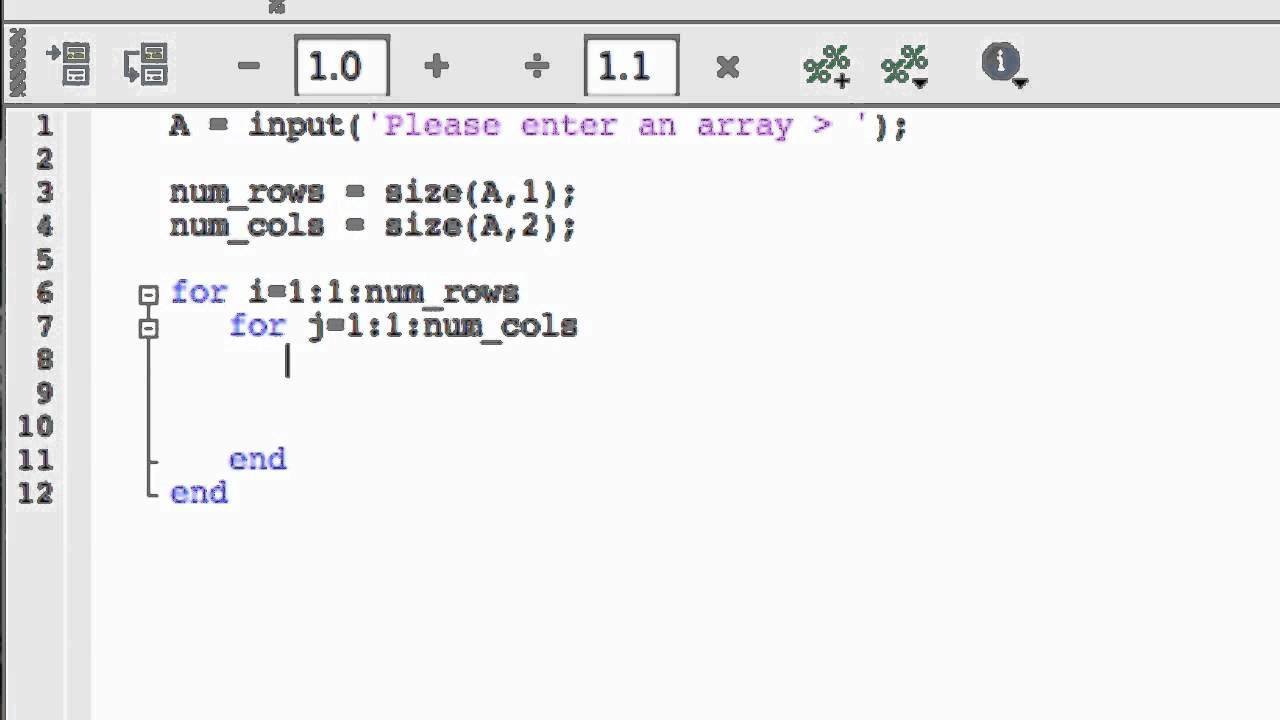
Nested loops are a thing.
Wherefore and range too I guess
for i in range(10):
    print i # 1,2,3,4,5,6,7,8,9,10

for i in range(10,15):
    print i # 10,11,12,13,14,15

for i in range(0,10,2)
    print i # 0,2,4,6,8,10

for i in "Hello World"
    print i
Be aware of break and continue
for i in range (10,0,-1):
    if i==0: break
    print 10/i

j = 0
message = "Hello Sunshine"

while(j<=5):
    if j == 1: continue
    print message[j]
    j+=1
Sometimes you want things to end early
Functions
Why bother with functions?
Empowering your programming
Boosting readability
Everyone Remembers Their First
def helloWorld(name):
    return "Hello " + name

def times2(num):
    return num *2
But, everyone uses other people's stuff.
import numpy
import numbers
import scipy
import requests
import Pillow
import SQLAlchemy
import Pygame
import IPython
Practice Thyme:
- Speed Radar.
- Finn the Enthusiastic Kid!
- Leap Year?

Speed Radar
You're to put together a program which determines if cars are going the speed limit.
If more than 10 percent of the cars are breaking the speed limit the function should return 0
Otherwise return the average speed of all the cars that are not breaking the speed limit.

radar(minSpeed, maxSpeed, values){


}
Finn the Human!
Finn can be a bit rude.
If you don't say anything to him he says "Fine be that way"
If you say something loudly, he says "Woah chill out"
He only says "Sure" when asked a question.
Otherwise he says whatever

finnSays(input){


}
Leap Year?
Write a program which determines if this year is a leap year or not.
A leap year occurs on every year divisible by 4
Except if that year is also divisible by 100
Unless it's also divisible by 400
leapYear(year){

}
Leap Year in Haskell
leapYear :: (Integral a) => a -> String
leapYear a
  | mod a 4 == 0 && mod a 100 /= 0 = "Leap Year!"
  | mod a 400 == 0 && mod a 100 == 0 = "Leap Year!"
  | otherwise = "Not a Leap"
Data Structures
Different Sized Boxes
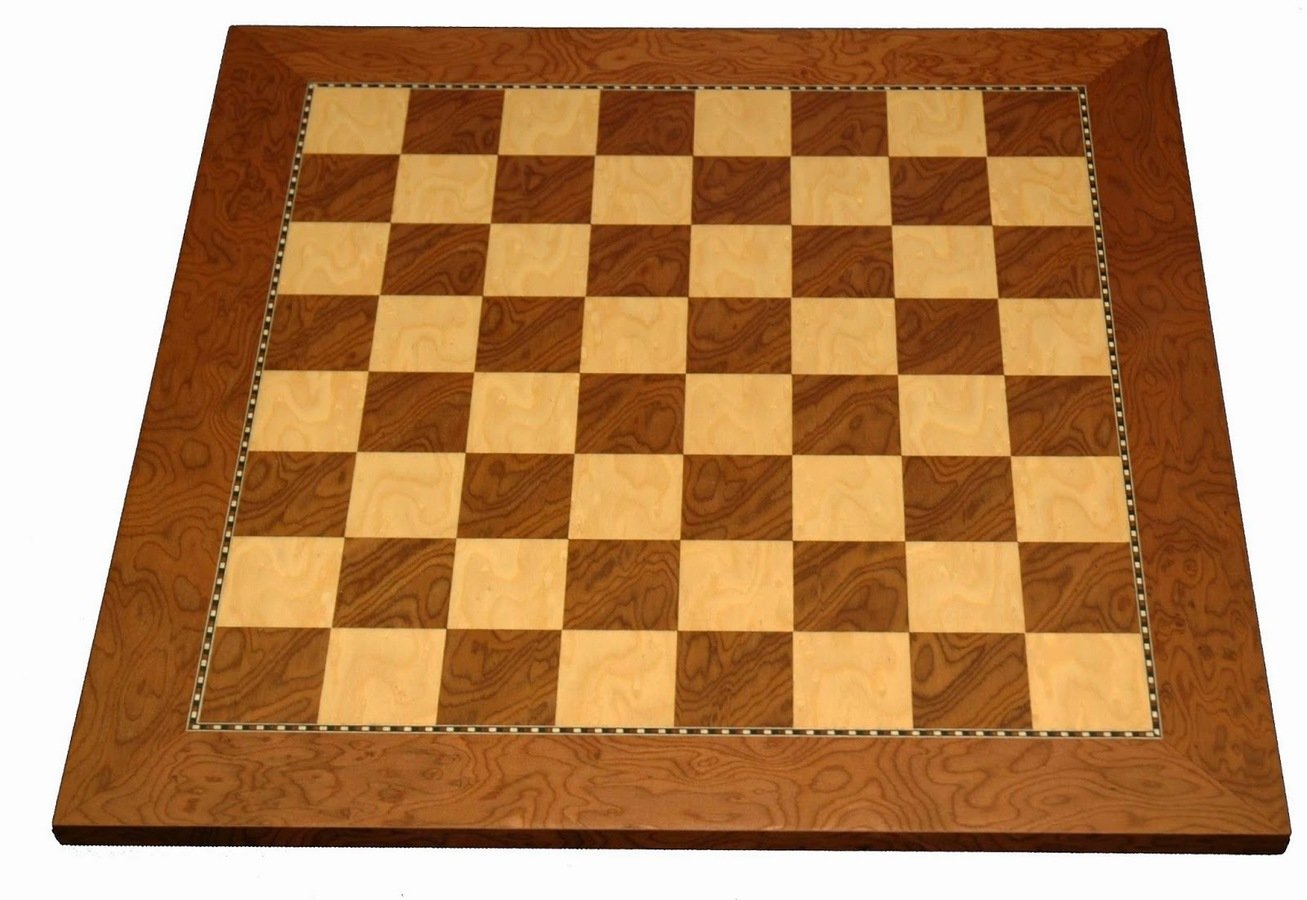
A variable holds one value
An array holds many values
x = "The King of France is named Roliere"arrayOfInt = [1,2,3]
arrayOfFloat = [1.0, 2.5, 3.14]
arrayOfArrayOfArray = [[1,2,3],[3,2,1],[2,1,3]]
These are one of the most useful tools in our box
Array Exercises Here
Reverse the contents of an array
"""
Write a function reverse which takes an array and reverses its contents
For added challenge do this without creating a new array
"""


x = [1,2,3]
reverse(x)     # [3,2,1]
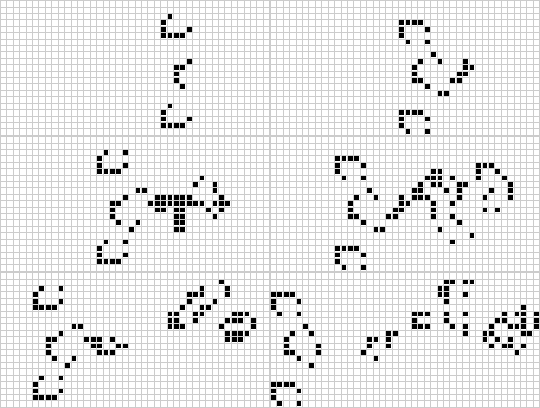
Conway's Game
#----------------------------------------------
__author__ = usingPython
#----------------------------------------------

import random
import time
import os

#---------------------------------------------------------------------------

def initGrid(cols, rows, array):
    for i in range(rows):
        arrayRow = []
        for j in range(cols):
            if (i == 0 or j == 0 or (i == rows - 1) or (j == cols - 1)):
                arrayRow += [-1]
            else:
                ran = random.randint(0,3)
                if ran == 0:
                    arrayRow += [1]
                else:
                    arrayRow += [0]
        array += [arrayRow]

#---------------------------------------------------------------------------

def printGen(cols, rows, array, genNo):
    os.system("cls")

    print("Game of Life -- Generation " + str(genNo + 1))

    for i in range(rows):
        for j in range(cols):
            if array[i][j] == -1:
                print("#", end=" ")
            elif array[i][j] == 1:
                print(".", end=" ")
            else:
                print(" ", end=" ")
        print("\n")

#---------------------------------------------------------------------------

def processNextGen(cols, rows, cur, nxt):
    for i in range(1,rows-1):
        for j in range(1,cols-1):
            nxt[i][j] = processNeighbours(i, j, cur)

#---------------------------------------------------------------------------

def processNeighbours(x, y, array):
    nCount = 0
    for j in range(y-1,y+2):
        for i in range(x-1,x+2):
            if not(i == x and j == y):
                if array[i][j] != -1:
                    nCount += array[i][j]
    if array[x][y] == 1 and nCount < 2:
        return 0
    if array[x][y] == 1 and nCount > 3:
        return 0
    if array[x][y] == 0 and nCount == 3:
        return 1
    else:
        return array[x][y]

#---------------------------------------------------------------------------
############################################################################
#---------------------------------------------------------------------------

ROWS = 10
COLS = 10
GENERATIONS = 10
DELAY = 0.4

thisGen = []
nextGen = []

initGrid(COLS, ROWS, thisGen)
initGrid(COLS, ROWS, nextGen)

for gens in range(GENERATIONS):
    printGen(COLS, ROWS, thisGen, gens)
    processNextGen(COLS, ROWS, thisGen, nextGen)
    time.sleep(DELAY)
    thisGen, nextGen = nextGen, thisGen
input("Finished. Press <return> to quit.")
Python Night
By Matthew FancyPants Getch