AI in Writing Platforms: Transforming Content Creation and User Experience
Exploring the impact of AI technologies on modern writing platforms like Medium, Hashnode, and Substack.
Presented By:
- Harsh Nishant Panchal (100816464)
- Meet Master (10083521)
- Abhishek Dodiya (100835754)
- Dhyani Patel (100825331)

-
Overview of AI in Writing Platforms:
AI is revolutionizing content creation, discovery, and consumption.
Major platforms like Medium, Hashnode, and Substack are harnessing AI to personalize content, optimize user engagement, and improve content quality.
-
AI's Role:
Enhances content creation and curation.
Improves user interactions through personalization.
Delivers more efficient content discovery and recommendation.
The AI Paradigm Shift
How AI is Shaping Writing Platforms
-
Personalization: Tailors content to individual preferences and reading habits.
-
Content Discovery: Recommends relevant articles based on past behavior and engagement.
-
Writing Quality: Provides suggestions to improve grammar, style, and readability.
- User Behavior Insights: Helps platforms analyze engagement patterns and optimize content strategies.
Supervised Learning in Writing Platforms
What is Supervised Learning?
Supervised learning involves training AI models using labeled data to recognize patterns and make predictions or classifications.
Role in Writing Platforms:
Improves content quality and user engagement through automated moderation, grammar correction, and headline optimization.
Key Areas:
Content moderation
Grammar and style correction
Headline optimization
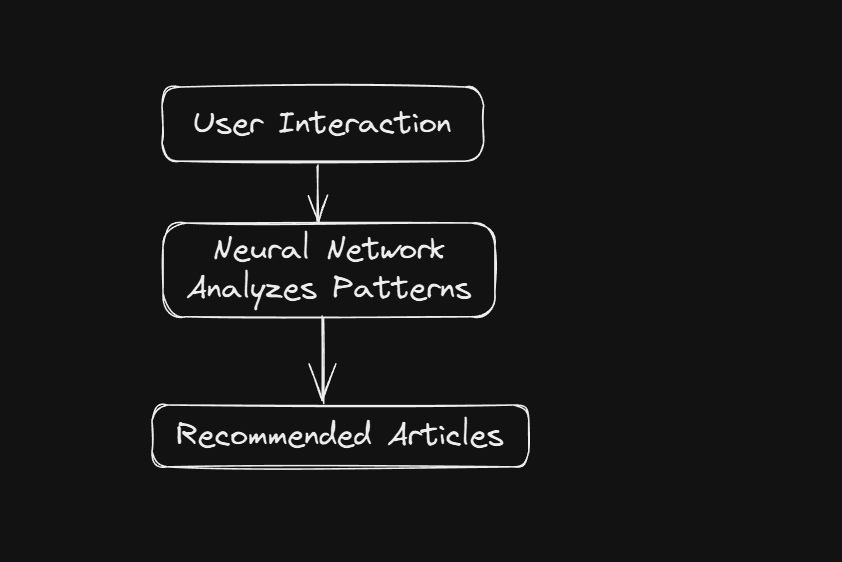
Content Recommendation Systems
How AI Enhances Discovery:
Collaborative Filtering: AI recommends content based on user behavior and preferences.
Deep Learning Models: Analyze past behavior to make content suggestions.
Example: Medium's AI suggests articles based on reading habits, enhancing content discovery.
Unsupervised Learning: Discovering Patterns
Clustering and Data Analysis:
AI groups users or content based on similarities without predefined labels.
Personalization Techniques:
- Interest-based Segmentation: Creates dynamic user groups and specialized content streams.
- Adaptive Learning: Continuously refines user categories and responds to evolving user interests
Natural Language Processing (NLP)
Emotional Intelligence Technologies
Deep Learning Models
NLP models like BERT, RoBERTa, and XLNet can perform multi-dimensional sentiment scoring that accounts for emotional intensity.
Practical Applications:
- Feedback Analysis: Analyzing reader reactions to provide actionable insights to content creators.
- Content Tagging: Automatically categorizing content to improve discoverability
Ethical Considerations in AI Implementation
Bias Mitigation: AI models must be trained on diverse datasets to avoid biases in content recommendations and moderation.
User Privacy: Ensuring data transparency and protecting user information.
Creative Authenticity: AI should enhance, not replace, human creativity.
Conclusion: The Evolving Landscape of AI in Writing Platforms
The convergence of advanced AI technologies is fundamentally reimagining digital content platforms. These platforms create more intelligent, responsive, and personalized user experiences by integrating sophisticated machine-learning techniques.
EnhancedPersonalization:
More refined content recommendations tailored to individual preferences.
More Ethical AI Frameworks:
Improved transparency and fairness in algorithmic decision-making.
Adaptive, Context-Aware Systems:
AI platforms will become more context-sensitive, providing relevant content based on time, location, and user mood
Future Trajectory
Thank You!
AI in Writing Platforms: Transforming Content Creation and User Experience
By Meet Sureshbhai Master