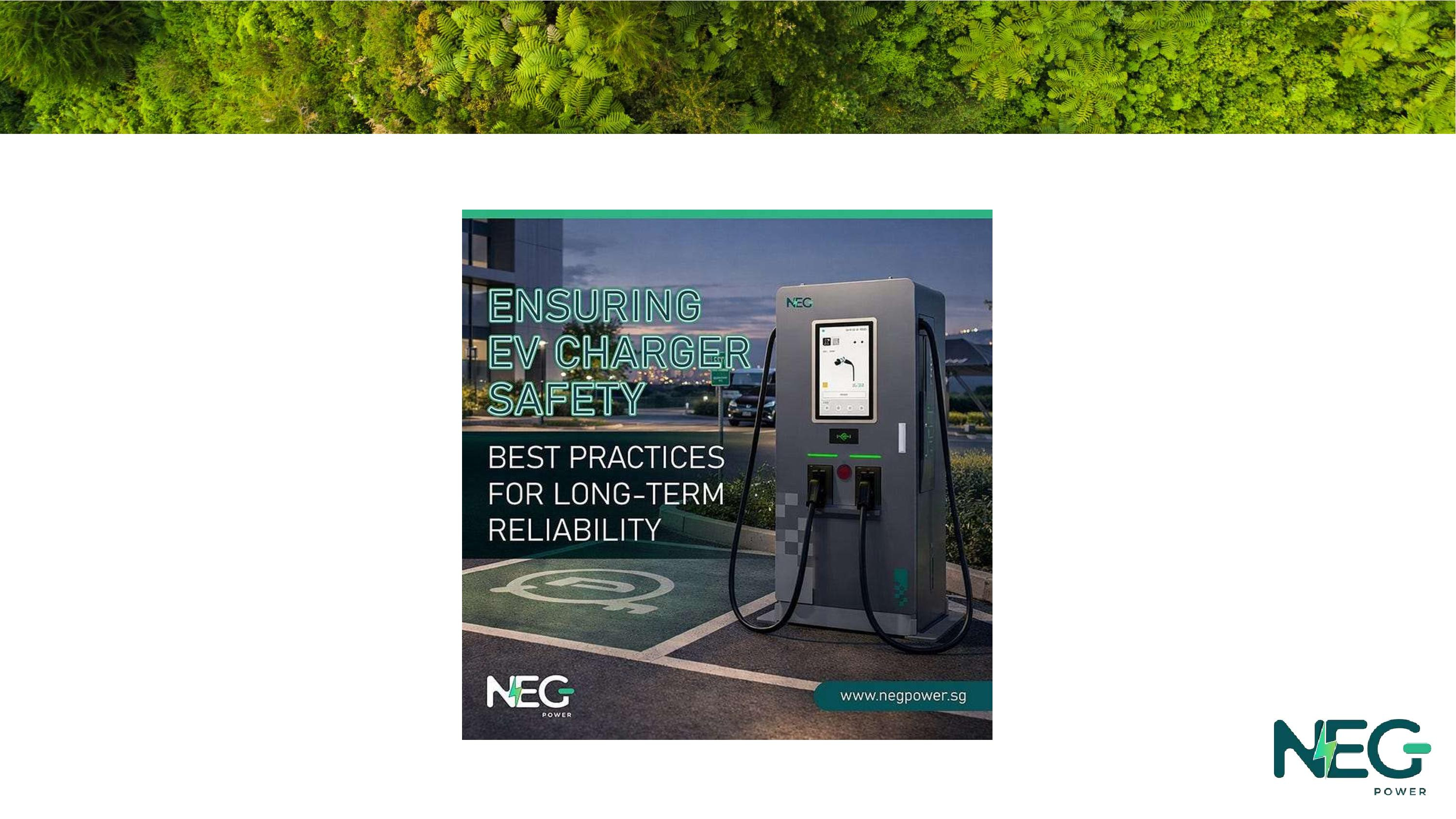

Ensuring EV Charger Safety: Best Practices for Long-Term Reliability — Neg Power
By Negpower Sg
Ensuring EV Charger Safety: Best Practices for Long-Term Reliability — Neg Power
As the global automotive landscape shifts toward electrification, the infrastructure supporting this transition must be more than just fast; it must be inherently safe. An EV Charger is not a simple electrical outlet; it is a sophisticated high-power gateway that manages the transfer of massive amounts of energy between the utility grid and a vehicle’s high-voltage battery. Given that these systems often operate in harsh outdoor environments and under high thermal stress, ensuring long-term reliability requires a multi-layered approach involving advanced protective functions, strict certifications, and proactive maintenance. I. Core Protective Functions: The First Line of Defense Safety in an EV Charger starts at the circuit level. Unlike standard appliances, chargers must handle continuous high-current loads for hours. This necessitates several integrated safety features designed to prevent fire, electrocution, and hardware damage. 1. Ground Fault Circuit Interruption (GFCI) Ground faults occur when electricity escapes its intended path and seeks the ground — potentially through a person. Modern chargers include highly sensitive RCD (Residual Current Device) or GFCI protection that can detect even minute leakage currents. If a fault is detected, the system’s millisecond-response time disconnects the power to prevent electric shock. Visit us : https://www.negpower.sg/