
Nickoal Eichmann-Kalwara
Research Librarian | History | Digital Humanities | Scholarly Communication
Nickoal Eichmann-Kalwara
Research Librarian / neichmann@library.msstate.edu
Follow these slides: https://slides.com/nickoal/rcr16/live
http://mrg.bz/Ah4NiX
http://mrg.bz/2wWVDq
"To promote the Progress of Science and the useful Arts, by securing for limited Times to Authors and Inventors the exclusive Right to their respective Writings and Discoveries."
Article 1, Section 8, Clause 8, U.S. Constitution
http://mrg.bz/nMjN3p
Writing
Choreography
Music
Visual Art
Architectural Works
Ideas & Theories
Facts & Data
Titles
Short Phrases
Patents
http://mrg.bz/WHIAt6
http://mrg.bz/T4gBoi
The creator is usually the copyright holder.
If two or more people create a work, they are joint copyright holders, with equal rights.
http://mrg.bz/jkkJ3b
Life of the author + 70 years
Joint works: 70 years after death of last author
For works for hire or anonymous works, 95 years from publication or 120 years from creation, whichever expires first
http://mrg.bz/b2zA7D
Helps avoid plagiarism
Helps share knowledge and creative works publicly
Protects creator's work and potential profit
It is flexible
Loves non-profit libraries and schools
http://mrg.bz/0Y2JXI
Section 107, codified with the Copyright Act of 1976
Determined on a case-by-case basis
Requires one to think and make a judgment
http://mrg.bz/A1RMMC
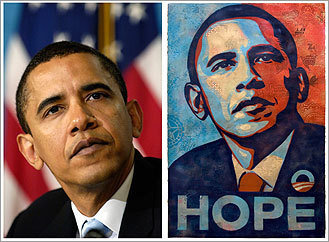
Why do you want to use a copyright?
Are you adding new interpretation, expression or meaning?
www.boston.com/bostonglobe/editorial_opinion/outofline/2009/02/fair_use_vs_faireys_use.html
www.pastemagazine.com/blogs/awesome_of_the_day/2011/05/celebrate-star-wars-day-with-these-sweet-propaganda-posters.html
Amount: Less is more (except in parody)
Usually 10% rule
Substantiality: Heart of a work or peripheral?
ex. Blurred Lines
Does your use deprive the copyright owner income?
Does it undermine a new or potential market for the copyrighted work?
Motion Media
Text Material
Music, Lyrics and Music Video
~10%
http://mrg.bz/RN97hE
Section 110 : allows teachers to display or perform works in the face-to-face classroom and in the digital or distance education classroom via digital networks
Section 117 : owner of a software program can make a backup copy
http://mrg.bz/q5ifCE
If I find it on the web, it's free to use, right?
If I find it on the web, it's free to use, right?
No. All of the copyright concepts apply to electronic and printed materials.
Remember that it is not necessary to post a copyright notice for the author to have rights, even on the web.
A teacher wants to give a class an entire copy of the Canterbury Tales to use for class. Will that infringe on copyright?
A teacher wants to give a class an entire copy of the Canterbury Tales to use for class. Will that that infringe on copyright?
It depends on annotations, translations, introductions, and editions. The Canterbury Tales itself is in the Public Domain.
As an instructor, you want to use a YouTube copy of a TV show that was not uploaded by the studio. Is this ok?
As an instructor, you want to use a YouTube copy of a TV show that was not uploaded by the studio. Is this ok?
No. Options:
Can you copy software code and incorporate it into your own code that you upload to GitHub?
Can you copy software code and incorporate it into your own code that you upload to GitHub?
It depends.
Can you reverse engineer commercial software to help establish its functional principles for your own development purposes?
Can you reverse engineer commercial software to help establish its functional principles for your own development purposes?
Maybe.
private static void rangeCheck(int arrayLen, int fromIndex, int toIndex {
     if (fromIndex > toIndex)
          throw new IllegalArgumentException("fromIndex(" + fromIndex +
               ") > toIndex(" + toIndex+")");
     if (fromIndex < 0)
          throw new ArrayIndexOutOfBoundsException(fromIndex);
     if (toIndex > arrayLen)
          throw new ArrayIndexOutOfBoundsException(toIndex);
}Can you download web images for presentation slides without worrying about breaking the law?
Can you download web images for presentation slides without worrying about breaking the law?
Yes! Section 110(1) of Copyright law allows this. The images should be used strictly for non-profit, educational purposes in the face-to-face classroom, including professional development.
http://mrg.bz/coHKW2
http://mrg.bz/rN2fsc
By Nickoal Eichmann-Kalwara
Reese, RCR, Fall 2016 | Nickoal Eichmann-Kalwara