
Opetus.tv PRO
Opetus.tv
Lauri Hellsten
(lauri.k.hellsten@gmail.com)
(disclaimer: I'm slightly biased)
Lauri Hellsten
(lauri.k.hellsten@gmail.com)
(disclaimer 2: this is an interpretation of the finnish curriculum)
Spesific and general ICT-goals in the curriculum.
Need for a mathematics textbook that guides students in the use of programs.
e.g. the first course in A-level mathematics
e.g. in general part of the mathematics curriculum
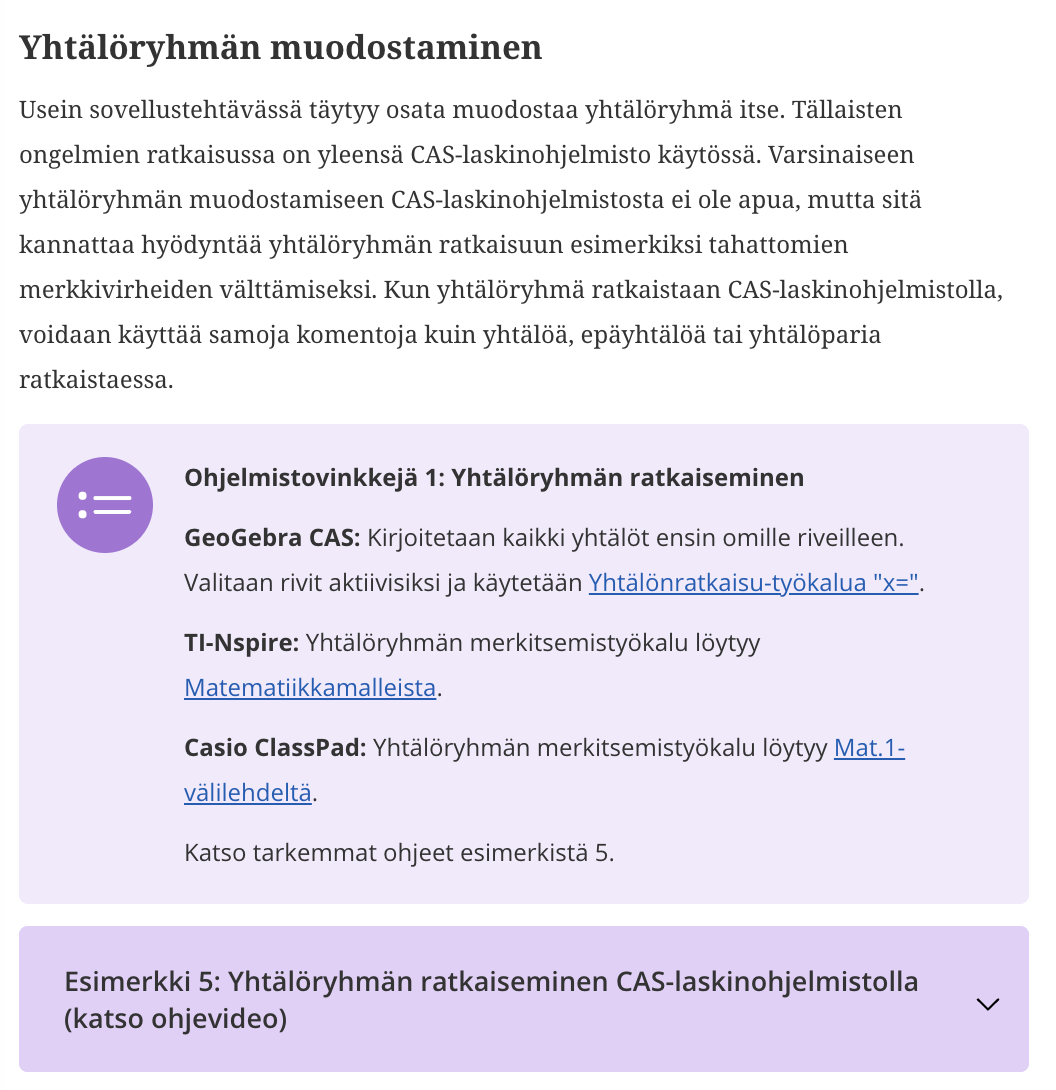
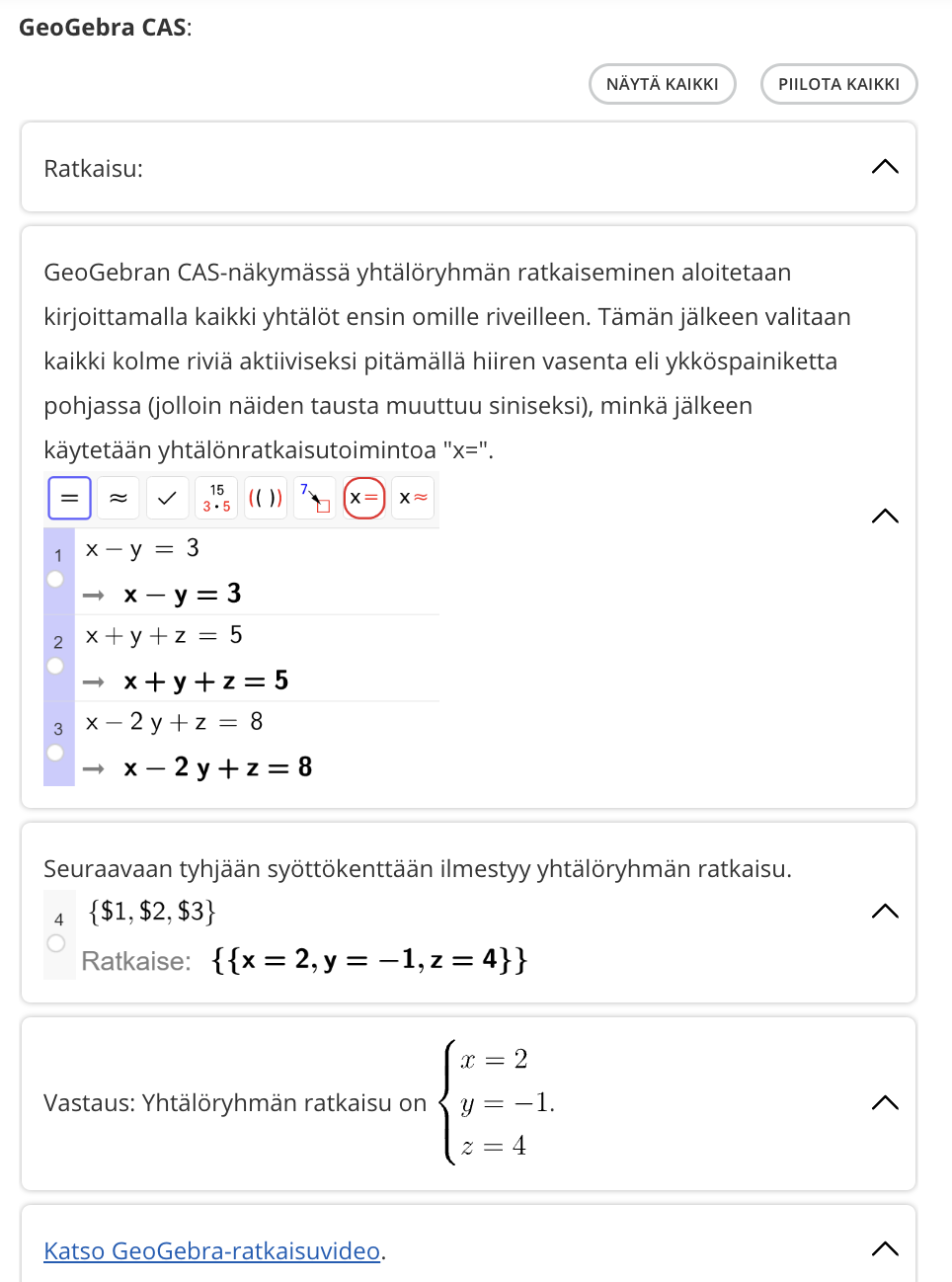
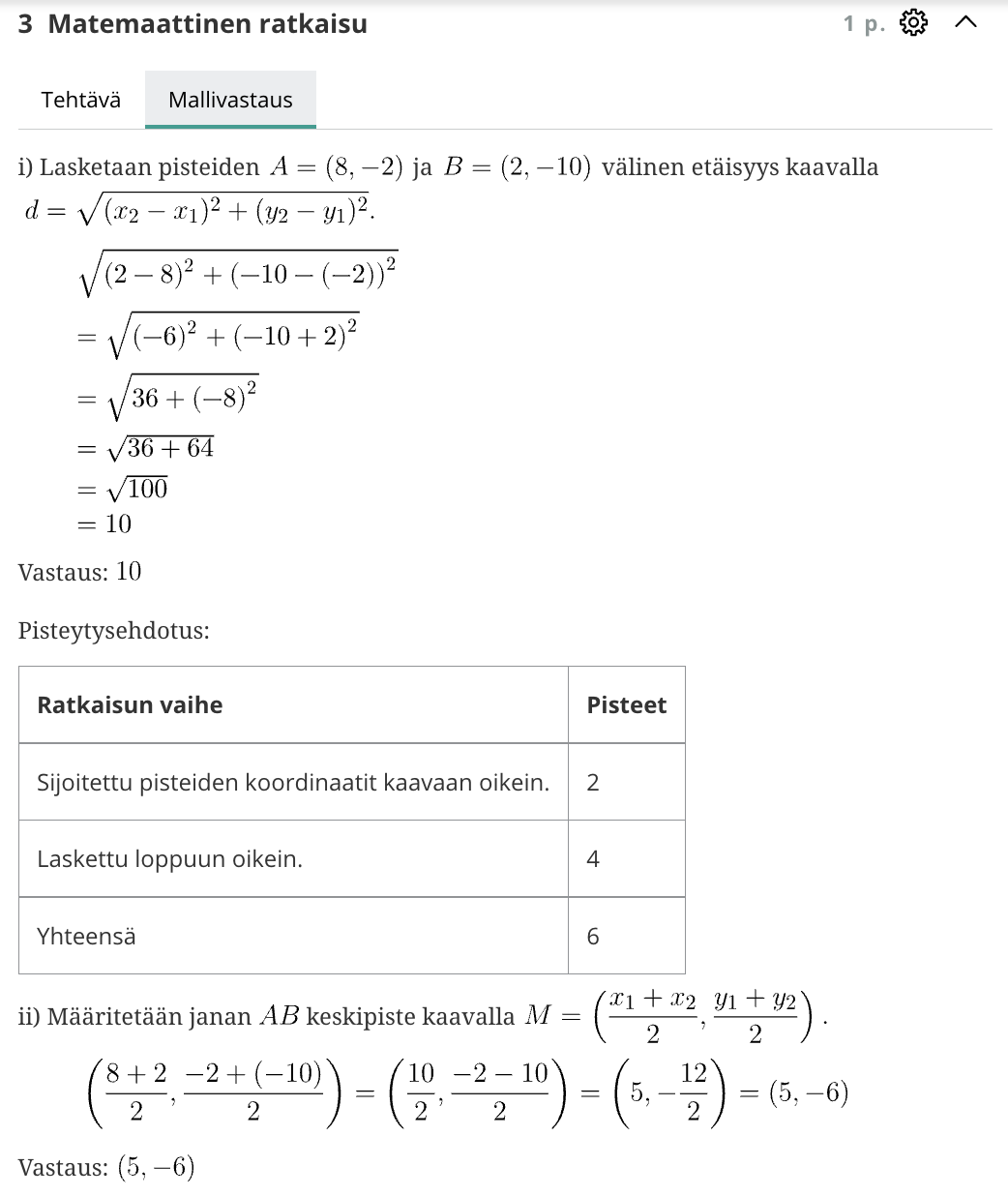
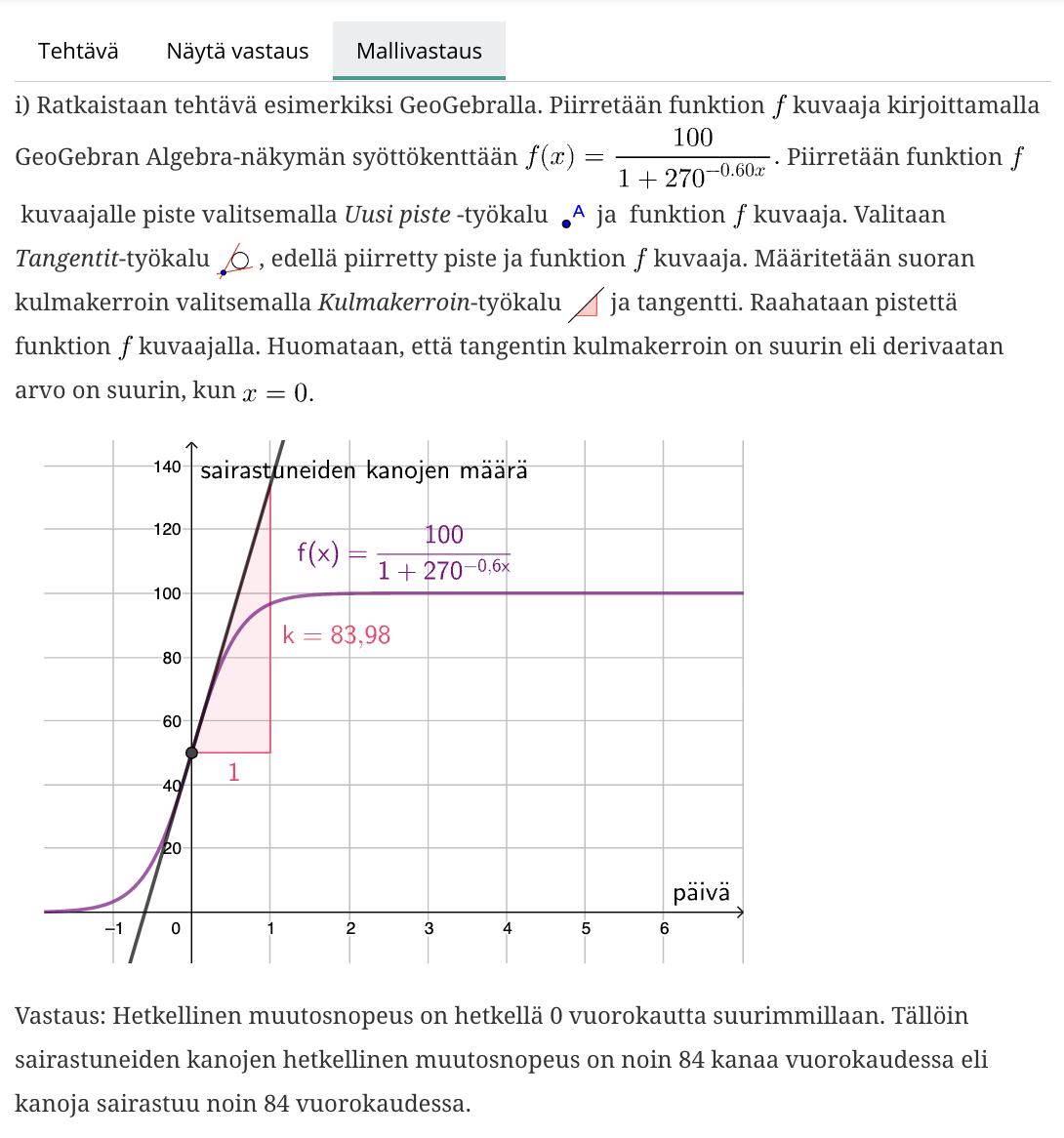
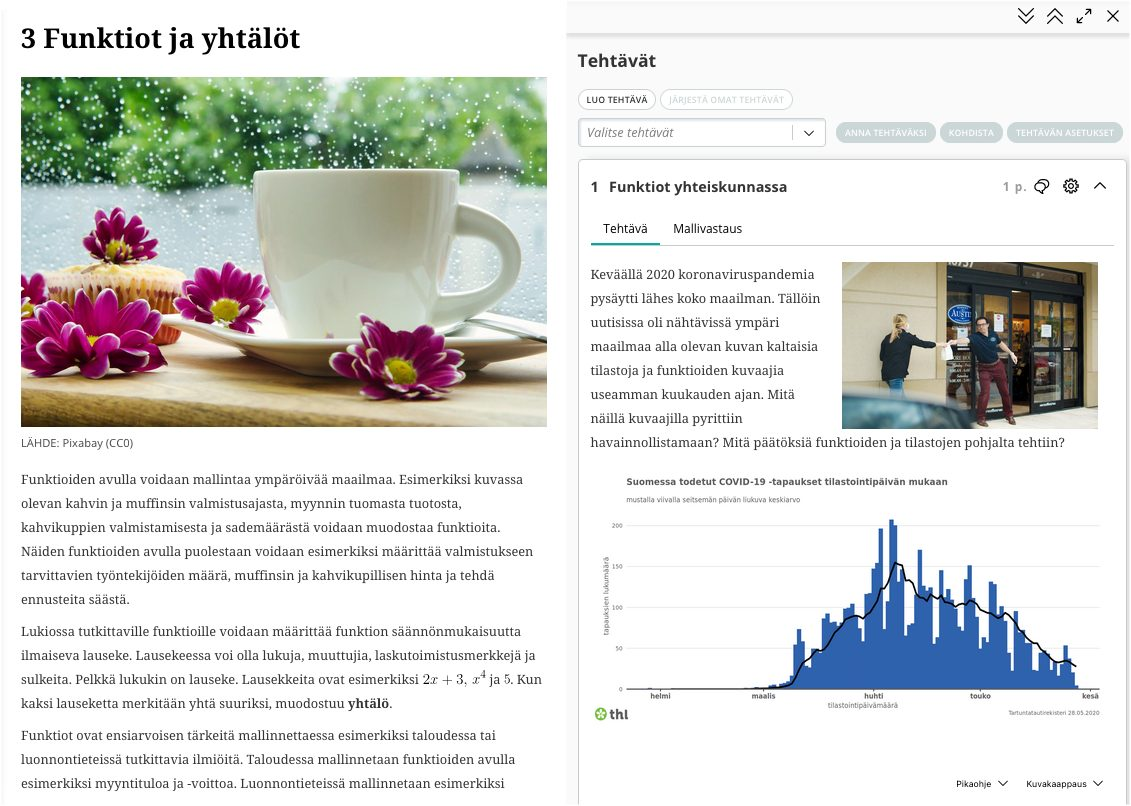
Instructions for the use of different programs GeoGebra / TI-Nspire / Casio Classpad. Detailed examples for the use of programs and solution videos.
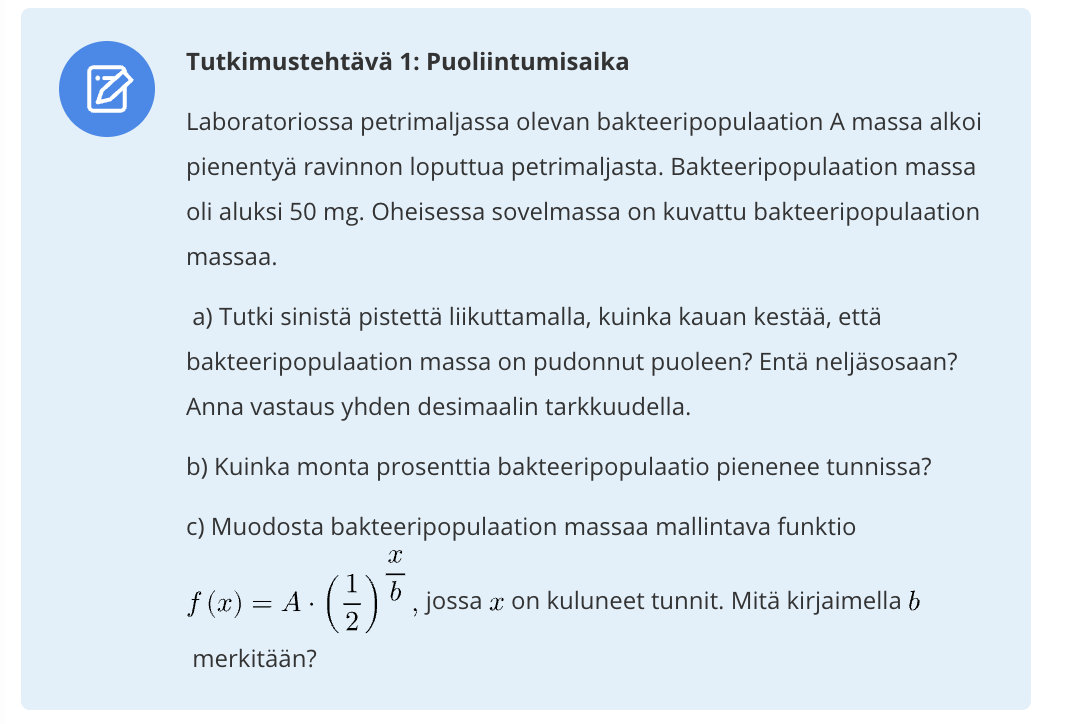
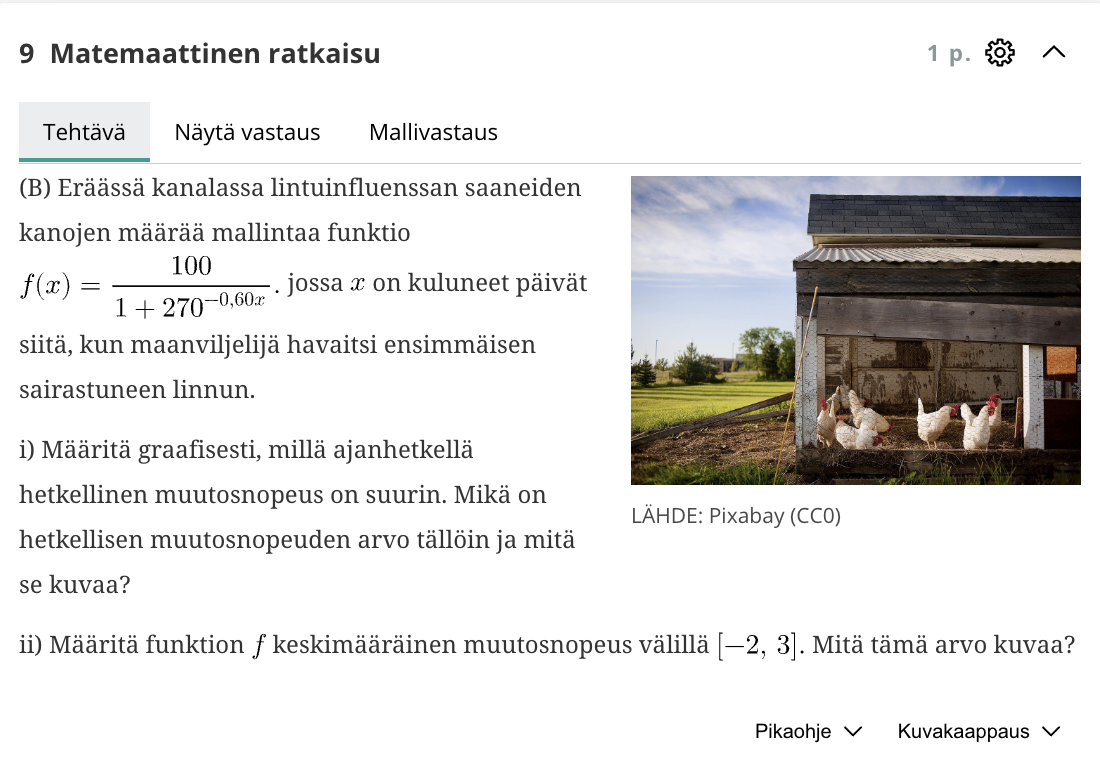
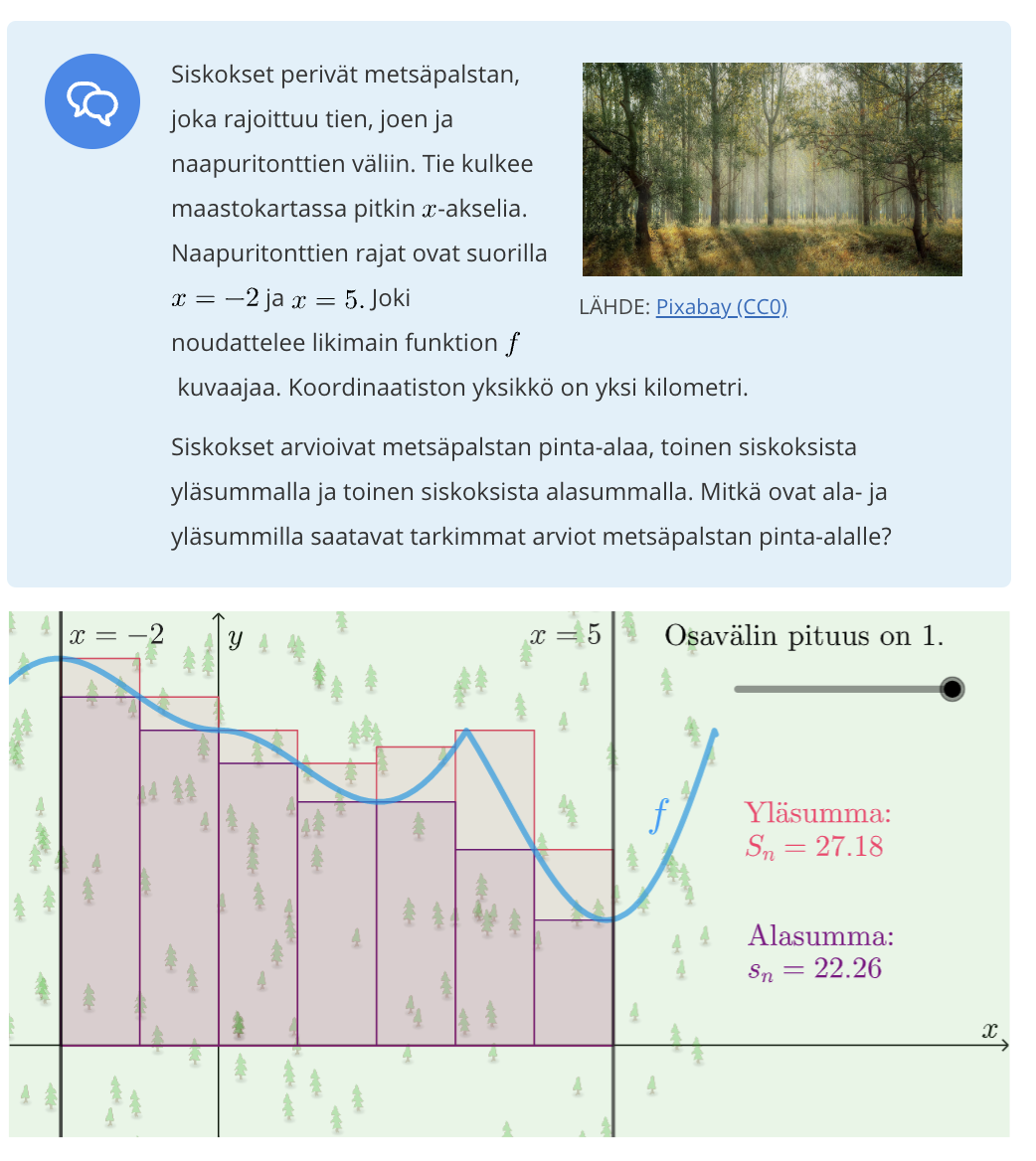
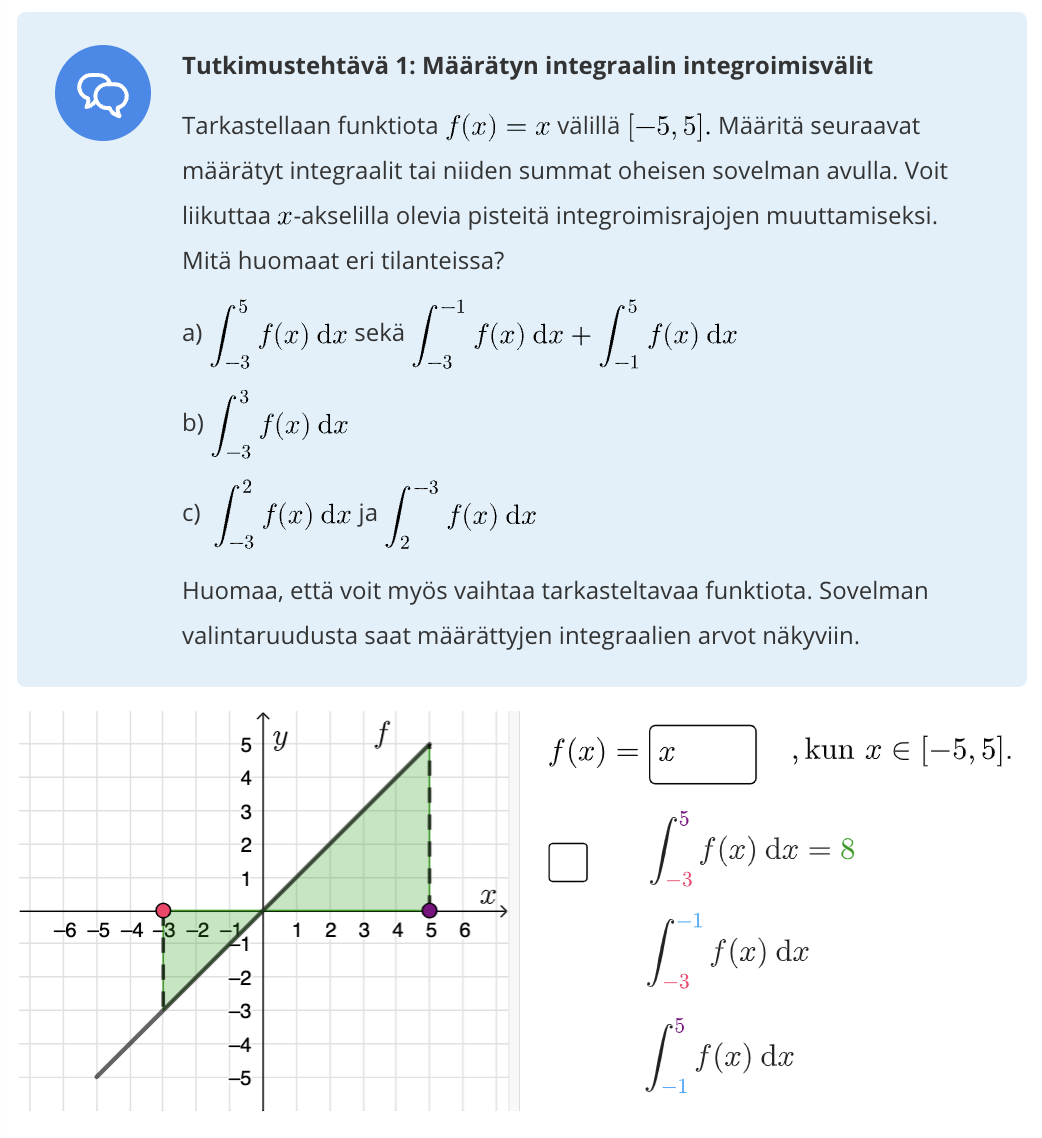
Problems directly in the chapters where students use e.g. GeoGebra-applets to research and investigate.
\( \rightarrow \) Students are active participants in finding relations, arguing about mathematical properties and building new mathematical knowledge.
Guidelines regarding assessment that it should be inclusive, versatile, encouraging and guiding towards self-assessment.
Need for a digital learning enviroment that gives the teachers options on how to implement assessment.
Need for a mathematics textbook that guides students towards self-assessment.
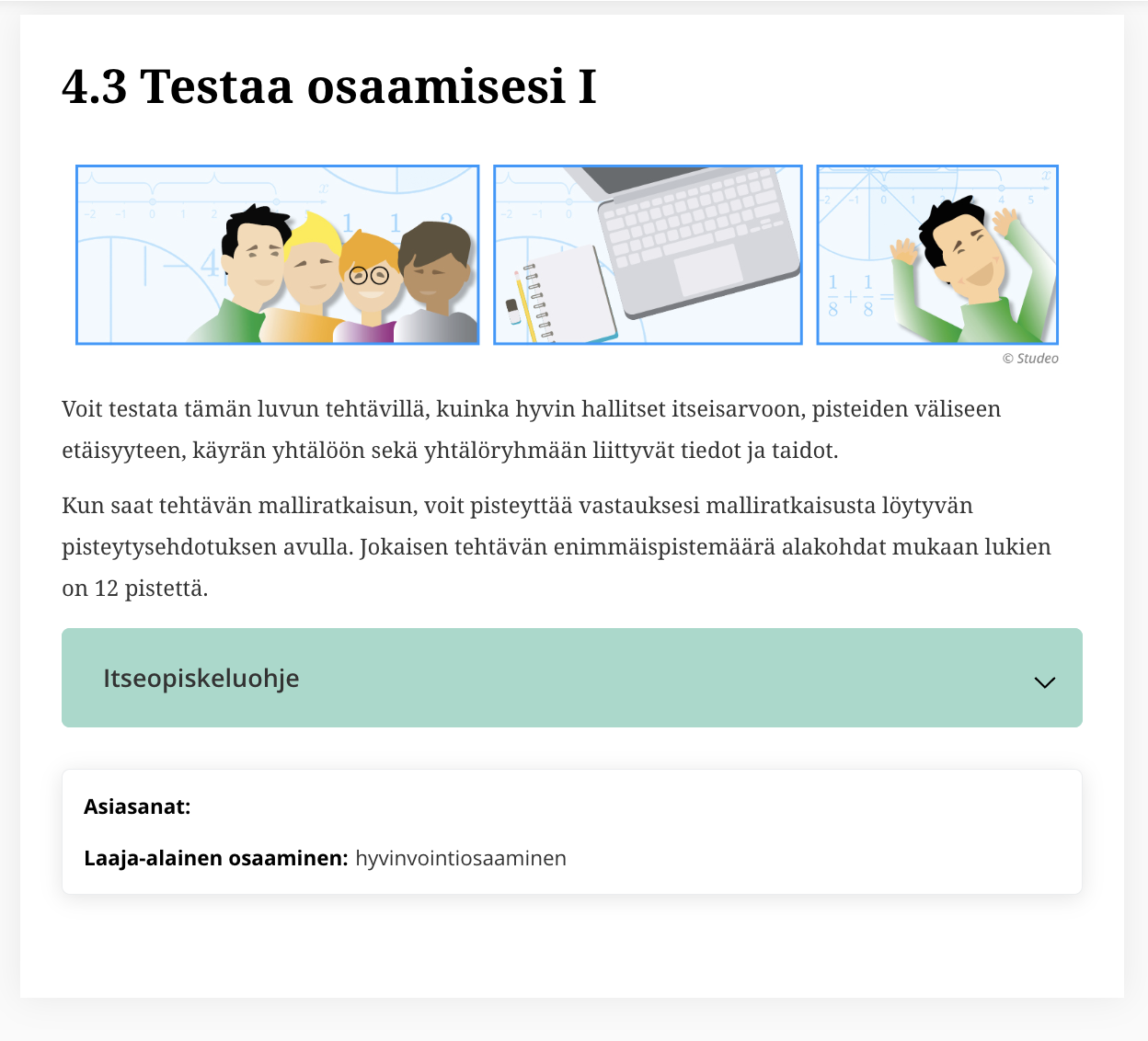
"Test your knowledge!" -sections where students can self-assess their solutions to given problems. Problems are divided into three categories.
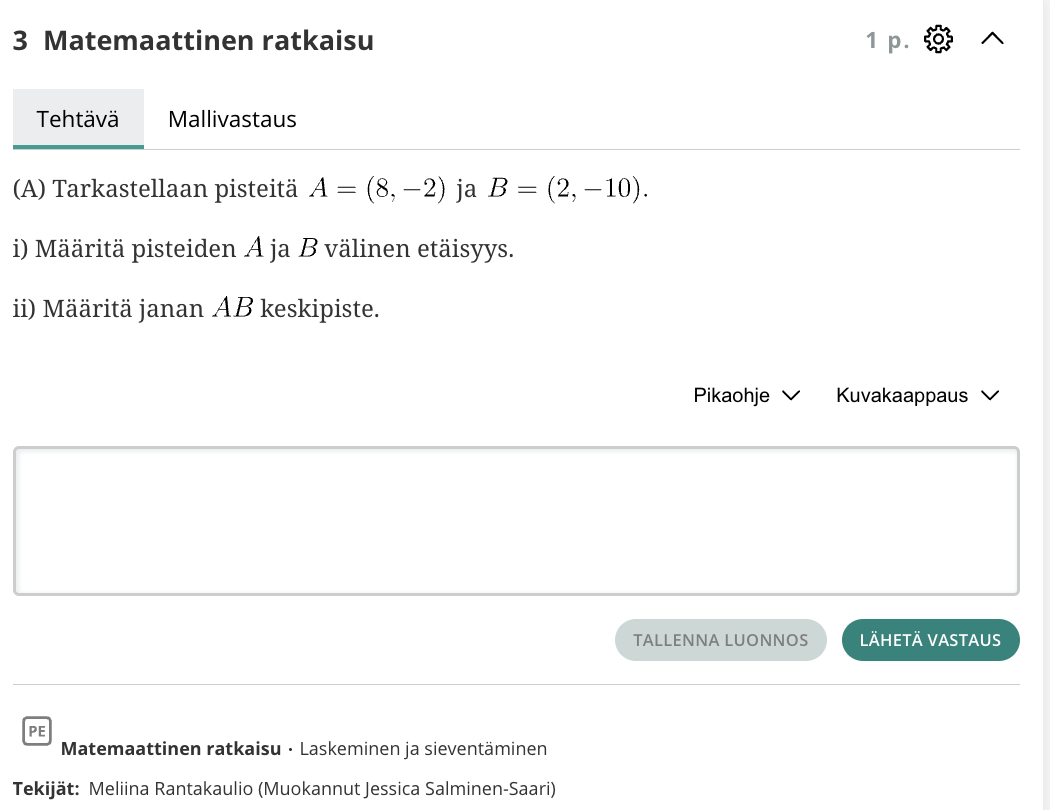
After submitting the their solution to the digital learning enviroment the students can see an example solution for the problem, written with detail.
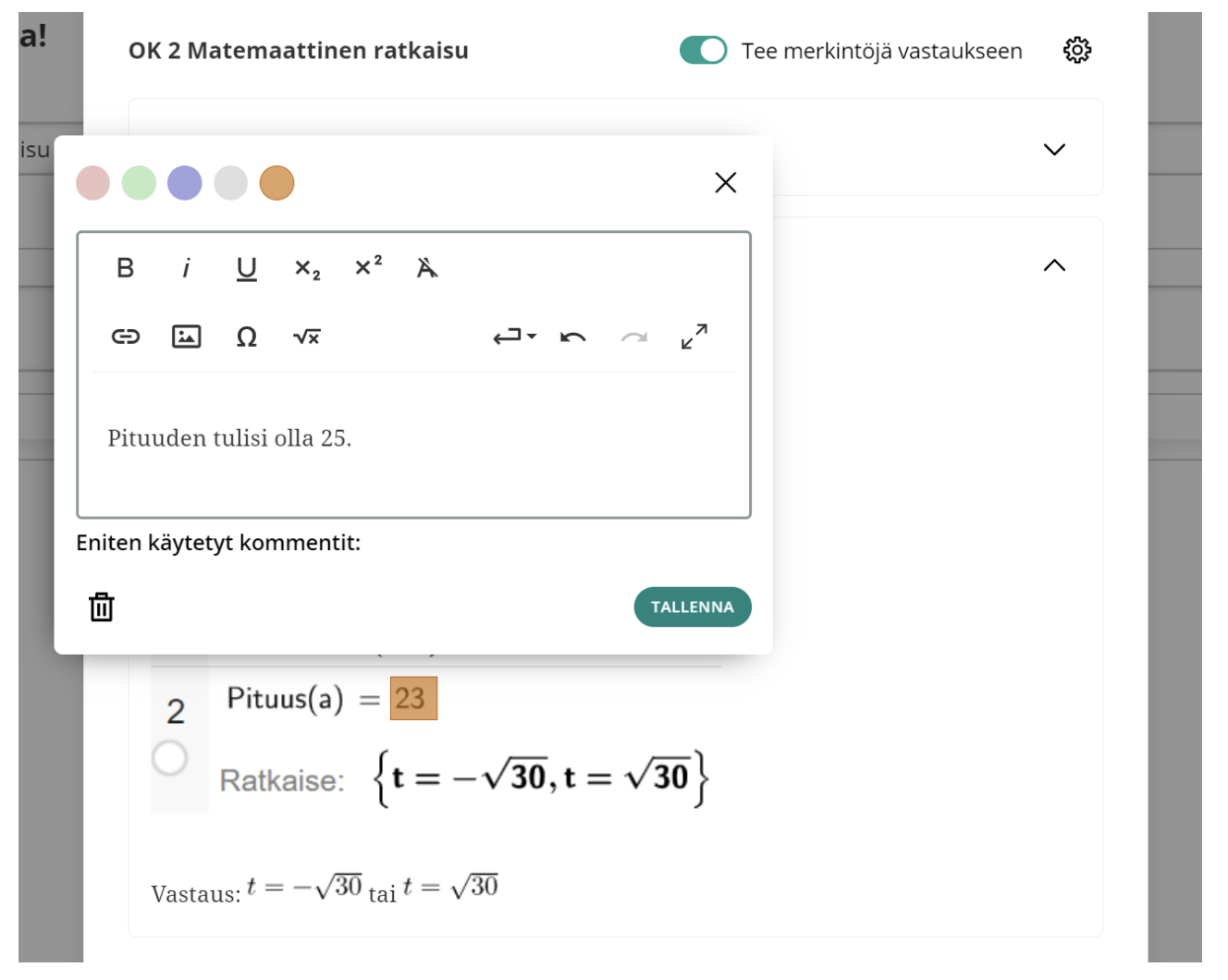
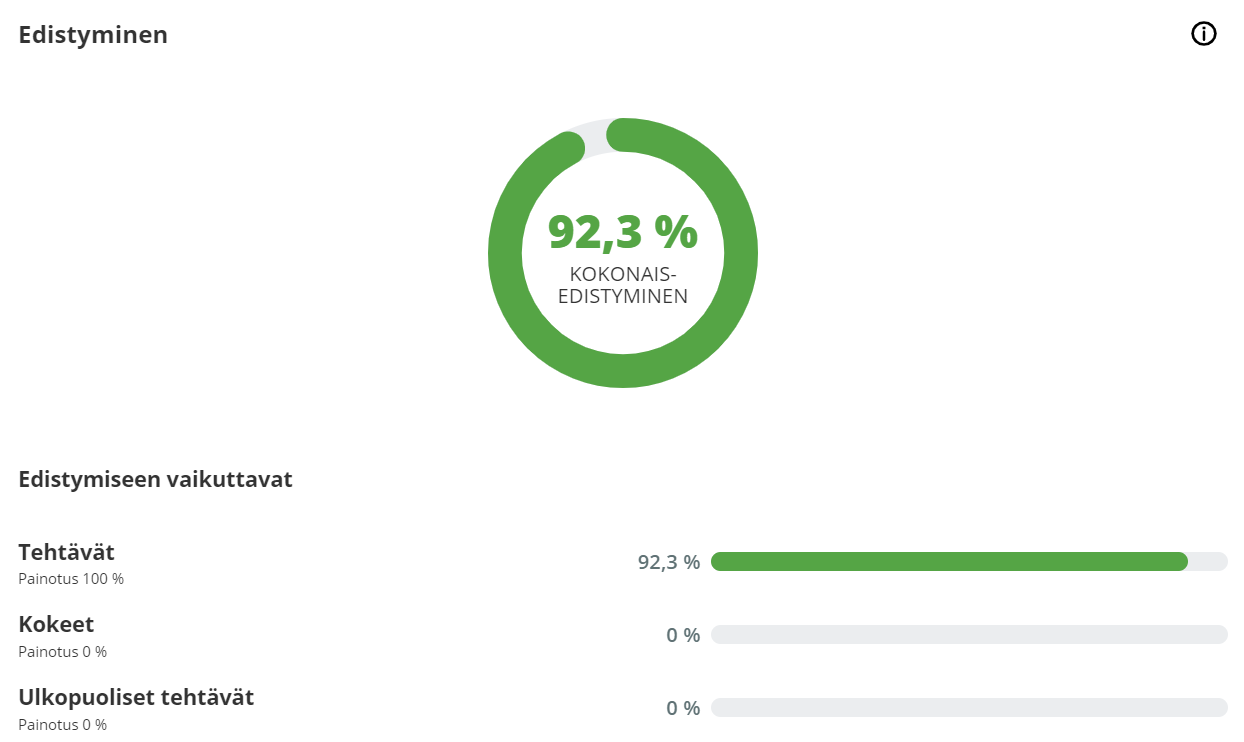
Easy to use feedback and exam tools for the teachers, annotation on mathematical formulas, tools for peer feedback, and overall progress of the class or individual.
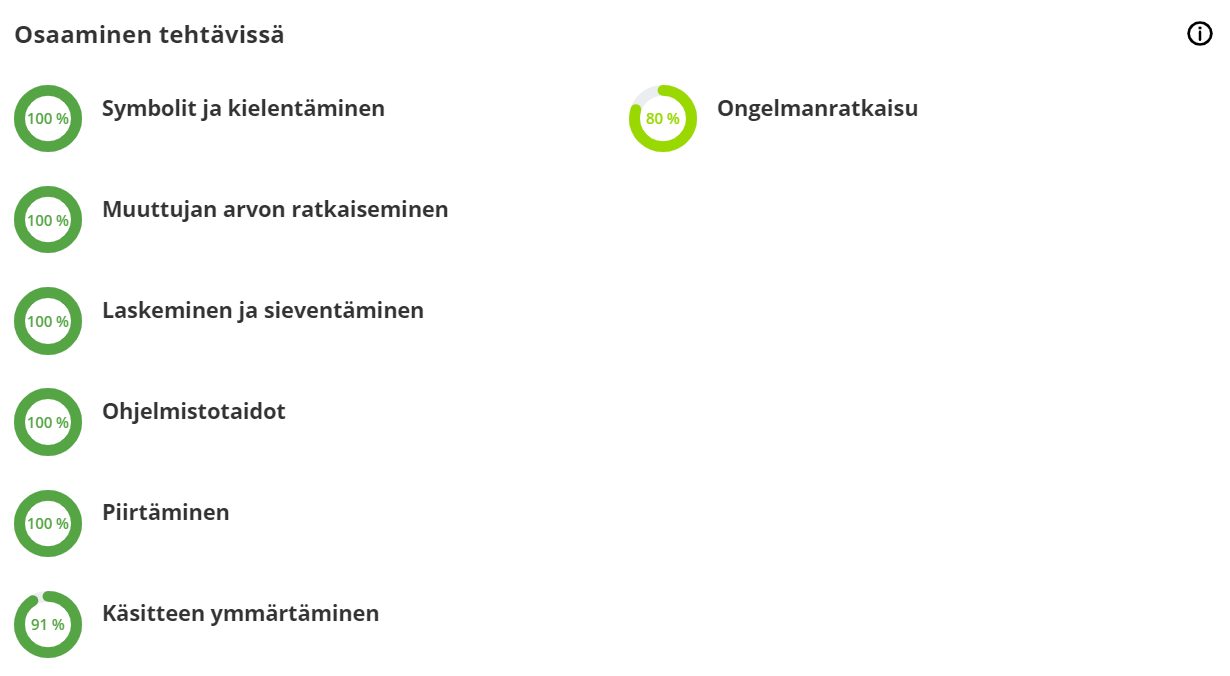
Detailed progress of what the student has done and what type of assigments.
Transversal competences introduced in all subjects
Need for a mathematics textbook that supports the learning and assessment of these competences.
Introductory chapters where the approach to the mathematical subject at hand comes from one of the transversal competences and the assignment in the chapter support this.
The student gains courage for experimental and investigative activities and problems solving in mathematics.
Need for a mathematics textbook that supports students own experimentation and investigations.
Introductory problems, where the student get's a basic undestanding of the mathematical concept at hand.
Research problems regarding the mathematical concepts or formulas that are going to be introduced.
By Opetus.tv