Invisible Data: Building Trust in the Age of AI

§ 01

 Alexander Røyne-Helgesen – TALK · month 2026

Event

Duration

Location

≈ 45 minutes  ·  37 slides

Some event

Somewhere

A practical talk on designing systems that demand trust instead of blind belief.

Based on the Trusted Data article trilogy by Alexander Vassbotn Røyne-Helgesen

02 / 36

 Bio

Driving growth through technology and leadership.  Technology Leader, Speaker, Event Manager, Design Engineer, AI Prompt Engineer and Frontend expert with over 20 years of experience

Alexander Vassbotn Røyne-Helgesen

AVR AVR
Alexander Vassbotn Røyne-Helgesen

Driving growth through Technology and Leadership

§ 03

03 / 36

Invisible Data: Building Trust in the Age of AI

A practical talk on designing systems that demand trust instead of blind belief.

AI scales assumptions faster than humans can notice them

04 / 36

04 — Why should we care?

§ 04

 why now?

The more automated the decision, the more dangerous invisible data becomes.

  • Sensors and logs feel objective — but collection is selective.
  • Dashboards compress reality into a few numbers and colors.
  • ML pipelines inherit every upstream omission and unit mismatch.
  • Automation turns local errors into organizational policy.

32 / 36

32 — MAKE IT CREDIBLE

Trusted Data is not "perfect data"

32 / 36

32 — MAKE IT CREDIBLE

  • Carefully selected sources: Where did it come from? Why trust the producer, device, process, or witness?
  • Intentional transformation: Was it cleaned, joined, labeled, or summarized for the purpose at hand?
  • Consumer fit: Is it delivered in the right format, freshness, and context for the audience?

 Foundation

It is data we can rely on because we understand its source, transformation, and use.

05 — Why should we care?

05 / 36

Trusted data comes from selected sources, is transformed for intended use, and delivered appropriately.

Adapted from: Russom, Philip - The Ramifications of Trusted Data

Most critical assumptions never appear in the UI

32 / 36

32 — MAKE IT CREDIBLE

 Where it hides

Invisible data lives in logs, dashboards, features, alerts, and “ground truth”.

  • CollectionWhat the sensor sees, and what it misses
  • Model InputsFeatures, labels, proxies, thresholds, defaults
  • InterpretationHumans and software mapping signals to meaning
  • Decision LayerPrioritization, action, denial, escalation, exposure

From observation to decision, every layer can distort reality

32 / 36

32 — MAKE IT CREDIBLE

 Failure chain

The problem is rarely one bad number. It is accumulated uncertainty.

  • SourceCamera, API, form, witness
  • CaptureSampling, compression, missingness
  • TransformCleaning, joins, labels, AI summaries
  • InterpretCharts, alerts, prompts, narratives
  • DecideCredit, safety, pricing, care

Invisible data problems are usually design problems wearing a statistical mask.

05 — Why should we care?

05 / 36

The playbook

04 / 36

04 — Why should we care?

§ 04

 playbook

32 / 36

32 — MAKE IT CREDIBLE

Scrutinize the source before you optimize the pipeline

  • Who or what produced the data?
  • What incentives, blind spots, or physical limits shaped it?
  • Has this source proven reliable over time?
  • Can another source confirm or challenge it?

I

 playbook #1

Trust starts with provenance.

Source trust can come from rules, experience, or identity, but none of them remove the need for verification.

32 / 36

32 — MAKE IT CREDIBLE

Separate data from interpretation

II

 playbook #2

The same signal can lead to very different conclusions.

  • MessageBuy a gallon of milk, and if there are eggs, buy a dozen.
  • Interpretation A12 gallons of milk because eggs existed.
  • Interpretation B1 gallon of milk and 12 eggs.
  • Interpretation C13 gallons of milk because eggs existed (hint: and).

32 / 36

32 — MAKE IT CREDIBLE

Separate data from interpretation

II

 playbook #2

The same signal can lead to very different conclusions.

  • MessageBuy a gallon of milk, and if there are eggs, buy a dozen.
  • Interpretation A12 gallons of milk because eggs existed.
  • Interpretation B1 gallon of milk and 12 eggs.
  • Interpretation C13 gallons of milk because eggs existed (hint: and).

32 / 36

32 — MAKE IT CREDIBLE

  • Semantics matter: units, labels, context, and audience.
  • Dashboards encode interpretation choices as if they were facts.
  • AI systems add another interpretation layer through prompts and summarization.

II

 playbook #2

32 / 36

32 — MAKE IT CREDIBLE

Track silent reshaping

III

 playbook #3

Data changes meaning as it moves through systems.

  • Missing fields become defaults.
  • Timestamps are rounded or shifted.
  • Units are converted, or forgotten.
  • Records are deduplicated, joined, or dropped.
  • LLMs summarize nuance into a single sentence.

32 / 36

32 — MAKE IT CREDIBLE

III

 playbook #3

If the transformation history is invisible, trust decays even when the chart looks clean.

If your training data is history, your model may automate history’s unfairness.

05 — Why should we care?

05 / 36

Models do not invent all bias. Many simply amplify what collection and labeling already encode.

Ask where the asymmetry begins.

32 / 36

32 — MAKE IT CREDIBLE

 bias is often upstream

  • Capture biasWho gets measured? In what conditions? At what resolution?
  • Label biasWho decided the “correct” answer or category?
  • Proxy biasWhat variable stands in for something more complex?
  • Feedback biasPast decisions create future data.

False positives feels like facts when the UI is confident

A red alert is still an interpretation, not reality. Developers know this from loose equality, noisy monitoring, and brittle thresholds.

32 / 36

32 — MAKE IT CREDIBLE

  • MonitoringHealthy-looking dashboards can hide blind spots.
  • DetectionThresholds turn probabilities into certainties.
  • AI ClassificationConfidence scores are not truth.
  • OpsEscalation creates its own momentum.

Bad data has always been dangerous

Some examples:

32 / 36

32 — MAKE IT CREDIBLE

 Real world reminders

 AI just multiplies the blast radius.

§ 04

32 / 36

32 — MAKE IT CREDIBLE

 Real world reminders

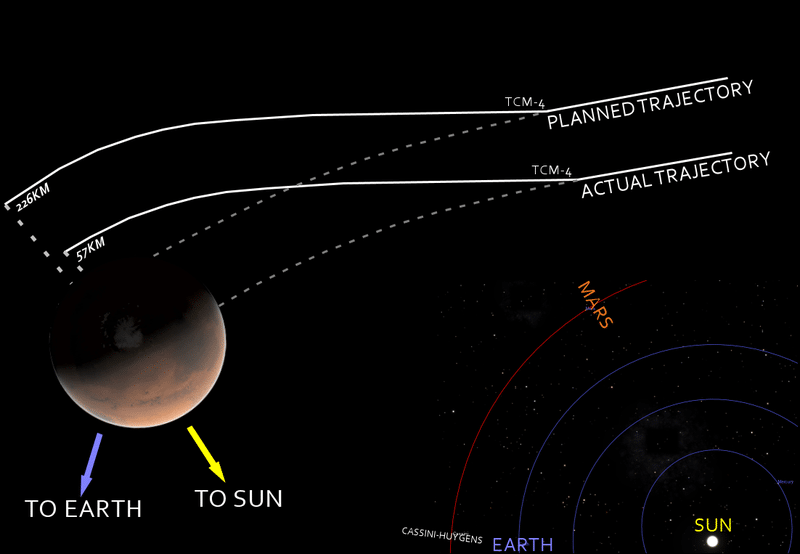
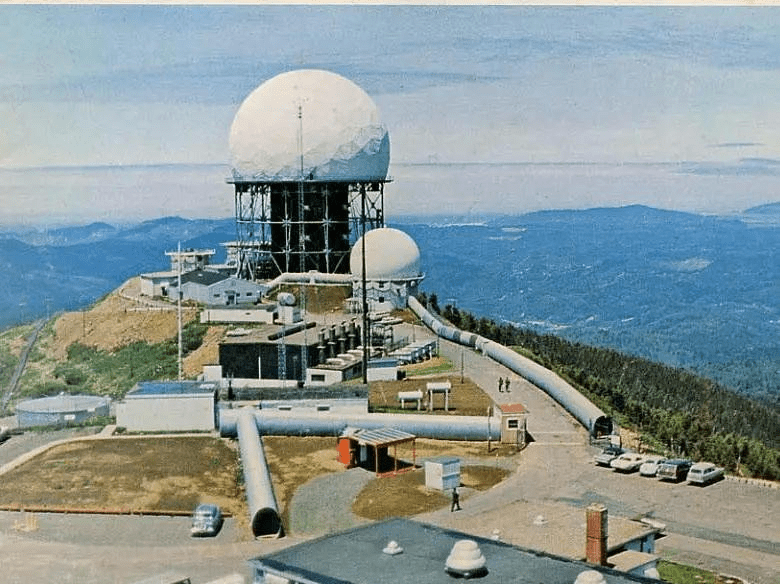
1979

1980

1998

NUCFLASH

NUCFLASH

Marse Climate Orbiter

AI can hide uncertainty behind fluent output and polished interfaces

That makes governance a product design problem, not just a compliance task.

32 — MAKE IT CREDIBLE

 Why ai changes the stakes

  • Scaleone bad assumption affects thousands of decisions.
  • Opacitylearned patterns are harder to inspect than rules.
  • Authorityhumans defer to confident systems.
  • Speedremediation often arrives after harm has propagated.

32 / 36

Treat data as a boundary condition

Not as magical raw material, but as something constrained by reality, context, quality, and interpretation.

32 — MAKE IT CREDIBLE

 key idea

  • PhysicsSensors have limits.
  • SystemsPipelines drop and reshape.
  • HumansWe interpret through bias and incentives.
  • AIModels compress uncertainty.

32 / 36

Trustworthy systems are built by acknowledging boundaries, not hiding them.

05 — Why should we care?

05 / 36

A real-world playbook for teams building or buying AI-enabled systems

Use this as architecture, review, and ops language.

32 — MAKE IT CREDIBLE

 five practical pillars

32 / 36

  • ProvenanceKnow origin, ownership, incentives, and freshness.
  • ValidationReproduce, cross-check, and test assumptions.
  • SemanticsProtect units, schemas, labels, and contracts.
  • TransparancyExpose lineage, confidence, and change history.
  • OversightKeep humans and kill switches in the loop.

If it cannot be checked, it cannot be trusted

Validation should exist in code, pipelines, UX, and operations.

32 — MAKE IT CREDIBLE

 Validation is a product feature

32 / 36

  • Cross-check against independent sources.
  • Recollect or replay data: do you get the same result?
  • Use tests for schemas, units, nullability, drift, and ranges.
  • Design interfaces that reveal confidence and missing context.

Many “data quality” failures are really meaning failures

Make meaning machine-readable and human-visible.

32 — MAKE IT CREDIBLE

 Semantics save systems

32 / 36

  • UnitsMetric vs imperial. Seconds vs milliseconds. UTC vs local.
  • LabelsWhat counts as fraud, risk, churn, or healthy?
  • DefaultsUnknown is not the same as zero.
  • ContractsSchemas, versions, and ownership.

A number without semantics is a rumour with decimals.

05 — Why should we care?

05 / 36

Governance is visible accountability for invisible transformations

Keep it concrete.

32 — MAKE IT CREDIBLE

 Governance that engineers can love

32 / 36

  • LineageWhere did this answer come from?
  • Decision logsWhat changed, when, and why?
  • OwnershipWho can approve schema or model changes?
  • AuditabilityCan we explain an output after the fact?

A human in the loop is only useful if they can see enough to disagree

Otherwise they become a rubber stamp.

32 — MAKE IT CREDIBLE

 HUMAN OVERSIGHT SHOULD BE DESIGNED, NOT ASSUMED.

32 / 36

  • Show rationale, not just a recommendation
  • Make escalation and overrides paths easy
  • Pause automation when confidence, drift, or impact crosses thresholds
  • Train teams to challenge the system, not defend it

Use these in architecture, product, incident, and model reviews

32 — MAKE IT CREDIBLE

 Seven questions for every review

32 / 36

If you cannot answer them, trust is currently faith.

  1. What is the source, and why do we trust it?
  2. What is missing, and who is underrepresented?
  3. How has the data been transformed?
  4. What assumptions are hidden in labels, defaults, and thresholds?
  5. How can we verify or reproduce the result?
  6. How is uncertainty communicated to users and operators?
  7. What happens when the system is wrong?

Use these in architecture, product, incident, and model reviews

32 — MAKE IT CREDIBLE

 Seven questions for every review

32 / 36

If you cannot answer them, trust is currently faith.

  1. What is the source, and why do we trust it?
  2. What is missing, and who is underrepresented?
  3. How has the data been transformed?
  4. What assumptions are hidden in labels, defaults, and thresholds?
  5. How can we verify or reproduce the result?
  6. How is uncertainty communicated to users and operators?
  7. What happens when the system is wrong?

From blind belief to earned trust

32 / 36

32 — MAKE IT CREDIBLE

 Maturity Model

Aim to move conversations left to right.

  • Blind belief“The dashboard says so.”
  • Operational confidence“It usually works.”
  • Measured trust“We validate and monitor drift.”
  • Accountable trust“We can explain, audit, and override.”

Trust is not a property of the data alone. It is a property of the whole socio-technical system around it.

Design systems that demand trust, not blind belief.

 Take away

Alexander Røyne-Helgesen · Talk · May 2026

  • Scrutinize sources.
  • Make interpretation explicit.
  • Preserve semantics and lineage.
  • Expose uncertainty.
  • Keep humans capable of dissent.

Primary articles for this talk

32 / 36

32 — MAKE IT CREDIBLE

 Source Bases

These are the conceptual foundation for the talk.

  1. Røyne-Helgesen, 2015 – Trusted Data https://phun-ky.net/2015/09/09/trusted-data
  2. Røyne-Helgesen, 2015 – How to work with Trusted Data https://phun-ky.net/2015/09/14/how-to-work-with-trusted-data
  3. Røyne-Helgesen, 2015 – Trusted Data for developers https://phun-ky.net/2015/09/29/trusted-data-for-developers

§ 36

Invisible Data: Building Trust in the Age of AI

A practical talk on designing systems that demand trust instead of blind belief.

Invisible Data: Building Trust in the Age of AI

By Alexander Vassbotn Røyne-Helgesen

Invisible Data: Building Trust in the Age of AI

Data surrounds us, hidden in logs, dashboards, ML pipelines, and real-time alerts. We assume it's trustworthy. Cameras count cars, sensors track health stats, AI algorithms recommend creditworthiness, but what happens when data isn't? When it's incomplete, biased, misinterpreted, or worse, silently reshaped? I'll explore how invisible biases and hidden assumptions can distort every decision, from business strategy to safety-critical systems. We'll dive into methods for treating data as a boundary condition: emphasizing source scrutiny, interpretation layers, governance and transparency, especially as AI automates more decision-making. This talk gives devs, engineers, and leaders a real-world playbook: how to design systems that demand trust, rather than blind belief.
  • 34