Why Elixir? &
Getting Started
for Boston's Elixir Women
Elixir (and Functional JS) is Gaining Traction
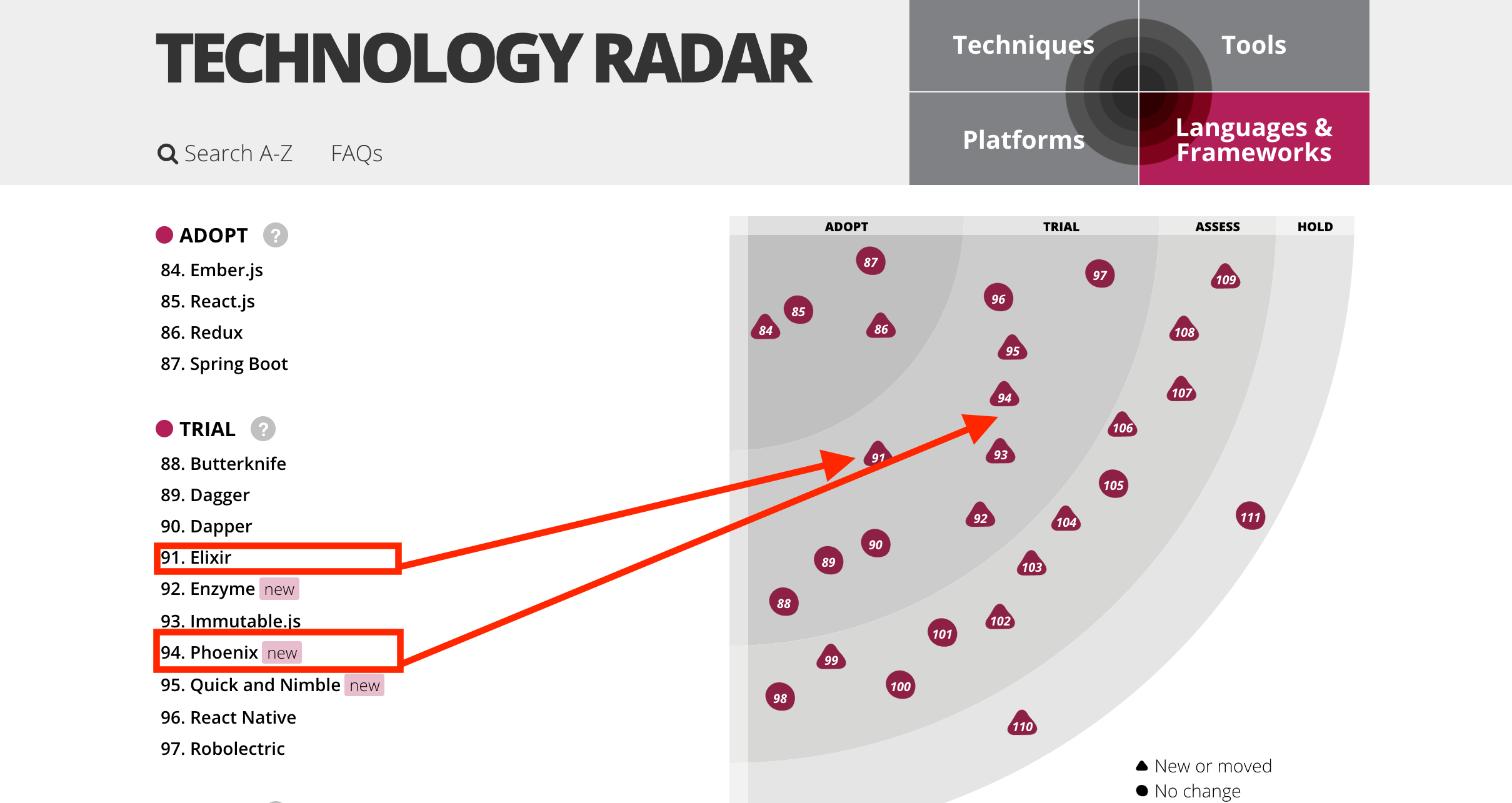
Elixir - April 2016: Assess → November 2016: Trial
Phoenix - First Appearance → November 2016: Trial
It's Fast
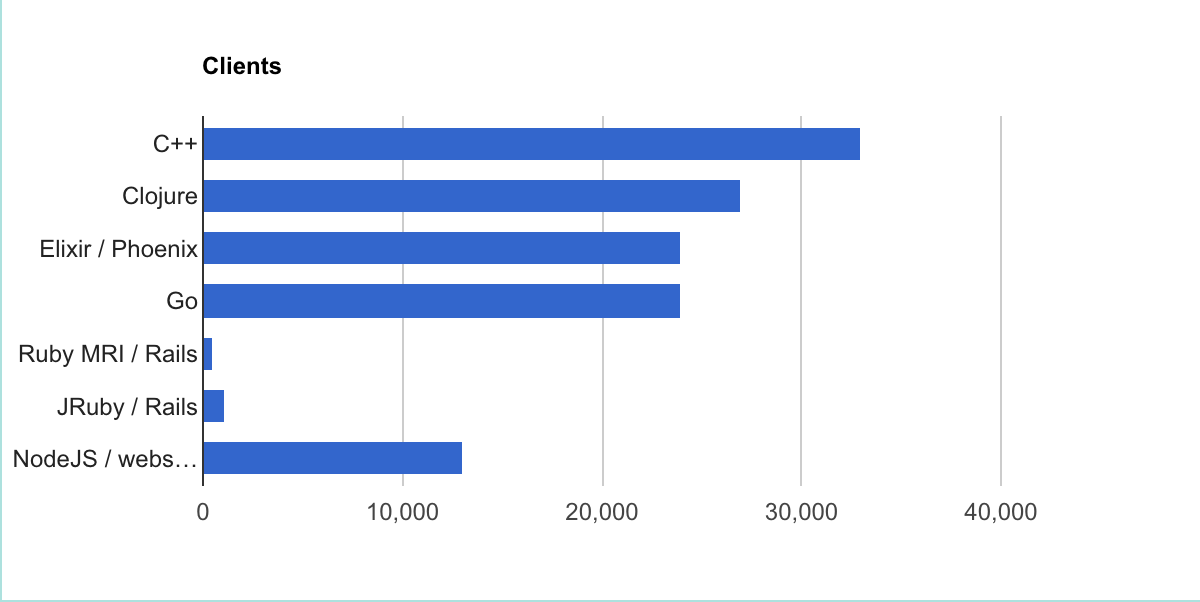
Websocket Client Concurrency Performance
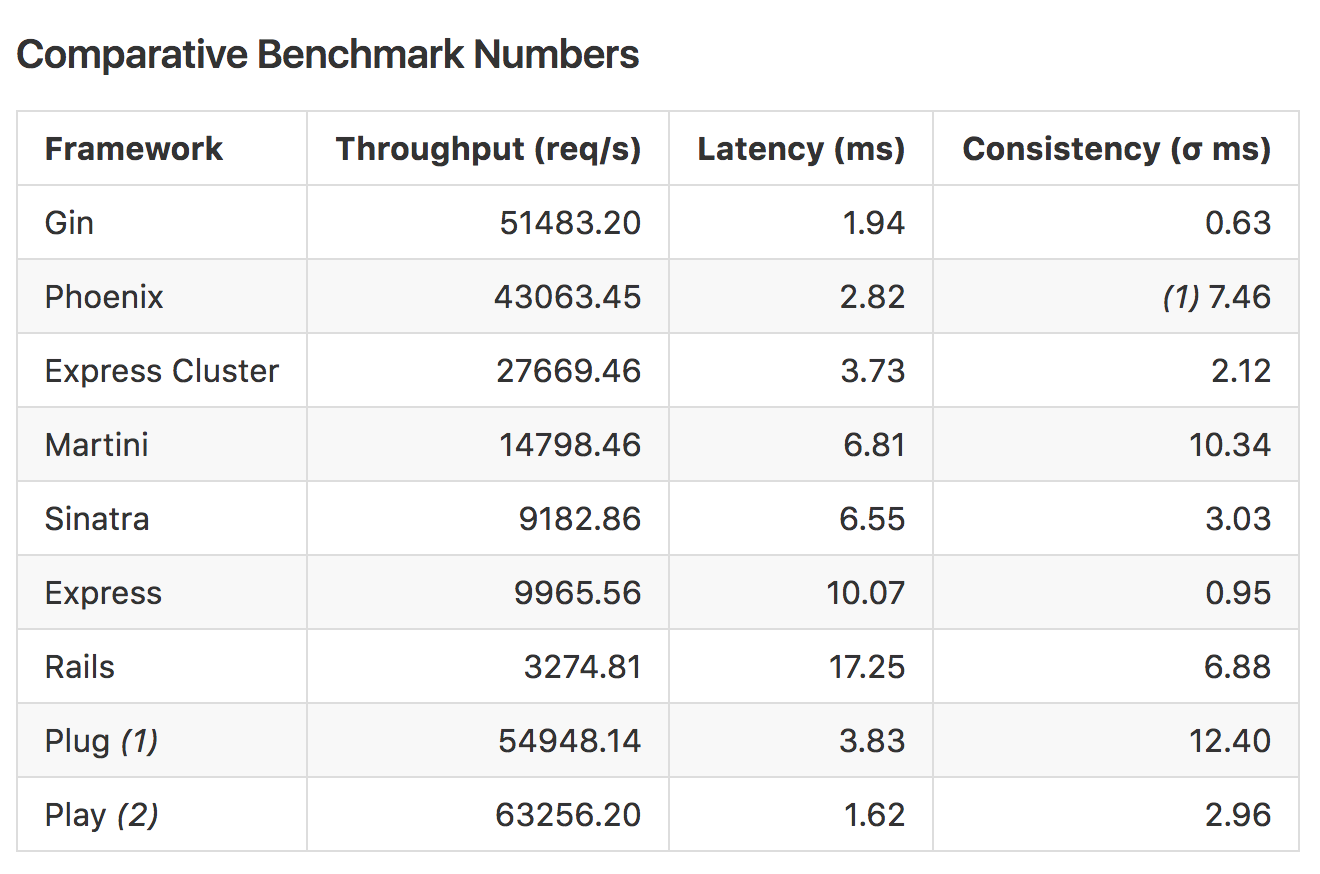
Web Framework Performance
It's a Readable Functional Language
 object HelloWorld {
    def main(args: Array[String]) {
      println("Hello, world!")
    }
  }
Scala
module Main where

main = putStrLn "Hello, World!"
Haskell
fn main() {
    println!("Hello World!");
}
Rust
(ns helloworld.core)

(defn -main []
  "I can say 'Hello World'."
  (println "Hello, World!"))
Clojure
defmodule HelloWorld do
  def hello do
    IO.puts "Hello World"
  end
end
Elixir
The Ruby → Elixir Migration?
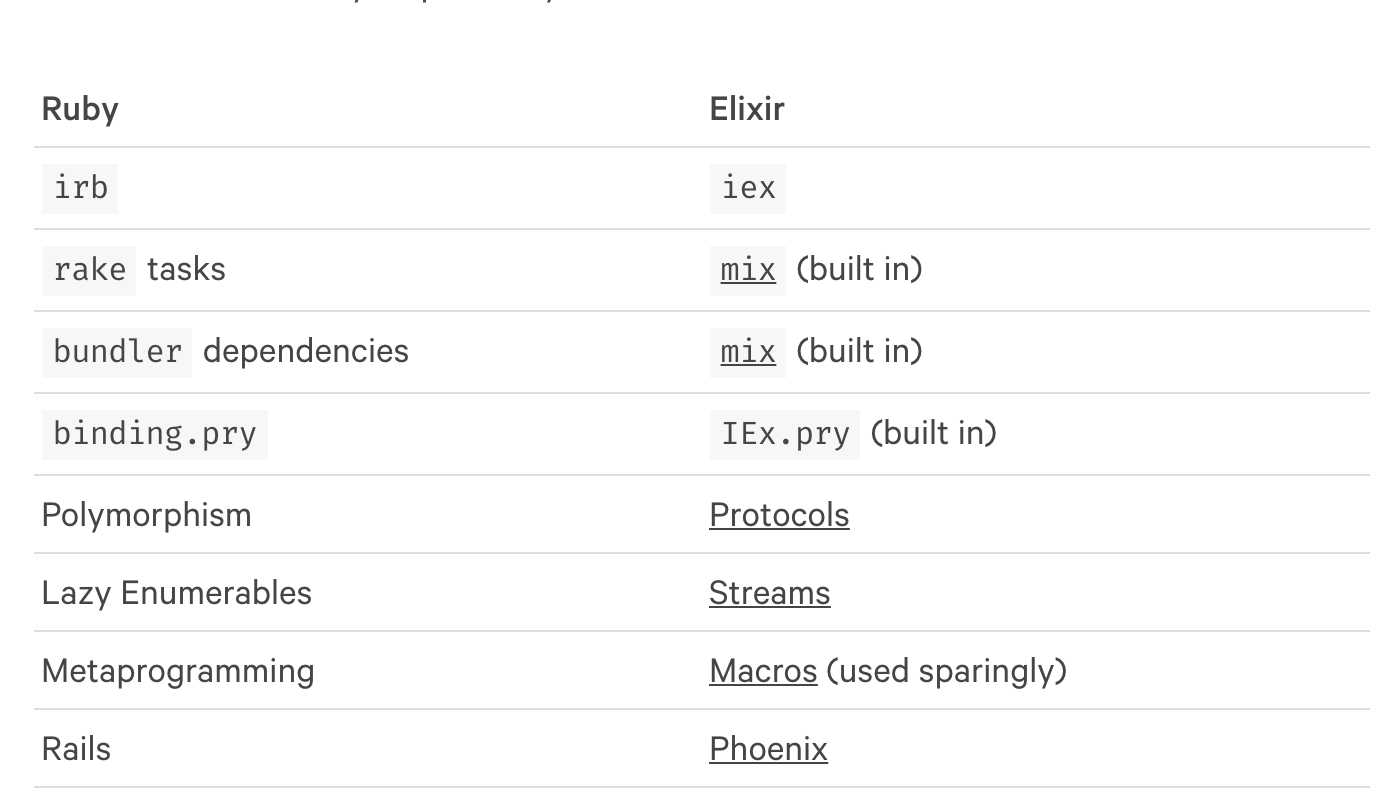
It's heavily inspired by Ruby.
The Ruby → Elixir Migration?
- Plaformatec, creators of the indispensable Ruby gems, Devise and Simple Form, back/created Elixir.
-
Jose Valim, creator of Elixir, is a former core team member of Ruby on Rails.
-
Chris McCord, creator of the Phoenix framework, was hired by Dockyard in Oct. 2015, when they dropped RoR to go full-on Elixir, Phoenix, and Ember.
- Thoughtbot, creators of Ruby gems Paperclip and Factory Girl, are also adopting it and heading up new open-source efforts (Hex Packages Bamboo and ExMachina).

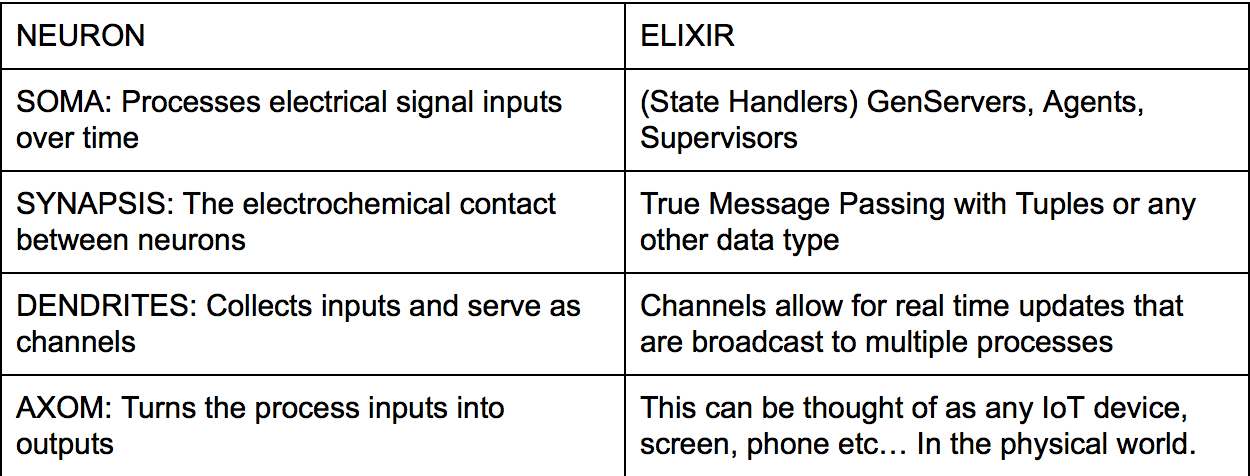
It's Great For Artificial Neural Networks and Deep Learning
# Create nodes
neuron = Neuron.start_node(bias: 10, activation_function: function(identity/1))
sensor = Sensor.start_node(sync_function: fake_sensor_data([[1, 1, 1, 1, 1]]))
actuator = Actuator.start_node([])

# Wire up network
connect(from: sensor, to: neuron, weights: [20, 20, 20, 20, 20])
connect(from: neuron, to: actuator)

# tap into actuator for testing purposes
NodeProcess.add_outbound_connection(actuator, self())

# feed input into sensor
NodeProcess.sync(sensor)

# verify actuator output
assert actuator_next_output() == 110Paradigms
- Functional
- Concurrent
- Dynamic
- Fast, Elegant, and Fun
- 6 years young
- Built on Erlang (31 years young)
Familiar Concepts
| Name | Example | Kind of Like |
|---|---|---|
| Atom | :foo | Symbols in Ruby |
| Lists | [:item, 30, "hat"] | Arrays |
| Tuples | {:ok, "It the was the best of times..."} | Objects + Pointers (stored contiguously) |
| Maps | %{:first => "Bob", :last => "Barker} | Objects, Key-Value Stores |
| Keyword Lists | [age: 40, gender: "F"] | [{:age, 40}, {:gender, "F"}] |
Exciting Concepts
- Pattern Matching
- First-Class Functions
- Closures
- Pipelines
- First-Class Documentation
- First-Class Testing*
- Erlang*
- Phoenix Framework*
Pattern Matching
# The equal sign is a Match Operator
# It binds when empty
iex> x = 1
1

# It fails on mismatches
iex> 2 = x
** (MatchError) no match of right hand side value: 1

# It can match simple values, data structures, and functions
iex> {:ok, result} = {:ok, 13}
{:ok, 13}
iex> result
13
First-Class Functions
iex> greeter = fn -> "Hey Buddy" end
#Function<20.52032458/0 in :erl_eval.expr/5>
iex> greeter.()
"Hey Buddy"
Functions can be assigned to variables
iex> apply.(minus_2,6)
4
Functions can be passed to other functions
First-Class Functions
Functions can return functions
inception_greeter = fn ->
                      fn ->
                        "Hiya"
                      end
                    end
#Function<20.52032458/0 in :erl_eval.expr/5>
iex> inception_greeter.()
#Function<20.52032458/0 in :erl_eval.expr/5>
iex> greeter = inception.()
#Function<20.52032458/0 in :erl_eval.expr/5>
iex> greeter.()
"Hiya"
First-Class Functions
name_greeter = fn name ->
                 fn ->
                   "Hiya #{name}!"
                 end
               end
#Function<20.52032458/0 in :erl_eval.expr/5>
iex> tiff_greeter = name_greeter.("Tiff")
#Function<20.52032458/0 in :erl_eval.expr/5>
iex> tiff_greeter.()
"Hiya Tiff!"
Functions carry with them the bindings of variables in the scope they're defined (closures).
First-Class Functions
It's a modern, functional language! Huge libraries of functions are built-in and the convention is to use them.
First-Class Functions
Pipelines!
people = DB.find_customers
orders = Order.for_customers(people)
tax = sales_tax(orders, 2016)
filing = prepare_filing(tax)
filing = DB.find_customers
|> Orders.for_customers
|> sales_tax(2016)
|> prepare_filing

→
First-Class Documentation
defmodule Butler.Tableflip do
  @moduledoc """
  Flip some tables
  """

  use Butler.Plugin

  @usage """
  tableflip - replies with a flipped table
  """

  def flip_table do
    :random.seed(:os.timestamp)
    table_list = [
      "(╯°□°)╯︵ ┻━┻",
      "(╯°□°)╯︵ <ǝlqɐʇ>",
      "the table flipped you! ノ┬─┬ノ ︵ ( \o°o)\ ",
      "┻━┻ ︵ヽ(`Д´)ノ︵ ┻━┻"
    ]

    Enum.random(table_list)
  end

  hear ~r/tableflip/, conn do
    reply conn, flip_table
  end
endFirst-Class Documentation
Learning Resources
Books
- Programming Elixir
- Programming Phoenix
- Elixir in Action
- Elixir Cookbook
Screencasts
- ElixirConf 2014
- ElixirSips
- LearnElixir.tv
- LearnPhoenix.tv
Exercises
- Elixir Koans
- Exercism
- 30 Days of Elixir - Katas
- Elixir Quiz
Newsletters
- Elixir Radar
- Functional Elixir
More...
- Elixir Fountain Podcasts
- Elixir Nation
- Udemy Elixir & Phoenix Bootcamp
- Elixir Radar
- Functional Elixir
- Elixir School
Why a Women's Group
- Reports range: Female software developers make up 10%-30% of the industry (downward trend since 1980s)
- Boston Elixir Meetup: 7% (27/373)
- Boston's Elixir Women: 100% (36, less than 1/3 overlap)
- Active Elixir GitHub Repos: 1,210
- Active Ruby GitHub Repos: 132,848
- Bigger Impact + New Language + Boston
Meetup Structure Ideas
- Auto-join Slack!
bostons-elixir-women-slack.herokuapp.com - Lightning Talks
- Lightning Talk Signup App in Phoenix
- Meeting Frequency?
- Bookclub-style?
Talk / Lightning Talk Ideas
- Phoenix
- Erlang
- Tutorial Walkthroughs
- Open Source Repo Walkthoughs
Why Elixir? & Getting Started
By Rachael Serur