Migration patterns within the United States
Team 5
Dharitrikumari Rathod
Umapathy Beema
November 18, 2020
Summary:
Based on US Census data (2014-2018):
- Migration patterns in the US Regions
- Migration Patterns between the States
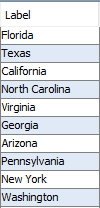
- In- moving Hubs in the states with high net migration
- Out-moving hubs in the states with low net migration
- Cause and effect of domestic migration
Purpose:
- To educate ourselves
- Inform others
-
What is the domestic migration pattern in the US?
-
Where people are moving?
-
What are the causes and effects of migration?
Reasearch Questions:
Data Laboratory view & Graph information:
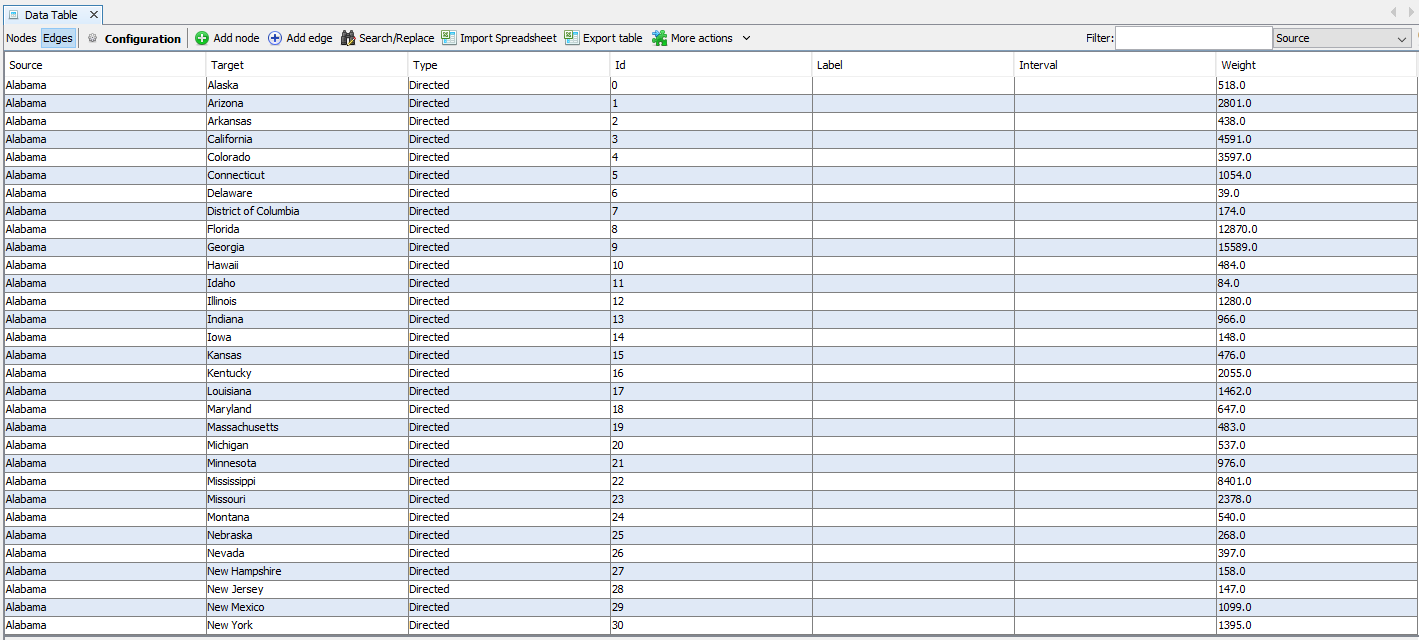
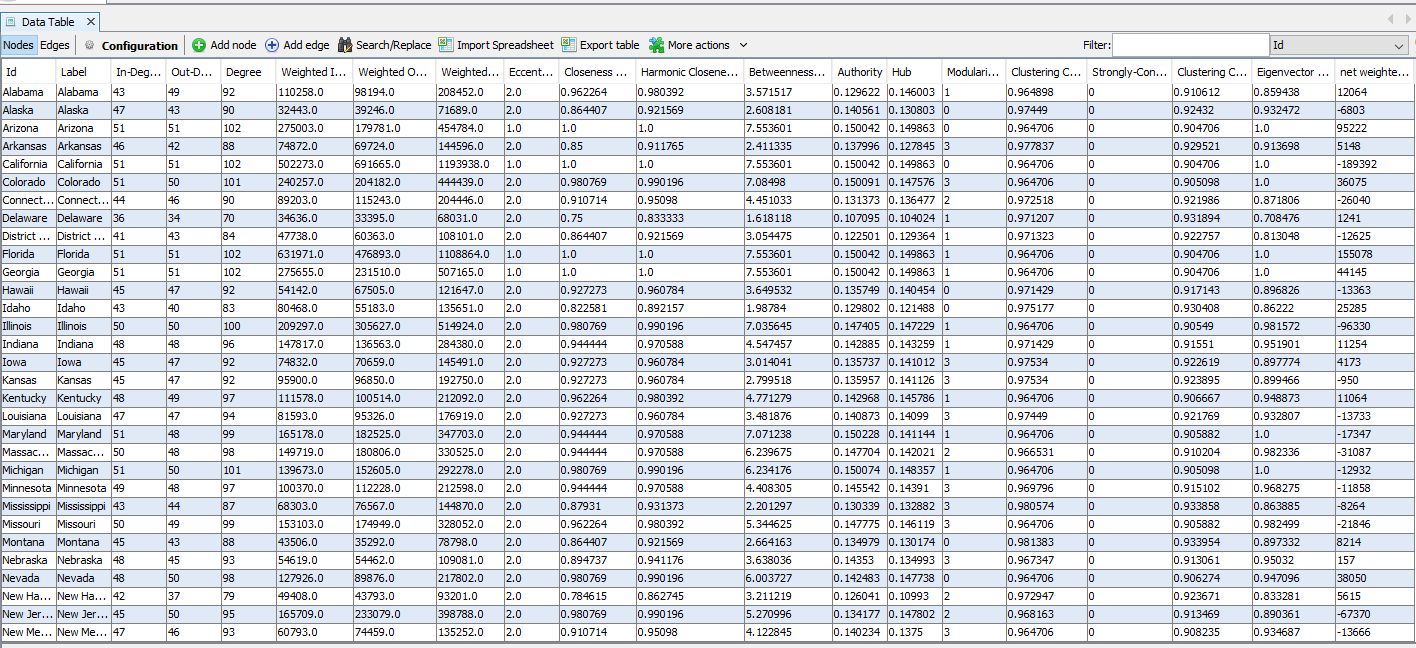
Graph information:
- Directed graph
- Weighted graph
States (2018):
- Node= 52
- Edges = 2409
Metro:(2014-18)
- Nodes = 390
- Edges= 70309
Gephi Layouts:
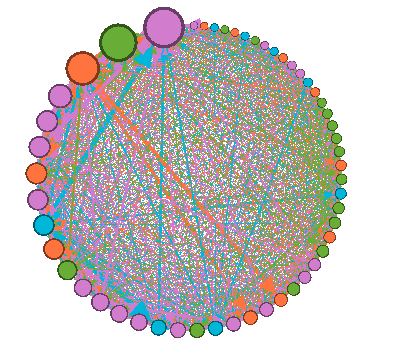
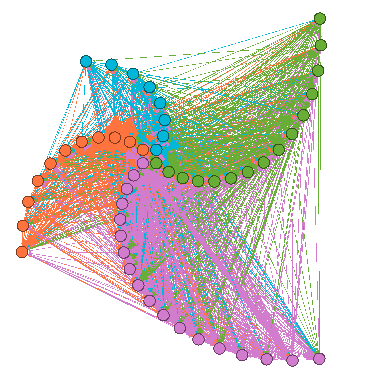
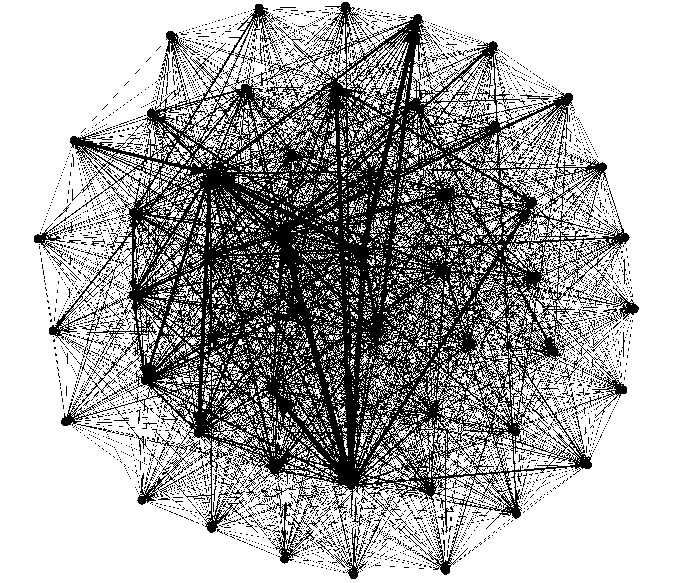
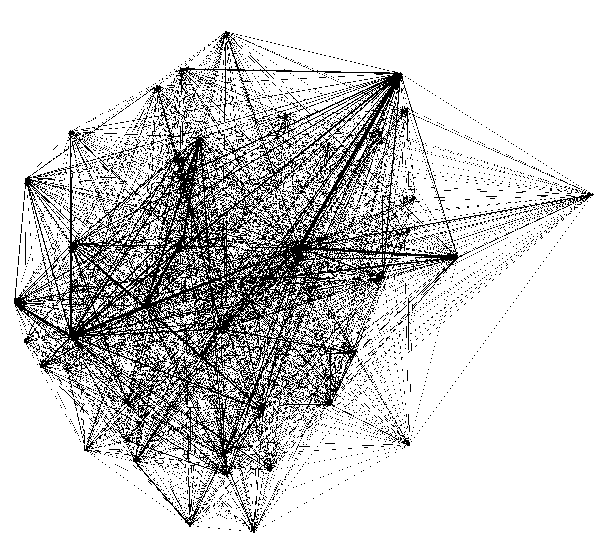
Frechterman Reingold
Open ord
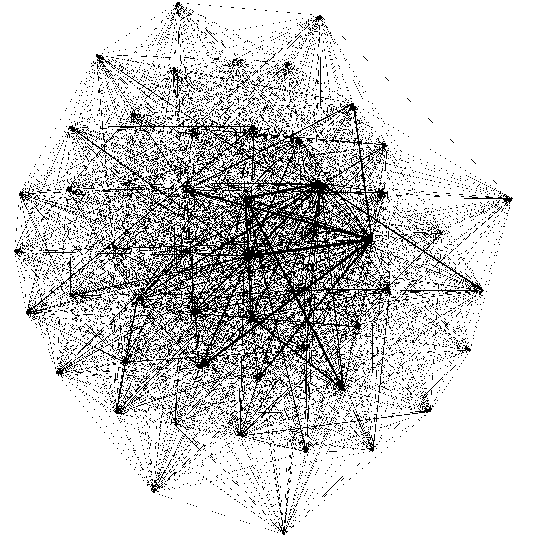
Yufan Hu
Circular graph
Radial Axis
Statistics and filters:
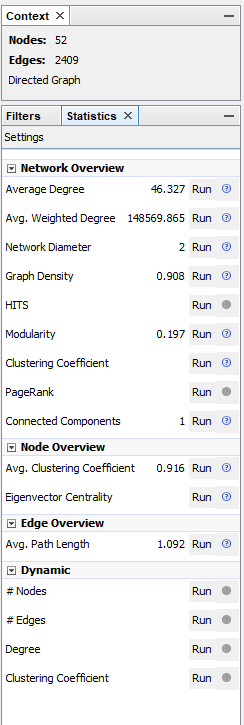
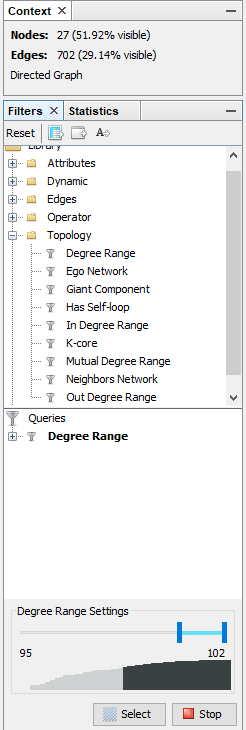
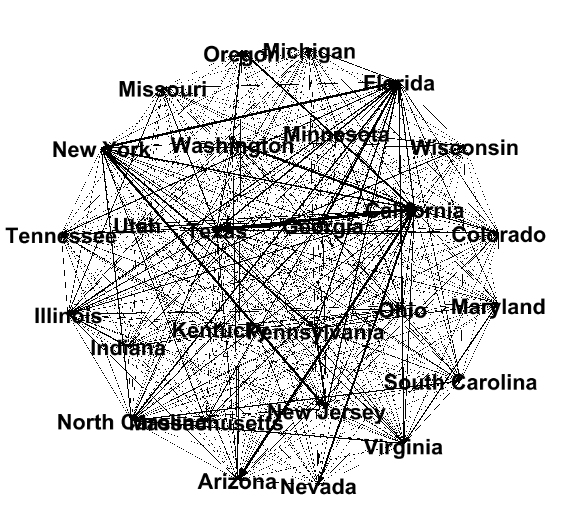
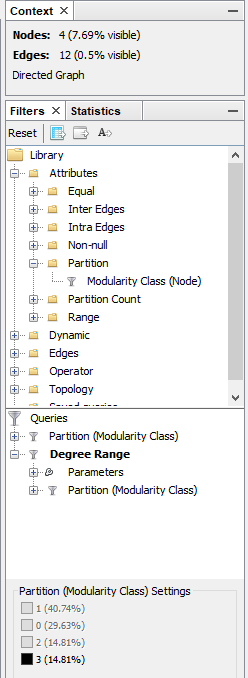
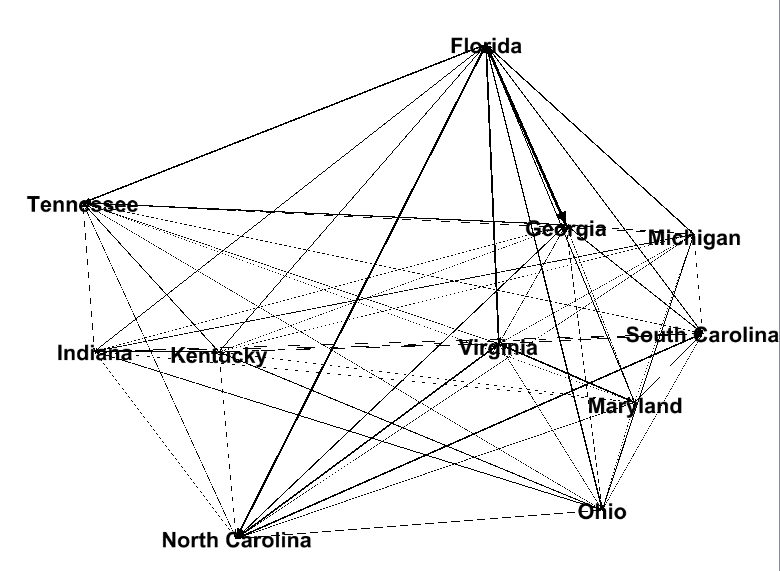
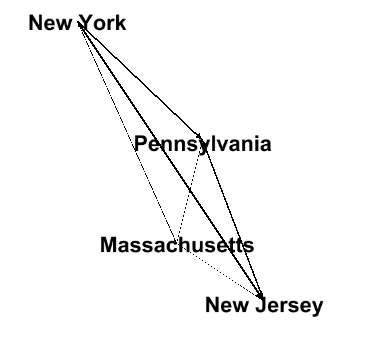
Mod_cl :3
Mod_cl :1
US Regional Migration:
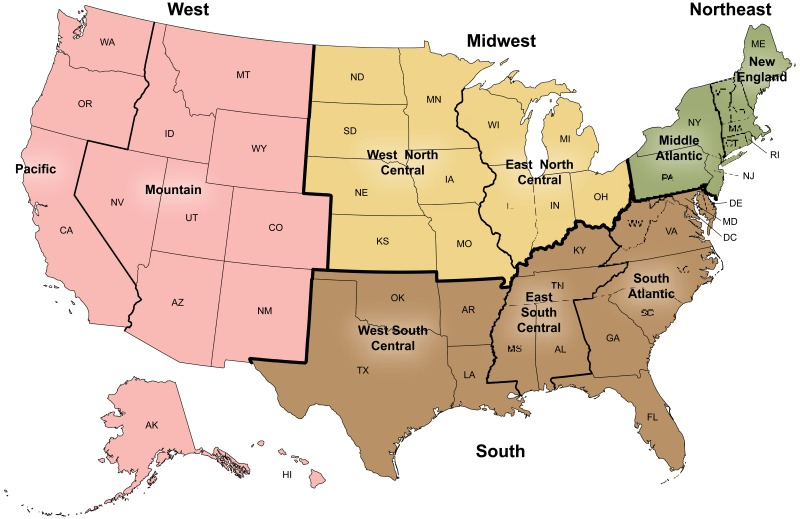
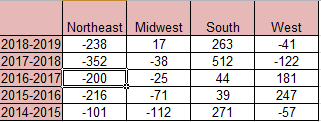
Annual Net Migration for Regions 2014-2019
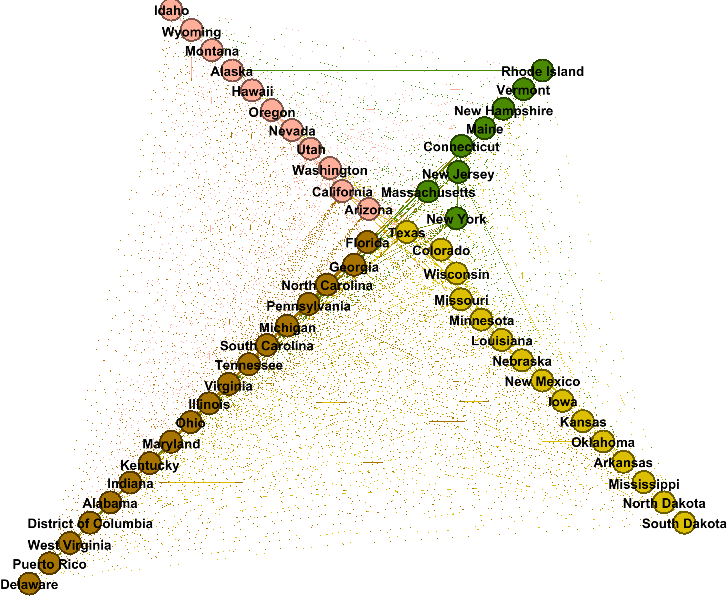
US State Migration:
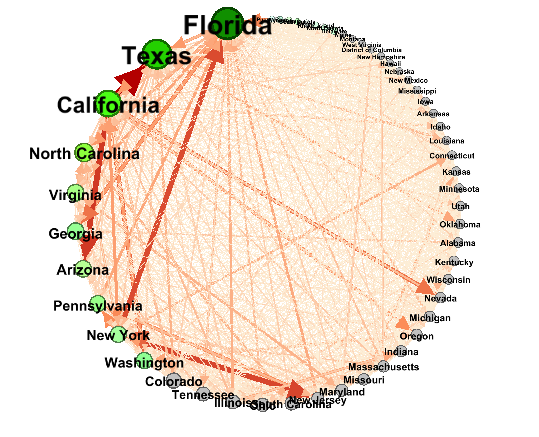
rank_ in migration
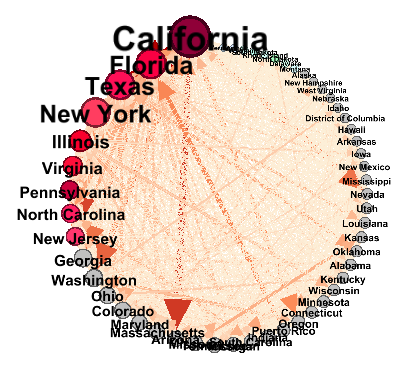
rank_ out migration
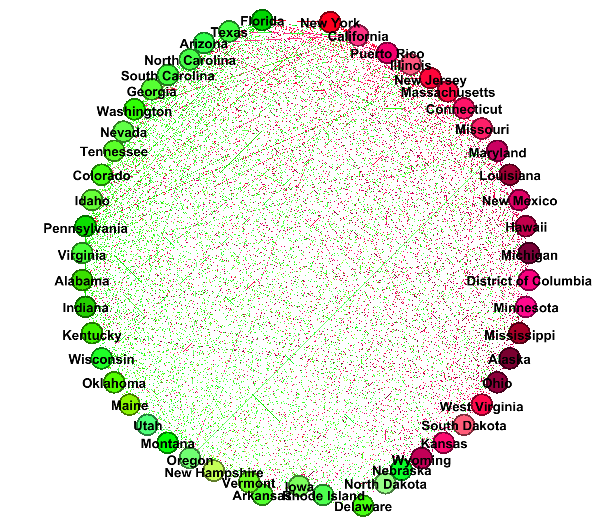
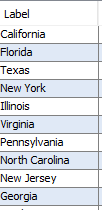
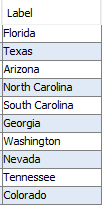
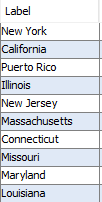


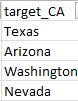


net migration
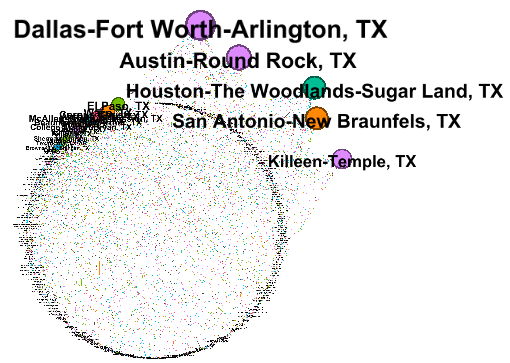
Texas
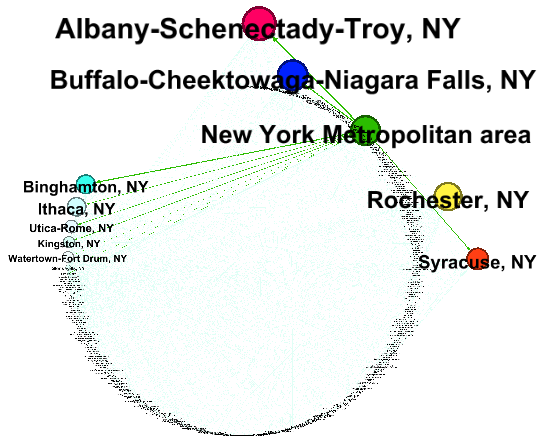
New York
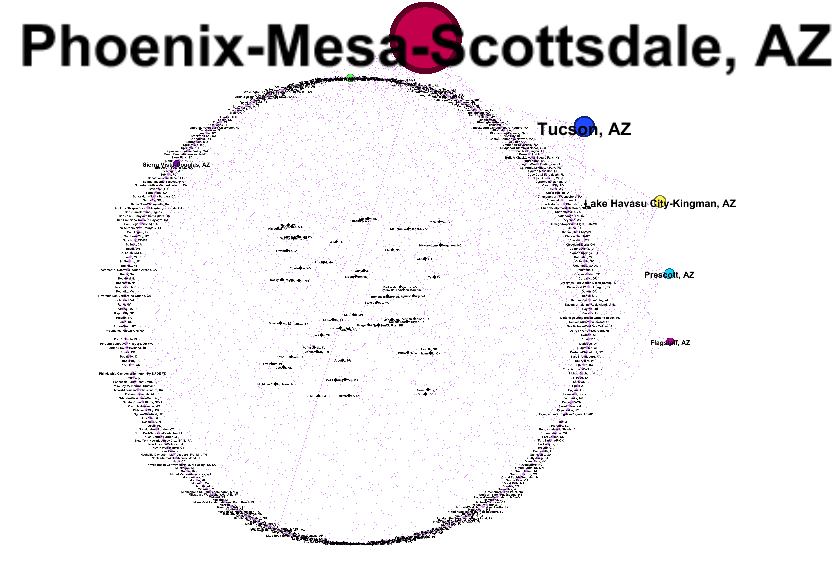
Arizona
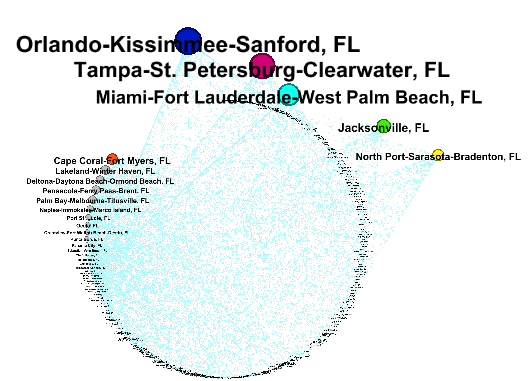
Florida
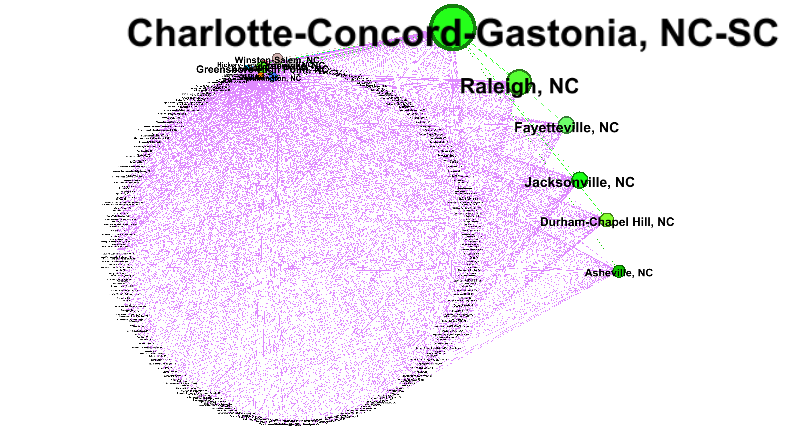
North Carolina
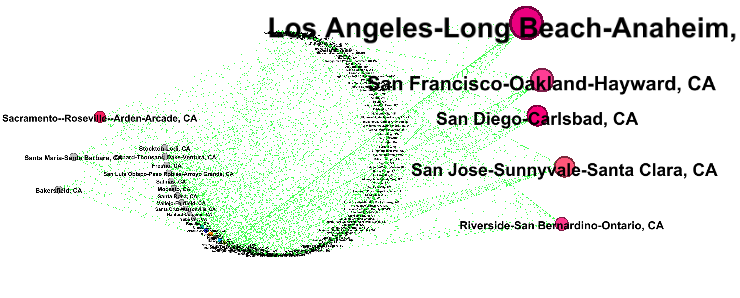
California
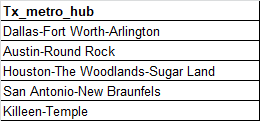
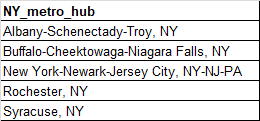
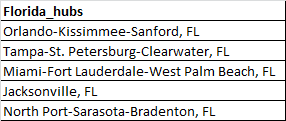
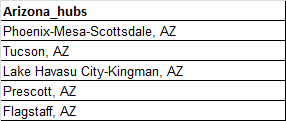
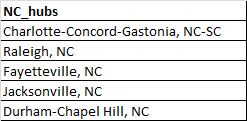
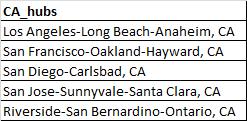
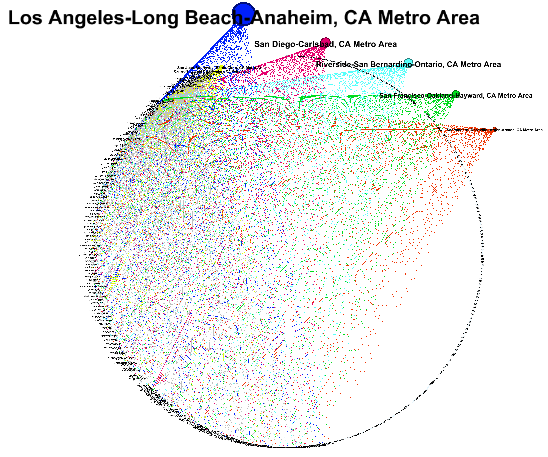
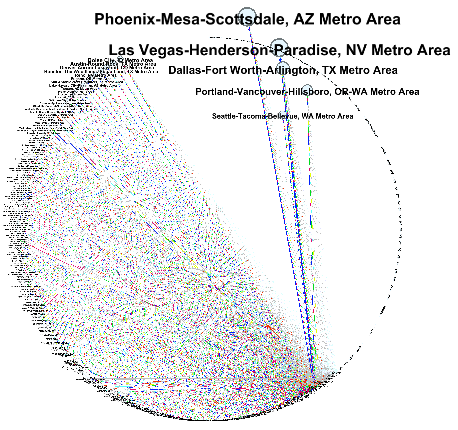
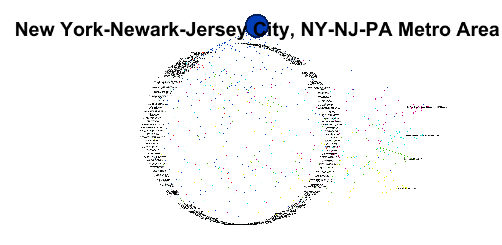
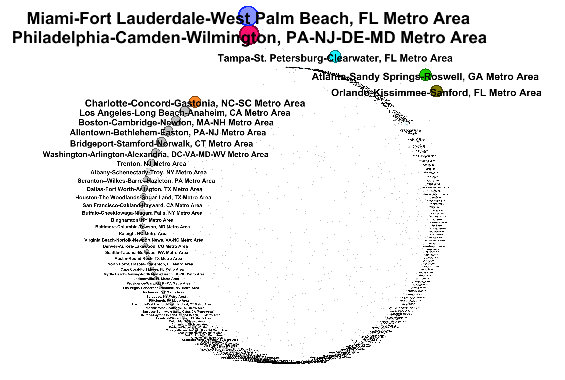
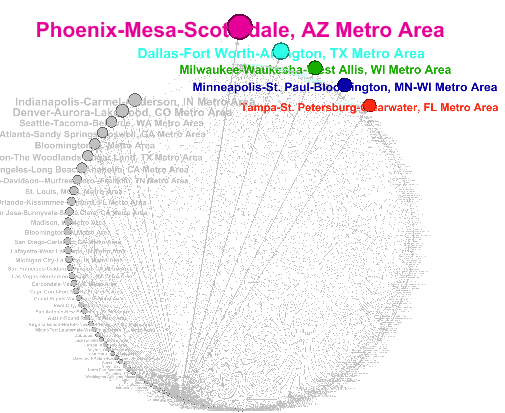
Metro to Metro In Migration
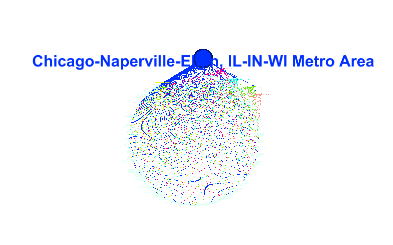
Metro to Metro Out Migration:
California
New york
Illinois
Metro to Metro Out Migration
Causes of the domestic migration:
- New job/transfer (3.5 million annually)
- To stay closer to the work/easier commute (2 million annually)
- To attend/ leave college (1 million annually)
- Due to climate change and natural disaster (400,000 annually)
- Due to retirement (350,000 annually)
- Housing-related (9 million annually)
Major reasons for internal US migration(2014-2018):
( approximately 32 million people migrate each year in the US)
Effects of the domestic migration in the US:
- Research shows that greater space and lower cost of living in the states like Florida, Oregon, the Carolinas, Washington, Texas, Arizona, and Nevada are in the center of migration, and cause of the real estate boom in these states.[1]
- On the other hand, we will see more empty houses in the metropolitan areas like New York and LA Metropolitan area.[2]
- Climate change will be the key player in migration and impact the billion-dollar real estate business in the affected states.[3]
- Due to high net migration states like Florida, North Carolina, Arizona, and Nevada will become more important in presidential elections.[1]
-
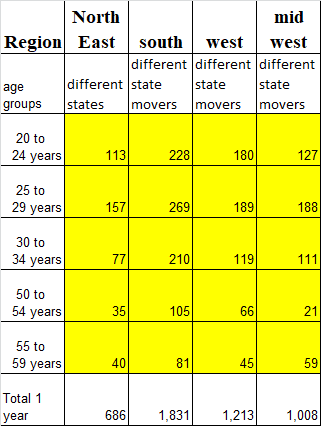
Based on U.S. Census data (as shown in the table), Millennials are moving to the south and west regions of the country which will impact the labor and housing market in the US.
-
Generation X is moving towards the southern region to retire in warmer places may impact the healthcare industry.
Results:
- Homophily: the east coast tend to live on the east coast and similarly west coast tend to live on the west coast
- Degree distribution: State migration is random (more likely adjacent states), But In-migration in metropolitan areas within a state follows a power-law distribution.
- Major reasons: Employment, Greater space, affordability, commute distance, climate change, and warmer weather.
Lowest Net Migration
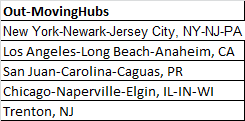
Highest Net Migration
Final contemplation:
-
Additional data:
- Reasons for interstate migration
- Migration due to Covid
- Interstate migration based on age group
- 2020 Census
Final remark: Florida, especially Orlando, looks promising. Stay in Florida.

-
Data preparation:
- Cleaned the State to State and Metro to Metro migration data by removing the abroad migrations and converted them into the node and edges table to run in the Gephi.
-
Unpredicted:
- Changed undirected to directed
- Gephi- large scale data
- Gephi treated the target as a source.
References:
https://www.move.org/why-americans-are-moving-to-southern-and-western-states/
https://www.census.gov/library/stories/2019/04/moves-from-south-west-dominate-recent-migration-flows.html
Stephan A. Schwartz (2020, August), America, Covid-19, Climate change, and Migration, Explore
https://www.jchs.harvard.edu/blog/not-just-the-sunbelt-millennials-and-baby-boomers-increasingly-head-west
Cherven Ken, PACKT publishing(2015), Mastering Gephi Network Visualization, 978-1-78398-734-4
https://www.census.gov/topics/population/migration/guidance/metro-to-metro-migration-flows.html
https://www.census.gov/topics/population/migration/guidance/state-to-state-migration-flows.html
https://www.census.gov/library/publications/2014/demo/p20-574.html
Thank you!!

deck
By rathod_dharitri