


Ms. Russel
STEM for life
Please copy this slide down
It can be hard to determine the absolute age of a rock... that is why we use
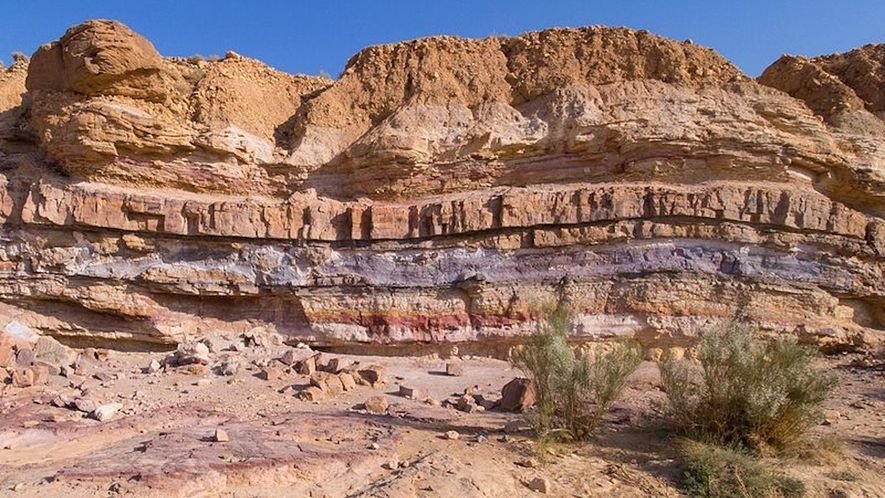
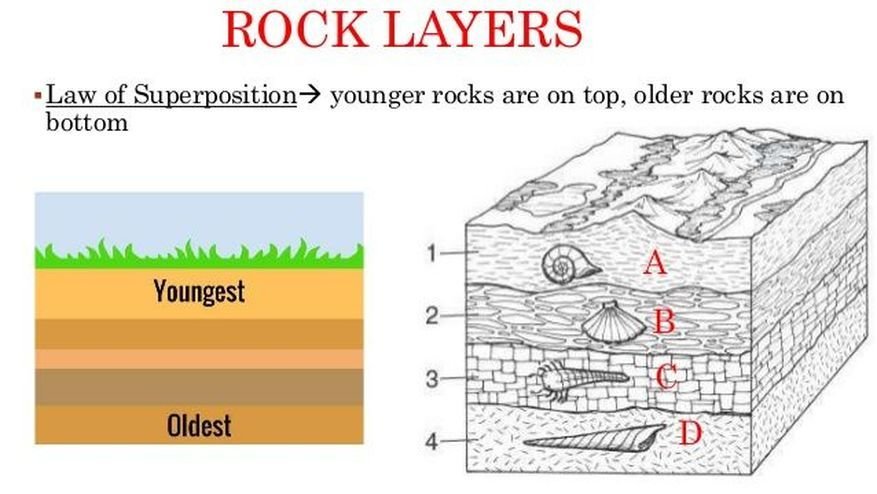
THE LAW OF SUPERPOSITION to find the relative age of rock layers
The LAW OF SUPERPOSITION states "In horizontal rock layers the oldest layer is at the bottom. Each layer higher is younger than the one below it"
Please copy this slide down
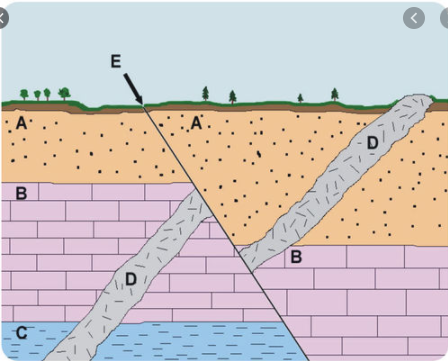
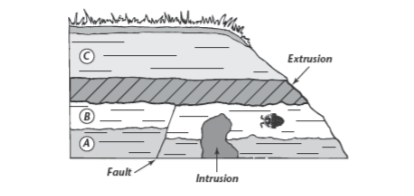
We also can look at EXTRUSIONS and INTRUSIONS of igneous rock, faults, and gaps in the geologic record to determine relative age of rock layers.
Extrusion: lava that cools outside the Earth. The rock layers below an extrusion are always older than the extrusion.
Intrusion: lava that cools within the earth. An intrusion is always younger than the rock layers around and beneath it.
Please copy this slide down
Fault: A break in Earth's crust.
A fault is always younger than the rock it cuts through.
Please copy this slide down
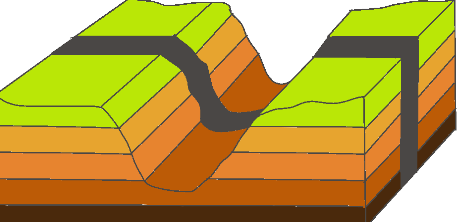
Unconformity:
The surface where new rock layers meet a much older rock surface beneath them.
An unconformity is a gap in the geologic record. An unconformity shows where some rock layers have been lost because of erosion.
Please copy this slide down
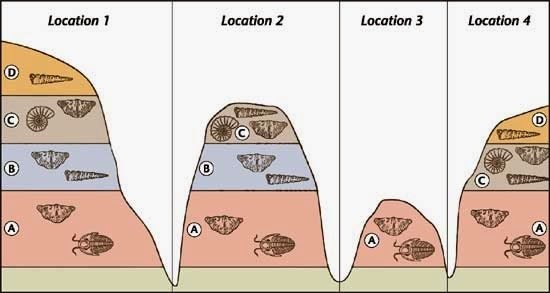
To date rock layers, scientists first give a relative age to a layer of rock at one location and then give the same age to matching layers at other locations
Please copy this slide down
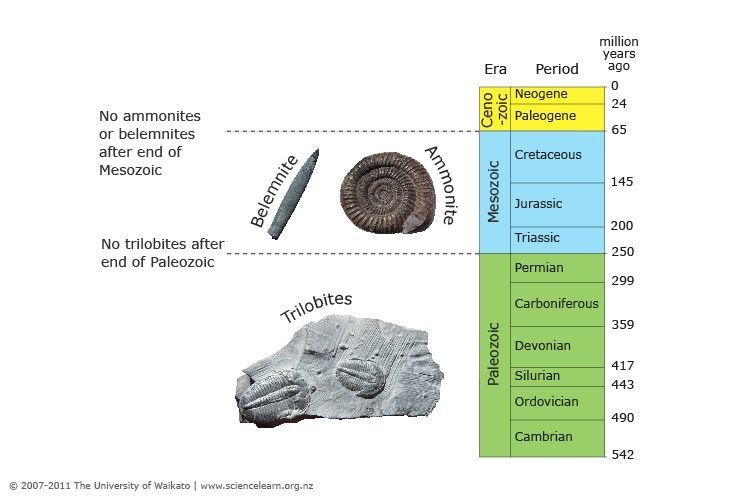
Index Fossils- fossils that help scientists match rock layers
example:
Please copy this slide down
What makes a good index fossil?
-widely distributed
-an organism that only existed briefly
INDEX FOSSILS ARE USED TO FIND THE RELATIVE AGE OF A ROCK!
Please copy this slide down
By Ms. Russel