Reactive
Programming
So what's reactive programming?
Reactive Programming is:
- Programming
- With
- Asynchronous
- Event Streams
So...?
- solve asynchronous problems easier
- with cleaner code
- by writing less boilerplate
- and also avoid callback-hells
- "LINQ for sequences of events"
So you get to:

The Basics:
Observables
&
Subscribers
Observable<T>
- First, an Observable<T> emits 0-* events of type T
- Then it emits a 'Complete' signal...
- ... OR it emits an 'Error' signal
- ... OR it's and endless stream of events


Creating an Observable
Observable<String> myObservable = Observable.create(
    new Observable.OnSubscribe<String>() {
        @Override
        public void call(Subscriber<? super String> sub) {
            sub.onNext("Serious Rr business.");
            sub.onCompleted();
        }
    }
);
Subscriber<T>
- Subscriber = listener of an Rx stream
- Reacts to incoming events & signals
- Can unsubscribe from the stream
Subscriber<String> mySubscriber = new Subscriber<String>() {
    @Override
    public void onNext(String s) { System.out.println(s); }

    @Override
    public void onCompleted() { }

    @Override
    public void onError(Throwable e) { }
};
Let's connect all this
Observable<String> myObservable = Observable.create(
    new Observable.OnSubscribe<String>() {
        @Override
        public void call(Subscriber<? super String> sub) {
            sub.onNext("Serious Rr business.");
            sub.onCompleted();
        }
    }
);

Subscriber<String> mySubscriber = new Subscriber<String>() {
    @Override
    public void onNext(String s) { System.out.println(s); }

    @Override
    public void onCompleted() { }

    @Override
    public void onError(Throwable e) { }
};

myObservable.subscribe(mySubscriber);
// Output: "Serious Rr business."
Advantages so far
- It seems to be a clean, generic & standard pattern for async problems
- ... and not much else, yet
Async - do we care?
- Network requests
- Disk I/O
- Bitmap manipulation
- Calculation-intensive BL
- UI layout
- Every single UI interaction
- Sensor input
- Model state changes
- Device configuration changes
- And the list goes on
The Observable pattern maps easily to these problems
We sure do:
The real deal: operators
Operators
- transform
- combine
- filter
- delay
- debounce
- etc.
With operators we can:
our Rx Streams -> huge flexibility.
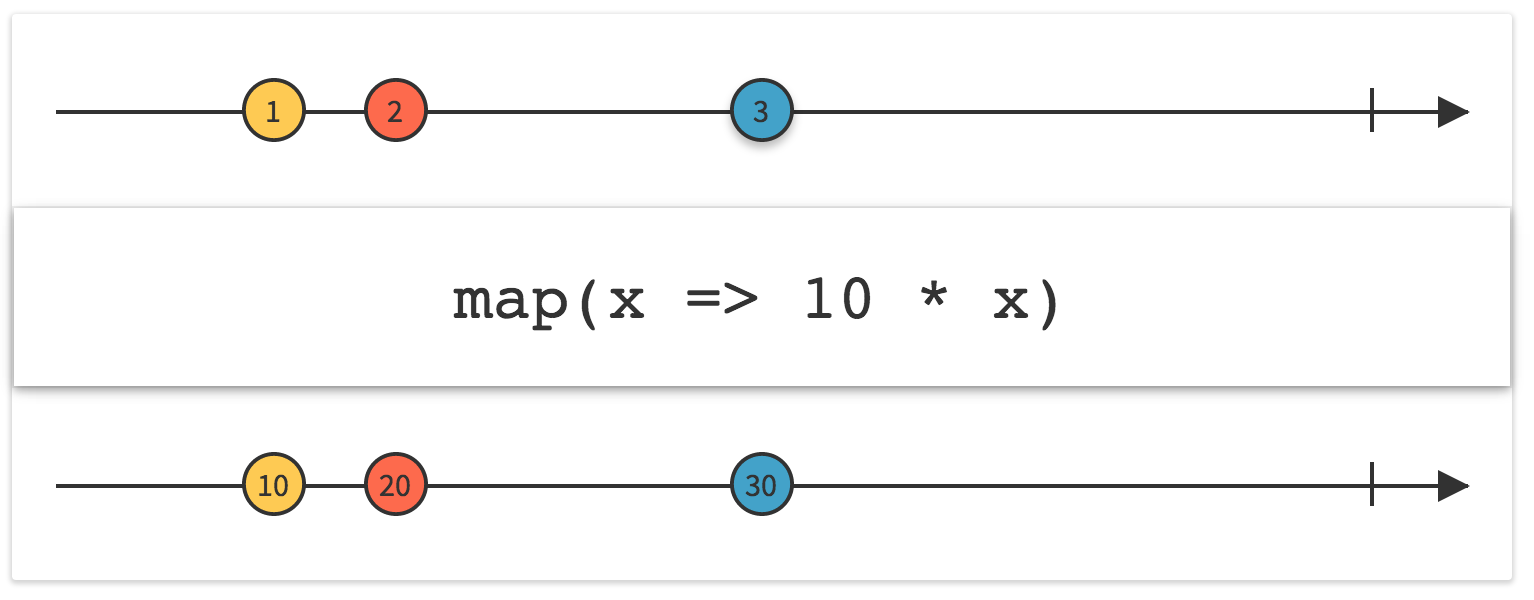
Rx Operators - Map
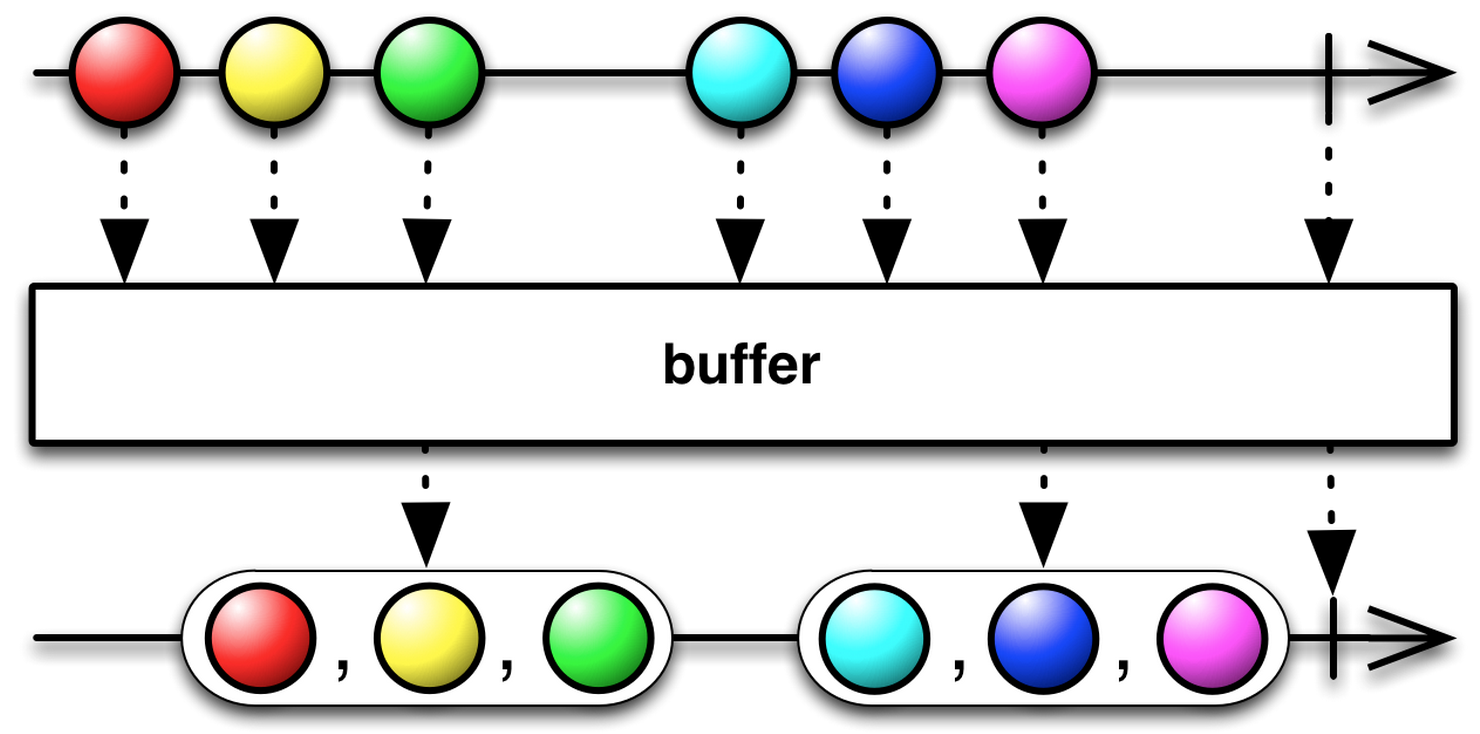
Rx Operators - Buffer
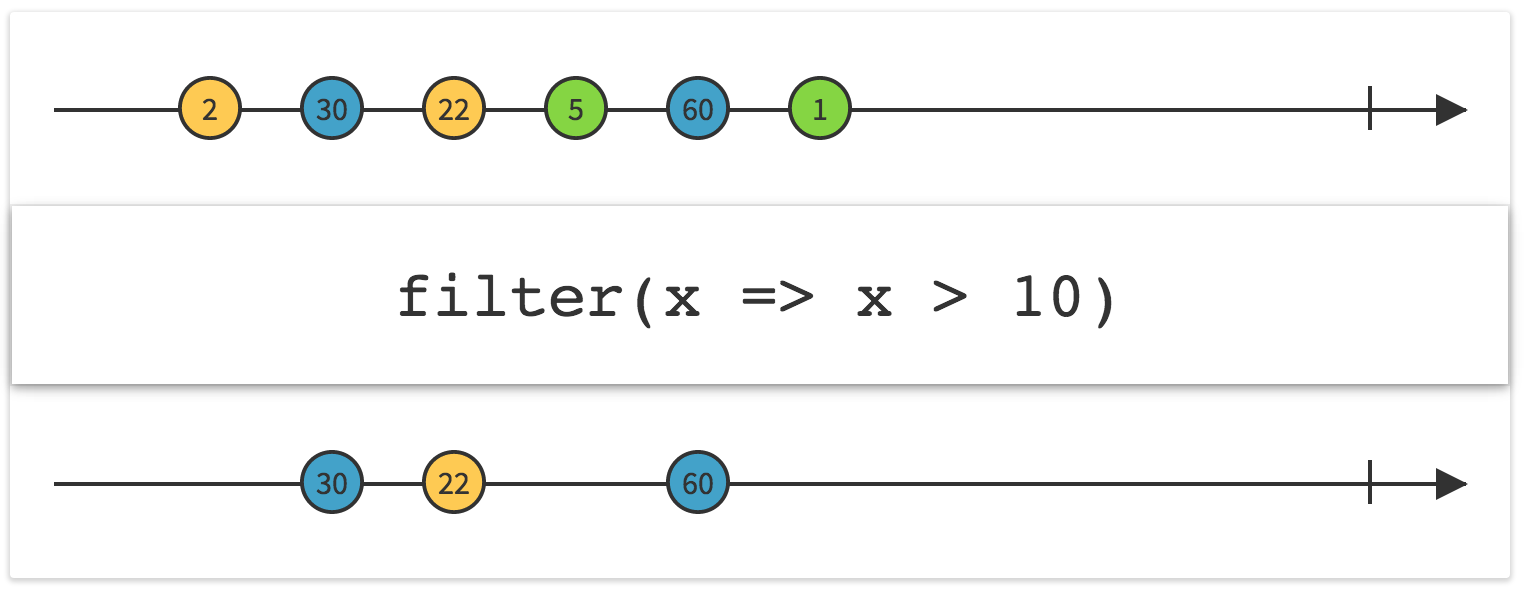
Rx Operators - Filter
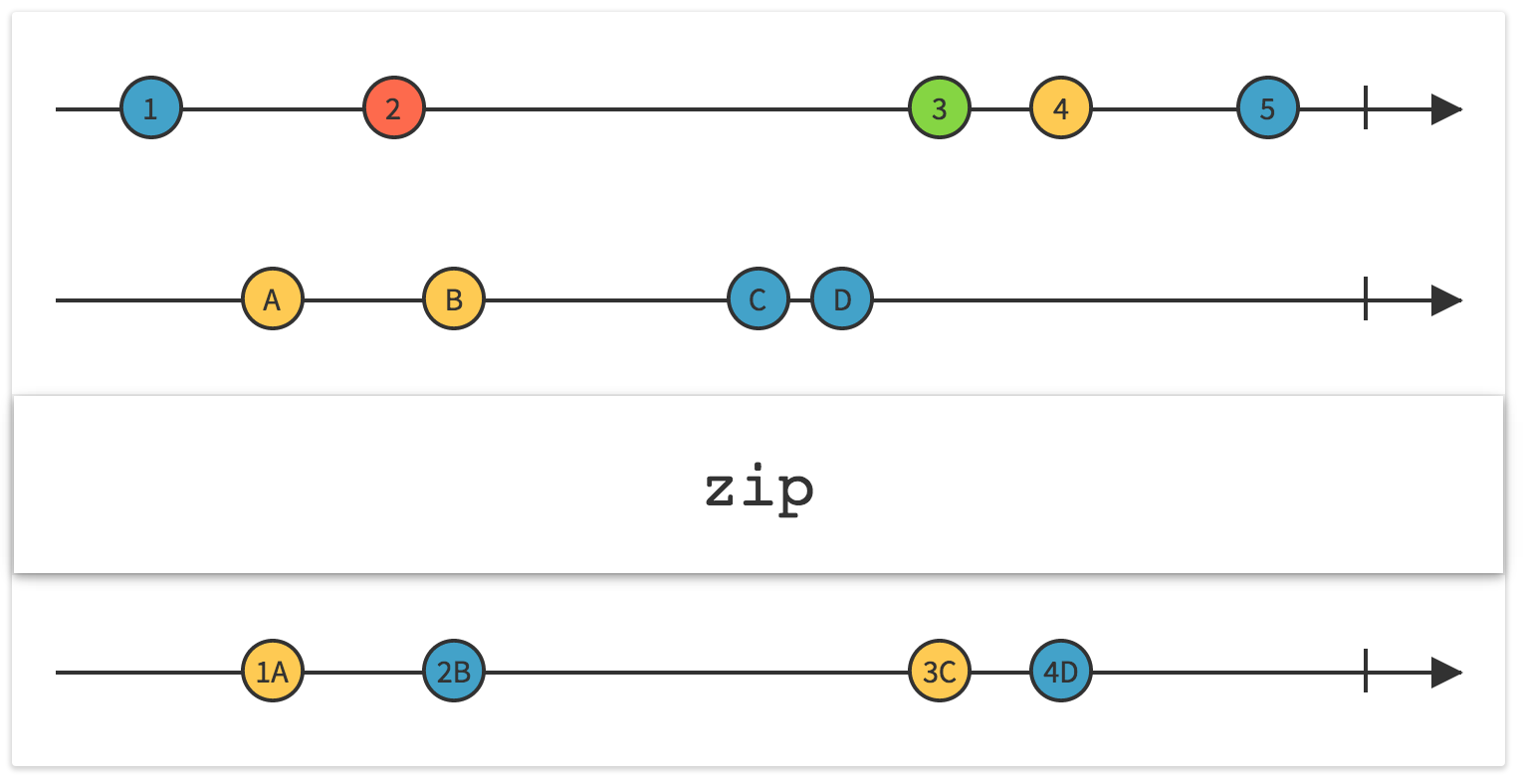
Rx Operators - Zip
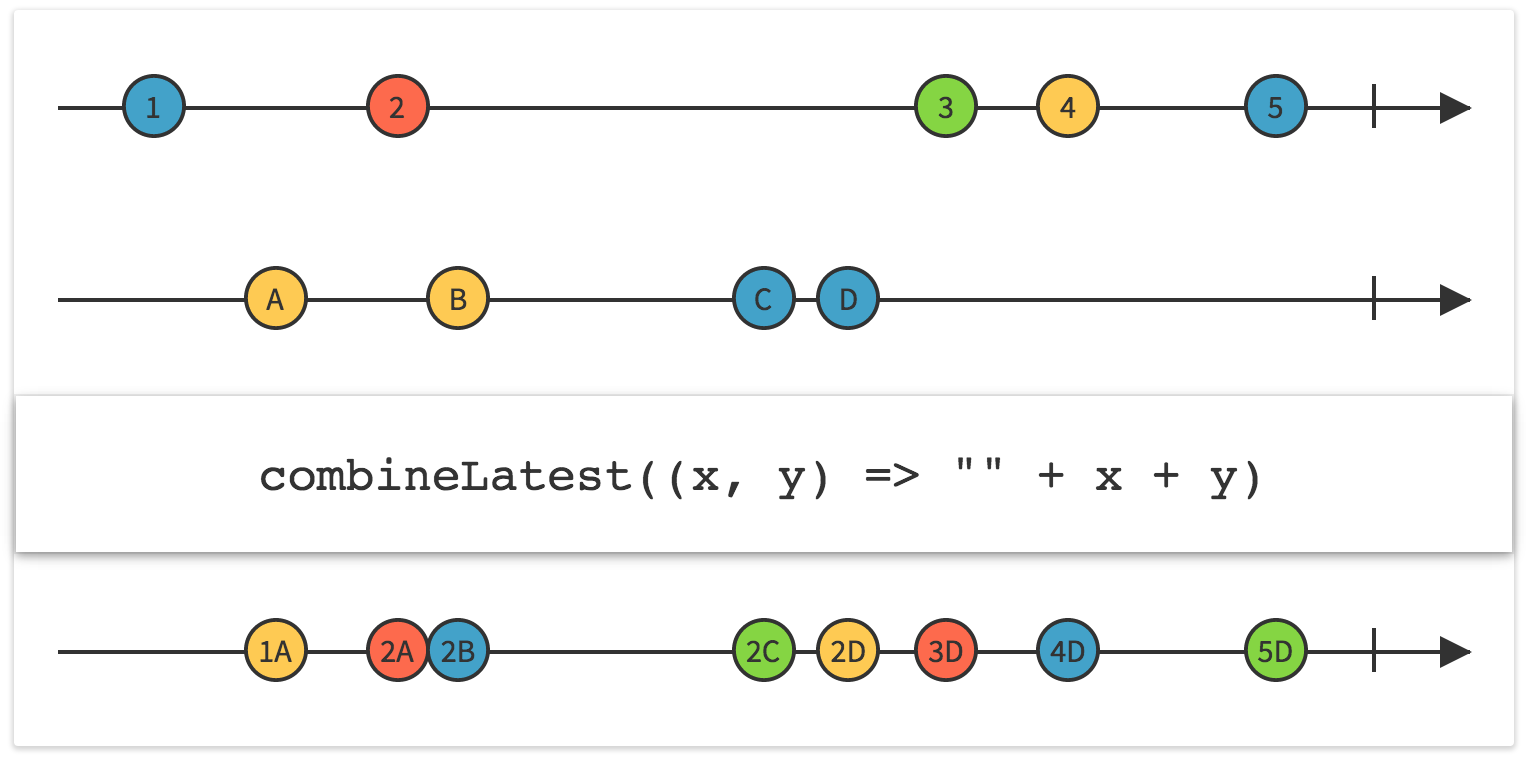
Rx Operators - CombineLatest
Win #1
Rx helps avoiding callback-hells by chaining streams
Win #2
Easier combination of async processes with stream primitives
Win #3
Better error handling
- Errors are passed cleanly towards the Subscriber
- Error handling code can remain in the Subscriber!
Oh there's more:
Scheduling
By default an Observable is synchronous!

Scheduling
-
The Subscriber can control threading via operators & Schedulers
-
.subscribeOn(<Scheduler>) -> work will be done on this Scheduler
-
.observeOn(<Scheduler>) -> events will be received on this Scheduler
Schedulers
-
Schedulers.newThread() -> new thread for each job
-
Schedulers.immediate() -> execute job in current context
-
Schedulers.from(<Executor>) -> use any Executor for job execution
-
AndroidSchedulers.mainThread() -> execute job on UI thread
-
Etc...
Schedulers - example
Observable.just(1, 2, 3, 4, 5, 6, 7, 8, 9, 10)
                .filter(new Func1<Integer, Boolean>() {
                    @Override
                    public Boolean call(Integer value) {
                        return value % 2 == 0;
                    }
                })
                .buffer(3)
                .subscribeOn(Schedulers.newThread())
                .observeOn(AndroidSchedulers.mainThread())
                .subscribe(new Action1<List<Integer>>() {
                    @Override
                    public void call(List<Integer> value) {
                        Log.d("Out", "Got: " + value);
                    }
                });
Output:
Got: [2, 4, 6]
Got: [8, 10]How we use RxJava in Go Android
Recent Place Handling
- We need to store the last X origin & destination places the user selected
- Simple SharedPrefs-based storage (XML)
- In general: most of our DataHandlers are Reactive
Route Categorization
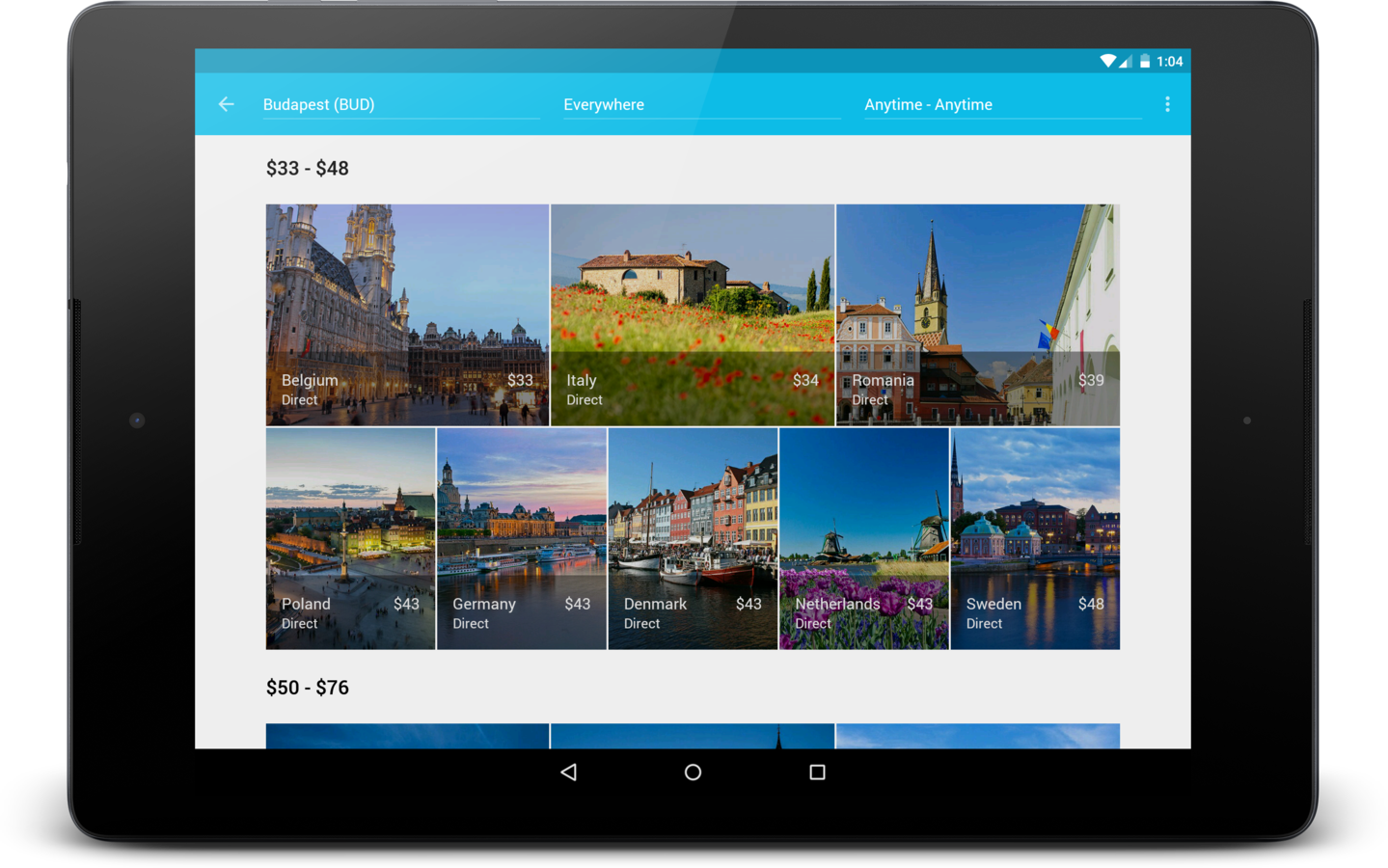
- We present possible travel destinations, with prices attached
- Need to put them into price categories of fixed sizes
Geo Lookups
- We need to get details Place information from the Geo Service
- IATA code (String) -> Place ID (int) conversion also needed
UI Interactions
- Click listeners, Text Changed listeners are Reactive where it makes sense
- Makes sense = need to integrate them into Rx streams
- E.g.: AutoSuggest EditText text changed event throttling
Sorting / Filtering Architecture
- Search Configurations
- Filter Configurations
- Dataset polling
- Search config change -> restart polling
- New result polled OR filter config change -> Refilter dataset / Refresh UI
- State for collection (dirty / complete)
- Calculating tags and rating
- Sort chain, Filter pipeline
- Wrapping result with statistics
- State for filters
Summary
More, Rx++ topics
- Hot and Cold Observables
- Subjects
- Backpressure
- More complex operators
- Custom-built operators
- RxJava plugins
- Patterns / anti-patterns
- ...
So what are the cons?
- Initial learning curve is a bit steep without guidance
- A bit hard to find good advanced docs
- You need to know what you're doing - cargo cult programming is especially dangerous with Rx
- Adds debugging complexity
And most importantly
- Rx is - yet again - not a silver bullet, don't use it for everything
- You're exchanging lower level problems to higher level problems
- We believe that in most cases this exchange is worth it
Thanks for watching!
Q & A?
Reactive Programming Intro
By rzsombor