How shall we represent their lives?
Life and Labor under Slavery amongst the Ancestors of the 272
Sharon M. Leon
February 8, 2025
Project Background
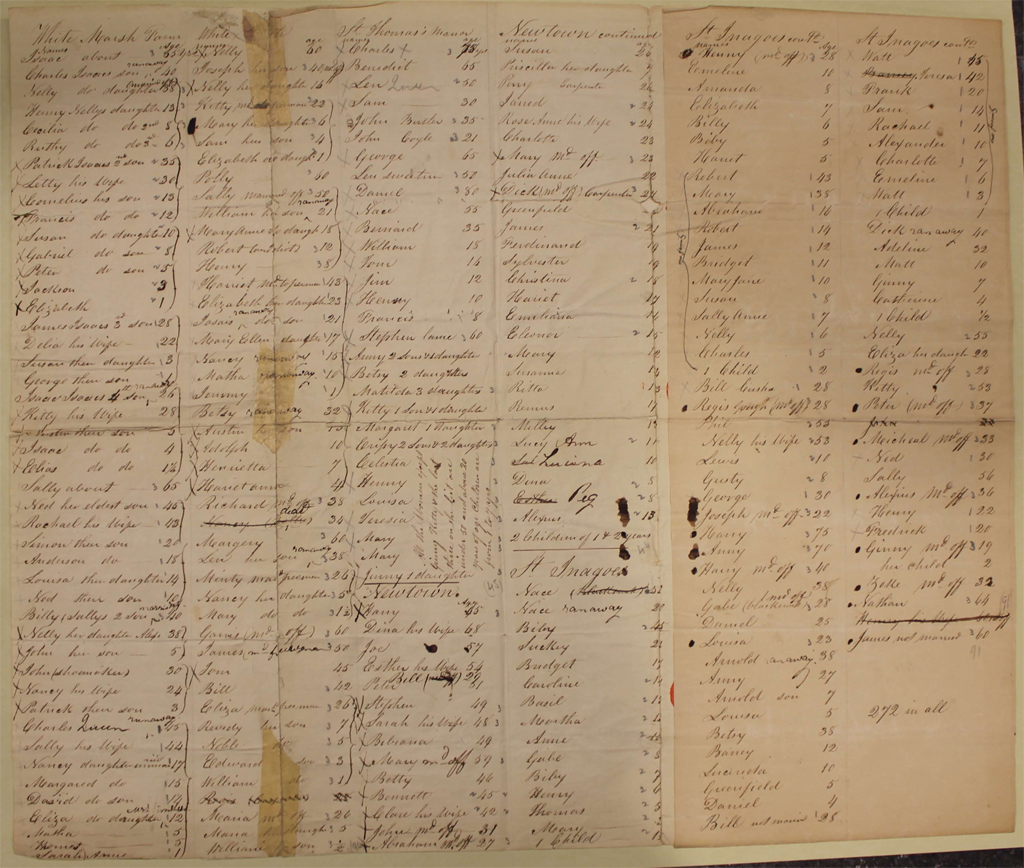
What can we know about the lives of the people enslaved and owned between 1717 and 1838 by the community of priests who founded Georgetown University?
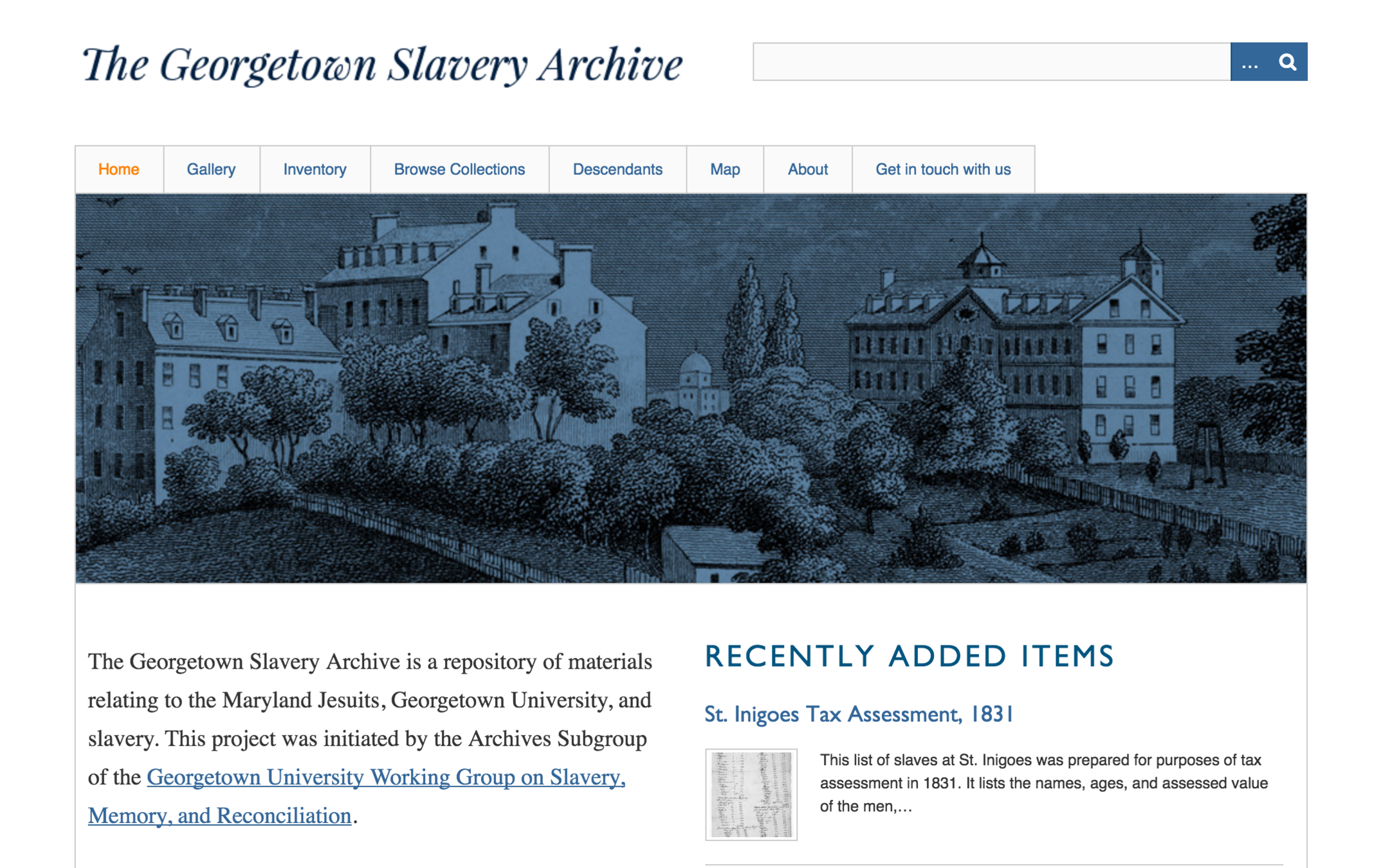
slaveryarchive.georgetown.edu
Document Transcriptions
[1802 Dr St. Thomas's Manor in acct with Cash]
[1803]
[Jan]
26     To cash from Henny for 3 barrels corn @ $2   6.00  2.5.0
April 22    To Cash recd for sale of negro Constant, property of N.L. Sewall's estate  101.10.0

[opposite folio 1802 Contra Cr.]
[1803]
[Jan]
10    By do to do (the Taylor C. Layman) for making a servant's great coat  0.12.6
April 22  By Do [cash] to Mrs. Dorothy Digges for negro woman Jenny & her child  85.0.0
Rectangular Research Data
-
Enslaved owned by priests (Jesuits): 1151
-
Enslaved owned by others: 49
-
Free Black people: 36
-
Priests: 62
-
White lay people: 118
People

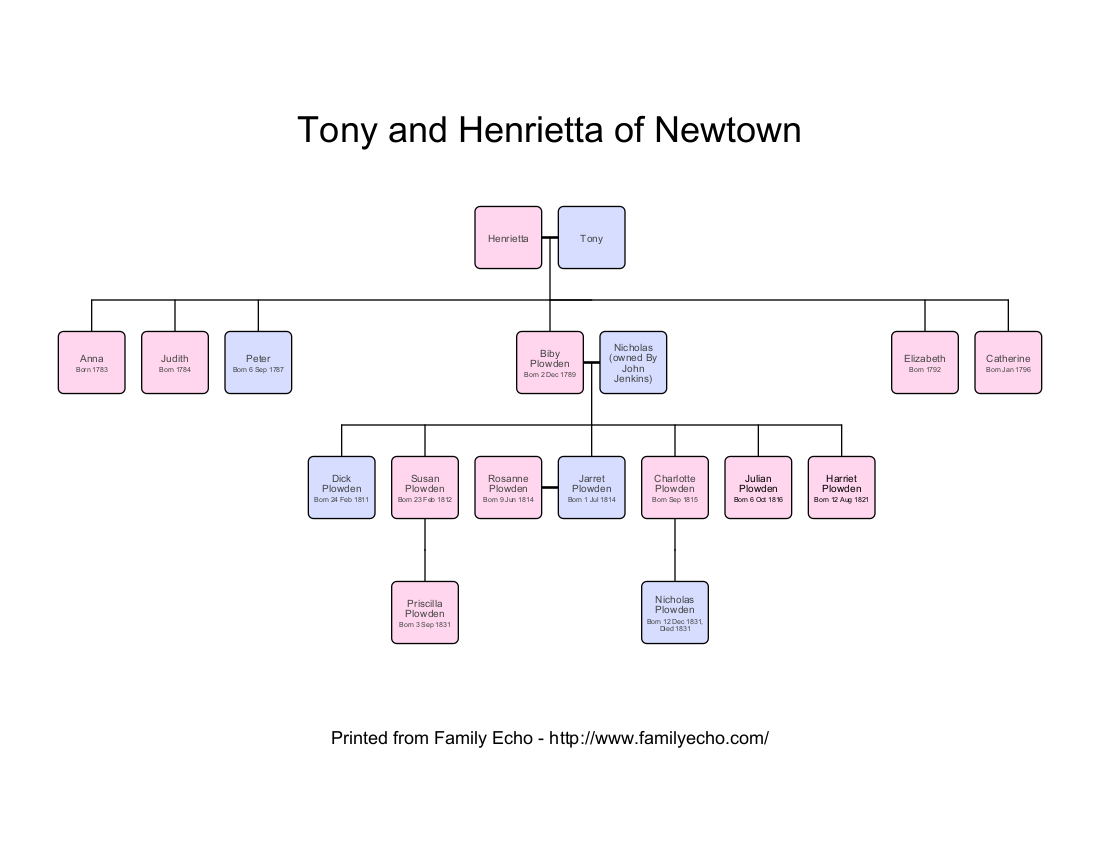
RElationships
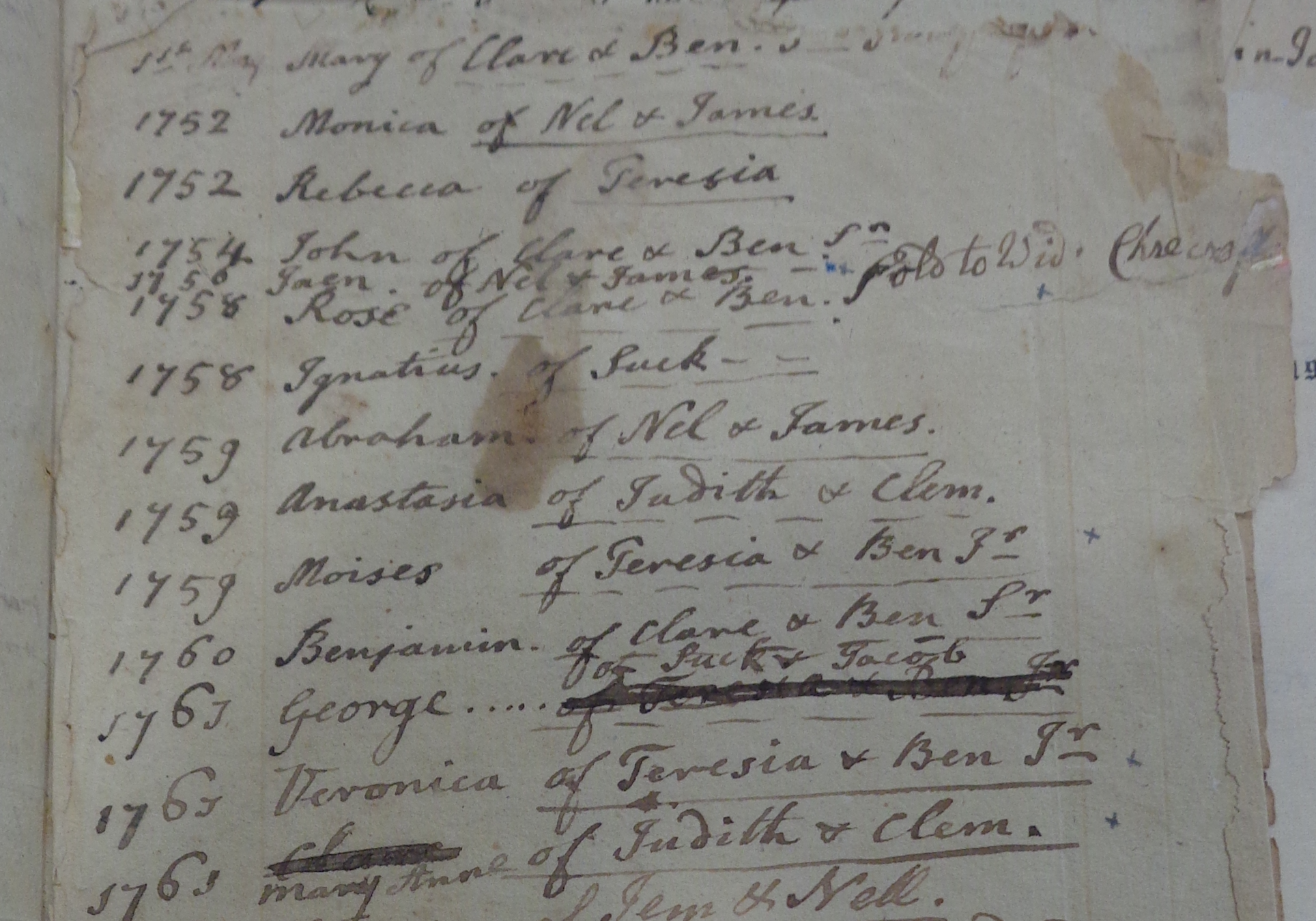
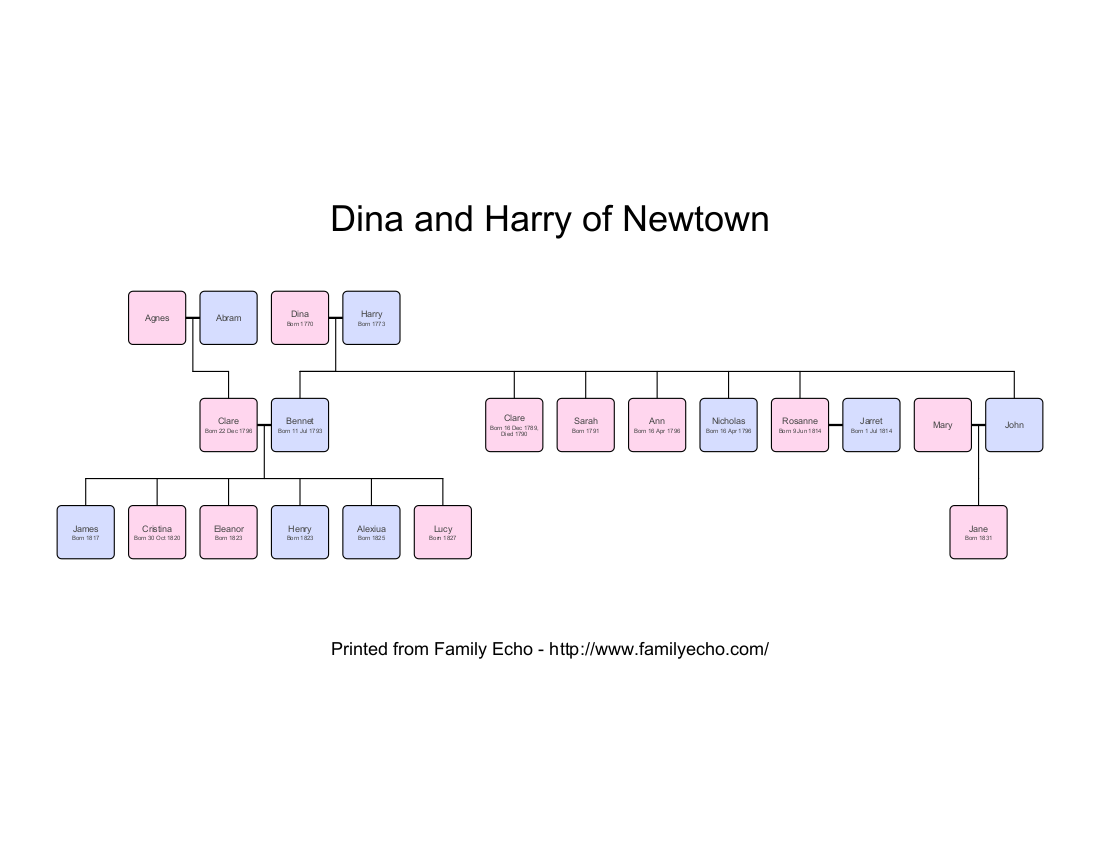
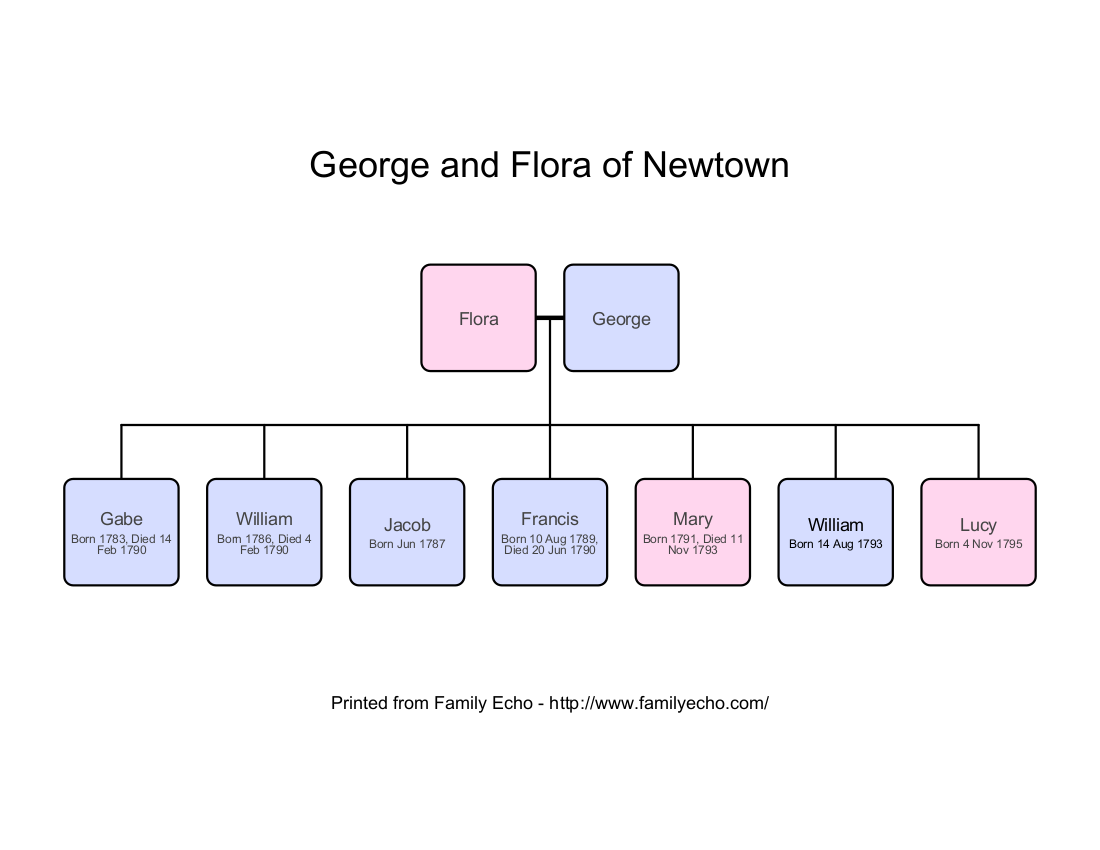
An examination of the full scope of the Maryland Province records provides the ability to piece together important stories of enslaved families.
Perry GreenWood
In 1790, purchases Nell and her son, Perry for 4 Pounds.
Patrick Barnes
- Blacksmith.
- Puts his family's freedom in motion in 1792.
- Begins paying on his wife Mary and children Isaac & Hannah in 1793.
- Purchases his own freedom in 1797.
Living Conditions
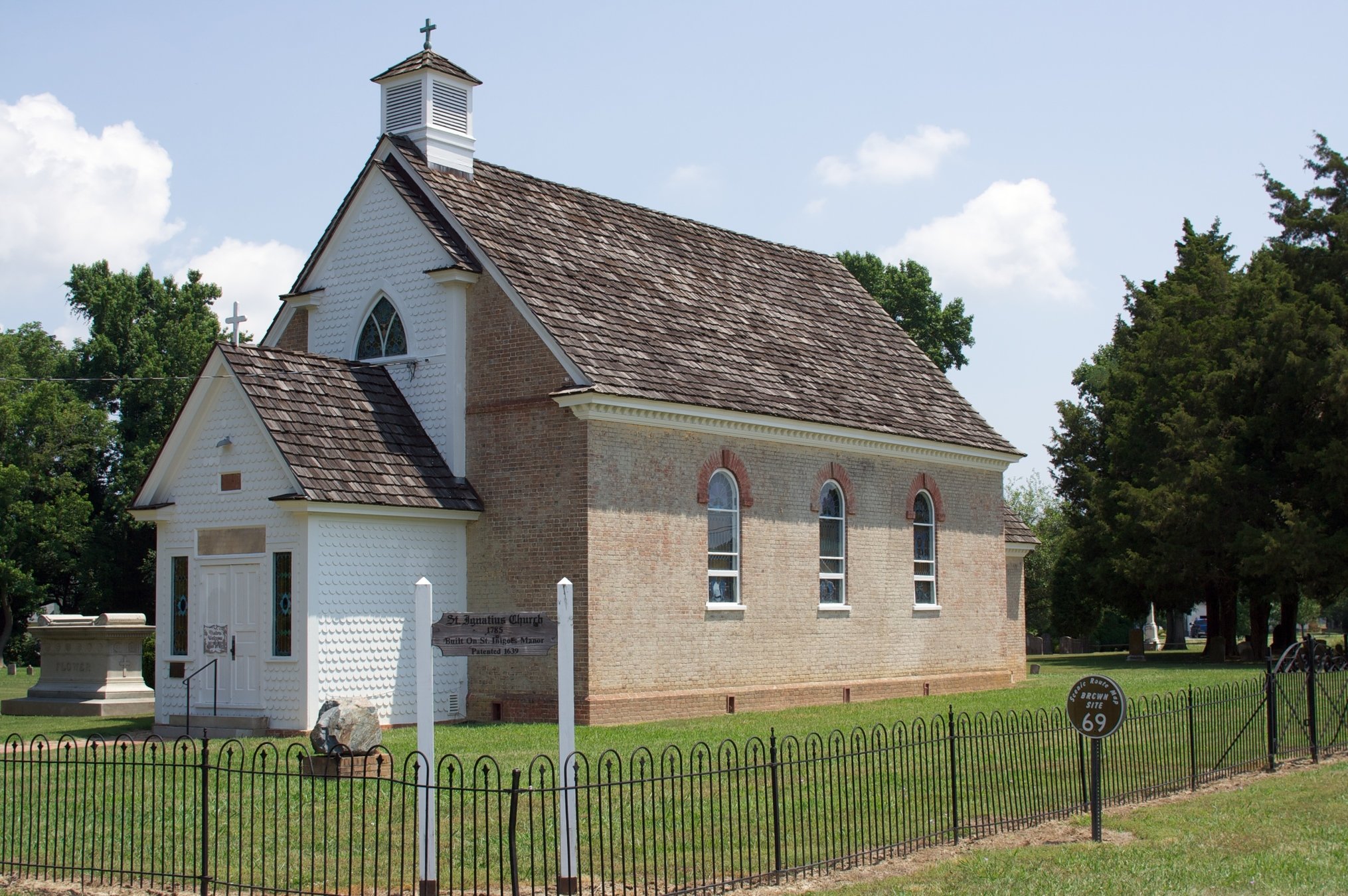
The documents and ledgers contained in the Maryland Province Archive reveal a great deal about the everyday living conditions of the enslaved.
〞
three Buildings, a miserable Dwelling House & much worse for some Negroes, & a House to cure tobacco in. The dwelling House was nothing but a few Boards riven from Oak Trees, not sawed Plank, & these nailed together to keep out some of ye coldest air: not one Brick or stone about it, no plastering & no chimney, but a little stole in ye Roof to let out ye smoak. In this I lived till ye Winter, when I got it plastered to keep of ye cold, & build a Brick Chimney, ye Bricks I was obliged to buy & cart about 5 Mile.
– Joseph Mosley, SJ
March 1765, St. Joseph's
〞
Men & working boys -- One Winter suit consisting of one woolen jacket & breeches (or, trowsers, at option of Master): one pair yarn stockings; one pair shoes. -- Two shirts -- one pair linen trowsers, for summer.
Women & working girls -- One woolen short gown and petticoat, for winter -- one linen petticoat, for summer -- two shifts -- one pair shoes -- one pair yarn stockings every other year; & feeting, alternately.
Children -- As necessity requires.
N.B. Blankets, when necessary
-- Francis Beeston, SJ
1791, Bohemia Manor
Mobberly's Clothing
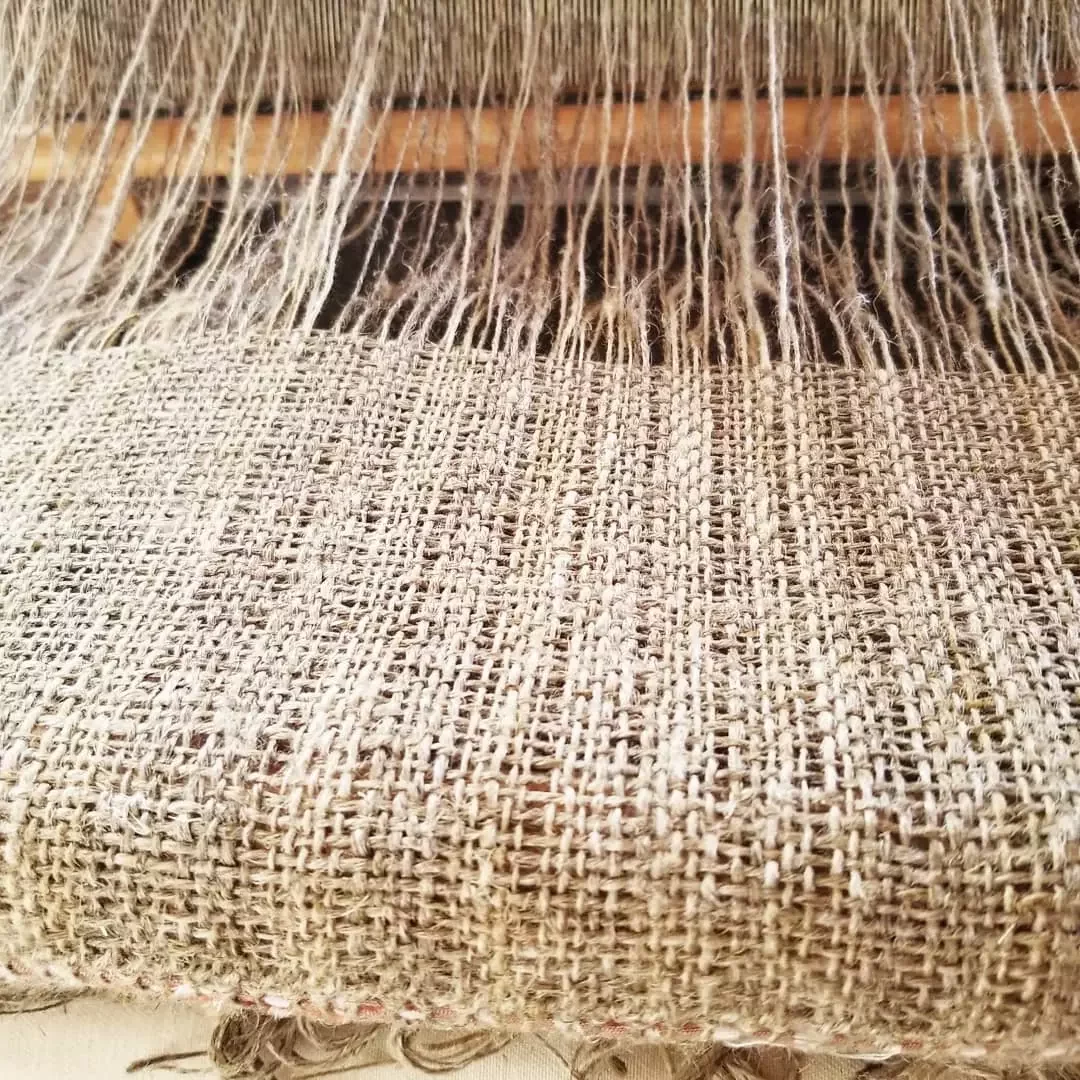
Each labourer received from the farm for summer, 2 shirts, and one pr. of double soaled shoes, one pr. of stockings, one pr. of pantaloons and a round-about coat, all made on the farm from the crops of wool and flax. --The women received 2 shifts and 1 habit for summer, and for winter 1 pr. of double soaled shoes, 1 pr. stockings, 1 petticoat, & 1 short gown.
- 400 bushels of corn
- 6,000 lbs. of pork
Farm production
- 630 bushels of corn
- 3,468 lbs, of bacon
- 68 lbs. of hog's lard
Annual Provisions
Mobberly's 1815 Estimates
Mobberly's Rations
One peck of meal a little heaped was always allowed each labourer per week and a half peck to children. Old people who were passed labour were allowed as much per week as a labourer. One peck per week was always found to be a plenty, and some of them did not use it all. What they did not use was preserved for the raising of poultry.
〞
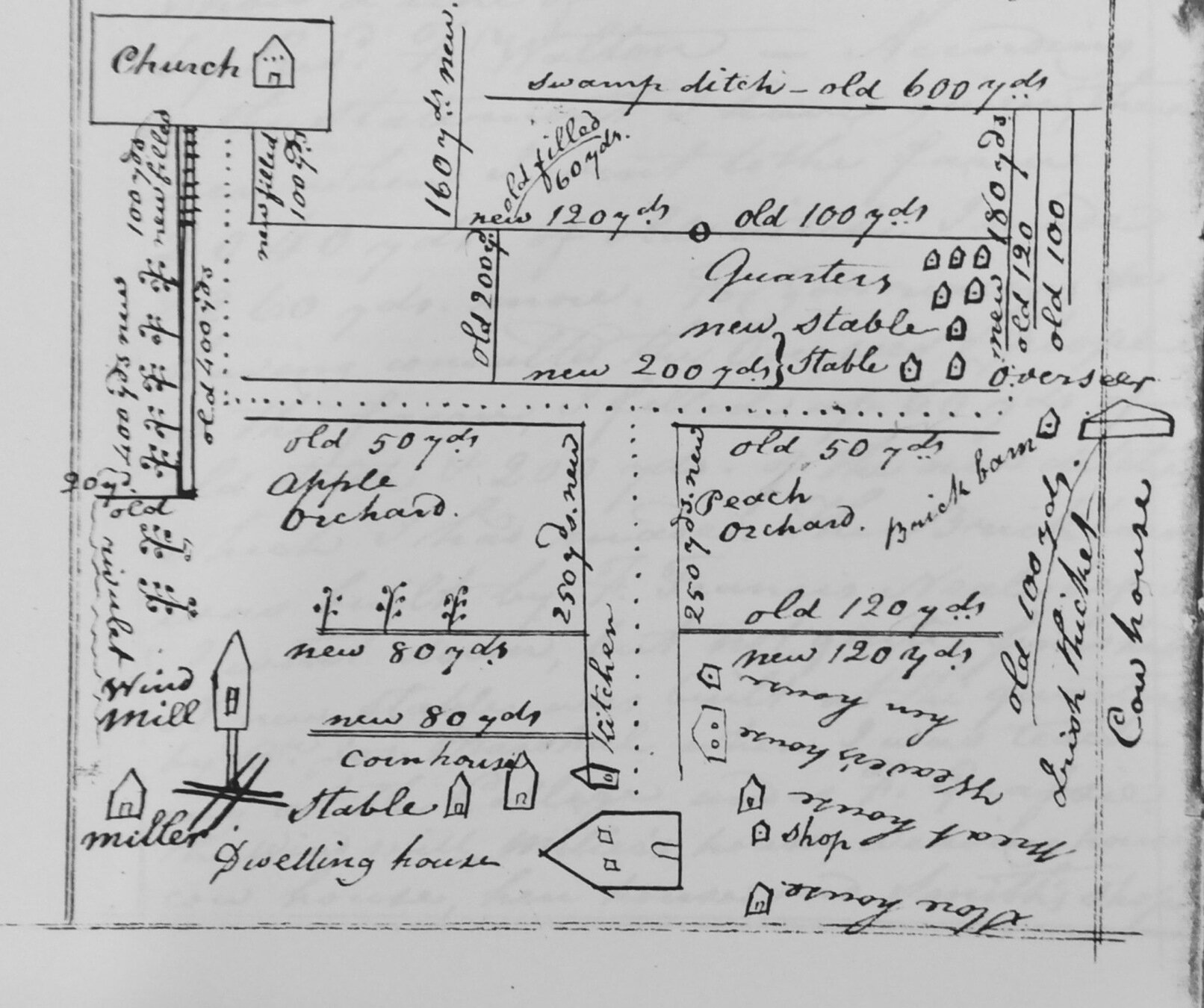
The dimensions of a Negroe's patch in the future shall be 100 yards long, & 40 yards wide from the fence of the field, to which it joins. If he be a married man, & his wife live on this Plantation, he shall be allowed a patch 200 yds. in length, & 40 ^yds.^ in breadth from the fence of the adjoining field. If a ^married^ man has a patch of these last dimensions; his wife shall have no separate patch. No boy, nor girl shall be entitled to a patch til he or she is a full hand, with respect to work. -- The patches shall be made only in such places, as the Master shall appoint. -- If any one transgress these rules; he shall, without fail, lose his patch ^& all title to any for the future.
-- Francis Beeston, SJ
1792, Bohemia Manor
Health & Sickness
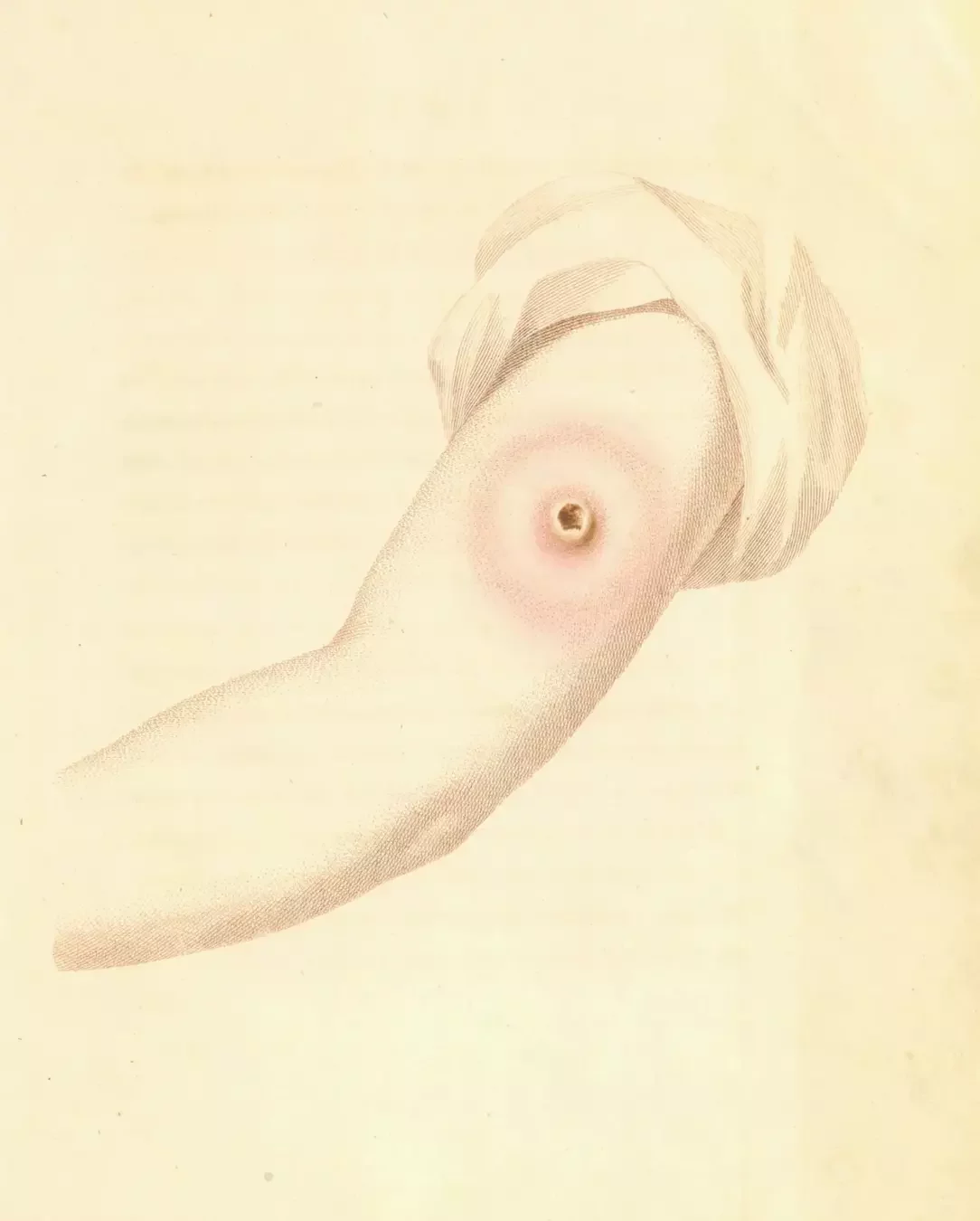
The lives of the enslaved where punctuated by a number of health events, ranging from mundane, to serious, to deadly.
| Medicine | Form | Usage |
|---|---|---|
| Hydrargyum | Mercury, commonly known as Quick Silver | diuretic, topical antiseptic |
| Spiglia | known as Annual Worm Grass, homeopathic | eye pain; heart remedy; nerve pain; bad breath; worms |
| Sasaparilla | root of the plant | skin diseases, rheumatoid arthritis, kidney disease, sexually transmitted diseases |
| Ammonium | ointment | itchy skin |
| Antimony potassium tartrate | emetic | discourage alcohol use, other ingested poison, purgative |
| Sulfur powder | sublimation | skin conditions |
Common Remedies Encountered by the Enslaved
〞
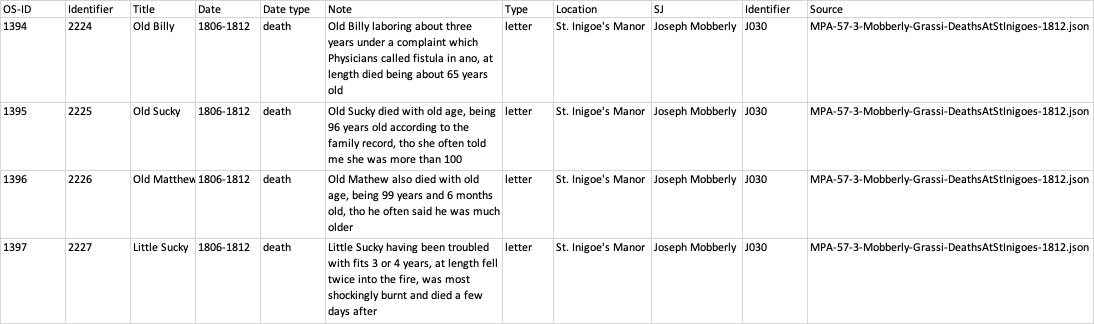
On my return, I found that our family here had meet with severe chastisements. - a young married woman had died, five men were confined with sickness as also six women, and five children. To two of these women I give the holy oils last night, their exit from this world is daily expected. Our quarters are condemned & must be destroyed by fire in the beginning of spring. - our prospects are dreadful and I am obliged to have recourse to the ordinary means to carry on business in the family. That is the hireing of slaves. I have hired three, nor will these supply our loses.-
I am forced to employ all I can to obtain timber for the building of Negroe quarters…
– Conrad Anker
-- Francis Neale, SJ
January 1827, St. Inigoes
How Shall We Represent their Lives? Life and Labor under Slavery amongst the Ancestors of the 272
By sharonmleon
How Shall We Represent their Lives? Life and Labor under Slavery amongst the Ancestors of the 272
A presentation for the GU272 Descendants Association's 2025 Black History Month Salon