Police Brutality
Putting An End to the Violence
Presented by: Victoria Maenner
what is it
Key terms
-
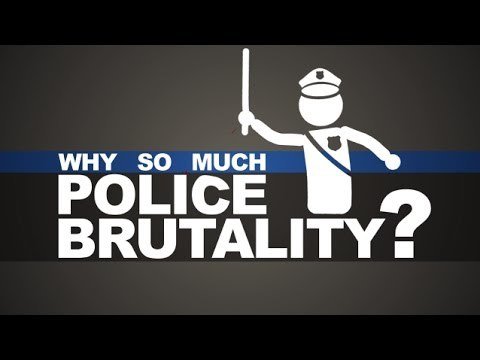
The term police brutality refers to the use of unnecessary, or excessive force by police officers when handling civilians.
-
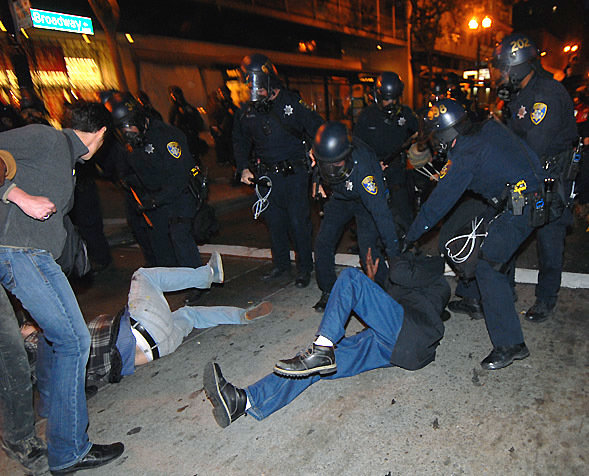
Physical force includes the use of pepper spray, tasers, and batons as well as hitting, choking, throwing a non-combatant civilian to the ground, and sexual abuse. While it may sound like police brutality is strictly physical, this is not the case.
- Non-physical force include false arrests, verbal abuse, and racial profiling.
- Social Justice - The promotion of fairness, freedom, and equality being evenly distributed amongst all people.
- Arrest – The act of detaining a person in a set of handcuffs by legal authority.
- Civil Lawsuit – A lawsuit brought about in court when one person claims to have suffered a loss due to the actions of another person.
- Criminal Charge– A formal accusation by a prosecuting authority that an individual has committed a crime.
- Racial Profiling – The use of someone’s race as justification for suspecting them of committing a crime.
why it matters to you
In order to enforce the law, cops are allowed to carry lethal weapons. Police have the almost unchecked power to use lethal force against anybody who doesn’t respond with instantaneous and unquestioning obedience to their commands. When police abuse their authority and the public trust, there’s no redress for grievances within the criminal justice system. (Sehat, par 2).
Police brutality has always and without exception been perpetrated against poor people and the socially marginalized. Like most bullies, police who abuse their discretion and use excessive force prey on those who have little power to retaliate (par 3).
Poverty might be responsible for worse outcomes in the criminal justice system. As Reiman and Leighton argue in their book, The Rich Get Richer and the Poor Get Prison, the less money you have, the more merciless the system is. Poor people are disproportionately investigated, arrested, and charged. Typical poor crimes (burglary, assault, etc.) are treated more seriously and aggressively than typical rich crimes (ie. fraud or tax evasion) where the really spectacular thefts happen (Cooper, par 5).
perspectives
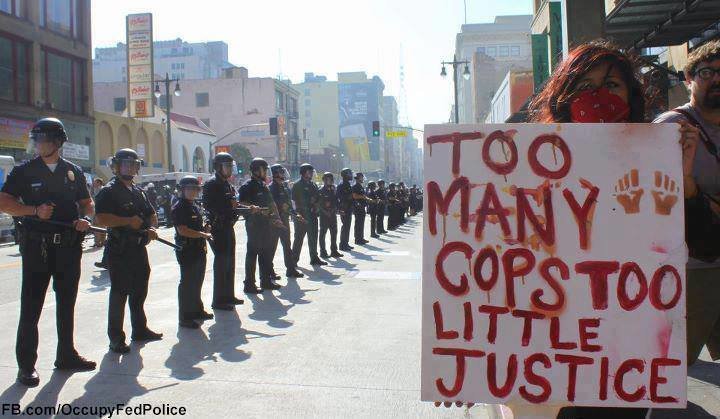
“Too much of police investigations into killings revolves around the immediate circumstances. We need to step back and ask what got us to that place. What got the person who is now deceased into the position where he acted the way he did? And those questions are not being asked.” - Michael Jenkins (Wines and Cohen, par 25).
"We have a lot of people that are oppressed. We have a lot of people that aren't treated equally, aren't given equal opportunities. Police brutality is a huge thing that needs to be addressed. There are a lot of issues that need to be talked about, need to be brought to life, and we need to fix those." -Colin Kaepernick
One
Two
Three
when a civilian is wrongly injured/killed...
First, there is a cry for investigation
Second, the victim’s family seeks justice from the administrative and criminal justice system against the officer(s) responsible
Third, the family seeks compensation for the death or injury
local example in utah
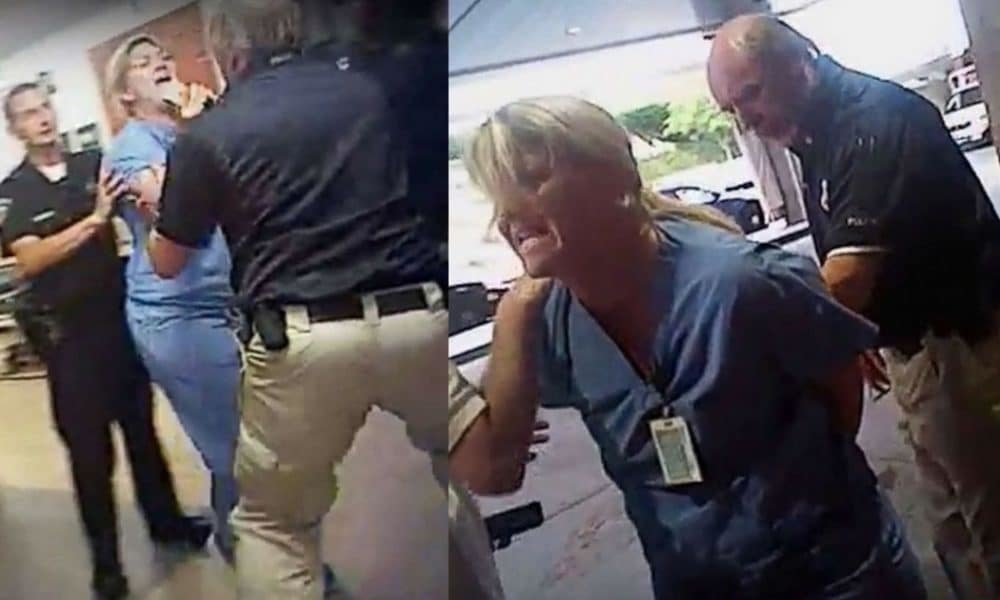
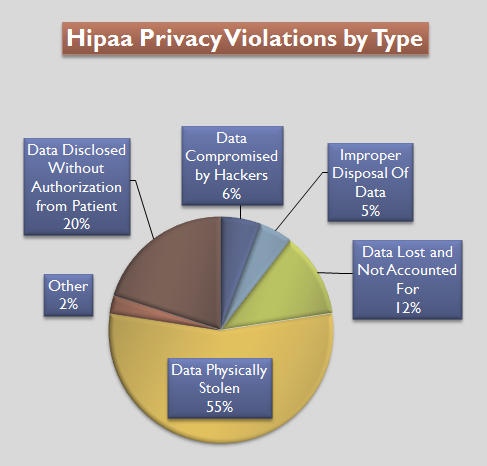
- Alex Wubbels, a U of U nurse, was recently arrested after refusing to provide a sample of blood from a patient.
- The nurse initially felt threatened by Detective Payne's aggressive demeanor. She was calm and polite before the arrest.
- The U of U hospital has policies that incorporate HIPAA laws (Health Insurance Portability and Accountability Act). Nurse Wubbels was simply abiding by these policies that protect the patient's privacy.
- D. Payne aggressively dragged and arrested the nurse, claiming she was "interfering with an investigation".
- The video footage was released to the public, drawing widespread attention online amid the national debate about police use of force.
- The video footage was released to the public, drawing widespread attention online amid the national debate about police use of force.
potential fix
Many law enforcement agencies are putting technology to their benefit. Equipping police officers with cameras is suggested to keep them in line and better the efforts to solving cases of police brutality (Pinizzotto 2009, par 1).
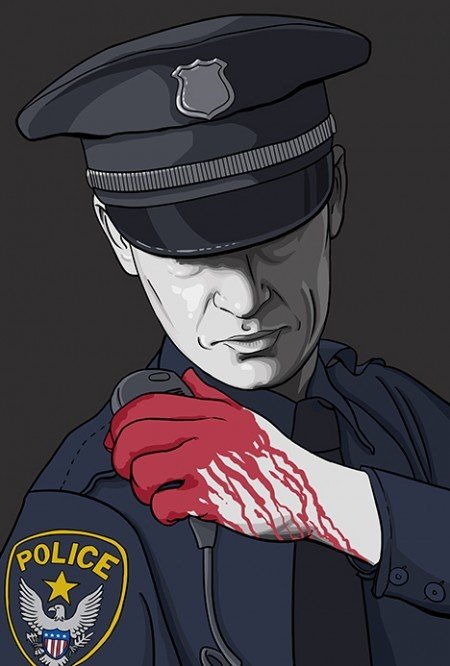
BODY CAMERAS
Widespread ownership of handheld electronic devices gives ordinary people the unprecedented power to record instances of police using extreme force against the unarmed and the powerless (Sehat, par 1).
89% of Americans support police body cameras and majorities are willing to raise taxes pay for them (51%) and let police look at the footage before making official statements (52%). Body cameras aren’t a zero-sum proposition: 74% think body cameras protect both officers and citizens equally (Ekins, par 5).
Image courtesy of Michele Melcher Illustration
Law enforcement officials and police reform advocates have championed body cameras as a tool to help keep cops and civilians honest. The argument holds that people behave better if they know they’re being recorded, and the entire department runs more smoothly as a result (Wing, par 15).
other solutions

"The problem of police brutality is actually deeply entrenched and amazingly complicated. It has no quick fixes. No one solution will solve the problem. Instead, it must be tackled from dozens of different angles, but as a part of one comprehensive plan"- Shaun King
Former police officer Randy Shrewsberry said, "On average, state basic police training is 622 hours with no required apprenticeship. Of course there is some time with a Field Training Officer — which is not mandated in most states and is fully subjective to the employing department. Conversely, the basic training requirements for cosmetologists is 1,570 hours, with an average of 1,080 mandated apprenticeship hours with a total of 2,650 required hours."
An increased amount of taxes would be able to fund this proposed solution.
1. Mandate police officers to earn 4 year degrees
2. Require American police to have more training than cosmetologists
The minimum requirement is usually a high school diploma, although an increasing number of police departments require
This will ensure more educated, higher qualified officers to patrol our streets and protect neighborhoods.
Scholarships could be incorporated into the program as it's funded by the government.
Universities could connect with the police department and provide programs for the prospecting officers.
degree is the minimum requirement for federal police jobs (“How to Become a Police Officer", par 7).
applicants to complete at least one or two years of college coursework or have an associate's degree. A bachelor's
what you can do
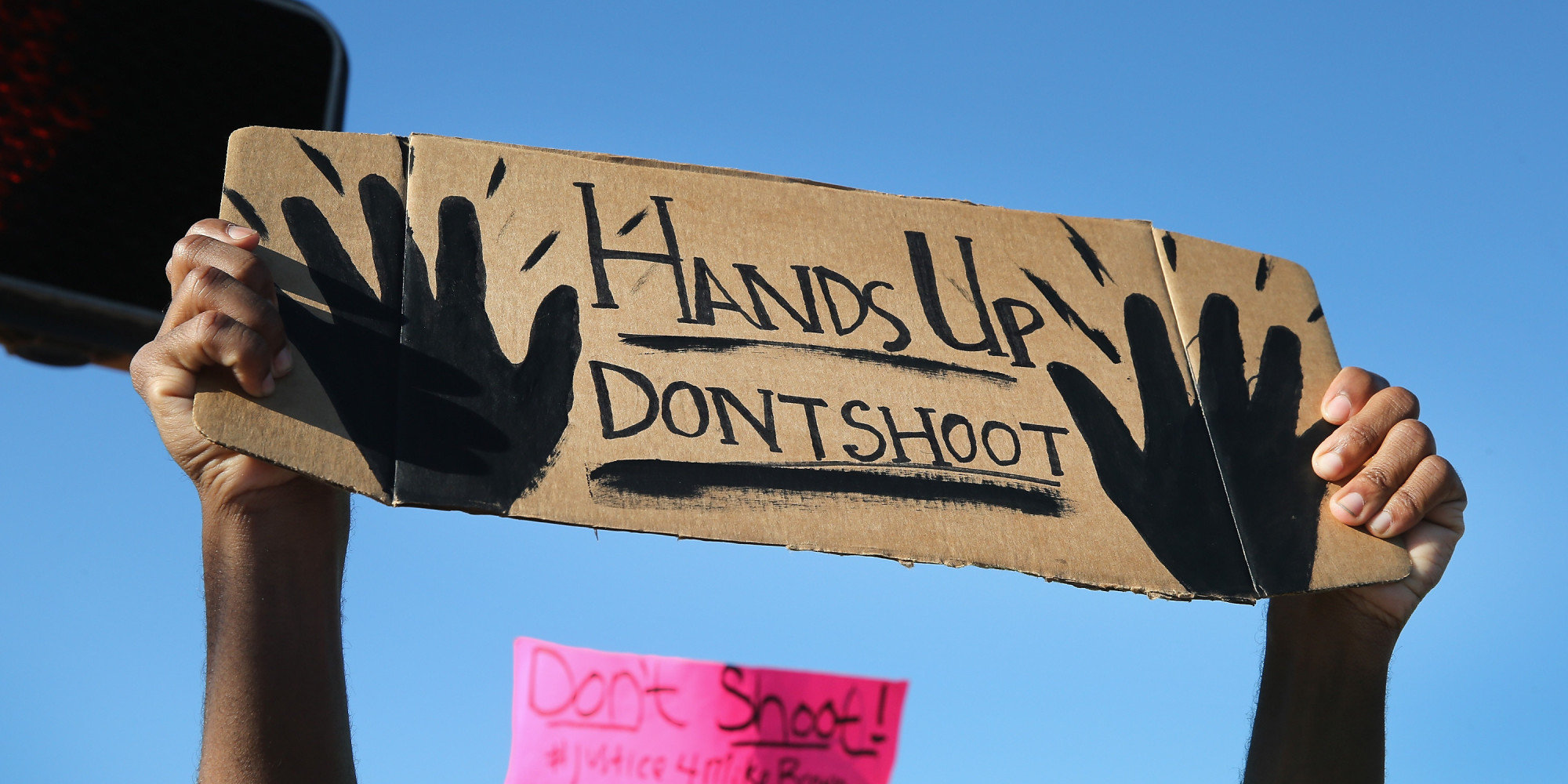
A popular example of a form of student protest is the Hand’s Up Don’t Shoot campaign. Many schools and universities around the world are participating in this campaign and making an impact. This campaign was created in response to the Ferguson shooting. The Ferguson shooting was a popular case of police brutality that recently happened in Ferguson, Missouri. More information about the Hand’s Up Don’t Shoot and other events can be found by clicking on: HUDS ("Police Brutality", par 6).
If you or somebody you know is a victim of police brutality, racial profiling, wrongful arrest, prison guard misconduct or any criminal behavior by police you must contact a Civil Rights Litigation Attorney if you hope to help make a change. You don’t know whether you have a viable cause of legal action without speaking to an attorney about your situation. Any tangible evidence such as video or witness contact information that you can provide will be most helpful. Together we can take action to protect our communities from criminal police (Sehat,par 9).

conclusion
In the last 10 years, the issue of police brutality has drastically changed. Technology plays a big role in this issue and can be used in the future to possibly help correct it. People cannot be too quick to judge a case because they don't know what it's like to be in the position that the officer was in when the incident occurred.
As we look to the future, we can hope that reforms in the policing system and new developments can help lessen or possibly even get rid of police brutality altogether.
Works Cited
- Cooper, Ryan. “To end police violence, we have to end poverty.” The Week - All you need to know about everything that matters, 24 Aug. 2015, theweek.com/articles/573307/end-police-violence-have-end-poverty.
- Ekins, Emily. “11 key facts about Americans' attitudes toward the Police.” Learn Liberty, 20 Dec. 2016, www.learnliberty.org/blog/11-key-facts-about-americans-attitudes-toward-the-police/?gclid=EAIaIQobChMIhs32xOql1wIVQm5-Ch2MDg2LEAAYASAAEgJExvD_BwE.
- Hertz, Michael T. “Should Police Have Liability Insurance?” PopularResistance.Org, 18 Aug. 2014, popularresistance.org/should-police-be-required-to-have-liability-insurance/.
- “How to Become a Police Officer" - Career Information, Education & Degree Requirements - Peterson's CollegeQuest.Com. CollegeQuest, 17 July 2014, www.collegequest.com/how-to-become-a-police-officer.aspx.
- Melcher, Michele. “Call For Backup.” Michele Melcher Illustration, www.michelemelcher.com/blog/2015/4/29/call-for-backup.
- Pinizzotto, A. J., Davis, E. F., Bohrer, S., & Cheney, R. (2009). Law enforcement perspective on the use of force: Hands-on, experiential training for prosecuting attorneys. FBI Law Enforcement Bulletin, 78(4), 16-21.
- “Police Brutality - Definition, Examples, Cases, Processes.” Legal Dictionary, 21 Jan. 2017. legaldictionary.net/police-brutality/.
- “Police Brutality.” Police Brutality: Putting an End to the Violence, Delicious Magazine, 7 Dec.2014, rampages.us/howardk/.
Works Cited cont'd...
- Sehat, Cameron. “The History of Police Brutality, and What it Means for You.” Hg.org, Law Firm's Profile & Articles, www.hg.org/article.asp?id=40344.
- Wines, Michael, and Sarah Cohen. “Police Killings Rise Slightly, Though Increased Focus May Suggest Otherwise.” The New York Times, 30 Apr. 2015, www.nytimes.com/2015/05/01/us/no-sharp-rise-seen-in-police-killings-though-increased-Focus-may-suggest-otherwise.html.
- Wing, Nick. “New Study Casts Doubt On Effectiveness Of Police Body Cameras. But Is That Fair?” The Huffington Post, TheHuffingtonPost.com, 24 Oct. 2017, www.huffingtonpost.com/entry/dc-police-body-camera-study_us_59ee1bace4b003385ac11440.
Police Brutality
By vmaenner