聊聊 IOC
2020/9/11
1、What and why ?
2、IOC在不同领域的应用场景
3、IOC实现的核心技术
4、浅谈Midway IOC 实现的原理
是面向对象编程中的一种设计原则,可以用来减低计算机代码之间的耦合度。其中最常见的方式叫做依赖注入(Dependency Injection,简称DI),还有一种方式叫"依赖查找"(Dependency Lookup)。通过控制反转,对象在被创建的时候,由一个调控系统内所有对象的外界实体,将其所依赖的对象的引用传递(注入)给它。
控制反转 (Inversion of Control,缩写为IoC)
What
— 维基百科
import {A} from './A';
import {B} from './B';


class C {
  constructor() {
    this.a = new A();
    this.b = new B();
  }
}
无IOC
import {IA} from './A';
import {IB} from './B';

class C {
  @inject()
  a: IA
  @inject()
  b: IB
}
IOC
依赖注入 Dependency Injection,简称DI
1,基于接口
2,基于set方法。
3,基于构造函数。
4,基于XML
5,基于注解
依赖基础容器
实现方式:
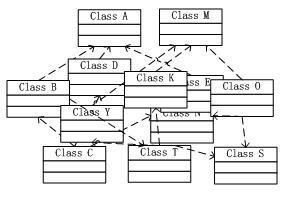
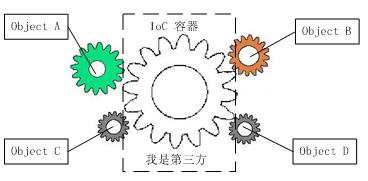
Why
碎片、难维护
简洁、中心化、易维护
aop/decorator/middleware/ioc :

异曲同工,业务和功能(可复用)的解耦,专注业务实现
1996 Michael Mattson https://www.researchgate.net/profile/Michael_Mattsson/publication/2238535_Object-Oriented_Frameworks/links/54d0a8ed0cf298d65667af54.pdf
2004 Martin Fowler 《Inversion of Control Containers and the Dependency Injection pattern[2]。》https://martinfowler.com/articles/injection.html
2006 Is IOC and Dependency Injection the Same Thing? https://www.dr-chuck.com/csev-blog/2006/01/is-ioc-and-dependency-injection-the-same-thing/
wikipedia https://en.wikipedia.org/wiki/Inversion_of_control
深入了解
IOC在不同开发领域的应用场景
Spring 39.2k
Core / IOC Container
AOP
Dao
ORM
JEE
Web
Server
XML的方式实现依赖注入
class SqlMapAccountDao {
    // ....
}

class SqlMapItemDao {
    // ...
}

class PetStoreServiceImpl {
    // ...
}
1. 定义类及相互引用的对象声明
<?xml version="1.0" encoding="UTF-8"?>
<beans xmlns="http://www.springframework.org/schema/beans"
       xmlns:xsi="http://www.w3.org/2001/XMLSchema-instance"
       xsi:schemaLocation="http://www.springframework.org/schema/beans
           http://www.springframework.org/schema/beans/spring-beans-3.0.xsd">

  <!-- services -->

  <bean id="petStore"
        class="org.springframework.samples.jpetstore.services.PetStoreServiceImpl">
    <property name="accountDao" ref="accountDao"/>
    <property name="itemDao" ref="itemDao"/>
    <!-- additional collaborators and configuration for this bean go here -->
  </bean>

  <!-- more bean definitions for services go here -->
  <bean id="accountDao"
      class="org.springframework.samples.jpetstore.dao.ibatis.SqlMapAccountDao">
    <!-- additional collaborators and configuration for this bean go here -->
  </bean>

  <bean id="itemDao" class="org.springframework.samples.jpetstore.dao.ibatis.SqlMapItemDao">
    <!-- additional collaborators and configuration for this bean go here -->
  </bean>
</beans>
2. XML定义类之间的相互引用关系
// create and configure beans
ApplicationContext context =
    new ClassPathXmlApplicationContext(new String[] {"config.xml"});

// retrieve configured instance
PetStoreServiceImpl service = context.getBean("petStore", PetStoreServiceImpl.class);

// use configured instance
List userList service.getUsernameList();
3. 容器初始化加载xml然后直接获取实例
butterknife 25.4k
class ExampleActivity extends Activity {
  @BindView(R.id.user) EditText username;
  @BindView(R.id.pass) EditText password;

  @BindString(R.string.login_error) String loginErrorMessage;

  @OnClick(R.id.submit) void submit() {
    // TODO call server...
  }

  @Override public void onCreate(Bundle savedInstanceState) {
    super.onCreate(savedInstanceState);
    setContentView(R.layout.simple_activity);
    ButterKnife.bind(this);
    // TODO Use fields...
  }
}
Client
过时了
Front

Angular 65.7k

Next.js 53k

InversifyJS 6.5k

Midway.js 3k
import { Injectable } from '@angular/core';
import { HEROES } from './mock-heroes';

@Injectable({providedIn: 'root'})
export class HeroService {
  getHeroes() { return HEROES; }
}
1.
import { Component }   from '@angular/core';
import { Hero }        from './hero';
import { HeroService } from './hero.service';

@Component({
  selector: 'app-hero-list',
  template: `
    <div *ngFor="let hero of heroes">
      {{hero.id}} - {{hero.name}}
    </div>
  `
})
export class HeroListComponent {
  heroes: Hero[];

  constructor(heroService: HeroService) {
    this.heroes = heroService.getHeroes();
  }
}
2.
Angular
IOC实现的核心技术
XML实现
1、动态加载类 Class.forName / require
2、反射
装饰器实现
1、装饰器收集元信息
2、静态语言-反射 / 动态语言 - 反射或者直接通过元信息实例化
class Apple {
  // ....
}

const instance = new Apple();  // 正射

const instance = Reflect.construct(Apple, []); // 反射
JavaScript 反射示例
TypeScript 装饰器示例
const requiredMetadataKey = Symbol("required");

function required(target: Object, propertyKey: string | symbol, parameterIndex: number) {

  // 元信息收集
  // 1. 通过requiredMetadataKey获取函数参数的存储队列
  // 2. 如果存在则将参数的元数据进行存储
  // 3. 如果不存在则创建当前函数唯一的元信息存储队列
  let existingRequiredParameters: number[] = Reflect.getOwnMetadata(requiredMetadataKey, target, propertyKey) || [];
  existingRequiredParameters.push(parameterIndex);
  Reflect.defineMetadata(requiredMetadataKey, existingRequiredParameters, target, propertyKey);
}

function validate(target: any, propertyName: string, descriptor: TypedPropertyDescriptor < Function > ) {
  let method = descriptor.value;

  // 元信息遍历
  // 1. 为该方法新增拦截逻辑,重写descriptor的value即可
  // 2. 当调用该方法时(运行时触发),遍历此前的元信息,挨个取值并验证是否符合验证条件
  descriptor.value = function () {
    let requiredParameters: number[] = Reflect.getOwnMetadata(requiredMetadataKey, target, propertyName);
    if (requiredParameters) {
      for (let parameterIndex of requiredParameters) {
        if (parameterIndex >= arguments.length || arguments[parameterIndex] === undefined) {
          throw new Error("Missing required argument.");
        }
      }
    }
    // 执行方法本身
    return method.apply(this, arguments);
  }
}

class Greeter {
  greeting: string;

  constructor(message: string) {
    this.greeting = message;
  }

  @validate
  greet(@required name: string) {
    return "Hello " + name + ", " + this.greeting;
  }
}

let gg = new Greeter('...')
console.log(gg.greet('xx'))
debounce decorator
export function debounce(delay: number): Function {
  return (
    target: Object,
    propertyKey: string,
    propertyDesciptor: PropertyDescriptor
  ) => {
    const method = propertyDesciptor.value;
    let timer = null;
    propertyDesciptor.value = (...args) => {
      if (timer) {
        clearTimeout(timer);
        timer = null;
      }
      timer = setTimeout(() => method(...args), delay);
    };
    return propertyDesciptor;
  };
}

class A {
  @debounce(1000)
  say(message: any) {
    console.log(message);
  }
}

let a = new A()
a.say('hello')
vue-property-decorator
Text
import { Vue, Component, Watch, Emit } from 'vue-property-decorator'

@Component
export default class YourComponent extends Vue {
  count = 0

  @Watch('child')
  onChildChanged(val: string, oldVal: string) {}

  @Emit()
  addToCount(n: number) {
    this.count += n
  }
}
export default {
data() {
return {
count: 0,
}
},
watch: {
child: [
{
handler: 'onChildChanged',
immediate: false,
deep: false,
},
],
},
methods: {
onChildChanged(val, oldVal) {},
addToCount(n) {
this.count += n
this.$emit('add-to-count', n)
}
},
}inject装饰器
Text
function inject(identifier?: ObjectIdentifier) {
  return function (target: any, targetKey: string, index?: number): void {

    if (typeof index === 'number') {
      if (!identifier) {
        const args = getParamNames(target);
        if (target.length === args.length && index < target.length) {
          identifier = args[index];
        }
      }
      const metadata = new Metadata(INJECT_TAG, identifier);
      tagParameter(target, targetKey, index, metadata);
    } else {
      if (!identifier) {
        identifier = targetKey;
      }
      const metadata = new Metadata(INJECT_TAG, identifier);
      tagProperty(target, targetKey, metadata);
    }
  };
}
// https://github.com/midwayjs/injection/blob/master/src/annotation/inject.ts
Midway IOC 应用和实现原理
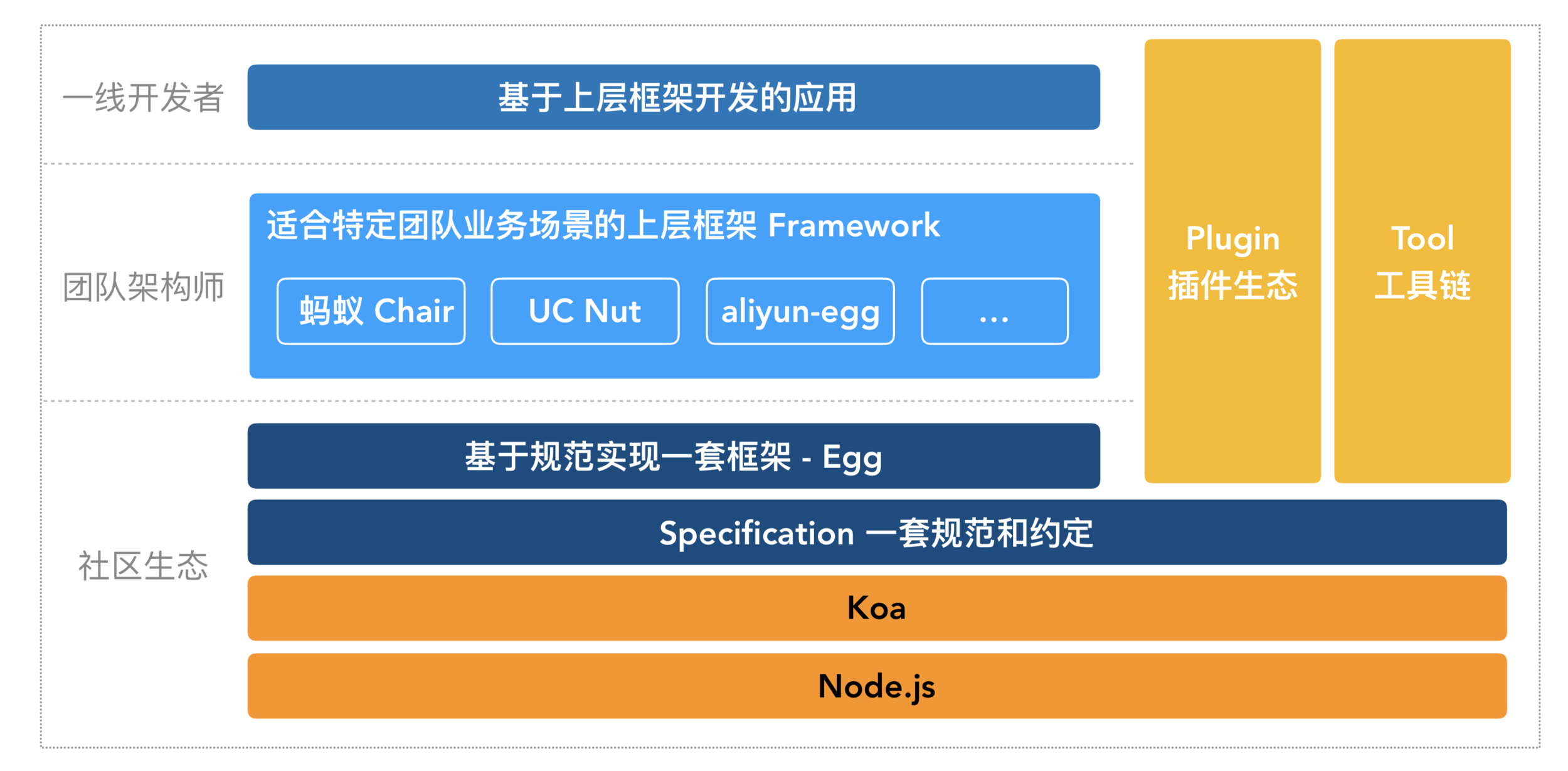
简单介绍
midway
Midway 使用示例
import { provide } from 'midway';
import { IUserService, IUserOptions, IUserResult } from '../../interface';

@provide('userService')
export class UserService implements IUserService {

  async getUser(options: IUserOptions): Promise<IUserResult> {
    return new Promise<IUserResult>((resolve) => {
      setTimeout(() => {
        resolve({
          id: options.id,
          username: 'mockedName',
          phone: '12345678901',
          email: 'xxx.xxx@xxx.com',
        });
      }, 10);
    });
  }
}
import { controller, get, inject, provide } from 'midway';
import { IUserService, IUserResult } from '../../interface';
@provide()
@controller('/user')
export class UserController {
@inject('userService')
service: IUserService;
@get('/:id')
async getUser(ctx): Promise<void> {
const id: number = ctx.params.id;
const user: IUserResult = await this.service.getUser({id});
ctx.body = {success: true, message: 'OK', data: user};
}
}
ioc container : injection
// 使用 IoC
import {Container} from 'injection';
import {A} from './A';
import {B} from './B';
const container = new Container();
container.bind(A);
container.bind(B);

class C {
  consturctor() {
    this.a = container.get('A');
    this.b = container.get('B');
  }
}
Injection 使用示例
不友好 ?
load(opts: {
     loadDir: string | string[];pattern?: string | string[];ignore?: string | string[];
}) {
  const loadDirs = [].concat(opts.loadDir || []);

  // TODO set 去重
  for (const dir of loadDirs) {
    const fileResults = run(['**/**.ts', '**/**.tsx', '**/**.js'].concat(opts.pattern || []), {
      cwd: dir,
      ignore: [
        '**/**.d.ts',
        '**/logs/**',
        '**/run/**',
        '**/public/**',
        '**/view/**',
        '**/views/**'
      ].concat(opts.ignore || []),
    });

    for (const file of fileResults) {
      debug(`binding file => ${file}`);
      const exports = require(file);
      this.bindClass(exports);
    }
  }
}
自动注册的核心实现
source: https://github.com/midwayjs/midway/blob/master/packages/midway-core/src/container.ts
injection的核心实现
1,provide、inject
2,bind
3,get
// A.js
...
@provide()
export class A {
  @inject
  b: IB
}

// B.js

...
@provide()
export class B {
  @inject
  a: IA
}


// main.js
import {Container} from 'injection';
import {A} from './A';
import {B} from './B';
const container = new Container();
container.bind(A);
container.bind(B);

class C {
  consturctor() {
    this.a = container.get('A');
    this.b = container.get('B');
  }
}
Definition
Factory Creator
Instance
bind
get
container
steps:
1,init: 读、写metadata
2,bind: 构建每个注入类的定义Definition[内部抽象]
3,get: 通过内部Definition来构建最终实例
project
read
metadata
   TypeScript
@provide/@inject
store
relect-matadata
function provide(identifier?: ObjectIdentifier) {
  return function (target: any) {
    if (Reflect.hasOwnMetadata(TAGGED_CLS, target)) {
      throw new Error(DUPLICATED_INJECTABLE_DECORATOR);
    }

    if (!identifier) {
      identifier = camelCase(target.name);
    }

    Reflect.defineMetadata(TAGGED_CLS, {
      id: identifier,
      originName: target.name,
    } as TagClsMetadata, target);

    // init property here
    initOrGetObjectDefProps(target);

    return target;
  };
}

function inject(identifier?: ObjectIdentifier) {
  return function (target: any, targetKey: string, index?: number): void {

    if (typeof index === 'number') {
      if (!identifier) {
        const args = getParamNames(target);
        if (target.length === args.length && index < target.length) {
          identifier = args[index];
        }
      }
      const metadata = new Metadata(INJECT_TAG, identifier);
      tagParameter(target, targetKey, index, metadata);
    } else {
      if (!identifier) {
        identifier = targetKey;
      }
      const metadata = new Metadata(INJECT_TAG, identifier);
      tagProperty(target, targetKey, metadata);
    }
  };
}
1,provide、inject
save metadata
2,bind
bind<T>(identifier: ObjectIdentifier, target: T, options?: ObjectDefinitionOptions): void {
  let definition;
  // definition.autowire = true;
  if (is.class(identifier) || is.function(identifier)) {
    options = target;
    target = <any> identifier;
    identifier = this.getIdentifier(target);
    options = null;
  }

if (is.class(target)) {
  definition = new ObjectDefinition();
} else {
  definition = new FunctionDefinition(this);
}

definition.path = target;
definition.id = identifier;

debug(`=> bind and build definition, id = [${definition.id}]`);

// inject constructArgs
const constructorMetaData = Reflect.getMetadata(TAGGED, target);
if (constructorMetaData) {
  debug(`   register inject constructor length = ${target[ 'length' ]}`);
  const maxLength = Math.max.apply(null, Object.keys(constructorMetaData));
  for (let i = 0; i < maxLength + 1; i++) {
    const propertyMeta = constructorMetaData[ i ];
    if (propertyMeta) {
      const refManagedIns = new ManagedReference();
      refManagedIns.name = propertyMeta[ 0 ].value;
      definition.constructorArgs.push(refManagedIns);
    } else {
      // inject empty value
      const valueManagedIns = new ManagedValue();
      valueManagedIns.value = undefined;
      definition.constructorArgs.push(valueManagedIns);
    }
  }
}

// inject properties
const metaDatas = recursiveGetMetadata(TAGGED_PROP, target);
for (const metaData of metaDatas) {
  debug(`   register inject properties = [${Object.keys(metaData)}]`);
  for (const metaKey in metaData) {
    for (const propertyMeta of metaData[ metaKey ]) {
      const refManaged = new ManagedReference();
      refManaged.name = propertyMeta.value;
      definition.properties.set(metaKey, refManaged);
    }
  }
}

this.convertOptionsToDefinition(options, definition);
// 对象自定义的annotations可以覆盖默认的属性
this.registerCustomBinding(definition, target);

this.registerDefinition(identifier, definition);
debug(`   bind and build definition complete, id = [${definition.id}]`);
}
3,get
...

get<T>(identifier: ObjectIdentifier, args?: any): T {
  ...
  return this.getManagedResolverFactory().create(definition, args);
}

....

doConstruct(Clzz: any, args?: any): any {
  ...
  inst = Reflect.construct(Clzz, args);
  return inst;
}
Reflect new
Thanks
聊聊 IOC
By wang dong