LocalRoot++
Making LocalRoot the Default
ICANN85 - Mumbai, IN - 2026-03 V0.7
Disclaimers:
- Joint work with Wes Hardaker, Geoff Huston, Jim Reid, but input from many many others.
- Ongoing discussions in the IETF DNSOP working group.
- Things are subject to change

Ignaz Semmelweis

Wikimedia Commons/Semmelweis Museum of Medical History
(not) Ignaz Semmelweis
Image created with Gemini AI

# PRESENTING CODE
A refresher on how resolution works...
Webserver
How do I reach
www.a-random-domain.net?
www.a-random-domain.net
# PRESENTING CODE
A refresher on how resolution works...
ISP Resolver
www.a-random-domain.net
Webserver
How do I reach
www.a-random-domain.net?
# PRESENTING CODE
A refresher on how resolution works...
Root
www.a-random-domain.net?
www.a-random-domain.net
Webserver
ISP Resolver
How do I reach
www.a-random-domain.net?
# PRESENTING CODE
A refresher on how resolution works...
Root
www.a-random-domain.net?
Ask .net, at 1.1.1.1
www.a-random-domain.net
Webserver
ISP Resolver
How do I reach
www.a-random-domain.net?
# PRESENTING CODE
A refresher on how resolution works...
Resolver
Root
.net
1.1.1.1
www.a-random-domain.net?
Ask .net, at 1.1.1.1
www.a-random-domain.net?
www.a-random-domain.net
Webserver
ISP Resolver
How do I reach
www.a-random-domain.net?
# PRESENTING CODE
A refresher on how resolution works...
Root
.net
1.1.1.1
www.a-random-domain.net?
Ask .net, at 1.1.1.1
www.a-random-domain.net?
Ask ns1.foo.net, at 2.2.2.2
www.a-random-domain.net
Webserver
ISP Resolver
How do I reach
www.a-random-domain.net?
# PRESENTING CODE
A refresher on how resolution works...
Root
.net
1.1.1.1
ns1.foo.net
2.2.2.2
www.a-random-domain.net?
Ask .net, at 1.1.1.1
www.a-random-domain.net?
Ask ns1.foo.net, at 2.2.2.2
www.a-random-domain.net?
www.a-random-domain.net
Webserver
ISP Resolver
How do I reach
www.a-random-domain.net?
# PRESENTING CODE
A refresher on how resolution works...
Root
.net
1.1.1.1
www.a-random-domain.net?
Ask .net, at 1.1.1.1
www.a-random-domain.net?
Ask ns1.foo.net, at 2.2.2.2
www.a-random-domain.net is 193.151.173.16
www.a-random-domain.net
Webserver
ns1.foo.net
2.2.2.2
www.a-random-domain.net?
ISP Resolver
How do I reach
www.a-random-domain.net?
# PRESENTING CODE
A refresher on how resolution works...
Root
.net
1.1.1.1
www.a-random-domain.net?
Ask .net, at 1.1.1.1
www.a-random-domain.net?
Ask ns1.foo.net, at 2.2.2.2
193.151.173.16
www.a-random-domain.net
Webserver
www.a-random-domain.net is 193.151.173.16
ns1.foo.net
2.2.2.2
www.a-random-domain.net?
ISP Resolver
How do I reach
www.a-random-domain.net?
Webpage please...
Response...
# PRESENTING CODE
A refresher on how resolution works...
Webserver
www.example.com
ISP Resolver
How do I reach
www.example.com?
# PRESENTING CODE
A refresher on how resolution works...
Root
www.example.com?
Webserver
www.example.com
ISP Resolver
How do I reach
www.example.com?
# PRESENTING CODE
A refresher on how resolution works...
Root
www.example.com?
Ask .com, at 2.2.2.2
www.example.com
Webserver
ISP Resolver
How do I reach
www.example.com?
# PRESENTING CODE
A refresher on how resolution works...
Root
www.example.com?
Ask .com, at 2.2.2.2
www.example.com
Webserver
ISP Resolver
How do I reach
www.example.com?

[ ...]
# PRESENTING CODE
A refresher on how resolution works...
Webserver
www.example.org
ISP Resolver
How do I reach
www.example.org?
# PRESENTING CODE
A refresher on how resolution works...
Root
www.example.org?
Webserver
www.example.org
ISP Resolver
How do I reach
www.example.org?
# PRESENTING CODE
A refresher on how resolution works...
Root
www.example.org?
Ask .org, at 3.3.3.3
www.example.org
Webserver
ISP Resolver
How do I reach
www.example.org?
# PRESENTING CODE
A refresher on how resolution works...
Root
www.example.org?
Ask .org, at 3.3.3.3
www.example.org
Webserver
ISP Resolver
How do I reach
www.example.org?
[ ...]
# PRESENTING CODE
A refresher on how resolution works...
Webserver
www.example.in
ISP Resolver
How do I reach
www.example.in?
# PRESENTING CODE
A refresher on how resolution works...
Root
www.example.in?
www.example.in
Webserver
ISP Resolver
How do I reach
www.example.in?
# PRESENTING CODE
A refresher on how resolution works...
Root
www.example.in?
Ask .in, at 3.3.3.3
www.example.in
Webserver
ISP Resolver
How do I reach
www.example.in?
# PRESENTING CODE
A refresher on how resolution works...
Root
www.example.in?
Ask .in, at 3.3.3.3
www.example.in
Webserver
ISP Resolver
How do I reach
www.example.in?
[ ...]

Wouldn't it be nice...

# CHAPTER 2
- Published in 2020, updates RFC7706 from 2015.
- Basically: Fetch the root zone and cache it.
# PRESENTING CODE
Benefits
- Increased performance
- If you don't need to send a packet, there is no RTT
- Increased reliability
- If you don't need to reach the root, you don't need to be able to reach the root
- Improved privacy
- www.alcoholics-anonymous.org
- www.alcoholics-anonymous.orf
- DoS Mitigation
- Enumeration attacks
Yes, I'm aware of RFC7816 - "DNS Query Name Minimisation to Improve Privacy" and RFC8198 - "Aggressive Use of DNSSEC-Validated Cache" (I'm an author)
# CHAPTER 2
How?

# CHAPTER 2
Getting the root zone
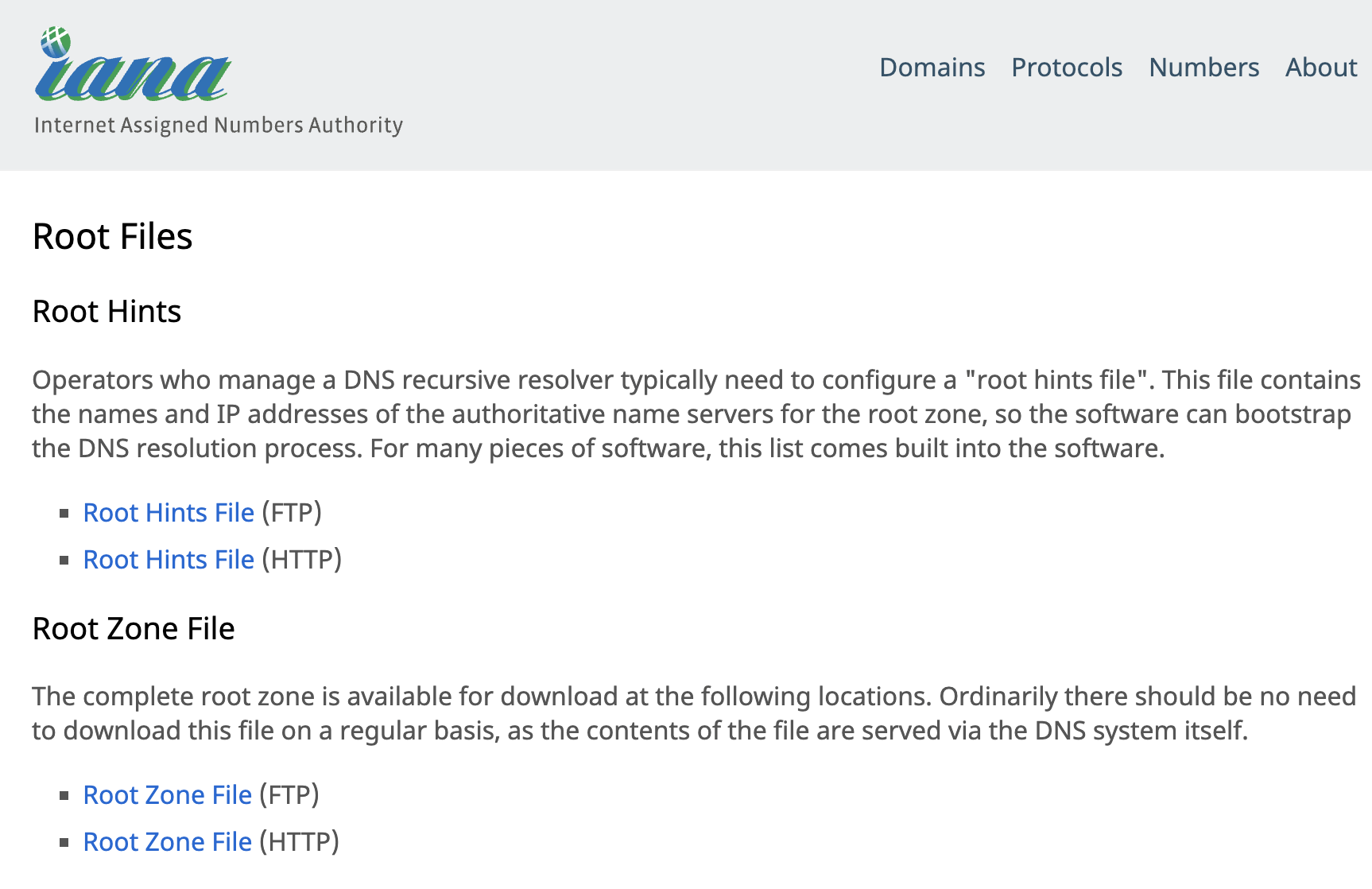
https://www.internic.net/domain/root.zone
Fetching using curl / wget
$ wget https://www.internic.net/domain/root.zone

--2025-10-17 11:37:51--  https://www.internic.net/domain/root.zone
Resolving www.internic.net (www.internic.net)... 192.0.46.9
Connecting to www.internic.net (www.internic.net)|192.0.46.9|:443... connected.
HTTP request sent, awaiting response... 200 OK
Length: 2246592 (2.1M) [text/plain]
Saving to: ‘root.zone’

root.zone                         100%[==============>]   2.14M  2.28MB/s    in 0.9s

2025-10-17 11:37:53 (2.28 MB/s) - ‘root.zone’ saved [2246592/2246592]
# PRESENTING CODE
Fetching using AXFR
$ dig axfr . @b.root-servers.net

; <<>> DiG 9.10.6 <<>> axfr . @b.root-servers.net
;; global options: +cmd
.			86400	IN	SOA	a.root-servers.net. nstld.verisign-grs.com. 2025101700 1800 900 604800 86400
.			518400	IN	NS	a.root-servers.net.
.			518400	IN	NS	b.root-servers.net.
.			518400	IN	NS	c.root-servers.net.
.			518400	IN	NS	d.root-servers.net.
.			518400	IN	NS	e.root-servers.net.
.			518400	IN	NS	f.root-servers.net.
...
...
ns1zim.telone.co.zw.	172800	IN	A	41.220.30.81
ns1zim.telone.co.zw.	172800	IN	AAAA	2c0f:f758:0:a::81
ns2zim.telone.co.zw.	172800	IN	A	41.220.30.82
ns2zim.telone.co.zw.	172800	IN	AAAA	2c0f:f758:0:a::82
.			86400	IN	SOA	a.root-servers.net. nstld.verisign-grs.com. 2025101700 1800 900 604800 86400
;; Query time: 172 msec
;; SERVER: 170.247.170.2#53(170.247.170.2)
;; WHEN: Fri Oct 17 11:30:52 EDT 2025
;; XFR size: 24904 records (messages 86, bytes 1422842)
# PRESENTING CODE
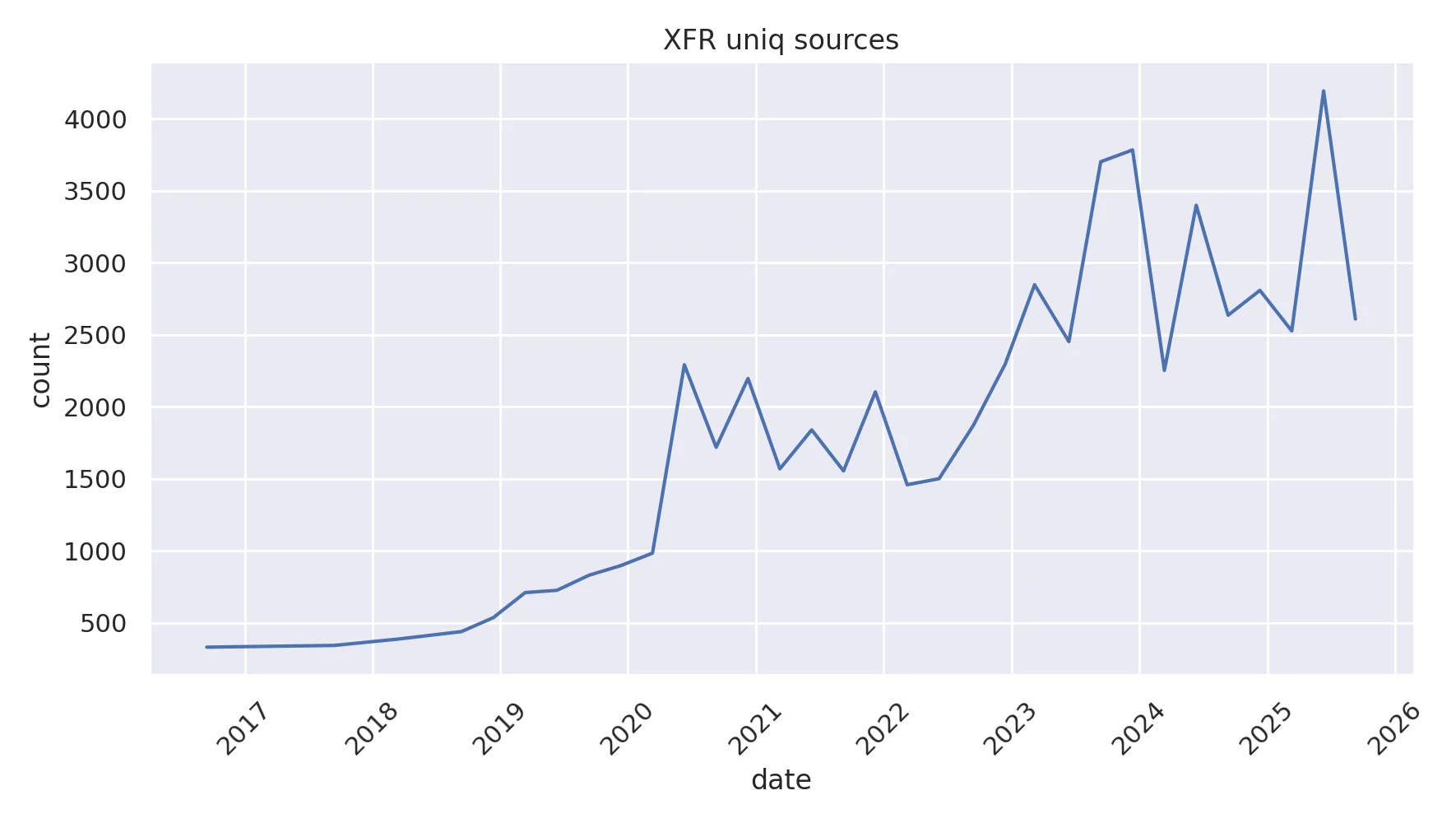
Can fetch from: [b, c, d, f, g].root-servers.net
Fetching using AXFR
# PRESENTING CODE
Stats from b.root-servers.net
ISC BIND 9.14 (and above)
 zone "." {
       type mirror;
   };
# PRESENTING CODE
Example configuration using a BIND "mirror" zone:
root zone
uses AXFR
Knot Resolver
modules.load('prefill')
 prefill.config({
       ['.'] = {
               url = 'https://www.internic.net/domain/root.zone',
               interval = 86400  -- seconds
               ca_file = '/etc/pki/tls/certs/ca-bundle.crt', -- optional
       }
 })
# PRESENTING CODE
Source: Knot Resolver Cache prefilling
Example configuration to prefill cache with root zone using HTTPS:
HTTP(s)
Optional TLS
zone
Unbound 1.9 (and above)
auth-zone:
     name: "."
     url: "https://www.internic.net/domain/root.zone"
     zonefile: "root.zone"
           fallback-enabled: yes
       for-downstream: no
       for-upstream: yes
       zonefile: "root.zone"
     prefetch: yes
# PRESENTING CODE
Source: Unbound Authority Zone Options
Unbound Auth Zones example:
HTTP(s)
root zone
# PRESENTING CODE
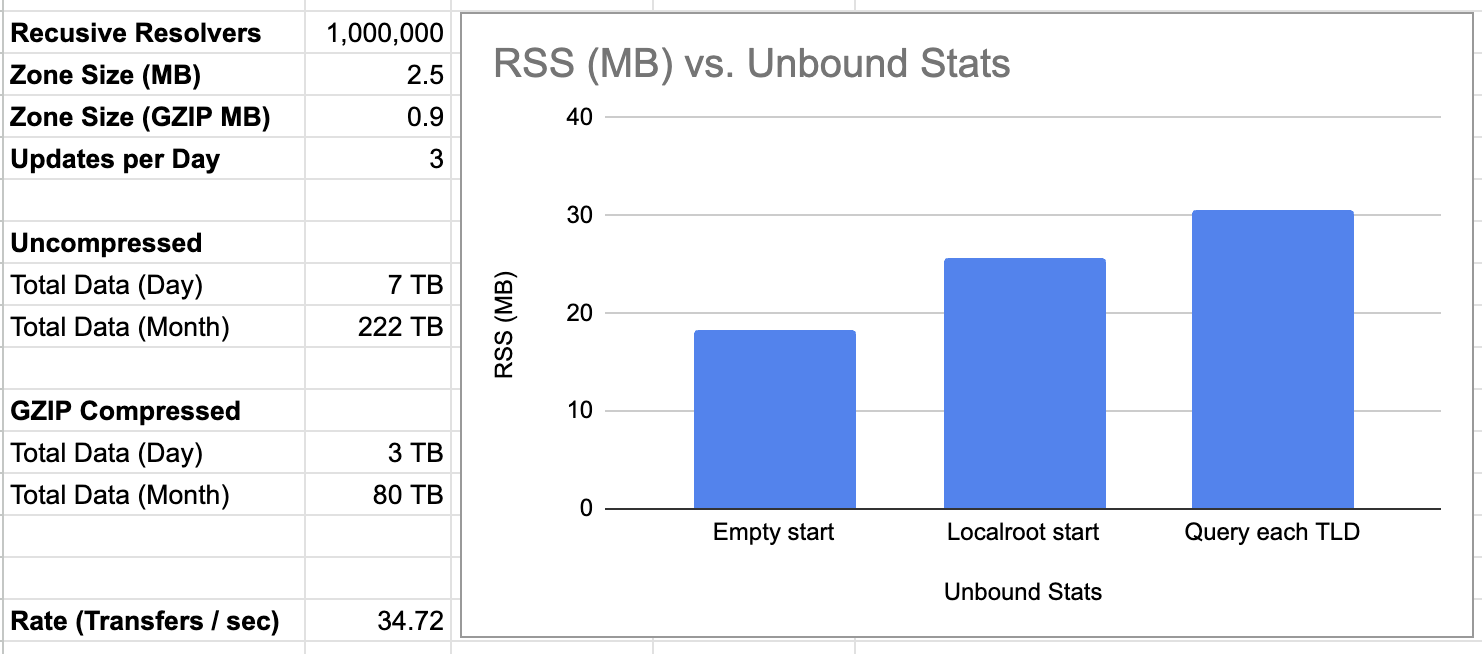
So, how much data is this?!

sudo ipset destroy root_servers
sudo ipset -N root_servers iphash

sudo ipset -A root_servers 198.41.0.4
sudo ipset -A root_servers 170.247.170.2
...

sudo iptables -A INPUT -m set --match-set root_servers src -j ACCEPT

sudo unbound-control flush_zone .
sudo iptables -L -Z -v

[ Query each TLD]

sudo iptables -L -vv
sudo iptables -L -vvv
ip filter INPUT 8
  [ match name set rev 4 ]
  [ counter pkts 1537 bytes 1127567 ]
  [ immediate reg 0 accept ]

Chain INPUT (policy ACCEPT 21512 packets, 5564K bytes)
 pkts bytes target     prot opt in     out     source               destination
 1537 1128K ACCEPT     all  --  any    any     anywhere             anywhere             match-set root_servers src
    0     0 ACCEPT     all  --  any    any     anywhere             anywhere             match-set root_servers dst
# PRESENTING CODE
Individual queries
1.1MB
# PRESENTING CODE
AXFR
Bytes: 1,602,476 (2719 packets)
dig axfr . @b.root-servers.net# PRESENTING CODE
HTTP
Bytes: 2,379,902
wget https://www.internic.net/domain/root.zoneBytes: 990,949
wget https://www.owl-stretching-time.com/root.zoneHTTPS
HTTPS with nginx - gzip
# PRESENTING CODE
CDNs - Content Delivery Network
- Specifically designed to distribute web objects
- Basically every webpage and video is served from a CDN
- Designed for high scalability, geographic distribution
Capacity
# PRESENTING CODE
Trust...

# PRESENTING CODE
- "... an RR type that provides a cryptographic message digest of the data in a zone."
- Also known as "ZONEMD"
- DNSSEC signature over the entire zone file
 $ dig zonemd .

; <<>> DiG 9.18.39-0ubuntu0.24.04.2-Ubuntu <<>> zonemd .
;; global options: +cmd
;; Got answer:
;; ->>HEADER<<- opcode: QUERY, status: NOERROR, id: 9730
;; flags: qr rd ra; QUERY: 1, ANSWER: 1, AUTHORITY: 0, ADDITIONAL: 1

;; OPT PSEUDOSECTION:
; EDNS: version: 0, flags:; udp: 65494
;; QUESTION SECTION:
;.				IN	ZONEMD

;; ANSWER SECTION:
.			86400	IN	ZONEMD	2025102400 1 1 9679D824471ED710F3C6332217D1A70A96757F564DD83F7C12F4C886 BBB744A51168E86E1932D59524A14B10956759C6

;; Query time: 22 msec
# CHAPTER 2
New document(s) provide:
- A list of places to fetch from
- And algorithm (AXFR, HTTPS, ...)
- And algorithm (AXFR, HTTPS, ...)
- Procedures for updating this list
- Relaxing the implementation requirements
- What to do (have the root zone locally), not how to do it (removed the "Thou must run an authoritative server...")
- What to do (have the root zone locally), not how to do it (removed the "Thou must run an authoritative server...")
- Clarifications on fallback, resilience, etc.
# PRESENTING CODE
1.  Identify locations from where root zone data can be
     obtained (Section 3.1).

2.  Downloading and refreshing the root zone data from
    one of the publication points (Section 3.2).

3.  Integrating and serving the data while performing
DNS resolutions (Section 3.3).- Has new text on retries, fallback and fetching by IP, where and how to get the zone, etc.
# PRESENTING CODE
Benefits
- Increased performance
- If you don't need to send a packet, there is no RTT
- Increased reliability
- If you don't need to reach the root, you don't need to be able to reach the root
- Improved privacy
- www.alcoholics-anonymous.org
- www.alcoholics-anonymous.orf
- DoS Mitigation
- Enumeration attacks
- Reduce criticality of the Root Server System
Yes, I'm aware of RFC7816 - "DNS Query Name Minimisation to Improve Privacy" and RFC8198 - "Aggressive Use of DNSSEC-Validated Cache" (I'm an author)
Questions?

Backup slides
Capacity
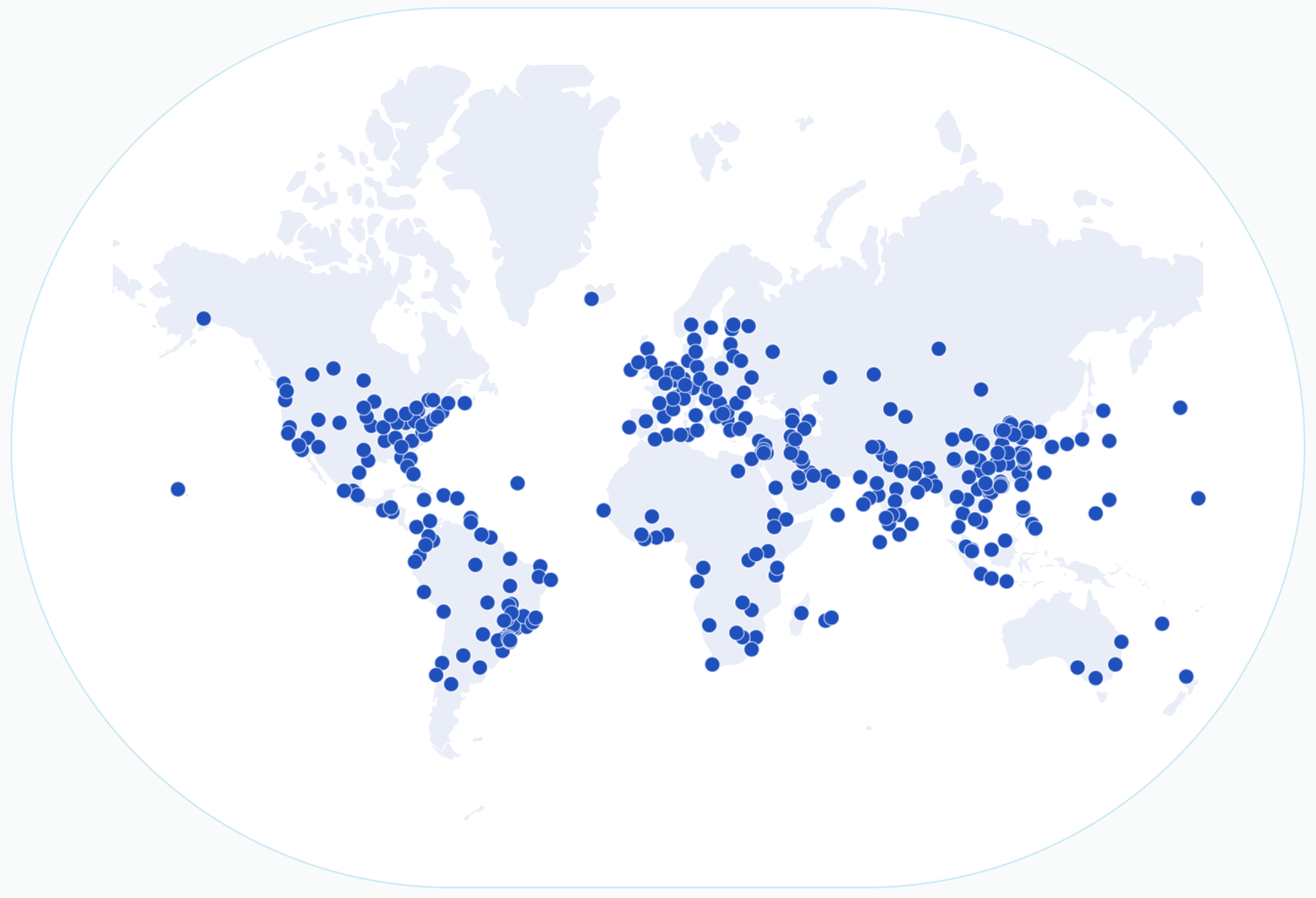
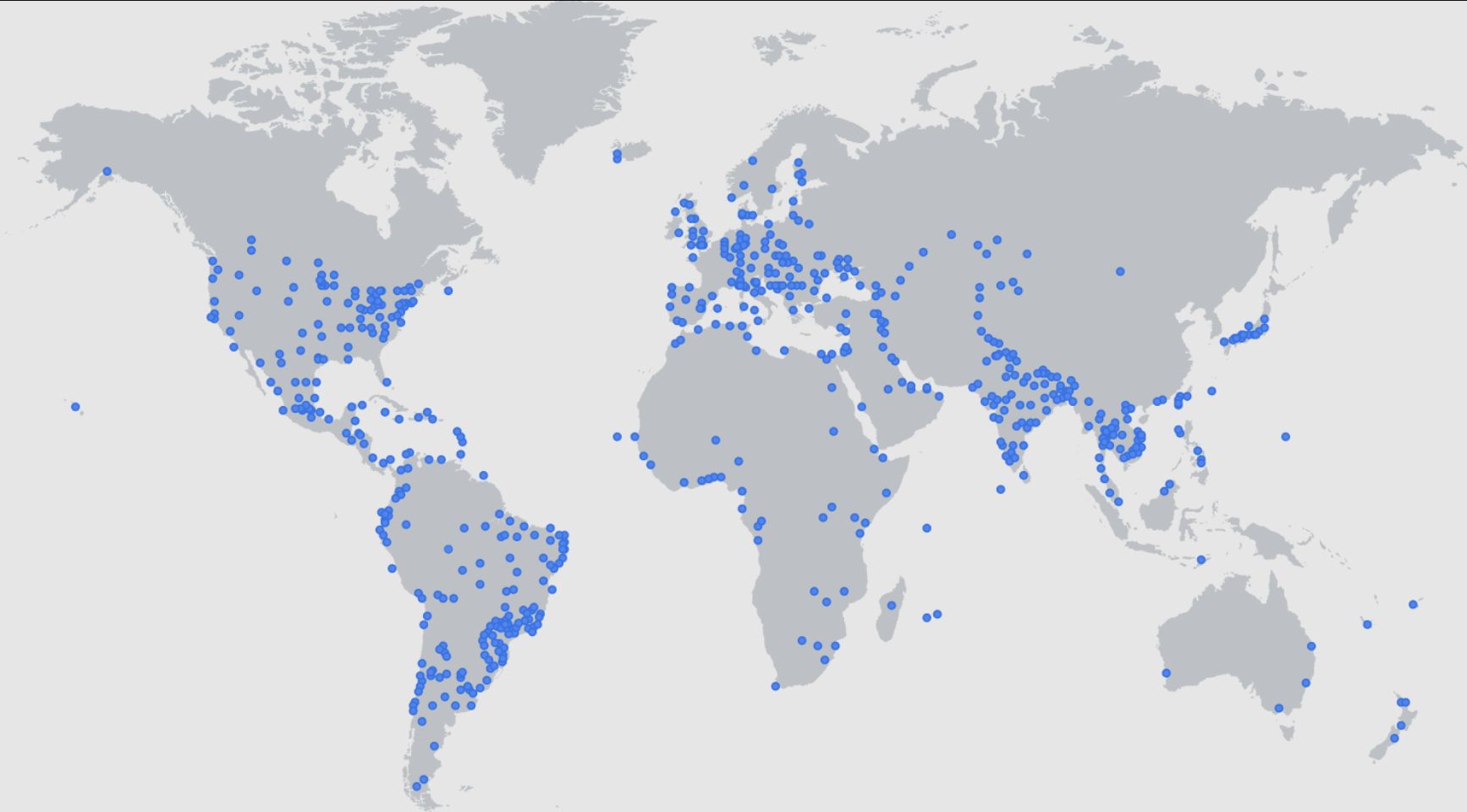
- Comparison to current root-server system
- One CDN states 405Tbps
- Current RSS: 1999 instances (2025-10-19)
- That means each instance would need 202Gbps to match
Cloudflare
Capacity

DDoS Capacity

Source: KrebsOnSecurity
Aisuru
- 30 Tbps / 1998 instances =~ 15Gpbs / instance
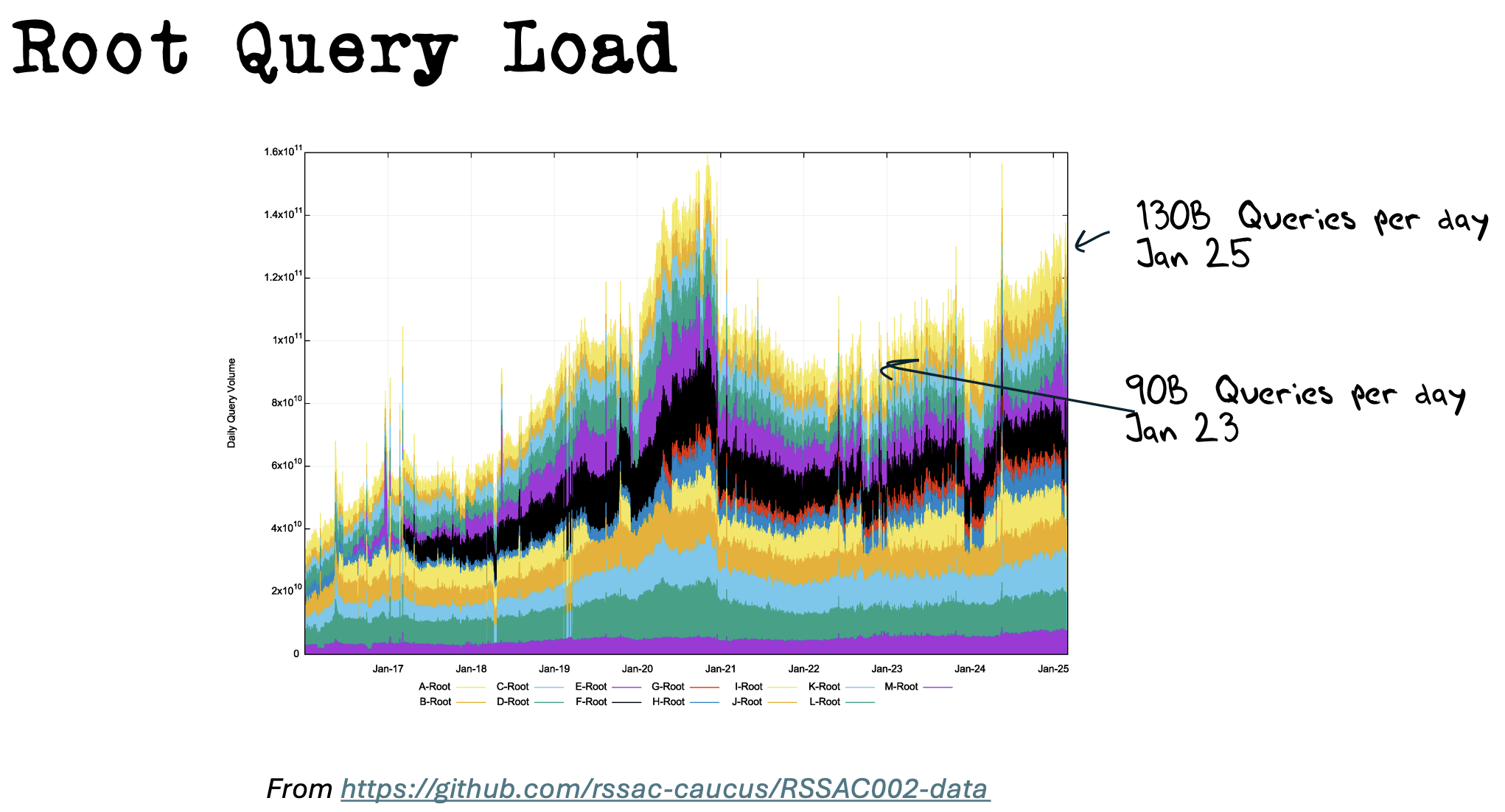
Root Query
Making LocalRoot Default - ICANN85
By wkumari