
Prepared: Starostin Oleh
           Al-Sel Yasmin
Plan:
1)Mars in our Night Sky(Where is it?)
2)What's going on Mars(Weather, temperature = Atmosphere;
What a tasty sand on Mars = a bit about Geology)
3)Martian moons
4)Mars childhood (The past of Mars. How investigated)
5)The future of the planet (The future of people on Mars)
6)In literature and kino (How popular it is)
The red planet Mars, named for the Roman god of war, has long been an omen in the night sky. And in its own way, the planet’s rusty red surface tells a story of destruction. Billions of years ago, the fourth planet from the sun could have been mistaken for Earth’s smaller twin, with liquid water on its surface—and maybe even life.Now, the world is a cold, barren desert with few signs of liquid water. But after decades of study using orbiters, landers, and rovers, scientists have revealed Mars as a dynamic, windblown landscape that could—just maybe—harbor microbial life beneath its rusty surface even today.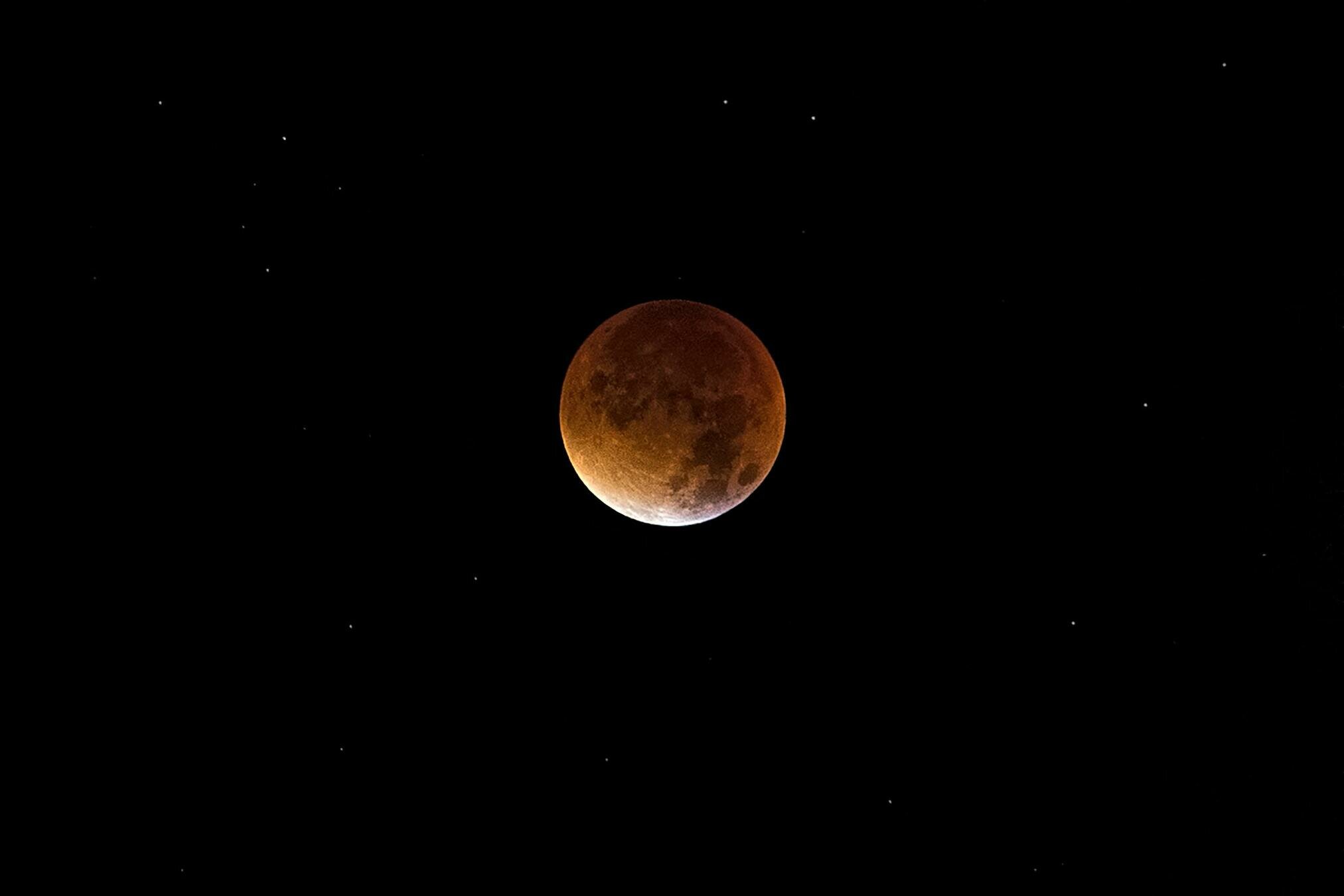
The weather on Mars is quite different from that on Earth, but its atmosphere and climate are also more similar to Earth’s than any other planet. Martian weather is relatively colder than Earth’s (as cold as -195 degrees Fahrenheit) and often features vast dust storms. Yet, despite being a frigid desert prone to violent storms, NASA scientists are more optimistic about exploration and habitation on Mars than any other planet.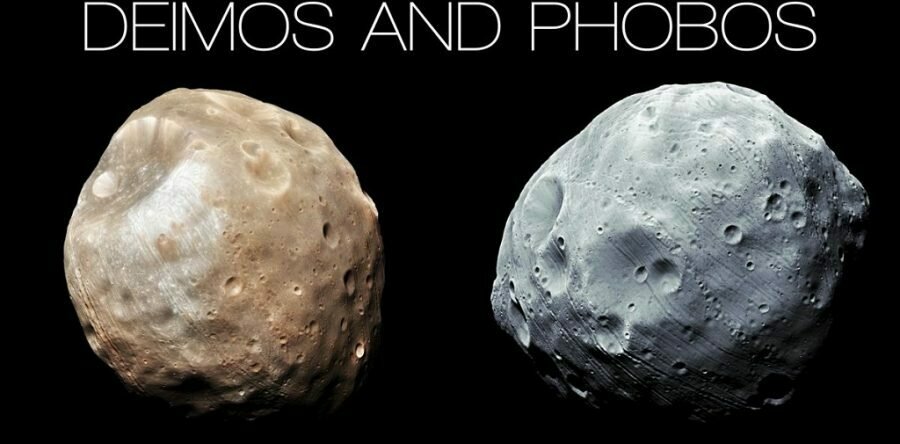
It is Phobos, which means "fear". He's bigger than Deimos. His mass
10.8x 10^15 kg. Phobos orbits 6,000 km from the Martian surface, closer to it's primary than any other known planetary moon. It is so close that it orbits Mars faster than Mars rotates, and completes an orbit in just 7 hours and 39 minutes.
And this is Deimos (panic). 1.8x10^15 kg.
Just Deimos.Phobos (fear) and Deimos (panic) were named after the horses that pulled the chariot of the Greek war god Ares, the counterpart to the Roman war god Mars. Both Phobos and Deimos were discovered in 1877 by American astronomer Asaph Hall. The moons appear to have surface materials similar to many asteroids in the outer asteroid belt, which leads most scientists to believe that Phobos and Deimos are captured asteroids.
In the past, on Mars, as on Earth, there was a movement of lithospheric plates. This is confirmed by the features of the magnetic field of Mars, the locations of some volcanoes, for example, in the province of Tharsis, as well as the shape of the Mariner Valley. The current state of affairs, when volcanoes can exist for a much longer time than on Earth, and reach gigantic sizes, suggests that now this movement is rather absent. This is supported by the fact that shield volcanoes grow as a result of repeated eruptions from the same vent over a long period of time. 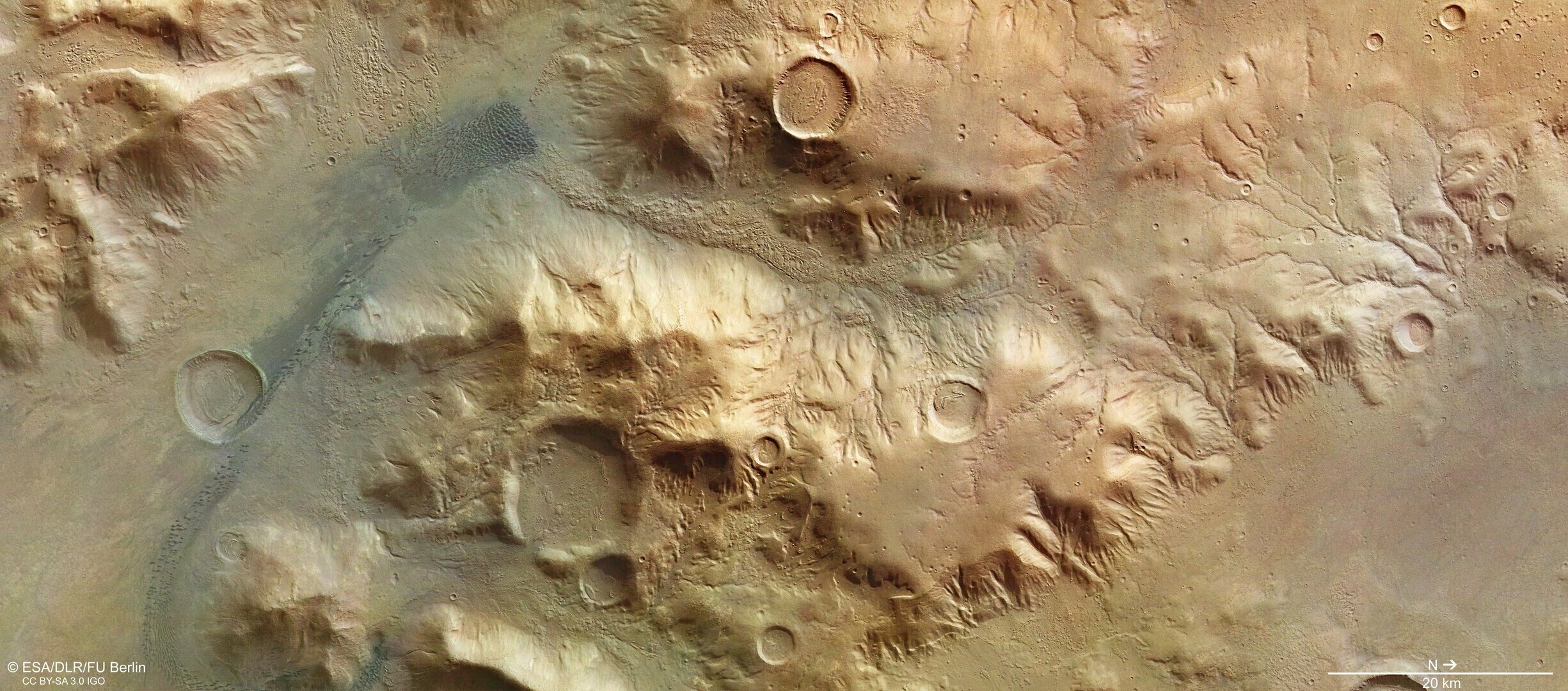
On Earth, due to the movement of lithospheric plates, volcanic points constantly changed their position, which limited the growth of shield volcanoes and, possibly, did not allow them to reach such a height as on Mars. On the other hand, the difference in the maximum height of volcanoes can be explained by the fact that, due to the lower gravity on Mars, it is possible to build higher structures that would not collapse under their own weight. It is possible that there is weak tectonic activity on the planet, leading to the formation of gently sloping canyons observed from orbit.It was believed that the Earth and Mars formed in relative proximity to each other. However, their mineral composition varied greatly, since the rocks of the Red Planet contained lighter silicates than terrestrial ones. This made Mars more like asteroids.
The researchers ran a simulation consistent with the Grand Taka model, in which Jupiter played an important role in shaping the orbits of the inner planets. The gas giant contributed to the formation of Venus and the Earth, while pulling matter away from Mars, as a result of which the latter has a relatively small mass. The simulation showed that with a probability of about three percent, the Red Planet was closer to Jupiter than it is now, but the giant's gravitational pull pushed Mars to its current location.
According to the researchers, the Red Planet may have initially been too cold for liquid water to exist on its surface. However, the constant bombardment by asteroids may have melted the crust of Mars, made its atmosphere warmer and denser, and started the circulation of water on the surface.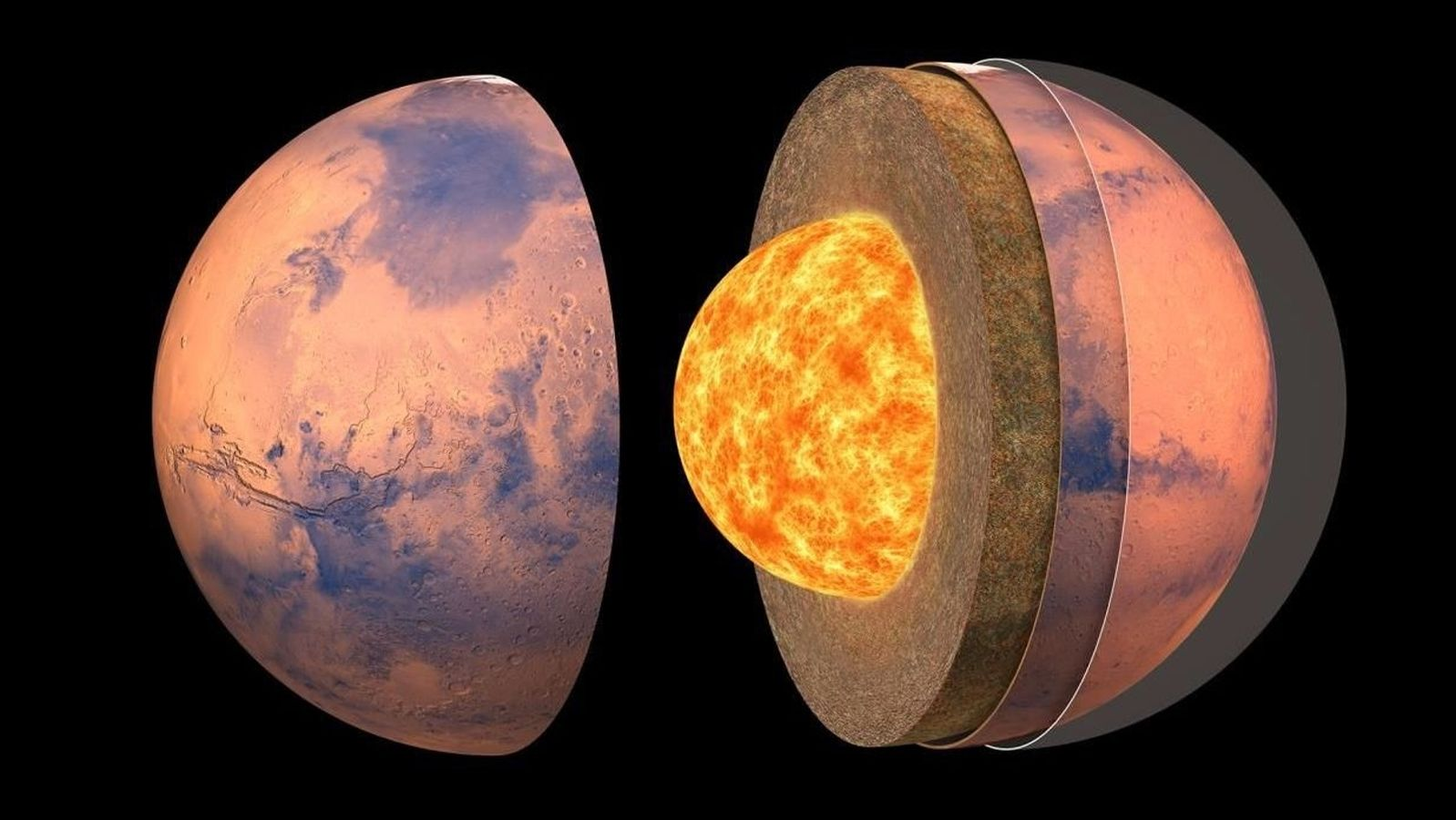
So the colonization of Mars is the theoretical human migration and long-term human establishment of Mars.
Motivations for colonizing Mars include curiosity, the potential for humans to provide more thorough observational research than uncrewed rovers, an economic interest in it's resources, and the possibility that the settlement of other planets could decrease the likelihood of human extinction. Difficulties and hazards include radiation exposure during a trip to Mars and on it's surface, toxic soil, low gravity, the isolation that accompanies Mars' distance from Earth, a lack of water, and cold temperatures.
To be self-sustaining, a colony would have to be large enough to provide all the necessary living services.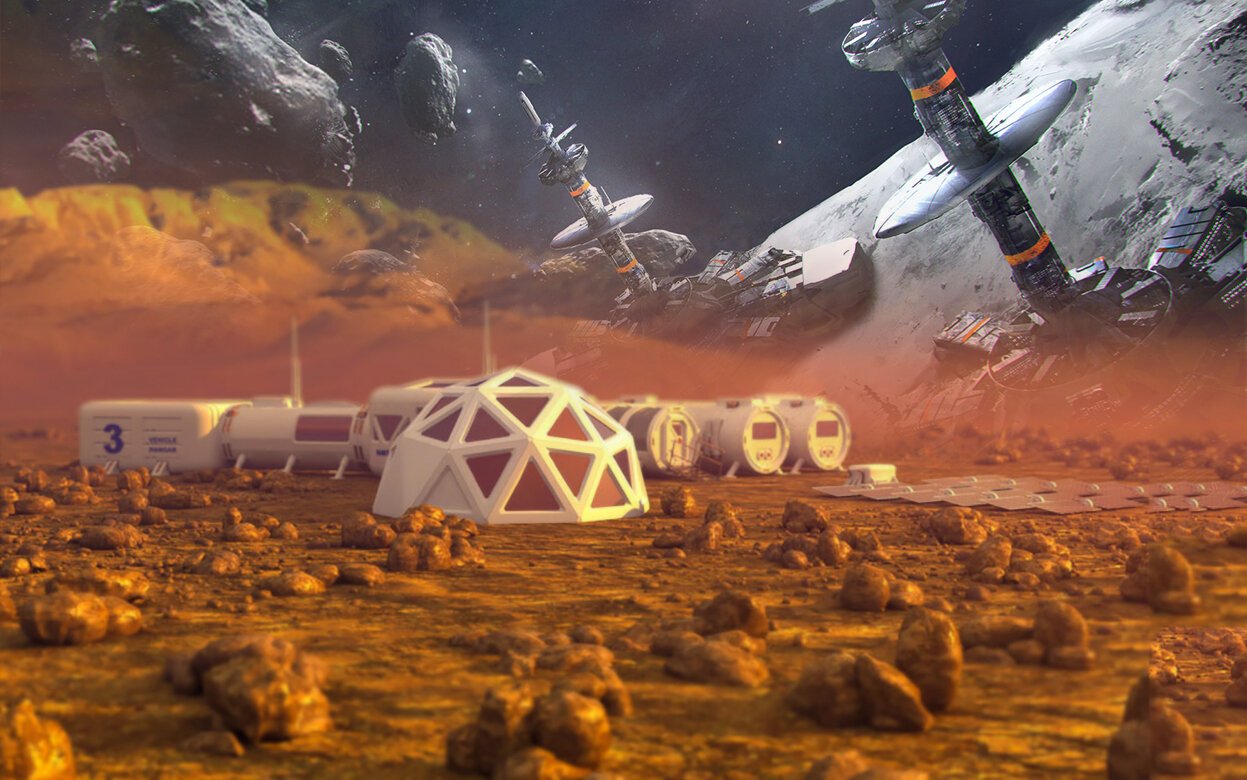
-
Ecosystem management -
Energy production -
Industry -
Building -
Social activities
Mars in culture, literature, kino
Mars in culture. For example, the planet Mars is named after the Roman god of war Mars. In Babylonian astronomy, the planet was named after Nergal, their deity of fire, war, and destruction, most likely due to the planet's reddish appearance.The popular idea that Mars was populated by intelligent Martians exploded in the late 19th century. Schiaparelli's "Canali" observations combined with Percival Lowell's books on the subject put forward the standard notion of a planet that was a drying, cooling, dying world with ancient civilizations constructing irrigation works.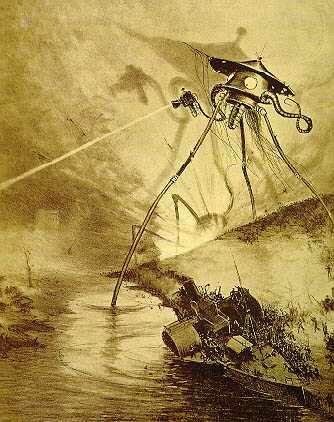
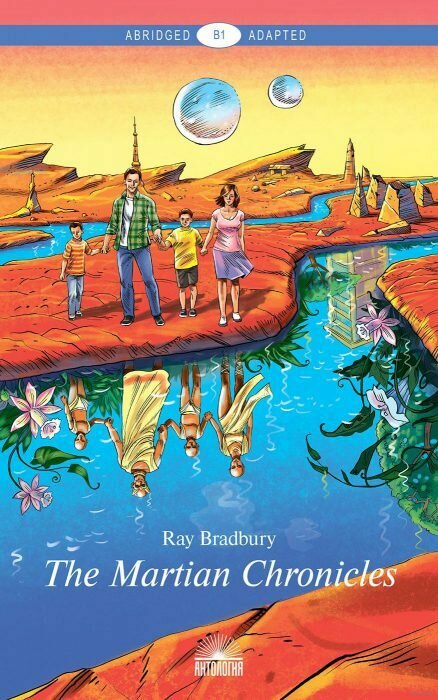
In literature"The Martian Chronicles" are told by the first settlers from Earth on the planet Mars. A very old Martian civilization in decline, eventually disappeared with the mass arrival of humans. Because of the war that has broken out on their home planet, the people from Earth are leaving Mars, for only a handful of them.For example "The Martian Chronicles" was created by Ray Bradbury. This is the main reason why the colonization of mars should be accompanied by peace on earth.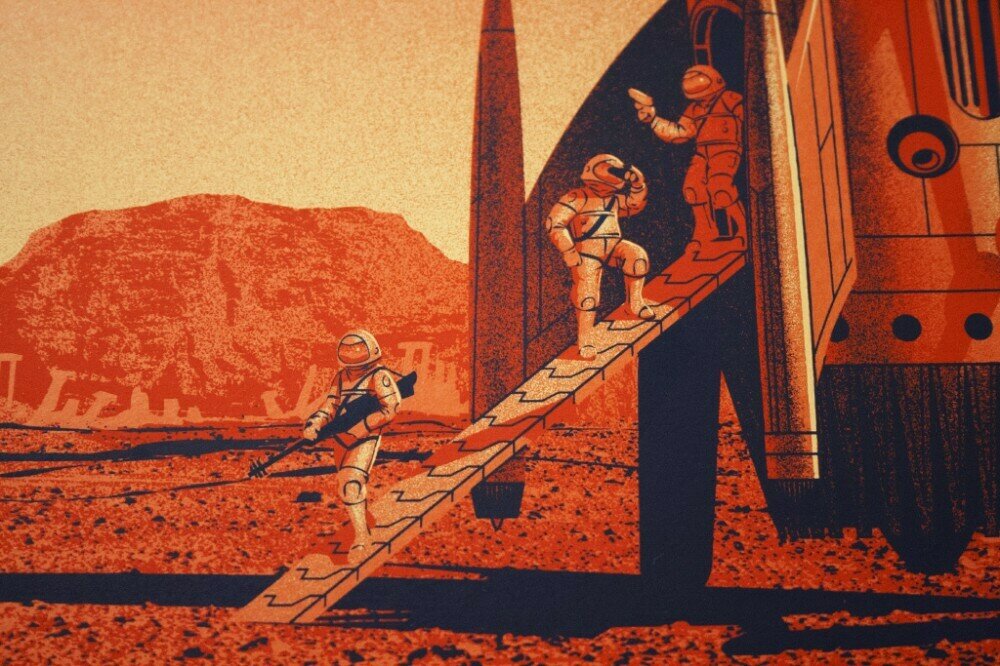
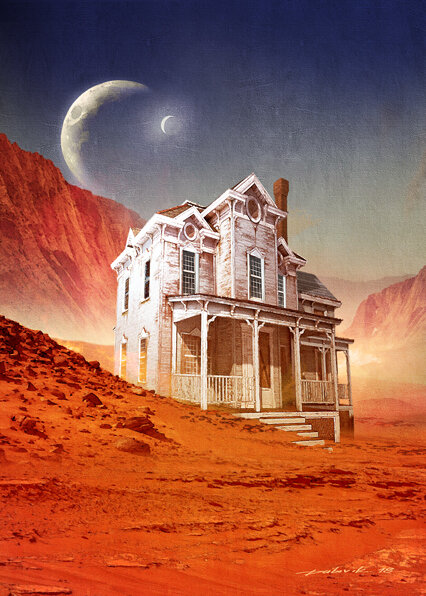
In moviesThe movie showed us the closest steps of colonization of Mars and of course the problems that may arise in the process. The main character can't go off the planet and should be survived in very specific and dangerous conditions as long as he can. Let's take "The Martian" as an example.Because of his experience and knowledge of biology, chemistry, and geology, he survived and did important discoveries, he was able to grow potatoes in unearthly conditions.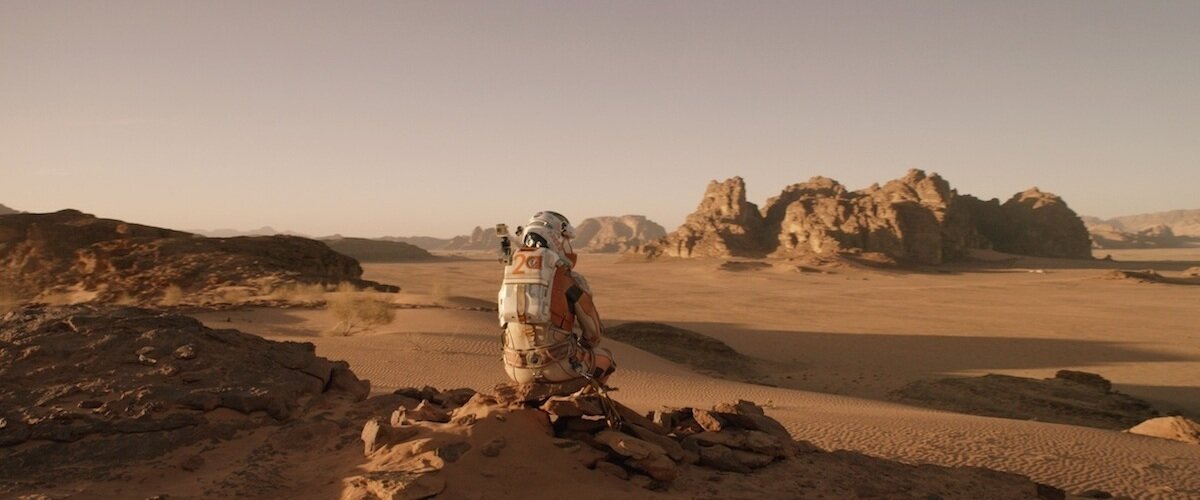

Thank you for your attention!
Palette
By Oleh Starostin
