Study of Optimal Mixing
Hsu, Hung-Wei
Juang, Yi-Lin
Prof. Yu, Tian-Li
2016.06.28
Outline
- Pasting Problem
- Tree Structure
- Generalize
- Area Distribution
- Cutting Method
Pasting Problem
Properties of Good Topologies
-
Tree structure
- Random instances
We first discuss on problems with following properties
Simple Case
-
Spin-glass like subfunctions
-
Graph degree = 4 (same as spin-glass)
A solution not compatible with high degree
Properties of simple case
Proof of O(1) Solution In Simple Case
E \leq 1 + \frac{\binom{4}{1}}{2^{4}}2E + \frac{\binom{4}{0}}{2^{4}}4E \leq 1 + \frac{3}{4}E
E \leq 4
High degrees doesn’t converge
E \leq 1 + \frac{\binom{7}{3}}{2^{7}}E +\frac{\binom{7}{2}}{2^{7}}3E+\frac{\binom{7}{1}}{2^{7}}5E+\frac{\binom{7}{0}}{2^{7}}7E
\leq 1 +\frac{140}{128}E
E\leq 1 + \frac{\binom{8}{3}}{2^{8}}2E+ \frac{\binom{8}{2}}{2^{8}}4E+ \frac{\binom{8}{1}}{2^{8}}6E+ \frac{\binom{8}{0}}{2^{8}}8E
\leq 1 + \frac{280}{256}E
Experiment results
| Degree | Avg Time | Max Time |
|---|---|---|
| 2 | 1.34 | 12 |
| 4 | 1.41 | 12 |
| 6 | 1.58 | 16 |
| 8 | 1.74 | 21 |
| 10 | 1.87 | 35 |
| 15 | 2.16 | 29 |
Instance with One Loop
-
Best solution is simple
-
Case 1 : all edges on loop matched.
-
Case 2 : some edges on loop mismatched.
Properties of instance with one loop
Case 1: All edges matched
Case 2: Some edges mismatched
-
Break that edge to form a tree structure
-
Fix this intance with previous method
Case 2: Some edges mismatched
How about 2D Spin Glass
-
Hard to decide loop numbers
-
Break mismatch edges
-
Estimate average loop number
Procedure:
A Wrong Approach
- V = N, E = 2N
-
N mismatched edges in average
-
V = N, E = N implies one loop in average
Obstacles
- Several connected components
- All edges matched after removing edges
- This analysis may only work for spin-glass
General analysis
The model we try :
- One-bit overlapping between BBs
- Quantize the value of each subfunctions
Expect that we can derive some properties
1
General analysis
0
0
0
1
1
0
1
1
We quantize the value of each
subfunctions into four cases :
1, 2, 3 and 4
By this method, we derive that optimal method must have 2.5 in average
Obstacles
- Few properties derived
- Cannot handle tree structure easily
- This analysis is a brute force approach
- No graph theory is applied
An Elegant Approach
An Elegant Approach
- Find the area different to optimal solution
- Estimate the distribution of these areas size
- Bound the value by integration
Expected result
We first try exponential distribution :
\int_{0}^{N}2^{n}\,pdf\left(n\right)\,dn = \mathcal{O}\left(N^{2}\right)
pdf \left( n \right) = \lambda \, e^{-\lambda n}
\lambda \geq \ln{2}
We need :
pdf \left( n \right) = n\ 2^{-n}
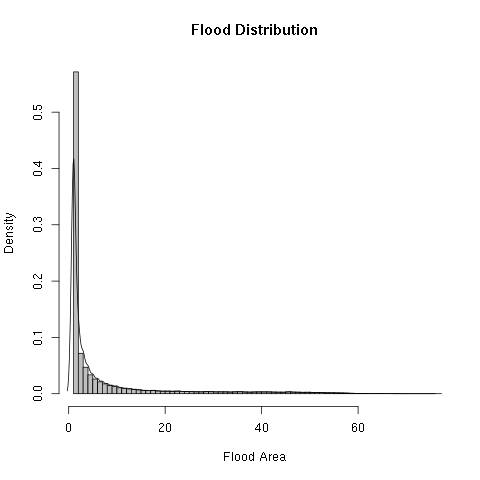
\lambda \approx 0.14
A Smarter Way
-
Ability to cut large areas into small ones
-
Apply a recusive method
-
Probability model
Basic Concept
+4
+3
-2
Basic Concept (Worst)
+1
+3
-4
Basic Concept (Illegal)
+1
+3
+2
Model consideration
-
Invariants
-
Constraints
-
Approximations
Model We Chose
-
Energy function
-
Proper assumption to preserve some properties
-
Estimated distribution to random variable
Order Assumption
+1
+3
-2
Order Assumption (recursive)
+5
+4
+1
+3
+0
Other Constraints
We want to know more about I to determine cuts
\sum_{c \in C }f\left(c\right) = I
Build Probability Model from Experiment
-
Calculate the value of optimal solution
-
Use half binomial distribution to bound
-
Use parameter p in model to determine cuts
-
Describe that we can usually cut the instance
Conclusion
End
Study of Optimal Mixing
By Yi-Lin Juang
Study of Optimal Mixing
Individual Study of Optimal Mixing by Hsu, Hung-Wei & Juang, Yi-Lin