ZARA
Y.Yang
21/12/2015 (M) - 4/1/2016 (M)
Discovering Research Topic with Zara
Potential Experiment Topic and Design
Y.Yang
21/12/2015
Agenda
- Problem Statement
- Flow
- Method
- Questions
- Next steps
Problem Statement
How to gracefully resolve ‘challenging topics/moments’ in human-robot interaction/conversations
Flow
Existing Zara Response Data
Common Derailing/Difficult Topics
Relevant
(Functional but out of scope)
Irrelevant
(Socially inappropriate, existential/predictive questions)
Negative
Neutral
Positive
Strategic mitigation responses
Method
1 condition with 4 factors (baseline inclusive)
or
2 * 2 Matrix Study
(modeled after "Gracefully mitigating Breakdowns in Robotic Services")
*Need good reasons to justify the factors we control
Control groups: Robotic response and no challenging questions posed
Questions
What is the purpose or areas of application for Zara?
-- Caretaker paradigm or assistant/companion paradigm
(From "Socially Intelligent robots: dimensions of HRI")
-- Important to direct the formation of strategies
Will Zara have a physical presence in the future?
-- Virtual vs Physical
-- Important to experimental design of whether to include another factor with 2 conditions
(humanlike vs virtual robot)
Answers
What is the purpose or areas of application for Zara?
-- Now: Personality assessor
-- Future: Ambassador/Receptionist role at UST
Will Zara have a physical presence in the future?
-- For the extent of experiment: a virtual entity
-- In the future: Physical entity
Follow-up Questions
How can Zara detect the relevant or irrelevant questions?
-- Relevant: "factual questions" or "keyword"
-- Irrelevant: Socially inappropriate (Sexually lewd, swear-words like "f*** you", "bitch", "whore" that are commonly associated with women),
Existential questions (keywords "life", "death", spiritual, religion, values)
Next Steps
Paper Hunt on Current Way and Challenging Topics people impose to break/challenge robots
-- Assumption: Intentionality. What about times when people don't understand "limits" of robot?
"Gracefully"
-- Subjective interpretation
-- Understand the psychology and qualities of what people perceive as graceful
If data available, organize and find patterns of most common question type or topic
Paper Hunt
Suggested to read hardcore robotics paper with commercial entities:
Siri
Erica
Pepper
Existing Data
Yes, they exists.
Need Pascale's approval before Anik can release them.
Personality
Zara needs to develop a supergirl type personality based on theatrical means.
Response and questions developed would have to be aligned with her personality
Response
Syntax and tone of response to difficult/challenging questions
"Gracefully"
Graceful Resolution of Challenging topics/ moments in HRI & Dialogue
Data Analysis of "Challenging Questions" & Insights
Y.Yang
4/1/2016
Agenda
- Present Stage
- Data Stats
- Insights
- Questions
- Next steps
Present
Existing Zara Response Data
Common Derailing/Difficult Topics
Relevant
(Functional but out of scope)
Irrelevant
(Socially inappropriate, existential/predictive questions)
Negative
Neutral
Positive
Strategic mitigation responses
Data Stats
184 responses in total
65 >= State1
16 challenges
Oct - Dec 2015
Insights
Seeking reciprocity from Zara
16 unique ID responses, 124 responses in total to all 15Q Zara posed. Of the 30 challenging responses, ...
8
Stated verbal avoidance of topic
5
Implied avoidance of topic
8
2
Abusive Language
4
Seeking Clarification
3
Deliberate Challenge of Zara's ability
13
--Categorical data validation with Prof Ma (are these the only classification?)
-- intention classification (intensive classifier), "garbage"
Insights
Seeking reciprocity from Zara
8
13
Avoidance of topic
Bonding
Mutual trust
Psychological need of Users
Intuition: Humans needs cues to bond with robots the same way humans bond with each other
Context: Most of the responses are from Asian users
Questions
How reliable are these insights?
-- 16 challenges/180 responses is a small sample size
-- Lee, M.K. et. al. "Gracefully Mitigating Breakdowns in Robotic Services" (2010) : 457 respondents to survey
How might Zara respond to challenging questions/derailing topics in an empathetically graceful manner that enhances mutual trust and information reciprocity?
-- Based on the psychological need of the users
-- Ease into conversations
Next Steps
Discussion with Prof Ma
-- Do we need more response data?
-- If yes, what setting and what factors should we control?
-- Intuition: Need more data
-- Gather more data from students overseas (international pool to balance out the Asian users)
Mutual Trust Assumption Validation
-- Psychology literature on mutual trust and bonding
-- A. Aron et. al. "The Experimental Generation of Interpersonal Closeness" (1997)
CHI 2017
Paper Submission Deadline: 18 Sep 2016
Conference Date: 6-11 May 2017
Location: Denver, USA
*According to: http://www.sigchi.org/conferences
NAACL 2016
Feb 12 Paper Deadline
Proposed HCI Flow of Investigation,
Zara community feedback, NAAACL Paper Updates
Graceful Resolution of Challenging topics/ moments in HRI & Dialogue
Y.Yang
4/1/2016
Agenda
-
Proposed HCI Flow of Investigation
-
Present
-
Proposed Flow Update
- Categories Literature validation
-
- Zara Community Feedback
- Stats
- User Research on what people are saying
- NAAACL Demo Update
- Landing Page (Demo)
- Facebook Populating Strategy
Present
Existing Zara Response Data
Common Derailing/Difficult Topics
Relevant
(Functional but out of scope)
Irrelevant
(Socially inappropriate, existential/predictive questions)
Negative
Neutral
Positive
Strategic mitigation responses
Proposed Flow Update
Off-topic Questions
Avoidance
Insult
Small Talk
Clarification
Knowledge
Factual or Abstract
Pandora can answer
Pandora has no satisfying answer
Get Back on Track
Serious
Exit with Respect
Yes
No
(Enter into conversational mode)
Validation of Categories
- Seeking Reciprocity from Zara
- Avoidance of topic
- Clarification
- Deliberate Ability Challenge
- Abusive Language
- Garbage
Principle of Reciprocity
Reciprocity (anthropology view): the mutual exchange involving receiving and giving gifts and favors
Source: http://bit.ly/1SIyVNK
"an authentic expression of emotion toward a recipient that overcomes any careful consideration of personal gain or loss"
[create] a state of mutual interdependence, contribute to the formation and maintenance of a social relationship between giver and receiver
"Reciprocity" has a physical manifestation context but in the context of Zara may be favors manifested in the form of personal information reciprocity.
Precision: Disclosure Reciprocity
(Fisher 1984) 3 hypothesis on this phenomenon:
1. trust attraction hypothesis
2. social exchange hypothesis
3. modeling hypothesis
Defintion: the tendency for one person's intimacy of self-disclosure to match that of a conversational partner
(Wheeless & Grotz, 1977) self-disclosing acts leads to trust towards the revealer
Modified terminology: Seeking disclosure reciprocity from Zara (in the context of her being a personality assessor)
Insight: Openness and intimacy in one individual are echoed in the other.
Application: When designing conversation flow of Zara, take into consideration more personal disclosure and transitions (responses to respondent's answers).
Alternative: Self-disclosure
Attachment style and intimacy in friendship
Source: http://bit.ly/1OlAnQI
Characteristics studied: 1. self-disclosure; 2. responsiveness to a partner’s disclosure; and 3. feeling understood, validated, and cared for during conversations"
Insights: during conversation, people form "working models" of the partner
"Self-disclosure" as a strategy to increase trust in the temporary "friendship" bond
"Experience with people who are understanding, trustworthy, and responsive to one’s needs will lead to positive views of others, whereas relationships with people who are unresponsive and rejecting will lead to negative views of others."(Bretherton, Ridgeway, & Cassidy, 1990)
Avoidance of Topic (Trust)
P.A. Hancock et. al. (2014). Human Trust in Other Humans, Automation, Robots, & Cognitive Agents: Neural Correlates & Design Implications. HFES.
A. Trust: "the attitude that an agent will help achieve an individual’s goals in a situation characterized by uncertainty and vulnerability"
B. Cognitive Model: Human trust in an agent involves an attempt to construct an ad-hoc theoretical model about agent behavior
C. Human trust in a non-human agent may also similarly be dependent on the degree to which the agent is perceived to possess such intentionality.
D. Key results: 1. Participants showed more calibrate trust with immediate response from robots; 2. malevolent human-like agents are trusted less compared to machine-like agents; 3. machine-like agents are trusted more than human-like agents because of an automation bias
Avoidance of Topics: Trust (HRI)
P.A. Hancock et. al. (2011). A Meta-Analysis of Factors Affecting Trust in Human-Robot Interaction. HFS
Objective: Evaluate and quantify the effects of human, robot, and environmental factors on perceived trust in HRI based on 29 empirical literature (1996-2010) with experimental and correlational data.
Key findings: Robotic performance and attributes > human factors > environmental factors
Failure Example: SWORD (Human + Robot ==> Failed to accomplish same goal)
Importance to Zara: 1. Higher trust is correlated with higher reliability (Ross, 2008)
2. Robotic Behaviorial Design
Avoidance of Topic: Trust (HRI)
P.A. Hancock et. al. (2011) A Meta-Analysis of Factors Affecting Trust in Human-Robot Interaction. HF
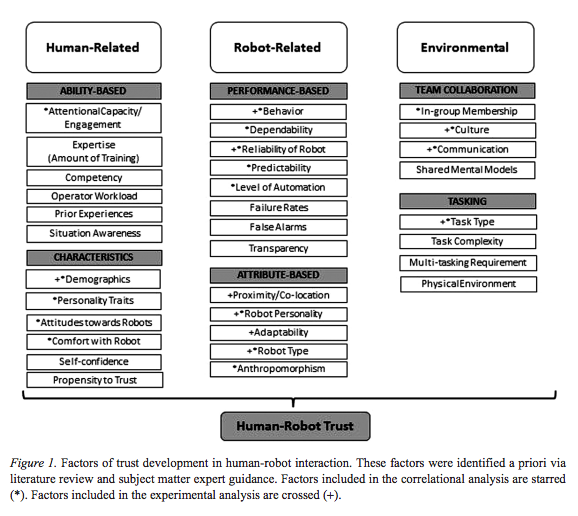
Need more research; analysis tapped the surface in the paper.
Avoidance of Topics: Coping (Human POV)
S. Ross et. al (1987). Approach, Avoidance, and coping with stress. APA [from Duke University]
Avoidance is a coping mechanism in response to some form of stressor, such as fear, discomfort, or anxiety
Suggests attempt to protect oneself from experiencing psychological damage
Insight: Two types of coping mechanisms active approaching (explicitly stating discomfort/doing sth to reduce stress) and passive avoidance (neglect, suppression, silence). This validates the categories for passive and active avoidance of topics
Implications: Instead of active and passive avoidance, change active to "Approach" and leave passive as "Avoidance"
Approach-Avoidance Dimension by Shrontz (1975)

Trust
Self-disclosure
Coping
Zara Usage Outreach Stats
10 Total
2 Reported Aborted Attempts
4 Successful Attempts
5-11/1/2016
Zara User Research & Feedback
What did you like about Zara?
What did you not like about Zara?
Where can Zara improve?
- One of its kind
- Interesting
- Piqued curiosity
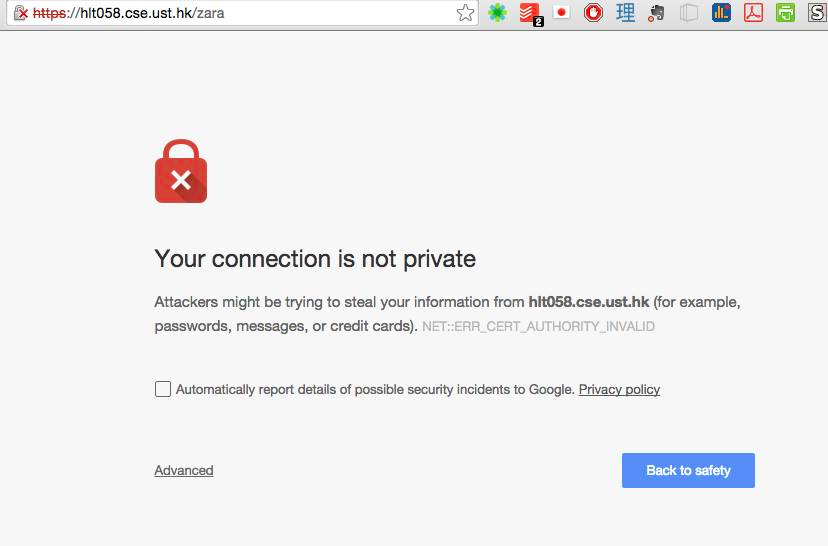
- Felt Spooky (chrome warning < microphone < cam)
- Off-beat stares and pose of avatar
- Monotone replies
- Q are too personal
-Chinese Version: "did not understand"
- Informational Landing page of some sort (prepare the users)
Terse AND Verbose responses:
"N" scores is way off the charts (3000 pts)
Landing Page
Facebook Usage
Next Steps
Zara
By Y Yang
Zara
Ongoing