and Time Period



Merten Kröncke, Jana Eckardt, Agnes Hilger

Canonicity,
Gender,
An Empirical Reconstruction of the German Academic Canon
data & code
data & code
slides.com/agneshilger/dh2026
Overview
1. Introduction
2. Theoretical Background
3. Data and Methods
4. Results
5. Conclusion
data & code
slides.com/agneshilger/dh2026
Introduction
Related Work
- Research on exclusions along gender, race, and class in Western literary canons
- (e.g., Guillory 1993; on gender, e.g., Showalter 1971; Russ 1983; Whittle 2013; Heydebrand/Winko 1994; Rippl/Straub 2013)
- Empirical reconstructions of canonicity, including examinations of gender-related aspects
- (e.g., Algee-Hewitt/McGurl 2015; Porter 2018; Barré/Champs/Poibeau 2023; Brottrager/Stahl/Arslan 2021; Fredner/Porter 2024; González et al. 2021; Rohe et al. 2025;
- on gender, e.g., Müller-Spitzer/Wortmann/Wolfer 2023; Fredner/Porter 2024; Schmidgall 2025; Teichmann 2026)
Aim
We aim to examine the connection between gender*, canonicity, and author time period within the context of the total population of German-speaking writers.
(Descriptive Approach)
*Categories limited to "female"/"male" due to data availability — not our conceptual understanding of gender.
...consider this hypothetical example
15%
Female Share in Today's Academic Canon
20%
10%
authors born in year y
authors born in year x
Female Share in Today's Academic Canon
... add author time period
...consider this hypothetical example
10%
authors born in year y
authors born in year x
40%
15%
Female Share in Population of Writers
... add population of writers
20%
Female Share in Today's Academic Canon
...consider this hypothetical example
... add author time period
Theoretical Background
Agnes Hilger, Jana Eckardt, Merten Kröncke: Taking a Step Back: Theoretical Fundamentals of Canonicity and its Empirical Reconstruction, in: Poetics Today 47.3 (2026) [forthcoming].
Explication
The canonicity of object O at time t in relation to a carrier group G is equal to the degree to which O has been deemed worthy of attention within G up to and including t.
Two Approaches to Reconstructing Canonicity
(1) Document Approach
(2) Survey Approach
Two Approaches to Reconstructing Canonicity
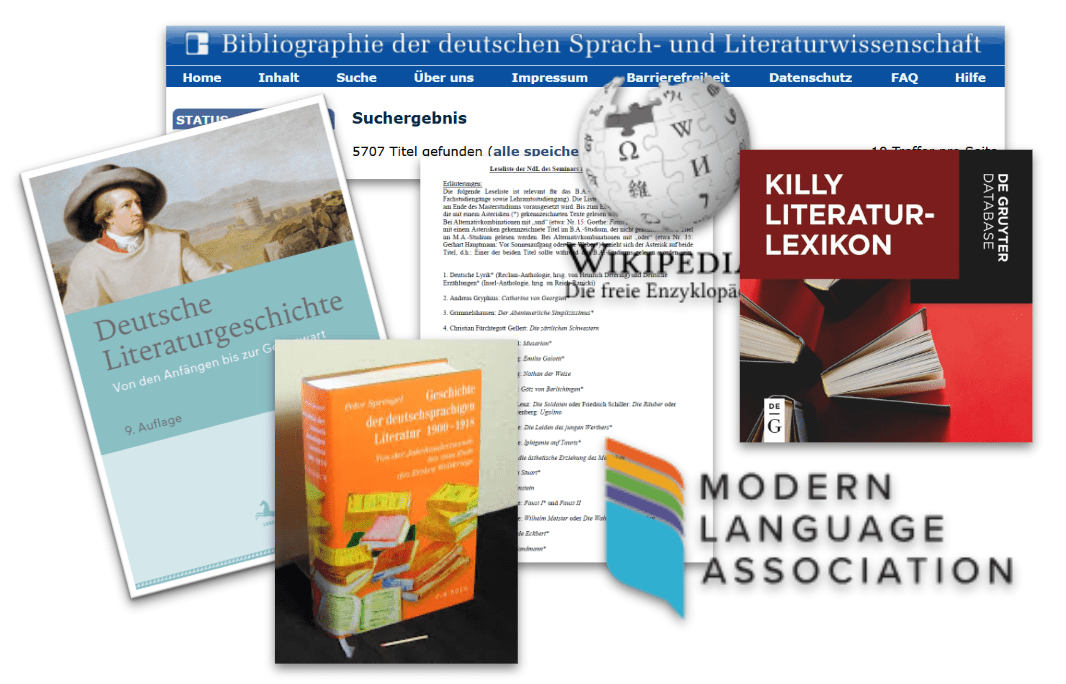
(1) Document Approach
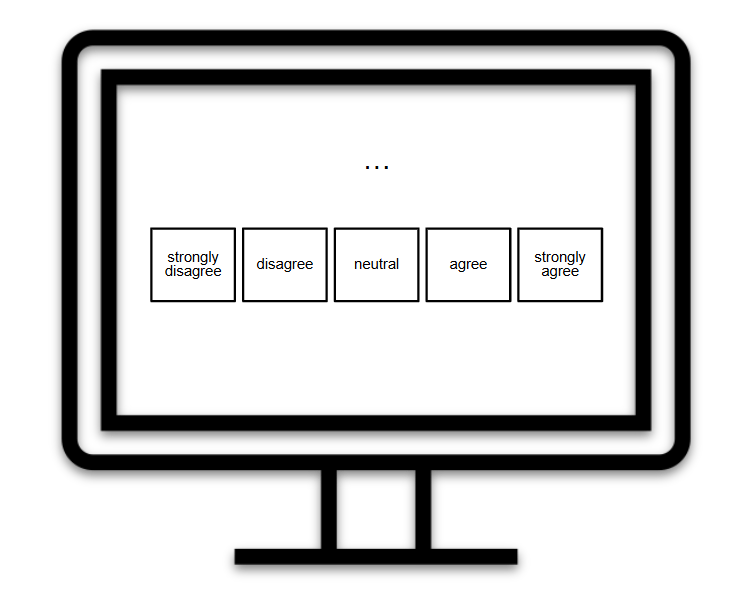
(2) Survey Approach
Existing documents are analyzed as indicators of their originators’ evaluative attitudes toward an object or their recipients’ evaluative attitudes toward that object (due to influence).
People are asked about evaluative attitudes they or others hold toward an object.
Data & Methods
(3) Author Population
(2) Gender
(1) Canonicity
Jana Eckardt, Agnes Hilger, Merten Kröncke: 1000 Punkte für Goethe: Eine empirische Rekonstruktion des Kanons der neueren deutschsprachigen Literatur, in: Zeitschrift für Germanistik 37.1 (2027) [forthcoming].
Canonicity
Canonicity
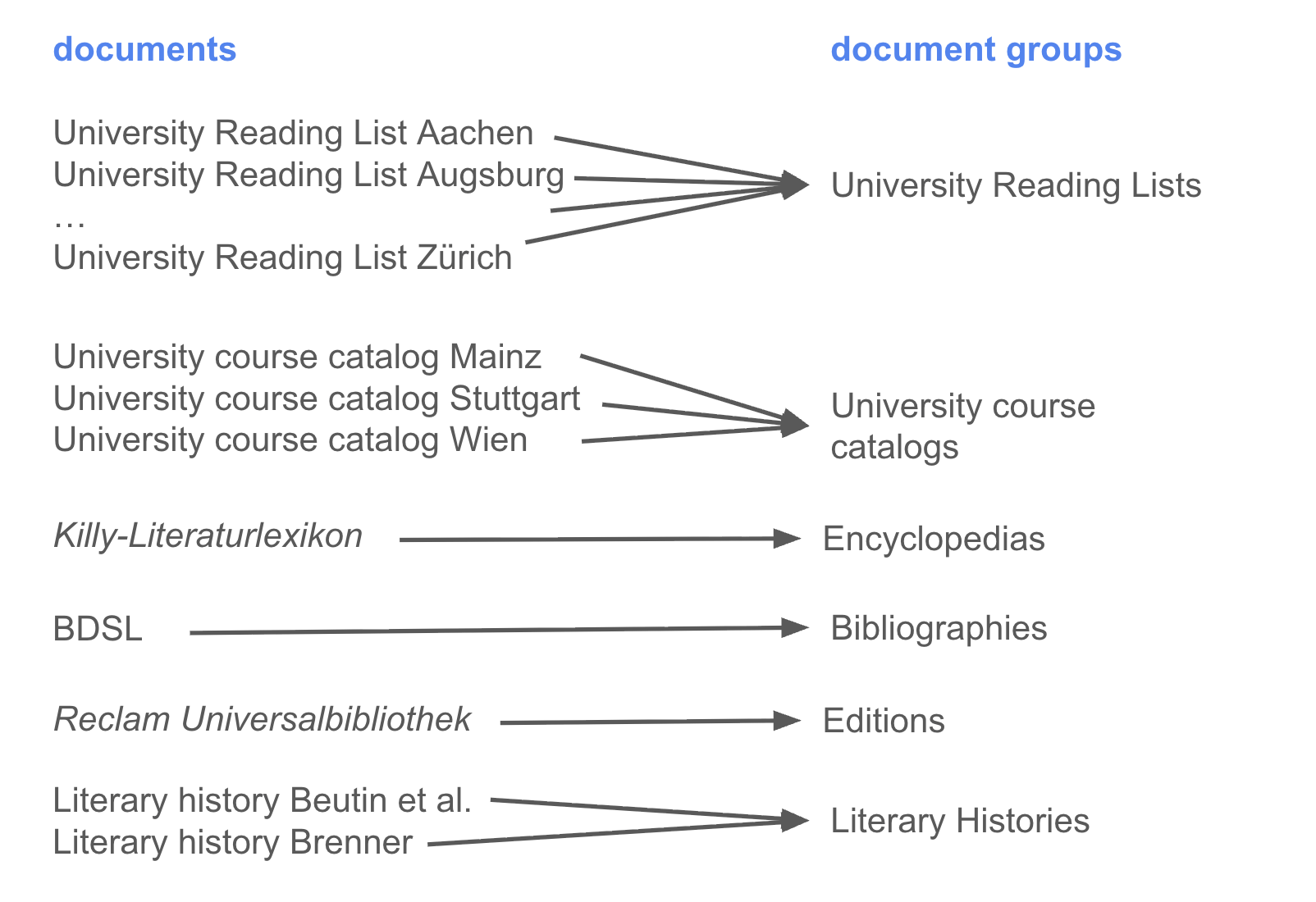
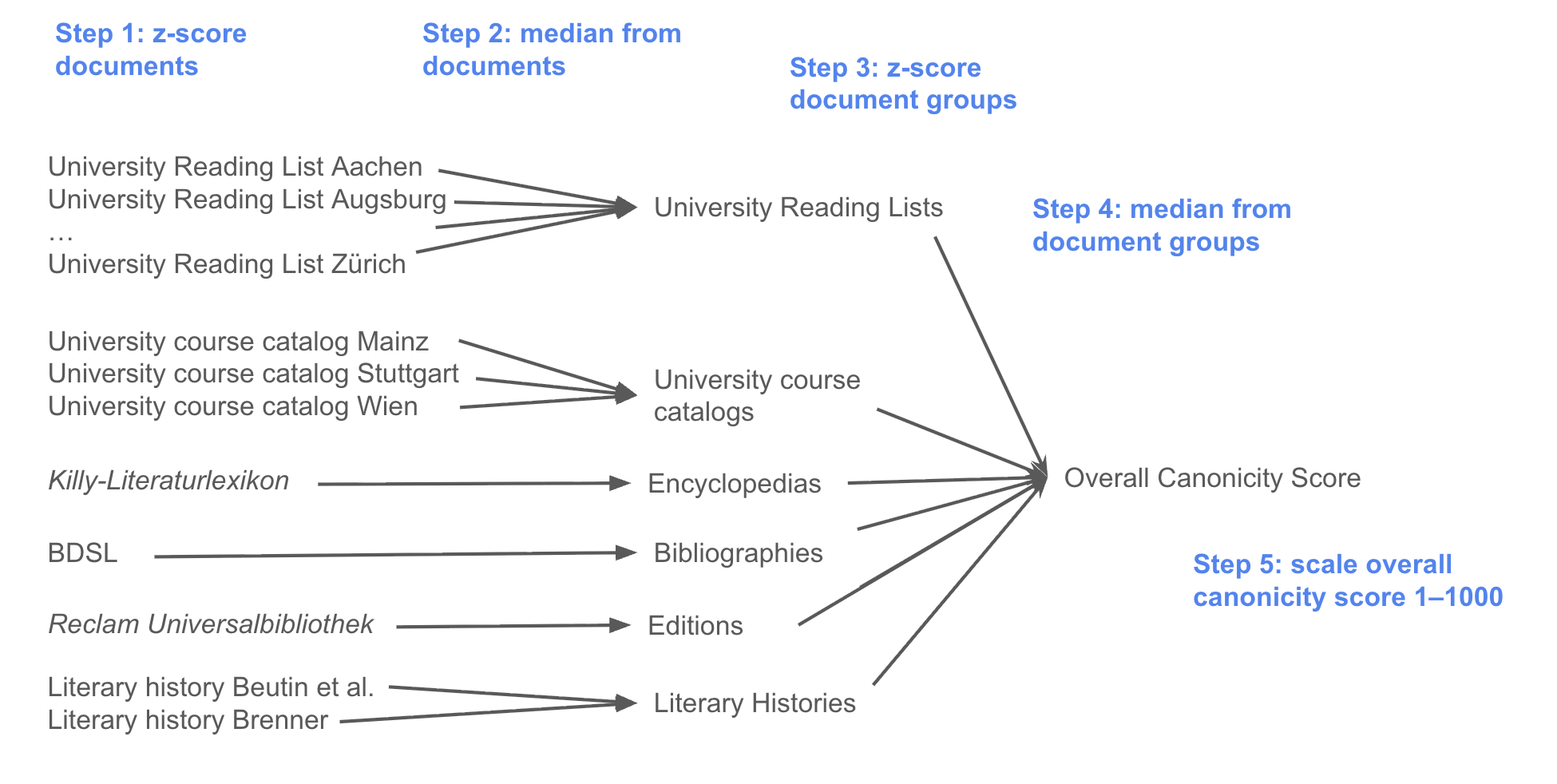
We reconstruct the canonicity of German-language authors since 1600 in 2025 among German-language literary scholars.
We follow the document approach, i.e. we analyze documents such as literary histories as indicators of their originators’ or recipients’ evaluative attitudes toward authors.
Canonicity
Canonicity
| Documents | Metric | Number of Authors per Document Group |
|---|---|---|
| University reading list 1 (2, 3, …) | Share of the author’s titles among all titles on the reading list | 717 |
| University course catalog 1 (2, 3) | Share of courses whose title or description mentions the author, relative to all courses | 587 |
| Killy-Literaturlexikon | Length of the article on the author (in words) | 4779 |
| Reclam Universalbibliothek | Number of the author’s titles and editions in the Universalbibliothek | 293 |
| Literary history 1 (2) | Share of pages mentioning the author out of all pages in the literary history | 1165 |
| BDSL | Number of research contributions on the author | 4026 |
| Total = 5167 Authors |
Canonicity
Gender
https://gnd.network/Webs/gnd/DE/Home/home_node.html

Gender
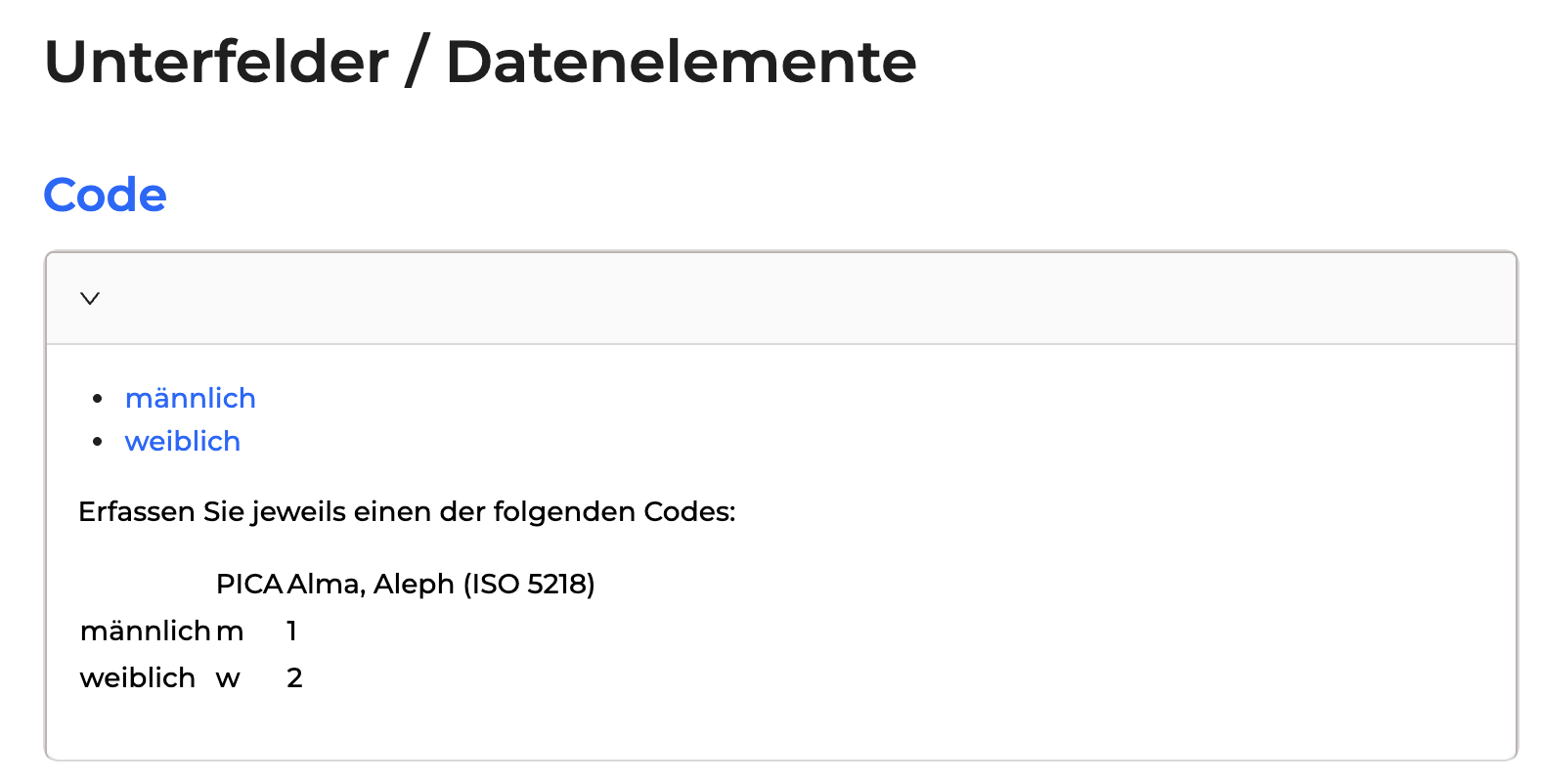
https://sta.dnb.de/doc/GND-DF-PERSON-GESCHLECHT
Gender in the GND:
- male
- female
- unknown
- (in principle) male + female
- (in principle) free text
Author Population
all authors/writers associated with German-speaking countries and born since 1600:
79,000 individuals
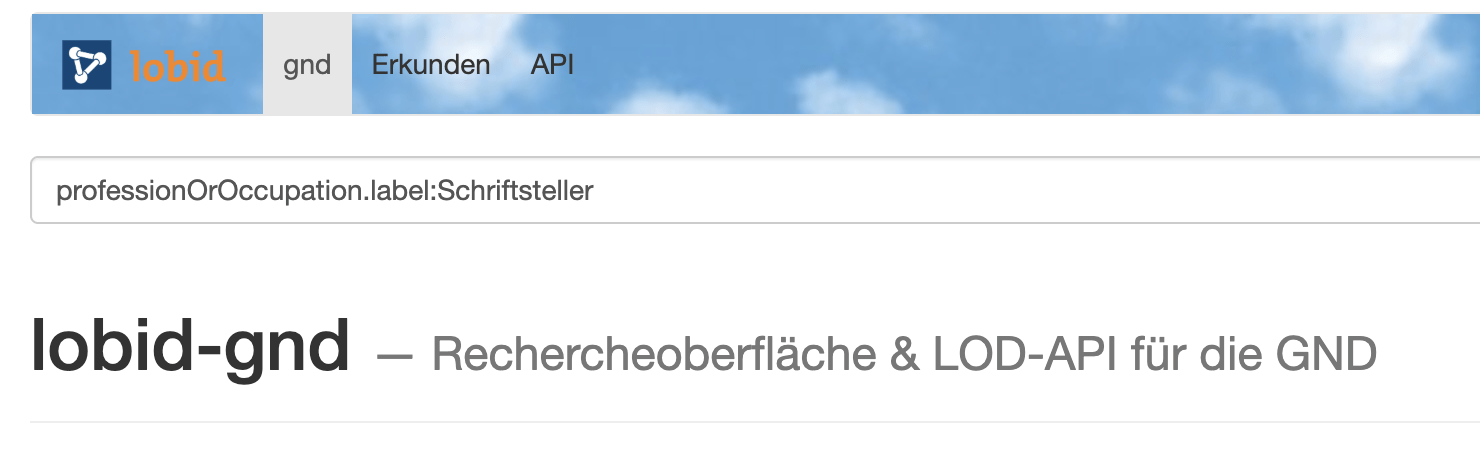
Author Population
Authors with Canonicity Scores
(n=5,167)
Authors in the GND
(n=79,000)
Overall Population of Authors
(n=???)
Results
Distribution of German Academic Canonicity
Distribution of German Academic Canonicity (colored by gnd-gender)
Canonicity, rank and gender
Gender share by GND author birth year
Canonicity, Gender and Author Time Period
Canonicity, Gender and Author Time Period
Canonicity, Gender and Author Time Period
Conclusion
Conclusion and Discussion
data & code
- intersectional perspectives
- think more about baselines
Future Work
- think about canonicity of time periods
- canonization of 19th century female authors
Normative Implications
- male bias
- author time period dependency
Learnings
Appendix
dh2026
By Agnes Hilger