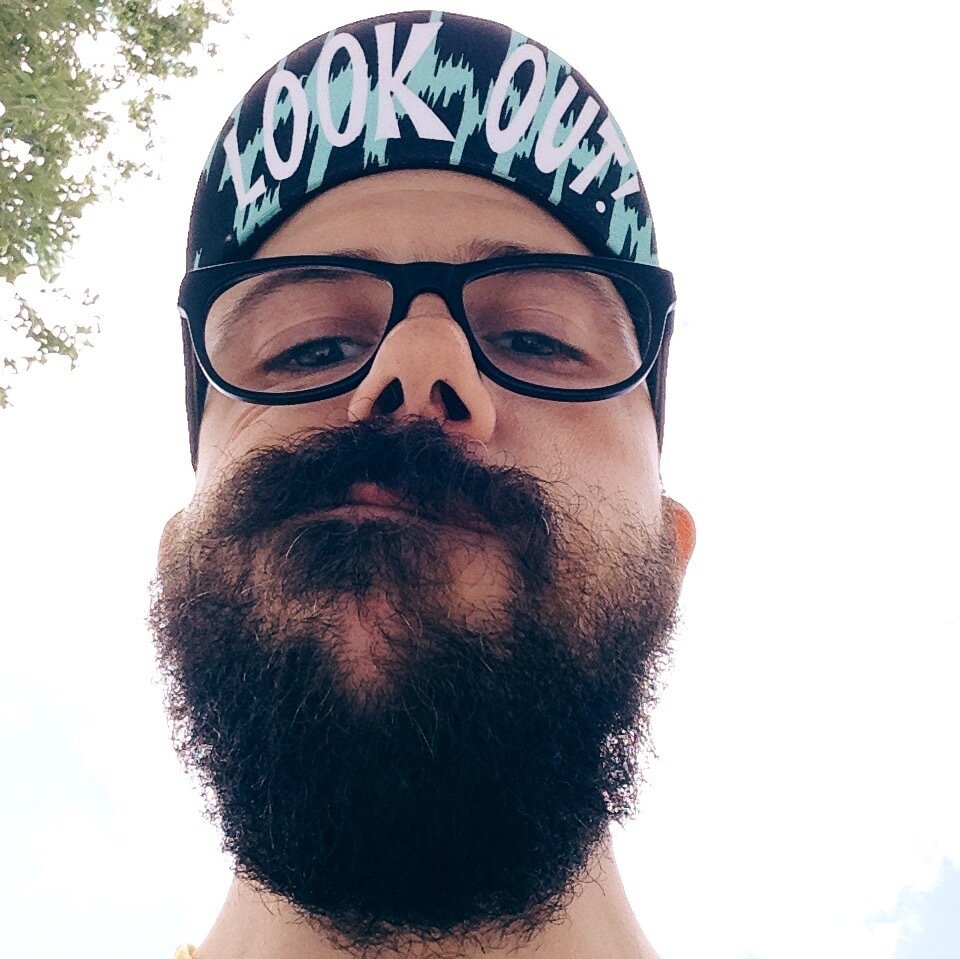
Mike Nason PRO
Open Scholarship and Publishing Librarian @ UNB Libraries // Metadata Nag and DOI Wrangler @ PKP // General Loudmouth and Malcontent
Mike Nason
Open Scholarship & Publishing Librarian | UNB Libraries
Open Scholarly Infrastructure Advisor | Public Knowledge Project
Camposantoblog. (2016, February 9). Firewatch Launch Wallpaper. Tumblr. Retrieved March 9, 2026, from https://blog.camposanto.com/post/138965082204/firewatch-launch-wallpaper-when-we-redid-the
It's me, Mike! Hello! I hope you're well, despite [gestures broadly] this haunting late-stage of capitalism and the wailing, violent death throes of modern western empires.
I'm your Open Scholarship & Publishing Librarian.
I continue to work, primarily, in a field referred to by some as "Scholarly Communications".
My job is about helping researchers make the results of their work as accessible to the public (or, relevant research communities) as they need them to be, whether that's due to funding mandates, personal interest, or a sort of proactive capitulation.
I am here to help you. It's, like, specifically built into the CBA (16c.02).
It is what librarians are for.
research data management
tri-agency oa requirements
open access publishing
scholar profiles
repositories
digital publishing
open educational resources
open infrastructure
persistent identifiers
scholarly publishing
scholarly communications
academic integrity
bad-faith publishers
Cat will be focusing on "Artificial Intelligence" in publishing, including best practices for using GenAI as a researcher, red flags to look for as a reader, and publisher policies around disclosure.
We will also be discussing resources for keeping on top of current issues.
Then, my colleague Julie will be discussing research metrics, their formulae, and their applications.
You will learn about the importance of defining your "impact", and how to communicate that "impact" to a broad audience.
We'll talk about what this means, why I don't think the phrase "predatory" is useful in this space, and why I would prefer to reframe this issue.
We'll talk about some red flags.
We'll talk about where to look for evidence about a journal and some ways you can protect yourself from scams.
If you are publishing in places that you feel best showcase your work and serve your intended audience/community, then you're also publishing with integrity...
... probably!
Throughout this series of sessions, I've repeatedly talked about what it means to "publish with intention".
Integrity and intention in this space are certainly not unrelated.
It's so, so vital to think about where your work goes and why you want it to go there. Where you share your work matters. What happens to your labour matters.
There a lot of different people, bodies, companies, organizations – you name it– who would love to take your money (or someone elses', they're not picky, really) "in exchange" for publishing your work. And they know that you need to publish. And they know you're under the gun.
Most people talking about trust issues in scholarly publishing employ the phrase "predatory publisher[ers/ing]".
I don't love it. I don't think it's useful.
First of all, it's a pretty reductive way to talk about publishing, the publishing industry, and the post-secondary education industry. But there's other reasons too...
A lot of the early mania around bad-faith journals is that they didn't really do peer review and they weren't "quality" publications. They were sub-par, and they solicited submissions from authors.
And a lot of the finger wagging was done by western, privileged researchers at new, open access publications from the global south (Beall sucks).
Publishers come in all shapes and sizes. Profit. Not-for-profit. Publicly traded. Privately owned. Alternatively funded. Society- and Association-run. Vertically-integrated oligopolies. Small, independent journals. University presses. Entirely fake websites designed to trick you into spending money. Real websites with bad reps.
Any of these can be predatory.
This is an industry that resells the results of research back to the people who performed it at a premium. It has manufactured a prestige economy that it also sells the measurement tools.
"Publish or Perish" has evolved to put undue pressure on researchers to generate publications at all costs. Lots about this is also predatory.
Have no interest in the labour of publishing. They don't copyedit or do layout. They don't intend to facilitate peer review. There's no legitimate editorial oversight.
They exploit a combination of presumed academic trust and lack of technical literacy to make a quick buck at your expense.
They aren't really "publishers" at all. They are websites that look like journals. They do not do the verbs of publishing.
Profit significantly from the professional realities of modern publishing.
They hold researchers over a barrel, own their copyright, sell their writing, license their labour back to them, and charge researchers to read and to publish.
But they do, at least, have some services you benefit from. Copyediting, layout, distribution, search platforms and connected products... they do the verbs of publishing.
Sometimes a bad-faith publisher will fish for potential researchers to join an editorial board. These kinds of emails are harder to dismiss as unusual, and require extra due diligence. But, because one of the ways to evaluate a publication is to look at the editorial board to see if you recognize names, this can be especially hazardous.
There are probably a number of publications that went from "probably a scam" to "sort of successful" with the right kind of editorial pull.
One way folks end up in this boat is that they take an email solicitation seriously. It is super important to remember that journals do not typically solicit for submissions outside of a broad "call for papers". In the off chance this does happen and is real, you'll likely know the person asking you to submit a paper.
Solicitation is one of the bigger red flags that a publisher is to be avoided. Unfortunately, it's also not enough to totally rule one out.
Sometimes researchers will drift from their normal publishing practice because they have an OA mandate and are looking for a place to submit their work that will facilitate compliance.
In interdisciplinary fields, in particular, you might end up working with an author on a project that doesn't really fit neatly into journals you normally publish in, so you'll end up looking for something that might fit better.
Because we don't spend a ton of time talking about publishing literacy, it's not terribly surprising that some early career researchers will plop some terms for journals in a search engine and hope useful results.
There's a few common scenarios where authors are looking for potential places to publish and might come across a journal whose credibility they're unsure of.
In essentially every case, the problem boils down to people googling around for journals and not really knowing where to look or how to discern between the results they find.
In a very broad sense, the best advice I can give you is to take a beat to think about a title before you submit to it, no matter what. Just always do that. Even if they're with a big publisher, if you don't know the title just take some time to read it's scope and policies. It's time well spent!
If you're looking for a place to publish your work, don't rely on AI or a crumbling algorithm that filters your results based on what you normally search for.
At minimum, you may need to admit you could use a hand narrowing the field down.
By all means read your email. But know that there's very few publications who will solicit you, specifically, to write them a paper. The earlier you are in your career, the less likely this is.
Know that this also happens with conferences. There are bad-faith conferences. They make a lot of money!
Think. Check. Attend. is a similar resource from a different group of folks meant to evaluate the legitimacy or credibility of conferences.
Think. Check. Submit. is a resource with tremendous guidelines for sanity checking a publication. Stuff like:
A lot of folks wish there was just a definitive list of the bad ones. The problem is that fake journals are transient and easy to make. They can pull up stakes and make a new site in an afternoon. They don't always stick around.
Another problem is that relying on black or whitelists means outsourcing criteria to someone else who has their own motivations for labeling a title.
Though it's vital to note that no one flag is red enough that you can dismiss a publication, here's a list of some other common characteristics of bad-faith journals.
What makes these so hard to evaluate is that they have some journals that are pretty good and have reasonable reputations within a given field of study. Lots of UNB researchers publish in MDPI journals.
Even if these publishers started out with some problematic characteristics, it's now the case that some of those journals have pretty ok reputations even if the publishers themselves don't.
There are, increasingly, publishers who fit directly in the middle of this spectrum. They might have titles that solicit authors and editors. They might publish way more articles than seems ethical or reasonable. The two biggest publishers in this space are:
They're both gold open access titles, meaning you need to pay an APC to publish there usually.
Mike Nason
https://lib.unb.ca/publishing
mnason@unb.ca
Camposantoblog. (2016, February 9). Firewatch Launch Wallpaper. Tumblr. Retrieved March 9, 2026, from https://blog.camposanto.com/post/138965082204/firewatch-launch-wallpaper-when-we-redid-the
By Mike Nason
Foundation for a broader presentation on academic integrity and publishing, currently specifically focused on bad-faith publishers.