Networking Fundamentals
Dr. Alexios Louridas
Aims
On successful completion of this course a [you] will be able to:
1. Create policies for and configure appropriate routing protocols in a large network.
2. Analyse and solve problems involving the applications and configuration of hardware and software components of a communications network. Show competence in practical design and implementation of LANs within given parameters.
3. Compare and contrast in practical design and implementation of LANs within given parameters and have the ability to choose the appropriate technology for a given situation.
4. Apply diagnostic tools and configure a network to specific design specifications to support a wide range of networked environments.
Learning Outcomes

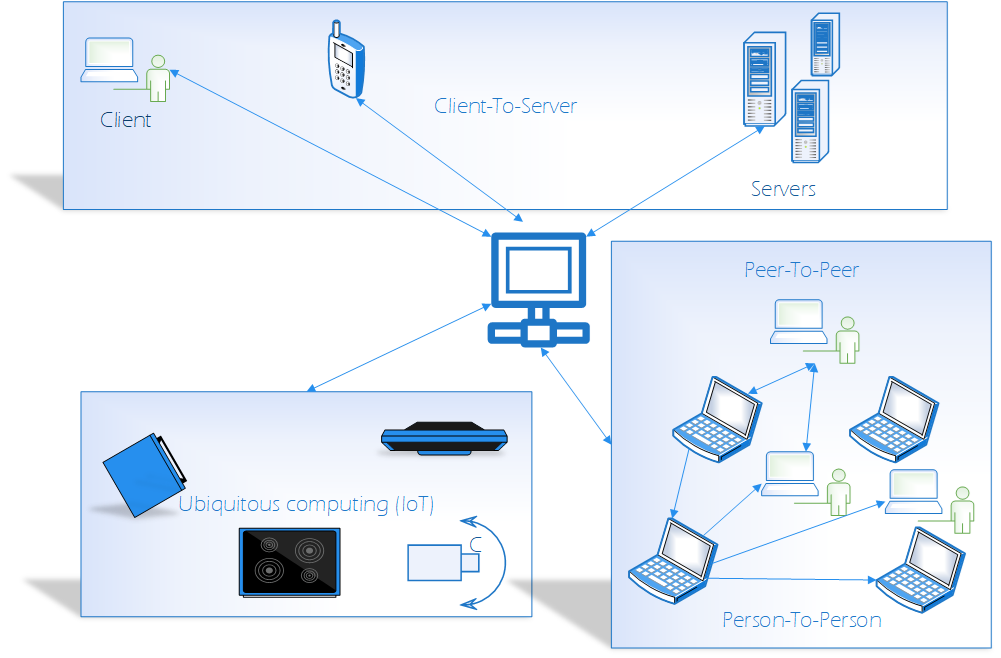
Computer Networks
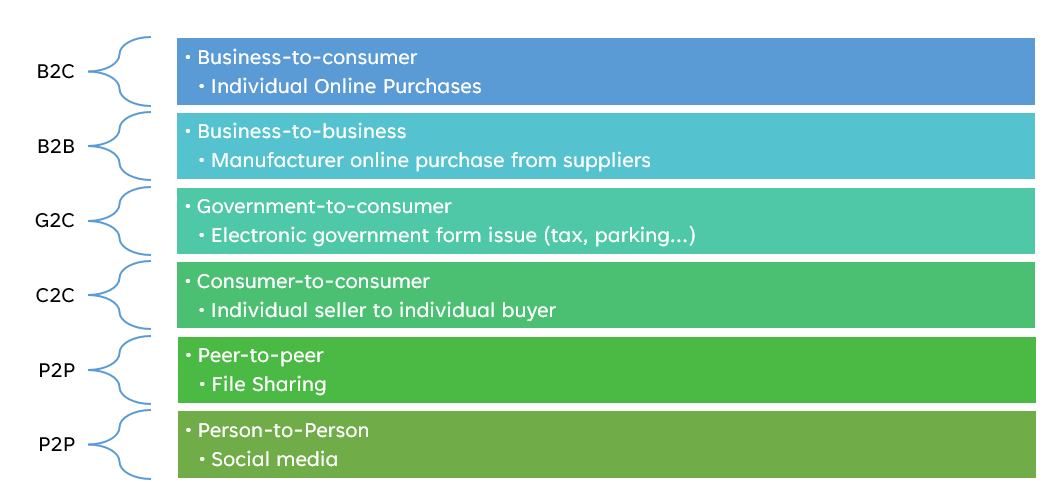
Forms Of Networks
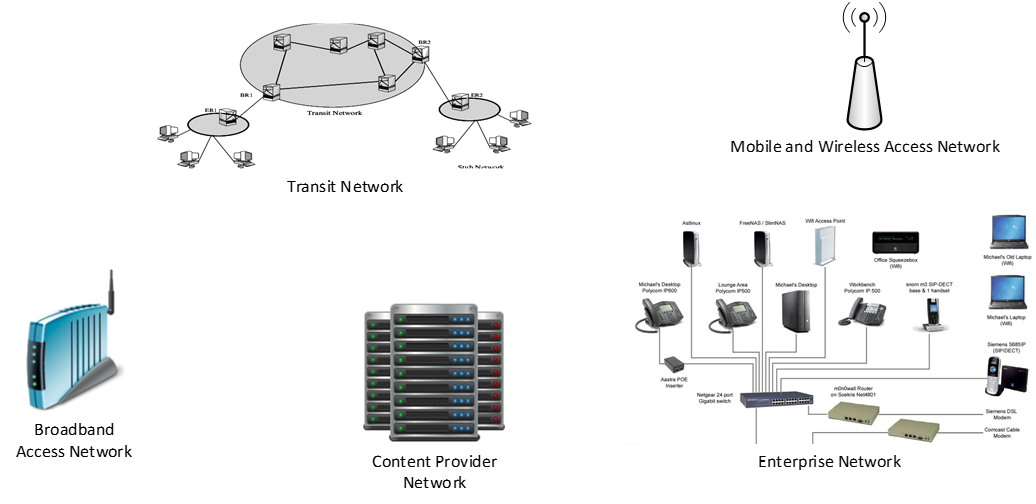
Forms Of Networks
Network Technology
Personal Area Networks (PAN), any device that communicate over the range of a person.
Local Area Network (LAN) standards for devices in single limited area.
Metropolitan Area Network (MAN) connecting user networks within small geographic areas.
Wide Area Network (WAN) connecting user networks over large geographic areas.
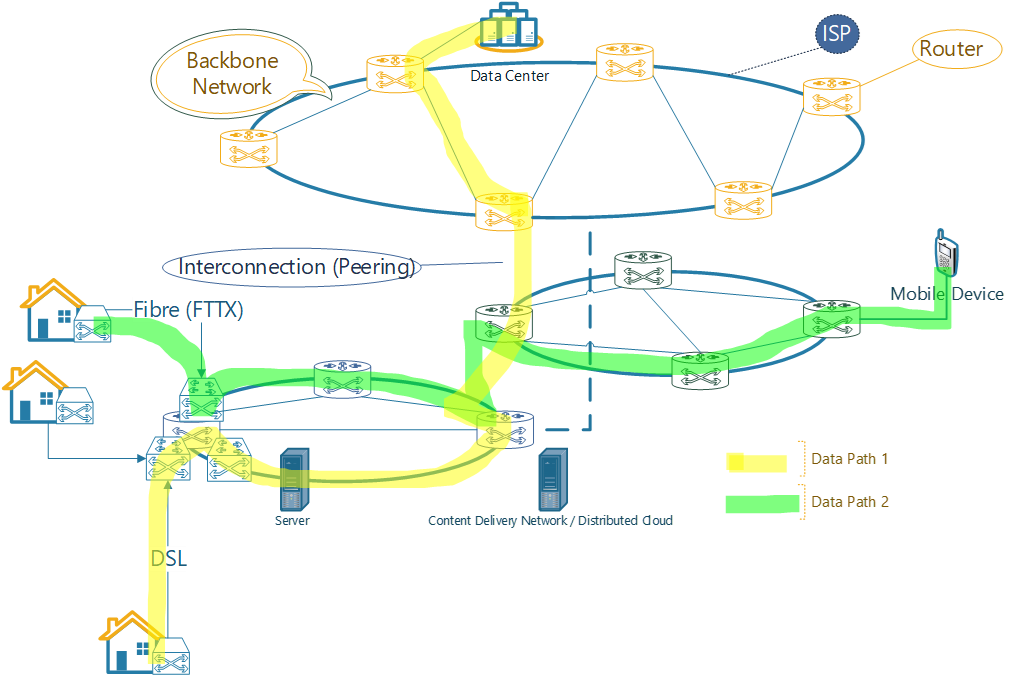
The Internet
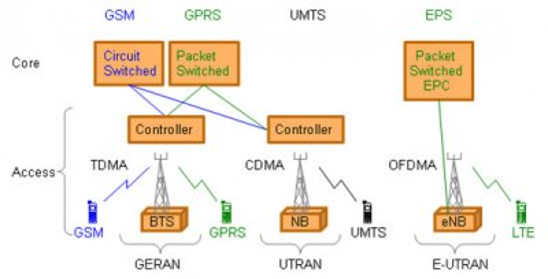
Mobile Networks
-
Mobile Station (MS)
- Mobile Devices
-
Base Station (BS)
- Radio equipment
-
Mobile Switching Centre (MSC)
- Connects multiple BS
- Public Switched Telephone Network (PSTN)
-
Radio Access Network (RAN)
- Transmission network
-
Core Network
- Infrastructure Network
- Internet
Radio Propagation
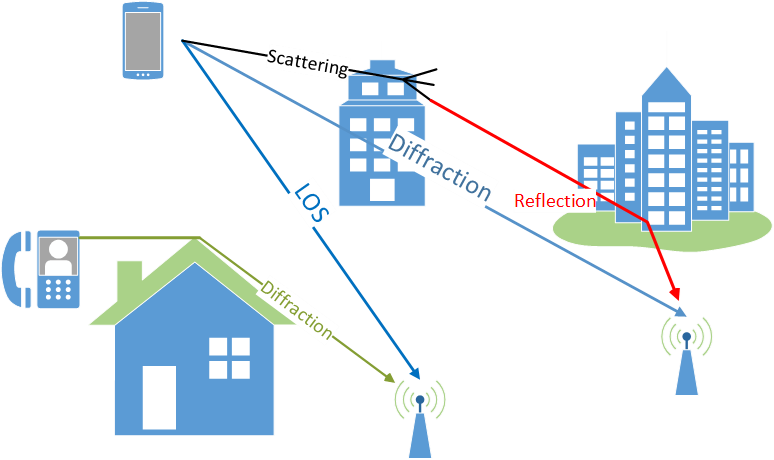
Designing a Network
Reliability
Dealing with Failures and Errors
Error detection
Error correction
Routing
Resource Allocation
Congestion
Multiplexing
Quality of Service (QoS)
Some Networks are Scalable!!
Evolvability
Scaling a network
Addressing
Protocol Layering
Internetworking
Security
Confidentiality
Authentication
Integrity
Protocol Layering
To minimise errors and complexity. Layered architecture with each layer having their protocols and algorithms hidden from other layers.
Each layer has a specific communication language/protocol
Communications between each layer is done via a interface. The interface defines which primitive operations and services the lower layer makes available to the upper one.
At the bottom of all layers a physical layer connects devices together. It is the layer where the true data transmission from one location to another happens
Layers
Distinguishing operations per layer is important to be able to create equipment specific for a layer.
Protocols
Each layer should contain a single protocol. A list of all protocols used in a network architecture is called a protocol stack.
Interfaces
These are not and should not be part of a network architecture
Network Architectures

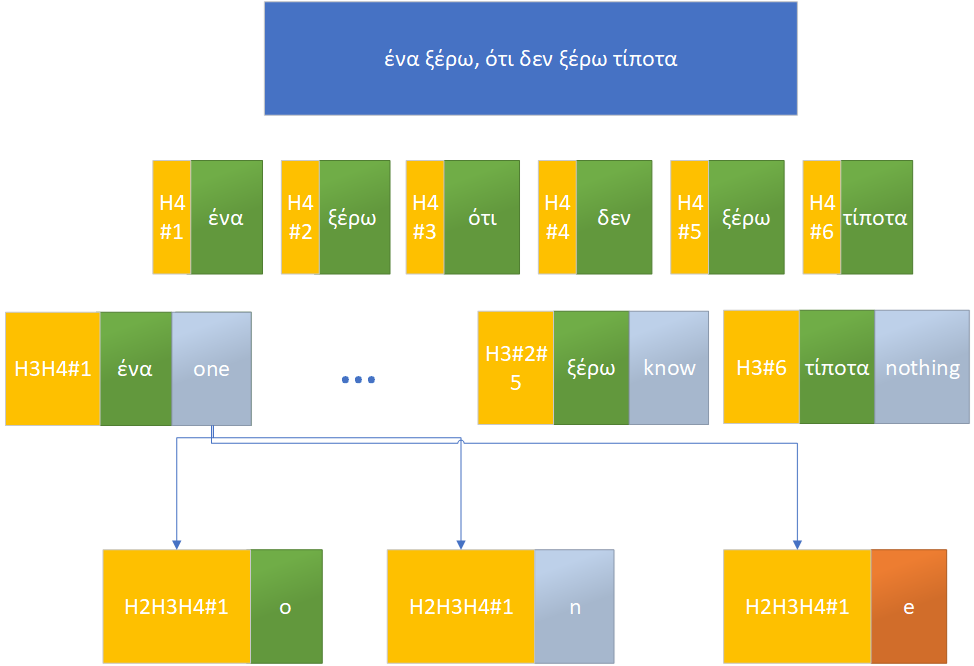
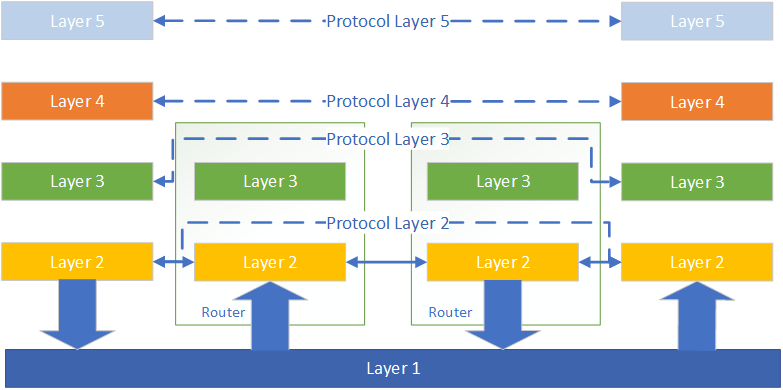
Example of Layered Network Architecture
A system has an n-layer protocol hierarchy. Applications generate messages of length M bytes. At each of the layers, an h-byte header is added. What fraction of the network bandwidth is filled with headers?
Problem
The total number of header bytes: n * h
The total packet size: n * h + M
Hence, the fraction of each packet used by protocol header is
[n * h / (M + n * h)]
Use n = 7, h=8 and M =56 and M =100
What do you believe is better sending big packets or small packets?
Answer




Communications SERVICES
Connection-Oriented Service
Connectionless Service

Network Performance
-
Data rate = Amount of data per time.
-
Bandwidth
-
The amount of information that can flow through a network connection in a given time.
Measured in bits per second (bps)
Throughput is the actual bandwidth at a specific time of day.
-
-
Latency
- Time taken from source to destination. Usually latency is used to devices to show how long it takes for data to enter and the leave a device. Whereas delay is usually used to describe the time taken from source to destination.
-
RTT
- Round Trip Time for data. Measures in seconds
-
RTTX Bandwidth
-
Bandwidth Delay Product is measured in bits and it signifies the amount of data that are transferred at anytime in through the network.
-
T_{best} = \frac{S}{BW}, T_{true}=\frac{s}{Throughput}
A normal person (Seb) can carry a bag with 3 data cartridges each containing 10GB of data and can run at a speed of 18km/hour. For what range of distances does Seb have a higher data rate than a transmission line whose data rate (excluding overhead) is 150Mbps? How does your answer change if (i) Seb’s speed is doubled; (ii) each cartridge capacity is doubled; (iii) the data rate of the transmission line is doubled.
Problem
Seb can carry 3 * 10 = 30GB (240Gb)
Speed = 18 km/hour = 0.005 km/sec
Distance: d km
Time: d / 0.005 = 200*d sec
Hence, 240 / (200*d) Gbps or 1200/ d Mbps.
Solve inequality: 1200/d > 150
For d < 8 km, Seb has higher rate than the communication line.
Answer
i)If Seb’s speed is doubled, then his data rate will also double. Therefore, the range of distances for which Seb has a higher data rate than the transmission line will also double.
ii) If each cartridge capacity is doubled, then Seb can carry 60 gigabytes of data. Therefore, redoing calculation in the main question you should find that the distance would double.
iii) If the data rate of the transmission line is doubled, then the range of distances for which Seb has a higher data rate than the transmission line will be halved.
Answer
Transmission Control Protocol / Internet Protocol
- Network still operational even if some routers are destroyed.
- Flexible architecture.
- Quick and easily deployable.
TCP/IP
Open System Interconnection.
- Each layer should be abstract.
- Each layer should perform a well-defined function.
- The function of each layer should be chosen with an eye toward defining internationally standardized protocols.
- The layer boundaries should be chosen to minimize the information flow across the interfaces.
- Layers should be large enough do be distinguishable between layers but small enough to be feasible.
OSI
Layered Reference Models
OSI Reference Model
OSI MODEL
Application
Presentation
Session
Transport
Network
Data Link
Physical
Model Comparison
TCP/IP MODEL
Application
N/A
N/A
Transport
Network
Link
N/A

Physical Layer (OSI)
Physical Cables to connect network nodes
Wireless connection between network nodes
Data packets in raw form are just digital 1 and 0.
Electromagnetic, Electrical and Optical data transfers.
Serial Lines
Ethernet connection
Creates Connections
Media Access Control (MAC) addressing
Ignored mostly in early TCP/IP
Data Link (OSI and TCP/IP)

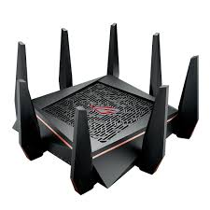
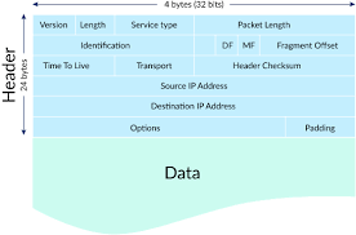
Network Layer (OSI)
Internet Layer (TCP/IP)
Routing of data
Transporting data from source to destinationInternet Protocols is used in this layer
Transport Layer (OSI and TCP/IP)
End to End packet delivery via datagrams or virtual circuits.
Data from a source process to data at a destination process
Error recovery
Retransmission
Two Protocols:
- TCP (Transmission Control Protocol)
- UDP (User Datagram Protocol)

Session Layer (OSI)
Authentication
Security
Creation of connection
presentation Layer (OSI)
Protocols that work with the client
Image formats
Video formats

Application Layer (OSI and TCP/IP)

This is the layer that most users interact with and will recognise.
Provides network services to the end user:
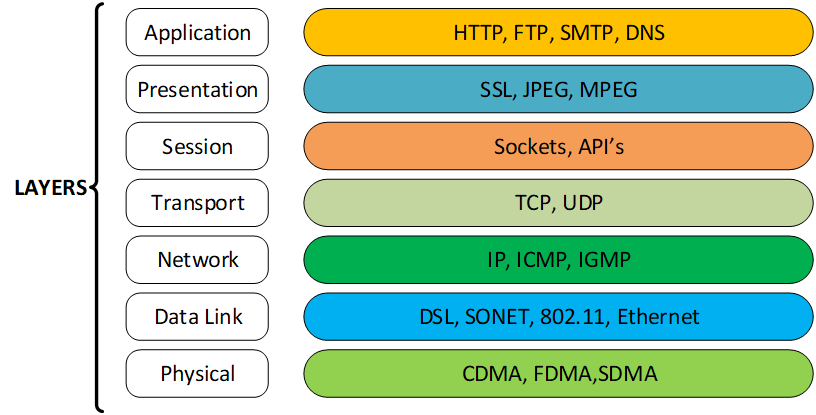
HTTP
FTP
SMTP
TELNET
Protocols per layer
Analysis of Reference models
OSI Timing
Bad timing. It was released too late to change the TCP/IP widespread usage.
Political Reasons
OSI 7 layers were more political selected rather than technical. The reason of the session and presentation layer are very thin.
Difficult to implement and probably inefficient.
TCP/IP Layer Separations
Services, interfaces and protocols are not easily differentiated. That makes design of expanding new networks very difficult.
It is more described as protocol stack rather than network architecture.
Bottom Layers undistinguishable
The link layer is used more like an interface between the OSI data link and network layer.
Besides the IP and TCP protocols all others protocols are very loosely defined but because of well spread usage difficult to replace.
ITU
Finding information
International Telecommunications Union
Committed to connecting all the world’s people.
ITU-R – for radiocommunications
ITU-T – for standardisation.
ITU-D – for development.
ISO
International Standards Organisation
Brings together experts to share knowledge and develop voluntary, consensus-based, market relevant International Standards that support innovation and provide solutions to global challenges.
3GPP
3rd Generation Partnership Project
Unites seven telecommunications standard development organizations (ARIB, ATIS, CCSA, ETSI, TSDSI, TTA, TTC), to provide a stable environment to produce the Reports and Specifications of mobile broadband standards.
W3C
World Wide Web Consortium
To develop Web standards, protocols and guidelines to ensure the steady and long-term growth of the Web.
Networking Fundamentals_Gr
By Alexios Louridas