








Alice
"Doubt kills more dreams than failure ever will"
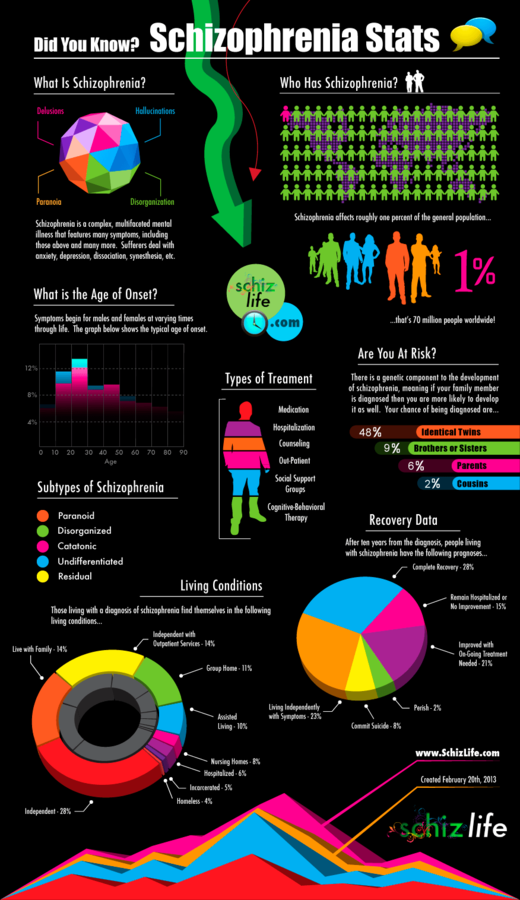
- Most common
- Symptoms include hallucinations & anxiety
- Less common
- More severe
- Symptoms include disorganized
speech & a flat expression
1800's
1900's
1700's
- First to identify was Emil
Kraepelin
- Treatment included shock therapy
- Anti-psychotic medication was introduced
- Believed that schizophrenics were possessed by evil spirits
- Many killed out of fear
- Treatment included exorcism
- patients in instituations were treated poorly
- "Hebephrenia" was known as "Schizophrenia"
- More intensive research
-Asylums were introducted for severe cases
Delusions - False beliefs not based in reality
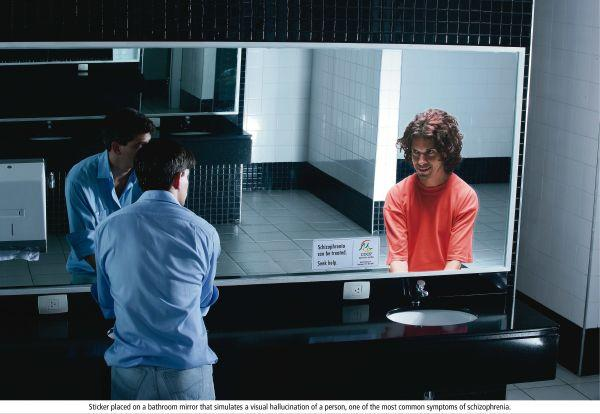
Hallucinations - Seeing & hearing things that do not exist
Disorganized Speech - Effective communication impaired
Abnormal Motor Behaviour - Resistance to instructions, inappropriate & bizarre posture, useless & excessive movement
Negative Symptoms - Reduced or lack of ability to function normally; no emotions or eye contact
Patients have twice the death rate than those without schizophrenia
Half of all schizophrenics will suffer from substance-use disorder
Patients have a better quality of life if family is supportive
Lifelong treatment & recovery
Treatments:
Schizophrenia is considered a lifelong condition.
Regular sessions with the patients & therapist, focusing on past or current issues regarding thoughts & feelings
Helps patients understand themselves better & learn to cope with their mental illness daily
Allows patients to differentiate reality from their delusions by using beneficial problem-solving skills
- Most effective treatment
- Not a permanent cure; only controls hallucinations & episodes
- Side effects include weight gain & drowsiness
- Many patients deny the presence of a mental illness & refuse to take the medication
- Varies depending on personal experiences
- One "psychotic episode" may have a greater impact on the individual rather than multiple
- Some may recover temporarily & then undergo additional
"psychotic episodes"
- IQ may drop due to
lack of focus
New research shows that schizophrenia is not a single disease, but a group of eight distinct disorders, each caused by changes in clusters of genes that lead to different sets of symptoms.
Awareness may possibly help better treat the illness to accommodate the different types of schizophrenia.
By Alice
Healthcare