HIV & AIDS Diagnoses in NYC (2010–2021): Trends, Demographics, and Geography
-
Dataset: Prof. Rachels’ Dataset Collection
-
~8,900 observations, 11 variables
-
Covers HIV & AIDS diagnoses by:
-
Year
-
Sex
-
Race/Ethnicity
-
Borough & Neighborhood
-
This analysis explores how HIV and AIDS diagnoses change over time, differ across populations, and vary geographically in New York City.
What is...
Human immunodeficiency virus (HIV) is a virus that attacks the body's immune system.
Acquired immunodeficiency syndrome (AIDS) occurs at the most advanced stage of infection. HIV targets the body's white blood cells, weakening the immune system.
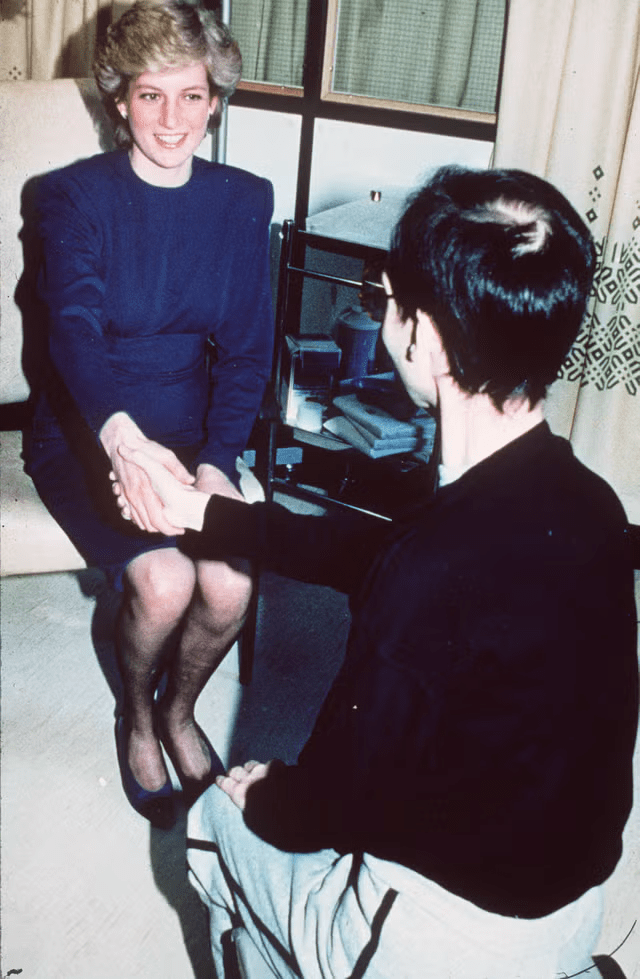
HIV does not make people dangerous to know, so you can shake their hands and give them a hug; Heaven knows they need it" - Princess Diana's
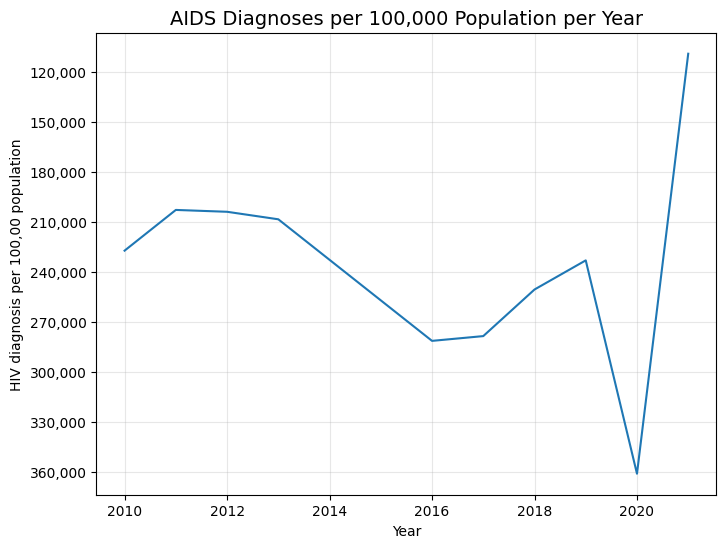
From the years 2010 to 2020 HIV diagnosis per 100,000 population significantly increased since after quarantine. There was decrease in 2013 - 2017 with a sharp downward trend during covid-19 peak transmission in 2019-2020. HIV diagnosis per 100,000 doubling post-covid.
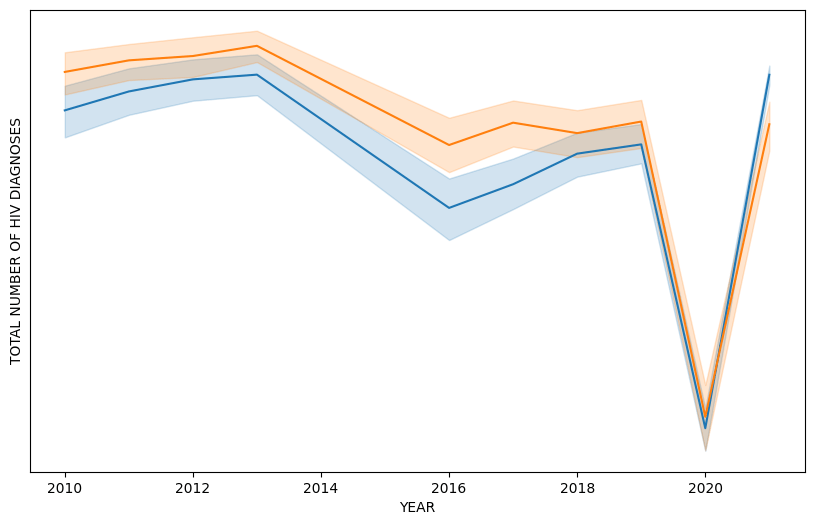
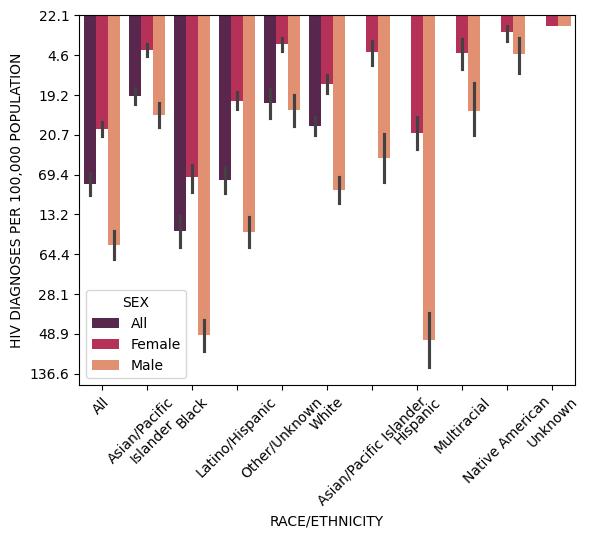
Males consistently have higher HIV diagnosis rates than females. Black and Hispanic men show the highest rates per 100,000 population. Black and Hispanic women also experience elevated rates.
HIV burden is not evenly distributed, Highlights long-standing racial, ethnic, and gender disparities
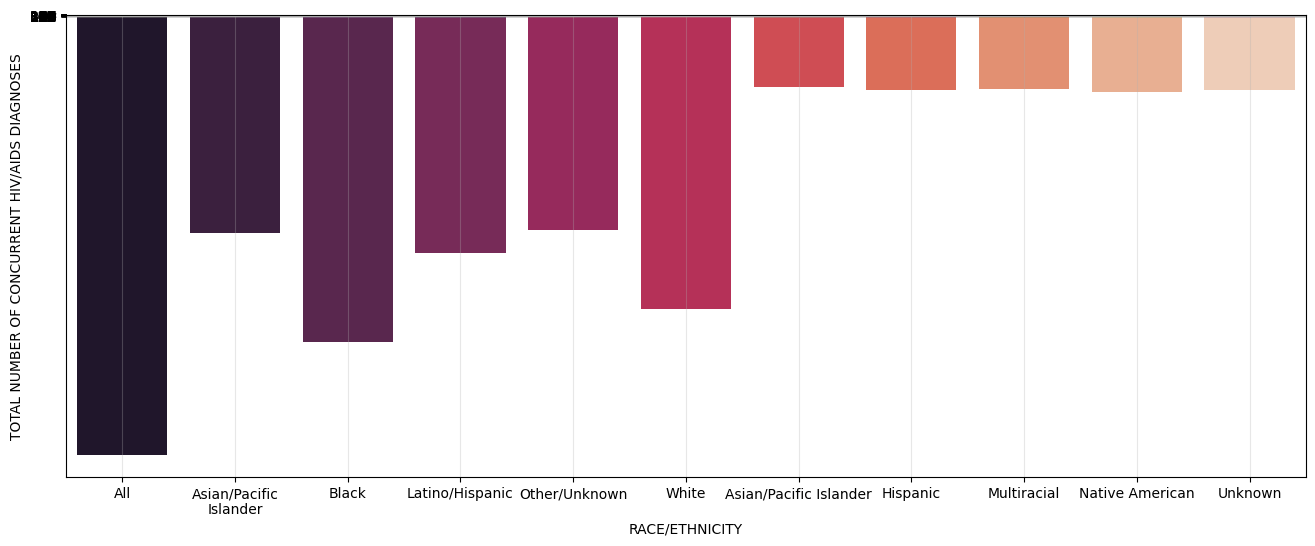
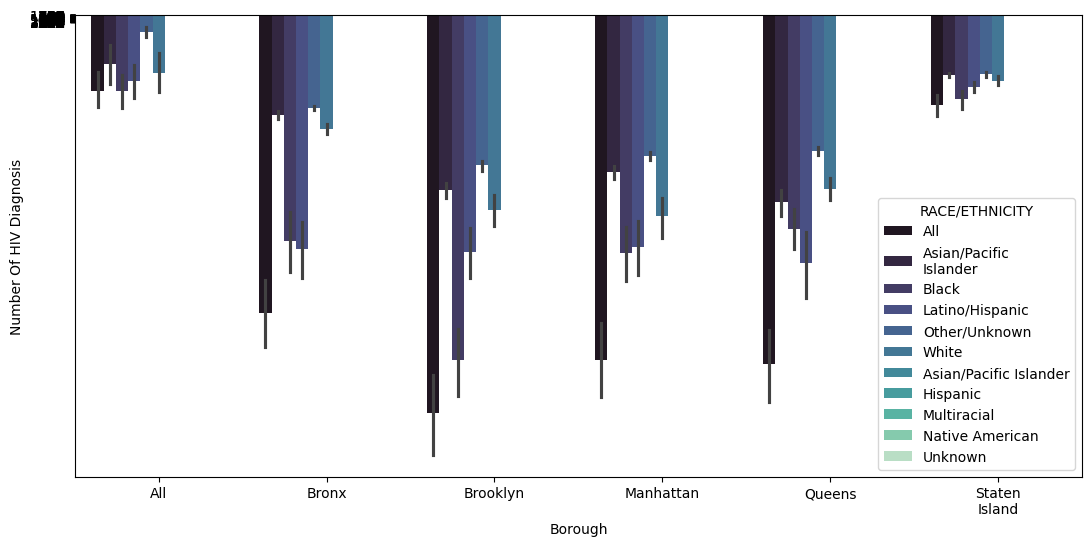
Black, White, and Latino/Hispanic groups have highest concurrent counts
Brooklyn and Manhattan report the highest total diagnoses
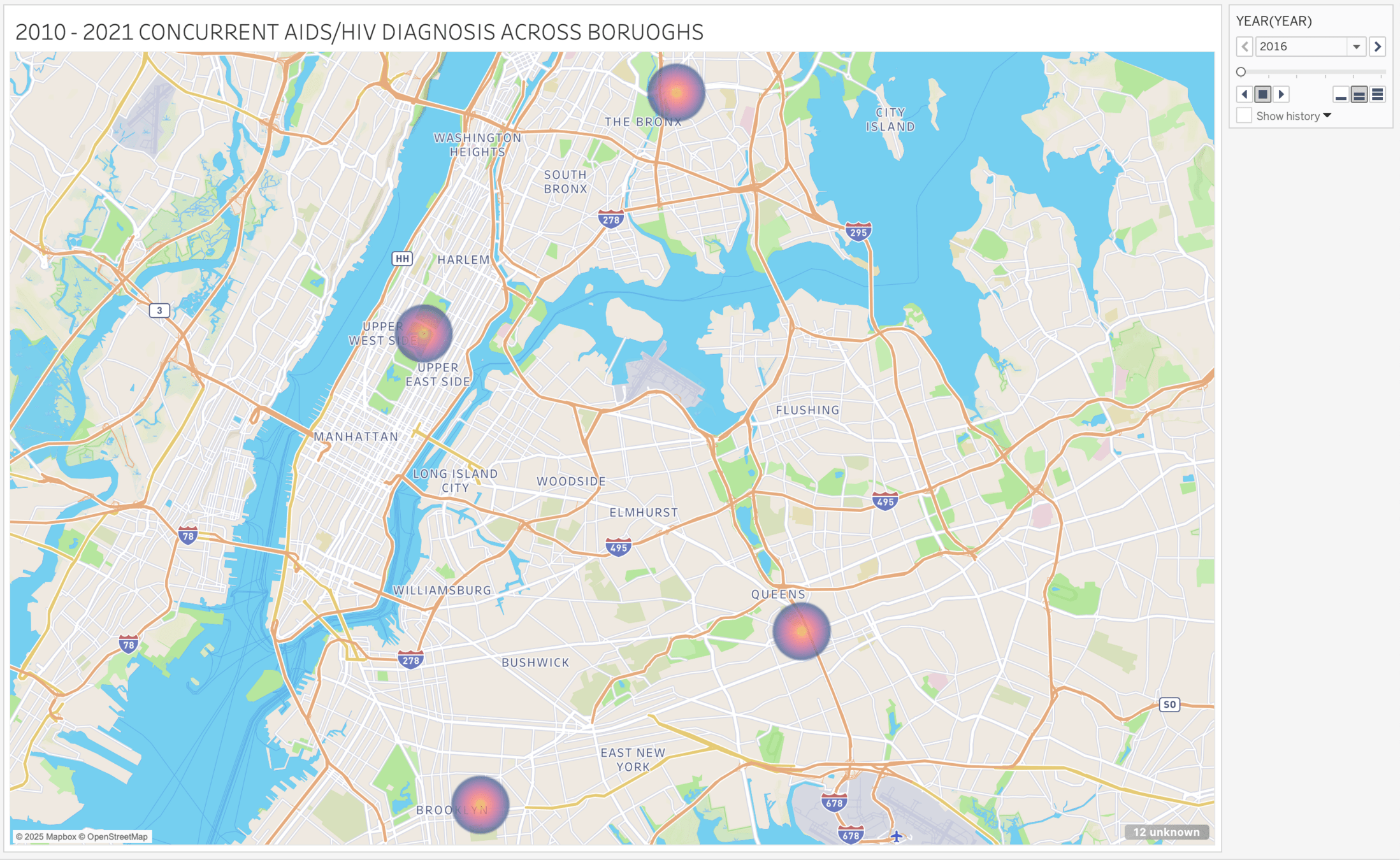
Interactive density maps show neighborhood clustering
Spatial patterns suggest place-based risk and resource gaps. Concurrent diagnoses may indicate late detection
In Conclusion...
Overall, the analysis reveals persistent disparities in HIV and AIDS diagnoses across time, demographics, and geography. Although diagnosis rates declined during parts of the last decade—particularly during the COVID-19 pandemic—the post-pandemic increase likely reflects delayed diagnoses and resumed testing rather than a true reduction in disease burden. Black and Hispanic communities, especially men, consistently experience higher diagnosis rates, highlighting long-standing inequities in access to care and prevention resources. Geographic clustering in boroughs such as Brooklyn and Manhattan further emphasizes the need for targeted, place-based public health interventions.
HIV/AIDS Diagnosis In New York Borough's
By Andrea