














Smart Contract risk


Instructors: Andreas Park and Zissis Poulos


What's special about smart contracts?

  1. Self-custody and selfcontrol of assets
  2. Unfiltered access to financial infrastructure
  3. Free entry of service providers
  4. Conceptually non-custodial services run as autonomous codes on the infrastructure
  5. Blockchain = common resource
  6. Services = platforms

features

consequences

Blockchain-based Decentralized Finance in a Nutshell

  1. Self-custody and selfcontrol of assets
  2. Unfiltered access to financial infrastructure
  3. Free entry of service providers
  4. Conceptually non-custodial services run as autonomous codes on the infrastructure
  5. Blockchain = common resource
  6. Services = platforms

features

What the focus of this paper?

What is a smart contract/DeFi application?

  • piece of code that performs operations on the blockchain
  • can be
    • called (= used) by anyone
    • deployed by anyone
  • organized
    • as a platform
    • often requires deposits of assets
    • often involves transfers of assets
  • immutable?
    • actually not exactly...
  • liquidity pools for trading, borrowing & lending
  • collateral for trades (derivatives), borrowing
  • bonds for securing services and trust

some features

some examples

Here's the problem...

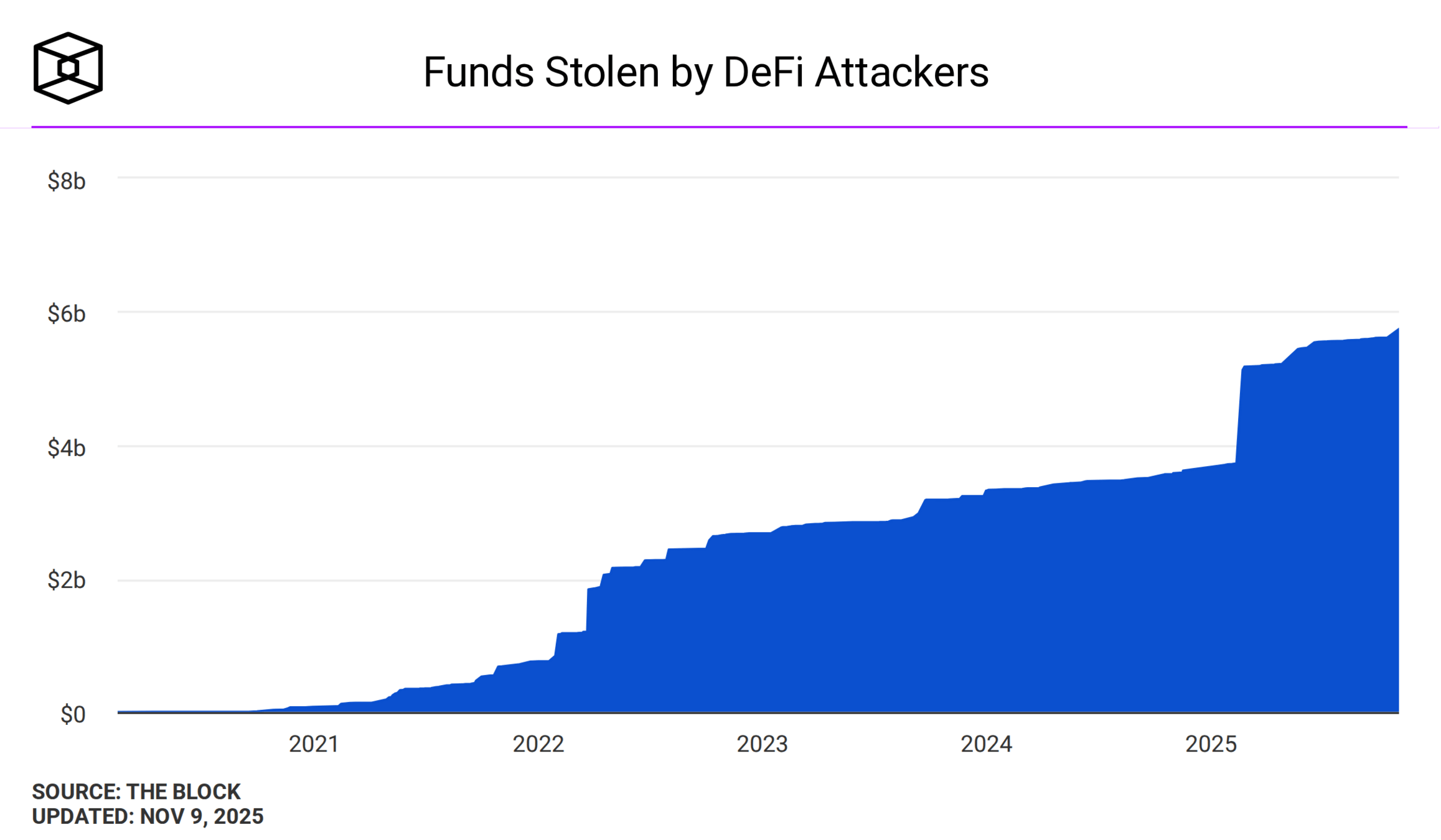
DeFi Security Risks

Risk is in every layer of the tech stack!

  • Network Layer
    • DDoS attacks etc.
  • Blockchain Layer
    • Sybil attacks
    • MEV
  • Smart Contract Layer
    • Malicious code
    • Bug exploits
  • Interface Layer
    • Oracle attacks
    • Malicious plug-ins (e.g., malicious wallet installation etc.)

Known Smart Contract Vulnerabilities

  • Re-entrancy
  • Insecure arithmetic
  • Unexpected ETH flows (force feeding)
  • Unprivileged access/writes
  • Etc...

https://consensys.github.io/smart-contract-best-practices/attacks/

What can we do to prevent exploit? What are common fault lines? 

  • do transfers work under all circumstances
    • edge cases matter
  • reliance on oracles
    • use price and input from other sources
    • oracles can be manipulated
  • applications may be used by others in unexpected ways
    • flash-loan attacks
    • unobserved risks created by users (Morpho)
  • smart contract code of other applications that you rely on may change
    • Morpho v. AAVE

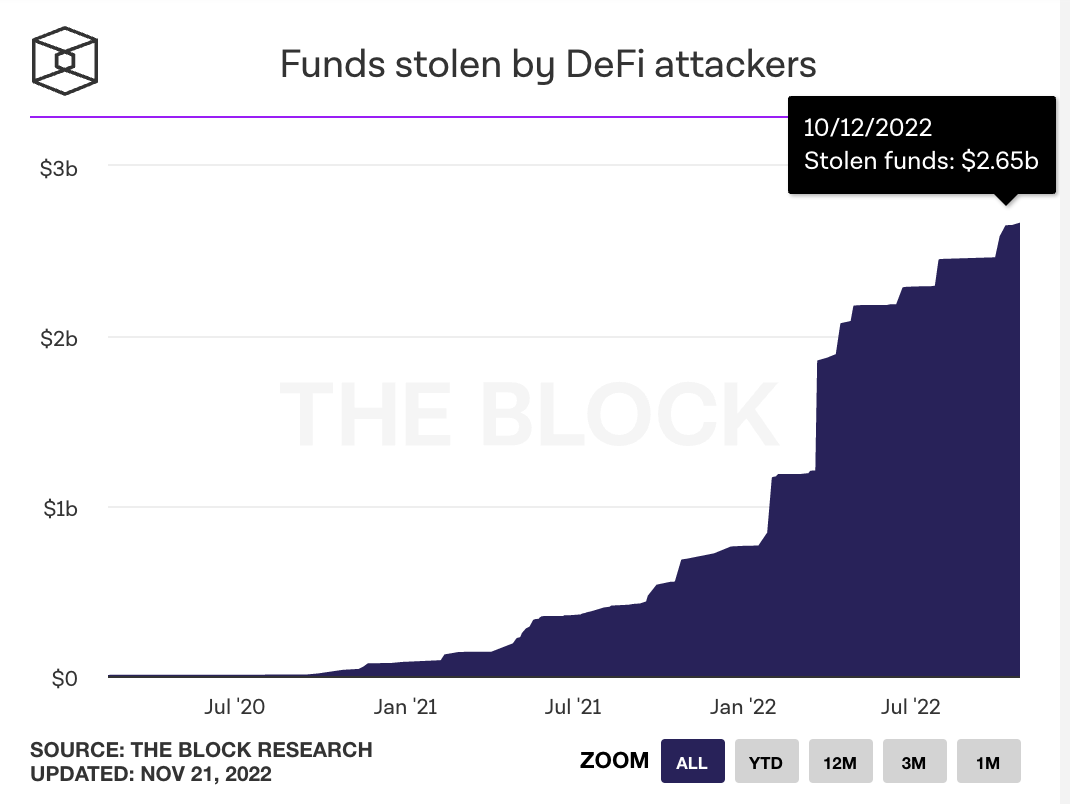
Three Examples of Exploits

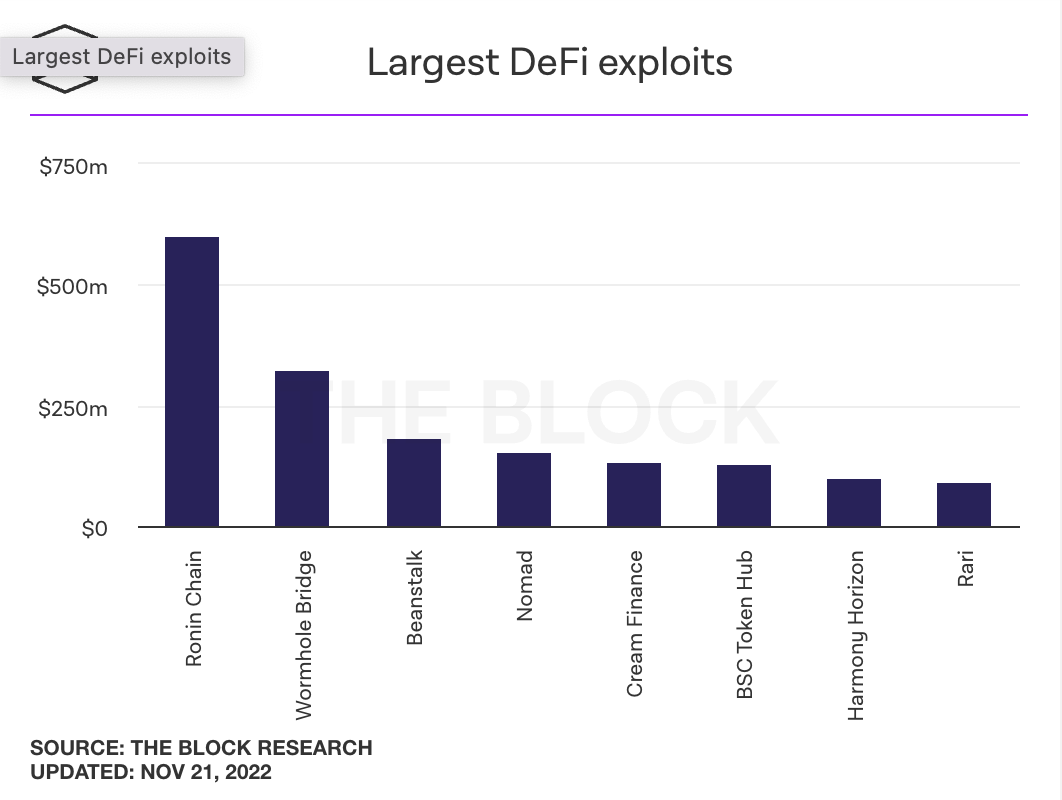
Cream Finance

  • attacker donated $10M of token to a trading mechanism
  • changes the exchange rate from 1:1 to 2:1
  • extract 130M by borrowing against non-existent collateral

PBS attack

  • certain arbitrage algos are designed to front-run trades ("sandwich attacks")
  • attacker pretended there was a front-runnable trade but made the block header invalid
  • allowed to view front-runners which they then front-ran to extract $25M

Balancer Rounding Error

  • Solidity code rounds down when it shouldn't.
  • Convinced the pool that there were fewer tokens than there were \(\to\) low price
  • extract $113M tokens at low price
  • The issue is only arises for very small transactions.
  • But exploit works when applied at scale (many small round-down transactions)
  • attacks very subtle
  • hard to anticipate every scenario and combination of scenarios
  • attacks happen with immense scale and incredibly quickly

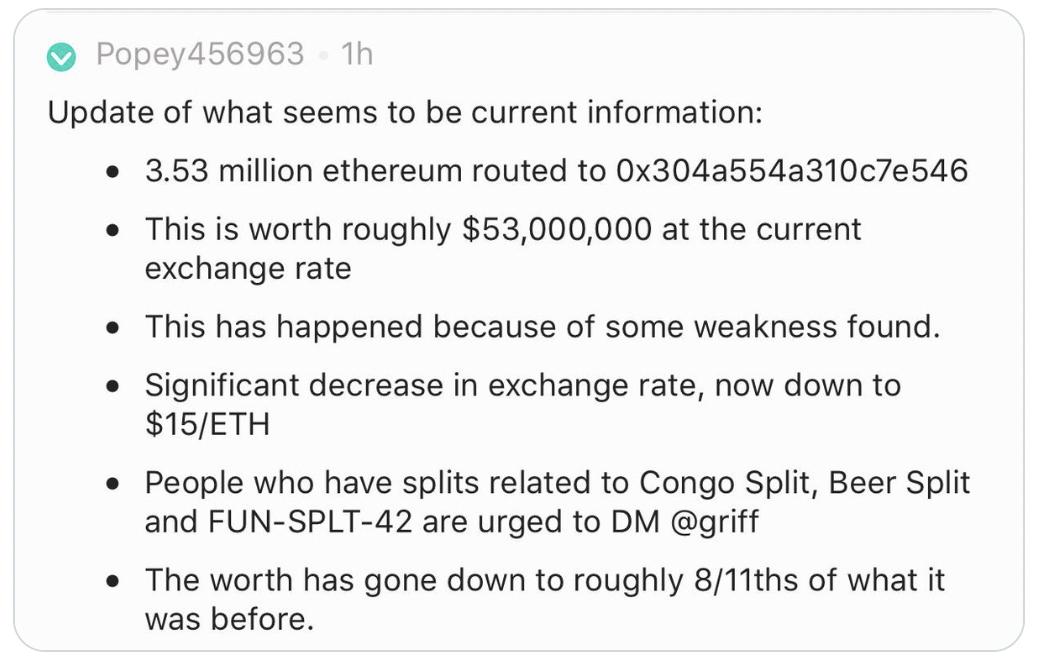
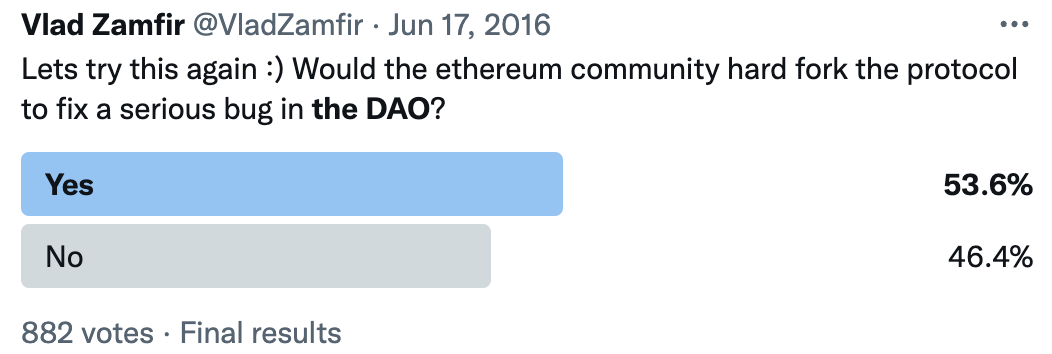
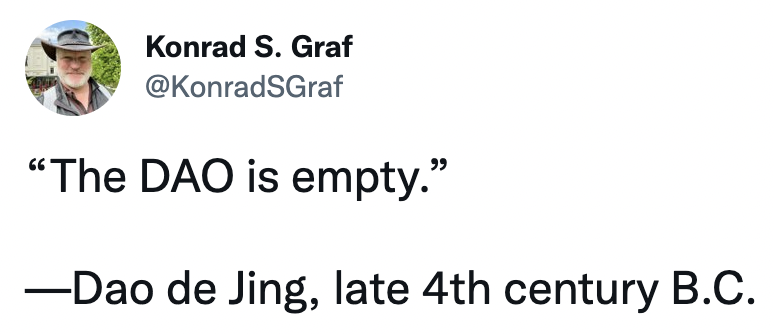
Re-entrancy - The DAO hack

Re-entrancy - The DAO hack

fallback() with "evil" logic

The DAO

withdraw

send

receive() is missing!

  • Hacker calls withdraw
  • The DAO sends ETH
  • No receive()
    • Do fallback()
    • fallback  takes ETH and calls withdraw()
    • First withdraw is still running!!!
    • Nested loop and balance never updates

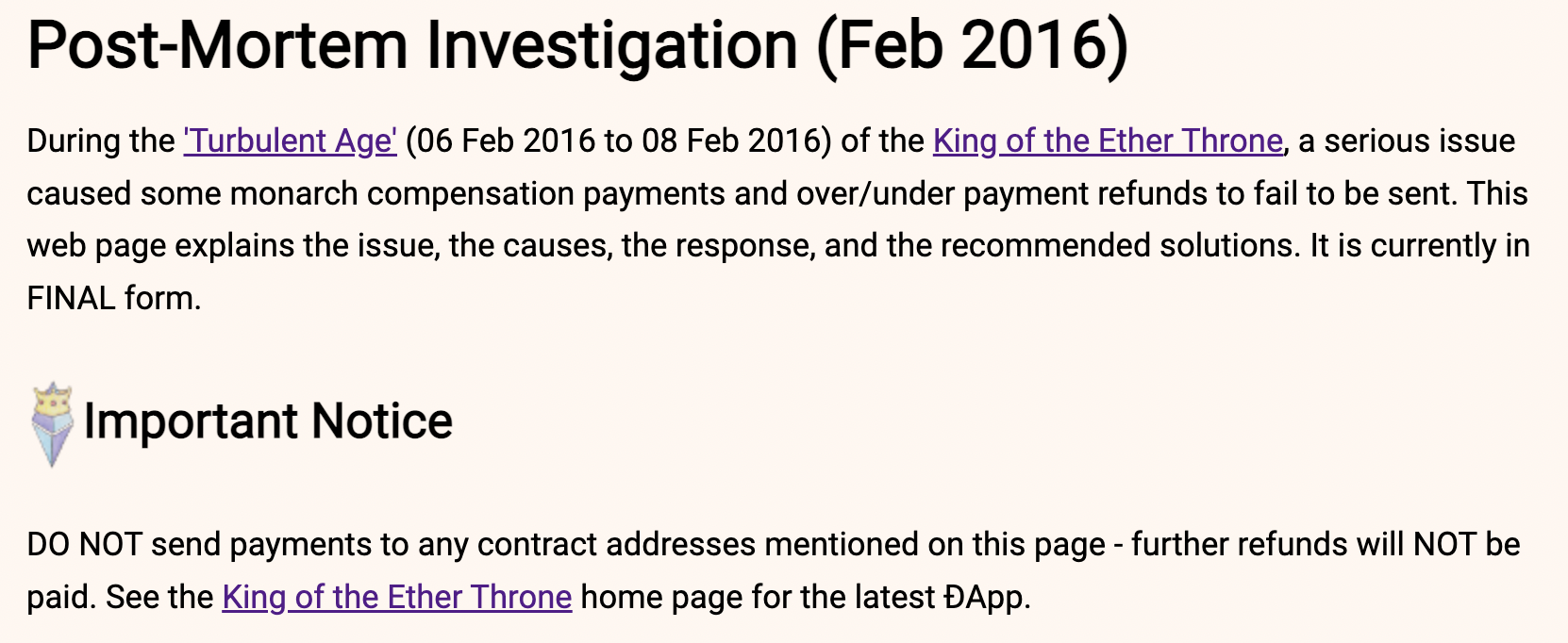
It's happened before

Unprivileged Writes - The Parity Wallet hack

...

...

DeFi Exploits 

Hacker remotely stole validator private keys

Bridge attack

Hacker minted WETH out of thin air on Solana's contract

Signatures were not verified! Bridge attack....hmmm

Smart Contract Scams

  • Too many to enumerate here
    • SetApproveForAll -> "I give you access to my digital assets to move around"
      • OK for NFT marketplaces and maybe DEX.
      • NOT OK if you don't trust the URL (see "Uniswap phishing attack")
    • SendEth -> Well..."Send your ETH to X address"
      • OK, but what if it's invoked when you try to "mint" an NFT?? 
    • Hidden "disable transfer" functions
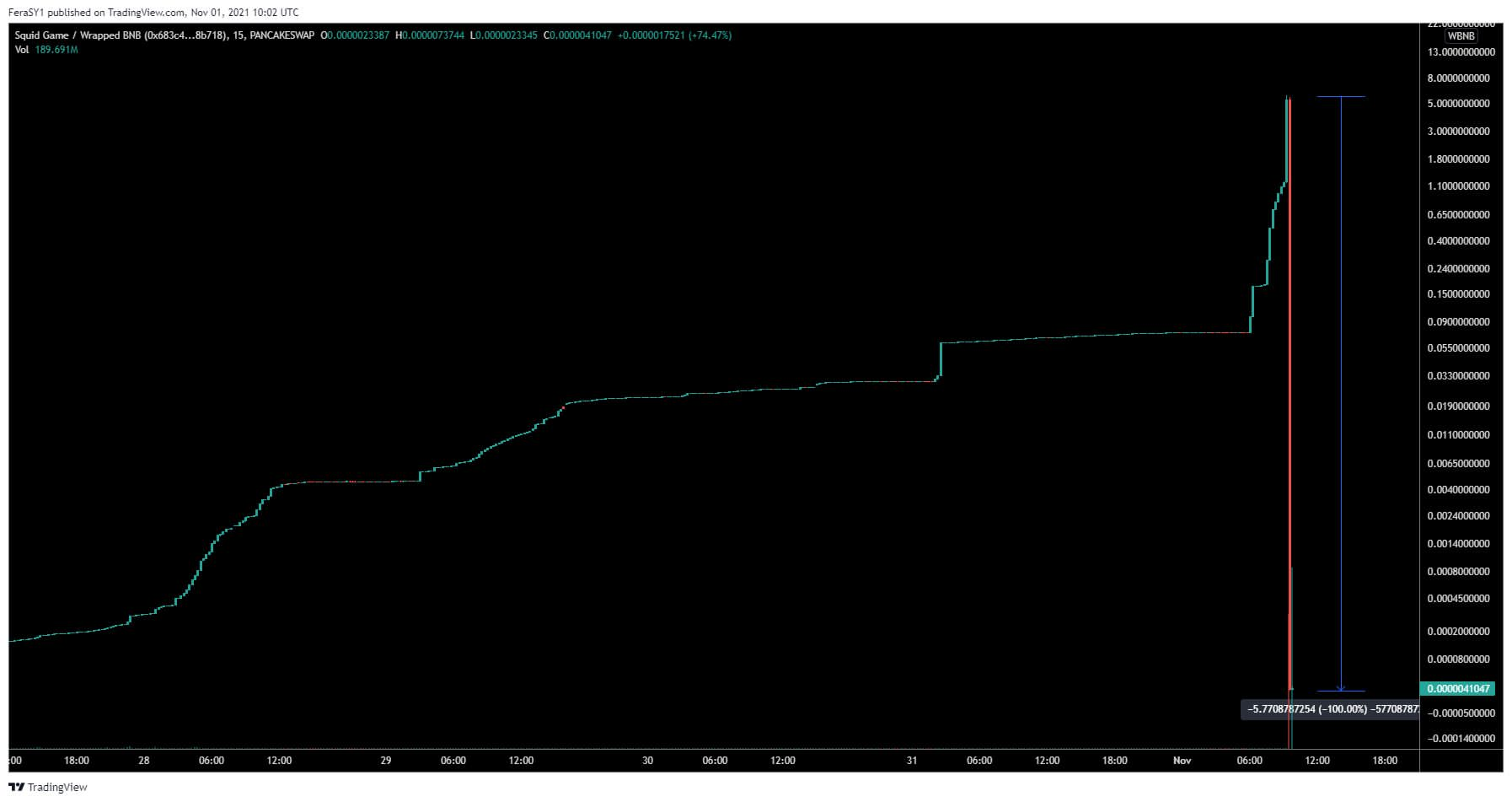
      • Cannot sell token (Squid token)
    • Buy/Sell taxes
      • Scammer can change tax from 5% to 99% for all holders except owner
      • Slippage threshold makes all transactions fail
  • Scammers think of new tricks every time a trick becomes "known"
    • Honeypots!!

https://rekt.news/leaderboard/

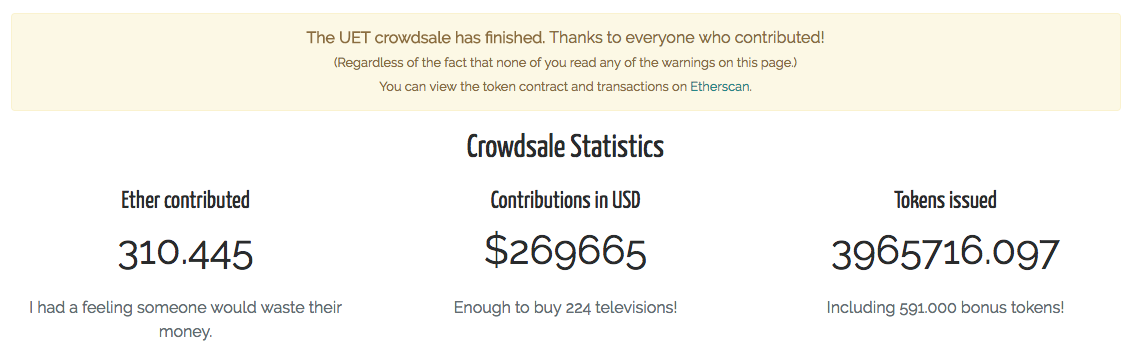
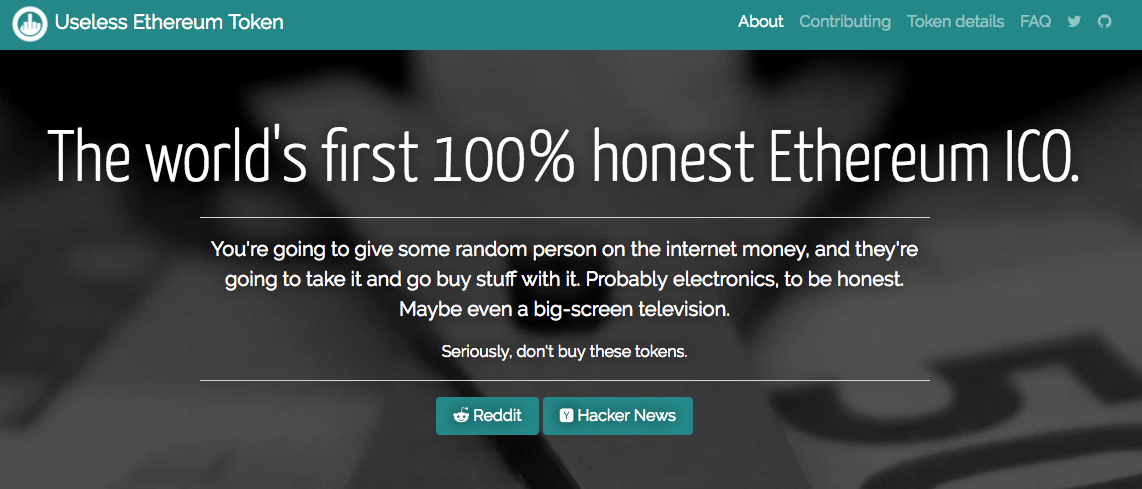
The Squid Game Token: does nothing  than borrow the name from the game

total gain: 230,000%

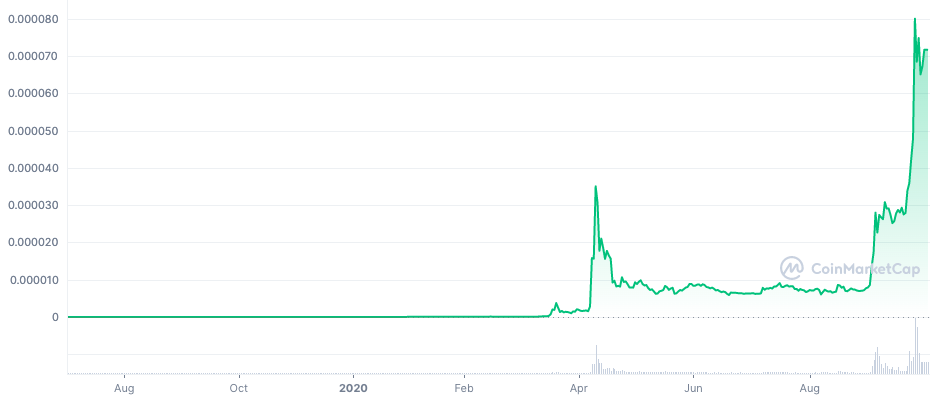
The Shiba Inu coin is nothing. It stands for nothing, it's linked to nothing. 

Token Scams (not just scam tokens)

A word about tokens: What might token investors be concerned about?

  • Prat, Danos, Marcasse (Management Science 2025) "Fundamental Pricing of Utility Tokens"
    • tokens first sold to investors ...
    • ... but eventually make their way to users
  • hidden features of tokens:
    • Squid Game Token could not be sold
  • Do the economics of the tokens work?
    • set incentives
    • pay for usage
    • optimizing for usage and income
    • payment mechanisms
  • trust issuer?
    • can the be interference?
    • will there be updates and continuoed development (Canidio 2022)
  • tokens are mostly financial instruments
  • ... but they don't neatly fit into our existing nomenclature
  • same for issuers, usage, evolution of tokens
  • requires a different "mindset" to understand 

Code-Audits?

What is so special about "auditing" smart contracts?

  • software code reviews and standards are nothing new
  • cyber-attacks happen everywhere
  • ... yet blockchain is different
  • Cyber-attack: indirect cost
    • loss of data
    • loss of secrets
    • abuse of information
  • Blockchain exploit:
    • direct loss of funds of customers/users
    • often irretrievable
    • no accountability, no recourse
    • no ability of courts or regulators to order return of funds

When do you do the review? Circumstances may matter

before launch

  • brand-new
  • updated version (v1\(\to\)v2 etc)

bad things have just happened to others

after launch

bad things happen to others

bad things happen to you

What kind of code review?

worry about

  • participation incentive
  • sufficient competition (may discover problem and exploit in future)

decentralized "bounty" program

code audit firm

high repuation (and pricey)

unknown (but cheap)

The cyber-attack \(-\) code-review  problem

known
knowns

unknown
knowns

known
unknowns

unknown
unknowns

develop "processes"

get
outside
help

code review space

  • write the code as well as you can before you deploy
  • code audit verifies that you
    • followed the right procedure
    • made no obvious error
  • you lacked full expertise and missed important checks
  • code audit identifies the issue and allows you to fix them
  • you know that problems can arise in the future but you don't know  what might happen
  • you build-in safeguards
  • you get caught off-guard by problems that you didn't think would be a problem
  • you need out-of-the-box thinking

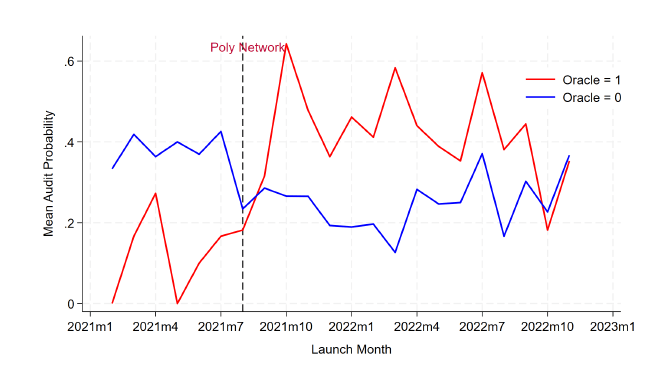
Some evidence on The Code Review Decision: "Auditing Smart Contracts" by Wayne Landsman, Evgeny Lyandres, Edward Maydew, Daniel Rabetti, Che Zhang (likely to be published in the Journal of Accounting and Economics)

  1. Code Review Decision

    • Who asks for code review?
    • What type of review?
      • Centralized firm? What level of reputation?
      • Decentralized “bounty” system?
  2. Audit Effectiveness

    • Do audits reduce the likelihood or severity of future security breaches?
  3. Post-Breach Responses

    • How do developers and auditors react after hacks?
    • Effects on auditor reputation and market share?

Research Questions

1. Audit Demand

  • Who seeks audits?
    • oracles, bridges, cross-chain designs, lending logic.
  • Top tier
    • Larger and more visible protocols.
  • Ex exploit
    • Systemic hacks increase demand for high-reputation audits.

Main Findings Part 1: Audit Demand

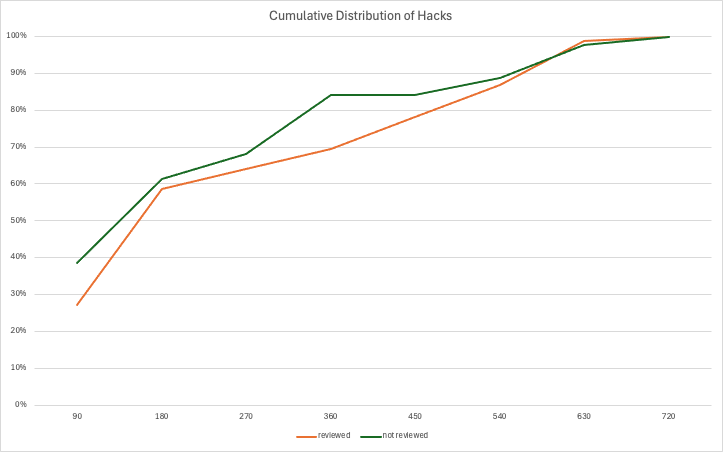
  • Naive average:
    • audits do not reduce hack probability.
  • Correcting for selection
    • top-tier and decentralized (bounty) audits are associated with fewer and smaller losses.

Main Findings Part 2: Audit Effectiveness

  • means that audited protocols "survive" longer without a hack
  • Hacked protocols:
    • upgrade auditors or
    • add bounty programs.
  • Auditors implicated in hacks
    • lose about 4 pp of market share short-term, but usually recover.
    • Strong, visible crisis management mitigates reputational damage.

Main Findings Part 3: Post Breach Effects

Solutions?

Some options

  • Centralized auditing (as a service)
    • Blockchain layer
    • Smart contract layer
    • OK, but audits based on past "lessons"
  • In-house testing
    • OK, but limited coverage of cases
  • Symbolic and formal verification
    • Expensive but probably the future

@financeUTM

andreas.park@rotman.utoronto.ca

slides.com/ap248

sites.google.com/site/parkandreas/

youtube.com/user/andreaspark2812/

Risks and Exploits 2025

By Andreas Park

Risks and Exploits 2025

  • 702