Case Study:
Race Condition Issues and Solutions in Batch Import Processes
Real Production Issue
Actual business logic will not be disclosed. Some details may be simplified, and service names or identifiers may be replaced or generalized.
-
Background
-
Evaluation
-
Trial and Error
-
Lessons Learned
Background
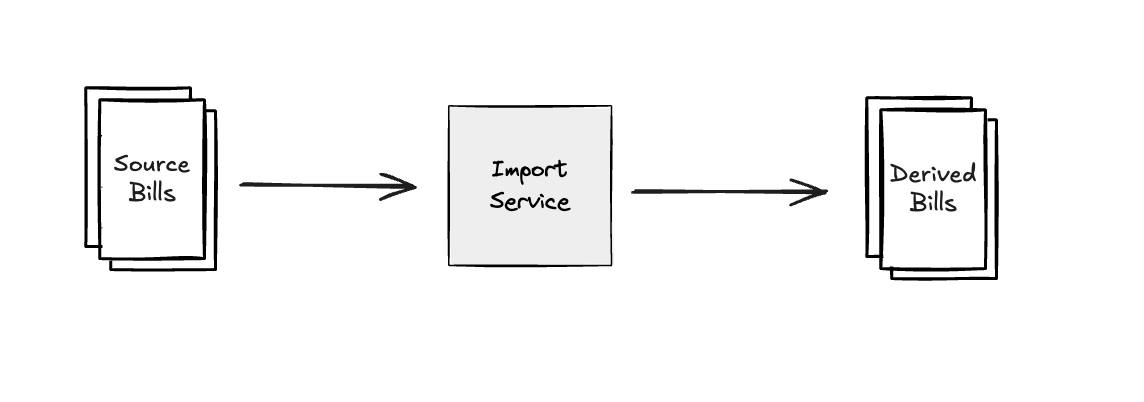
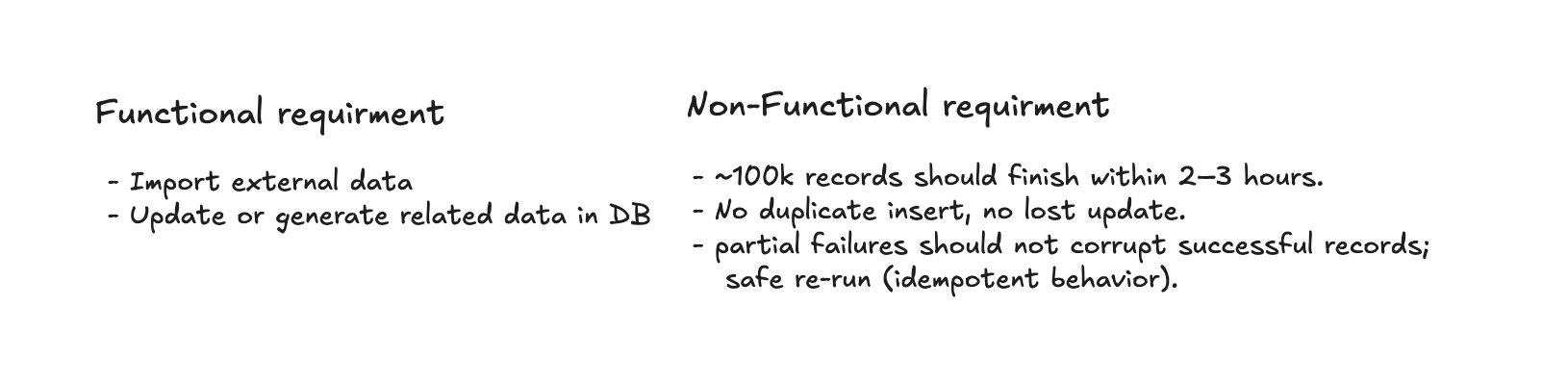
It's easy to design a system without any limitation
we colud import data one by one
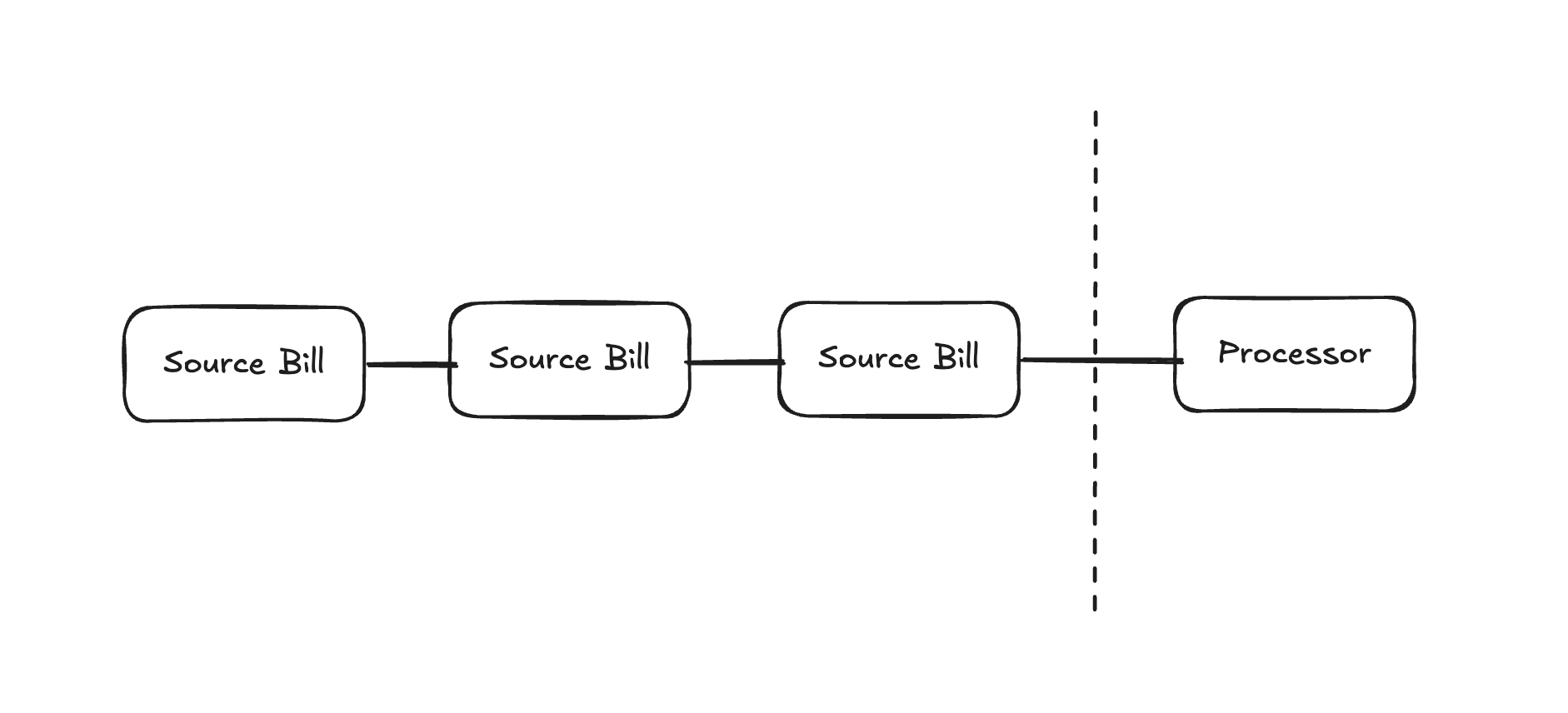
Consider time, cost, and risk
We should batch-import data
- Two different souceBills might affect same record in our db
- If the operation happend at the same time, a race condition will occur
Here comes the problems
Race Condition #1:
Duplicate Insert
INSERT ... ON CONFLICT DO NOTHING
Race Condition #2:
Lost Update
Transaction A: SELECT → DATA [a: 100]
Transaction B: SELECT → DATA [a: 100] ← read same old DATA
Transaction A: UPDATE → [a: 100, b: 50]
Transaction B: UPDATE → [a: 100, c: 80] ← Override A’s update
result: [a: 100, c: 80]
expect: [a: 100, b: 50, c: 80]
async upsertDerivedBill(configId: string, yearMonth: string, input: Input) {
  const key1 = hashToInt32(configId);
  const key2 = hashToInt32(yearMonth);

  return await db.transaction(async (tx) => {
    await tx.execute(sql`SET LOCAL lock_timeout = '5000ms'`);

    await tx.execute(sql`SELECT pg_advisory_xact_lock(${key1}, ${key2})`);

    const existing = await tx.select().from(DerivedBill).where(eq(name, input.name));

    if (existing) {
      return await this.mergeAndUpdate(tx, existing, input);
    } else {
      return await tx.insert(DerivedBill).values(input);
    }
  });
}
pg_advisory_xact_lock
Solutions
Idempotent Upsert
Not enough,
Resolve duplicate insert, but did not resolve Lost update issue
Transaction-Level Advisory Lock
One more thing
Integration test
circuit breaker
DLQ
Jitter
Case Study:Race Condition
By Jay Chou