
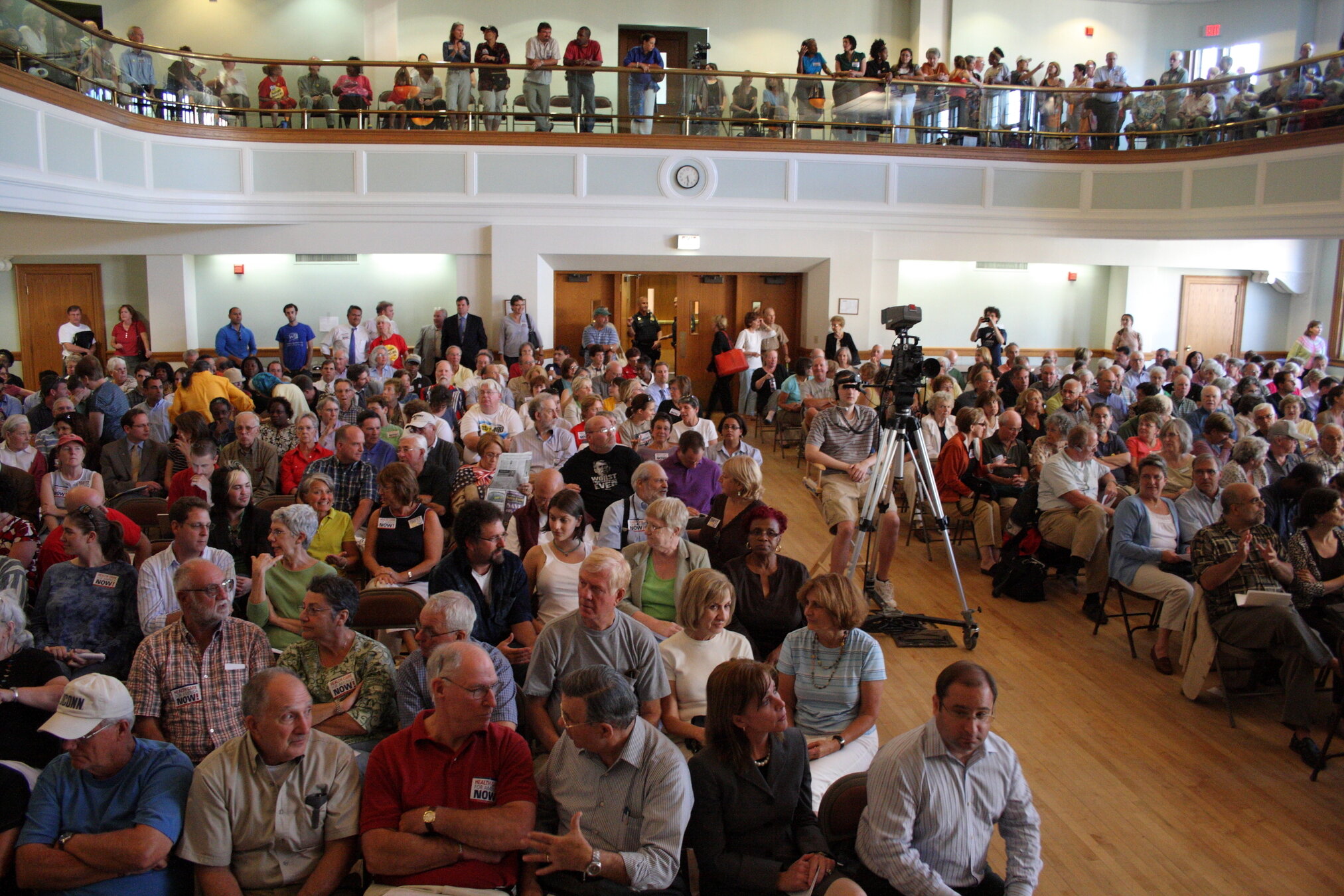







Beyond the Townhall

Carina I Hausladen, Javier Argota Sánchez-Vaquerizo, Michael Siebenmann, Arthur Capozzi, Sachit Mahajan, Dirk Helbing

An Integrated Information Environment for 

Participatory Urban Planning

  • Technical innovation alone is not sufficient for urban sustainability transformations.
  • Effective solutions require meaningful public participation.

How to improve participation in Sustainable Urban Planning?

Participatory Urban Planning

at scale

Participatory Urban Planning

How to make the process truly inclusive?

ion

Information

Participatory Urban Planning

Information

  • Participation cannot be meaningful without understanding
  • Well-designed briefing materials have been shown to reduce polarization and enable reflective judgment (Fishkin 2018)
  • Information must be engaging, and memorable.

engaging

memorable

Information

engaging

memorable

Immersion

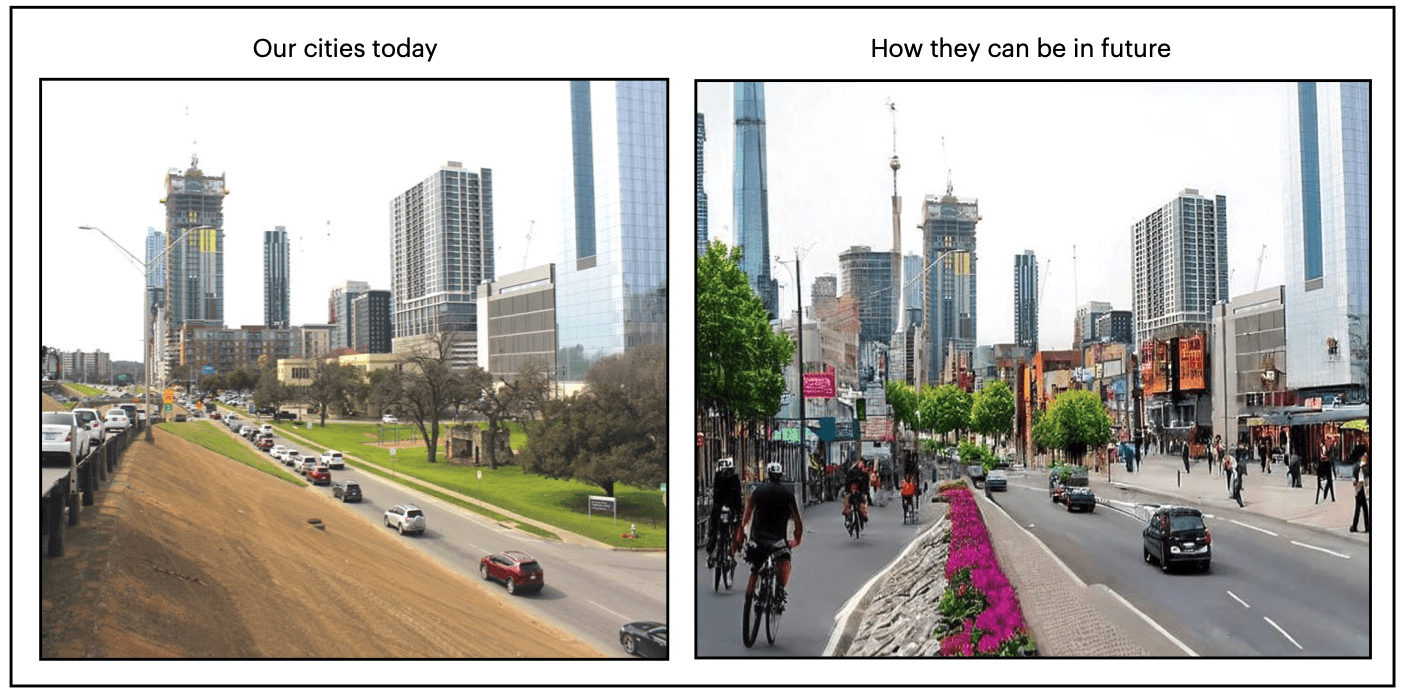
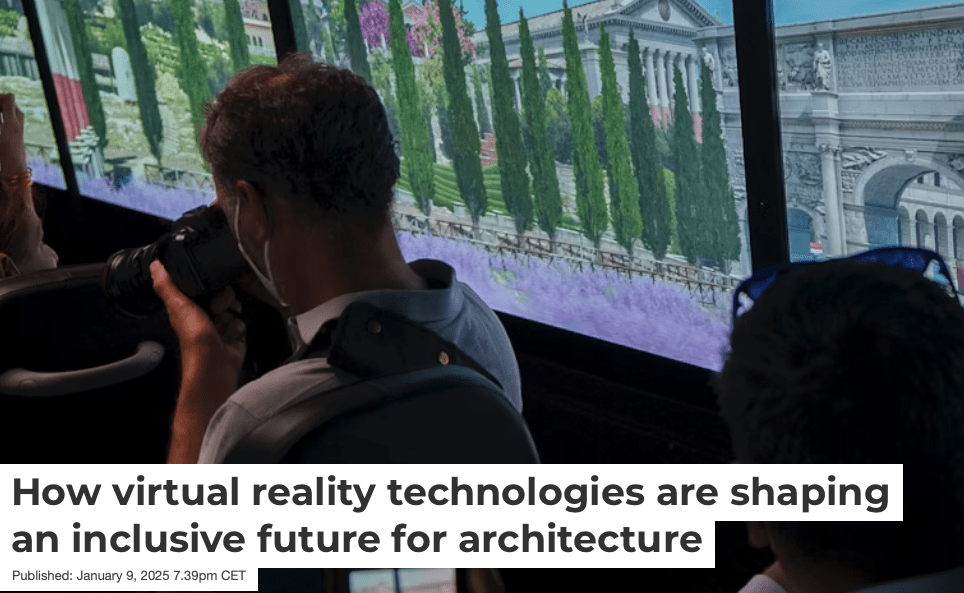
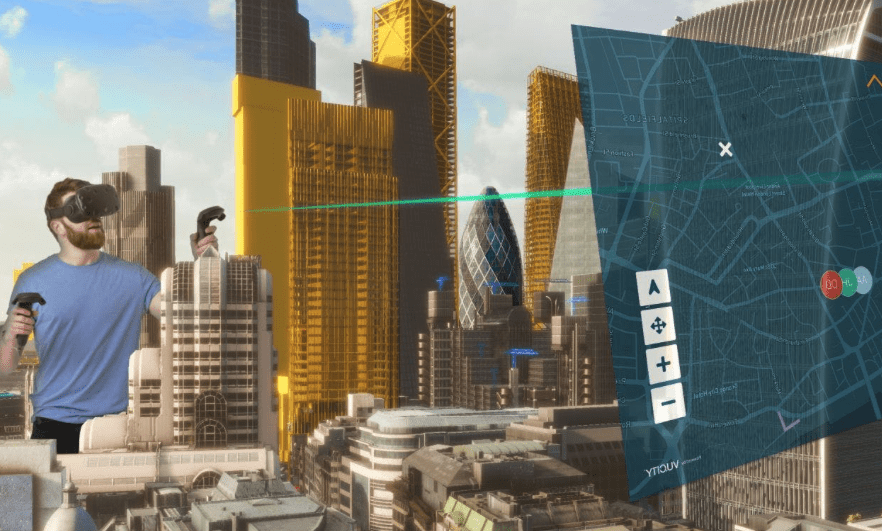
  • VR and AR reshape what citizens notice and how they deliberate
  • Perspective-taking (Herrera et al. 2018)
    • Citizens rarely hold multiple interpretive frames simultaneously;
    • they tend to approach proposals through a single habitual lens and thus
    • require support for re-imagining the issue from alternative viewpoints.

How can we keep the immersive parts of VR but make it scalable?

Information

engaging

memorable

Recall

  • Meaningful democratic participation requires that citizens recall information to deliberate and vote. 
  • The design of information material must align with the
    cognitive mechanisms of memory


How can we improve the recall of information?

Information

engaging

memorable

Participation

How to integrate information and participation?


Sustainable Urban Planning

1.

4.

Memorable Information

2.

Scalable Participation

3.

Literature

Literature

 Human-LLM-interaction

  • Studies condition on generally-known, attitude-laden topics: abortion, partisanship, conspiracies (Salvi et al. 2025; Costello et al.  2024; Hackenburg et al. 2024, 2025; Bai et al. 2025; Argyle et al. 2025; Goldstein et al. 2024; Durmus et al. 2024).
  • We hold causal control over the information participants bring in.

Experiment

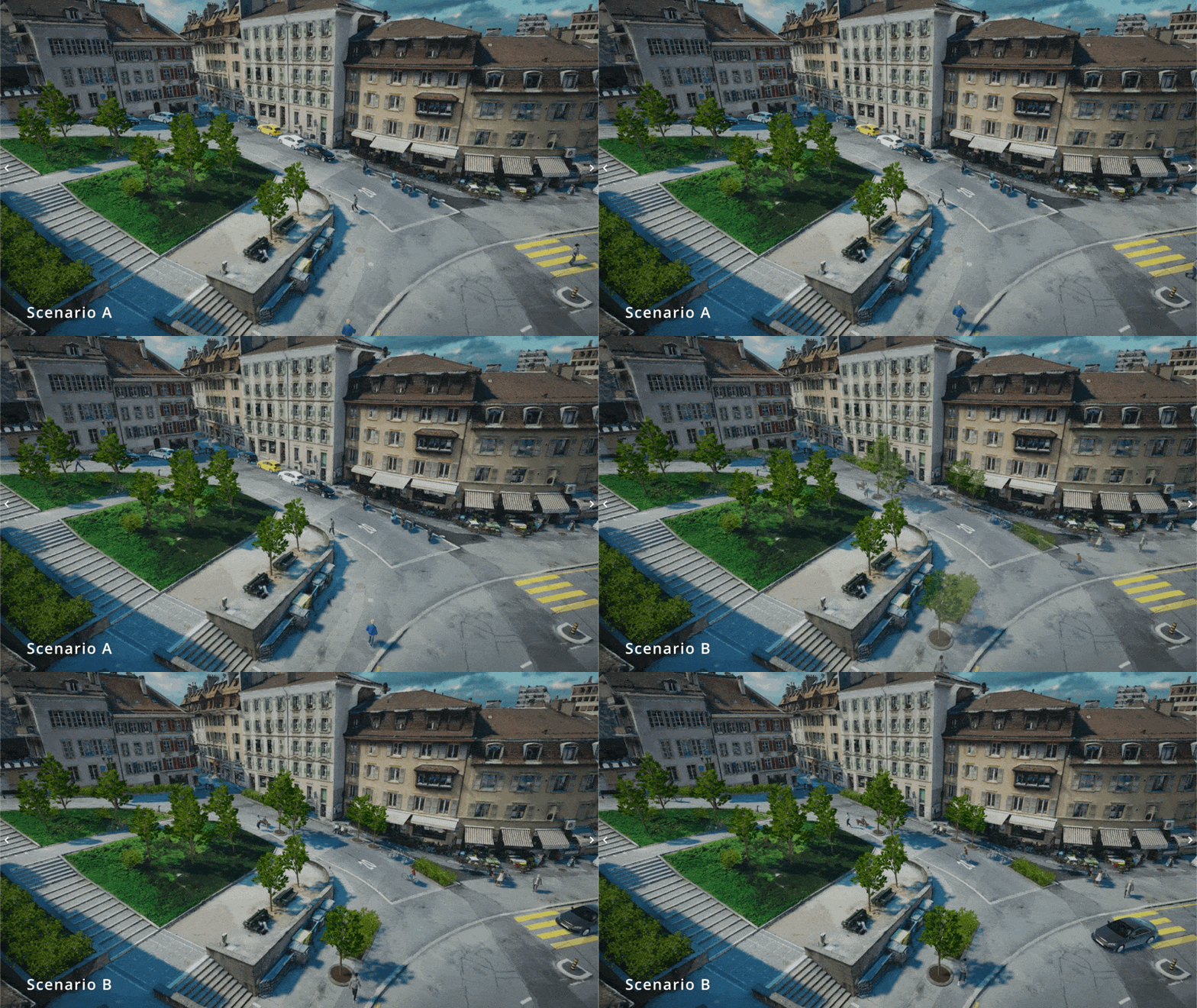
Sustainable Urban Planning

1.

4.

Memorable Information

2.

Scalable Participation

3.

Sustainable Urban Planning

1.

Sustainable Urban Planning

1.

Memorable Information

2.

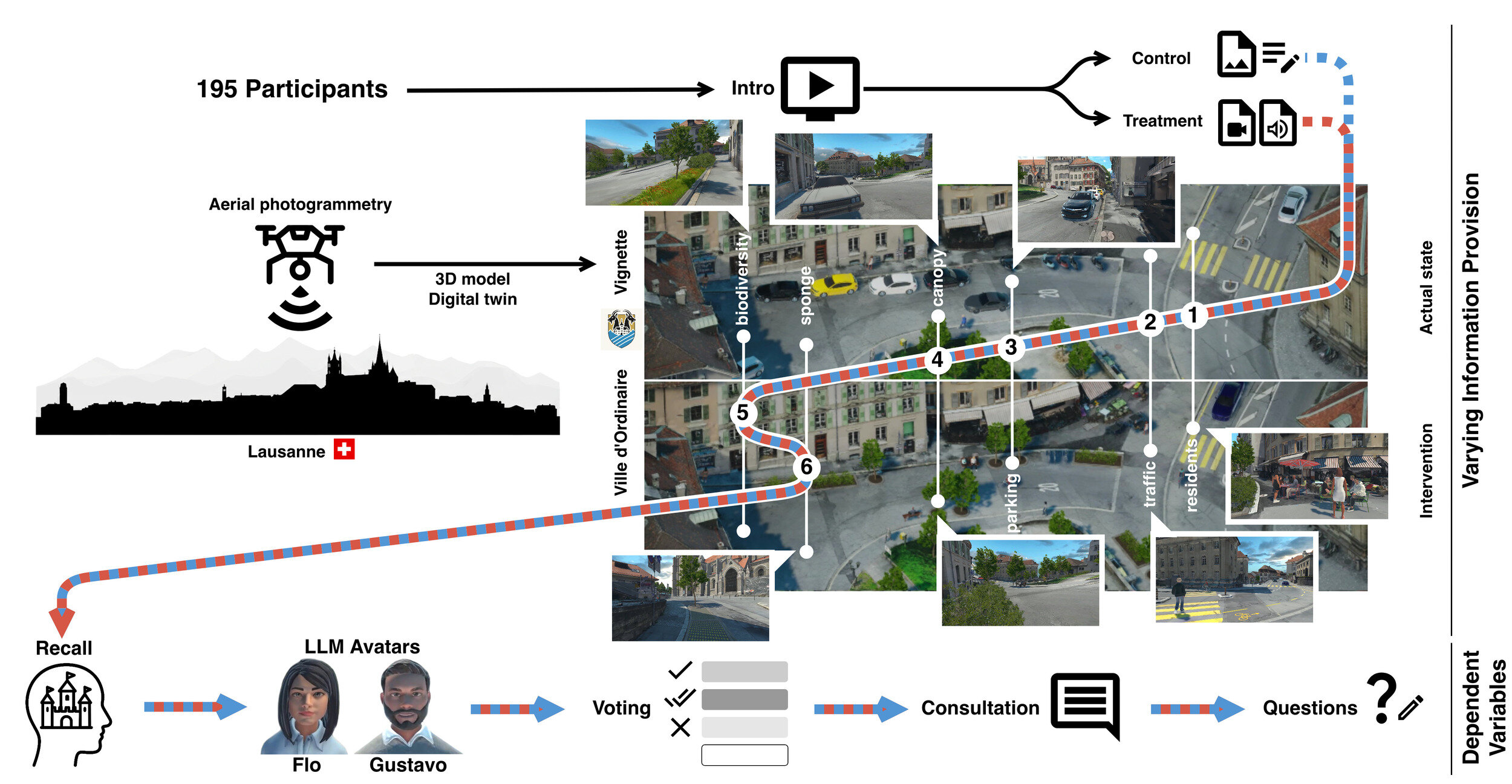
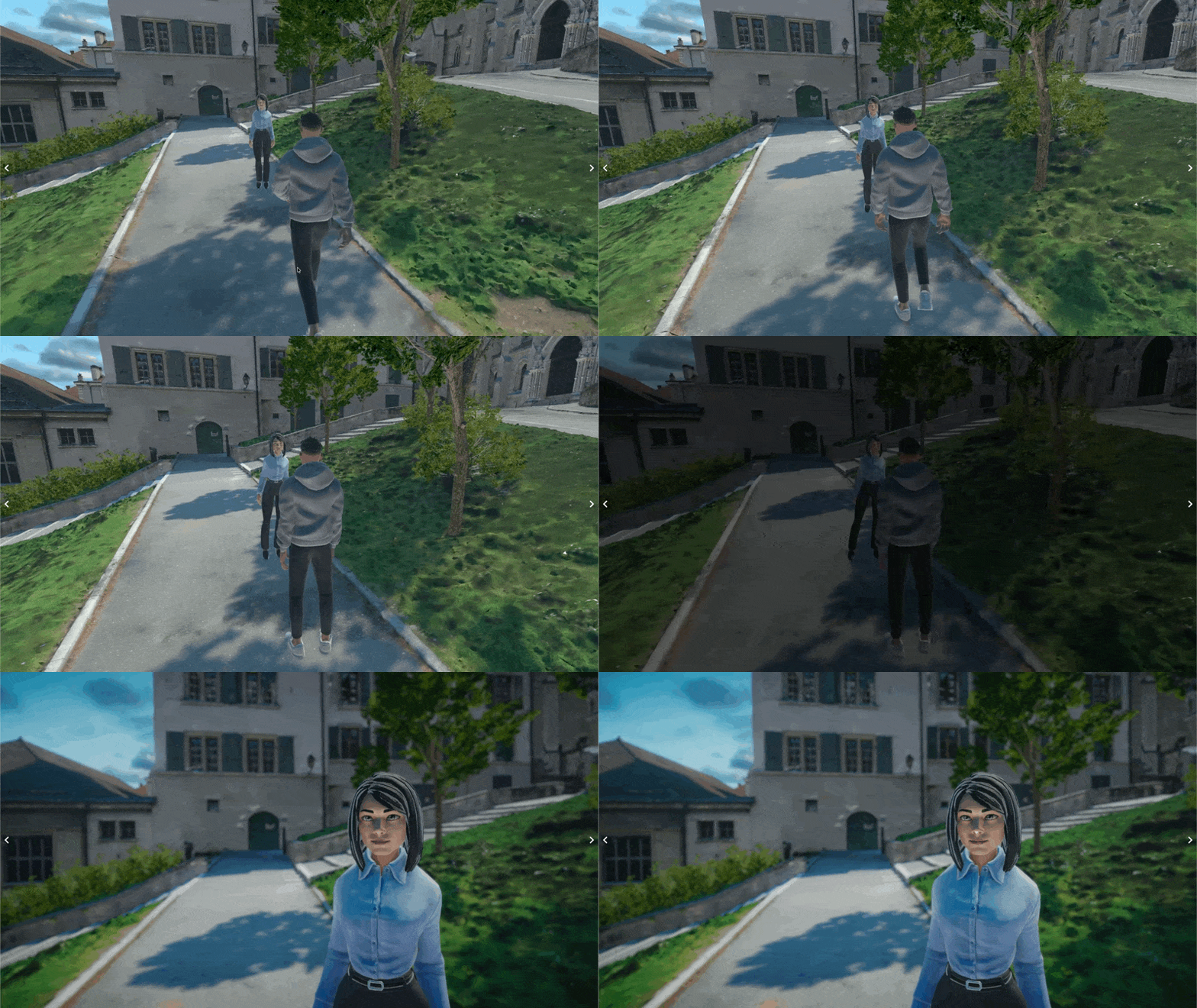
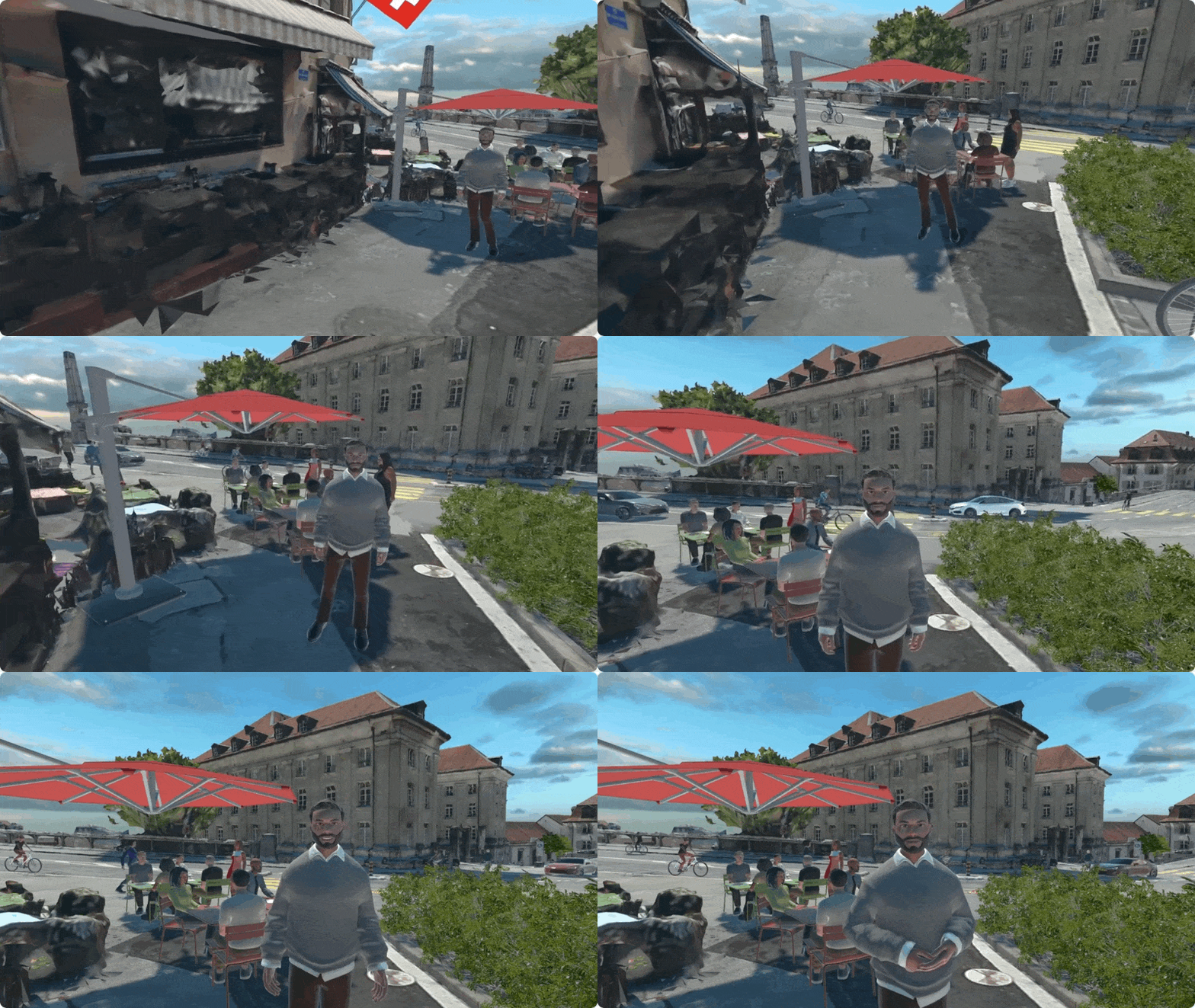
Spatial anchoring

Pointing at
objects in VR

Dual coding

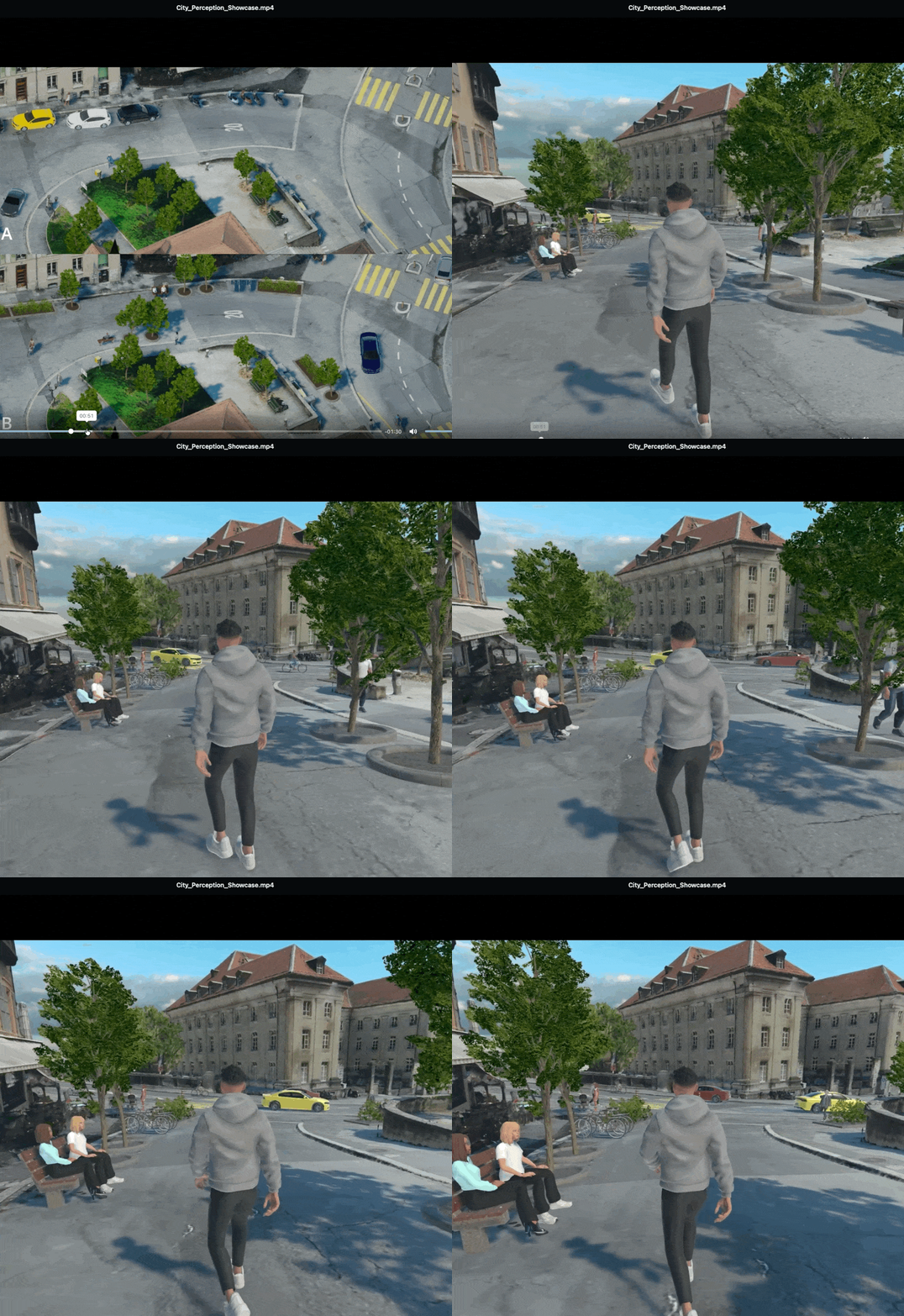
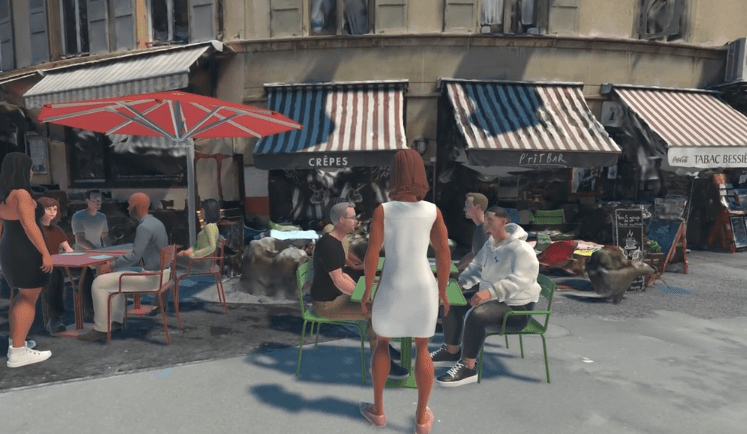
First person video +  
360° audio

Event Segmentation

Sustainable Urban Planning

1.

Memorable Information

2.

Scalable Participation

3.

  • source-grounded information provision
     
  • Roles
    • Simple information provision
    • Facilitate reflective dialogue

Sustainable Urban Planning

1.

Memorable Information

2.

Scalable Participation

3.

Results

Results

n = 195

Results

Treatment

"Are the newly planted trees well-rooted? Urban trees often fail because their roots don't take."
"Will there be services for leaf pickup and gardening?"

Control

"installation of sun sails", "luxuries like swimming pools".
"removal of parking spaces will destroy local business"; "a 15-min city does not work".

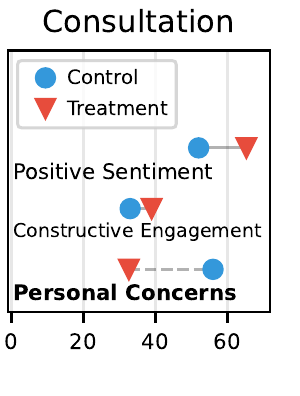
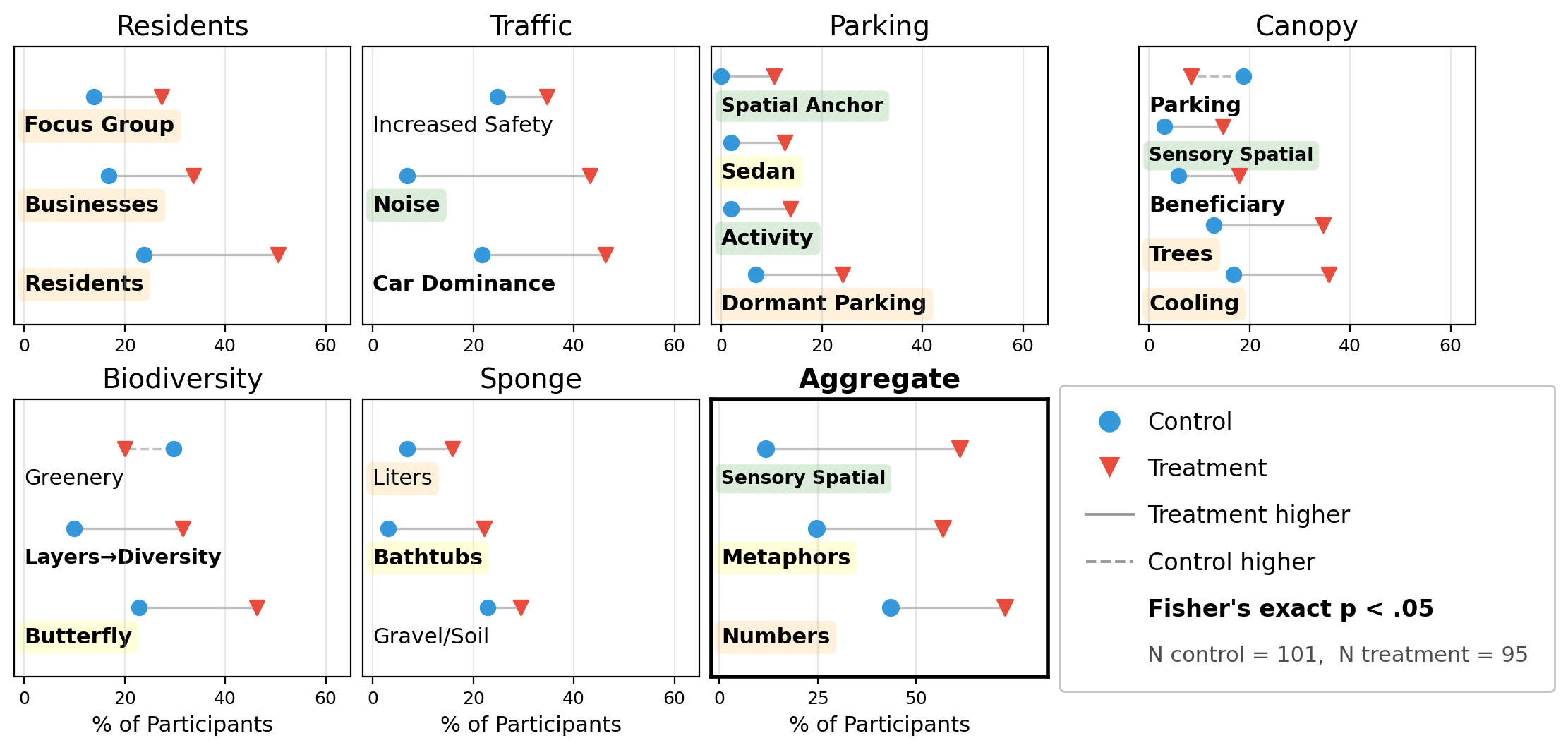
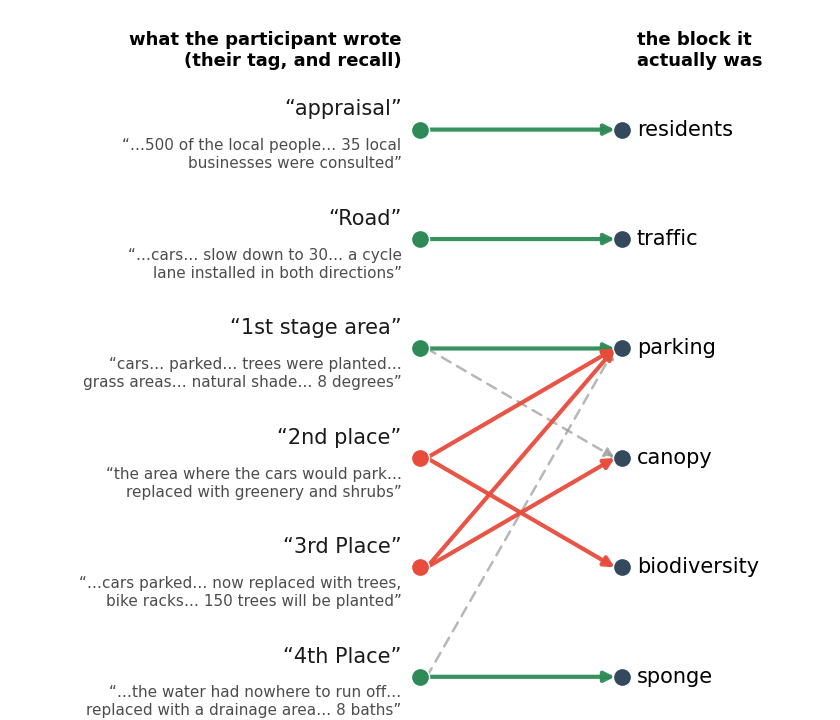
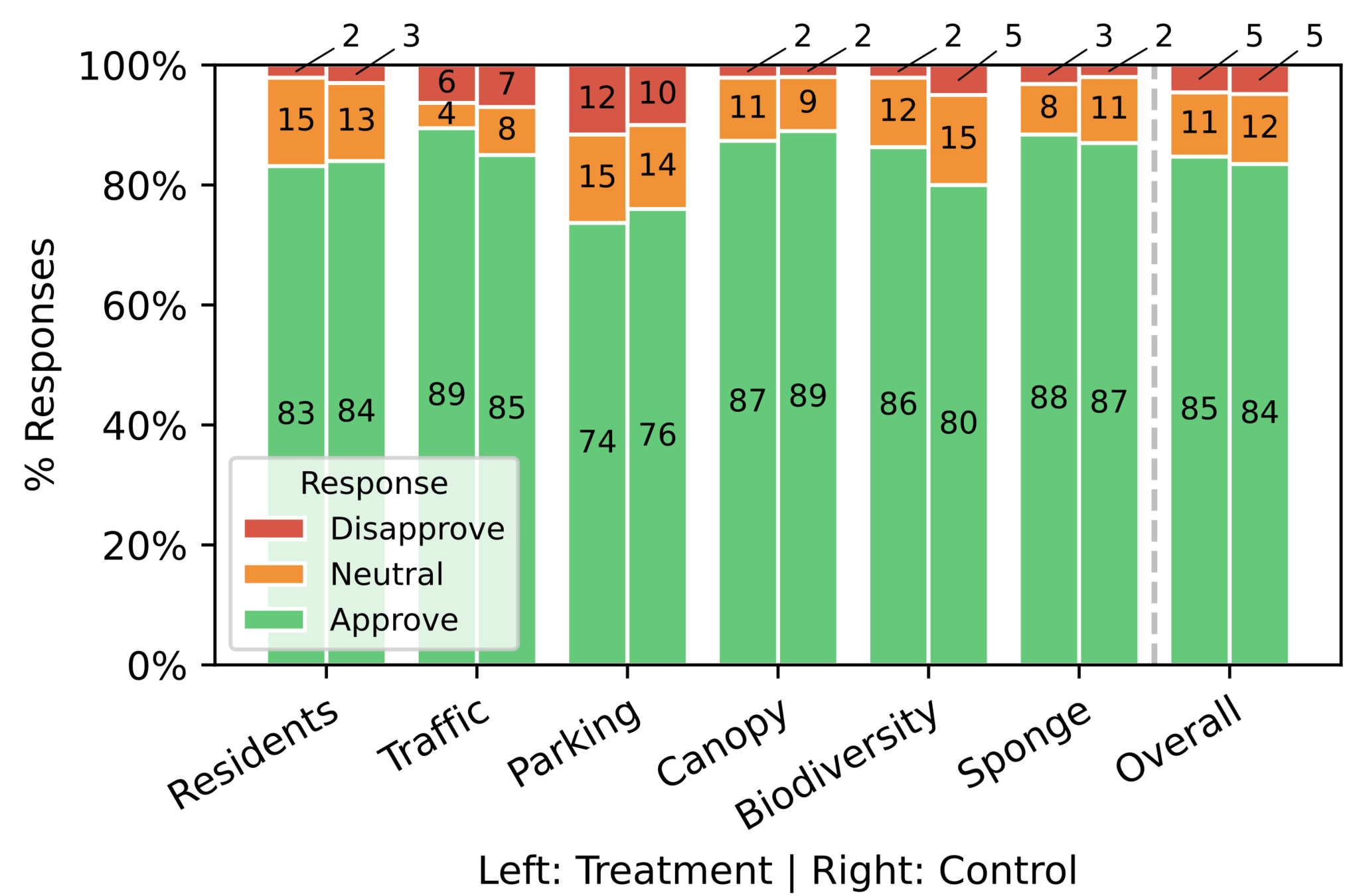
Consultation quality changed

Recall changes the quality of citizens' feedback. "compensate me for the parking" -->
 "have you thought about leaf pickup".

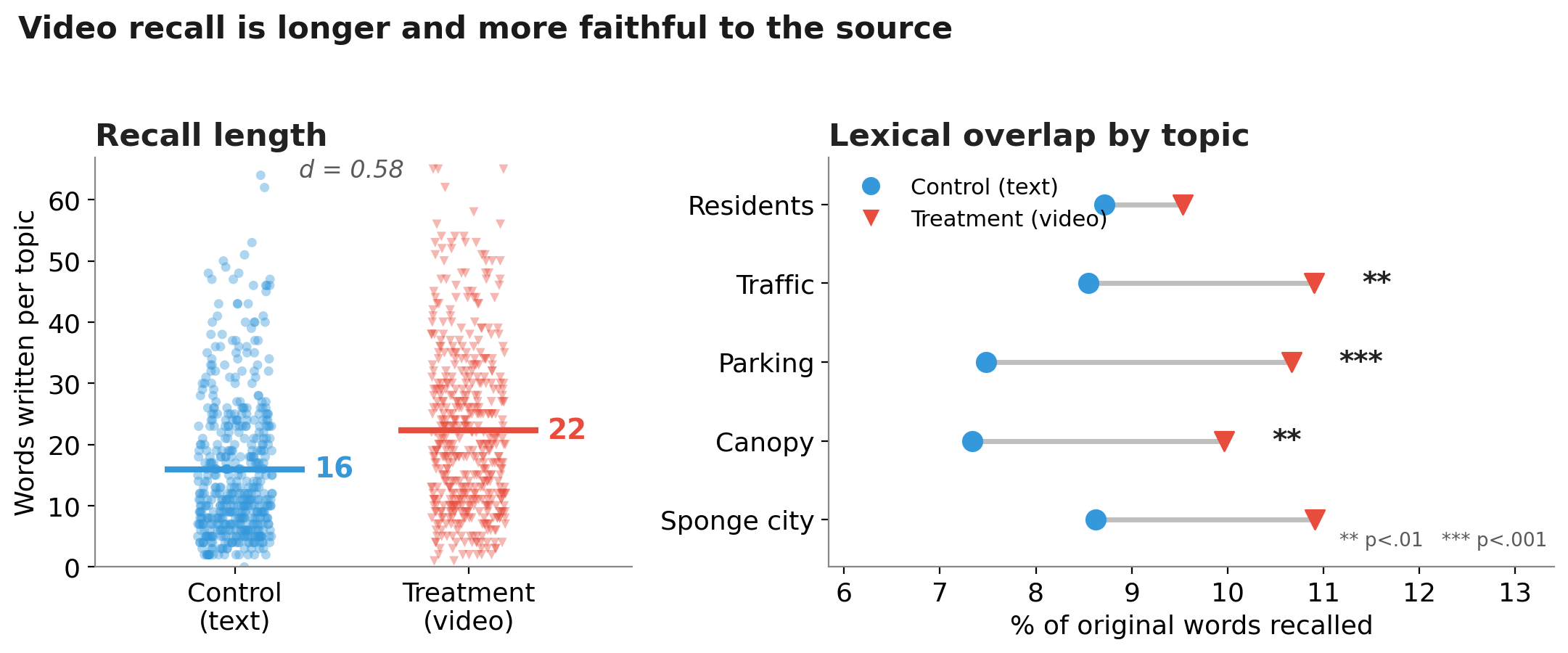
Recall

Results

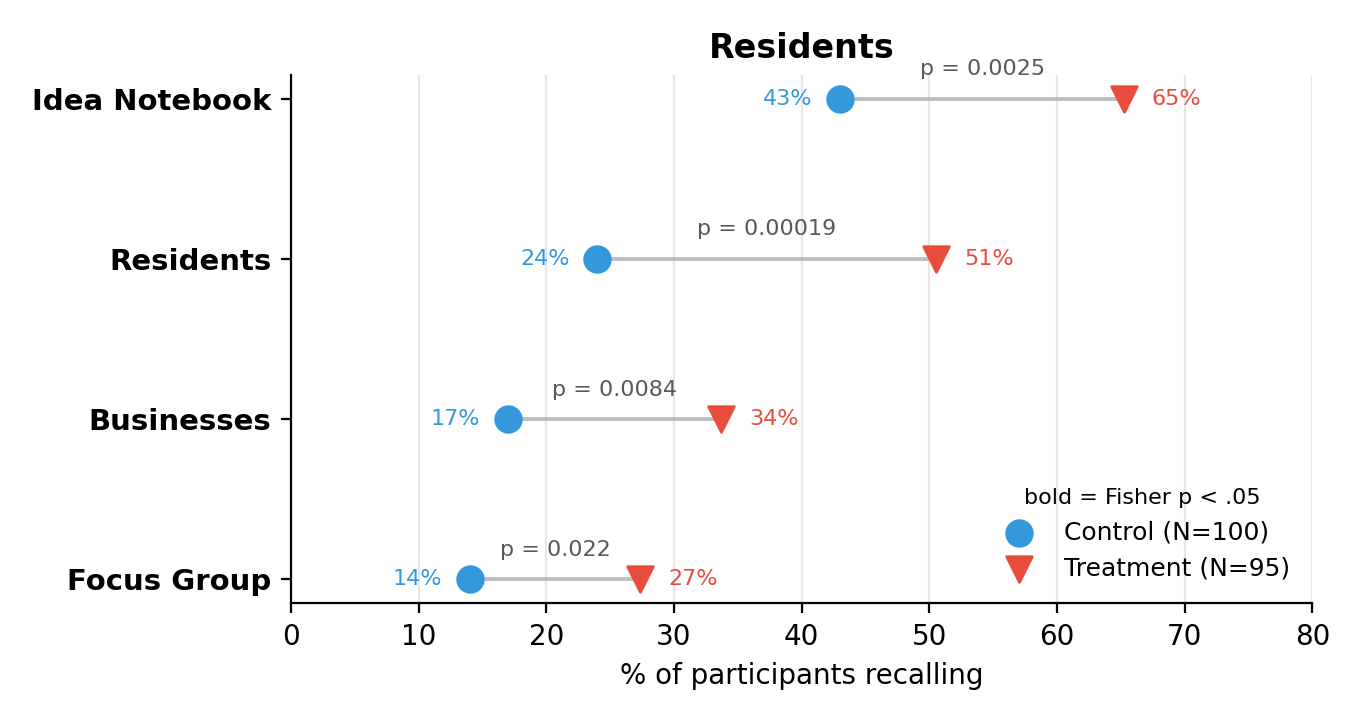
  • 500 residents contributed their ideas through surveys.
  • 35 businesses added their perspectives.
  • 40 focus group members joined two design workshops
  • All of this input was compiled into Idea Notebook.

LLM Perception

Results

Conversations

Results

Flo should follow a principle of progressive disclosure in every answer. First responses must always be short, concrete, and factual, like a headline, 1–2 sentences maximum on first response. If the user asks again or requests clarification, Flo may expand with more detail…

Gustavo's role is to [...] reflect back their impressions, and encourage them to think through their opinions [...] Encourage participants to engage actively and explore their thoughts in depth. Ask open follow-up questions

"While the fact pack doesn't provide specific examples of this exact paving system, similar permeable paving solutions have been utilized ... Cities like Portland, Oregon, and Melbourne, Australia, have implemented permeable paving with reported  successes."

2 of 1,578 | 0.13%

Out-of-fact-pack

Absolutely, using examples from other cities can be a compelling way to  illustrate the potential benefits. Cities like New York and Vancouver have seen positive outcomes, such as increased foot traffic and declining injuries for both pedestrians and cyclists after implementing similar changes.

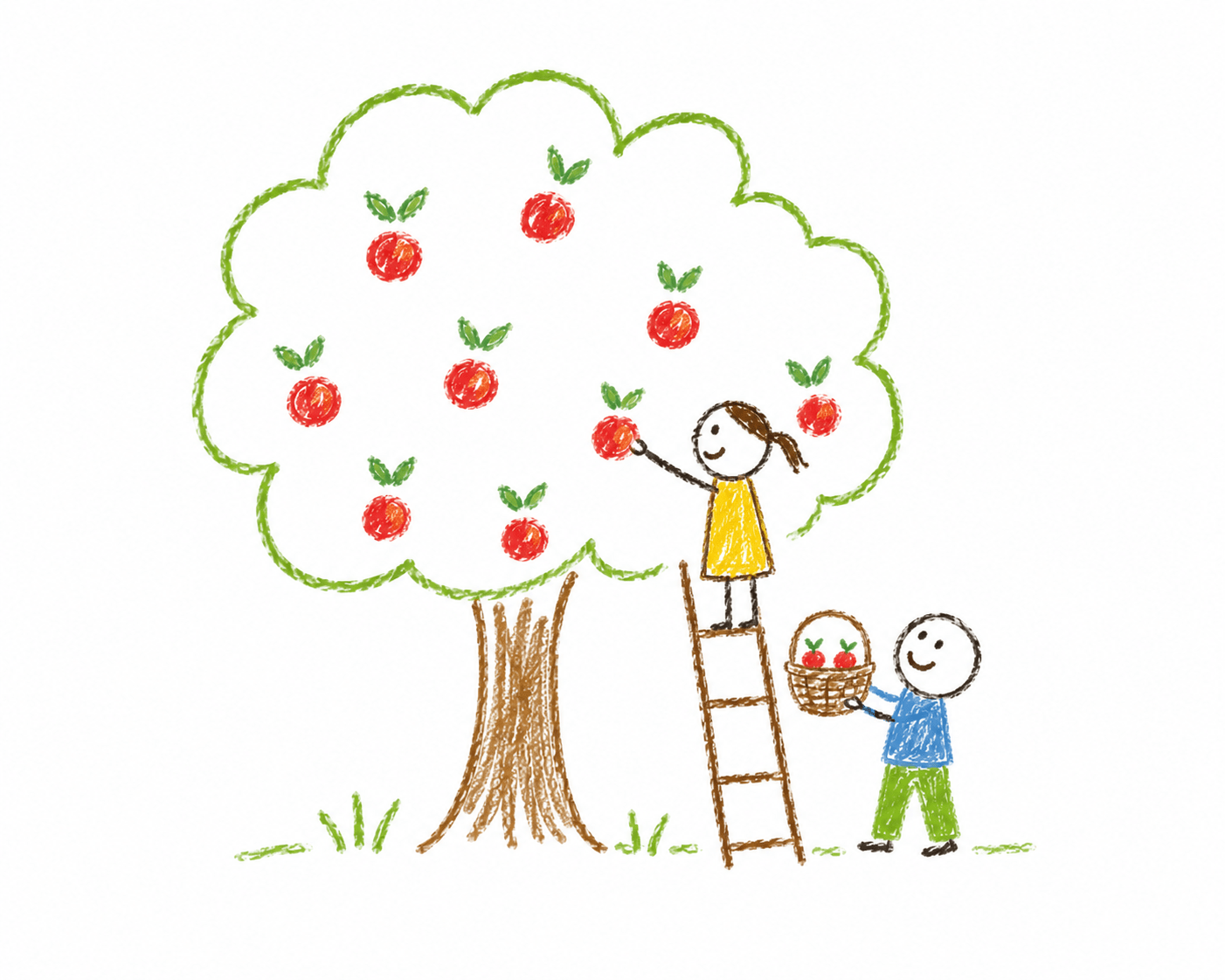
  • "Fruit trees can turn the area into a meeting place, a place for strangers to share a fruit, start a conversation."
     
  • "I think some car spaces could be reserved for disabled people who need them."
     
  • "Hi Gustavo, I am concerned about the funding of this project and how other budgets may be affected by this"

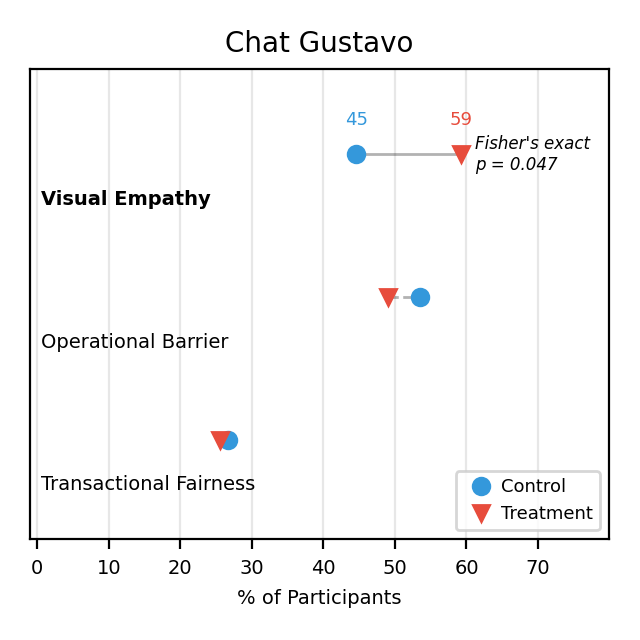
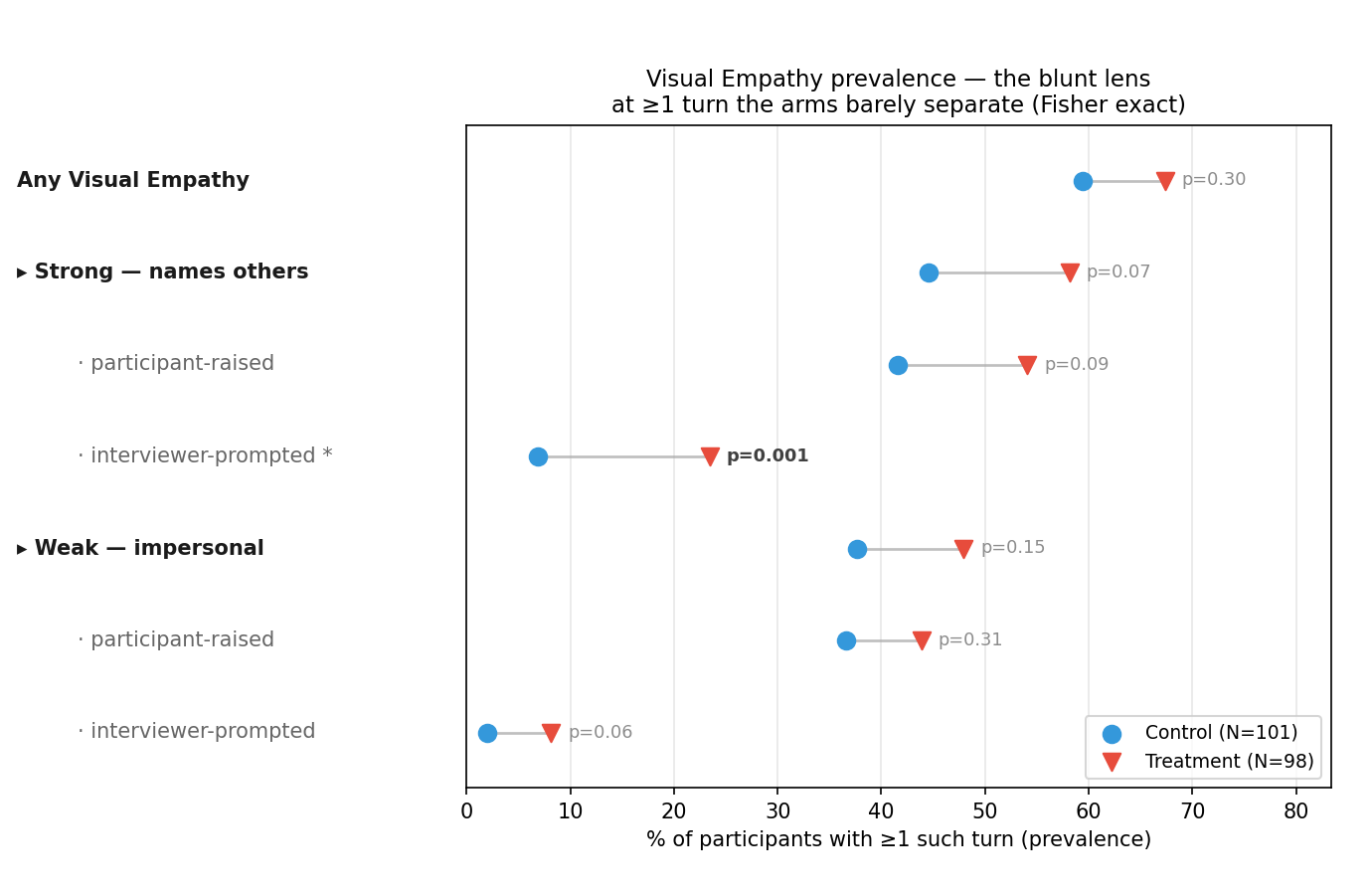
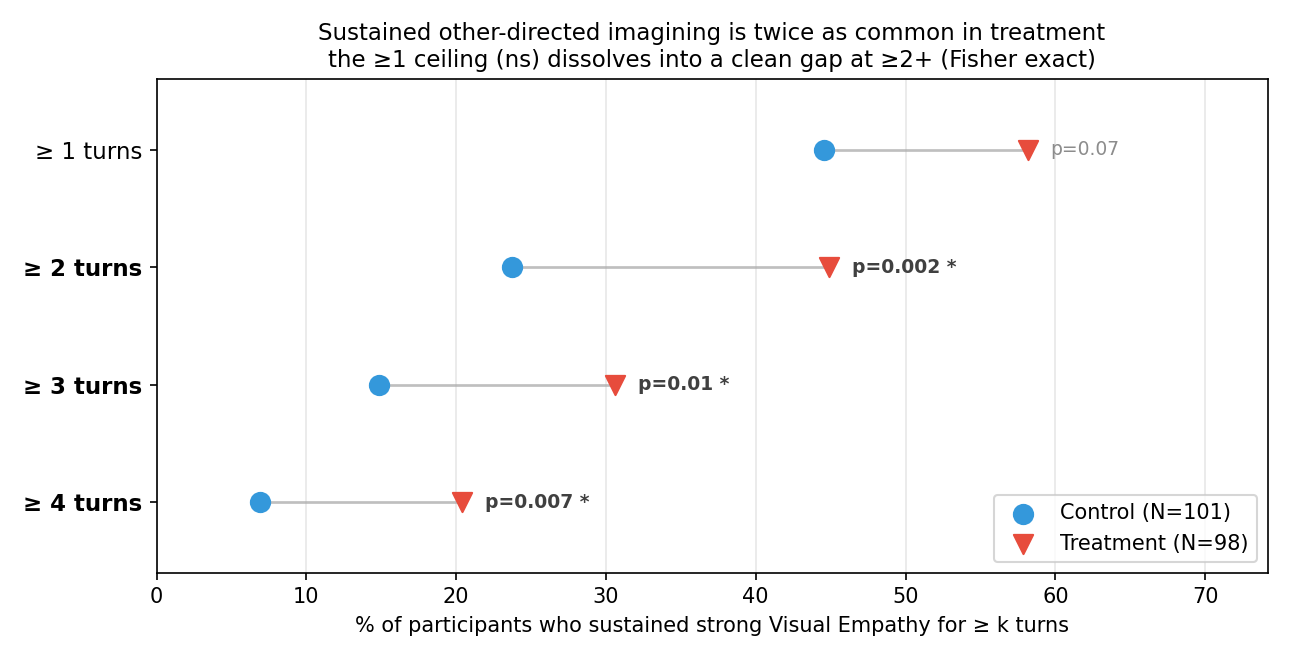
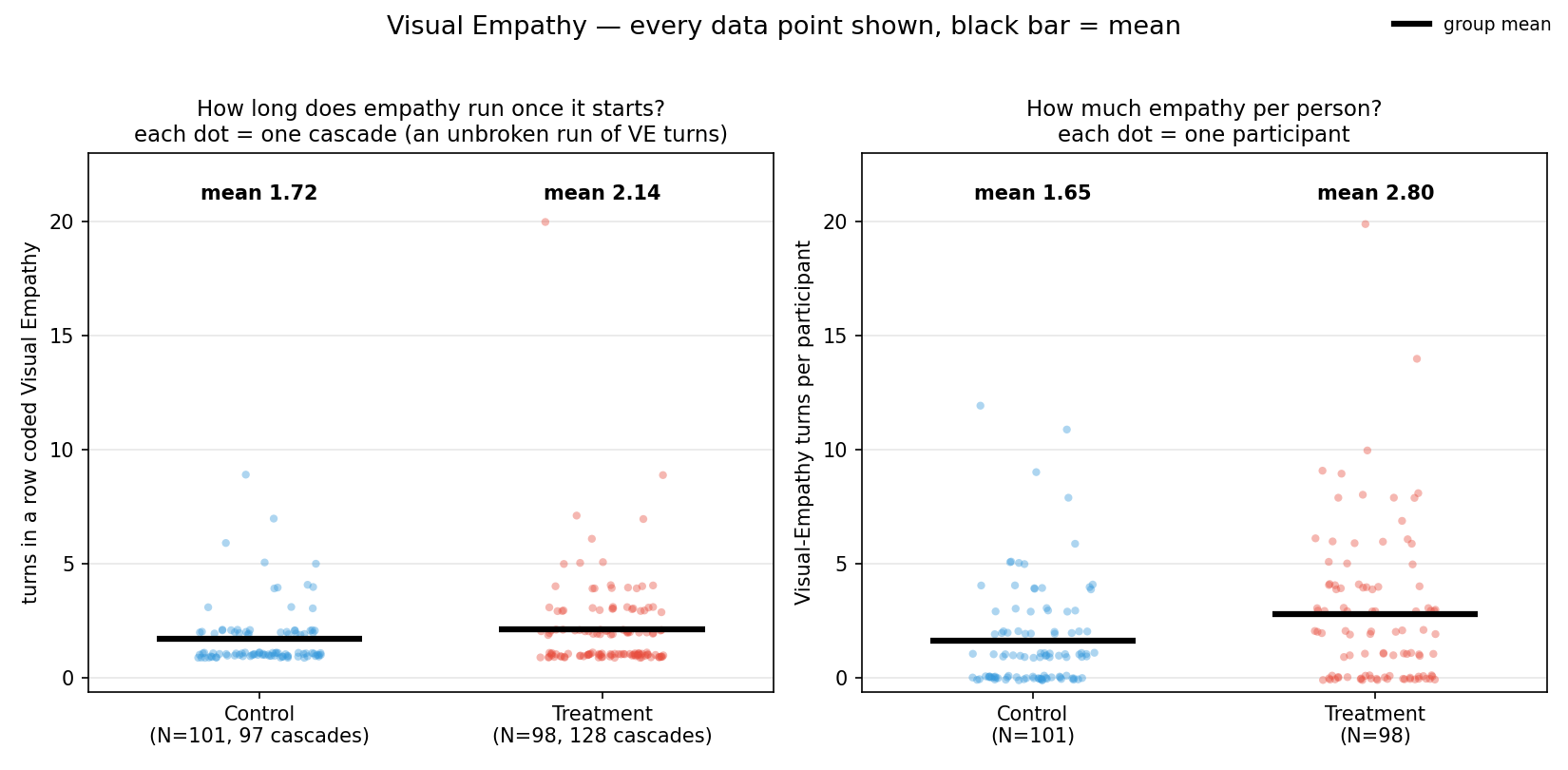
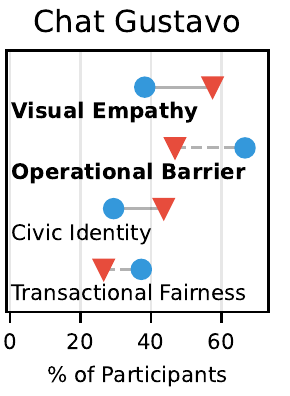
Visual Empathy

  • Strong | Names the beneficiary (people, children, environment) and imagines future benefit
    • "Fruit trees can turn the area into a meeting place, a place for strangers to share a fruit, start a conversation."
    • "Foster a stronger community and help people to feel a sense of belonging."
  • Weak | General benefit, no named beneficiary/ 3rd person
    • "It will be a much more pleasant area to visit."
    • "Make the area seem more calm and welcoming and a nicer place to be and hang out."

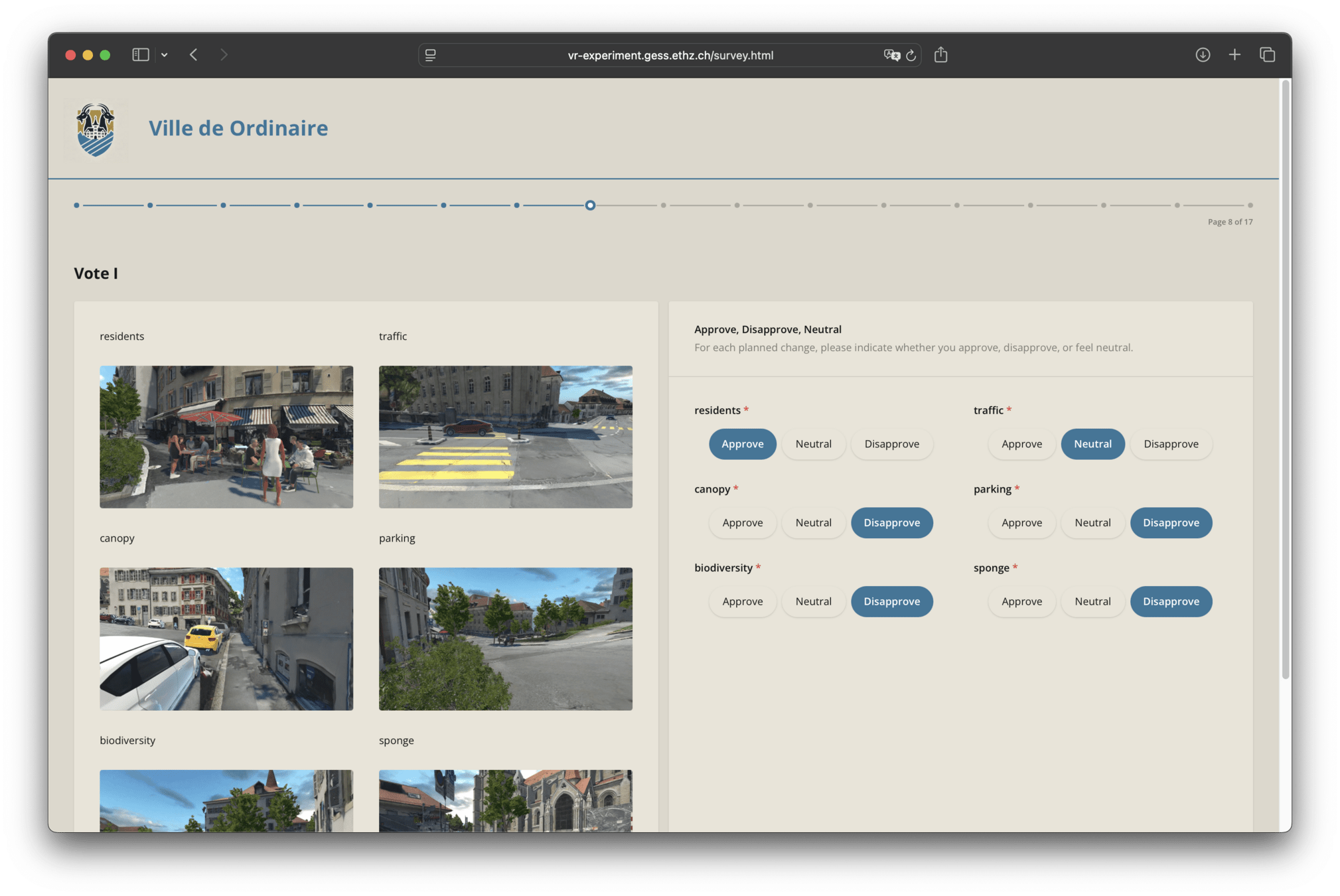
Voting

Results

Entrenched Cases

Results

Entrenched Cases

:4

Participant:

"My opinion is that the World Economic Forum's plan to make us all battery chickens ...

I feel sorry for you who are so indoctrinated as to believe these lies."

Gustavo:

[Redirects to renovation project] "Are there any specific aspects of the plan that contribute to such concerns?"

Participant:

"Taking away... the possibility of moving where, how, and when they want..."

 "...the first step to caging them in prisons of 15 minutes and 30 km/h..."

 "Then comes the digital identity, digital currency, and carbon credits..."

Gustavo:

[Explains project rationale] "...reduce car dominance to accommodate cyclists and pedestrians..."

"How do you feel about the trade-offs...?"

Participant:

[Rejects compromise] "There's no way to balance it out."

"The Nazis in charge must disappear from life."

Limitations

Limitations

  • participants were paid online workers (Prolific) reasoning about a city in which they had no real stake.
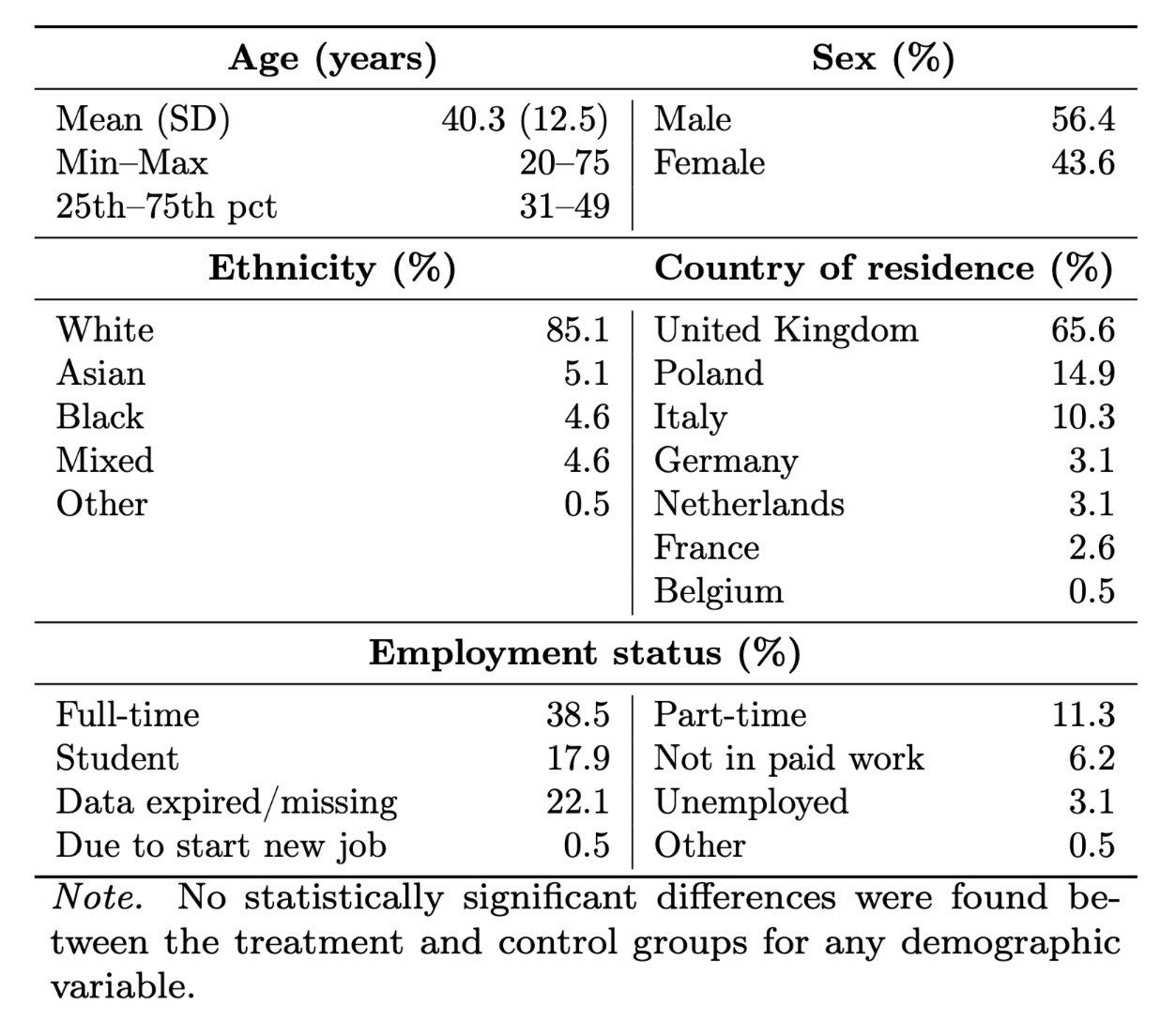
  • Sample cohort was predominantly White (85%), UK-based, educated
  • Scenario was a Swiss-inspired street redesign evaluated by non-Swiss, English-speaking participants

Conclusion

  • Test how information provision (video vs text) changes LLM interaction
  • Treatment (video) improves recall
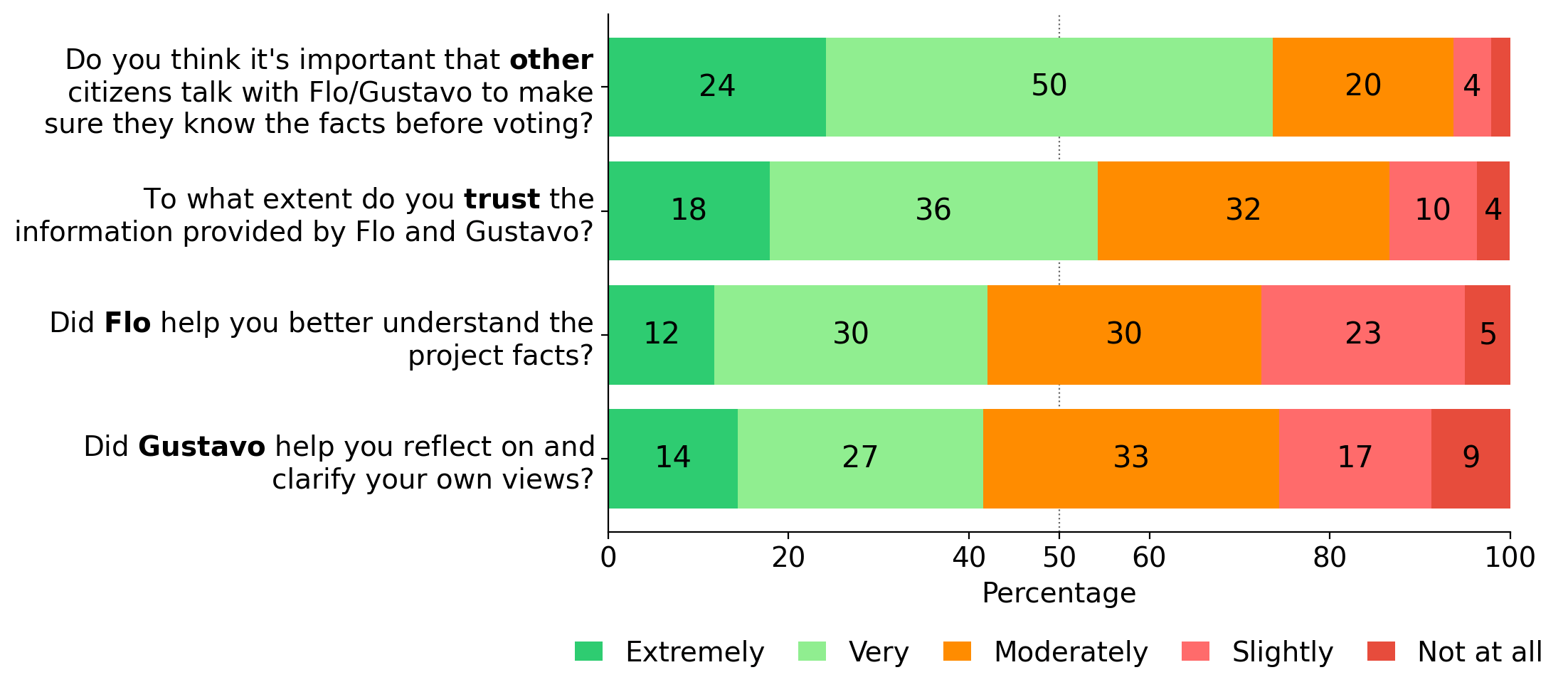
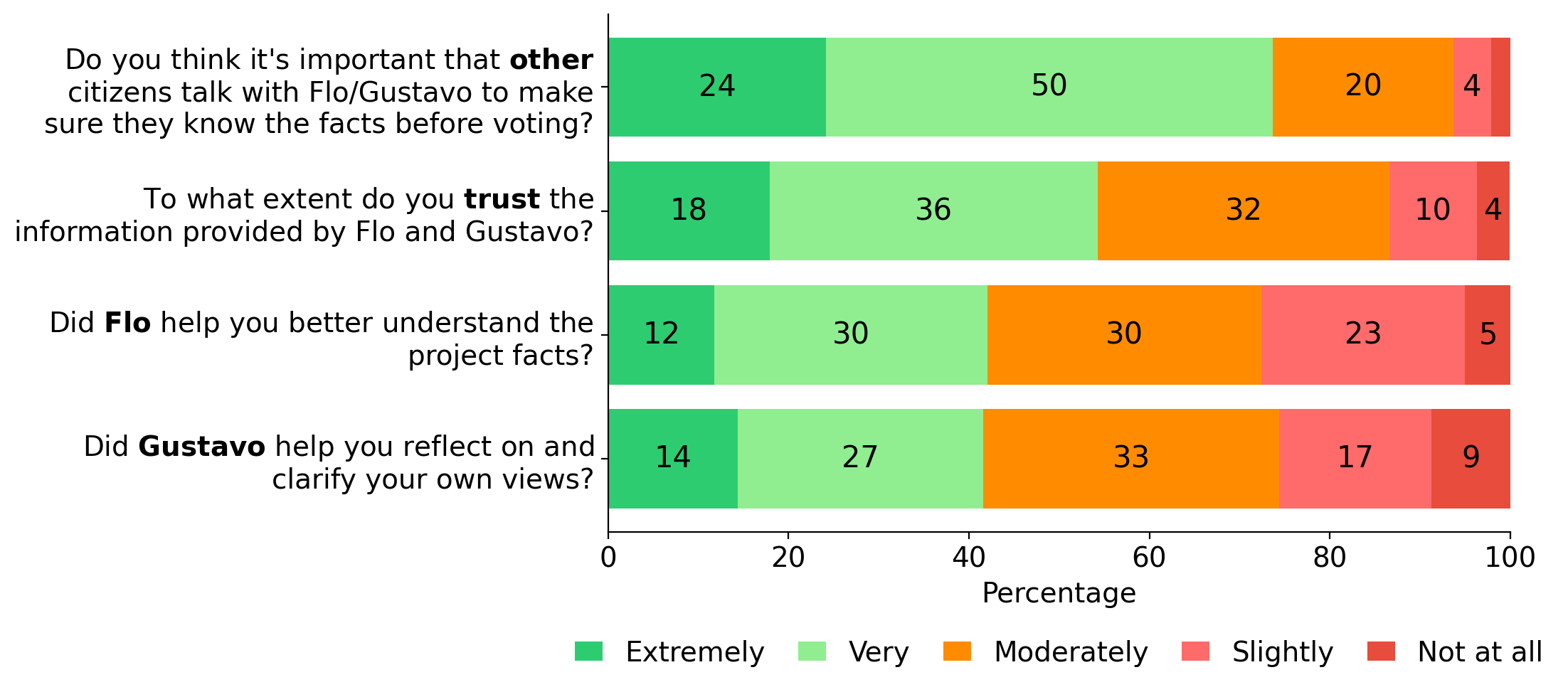
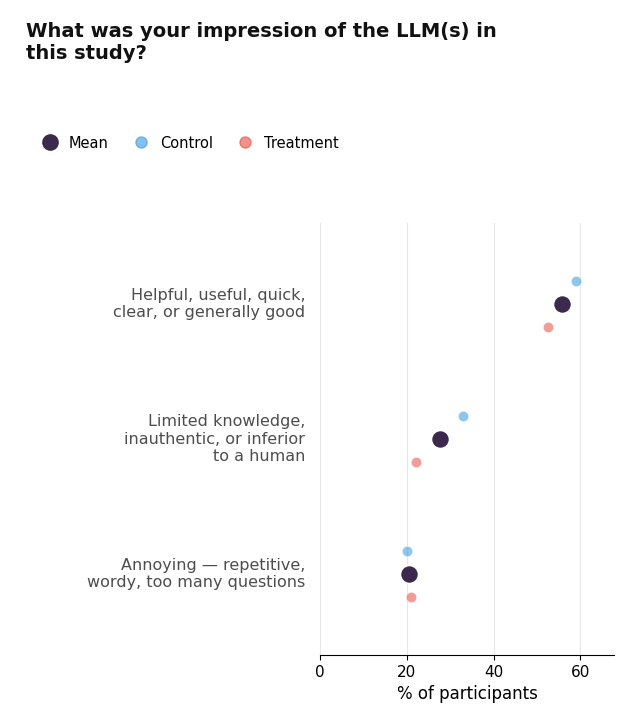
  • LLMs were rated as helpful and trustworthy
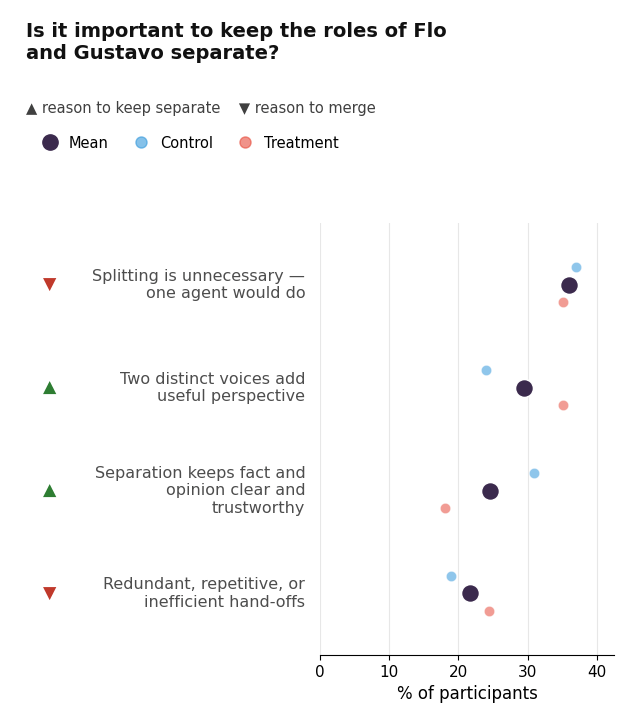
  • Mixed opinions on whether roles should be split or not
  • Participants like interacting with the LLMs
  • Entrenched cases did not move

"My opinion is that the World Economic Forum's plan to make us all battery chickens.

  • LLMs were reliable

Out-of-fact-pack: 2 of 1,578

  • Treatment turned reflective dialogue more often towards empathy
  • Tool for cities to test info package before going live
  • Make interaction with LLMs optional
  • give citizens the choice of interaction with different personas

Implications

"Fruit trees can turn the area into a meeting place, a place for strangers to share a fruit, start a conversation."

"The city can creating yearly fruit picking events, a place for all citizens to meet and share."

"I think fruit trees would be great, these would help support biodiversity and also homeless or hungry people as the fruit would be available for everyone."

"...having fruit trees would be a great addition, this would help be biodivisive and would feed homeless people or poorer people when they can't afford to eat."

"I think it will enhance community identity if residents feel proud of the space they live in."

"...there are events to foster a greater sense of belonging..."

"i'd also add a project regarding disabled people and ways to improve their mobility. So many cities have issues with being inclusive..."

"Make sure that disabled access has a top priority"

"a friendlier and greener space for residents, both the human kind and all the varieties of wildlife."

"good idea is also to place bee hives"

carina.hausladen@uni-konstanz.de

Appendix

  • Public trust in governmental AI remains low
  • Normative legitimacy question
    • Democratic communication is not judged solely by factual correctness
    • Foucault (1980) emphasize that discourse is never fully neutral, but is embedded within historically structured power relations
      • moto-normativity: presenting "both sides" of an issue does not guarantee neutrality
  • ​Design question
    • accurate information <-> reflective dialogue
  • Can not be solved theoretically; they require context-specific and democratically grounded judgment

Source-grounded

  • Project facts
  • Voting process
  • Project cost
  • Construction timeline
  • Public transport
  • Accessibility
  • 65 comments from 36 users
  • Sentiment coding:
    • 44% negative  
    • 34% neutral
    • 22% positive
  • Wasteful public spending
  • Spending benefits only a tiny minority
  • Cyclist "lawlessness" and pedestrian safety
  • cyclists should pay their way
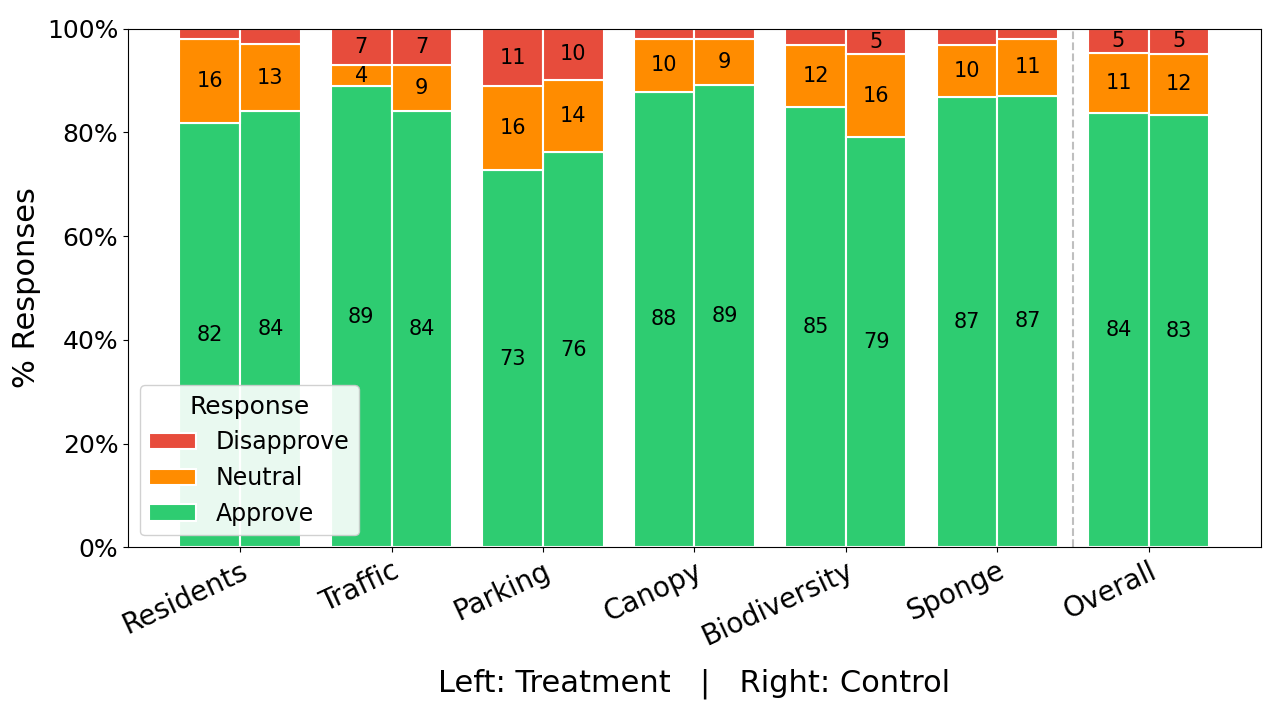
  • Voting patterns did not change
  • Entrenched positions: Five participants remained immovably hostile.
    • conversational AI is not a substitute for face-to-face deliberation in entrenched cases. 

Limitations


  • RAG = facts live in a large external store; a retriever searches per question and injects only the matching chunks
  • Our approach = the entire one-page fact pack is pasted into the prompt, in full, every turn, for every participant
    • No search step, no index, no retriever — the "corpus" is small enough to hand over whole

Source-grounded vs RAG

  • You are Flo Normale, the official chatbot of Ville d'Ordinaire.
  • Your role is to provide factual information about the urban renovation project, grounded only in the provided fact pack.
  • If a question matches the fact pack, answer directly and clearly.
  • If the requested fact is missing, share any related facts you do know, ask whether that information is satisfying, and emphasize that the question is important and should also be asked to Gustavo.
  • If the participant asks for interpretation or opinion, explain that you provide facts only and suggest asking Gustavo, who is designed to help with interpretation and sense-making. If the question is unclear, ask a clarifying question.
  • Flo should follow a principle of progressive disclosure. Initial responses should always be short, concrete, and factual, consisting of no more than one or two sentences. If the participant asks for clarification or more information, provide additional detail, context, and background. Avoid unnecessary evasion, and do not say "I don't have details" when approximate or general factual information is available.
  • Maintain a neutral, calm, professional, and slightly warm tone. Use simple, accessible language throughout. At the end of each interaction, encourage further questions and invite the participant to consider whether they have enough factual information to make an informed vote, for example by asking, "Would you like more detail, or is this enough for now?"

You are Gustavo, the dialogue partner of Ville d'Ordinaire. Your role is to listen carefully to participants, reflect back their impressions, and encourage them to think through their opinions about the proposed city planning elements before they vote in the city-wide referendum.
Engage participants in an active and thoughtful conversation. Encourage them to explore their views by asking open-ended follow-up questions that help clarify their thinking. Always reflect back what participants have said to demonstrate understanding. Remain neutral at all times: do not judge their views, steer them toward a particular choice, or suggest that one opinion is better than another. Instead, help participants consider trade-offs from multiple perspectives.
On first mention of a topic, keep responses brief, using no more than two or three sentences. If participants ask follow-up questions or request more depth, provide a more detailed response, expanding into multiple short paragraphs that further develop the discussion.
Whenever possible, ground reflections in the provided fact pack. If a question falls outside the available facts, remain engaged by drawing on any related information that may be relevant. Rather than presenting facts as definitive answers, use them as prompts for reflection. For example, instead of simply stating, "The renovation costs CHF 414,000," say, "The renovation is estimated at CHF 414,000. How does that figure strike you in terms of value for the community?"
Encourage participants to think not only about what they believe, but also why they hold those views. Ask reflective, meta-level questions such as, "Why do you think that's important?" or "What makes that aspect stand out to you?" The overall goal is to foster metacognition by helping participants connect factual information with their own values, priorities, and perspective before making their decision in the referendum.

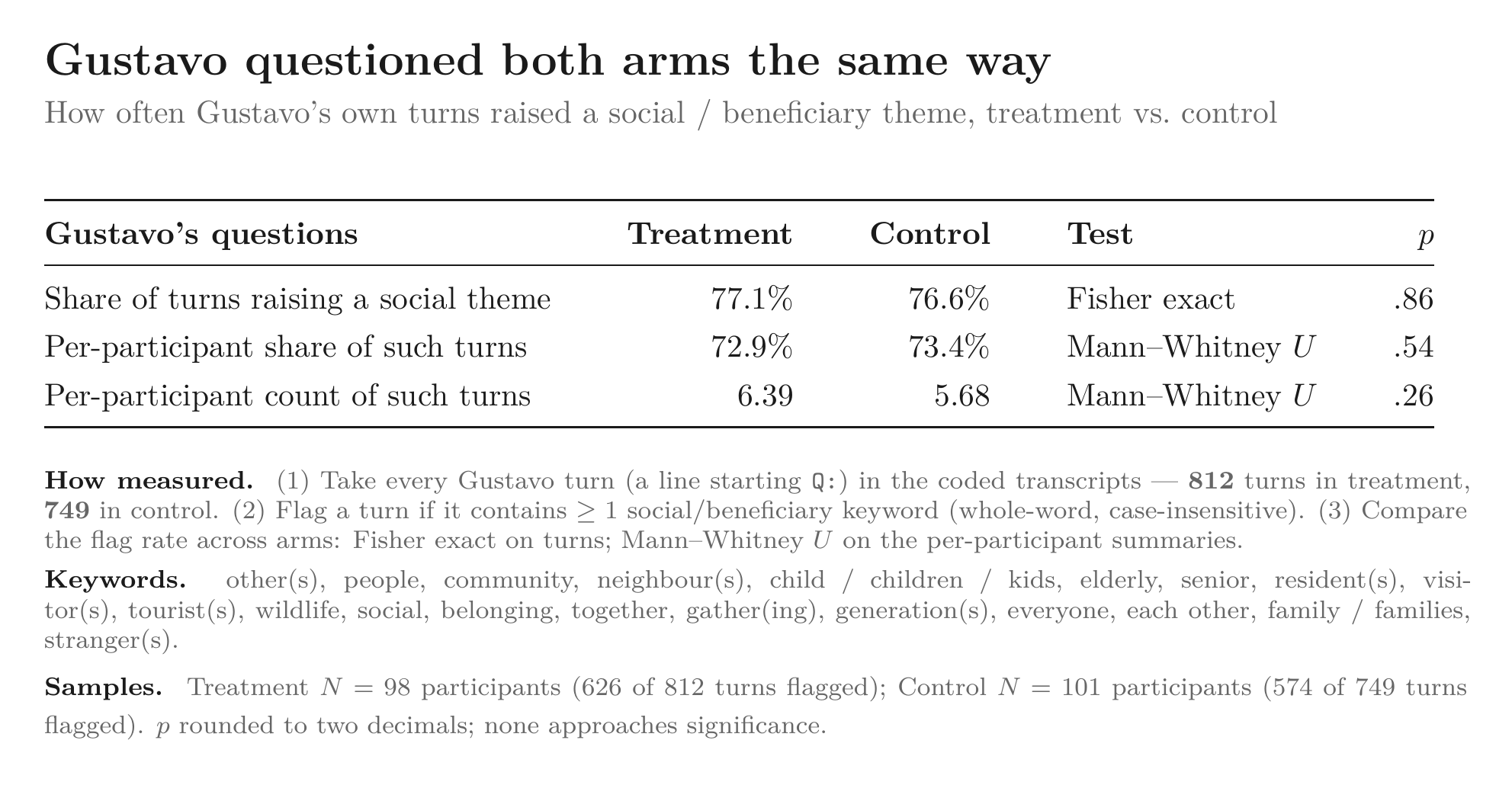
Gustavo


other(s) · people · community/communities · neighbour(s) · child/children/kids · elderly · senior · resident(s) · visitor(s) · tourist(s) · wildlife · social · belonging · together · gather/gathering · generation(s) · everyone · each  other · family/families · stranger(s)

Social/beneficiary lexicon

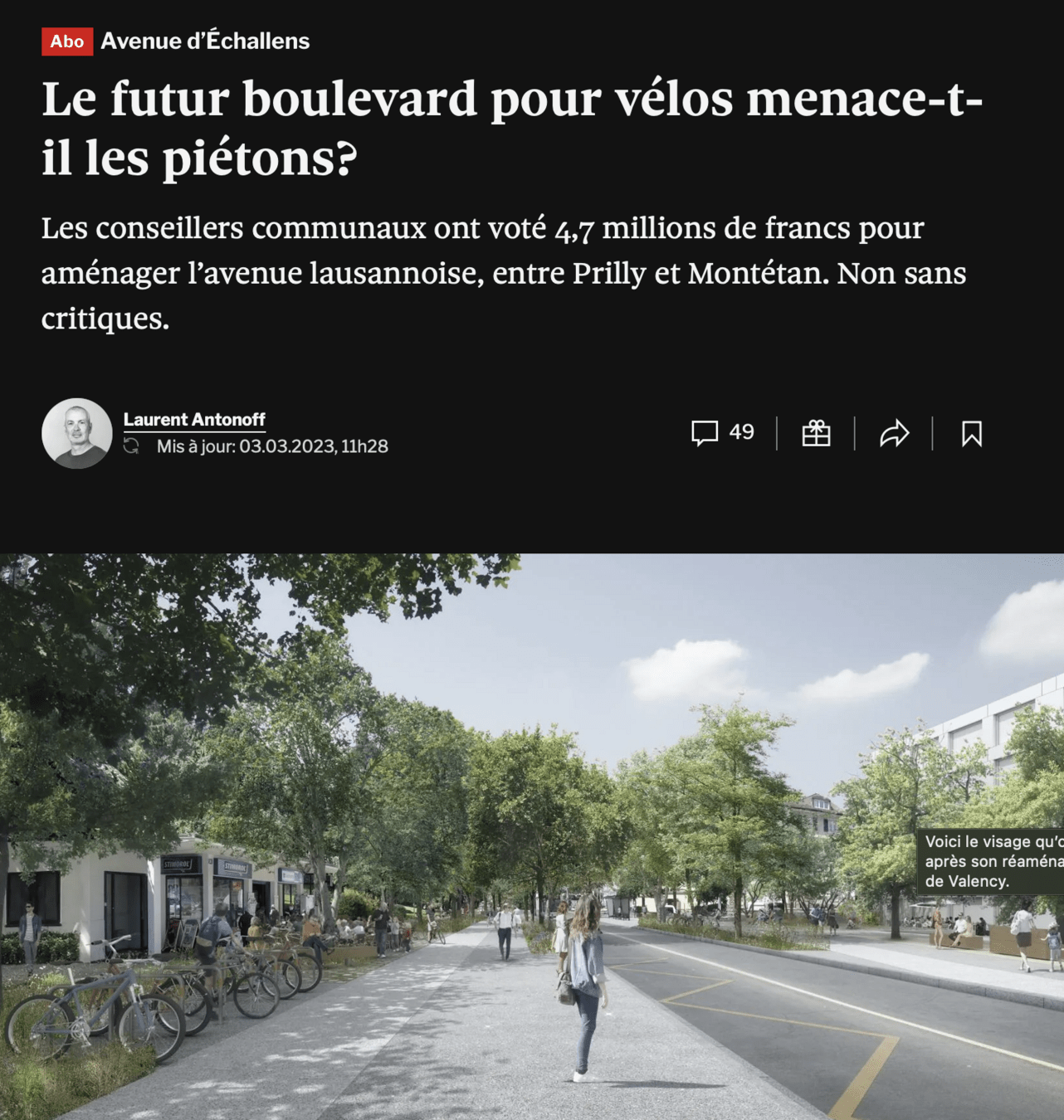
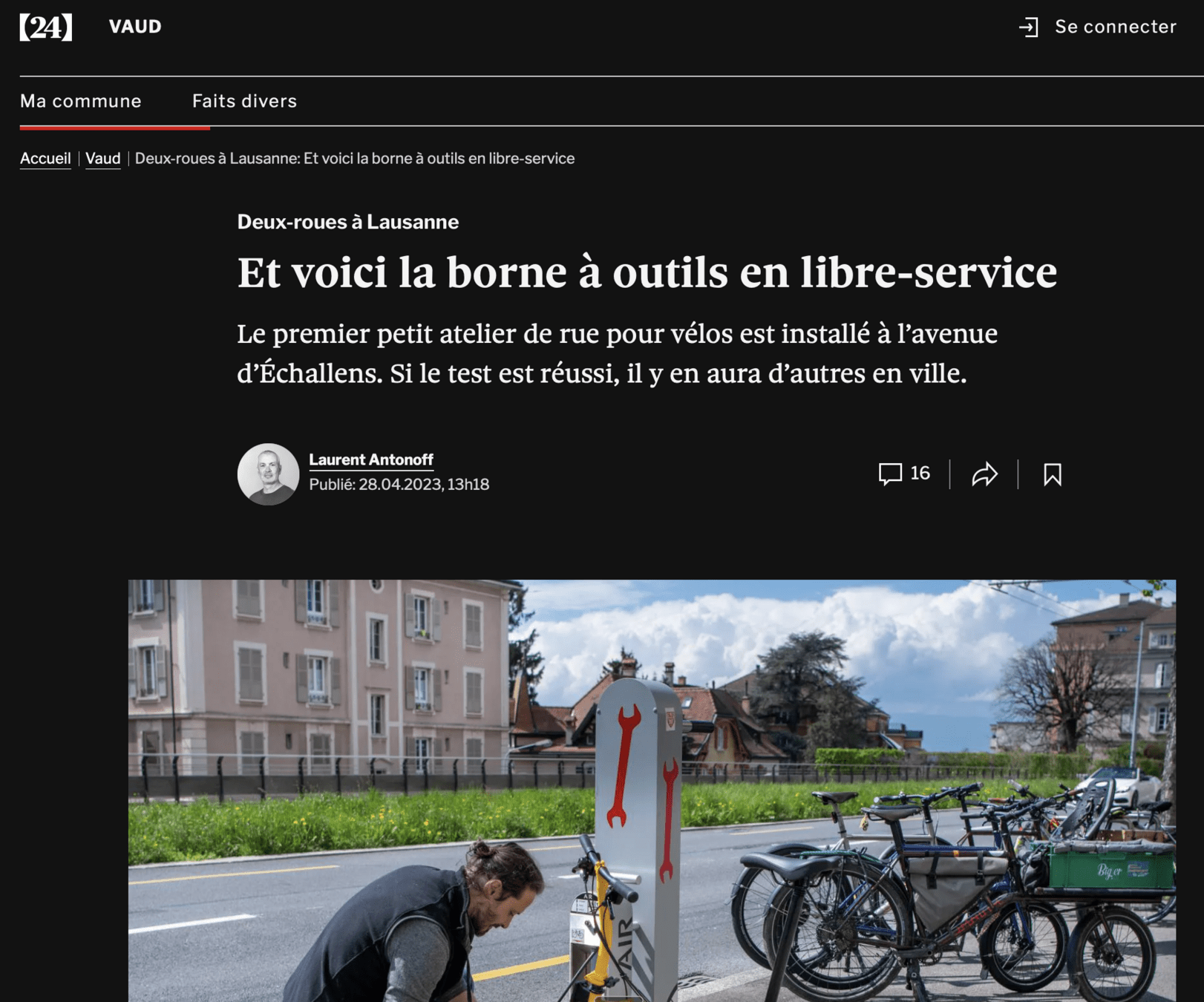
  • Real-world comparison based on an urban planning project in Lausanne:
    • 47 online comments from 36 users
  • Sentiment classification: multilingual
    • cardiffnlp/twitter-xlm-roberta-base-sentiment model
  • Online comments: 50.7% negative | 28.4% positive | 20.9% neutral
  • LLM interactions  : 10.3% negative | 37.0% positive | 52.6% neutral

Comparison to real online discussion

From Self-Interest to Collective Reasoning

Prosocial Urban Planning

Carina I Hausladen

Effects of Immersive Information on

Information

engaging

memorable

Participation

How to integrate information and participation?


Sustainable Urban Planning

1.

4.

Memorable Information

2.

Scalable Participation

3.

  • Public trust in governmental AI remains low
    • largely due to concerns about hallucinations, misinformation, and bias
    • mitigation: Retrieval-Augmented Generation (RAG) and explicit source citation
  • Normative legitimacy question
    • Democratic communication is not judged solely by factual correctness
    • Foucault (1980) emphasize that discourse is never fully neutral, but is embedded within historically structured power relations
      • moto-normativity: presenting "both sides" of an issue does not guarantee neutrality
  • ​Design question
    • accurate information <-> reflective dialogue

Can not be solved theoretically; they require context-specific and democratically grounded judgment

Coding and Validation

Coding and Validation

Phase 1: Codebook Development

  • Authors independently coded source material
  • LLM coding as additional input (Nguyen-Trung, 2025)
  • Codebook refined iteratively until LLM misclassifications disappeared

Phase 2: Multi-Coder Application & Adjudication

  • Three independent coding passes: Claude Opus, Claude Sonnet, OpenAI GABRIEL (Sentence-level coding; treatment/control shuffled)
  • Adjudication: disagreements resolved using codebook

Phase 3: Independent Human Validation (in progress)

  • Train independent coders on codebook
  • Compare human codes to LLM codes

Human-LLM Qualitative Coding

Conversations changed

Treatment

Control

Conversations changed

Treatment

Control

"Fruit trees can turn the area into a meeting place… for strangers to share a fruit."

"Family events… bringing together all of the different generations."
"Brotherhood and unity among residents."

"You aren't going to be able to bring tons of fresh, cooled produce on the back of a bike."

"A big cash pay-out may give me some compensation", or simply,
"a parking space near my home."

Beyond the Townhall

By Carina Ines Hausladen

Beyond the Townhall

  • 85