





Catherine Gracey
Open Scholarship and Applied Sciences Librarian at the University of New Brunswick
CS 4065, Catherine Gracey
# CHAPTER 2
If we haven't met before, my name is Cat(herine), and I'm the CS Librarian
I'm based in the Head Hall Library, and you can come visit me in person, or reach me via email/teams
Tech/tool Loans
You can checkout laptops, chargers, etc. from any library. You can also borrow from the Head Hall Tool Library
Audio/Video Studios
This also includes fully equipped audio/video recording studios
Makerspace
Access to 3D printers, sewing machines, button makers, tools, etc
# CHAPTER 2
You will need to prepare a reading list of 10+ sources, keeping in mind reputability & diversity
"Publication"
"Article"
"Database"
If I want to watch Chikhai Bardo (*legally*), I have to look in the appropriate database (Apple TV)
If I wanted to watch The Summer I Turned Pretty, or Arcane, looking in Apple TV would get me nowhere, (would need to look in Amazon or Netflix respectively)
Millions of possible 'hits'
Social media, research. on equal footing
Semantic Search
Biased ranking
Curated research outputs
Abundant & searchable metadata
Transparent & reproducible search
Millions of possible 'hits'
Social media, research. on equal footing
Semantic Search
Biased ranking
Disciplinary focus
Individual research contributions
Traditionally like magazines/books, now virtual collections of articles
Libraries or collections of journals/conference proceedings/more
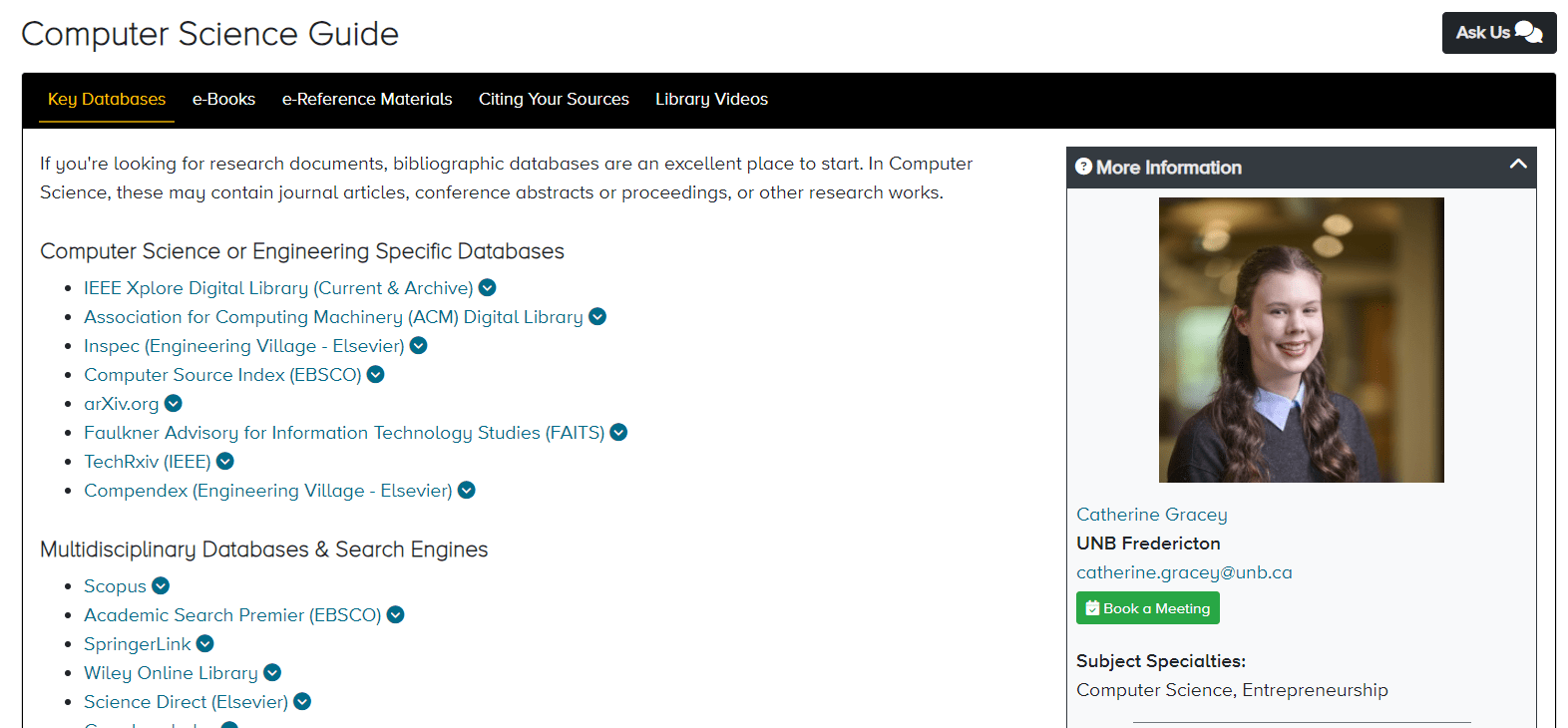
Use discipline specific resources:
These databases will contain highly curated, and reputable content
Note that besides Research Articles, these content types are not 'peer-reviewed' in the traditional sense, BUT are vetted.
In CS, conferences are a highly respected & valued way to share information
The main difference between searching in a search engine, compared to a library catalogue/article database, is that search engines make assumptions about what you mean, and databases don't
These databases employ keyword search, not semantic search, meaning they search texts for specified terms literally
| Name | Symbol | What it does | Example |
|---|---|---|---|
| Quotation | "" | Searches for that phrase exactly | "graph theory" |
| Truncation/Wildcard | * | Searches for variations on this word | comput* |
Therefore, omit 'filler' words like 'the' 'how' etc. and only include pertinent keywords
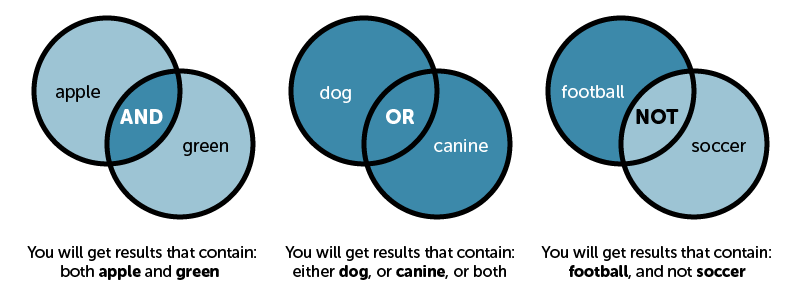
| Computer Science | Course Content | Student Engagement |
|---|
What factors make Computer Science students engage with their course content?
"computer science" AND "course content" AND "student engagement"
Let's try it in ACM!!
What factors improve Computer Science students' engagement with course content?
Find any article that meets the following criteria:
Look through citations
Avoid relying on a single author or lab
Look at other disciplines
Consider including differing perspectives
Use Bibliographic Databases
Look for markers of reliability (publisher, peer review)
Ask if you need help
Trust your judgement
We can talk more about this!
I'm based in the Head Hall Library, and can meet there, or Teams if preferred
Please share your research question & other pertinent information in your booking
By Catherine Gracey