





*chto@uchicago.edu

Challenges and Opportunities for Roman Weak Lensing Cosmology

Chun-Hao To*

I also work on...

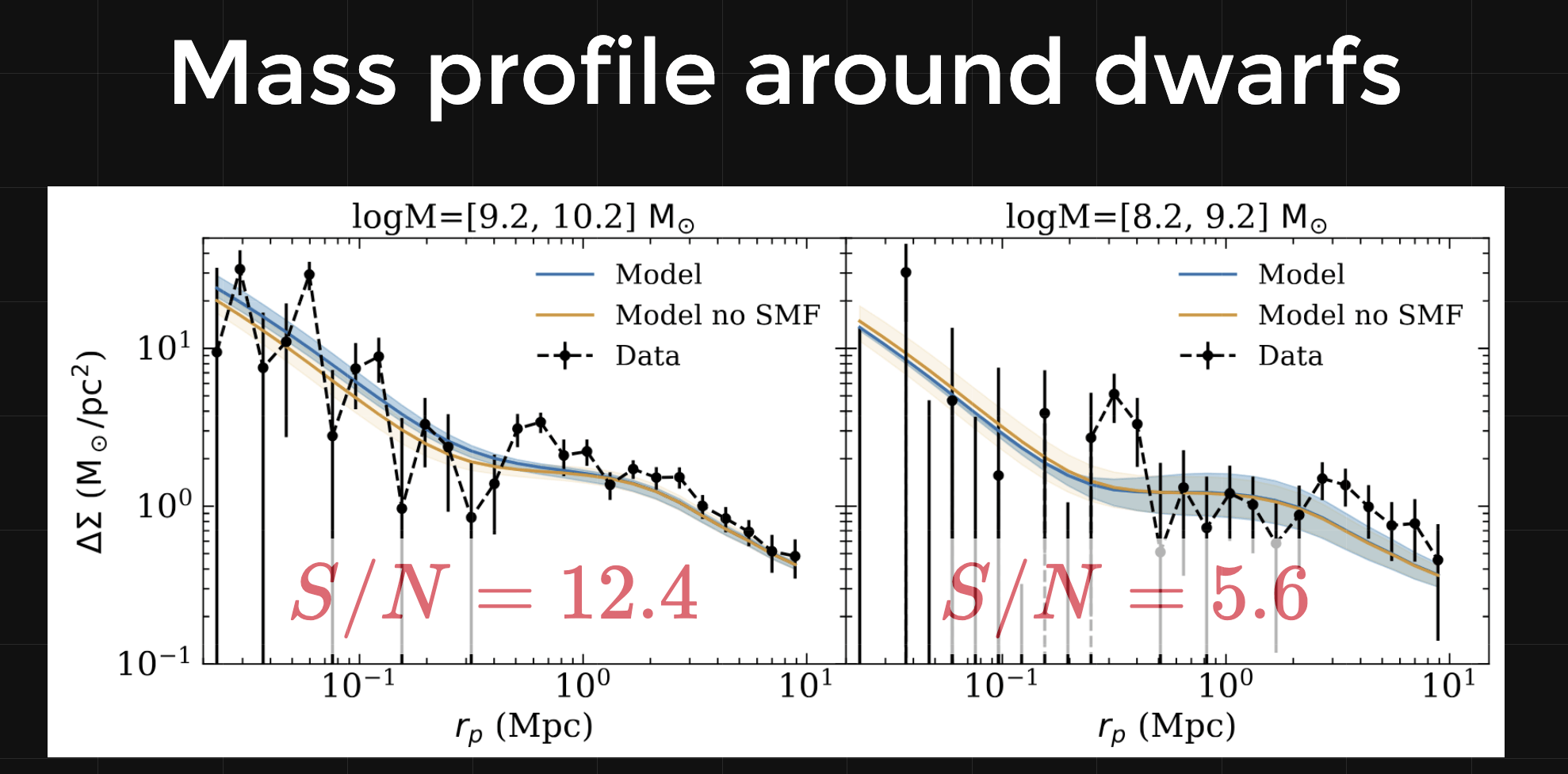
Lensing around dwarf galaxies

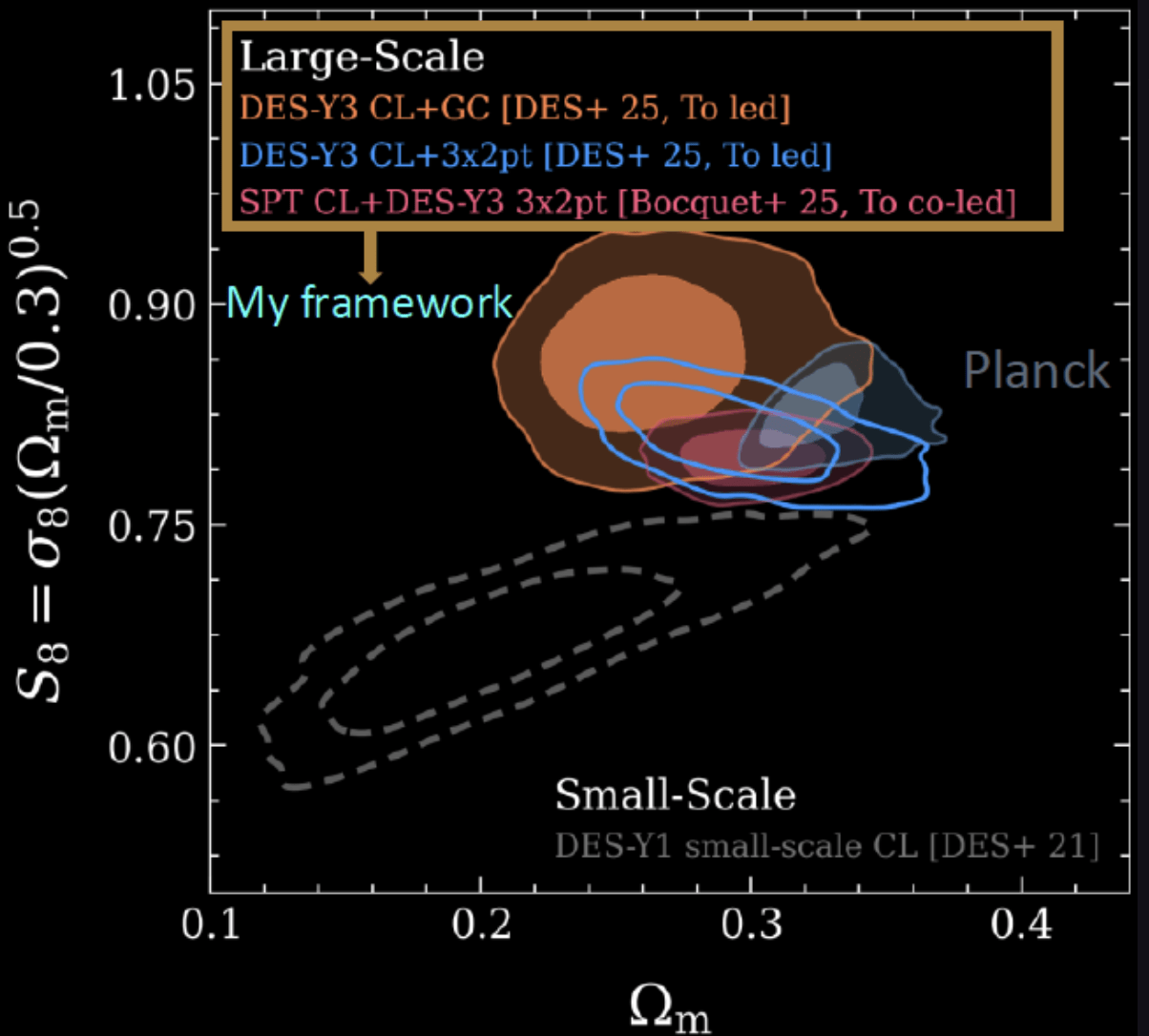
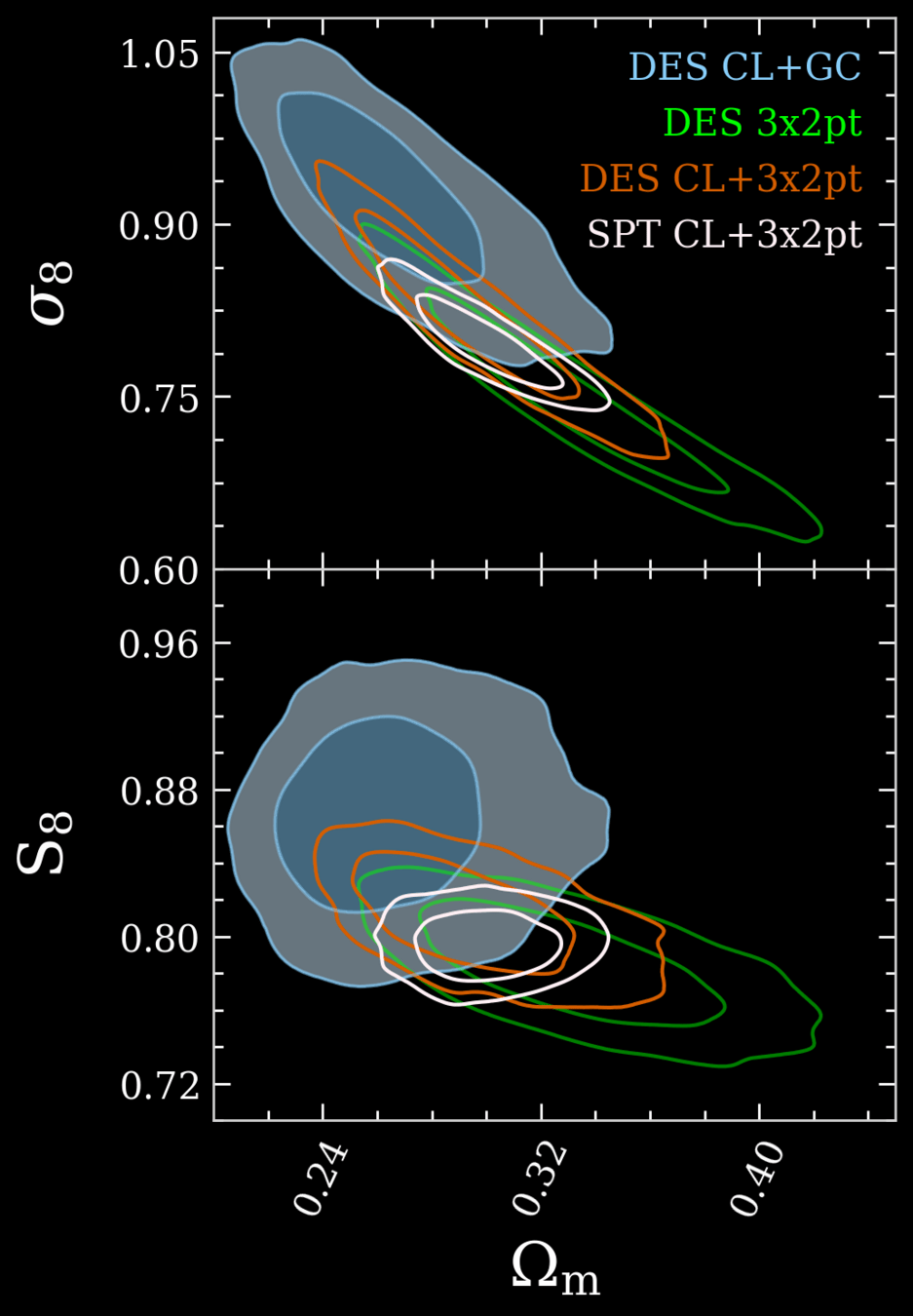
Weak lensing and cluster cosmology

Cosmological simulations

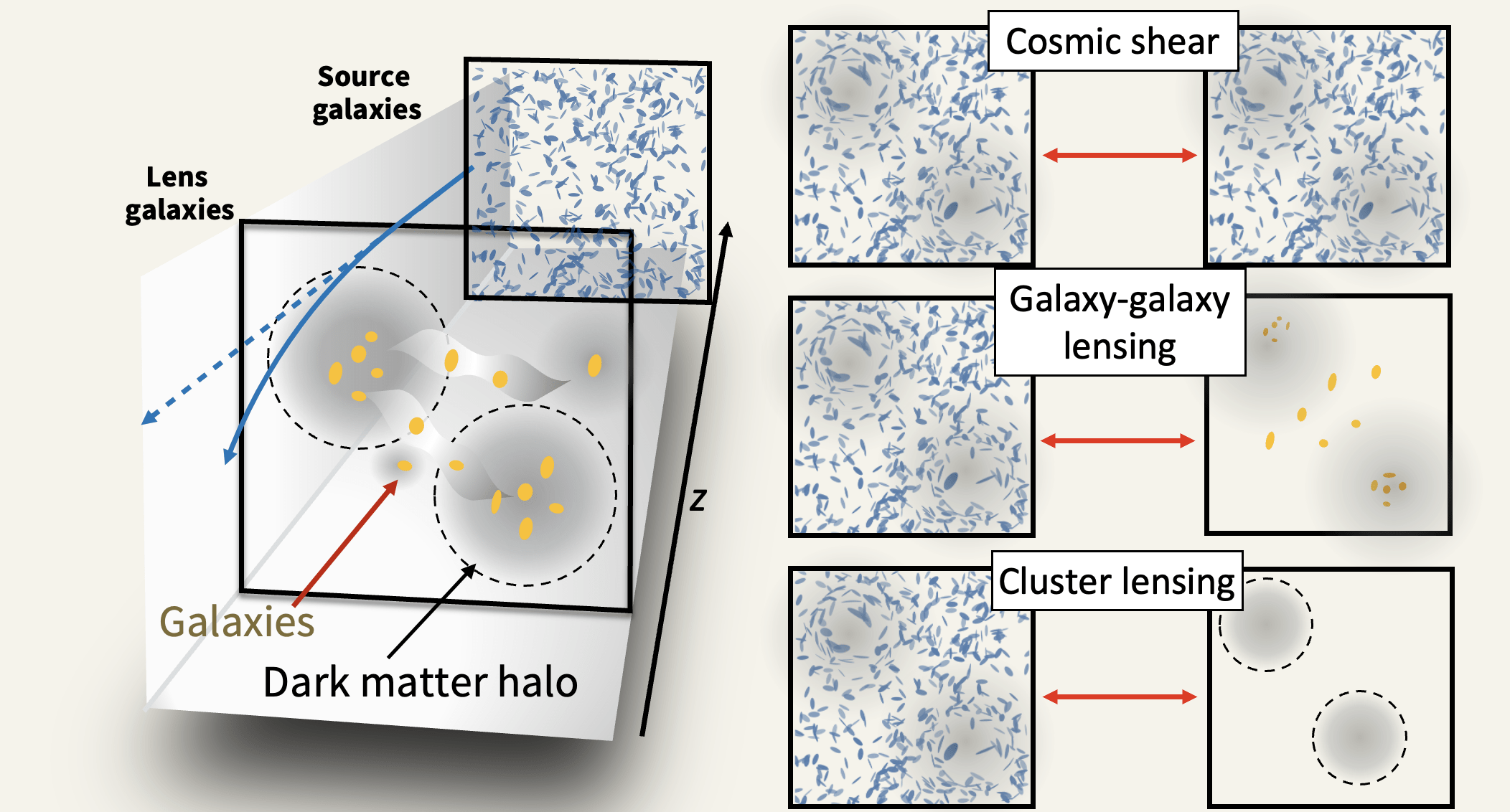
Weak lensing 

Text

Weak lensing 

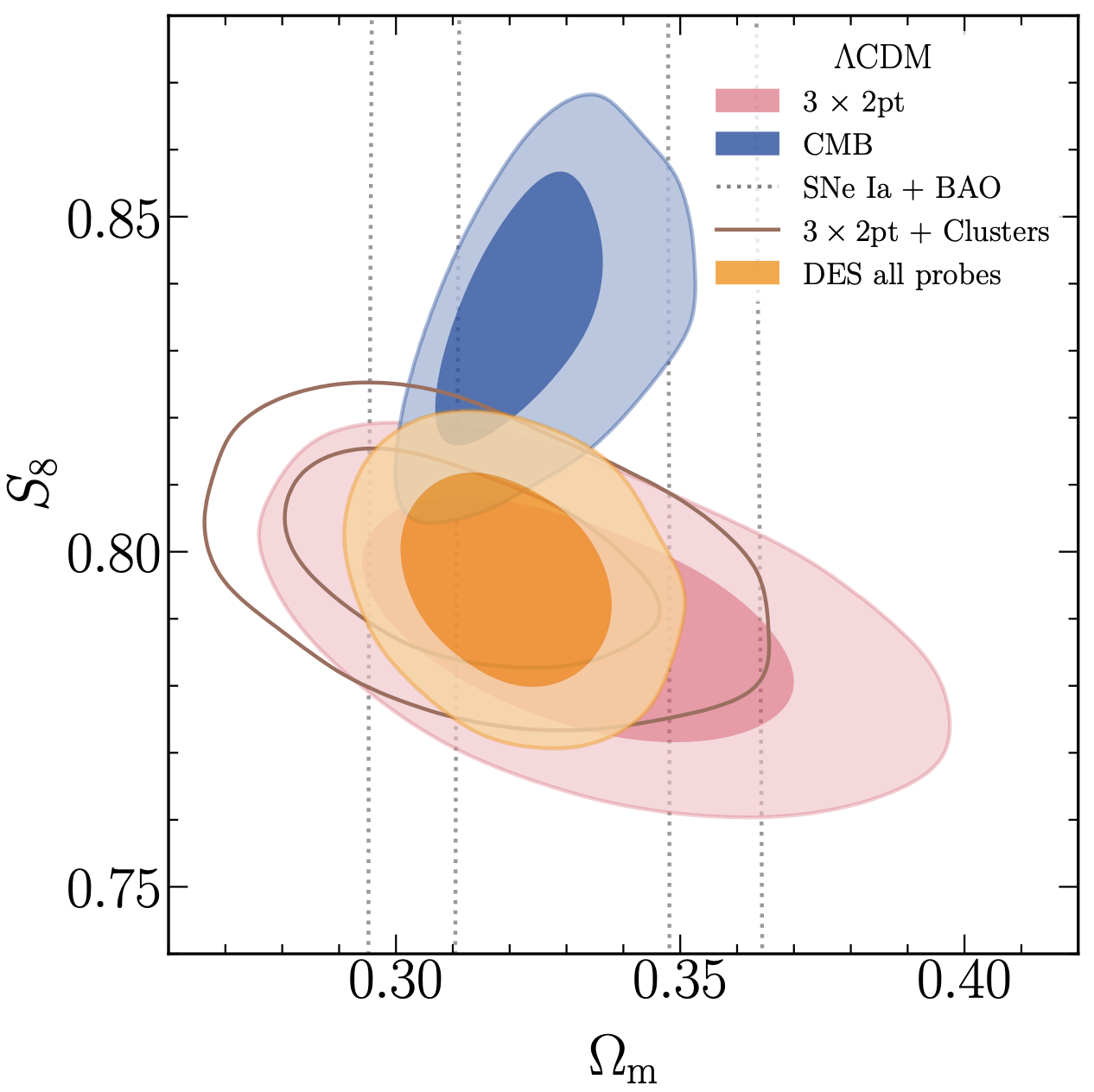
DES+25, 26, Bocquet+ (incl. CT) 25, and many many more.

Weak lensing 

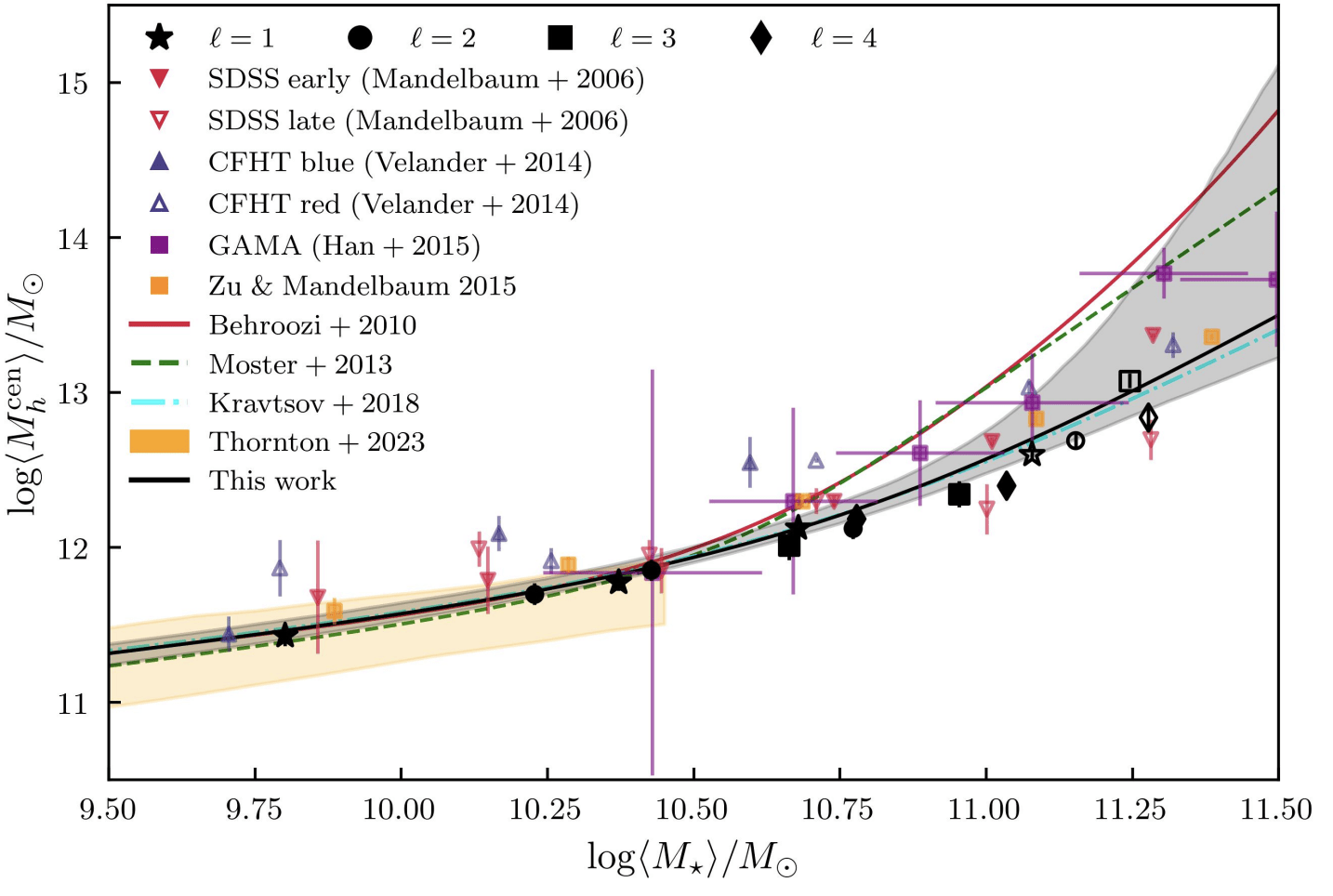
An extremely powerful probe of the co-evolution of galaxies and dark matter halos.


To+19,25, Zacharegkas+26, Leauthaud+11, Zu&Mandelbaum16, Cacciato+09, Yoo+06, Thornton+13, and many many more.

LSST Y5

Roman Medium-Tier

  • Space-based weak lensing experiments in infrared.
    • Undersampled PSF: Pixel size and PSF size are comparable.  
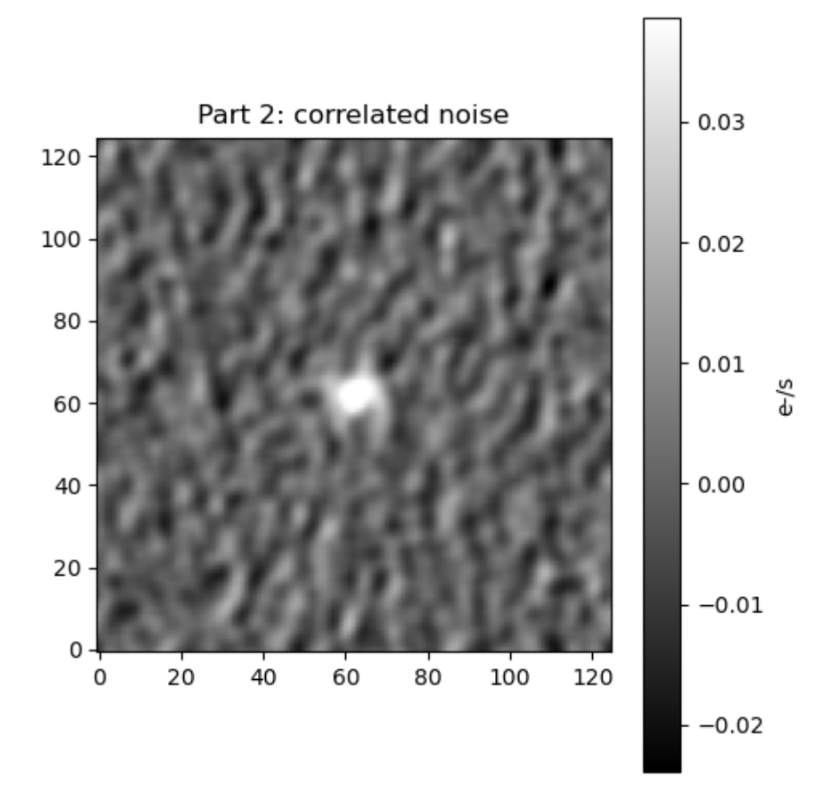
    • Correlated noise.
       
  • Poor spec-z coverage.
     
  • Theory uncertainties: 
    Reshift evolution of IA and baryonic feedback from z=0-3. 

What are the unique challenges for Roman compared to other ground based lensing survey?

Roman photometry problem

  • Ground-based telescope (LSST/DES):

     Sky background ~ 2000 e/p/s vs Read noise ~ 8.8 e/p
           Poisson shot noise.
  • Space-based telescope (Roman/JWST):

    Zodiacal+thermal ~ 0.76 e/p/s vs Read noise ~ 8.5 e/p
          readout noise is no longer negligible, which can be correlated across pixels (1/f noise). 

Bagley+ 2022

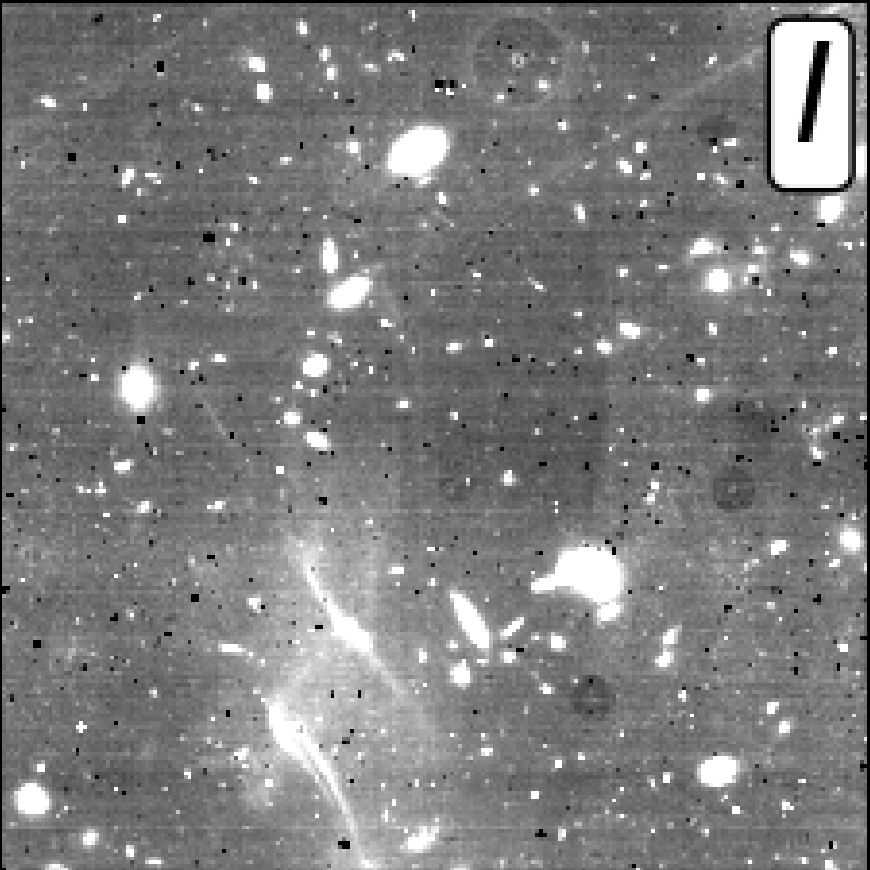
Snowballs (Cosmic Ray)

JWST

1/f

WISP
(Stray light)

See also, Rauscher+22, Betti+ 24

Laliotis+ 25

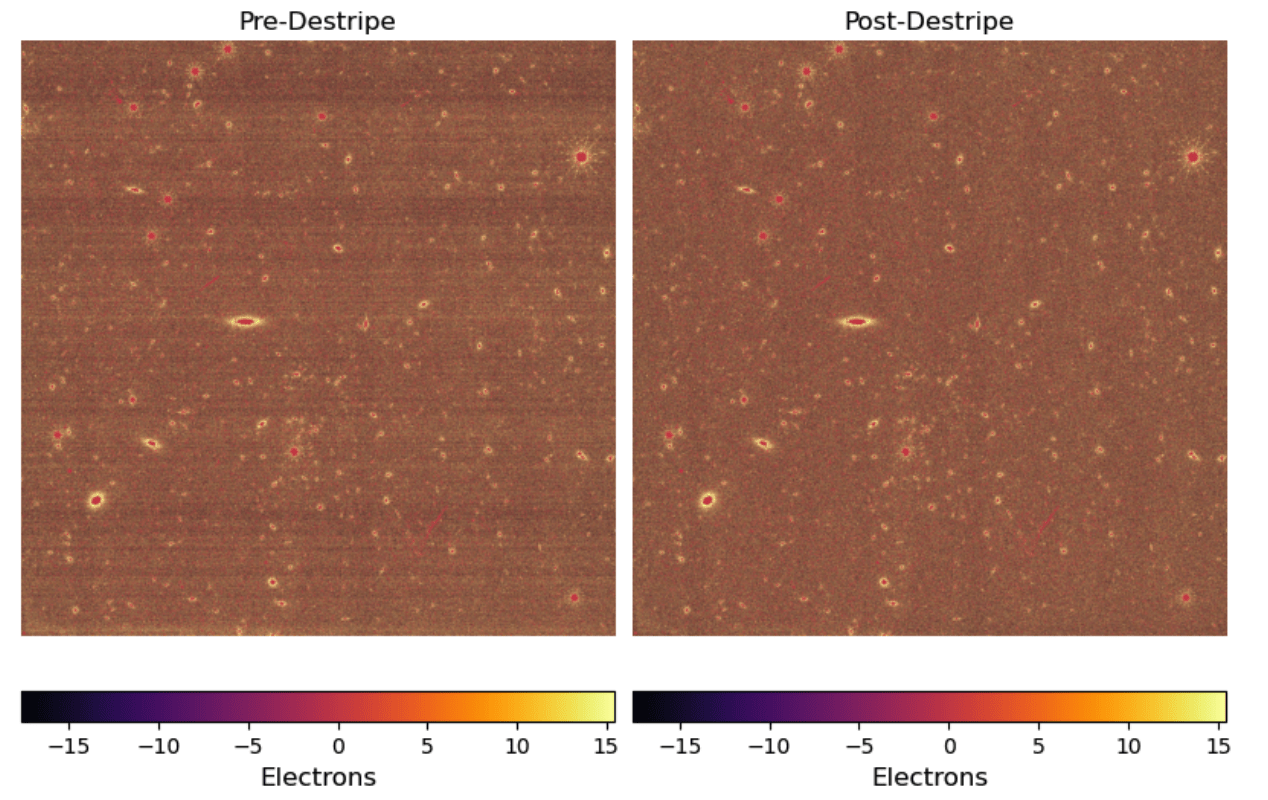
ImDeStripe: method subtracting 1/f noise using multiple overlapping observations 

Even with this, correlation remains

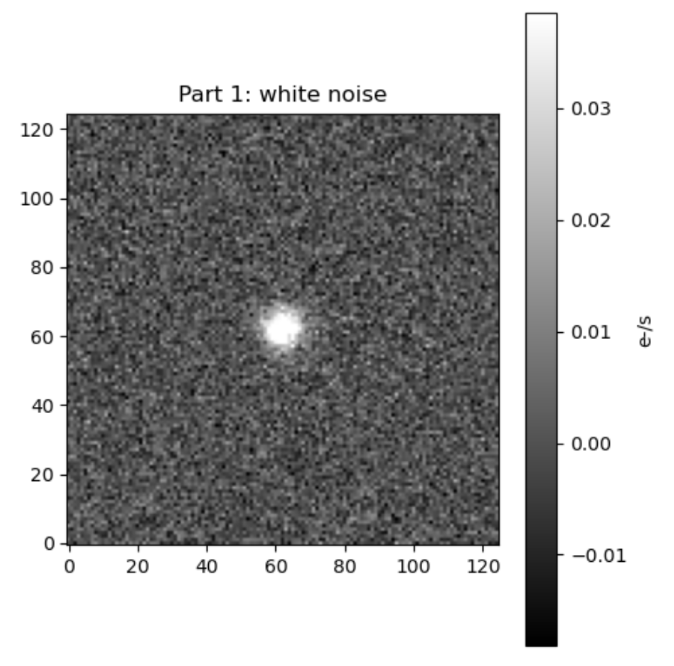
Generated with remaining noise powerspectrum  

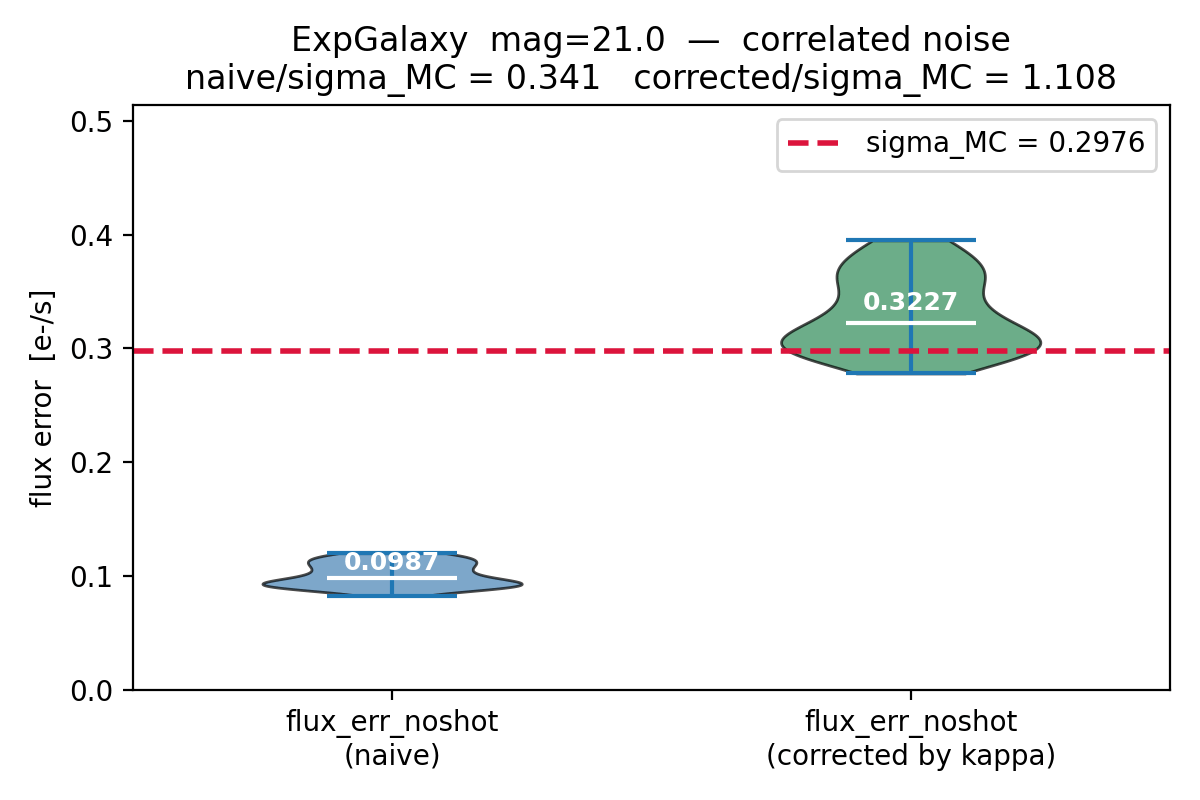
Impact on flux uncertainty

MonteCarlo Simulation 

Out-of-the-box Flux Uncertainty.

Flux uncertainty correction

Assuming the noise is homogeneous and isotropic within a block (1.6'x1.6'), we can estimate the correlation using the correlation of the noise realization. 

r(\Delta\alpha,\Delta\beta) = \left\langle \bar{n}(\alpha+\Delta\alpha,\beta+\Delta\beta) \bar{n}(\alpha,\beta) \right\rangle

where the normalized noise field is defined as:

\bar{n}(\alpha,\beta) = \sqrt{w_{\alpha,\beta}} \, n(\alpha,\beta)

Flux uncertainty correction

Photometry measurement

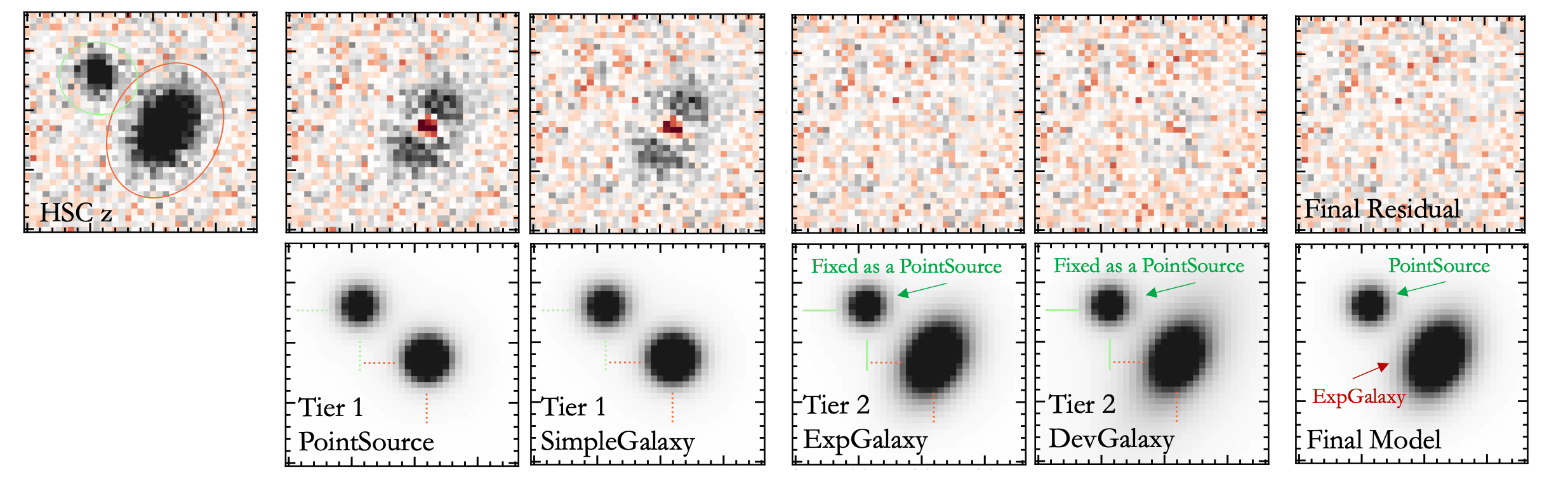
  • Following the approach of the Farmer:
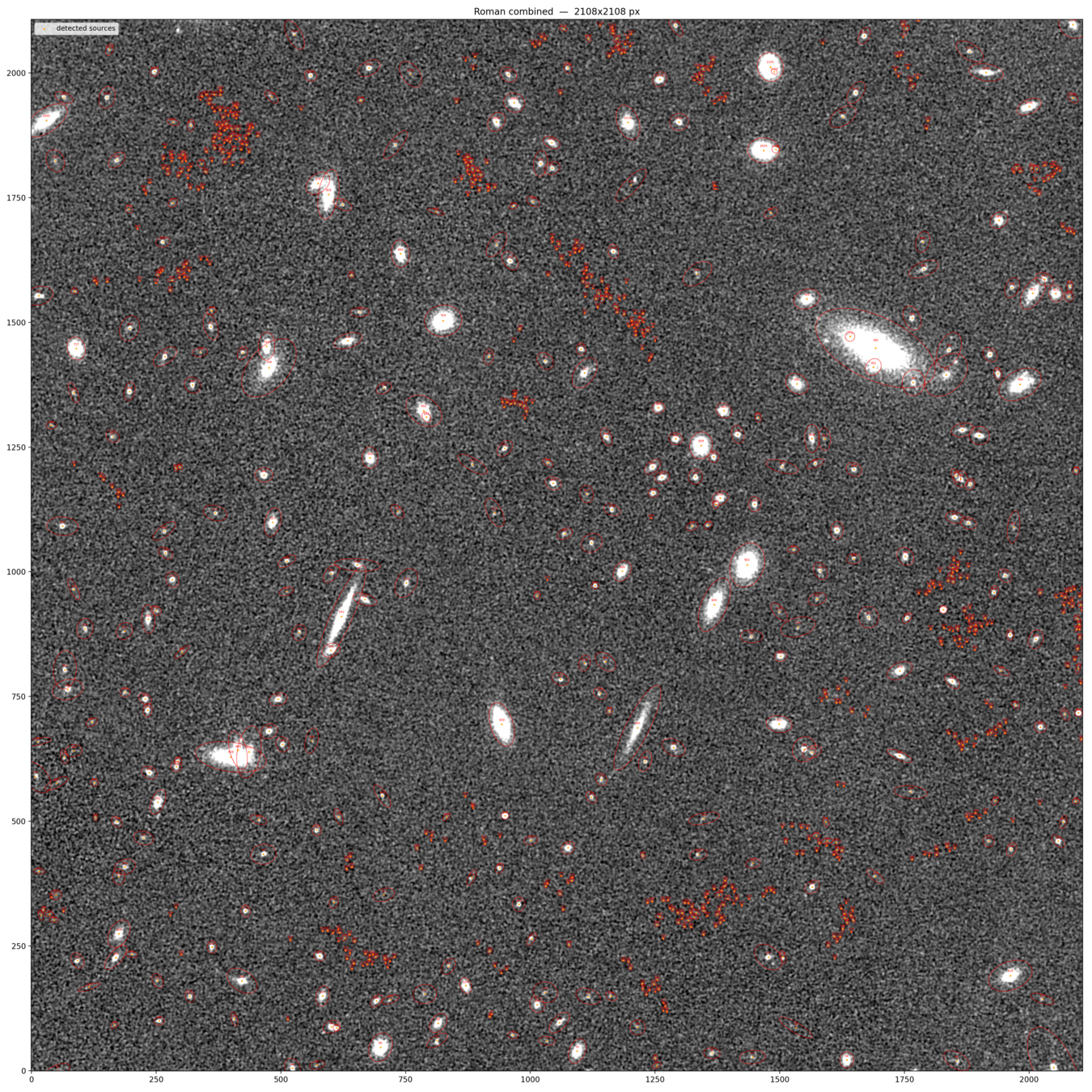
    • Detection: SEP
    • Photometry: Multi-object Model fitting (MOF) using the Tractor.
  • With the following major improvements:
    • Correlated noise correction. 
    • Fine-tune model decision trees for the Roman image. 
    • Noise from astronomical objects.

Also see Weaver+23

The Farmer: 

  • Detection:
    SEP 
  • Photometry:
    Tractor (Multi-object Model fitting)

Weaver+23

+ Lots of other things:
Such as Mosaic / divide skys into chunks, etc...

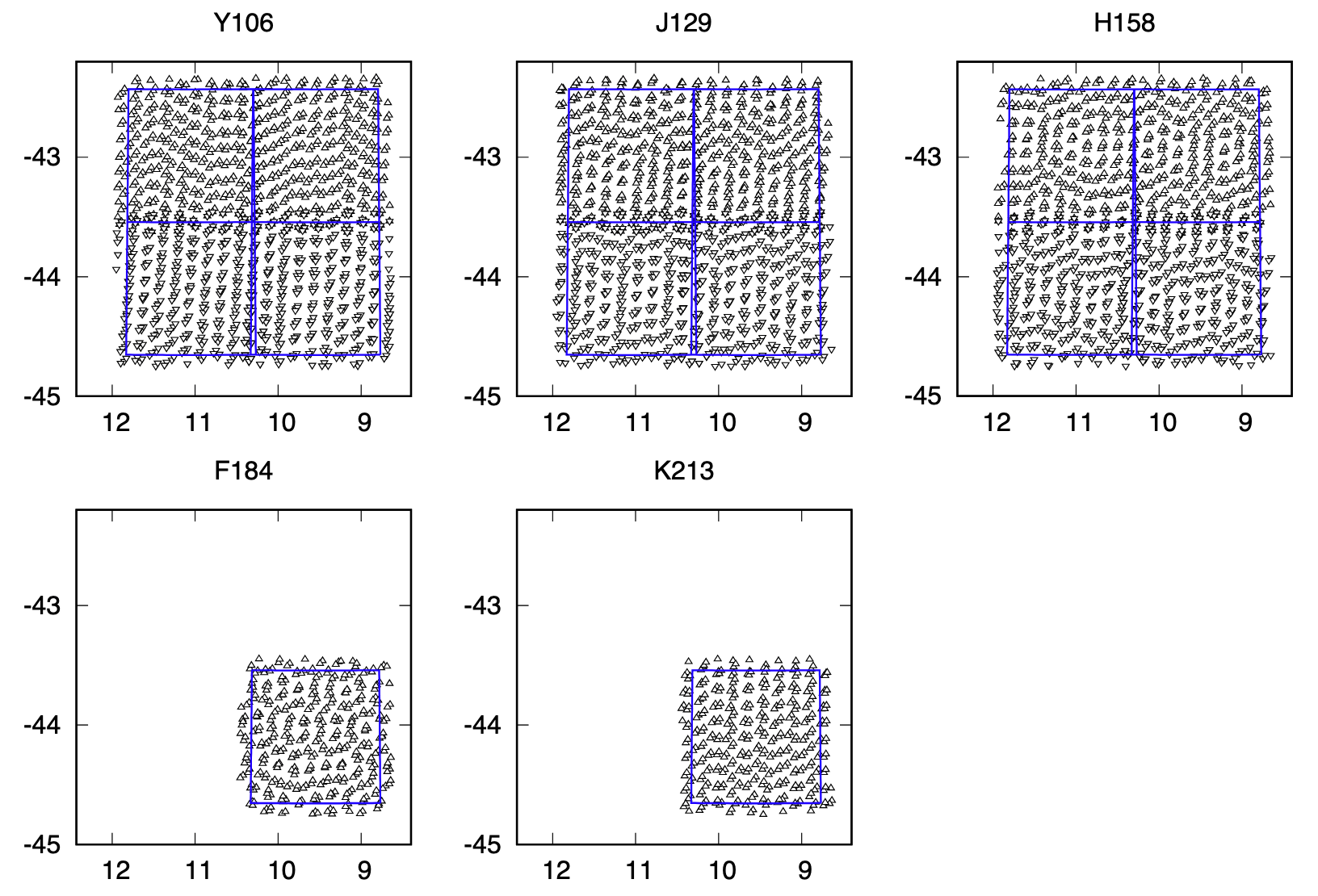
Performance validation: DC25 Sim

RA

DEC

  • Input: OpenUniverse24.
     
  • A series of imaging process pipelines from raw data to coadded images with a uniform PSF. 

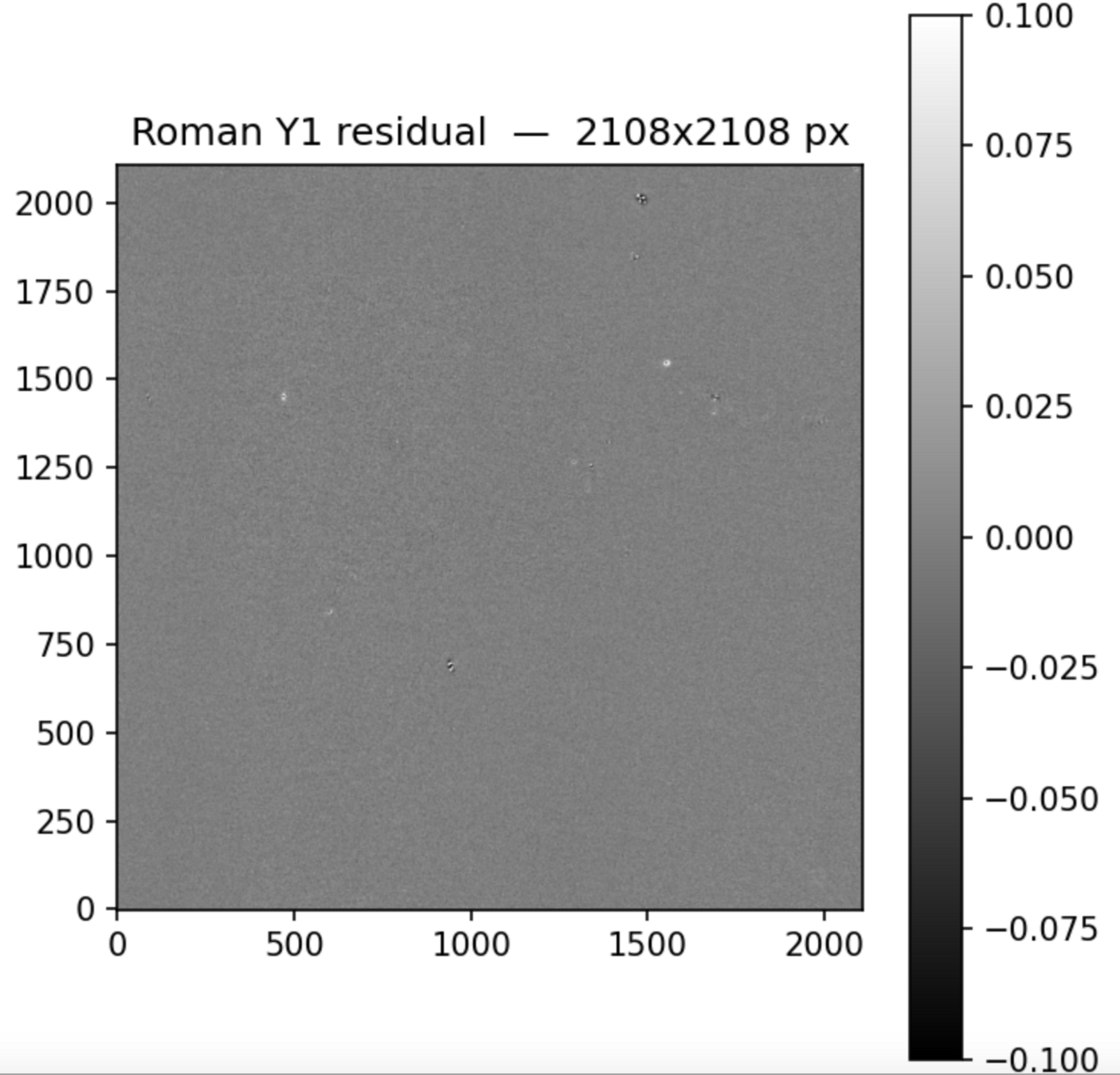
Performance: Roman

Performance: Roman

\frac{\text{model} - \text{data}}{\text{noise}}

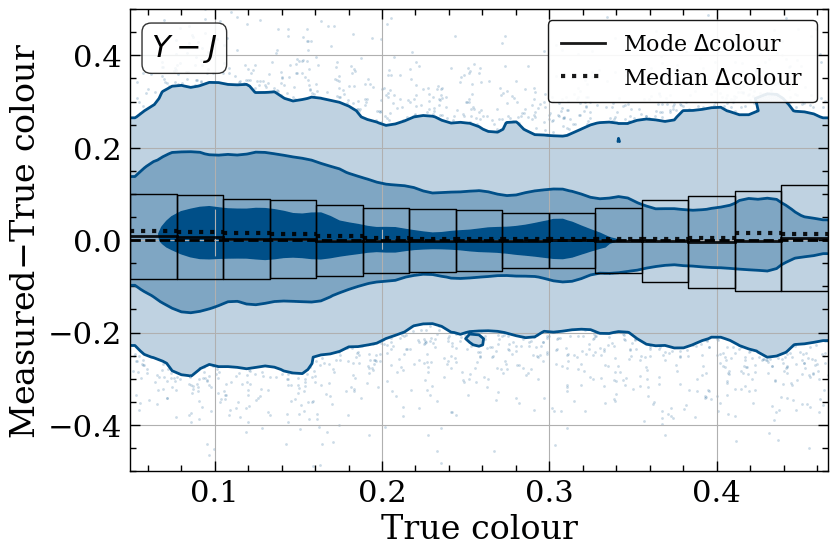
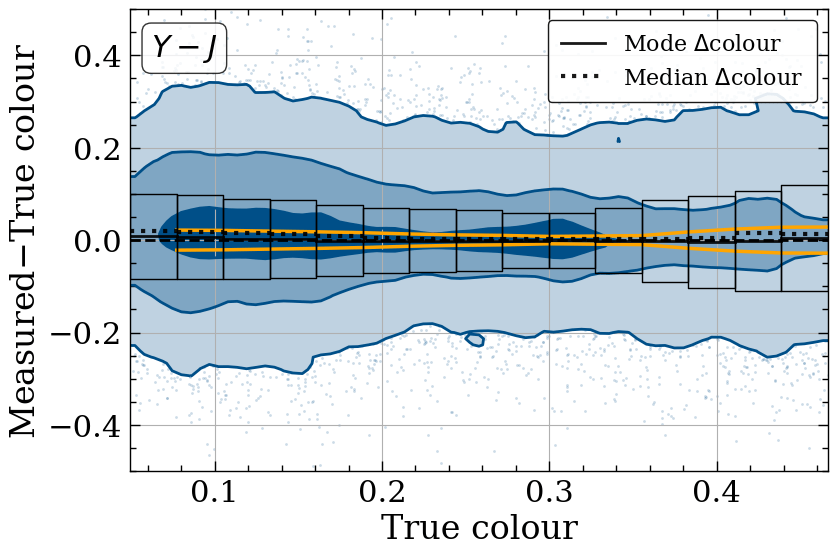
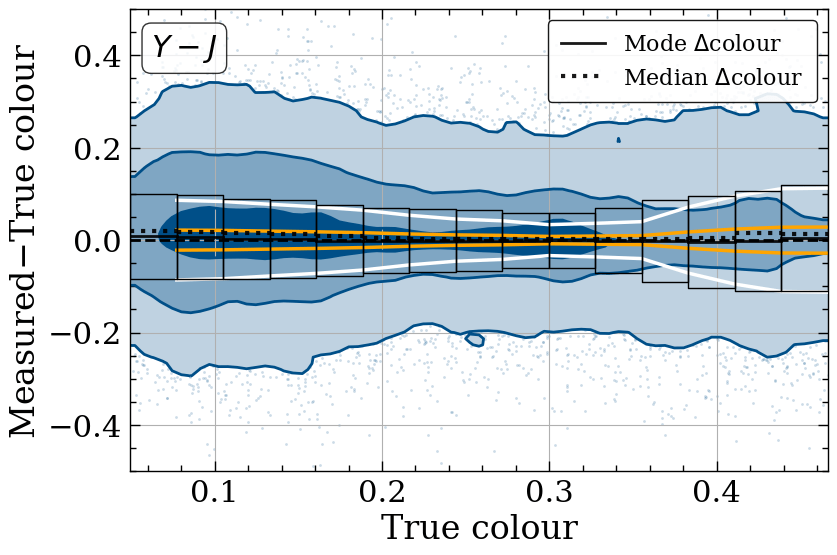
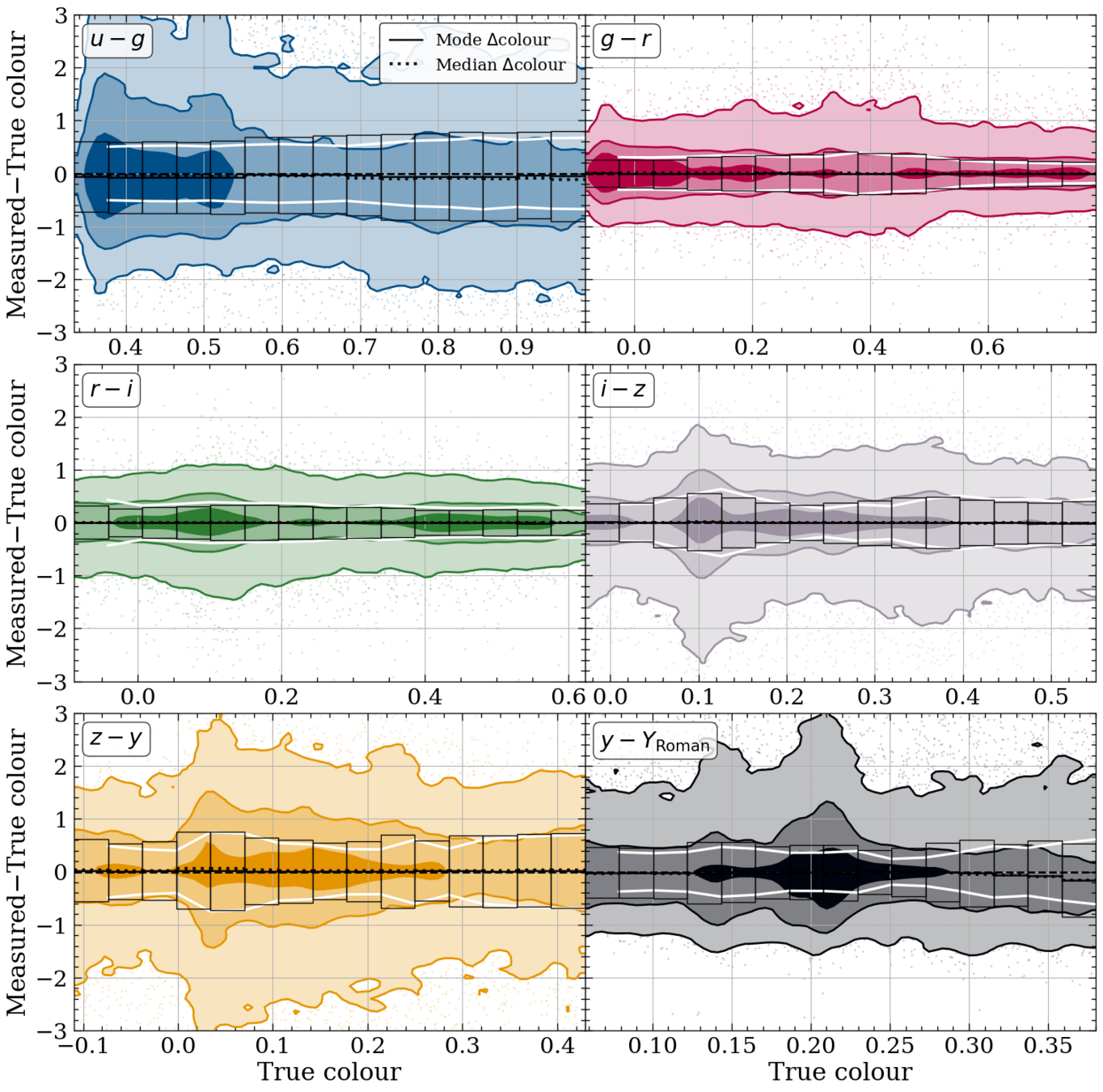
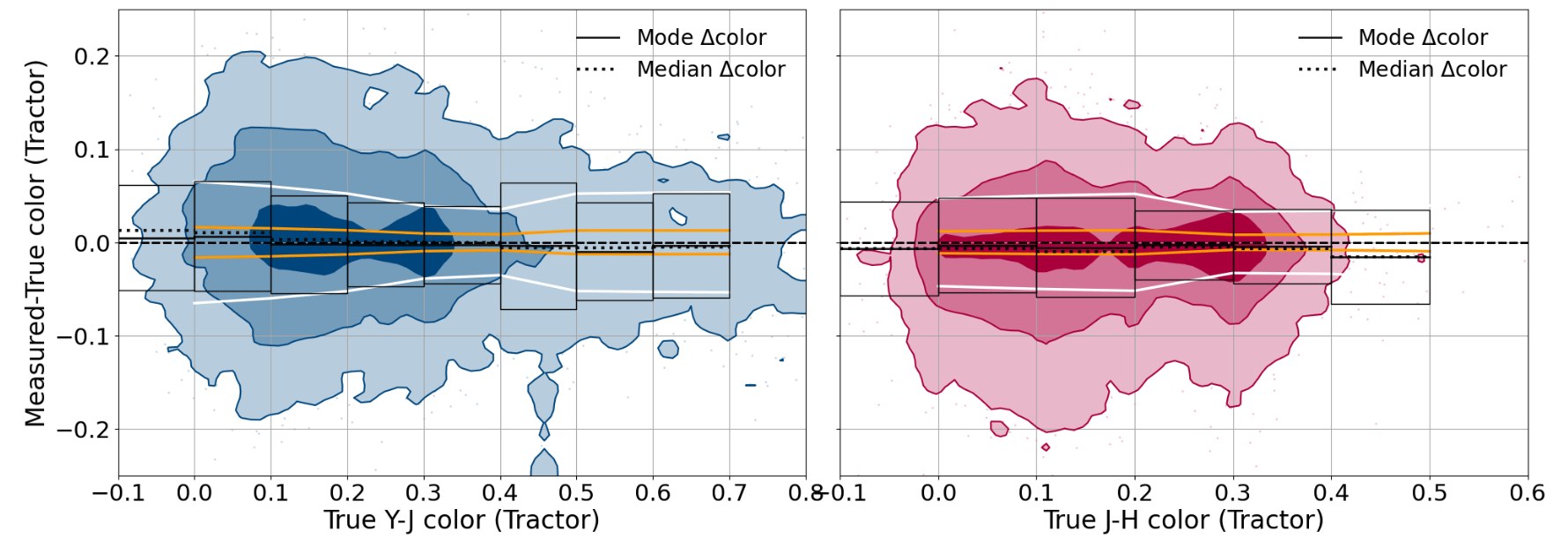
Performance: Roman Color

Out-of-the-box uncertainty

Our method

Color Error

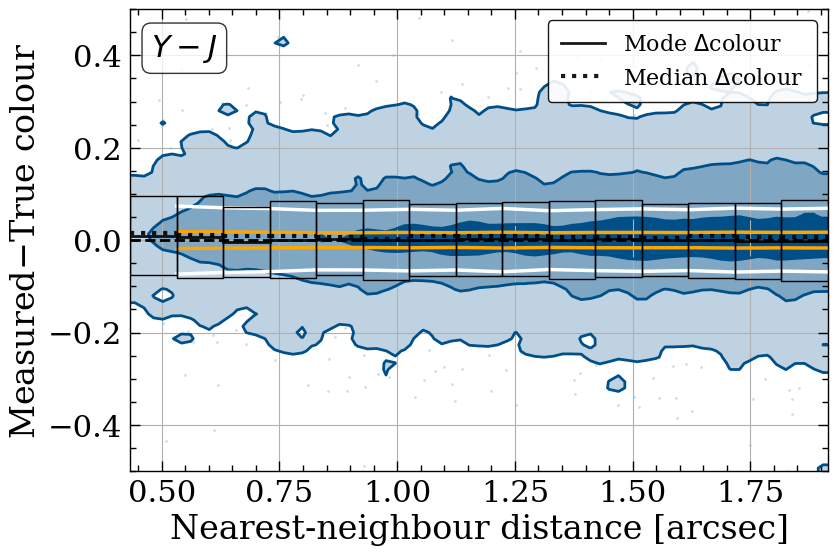
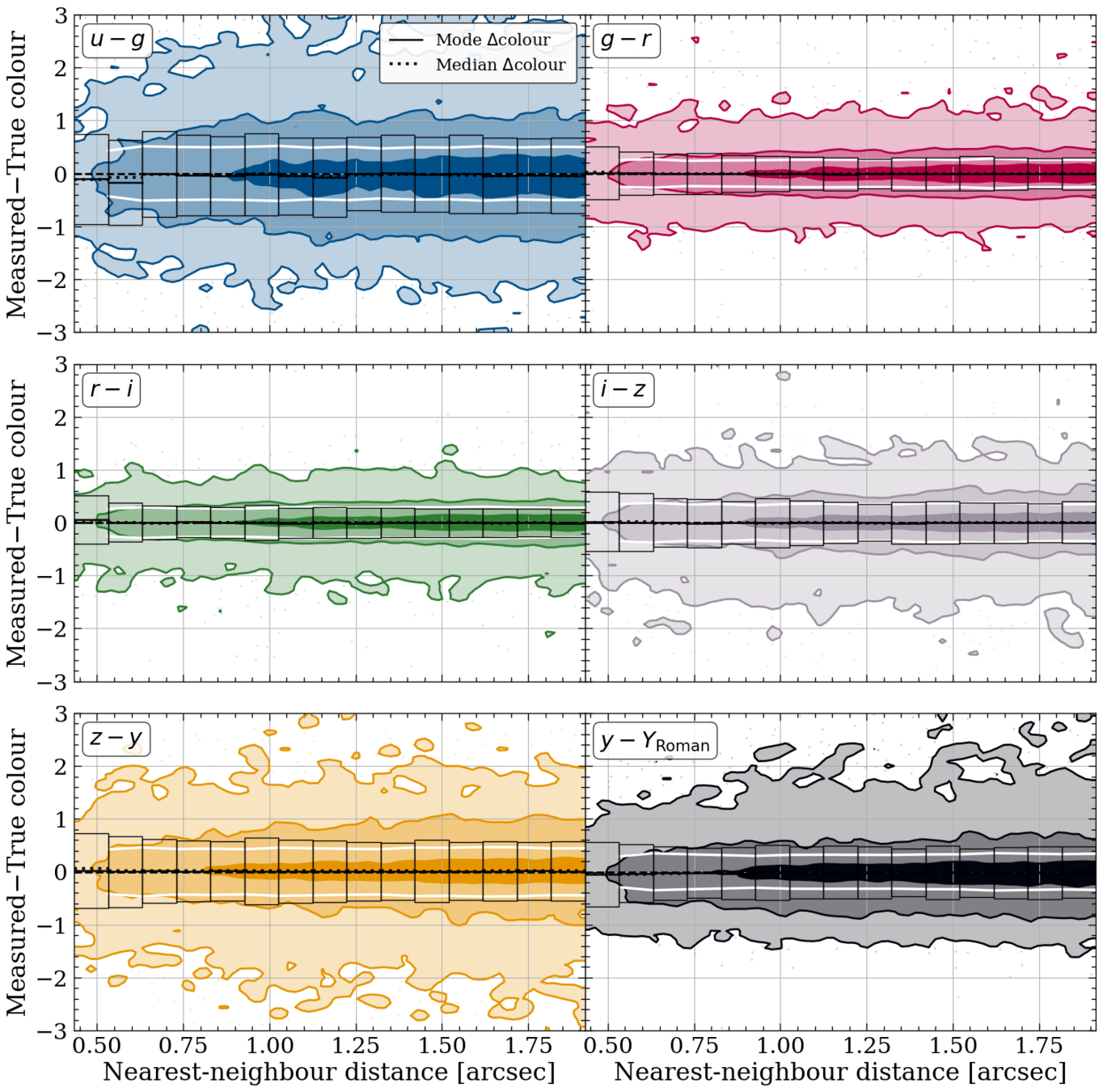
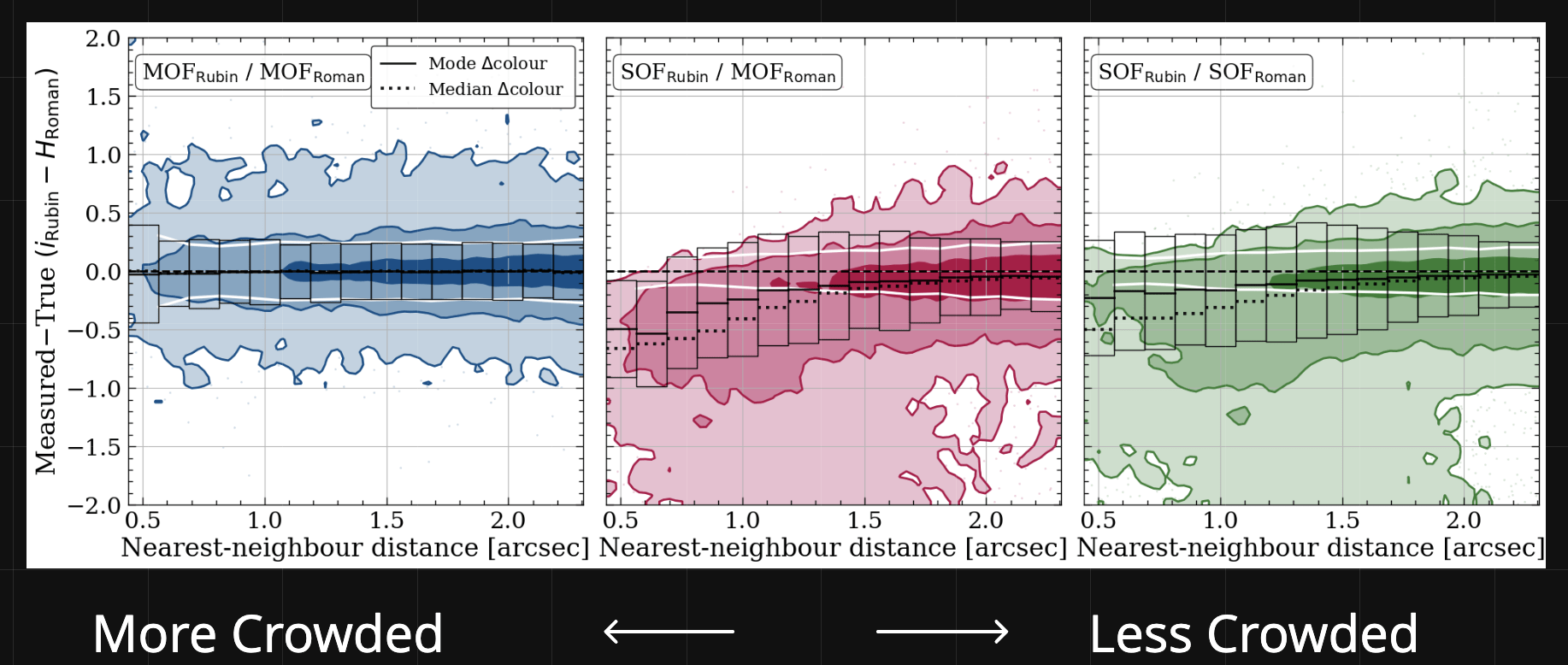
Performance: Crowdedness 

More Crowded

Less Crowded

Color Error

Forced photomety

  • Rubin coadd: Obtain the coadd image from the Butler, which contains WCS.
     
  • Forced photometry:
    • Take groups of Roman detections (in ra, dec). 
    • Rotate them to Rubin coadd using WCS (done in Tractor)
    • Vary their fluxes and positions with a position prior of 0.06" (0.3 of the pixel size). 
    • Jointly fit each group of galaxies. 

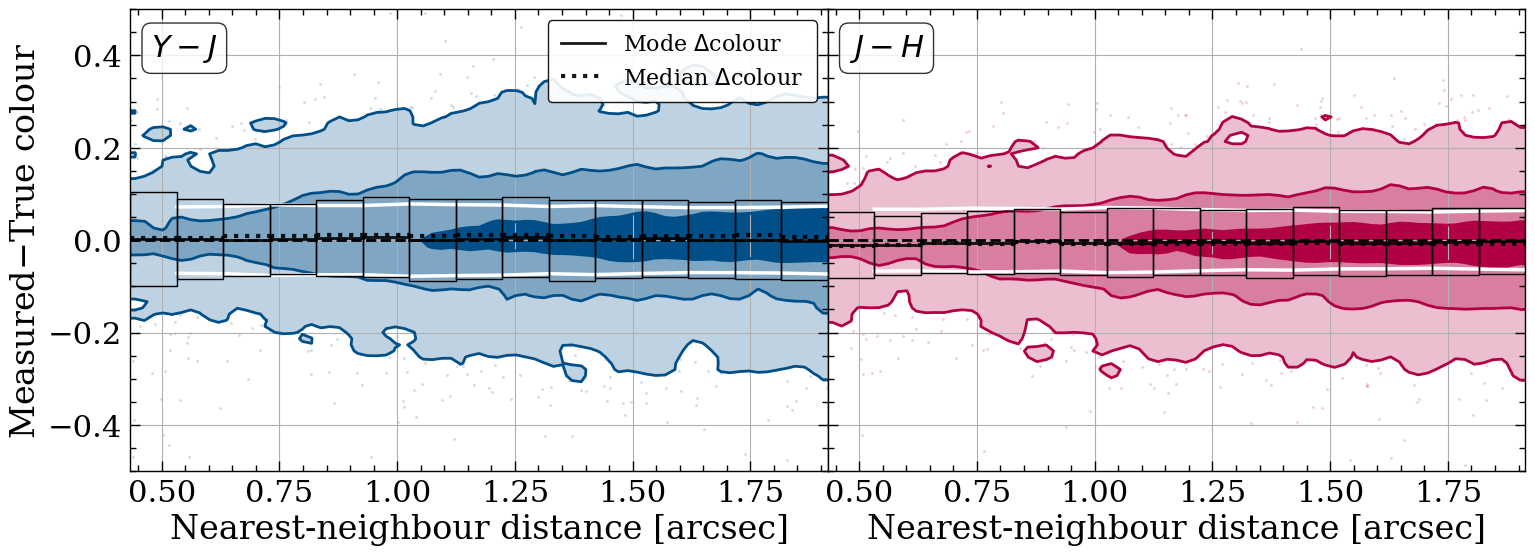
Performance: Forced Rubin Color

Color Error

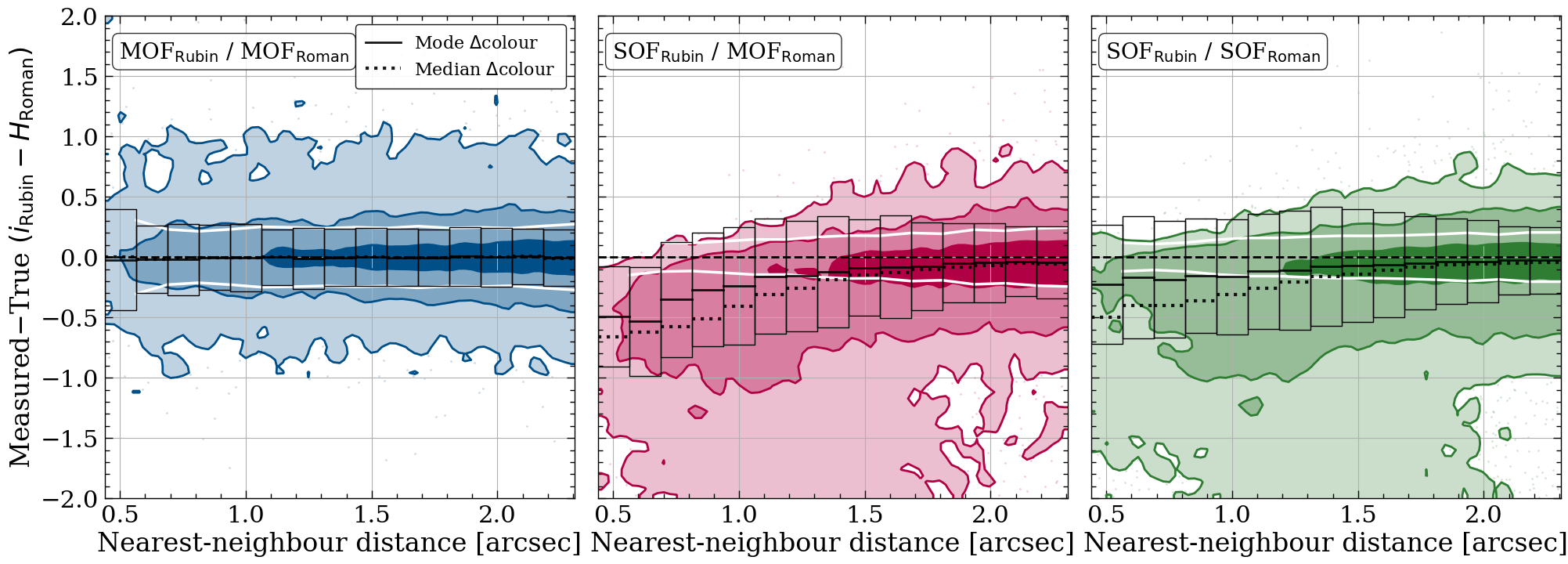
Performance: Crowdedness 

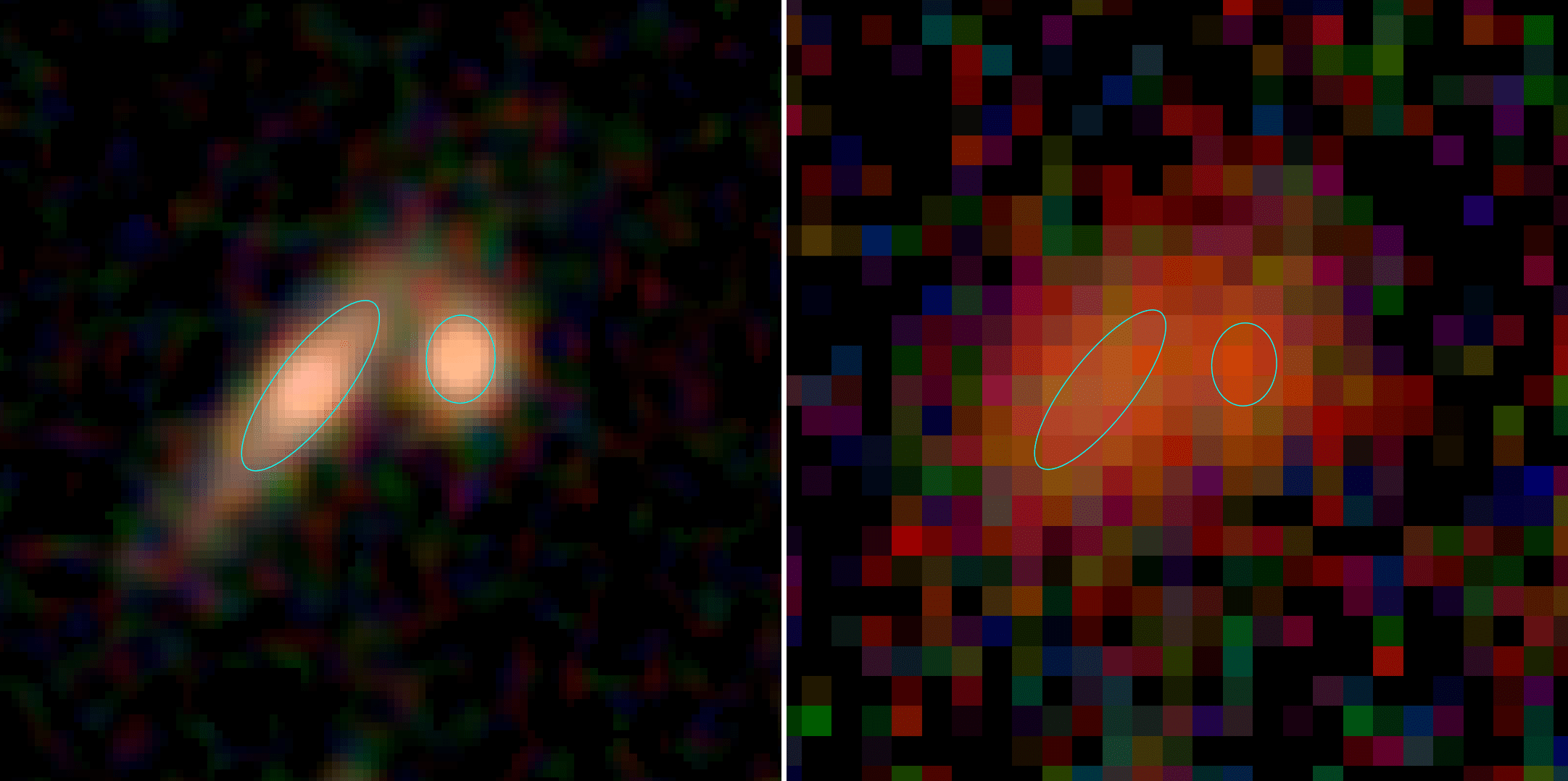
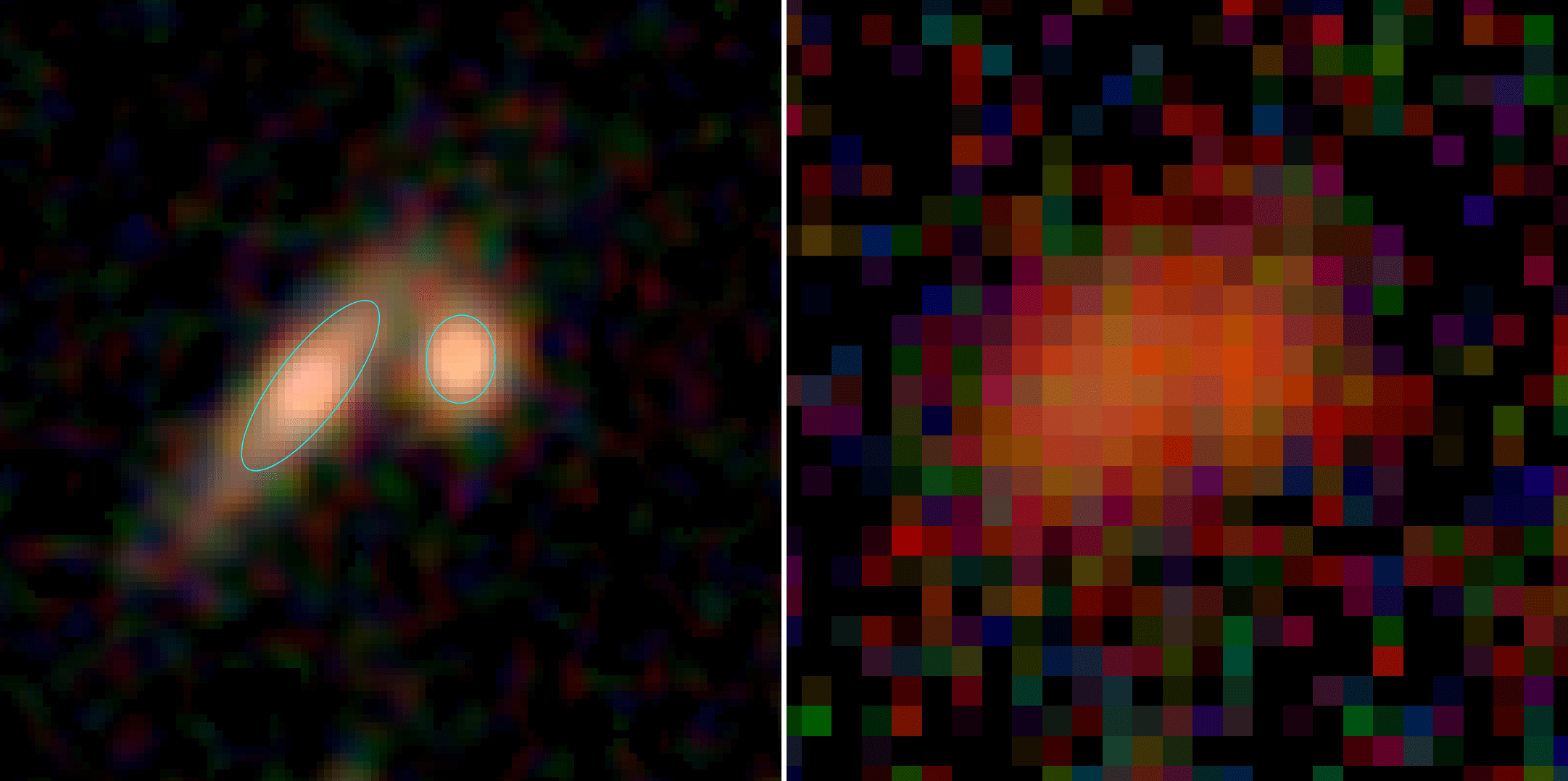
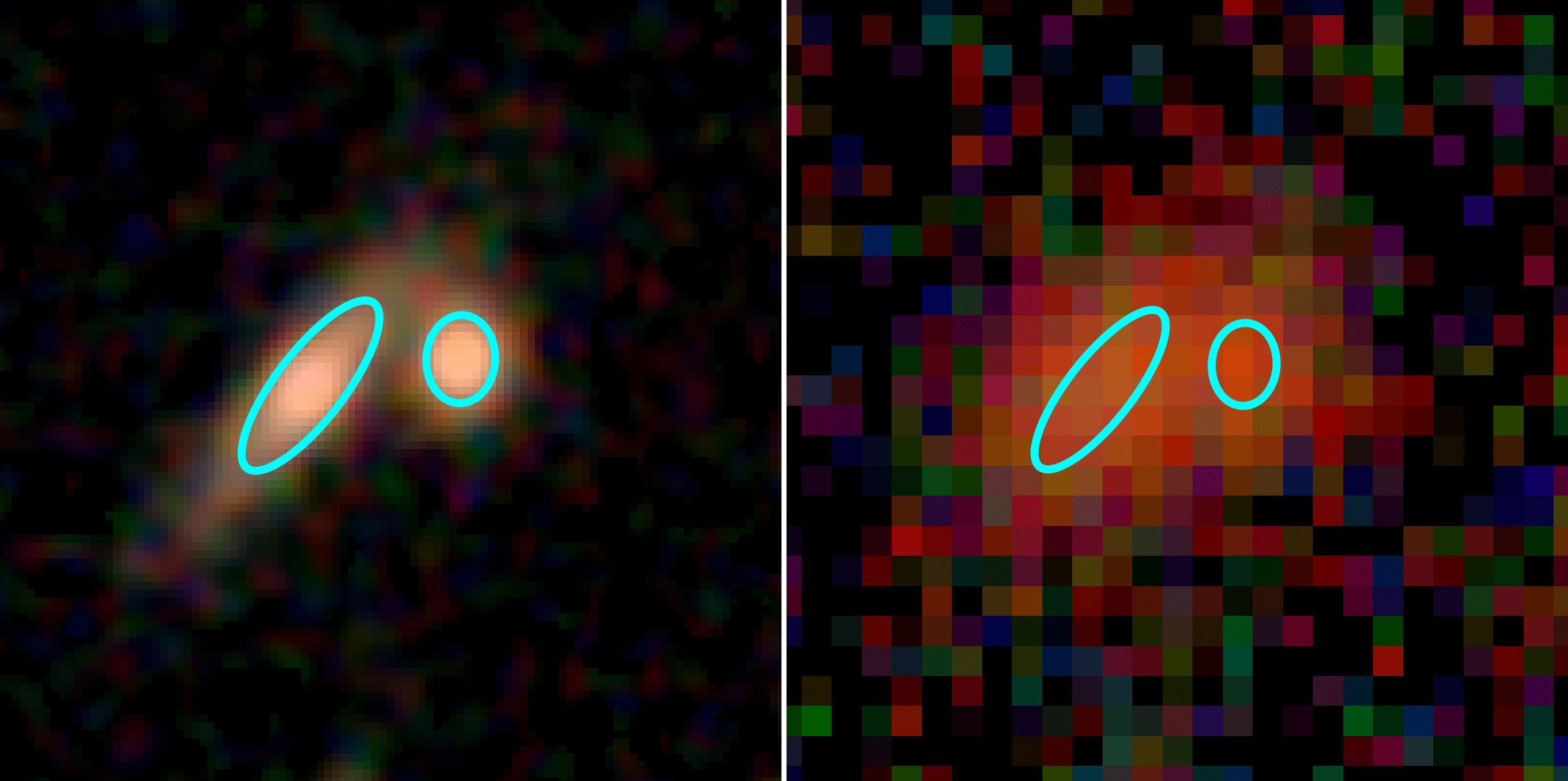
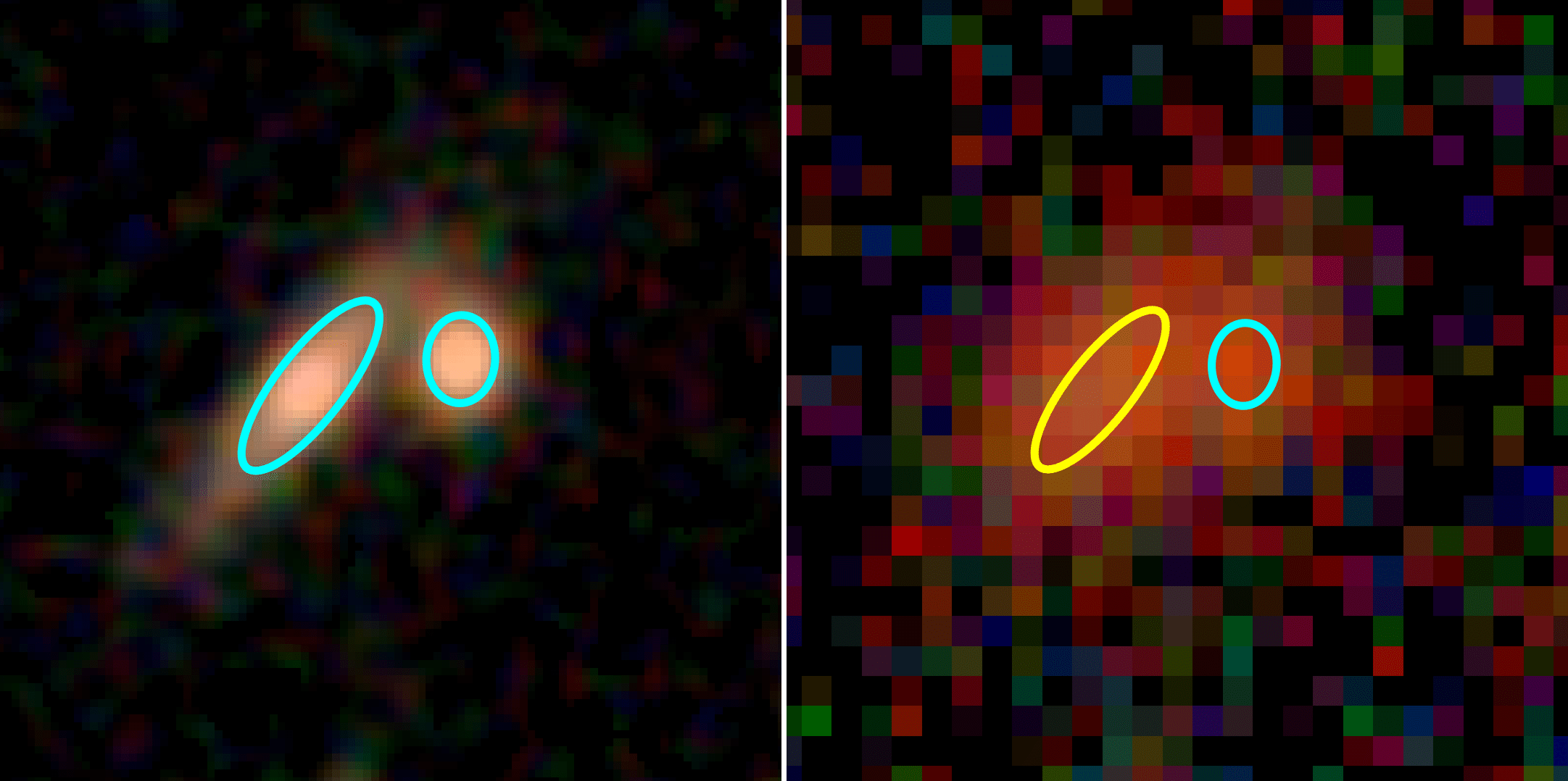
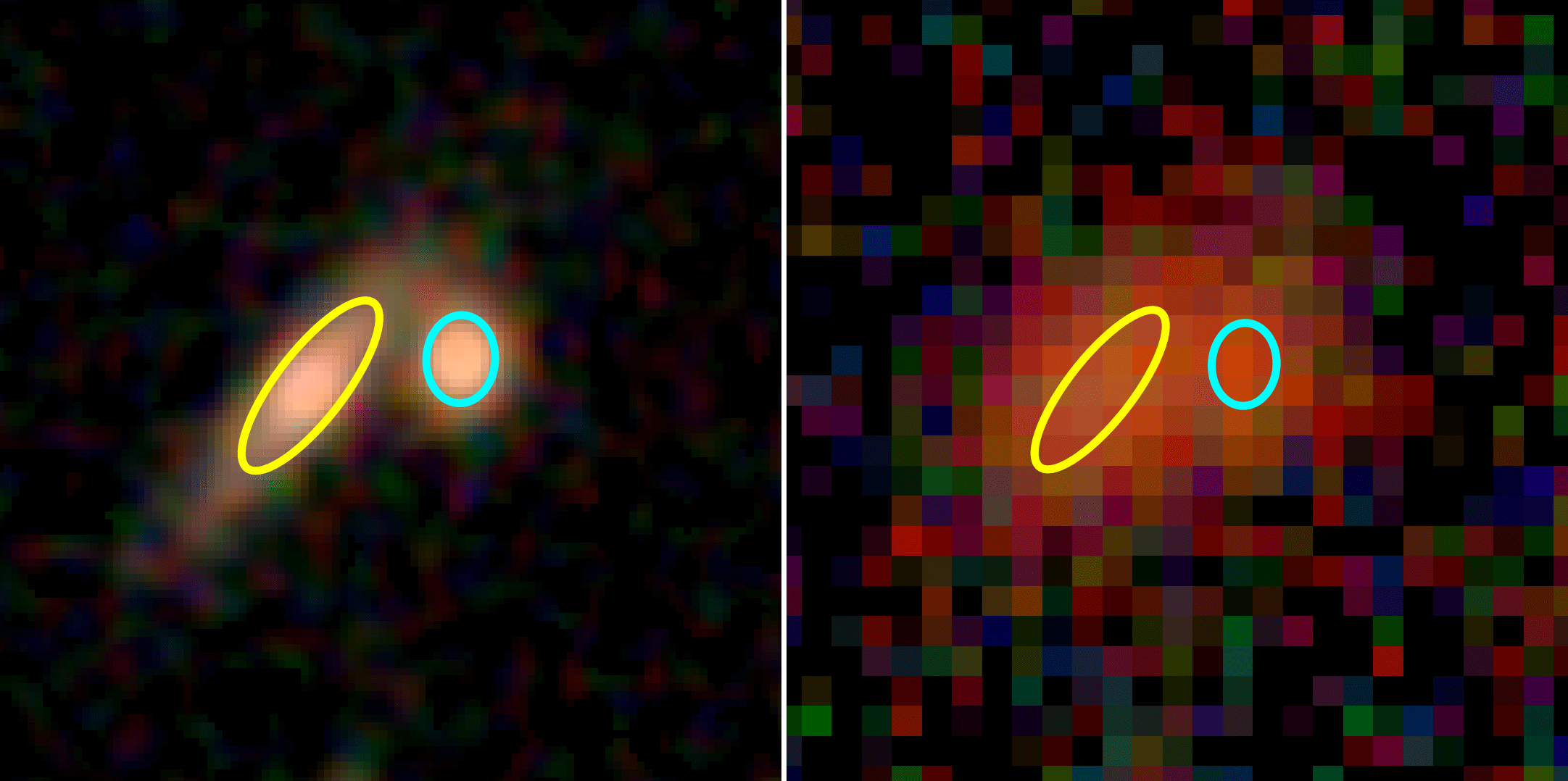
Do we need Multi-object fitting (MOF)?

Single object fitting (SOF) gives color almost as good as MOF

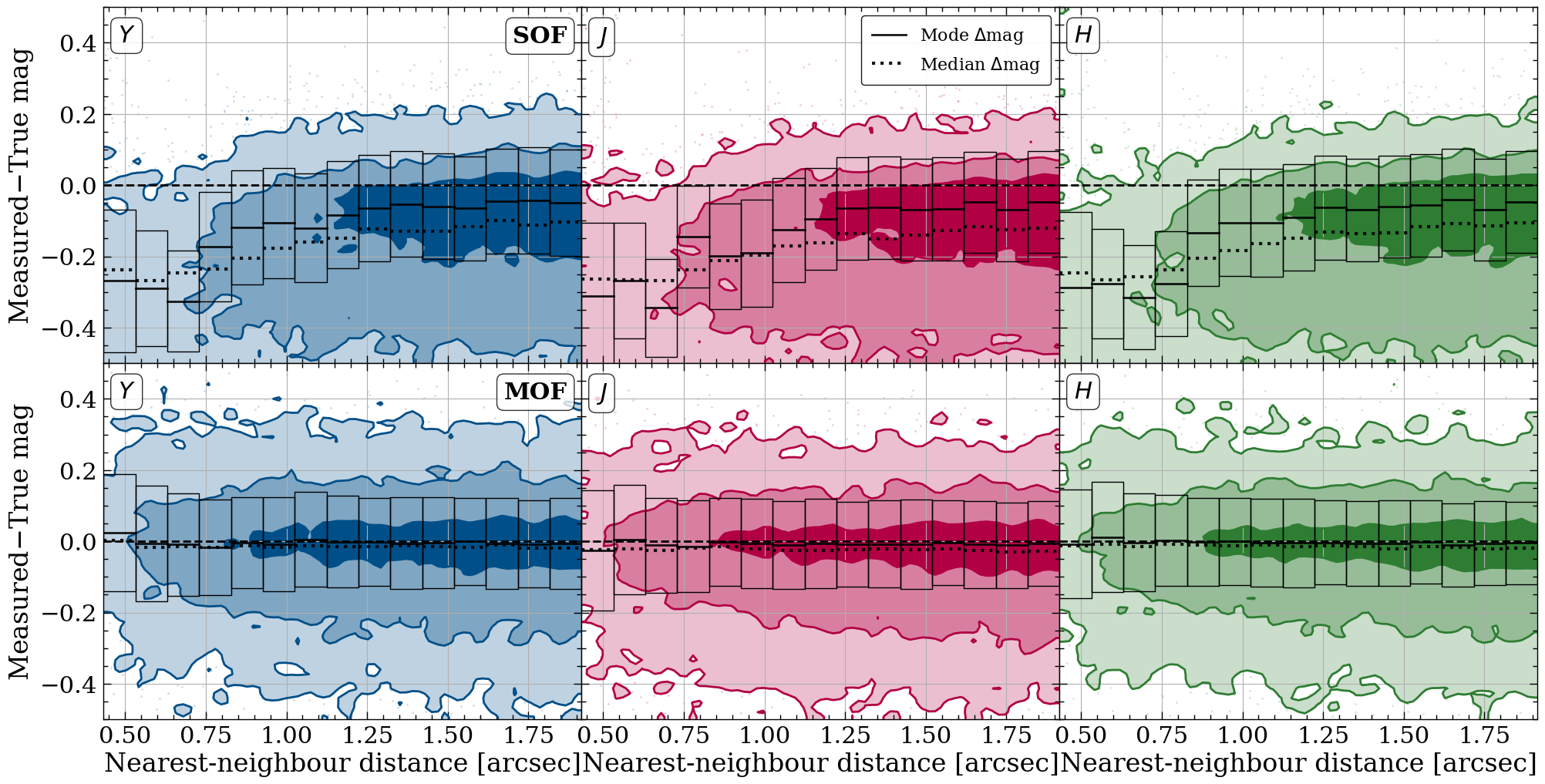
Do we need Multi-object fitting (MOF)?

Single object fitting (SOF) gives significantly worse photometry than  MOF in crowded region

Forced Rubin Color

Roman

Rubin


Roman

Rubin


Roman

Rubin


MOF

MOF

MOF

SOF

SOF

SOF

  • Multi-object fitting (MOF): Fit overlapping objects jointly
  • Single-object fitting (SOF): Fit each object seperately 

Default

Multi-object fitting vs Single object fitting

More Crowded

Less Crowded

Multi-object fitting vs Single object fitting

More Crowded

Less Crowded

Multi-object fitting vs Single object fitting

More Crowded

Less Crowded

  • Space-based weak lensing experiments in infrared.
    • Undersampled PSF: Pixel size and PSF size are comparable.  
    • Correlated noise.
       
  • Poor spec-z coverage.
     
  • Theory uncertainties: 
    Reshift evolution of IA and baryonic feedback from z=0-3. 

What are the unique challenges for Roman compared to other ground based lensing survey?

  • Space-based weak lensing experiments in infrared.
    • Undersampled PSF: Pixel size and PSF size are comparable.  
    • Correlated noise.
       
  • Poor spec-z coverage.
     
  • Theory uncertainties: 
    Reshift evolution of IA and baryonic feedback from z=0-3. 

What are the unique challenges for Roman compared to other ground based lensing survey?

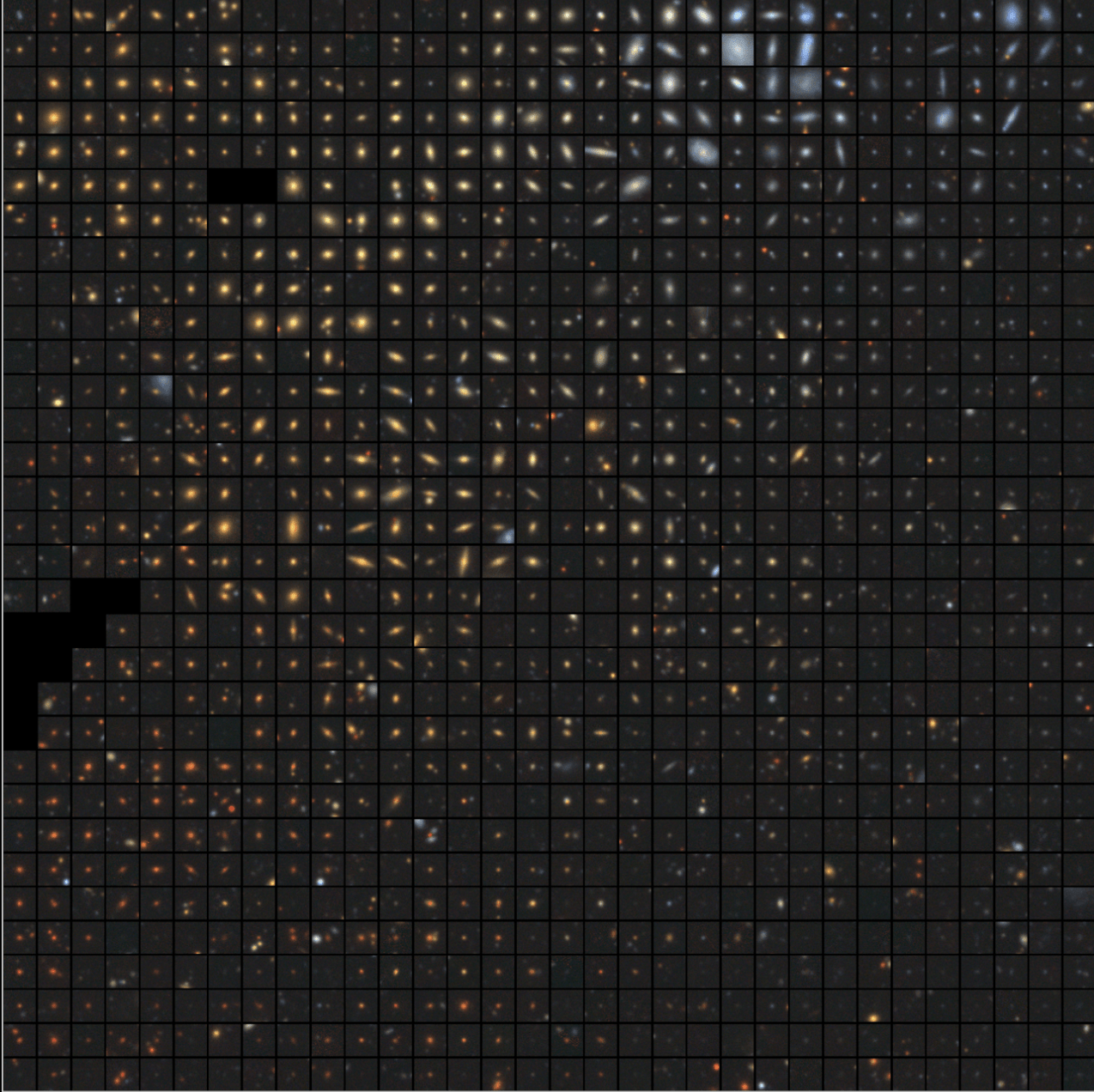
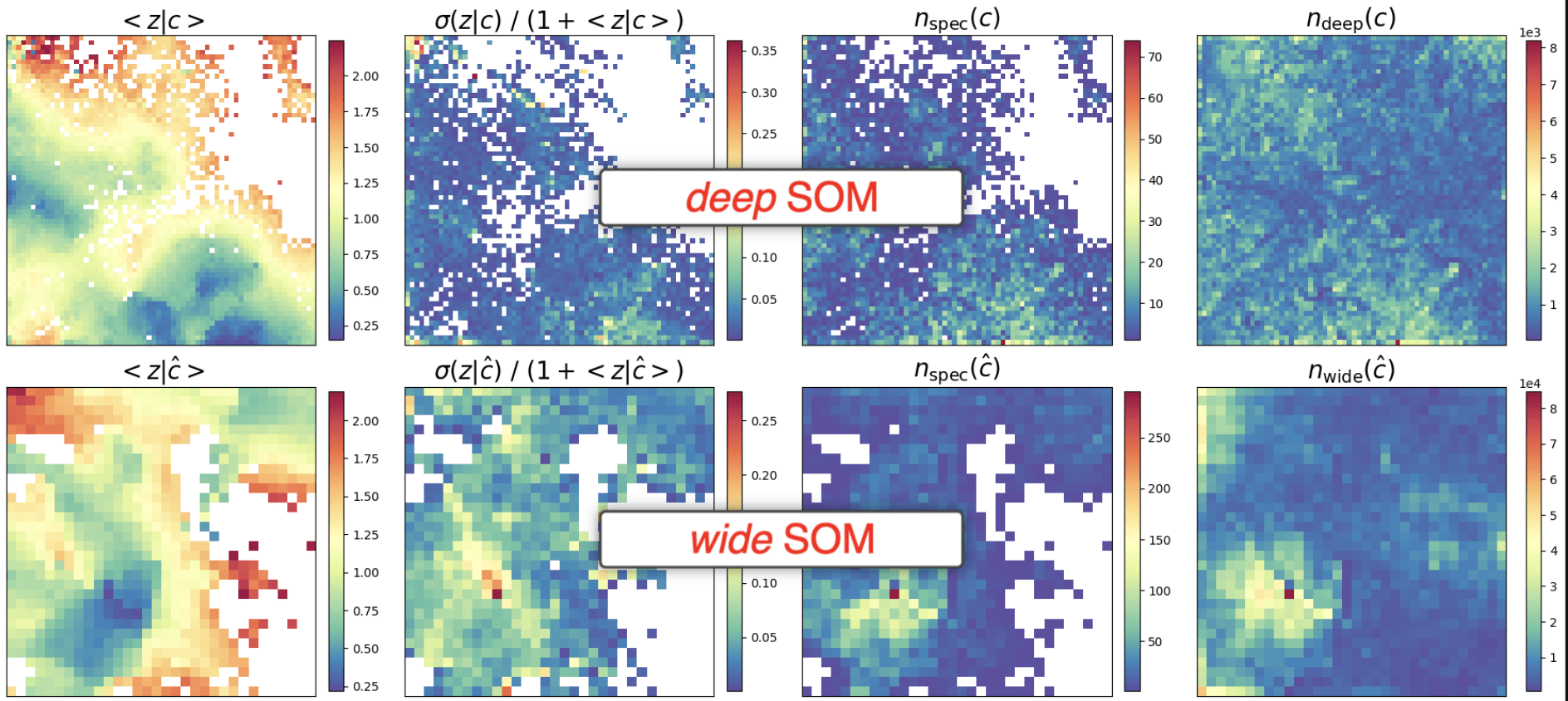
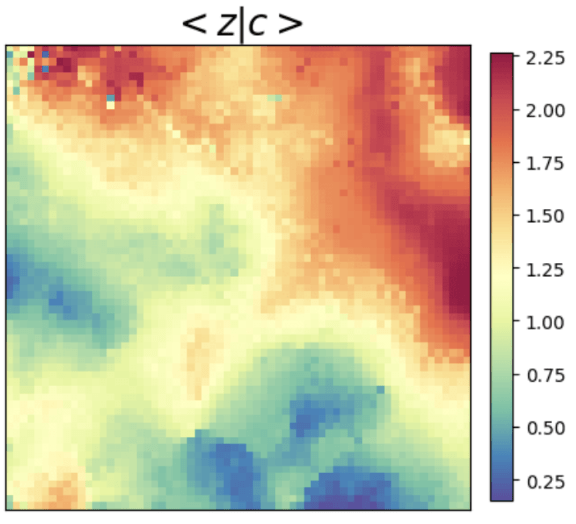
Photo-z algorithm SOM-PZ

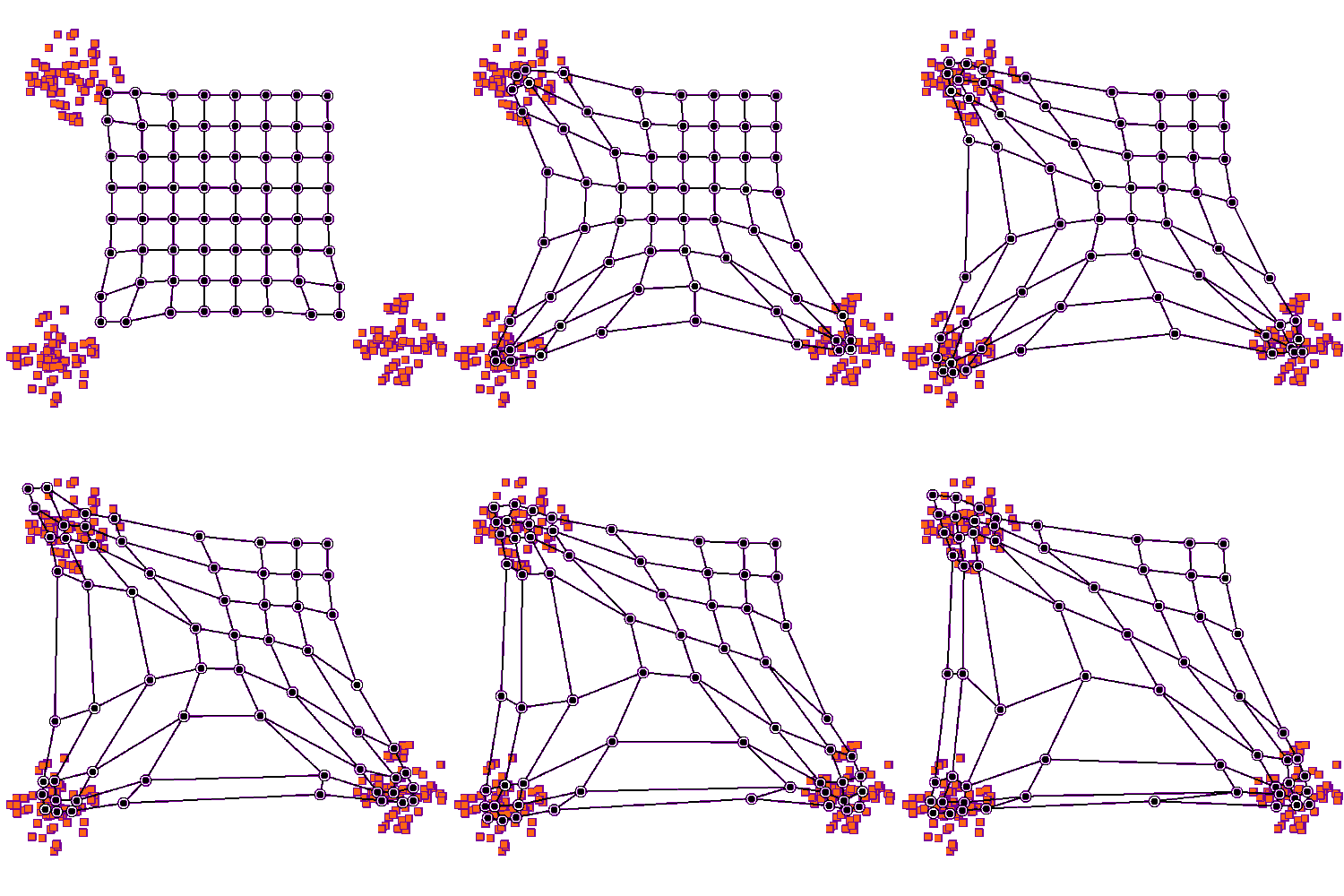
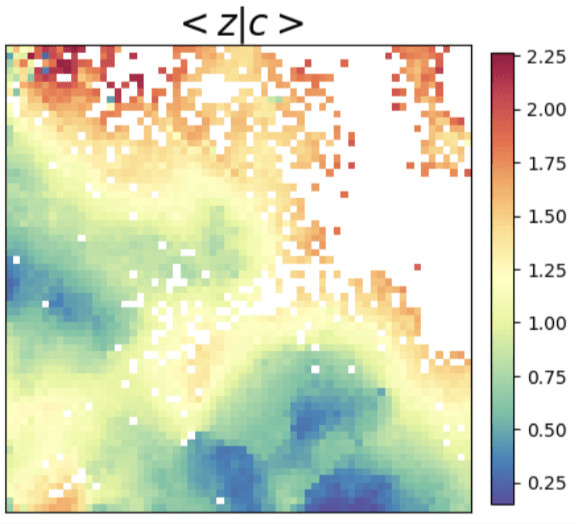
  • An unsupervised learning algorithm that characterizes galaxies into different phenotypes (cells).
     
  • Our ability to characterize galaxies depends on photometry.
     
  • Two cells are used, c and chat, corresponding to the Roman deep and medium tier. 

Photo-z algorithm SOM-PZ

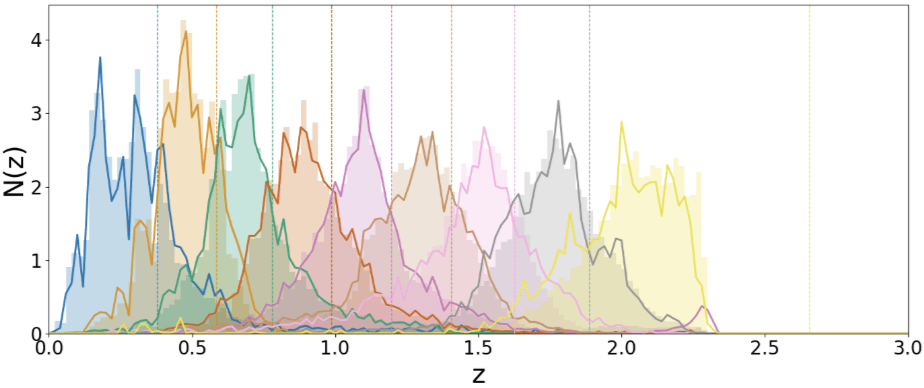
n(z | b) = \sum_{\hat{c} \in b}\sum_{c} p(z|c) p(c|\hat{c})p(\hat{c})

Each medium-Tier galaxy has a probability of being assigned to a wide SOM cell 

Photo-z algorithm SOM-PZ

n(z | b) = \sum_{\hat{c} \in b}\sum_{c} p(z|c) p(c|\hat{c})p(\hat{c})

Each medium-Tier galaxy has a probability of being assigned to a wide SOM cell 

Each deep-Tier galaxies has an estimation of redshift distribution

Photo-z algorithm SOM-PZ

n(z | b) = \sum_{\hat{c} \in b}\sum_{c} p(z|c) p(c|\hat{c})p(\hat{c})

Each medium-Tier galaxy has a probability of being assigned to a wide SOM cell 

Each deep-Tier galaxies has an estimation of redshift distribution

Transfer function obtained via galaxy injections

Photo-z algorithm SOM-PZ

n(z | b) = \sum_{\hat{c} \in b}\sum_{c} p(z|c) p(c|\hat{c})p(\hat{c})

Each medium-Tier galaxy has a probability of being assigned to a wide SOM cell 

Each deep-Tier galaxies has an estimation of redshift distribution

Transfer function through galaxy injections

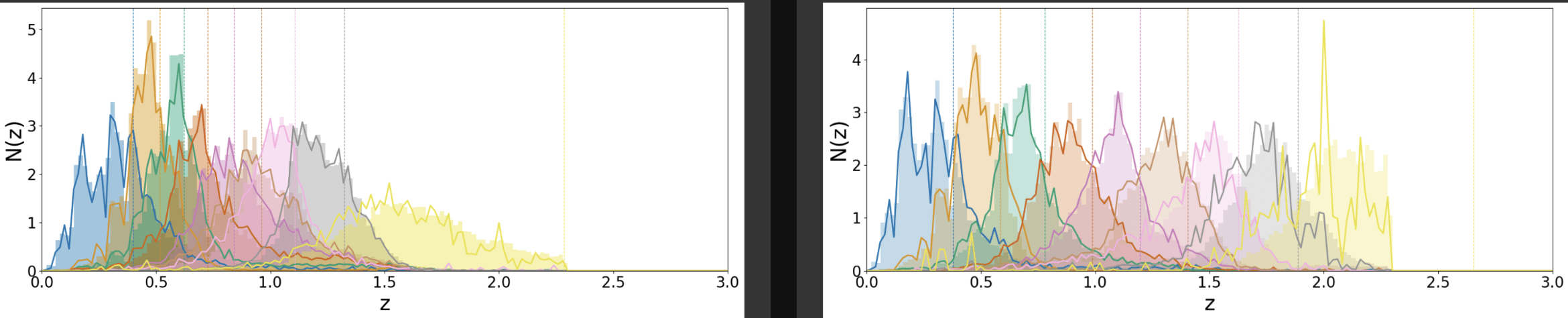
What it looks like in simulations

Challenges

19% wide and 18% deep galaxies are in cells with no spec-z samples

Challenges

19% wide and 18% deep galaxies are in cells with no spec-z samples

Our solution

deep SOM

wide SOM

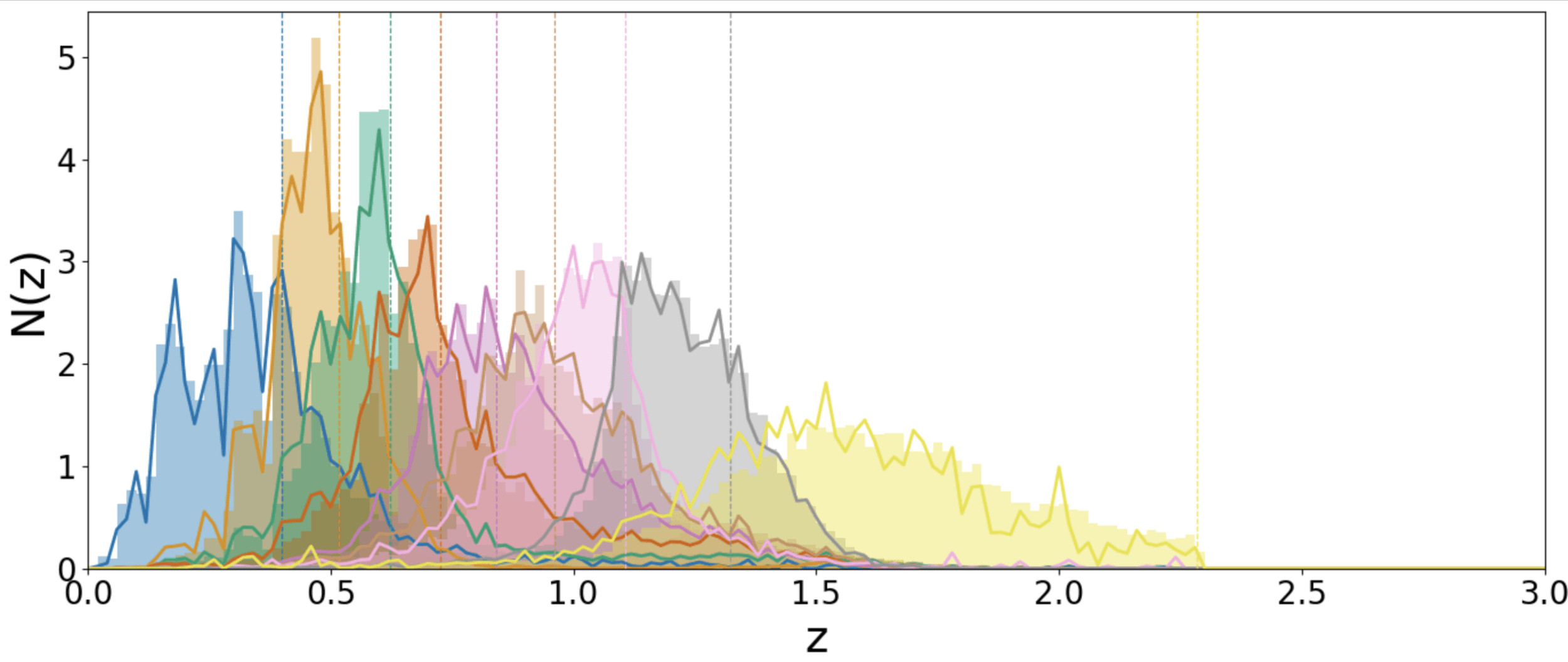
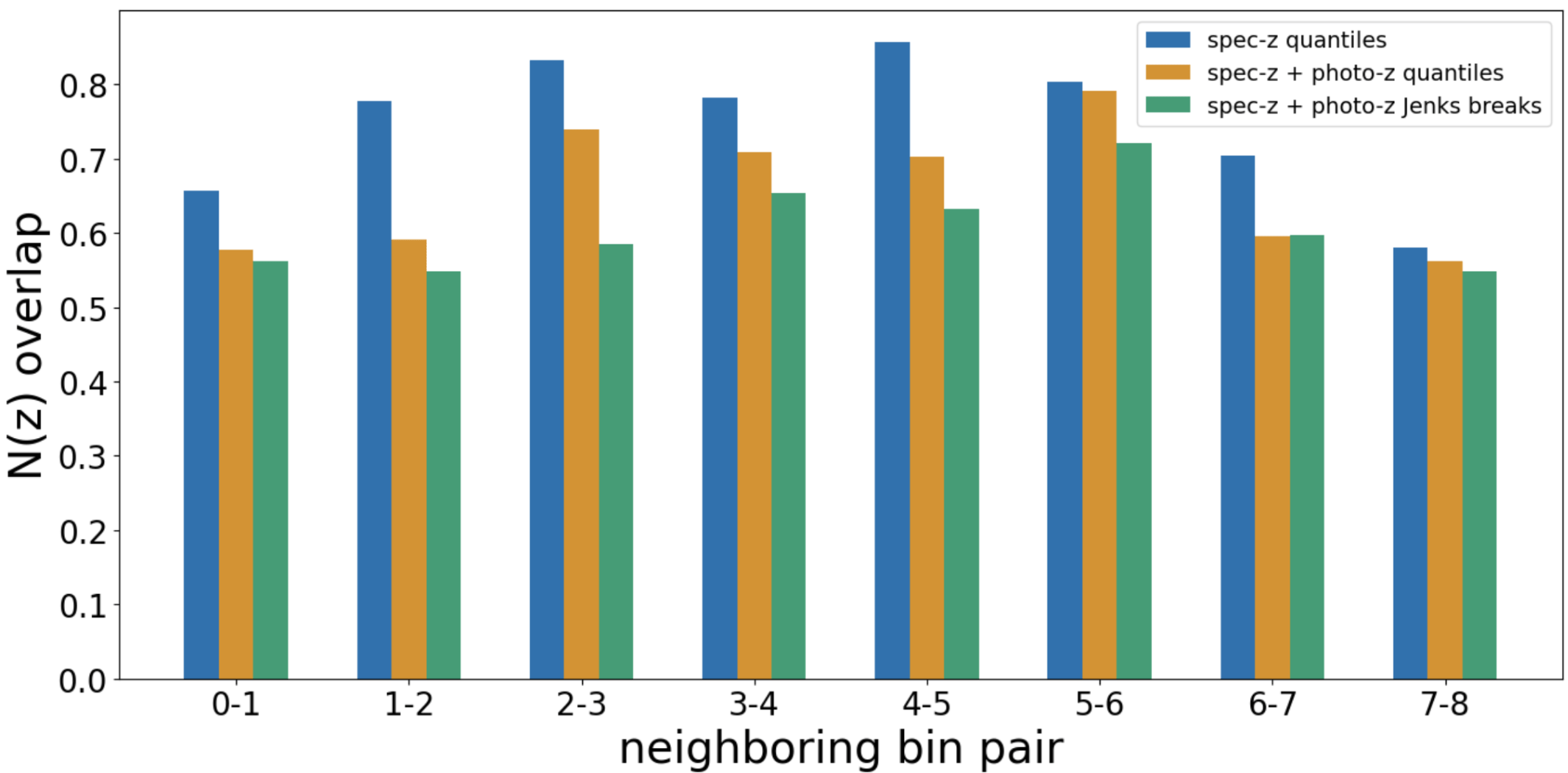
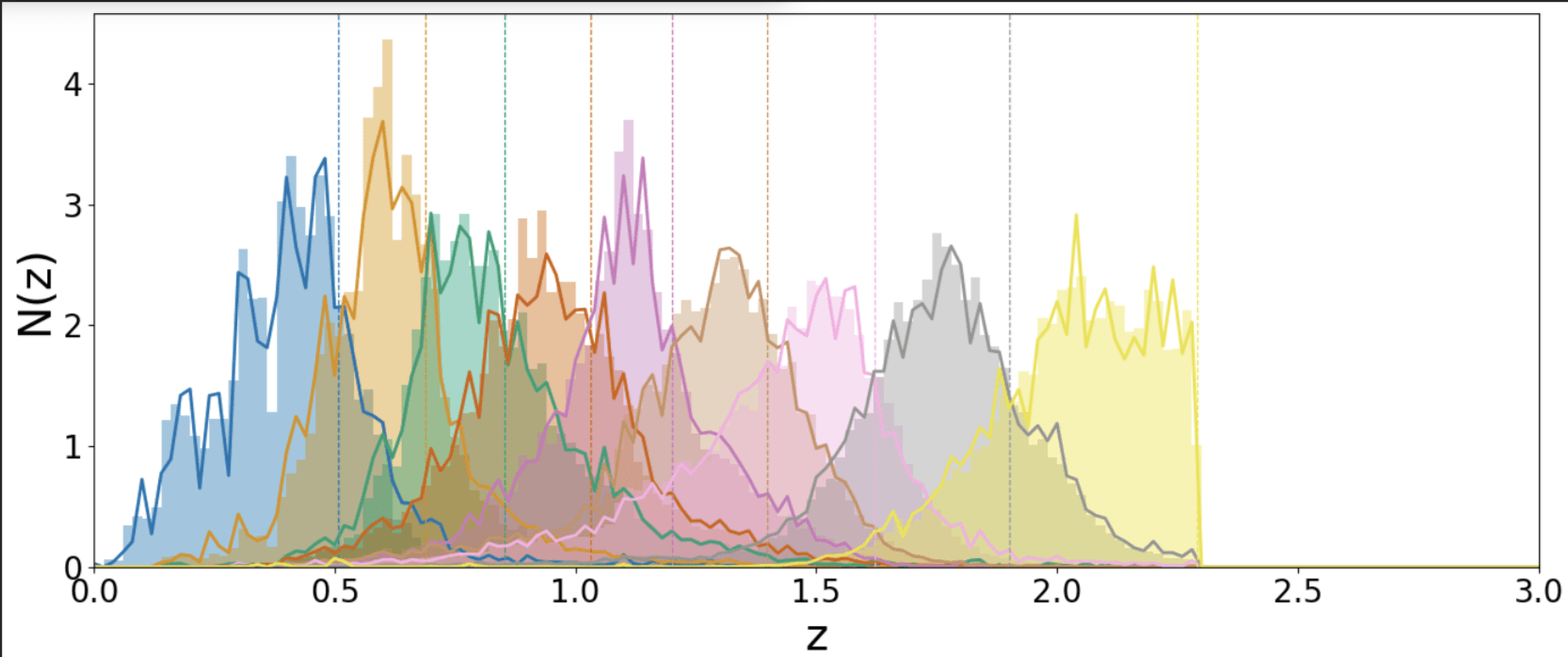
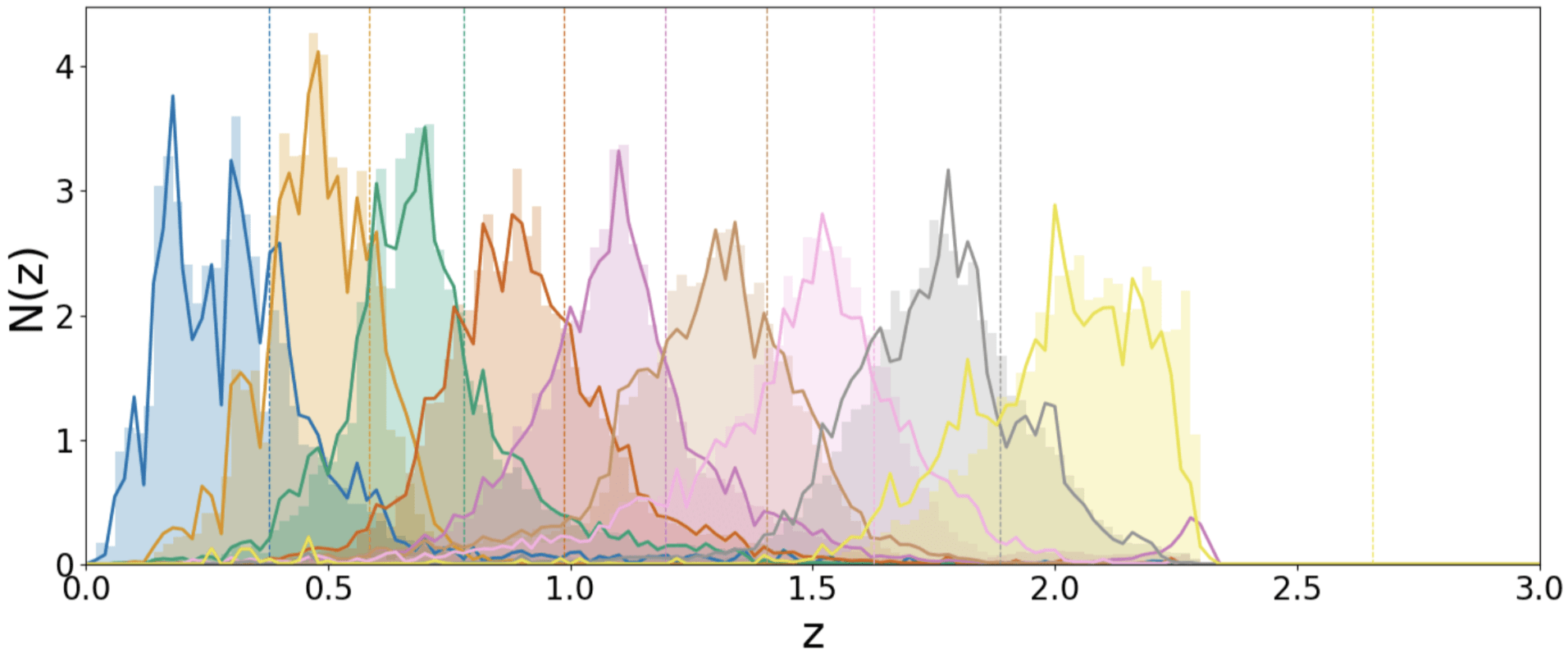
  • Bin assignment: majority bin assignment of spec-z + photo-z samples, for all cells
  • Bin edges: spec-z + photo-z Jenks natural breaks

Our solution

deep SOM

wide SOM

  • Bin assignment: majority bin assignment of spec-z + photo-z samples, for all cells
  • Bin edges: spec-z + photo-z Jenks natural breaks

Original binning

New binning

Our solution

deep SOM

wide SOM

  • Bin assignment: majority bin assignment of spec-z + photo-z samples, for all cells
  • Bin edges: spec-z + photo-z Jenks natural breaks

Our solution

deep SOM

wide SOM

New binning

  • Interpolation between cells?

Our solution

deep SOM

wide SOM

New binning

  • Interpolation between cells?

SOM does not preserve distance

Our solution

deep SOM

wide SOM

New binning

  • Interpolation between cells?

UMAP + Normalizing flow interpolation

deep SOM

Umap interp

New binning
+ UMAP interp

Impacts

If we spend many many nights on PFS to get representative spec-z. 

If we use the existing spec-z for Roman, we will have to throw away 19% of the galaxy samples.


Impacts

If we spend many, many nights on PFS to get a representative spec-z.

If we try to advance our algorithms...

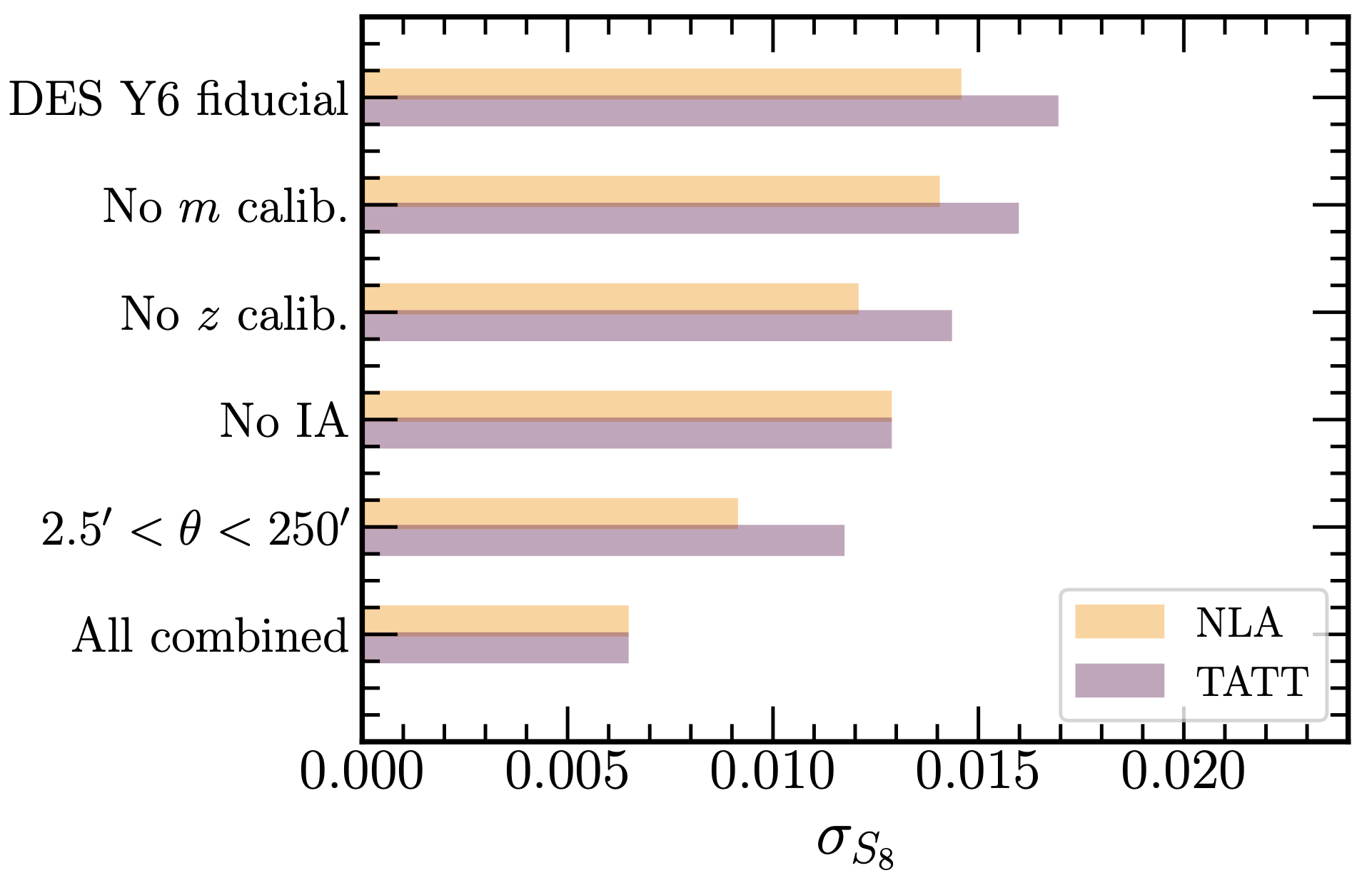
Why should we care?

DES+26

Text

If we can use all the scales, we could gain about 50% of the constraining power. 

DES fiducial

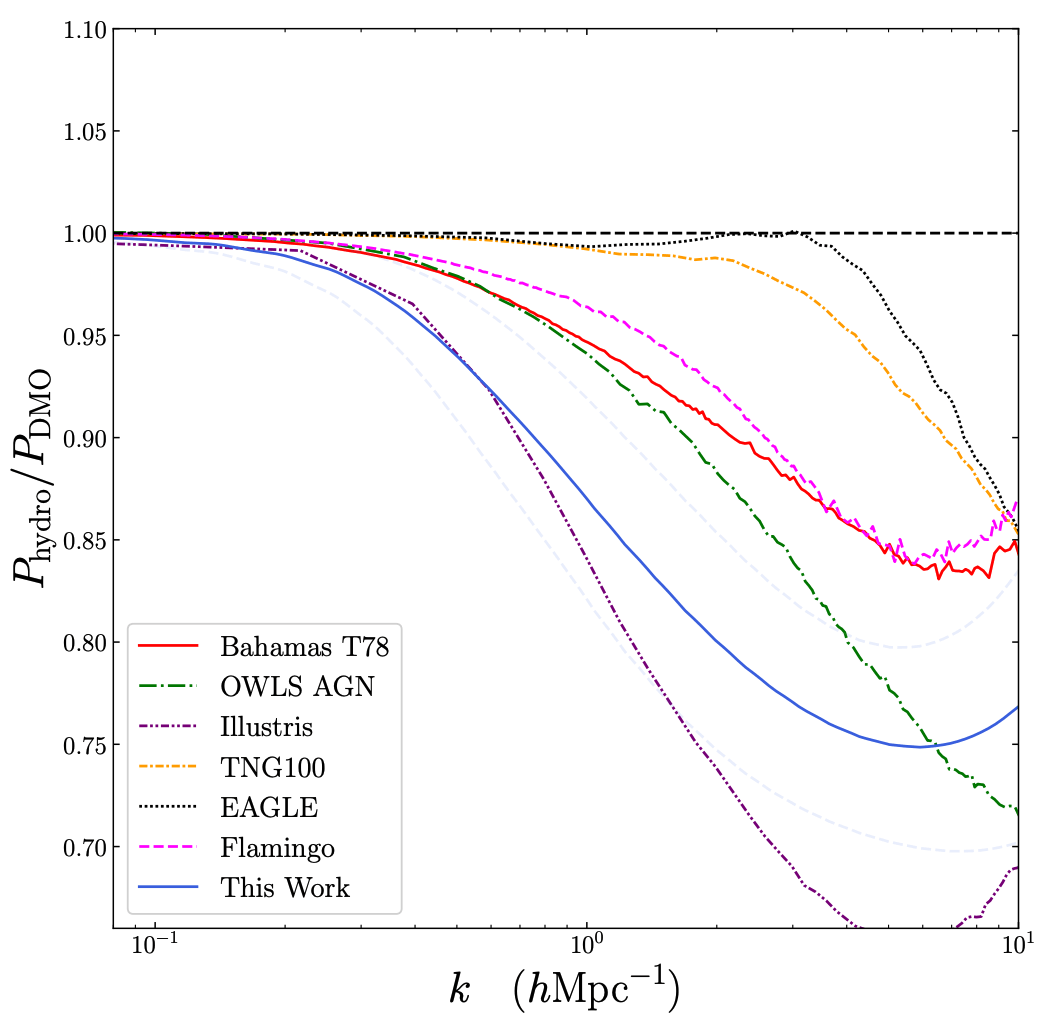
Status:

Dalal+ (incl. CT) 26

  • Simulations give a wide range of predictions.
  • Data seems to prefer a stronger feedback scenario. 


Status

  • Lots of data exist and have been used to constrain feedback. Here are a very incomplete list:

    • WL: Ario+22, Anbajagane+25, DES+26, Xu+25.

    • tSZxtSZ: Raghunathan+26, Chaubai+26, Efstathiou&McCarthy25.

    • tSZxothers: Sanchez+22, Dalal, CT+25, Pandey+25.

    • kSZ x others: Hadzhiyska+24, Bigwood+25, Ropper+25, Hotinli, Smith, Ferraro 25.

    • X-ray: Kovac+25, Eckert+25, Siegel+25, Zhang+26.

    • FRB: Reischke & Hazstotz25, Wang+25.

    • QSO absorption: Chen & Zahedy26, Qu+23, 24, Zahedy+19.

Status

  • The modeling landscape: 

    • Baryonification-flavored models that parametrize the gas distribution around halos at a given redshift.
      Schneider+19,25, Arico+20, Anbajagane+24, Osato+23, Williams+23, Semboloni+11,13, Fedeli+14, Debackere+20, Mead+20, Giri+21, Pandey (incl. CT)+24, and many more...
       

    • Hydrodynamic simulations.

      McCarthy+17, Schaller+25, Springel+18, Quataert&Hopkins+25, and many, many more... ​

What is missing?

  • Most of the baryon probes involve galaxies. 
    • Clusters rely on galaxies for redshift and selections.
    • kSZ stacks on galaxy samples. 
    • FRB needs to be cross-correlated with galaxies if DM (host) is unknown.
       
  • Weak lensing is sensitive to a broad redshift range.
    • Future weak lensing surveys (such as Roman) will be sensitive to z=0-3. 

What is missing?

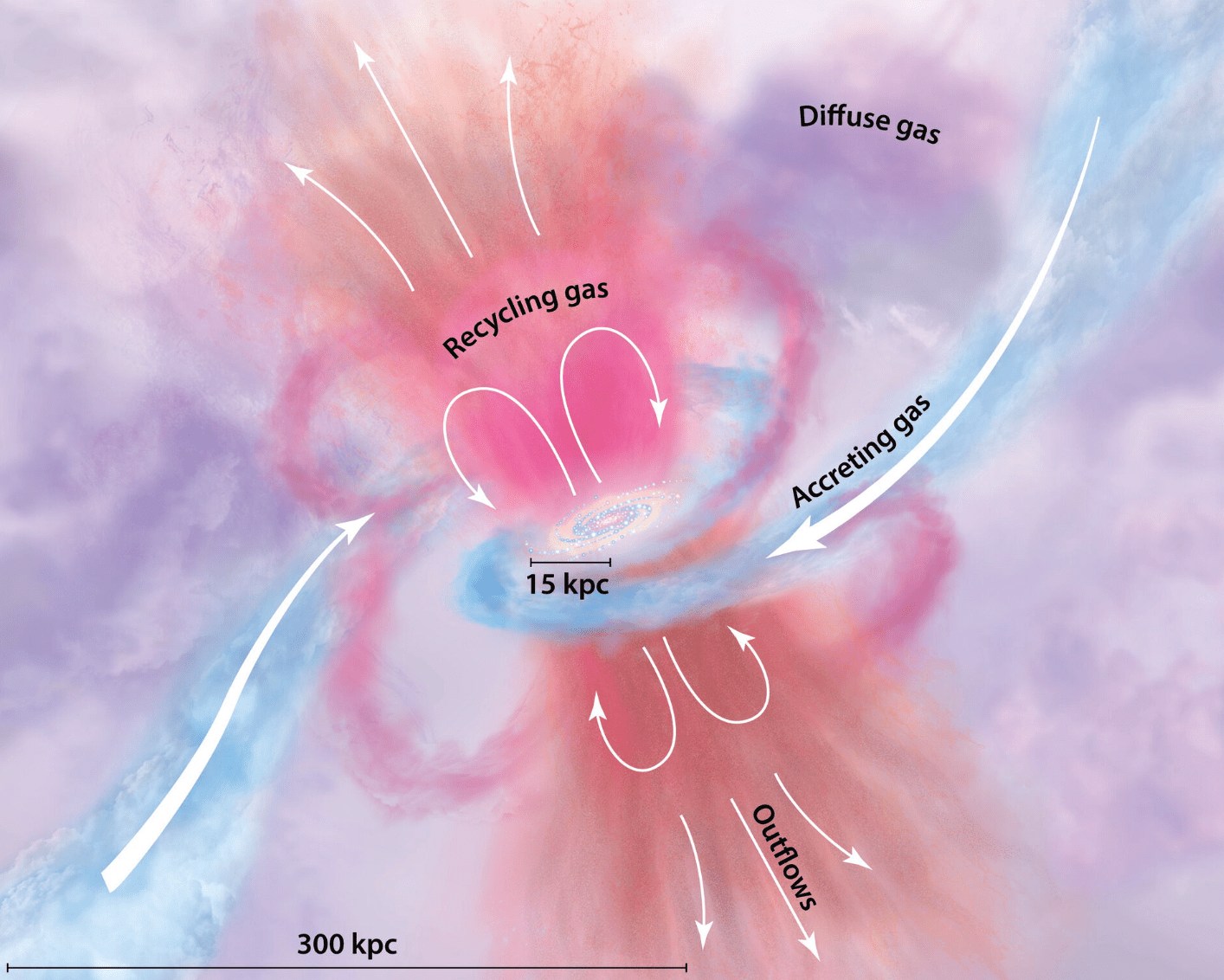
Tumlinson+17

Cold gas around galaxies is the fuel of star formation.

Galaxy properties and gas content should be correlated.

What we need for Roman?

A model that self-consistently describes galaxy evolution and gas properties across z=0-3.

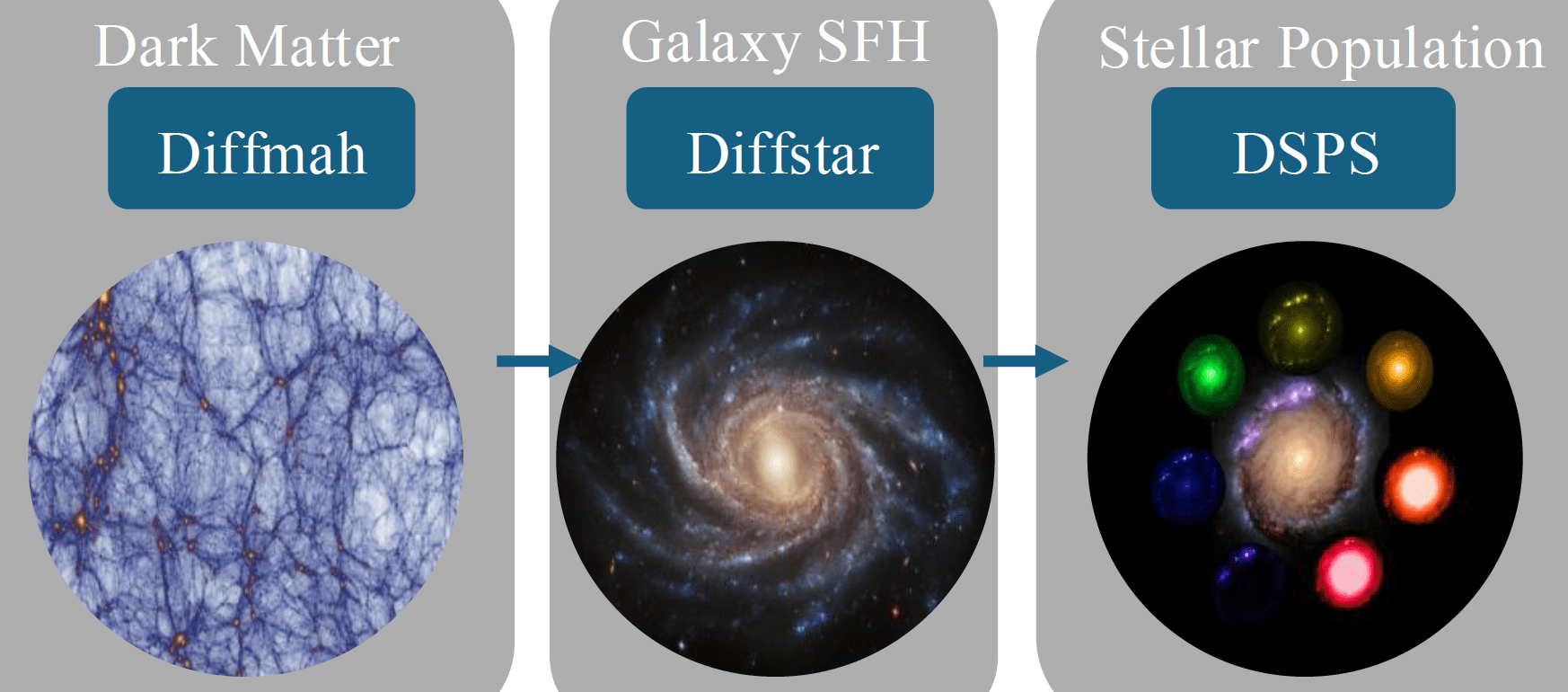
Diffsky model

To+ in prep (with diffsky team)

Galaxies:
Jax-based galaxy model

Alarcon+23, Hearin+21

Diffsky model

To+ in prep (with diffsky team)

Galaxies:
Jax-based galaxy model

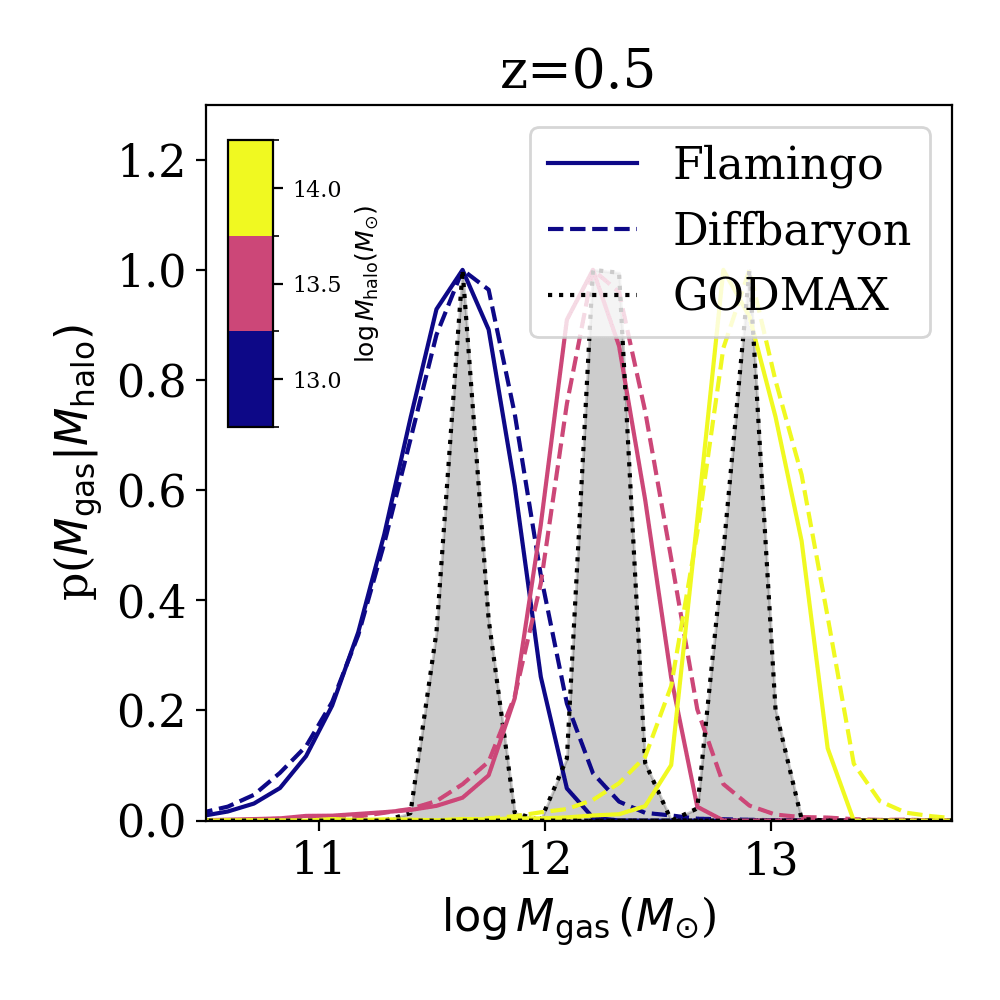
Godmax: (Pandey+ (incl. CT) 24)

Baryonification-flavored gas models implemented in Jax.

Diffbaryon

Alarcon+23, Hearin+21

Diffbaryon model

To+ in prep (with diffsky team)

Preliminary

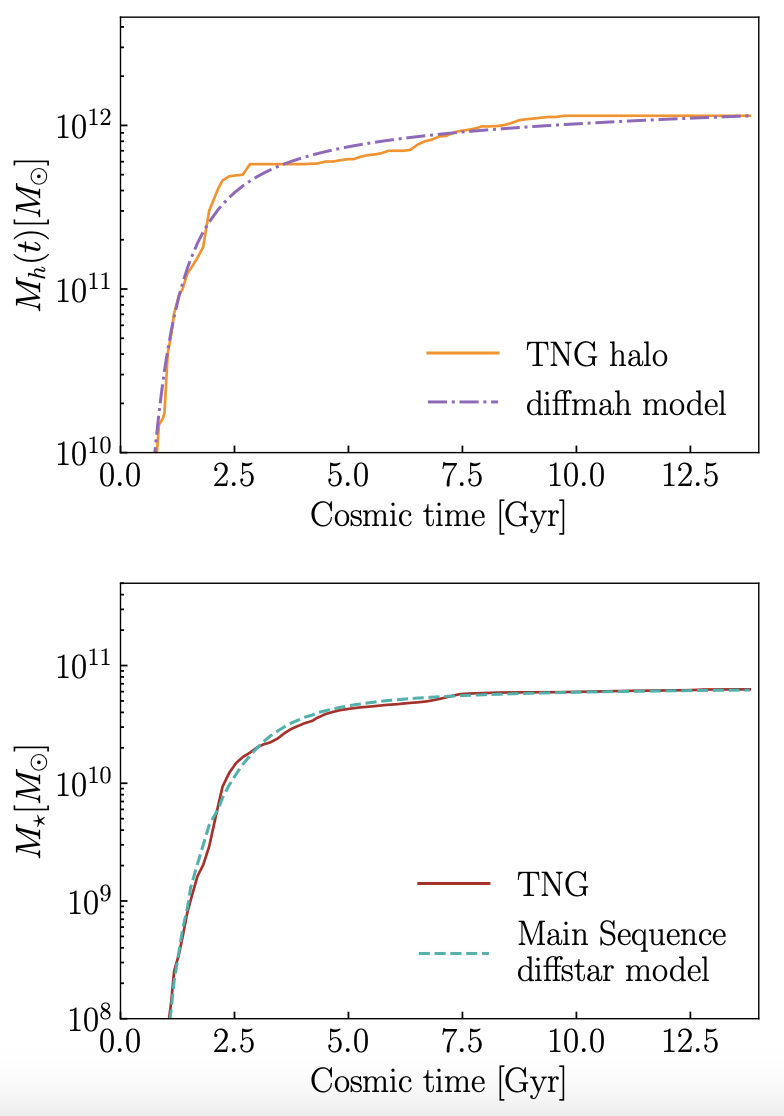
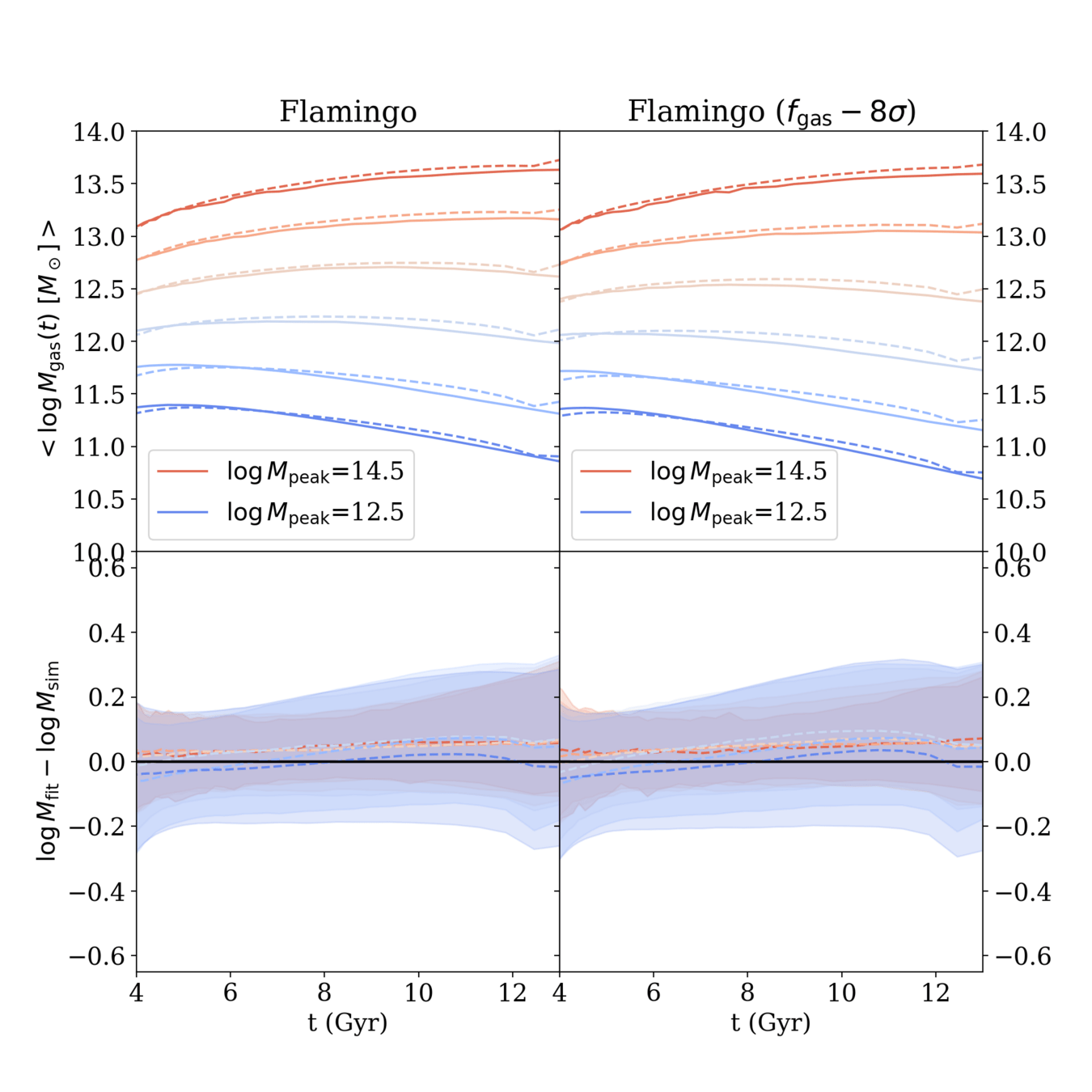
Hydro simulation

Diffbaryon

Diffbaryon model

To+ in prep (with diffsky team)

Preliminary

Hydro simulation

Diffbaryon

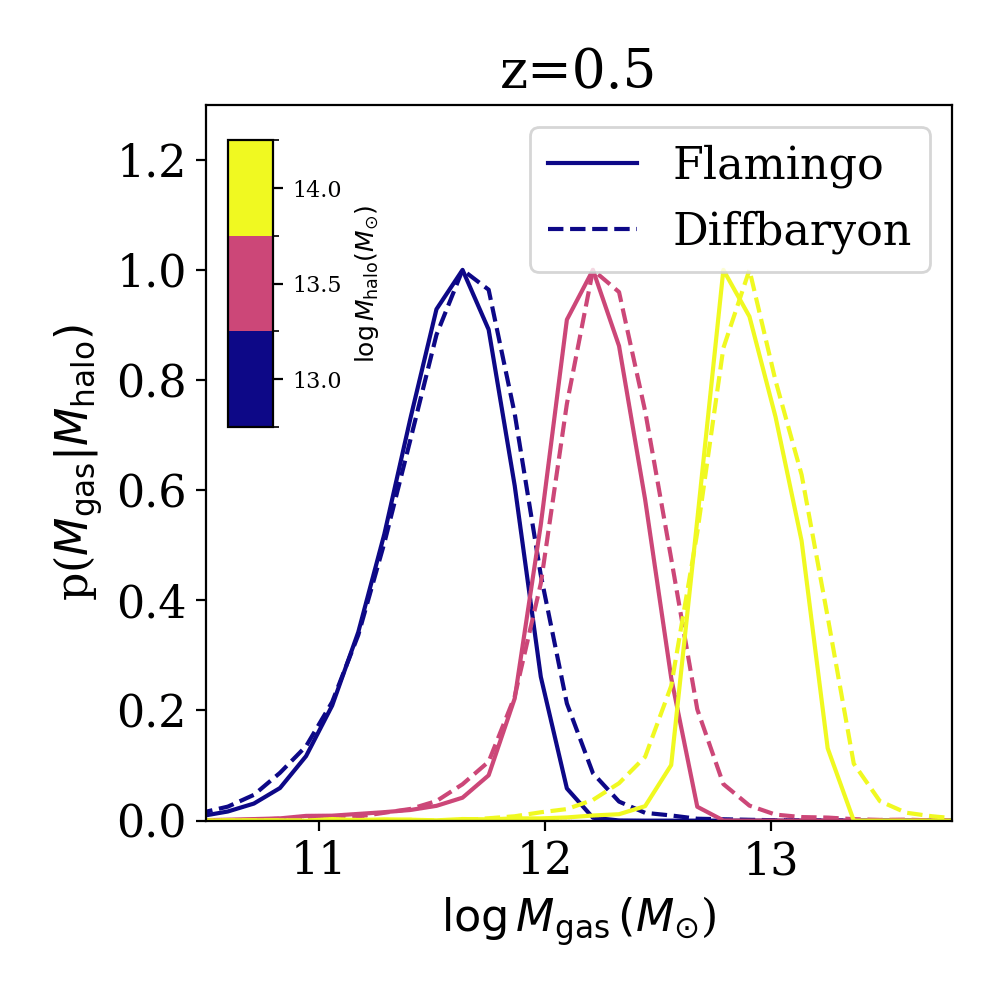
Preliminary

  • Diffbaryon captures                          
     
  • Godmax model underestimates the intrinsic scatter.

Central

P(M_{gas}|M_{halo})
  • Diffbaryon captures                        

Goddard seminar

By CHUN-HAO TO

Goddard seminar

  • 9