





CHUN-HAO TO PRO
I am a cosmologist!
*chto@uchicago.edu
Chun-Hao To*
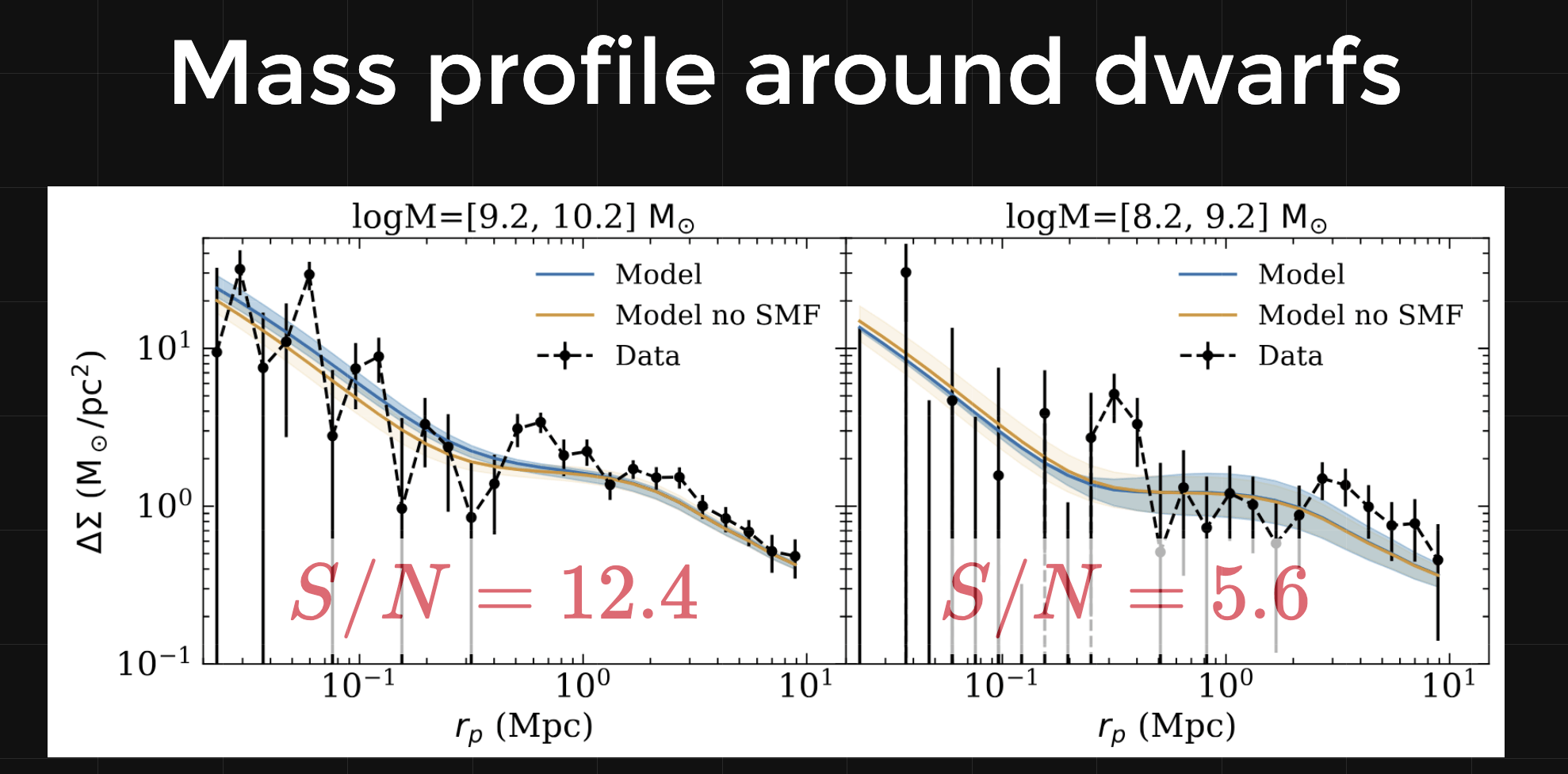
Lensing around dwarf galaxies
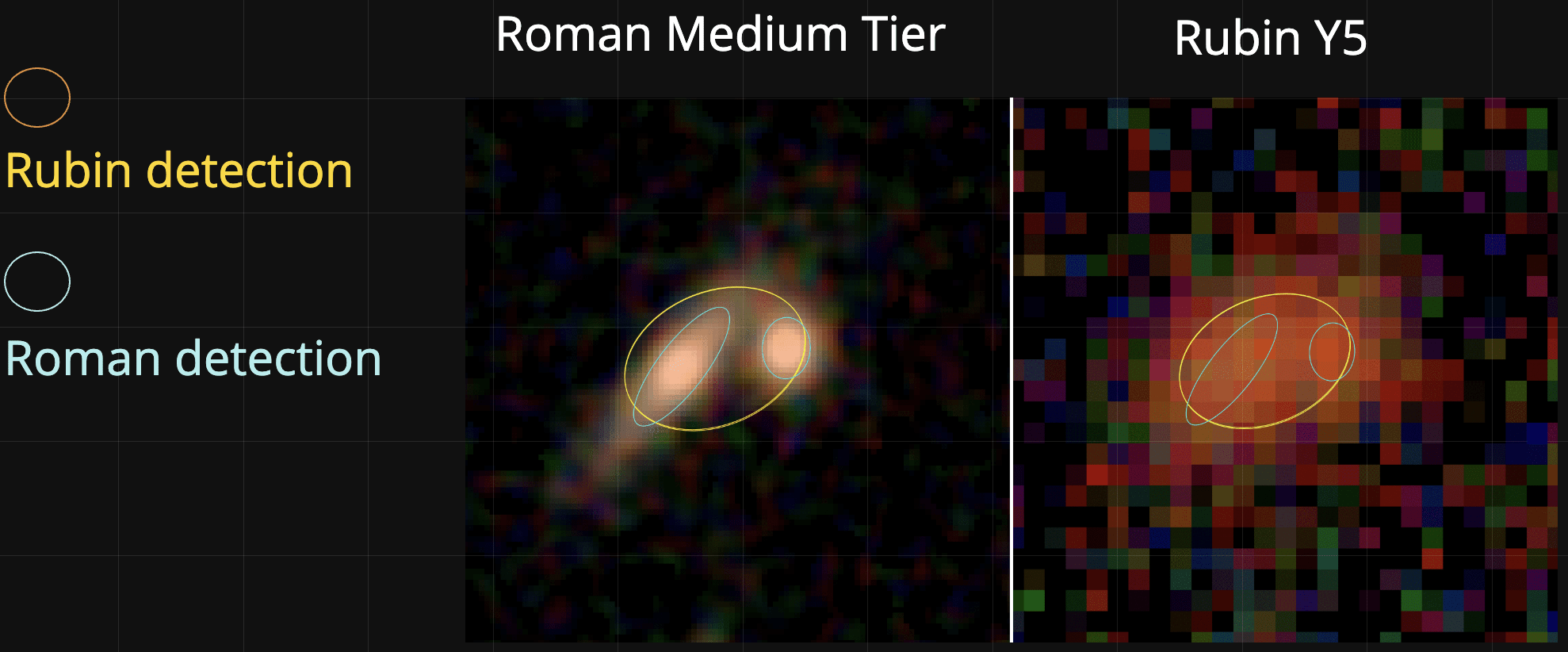
Pixel-level Synergies between Roman and Rubin
Dark Matter Halo
~
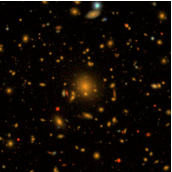
Red galaxies
~ 2% of the mass
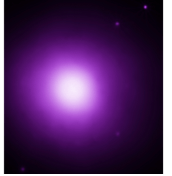
Hot gas
~ 10% of the mass
Cosmology
Galaxy physics
Baryonic feedback
Yang+03, Lin&Mohr04, More+16,
Kravstov+18, Shin+19, To+20 (APJ 897,15), ... many more
Vikhlinin+06, Eckert+16,
To+24 (JCAP 2024, 037), Dalal+26, Kovac+25, Siegel+25, ...many more
Bahcall 95, Wang&Steinhardt 98, Borgani+ 01, Allen+ 03, Vikhlinin+ 09, DeHann+16, To+ 21, Bocquet+24, Ghirardini+ 24, DES+25, ... many more
Hot gas
~ 10% of the mass
Line of sight
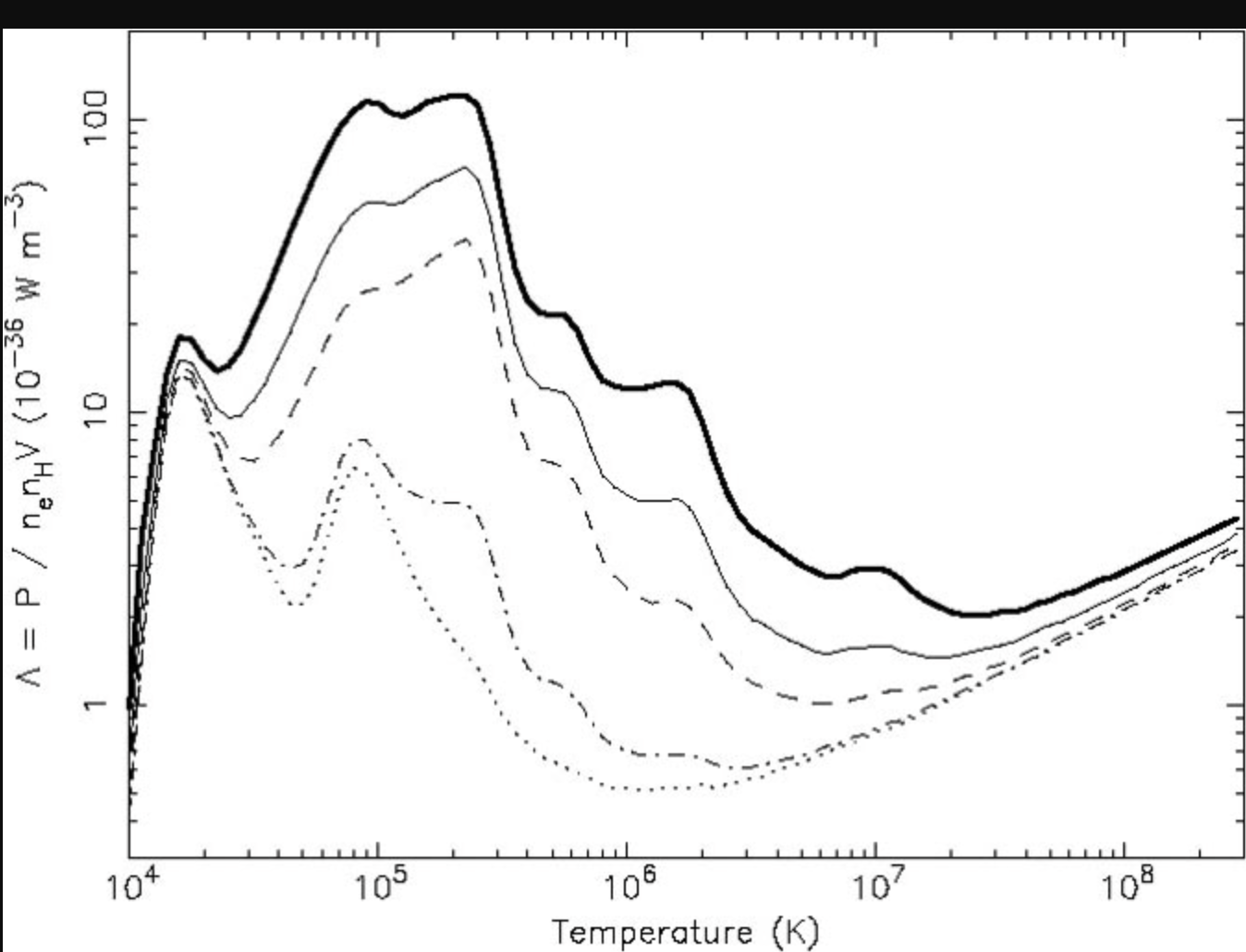
Cooling function
To+24, see also Lucie-Smith+ 25
To+24, see also Lucie-Smith+ 25
Weak lensing
CMB
Change of Matter clustering
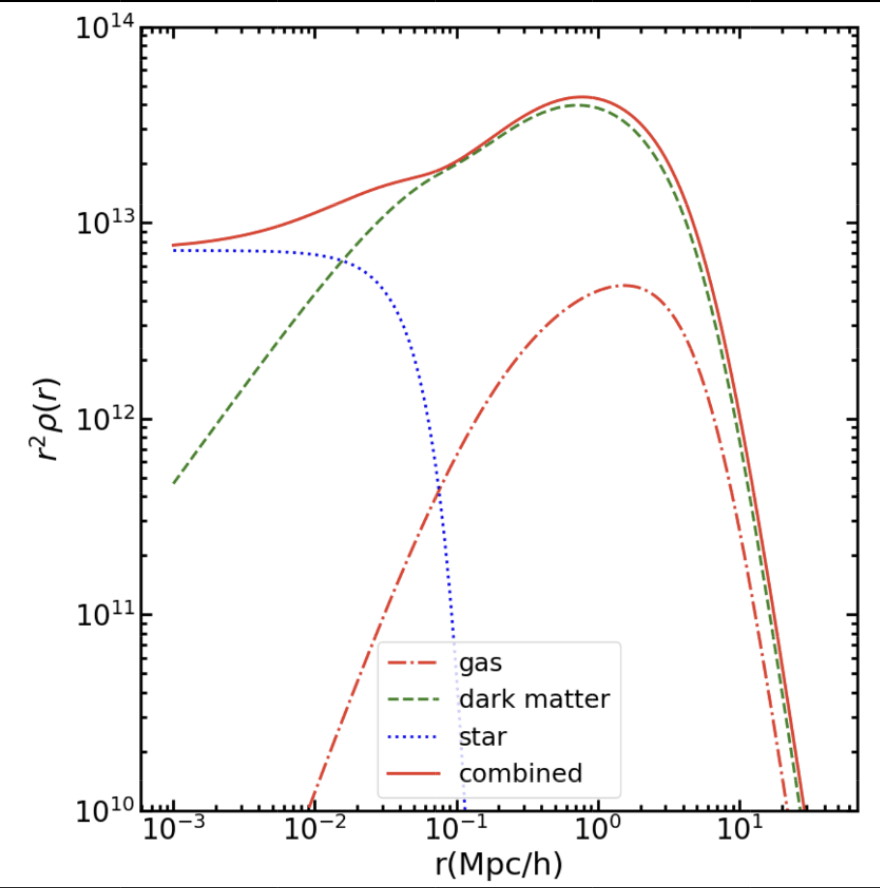
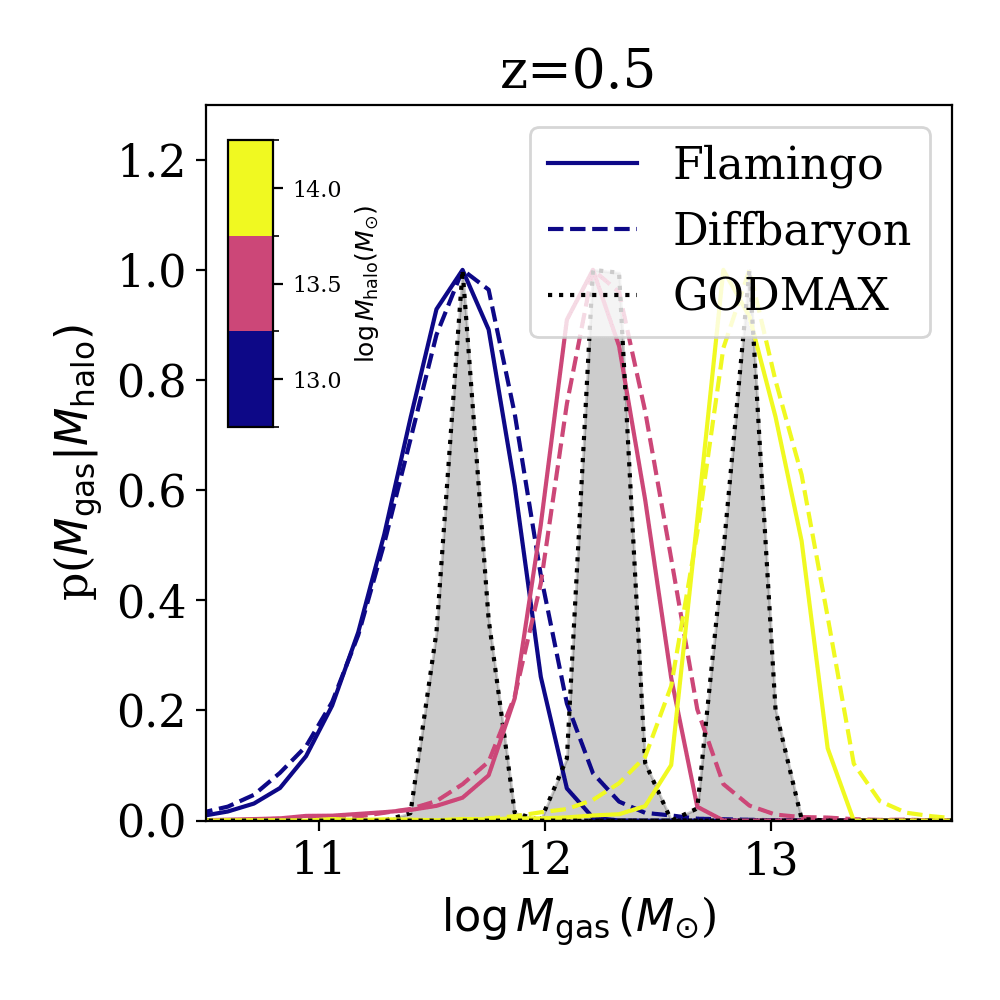
Model
Godmax:
A Schneider-Teyssier-type model with parametrized gas distribution implemented in Jax
(Pandey+ (incl. CT) 24)
See also Schneider&Teyssier 15, Giri+ 21, Schneider+ 25, and many more
Pandey+ (incl. CT) 24
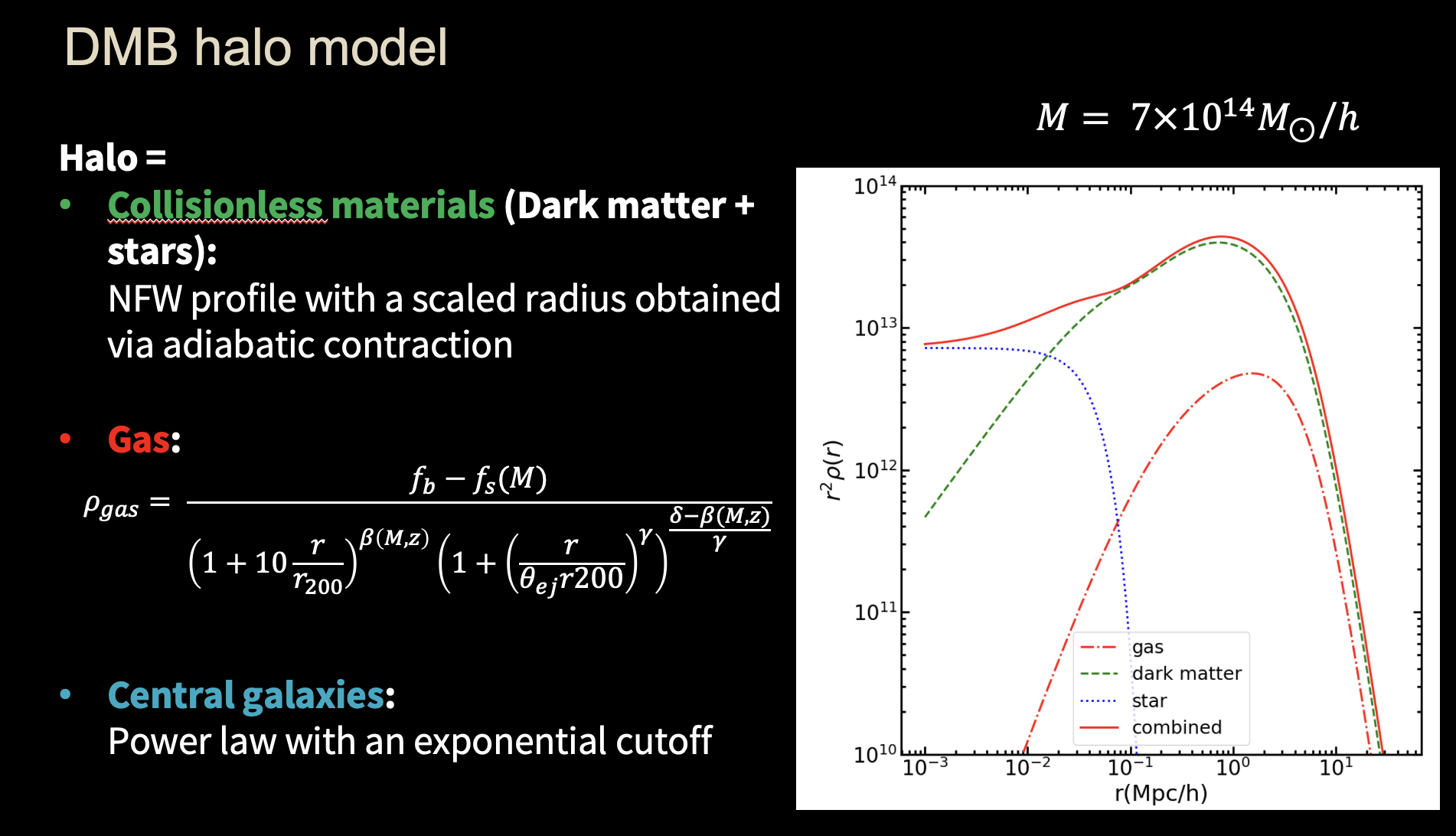
Halo=
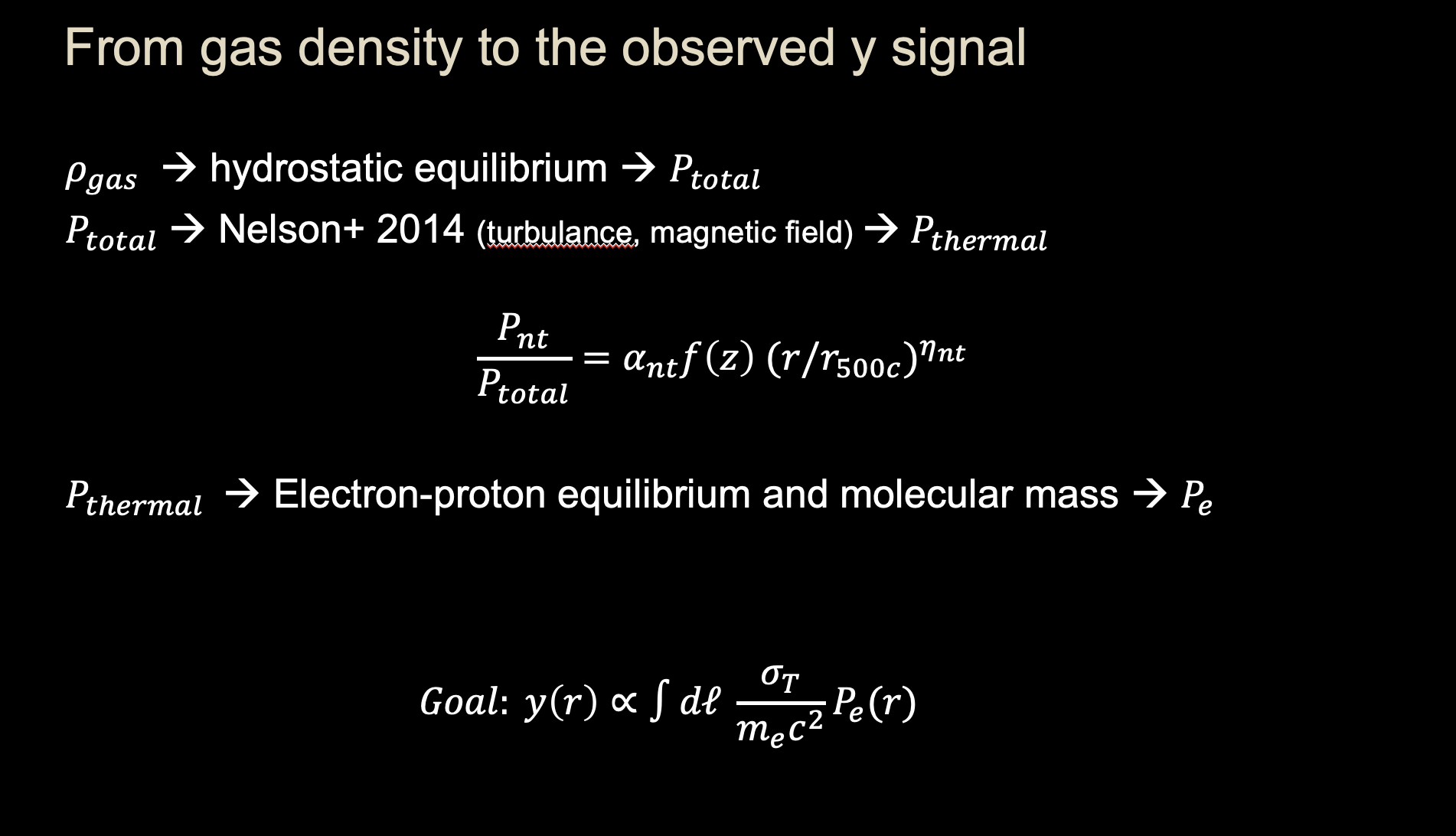
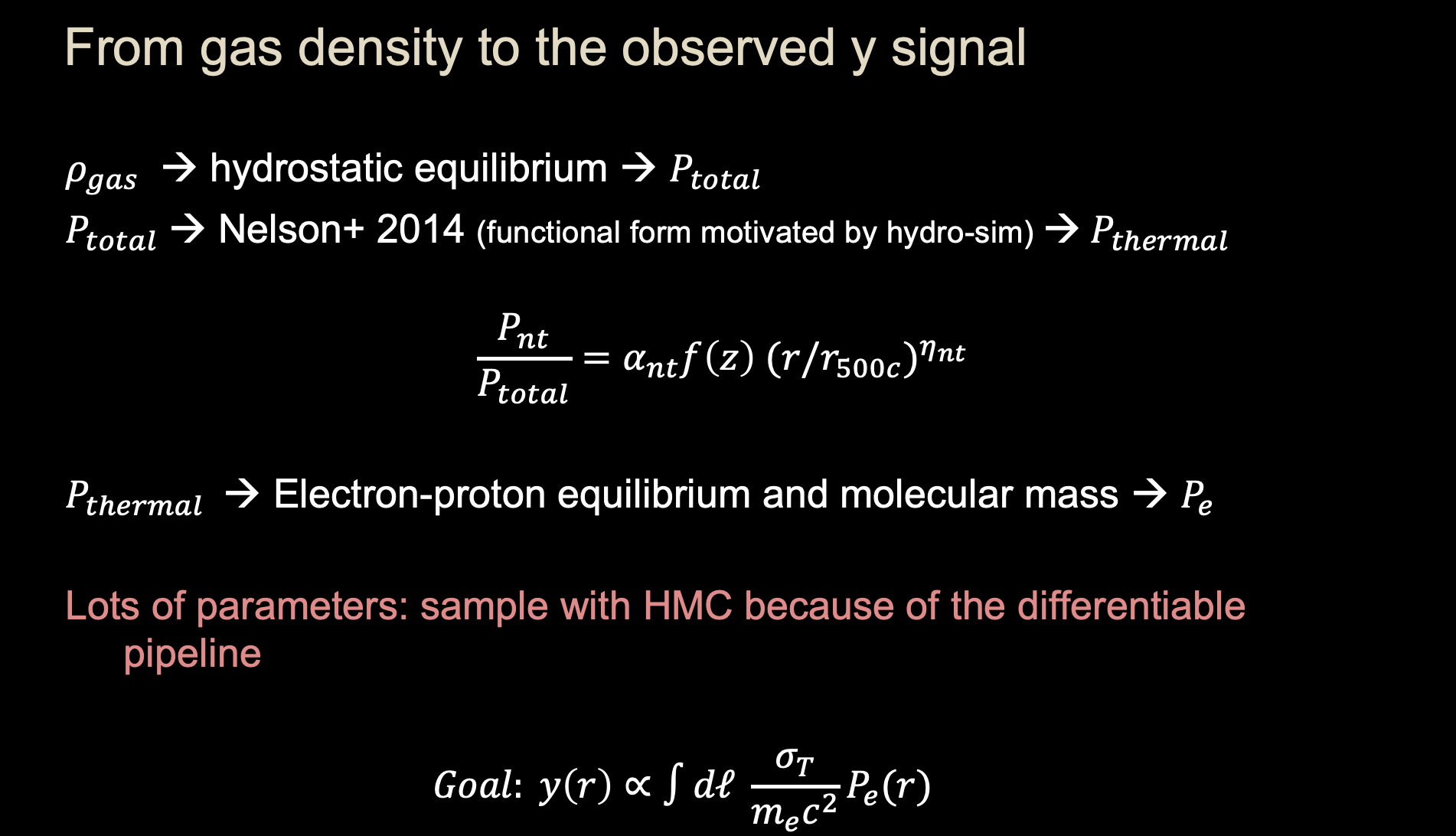
hydrostatic equalibrium
Nelson+14 (Turbulence, magnetic field)
Electron and protons are in equalibrium
and molecular mass
Goal
Change of Matter clustering
Model
Godmax:
A Schneider-Teyssier-type model with parametrized gas distribution implemented in Jax
(Pandey+ (incl. CT) 24)
See also Schneider&Teyssier 15, Giri+ 21, Schneider+ 25, and many more
Text
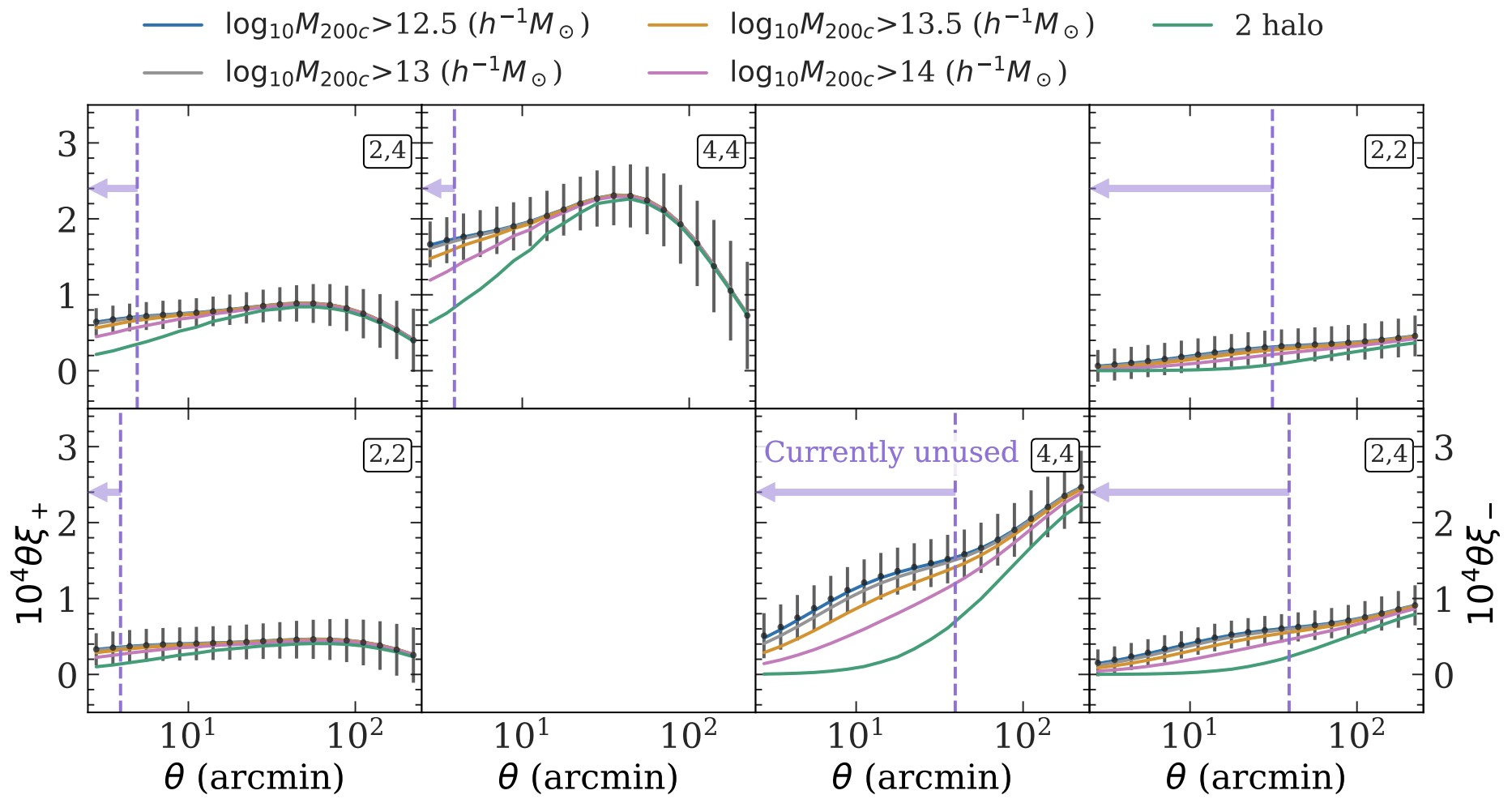
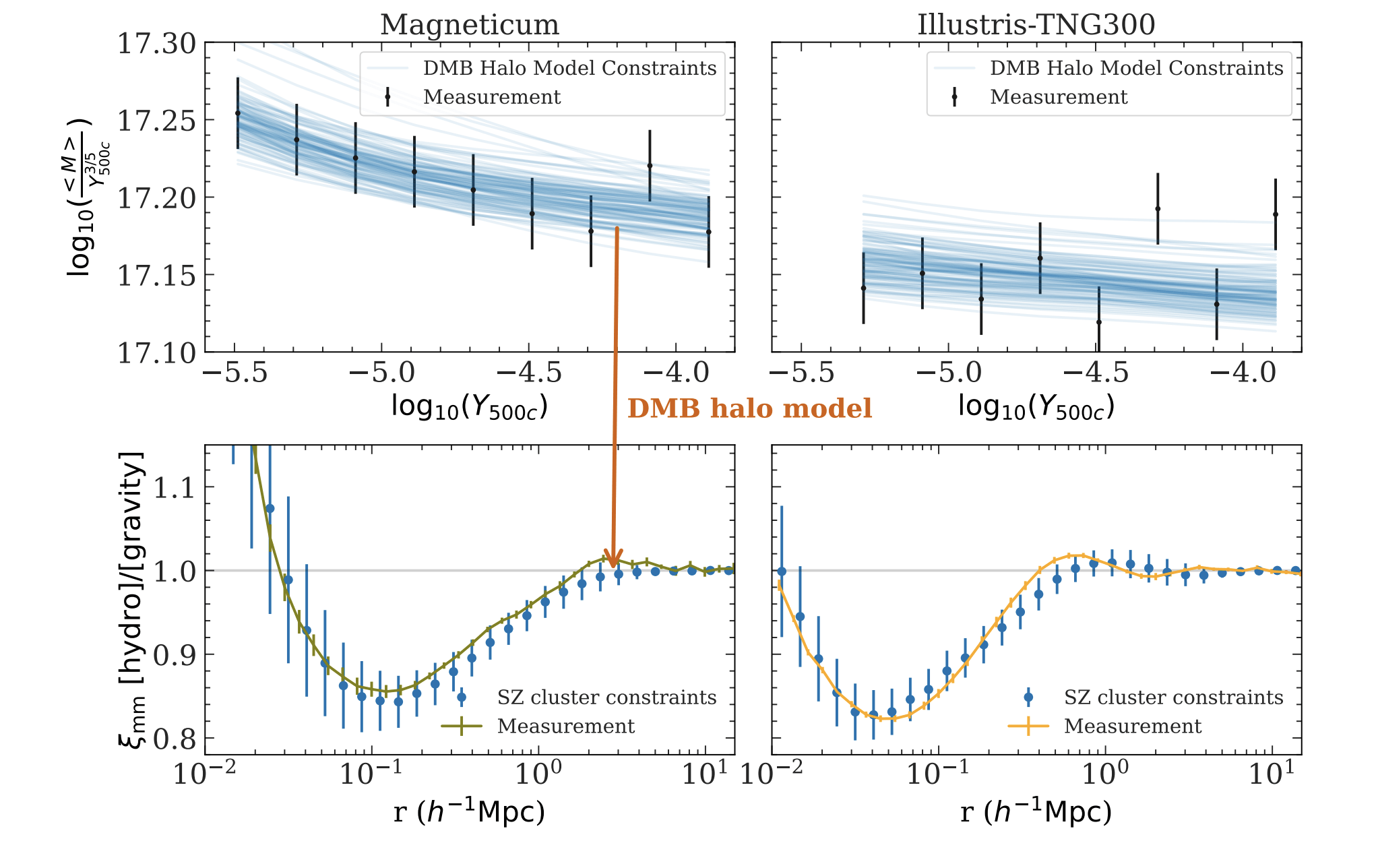
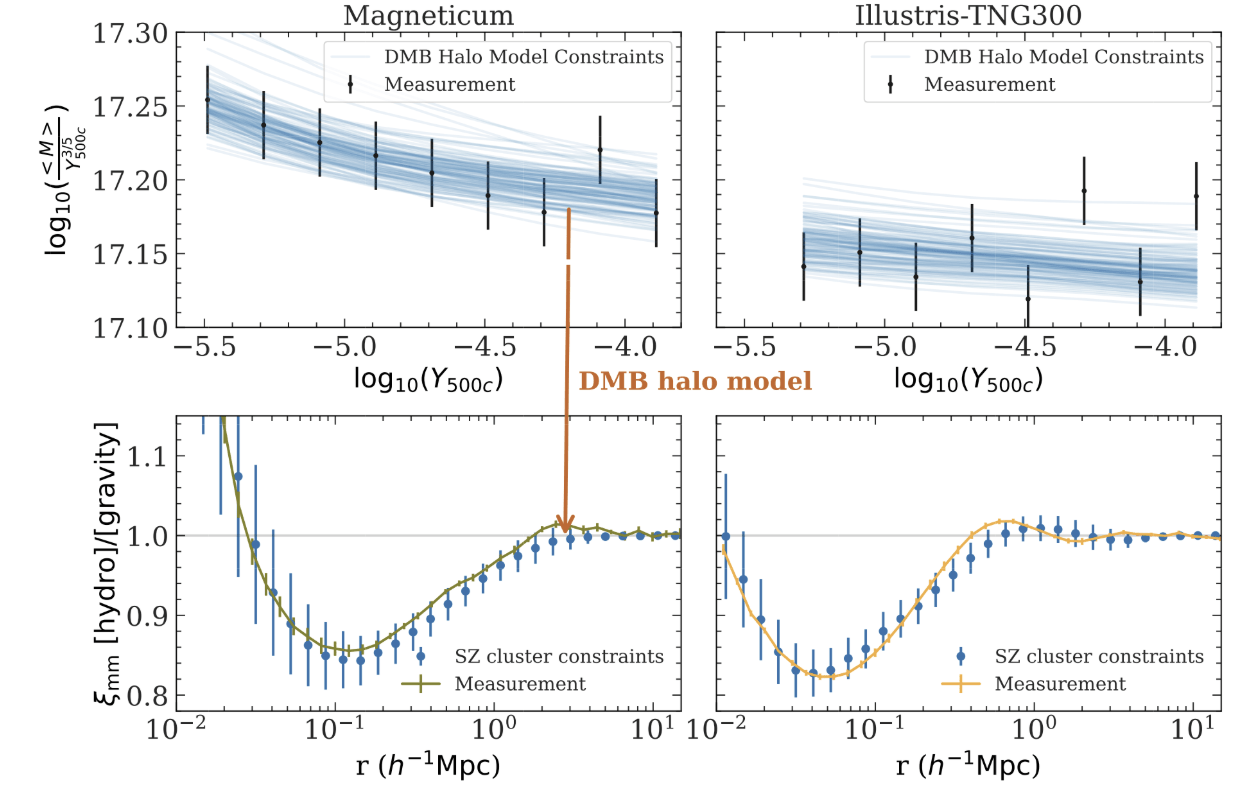
Measurement
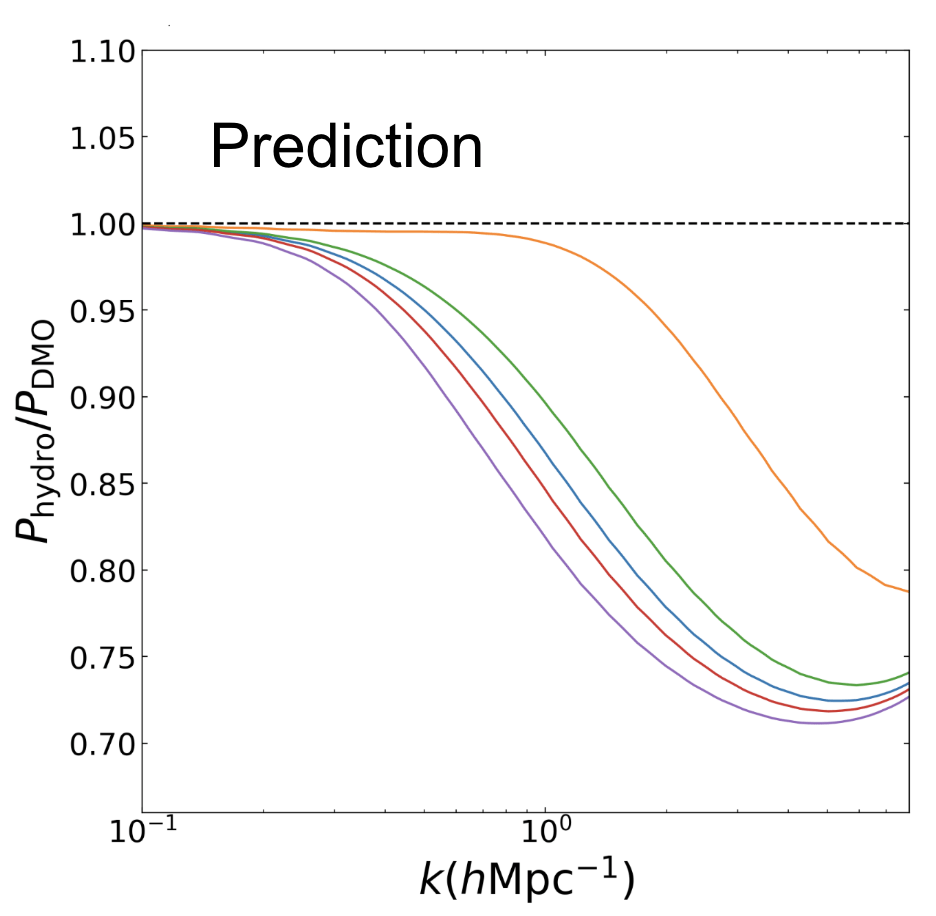
Prediction
+ Godmax model
To+ 24
Text
To+ 24
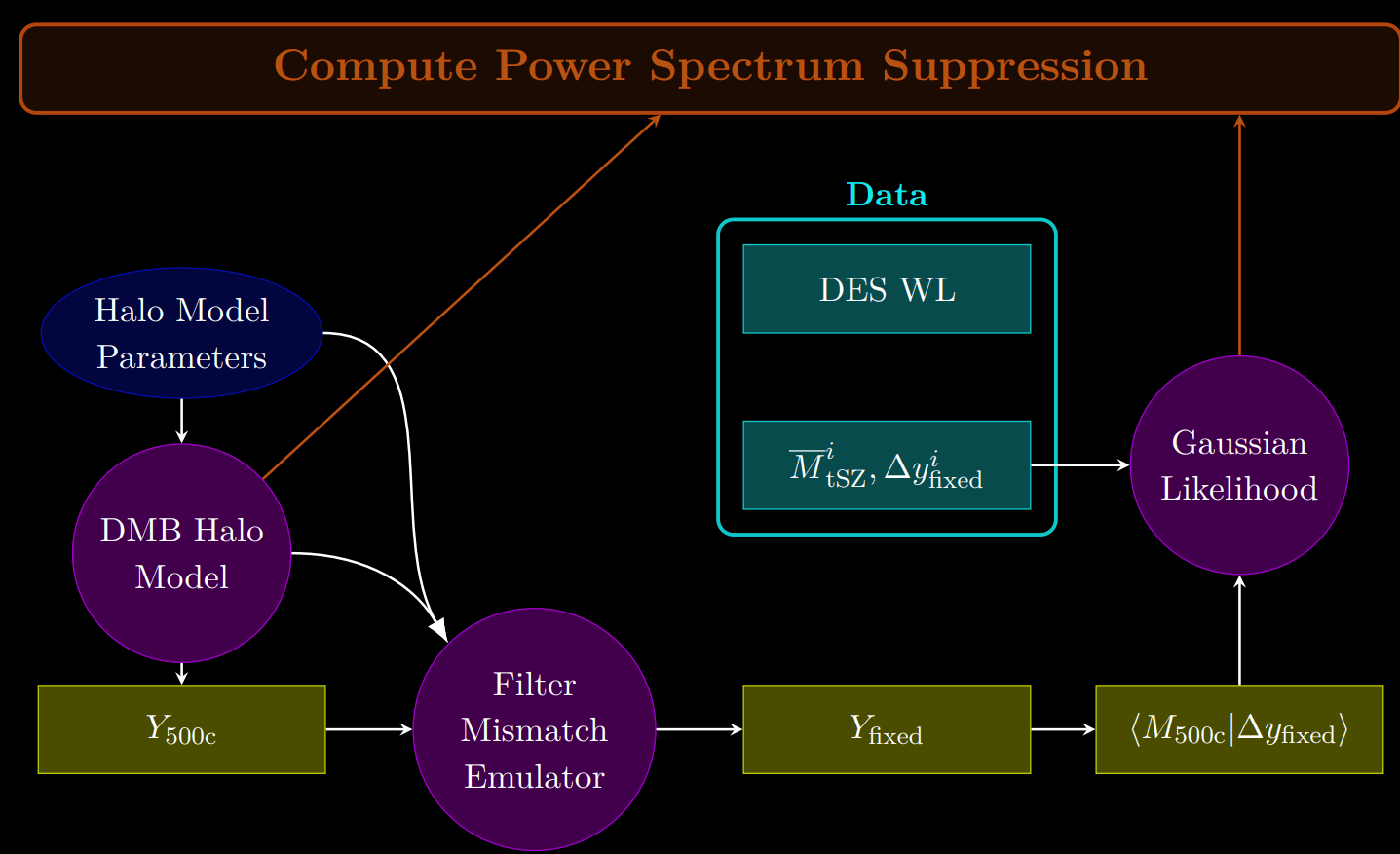
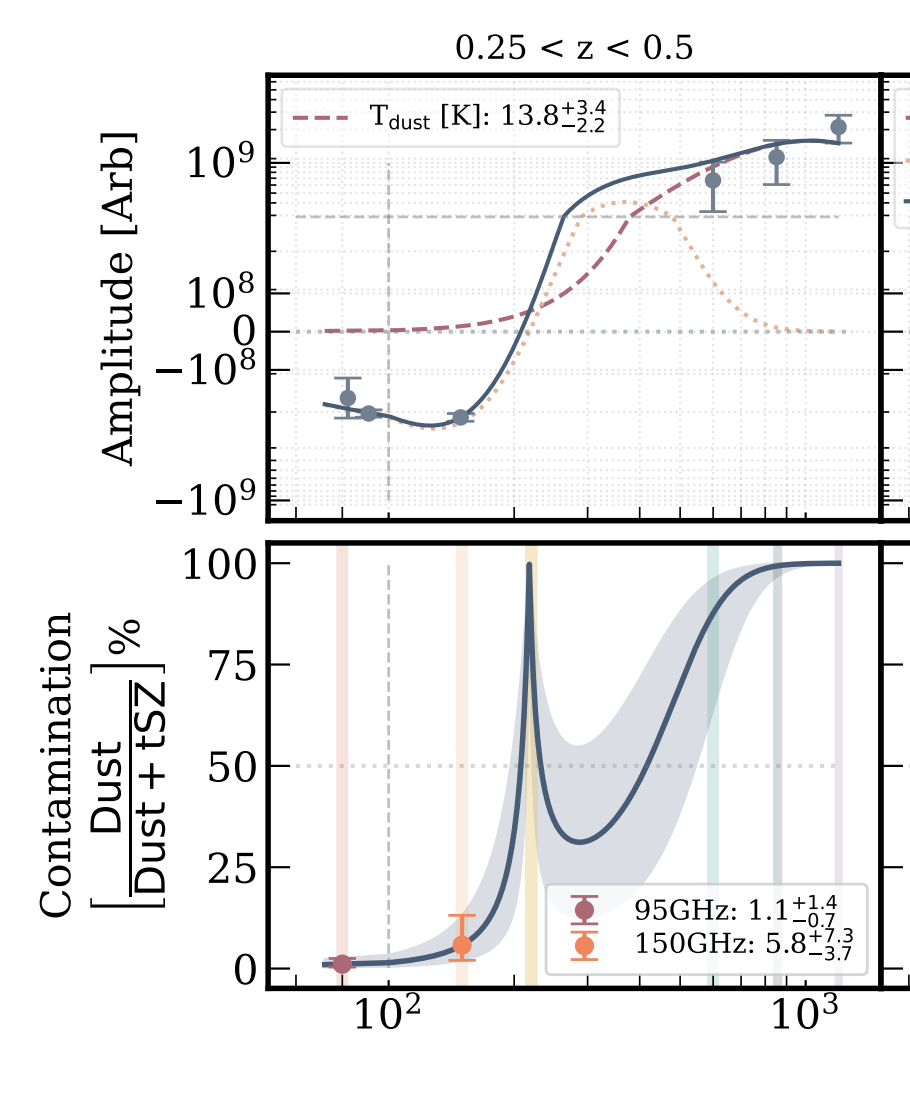
Dalal+ (incl. CT) 26
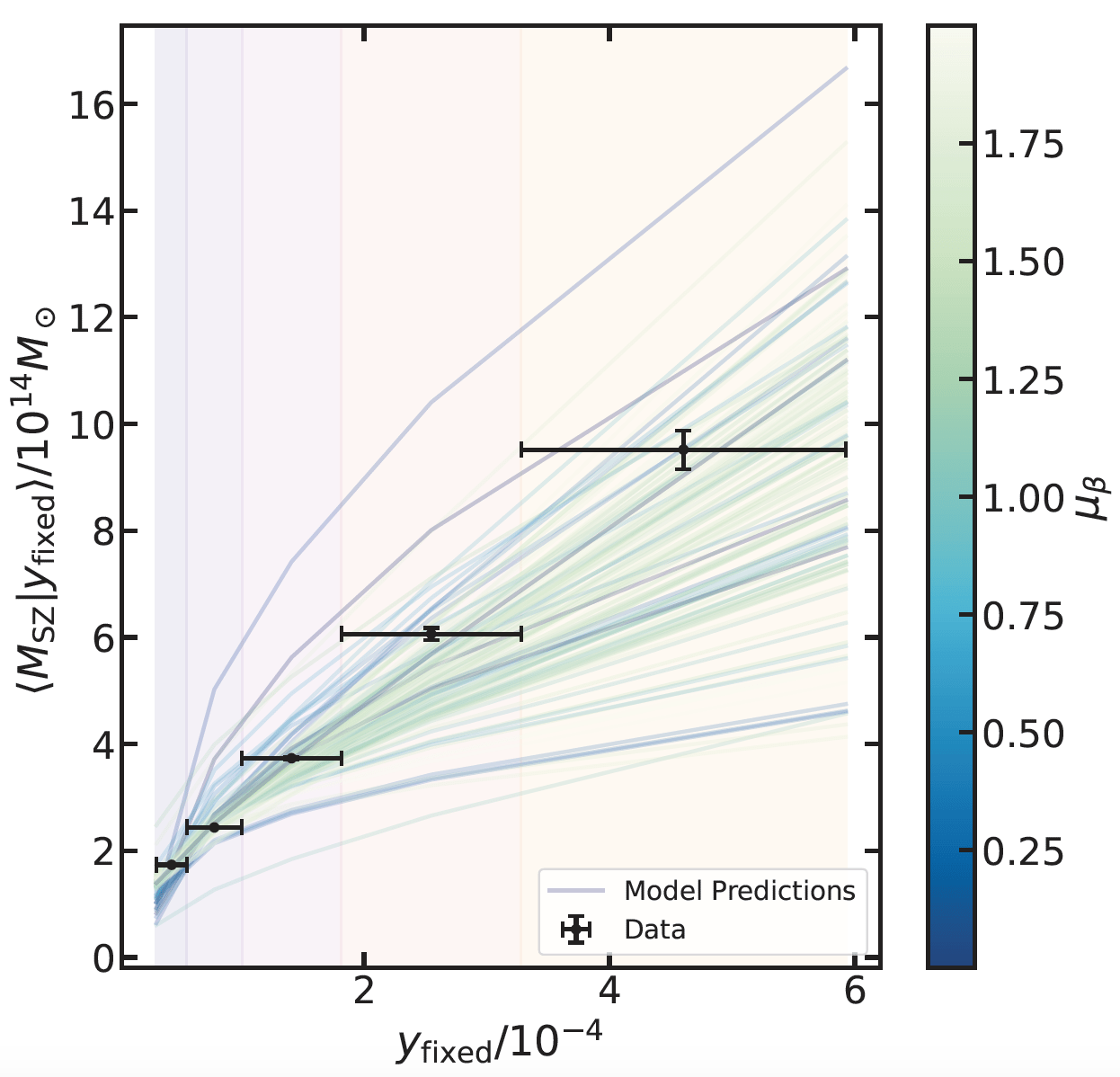
ACT cluster finder
Nemo
Shin+25
Godmax
Model
Noise
Dalal+ (incl. CT) 26
Dalal+ (incl. CT) 26
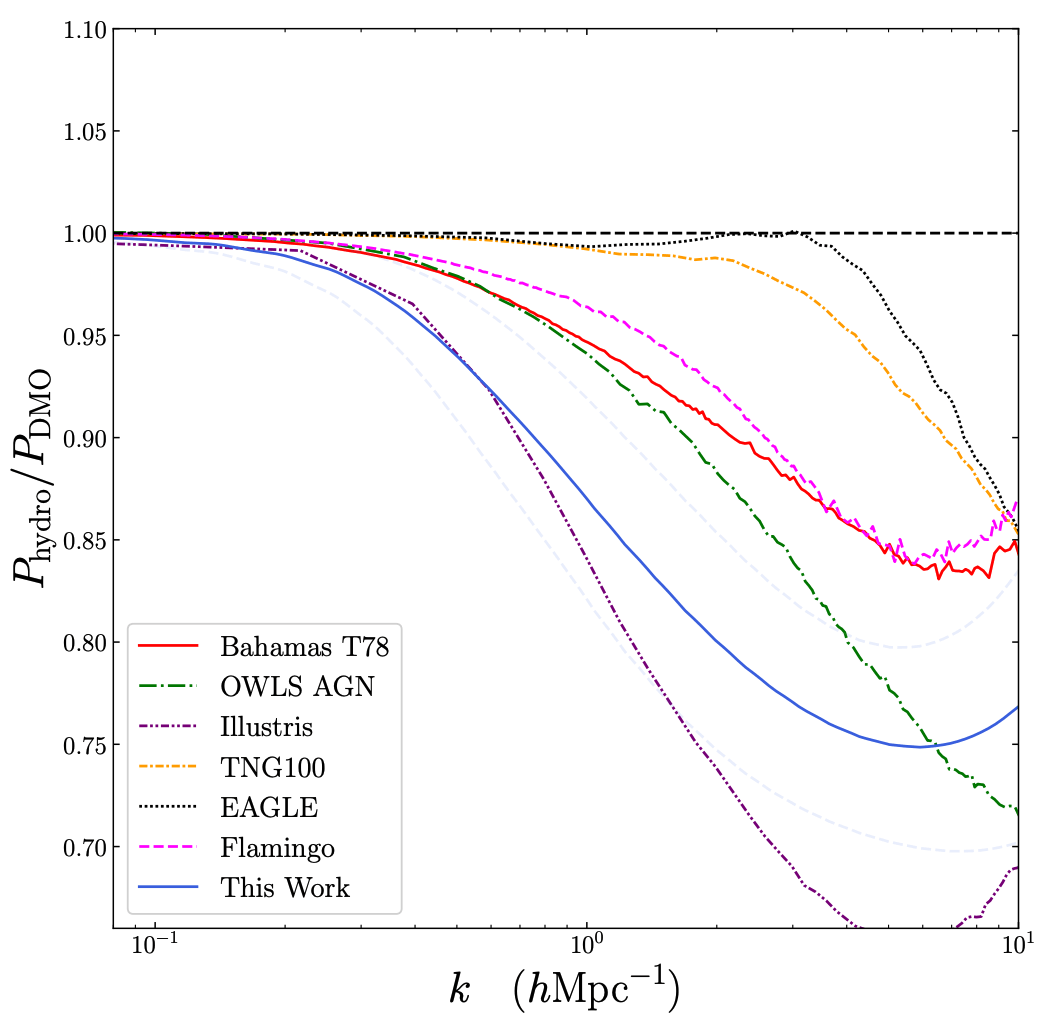
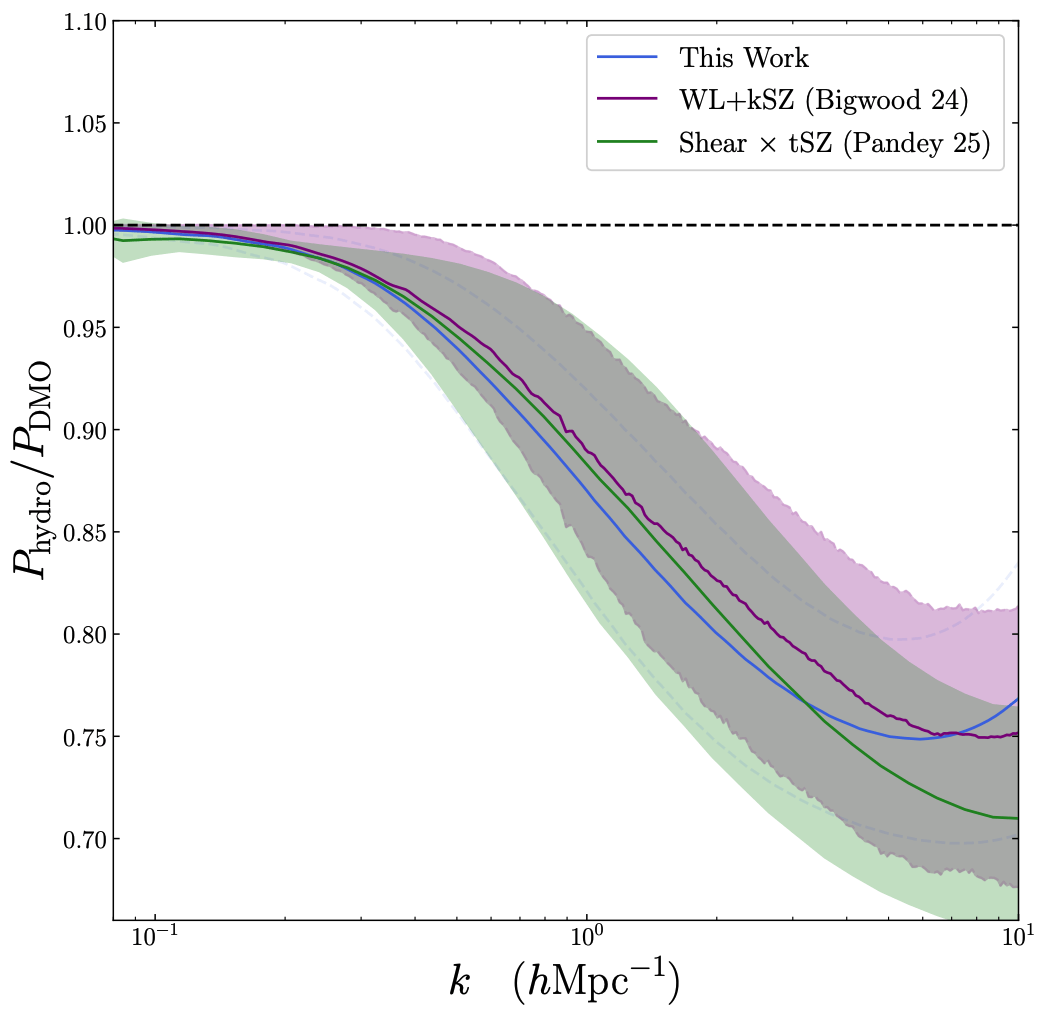
We find remarkably consistent results compared to other probes.
Lots of data exist and have been used to constrain feedback. Here are a very incomplete list:
WL: Ario+22, Anbajagane+25, DES+26, Xu+25.
tSZxtSZ: Raghunathan+26, Chaubai+26, Efstathiou&McCarthy25.
tSZxothers: Sanchez+22, Dalal, CT+25, Pandey+25.
kSZ x others: Hadzhiyska+24, Bigwood+25, Ropper+25, Hotinli, Smith, Ferraro 25.
X-ray: Kovac+25, Eckert+25, Siegel+25, Zhang+26.
FRB: Reischke & Hazstotz25, Wang+25.
QSO absorption: Chen & Zahedy26, Qu+23, 24, Zahedy+19.
The modeling landscape:
Baryonification-flavored models that parametrize the gas distribution around halos at a given redshift.
Schneider+19,25, Arico+20, Anbajagane+24, Osato+23, Williams+23, Semboloni+11,13, Fedeli+14, Debackere+20, Mead+20, Giri+21, Pandey (incl. CT)+24, and many more...
Hydrodynamic simulations.
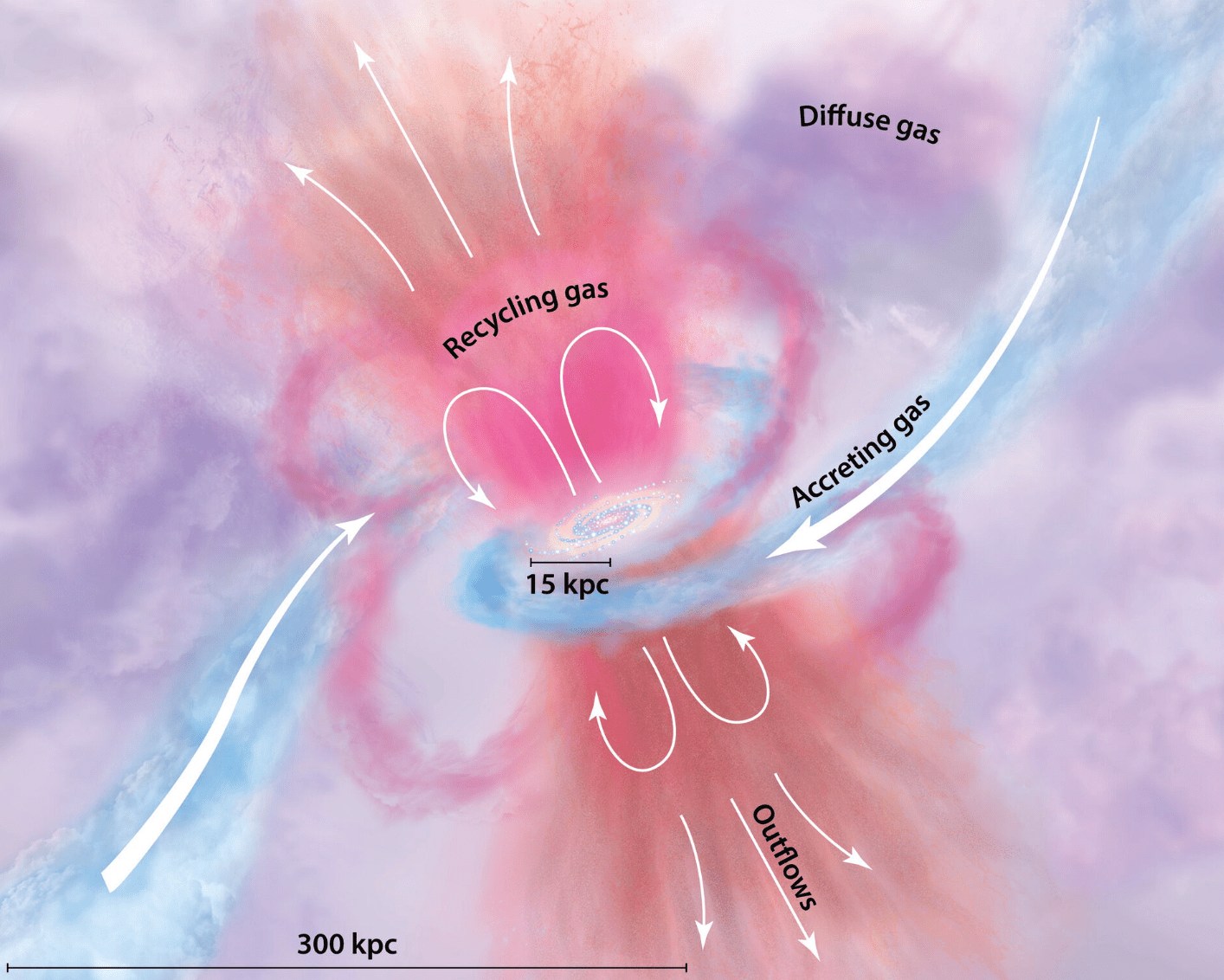
McCarthy+17, Schaller+25, Springel+18, Quataert&Hopkins+25, and many, many more... Tumlinson+17
Cold gas around galaxies is the fuel of star formation.
Galaxy properties and gas content should be correlated.
We need a model that self-consistently describes galaxy evolution and gas properties across z=0-3.
To+ in prep (with diffsky team)
Galaxies:
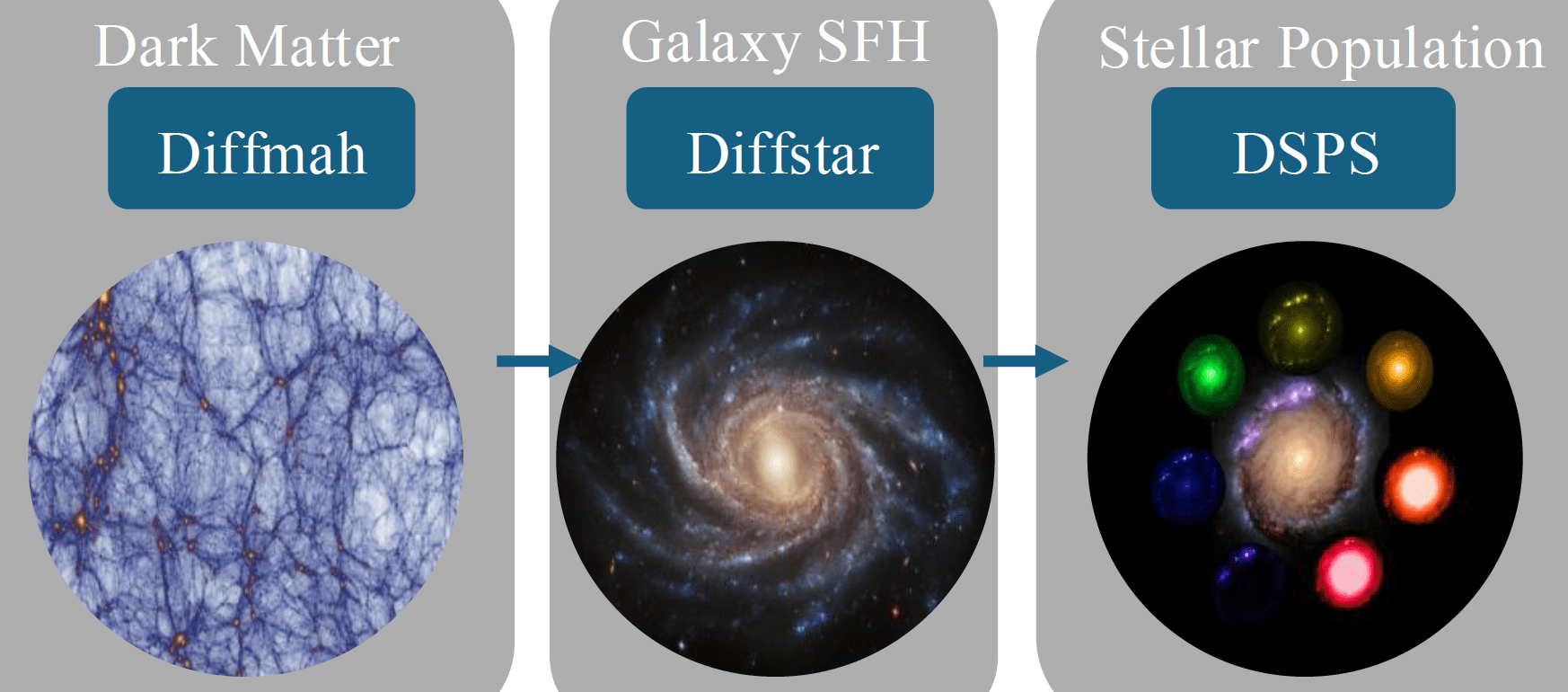
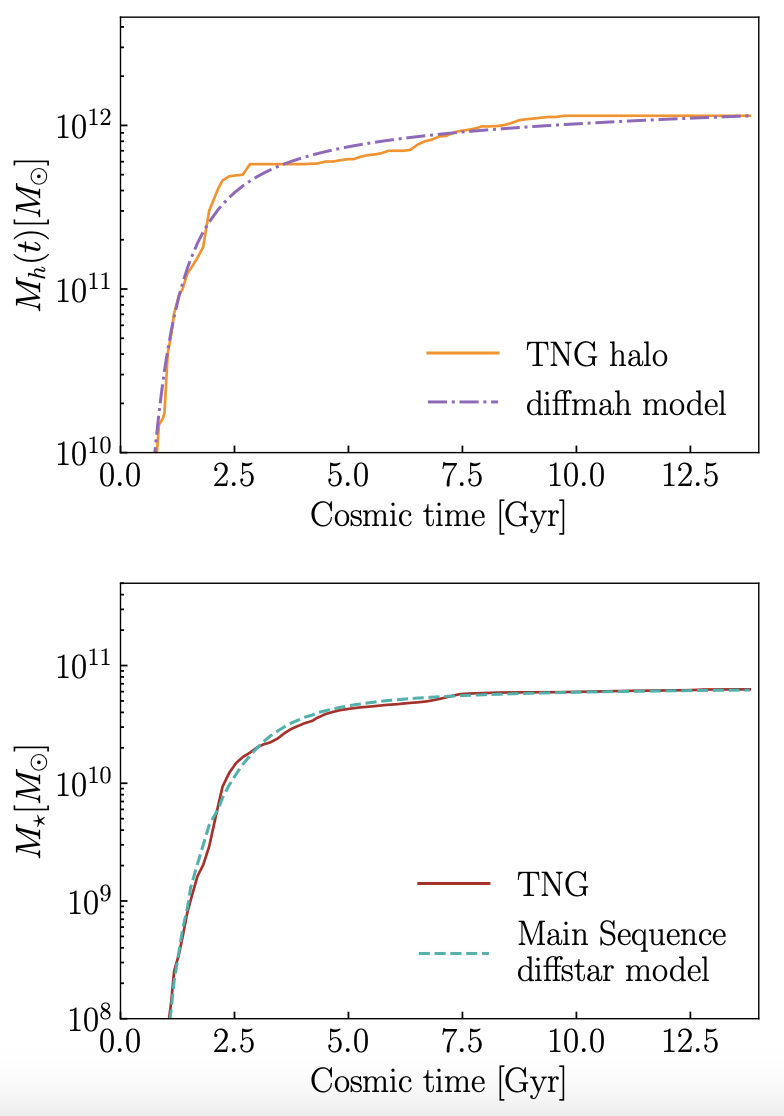
Jax-based galaxy model
Alarcon+23, Hearin+21
To+ in prep (with diffsky team)
Galaxies:
Jax-based galaxy model
Godmax:
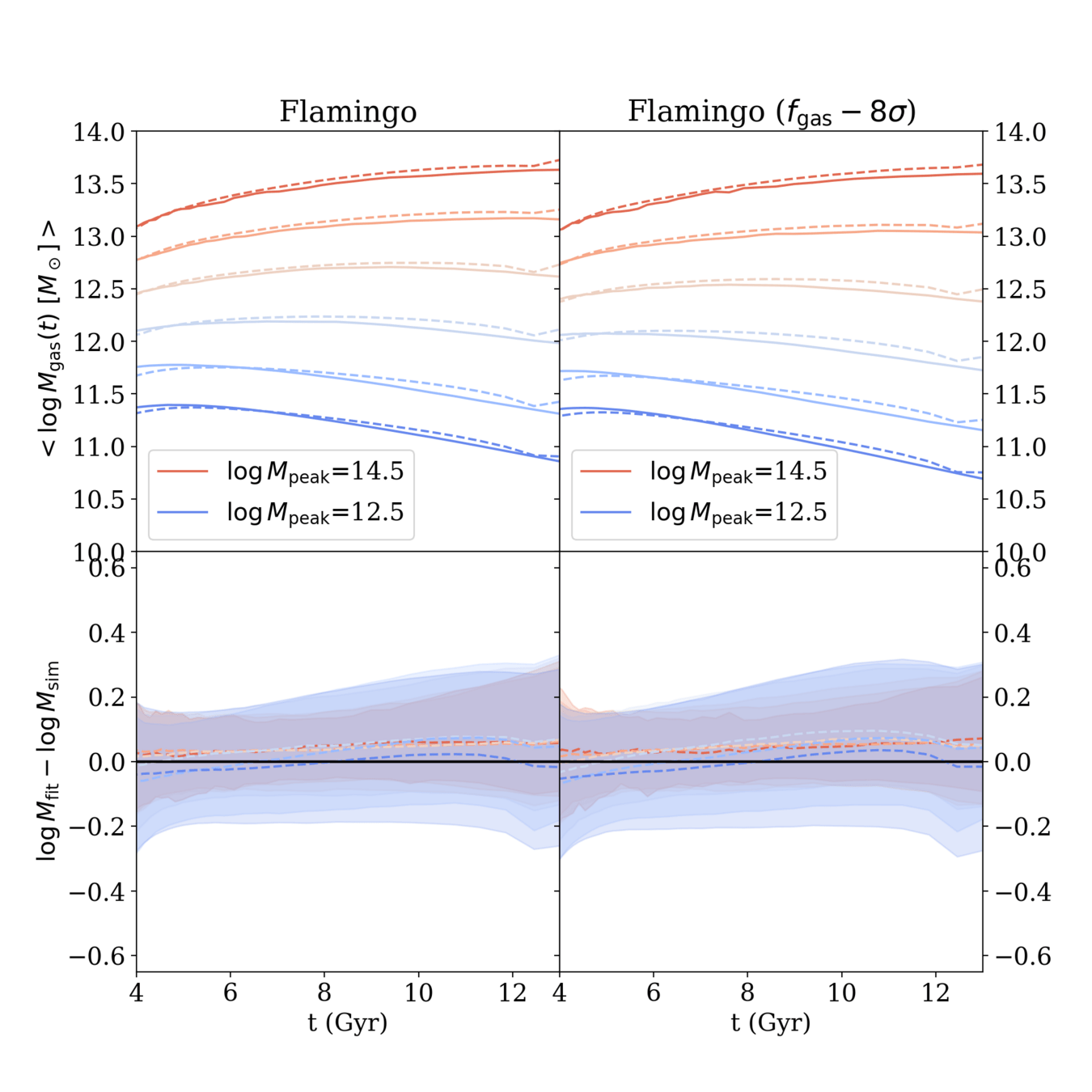
Jax-based gas model
Diffbaryon
Alarcon+23, Hearin+21
To+ in prep (with diffsky team)
Preliminary
Hydro simulation
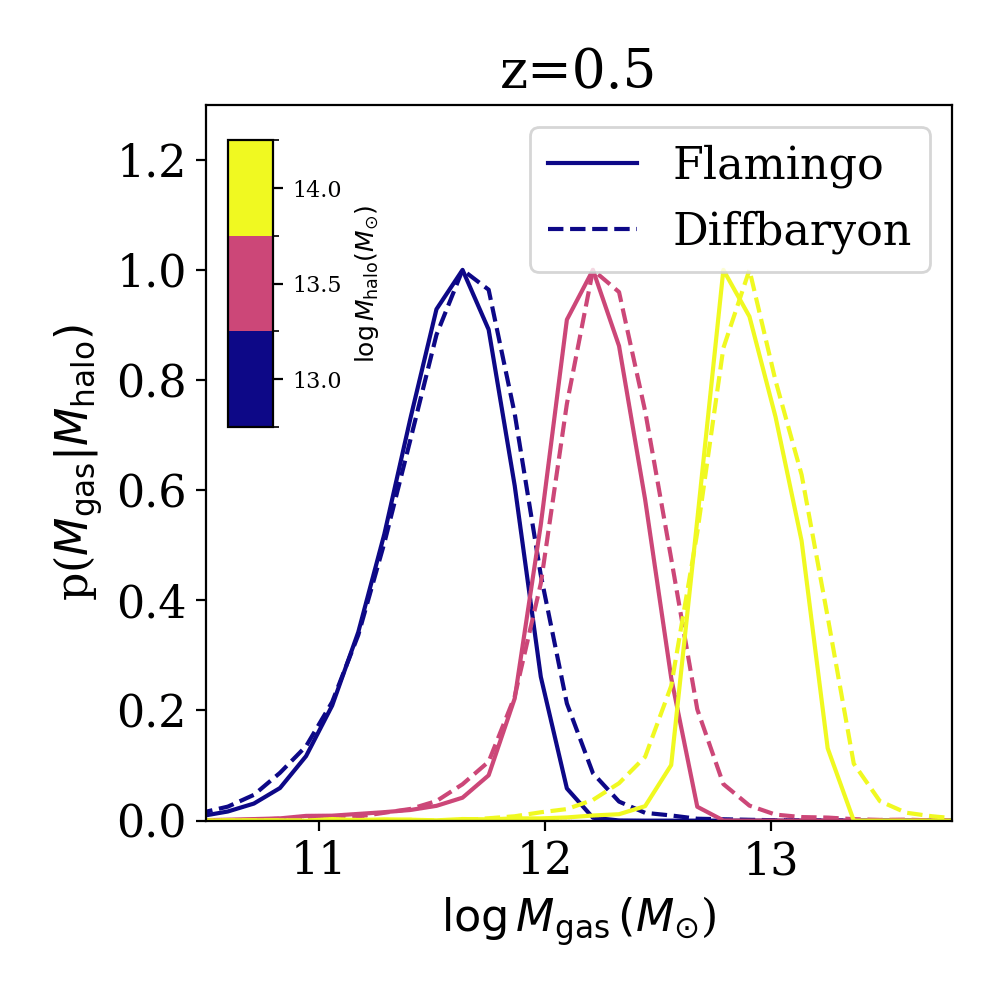
Diffbaryon
To+ in prep (with diffsky team)
Preliminary
Hydro simulation
Diffbaryon
Preliminary
Central
https://arxiv.org/pdf/2503.17271
z= 1, 0.3, 0.1, 0.01
By CHUN-HAO TO