




Content ITV PRO
This is Itvedant Content department
Learning Outcome
5
Apply cloud security best practices.
4
Recognize common cloud security risks.
3
Understand fundamental cloud security concepts.
2
Understand cloud service and deployment models.
1
Explain the concept and importance of cloud computing.
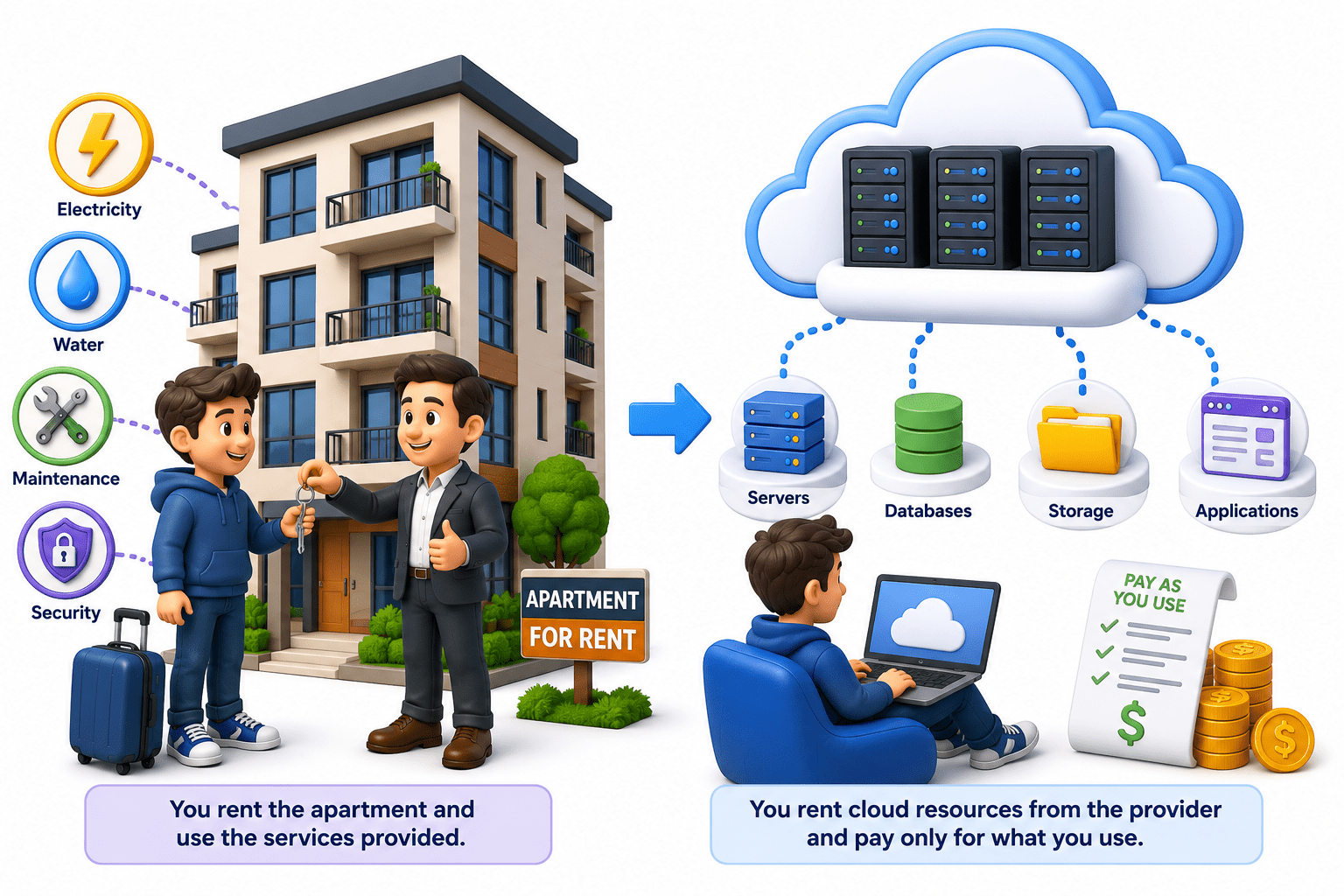
He needs a place to stay, so he decides to rent an apartment.
The provider offers everything like servers,storage, databases, applications, security, and more.
Just like renting an apartment, cloud computing lets you use powerful resources without owning or managing them, and you pay only for what you use.
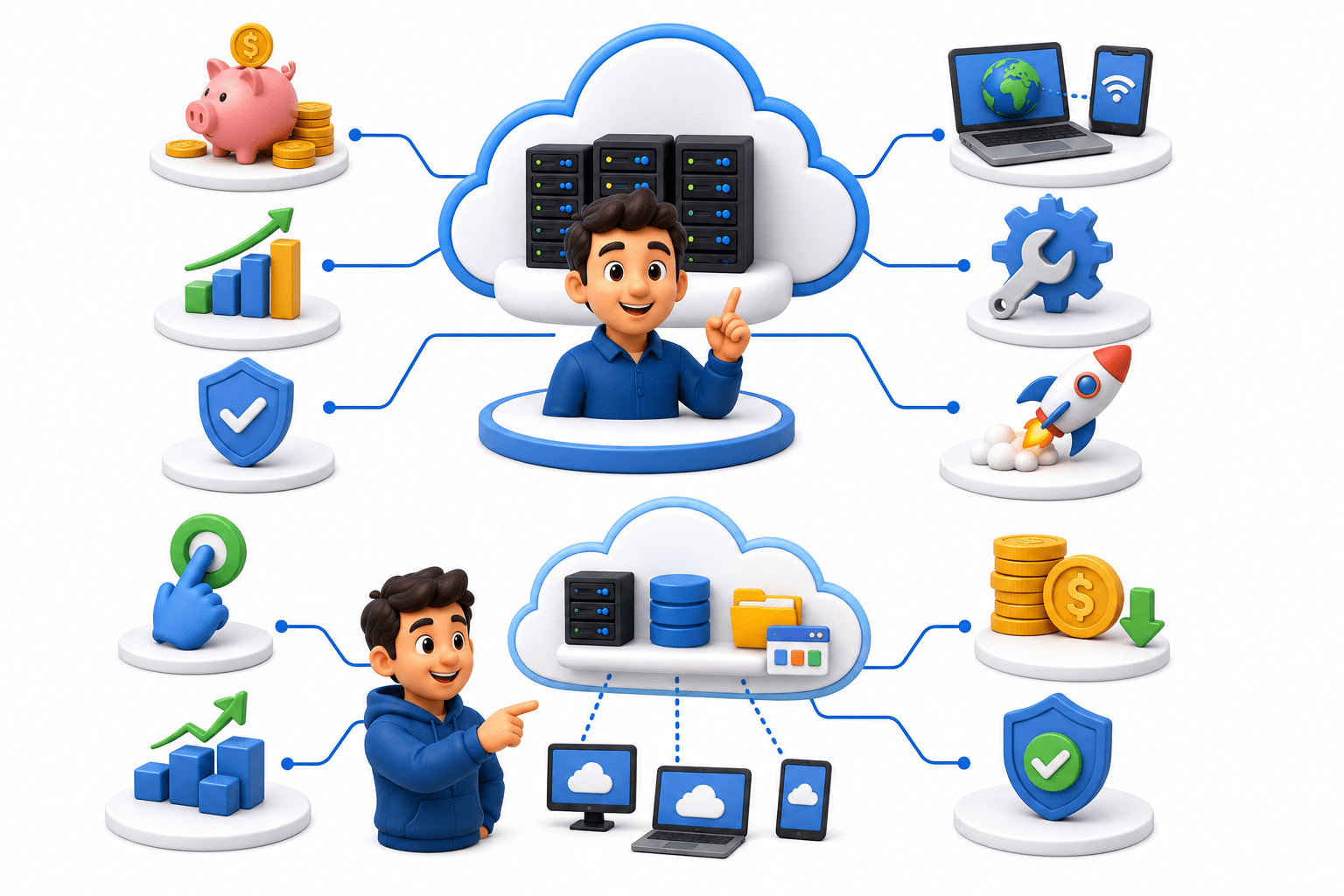
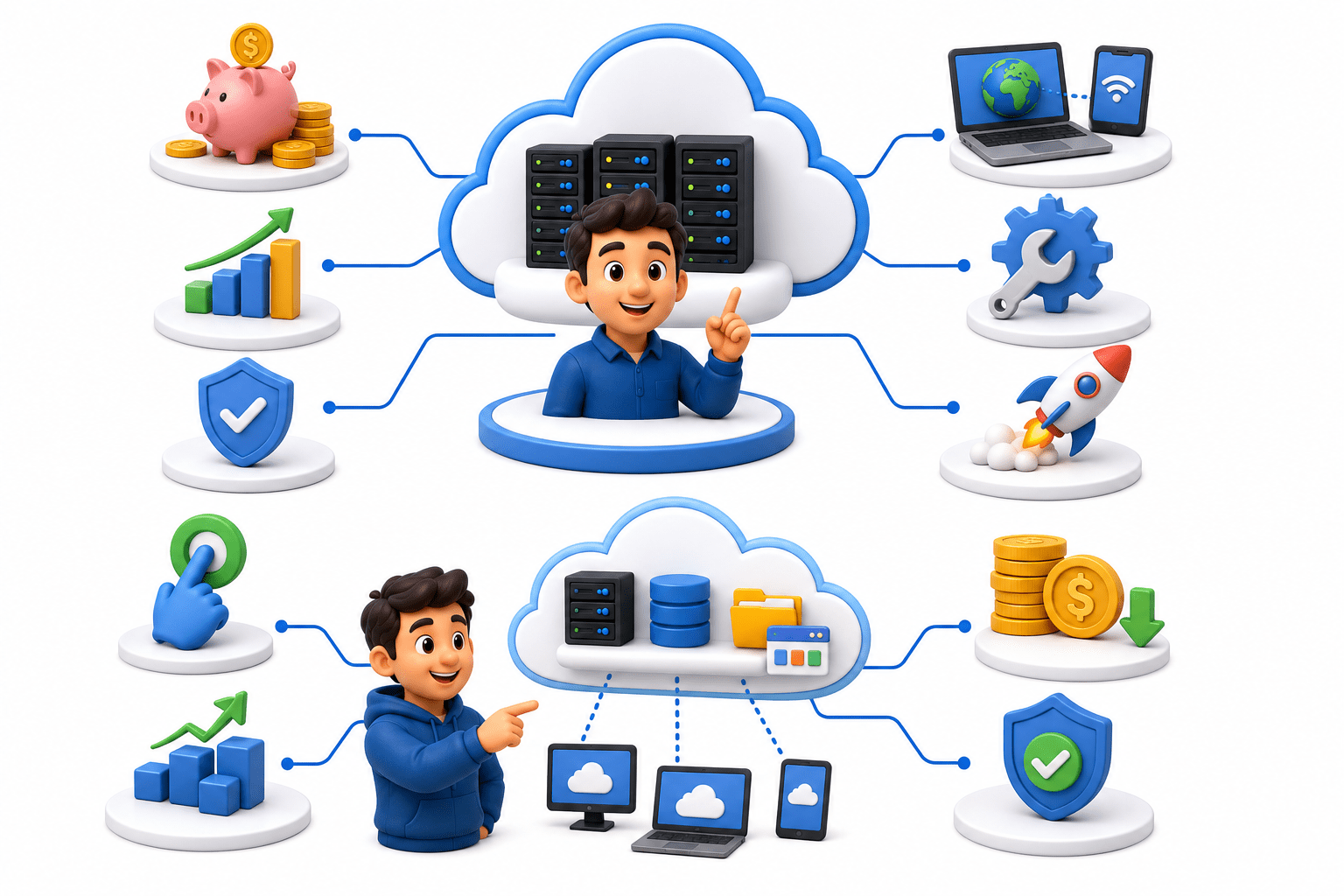
Reduce infrastructure costs.
Scale resources quickly.
Improve availability and reliability.
Enable remote access.
Simplify maintenance and management.
Accelerate application deployment.
Why Cloud Computing is Important
Objectives of Cloud Computing
Provide on-demand computing resources.
Increase availability and reliability.
Reduce operational costs.
Improve scalability and flexibility.
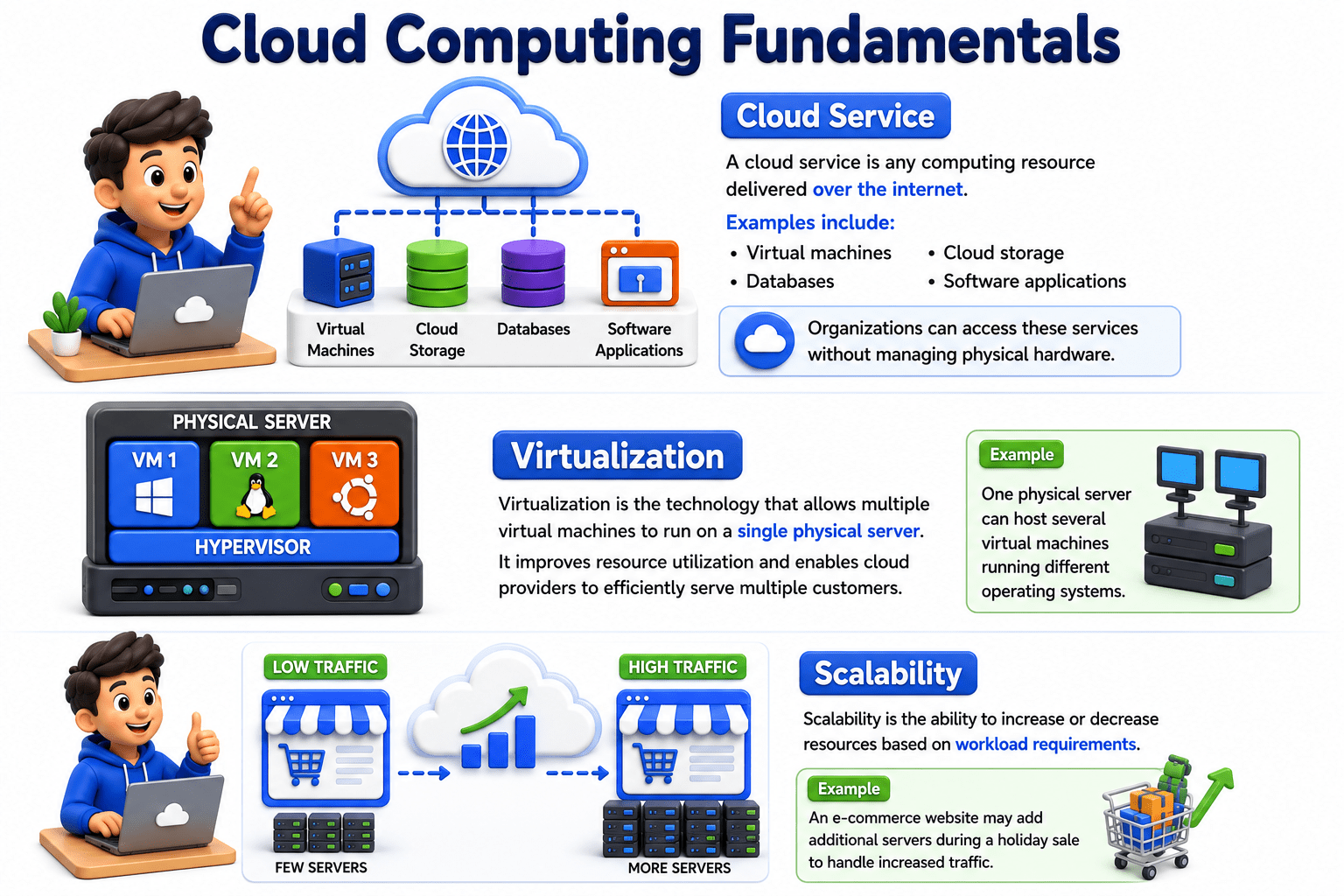
Cloud Computing Fundamentals
Cloud Service
Scalability
Virtualization
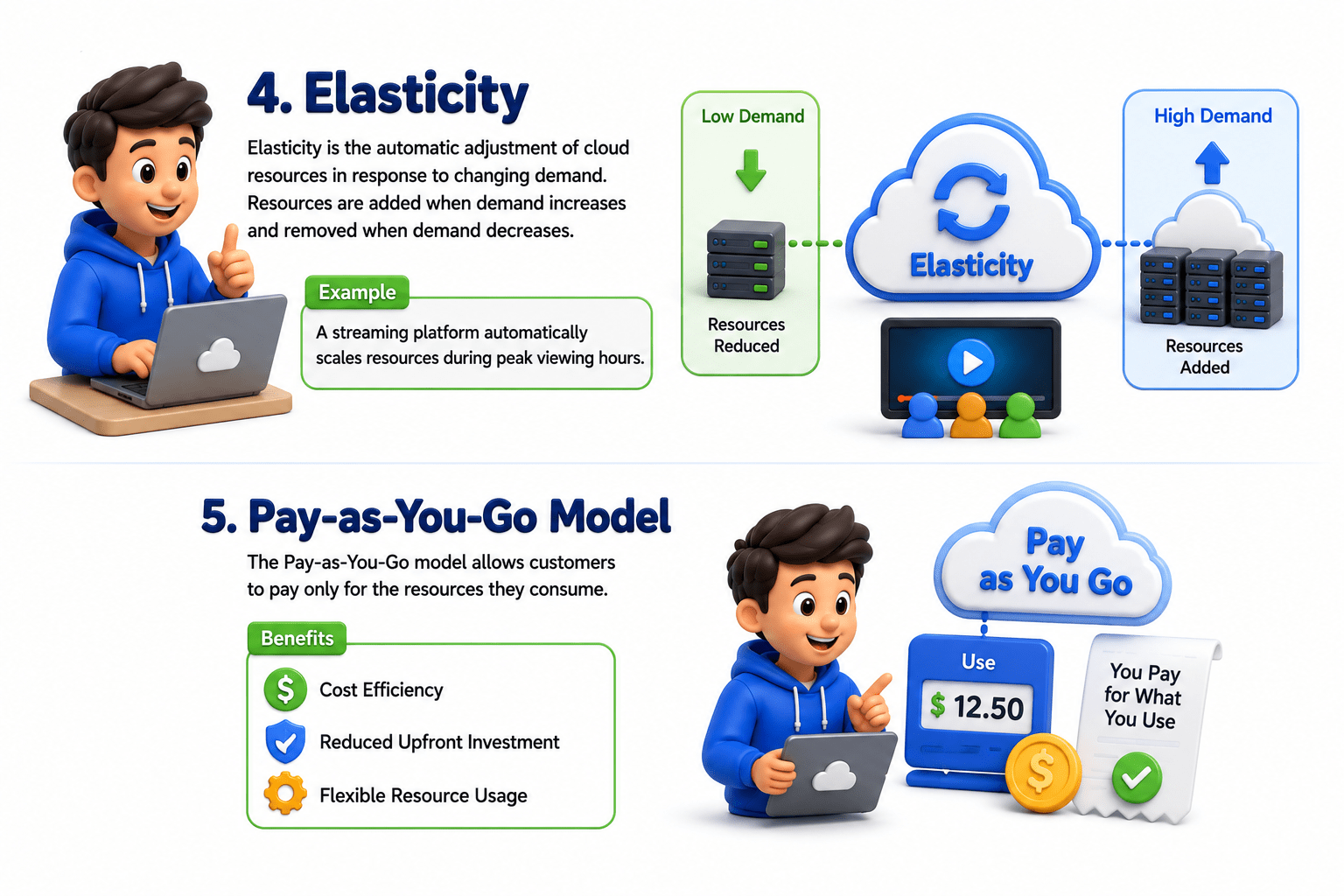
Elasticity
Pay-as-You-Go Model
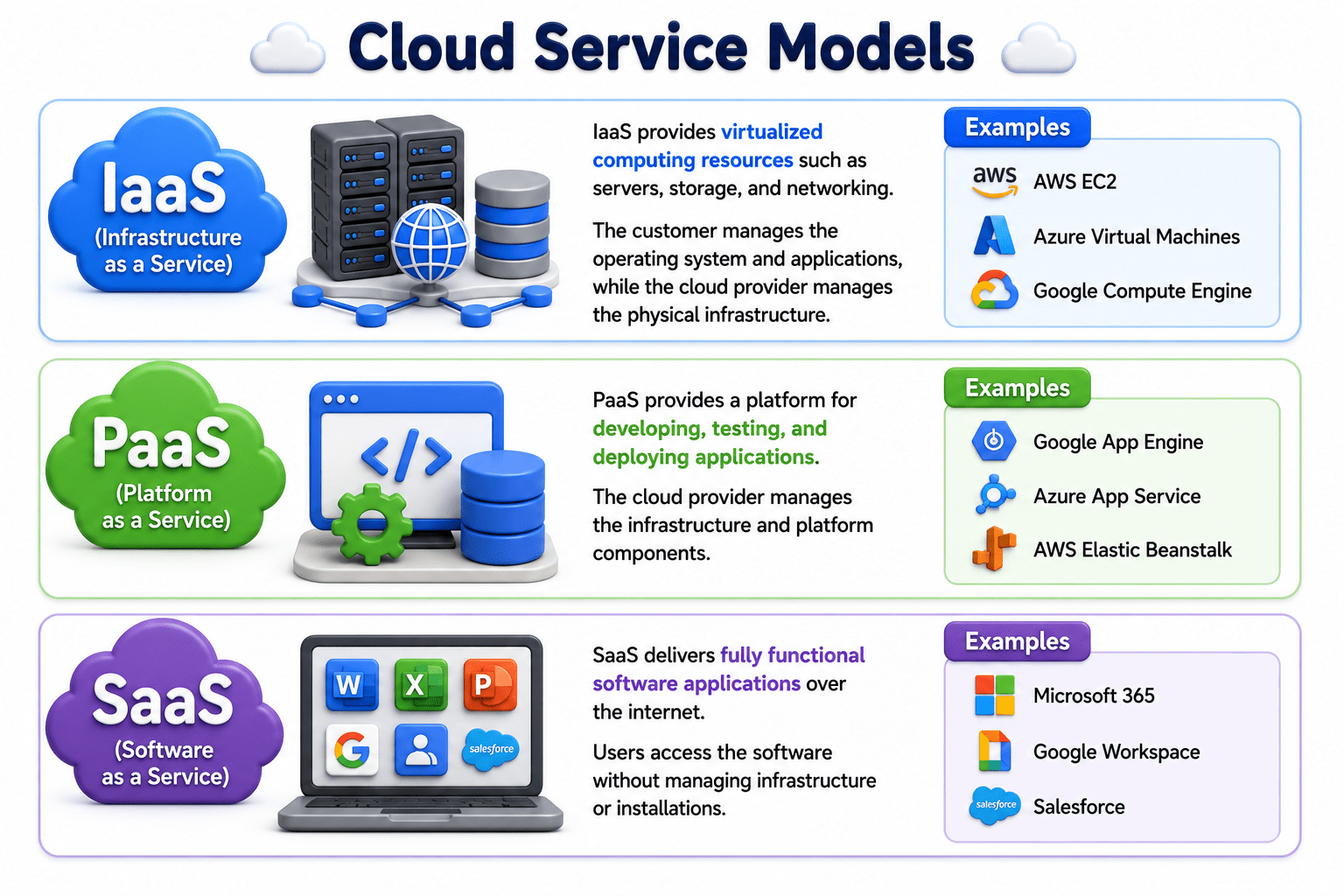
Cloud Service Models
1. IaaS (Infrastructure as a Service)
Provides virtual servers, storage, and networking.
Customer: Manages OS & applications
Provider: Manages infrastructure
2. PaaS (Platform as a Service)
Provides a platform to build and deploy applications
Provider: Manages infrastructure & platform
3. SaaS (Software as a Service)
Provides ready-to-use software over the internet.
Users: Access software without installation
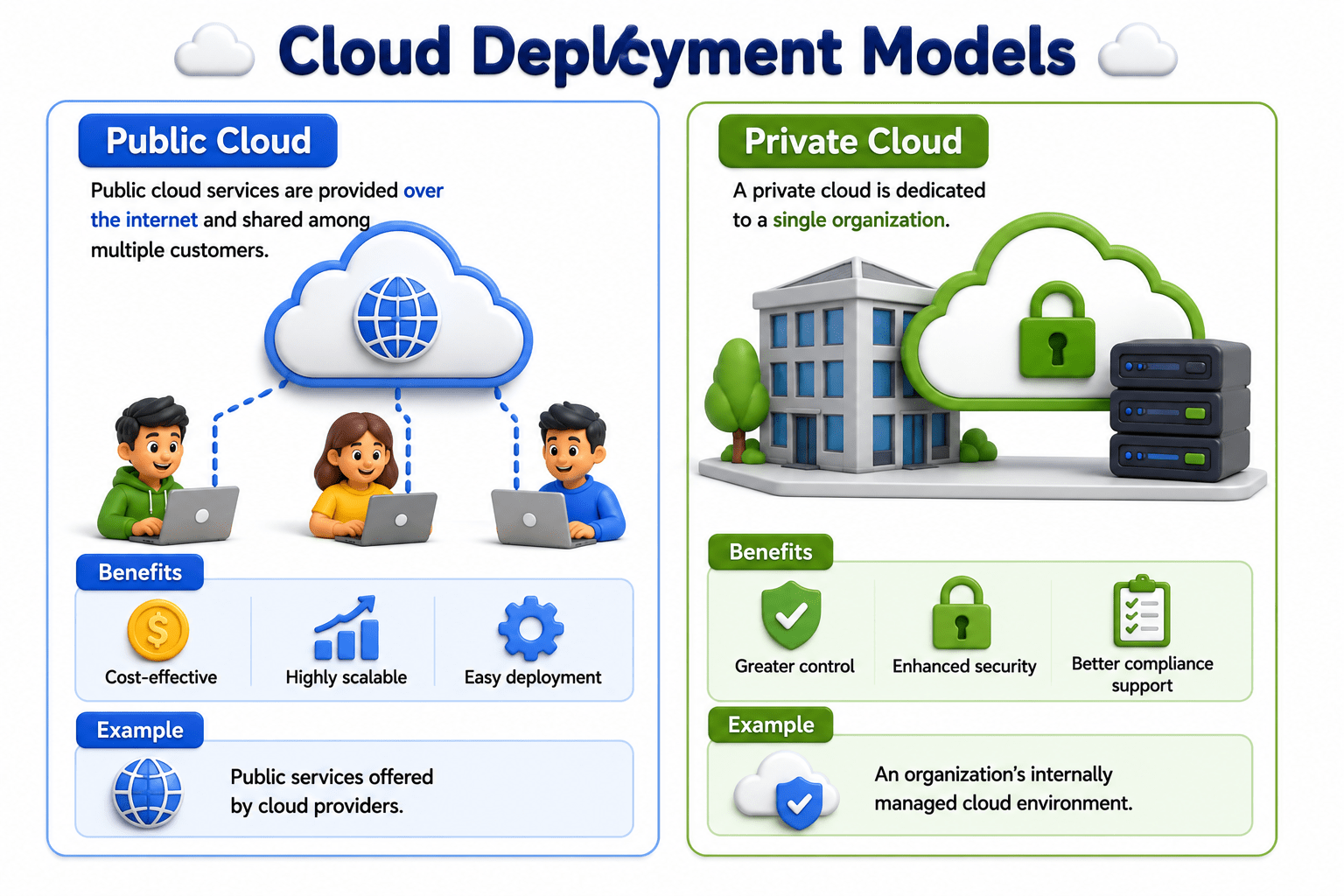
Example :- Public services offered by cloud providers.
Public Cloud
Public cloud services are provided over the internet and shared among multiple customers.
Benifits :-
Cost-effective
Highly scalable
Easy deployment
Example :-
An organization's internally managed cloud environment.
Private Cloud
A private cloud is dedicated to a single organization.
Benifits :-
Greater
control
Enhanced security
compliance support
Cloud Deployment Models
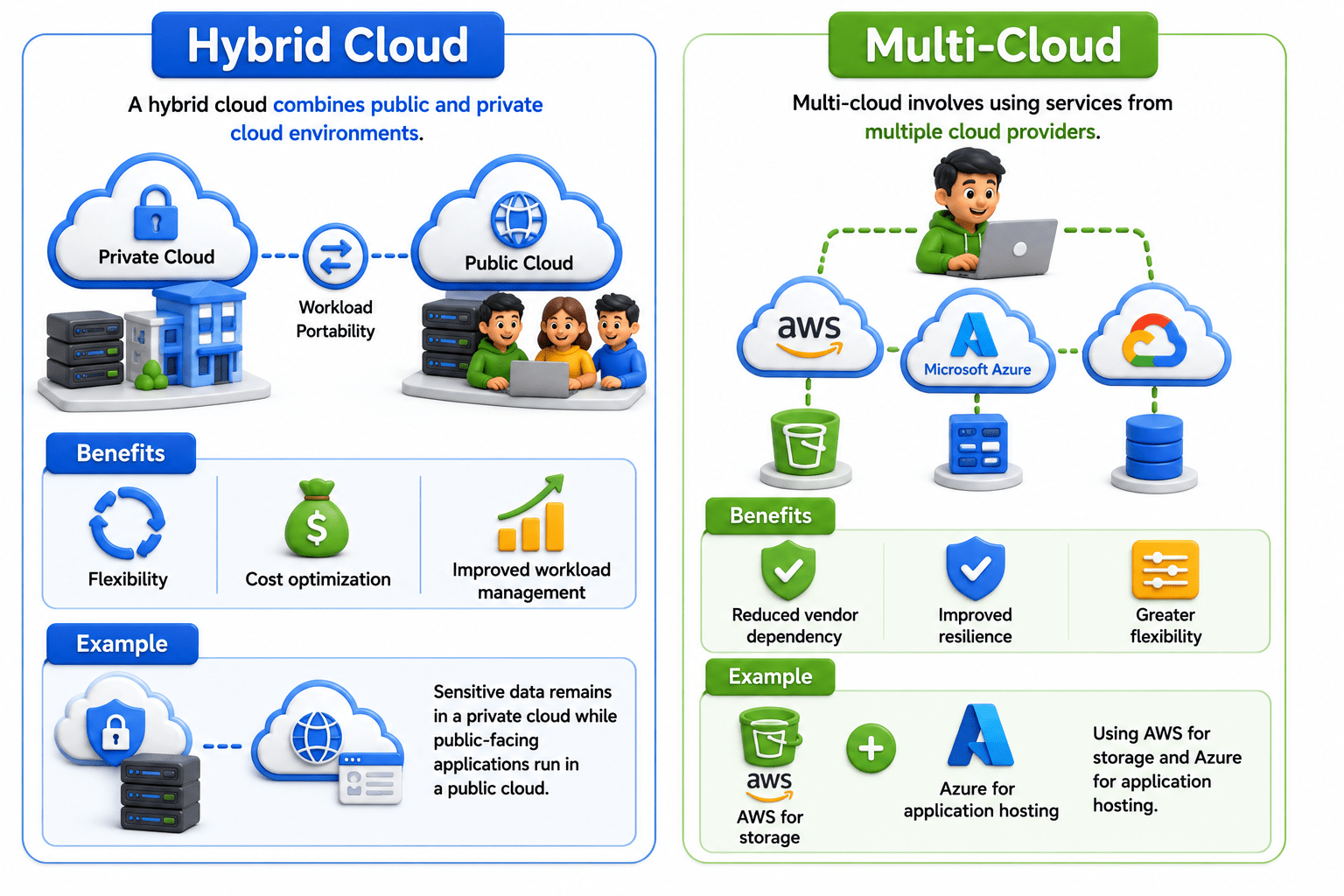
Benifits :-
Hybrid Cloud
A hybrid cloud combines public and private cloud environments.
Example :-
Sensitive data stays in the private cloud, while public
apps run in the public cloud.
Flexibility
Cost optimization
Improved workload management
Benifits :-
Multi-Cloud
Multi-cloud involves using services from multiple cloud providers.
Example :-
Reduced vendor dependency
Greater flexibility
Cloud Security Basics
Shared Responsibility Model
Security is shared between the provider and customer.
Identity and Access Management
Controls user access and permissions to cloud resources.
Data
Encryption
Protects data at rest and in transit.
Security Groups & Firewalls
Control inbound and outbound network traffic.
Backup & Recovery
Restores data after failures or data loss.
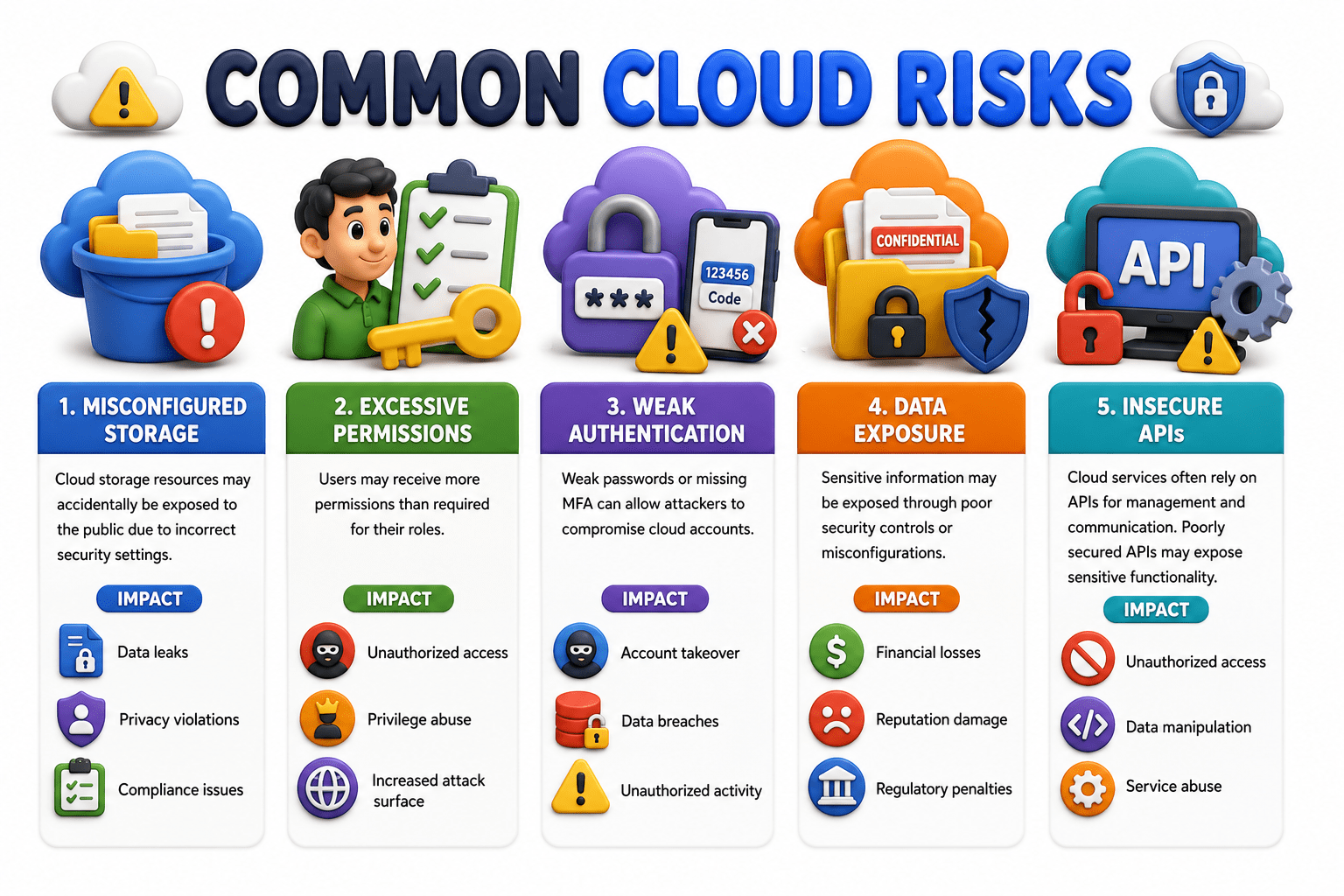
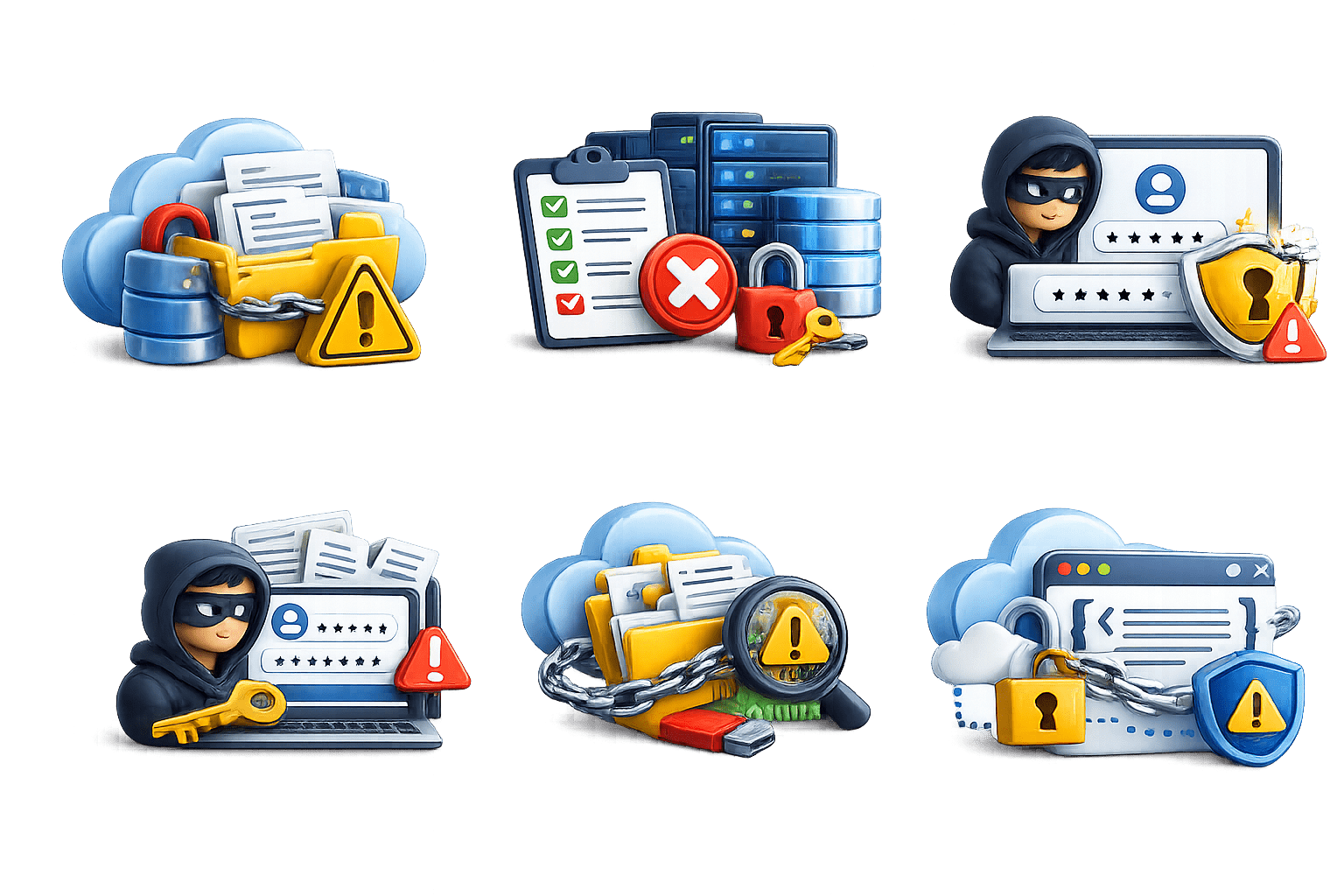
Common Cloud Risks
1. Misconfigured Storage
Cloud storage resources may accidentally be exposed to the public due to incorrect security settings.
2. Excessive Permissions
Users may receive more permissions than required for their roles.
3. Excessive Permissions
Users may receive more permissions than required for their roles.
4. Data Exposure
Cloud storage resources may accidentally be exposed to the public due to incorrect security settings.
5. Data Exposure
Sensitive information may be exposed through poor security controls or misconfigurations.
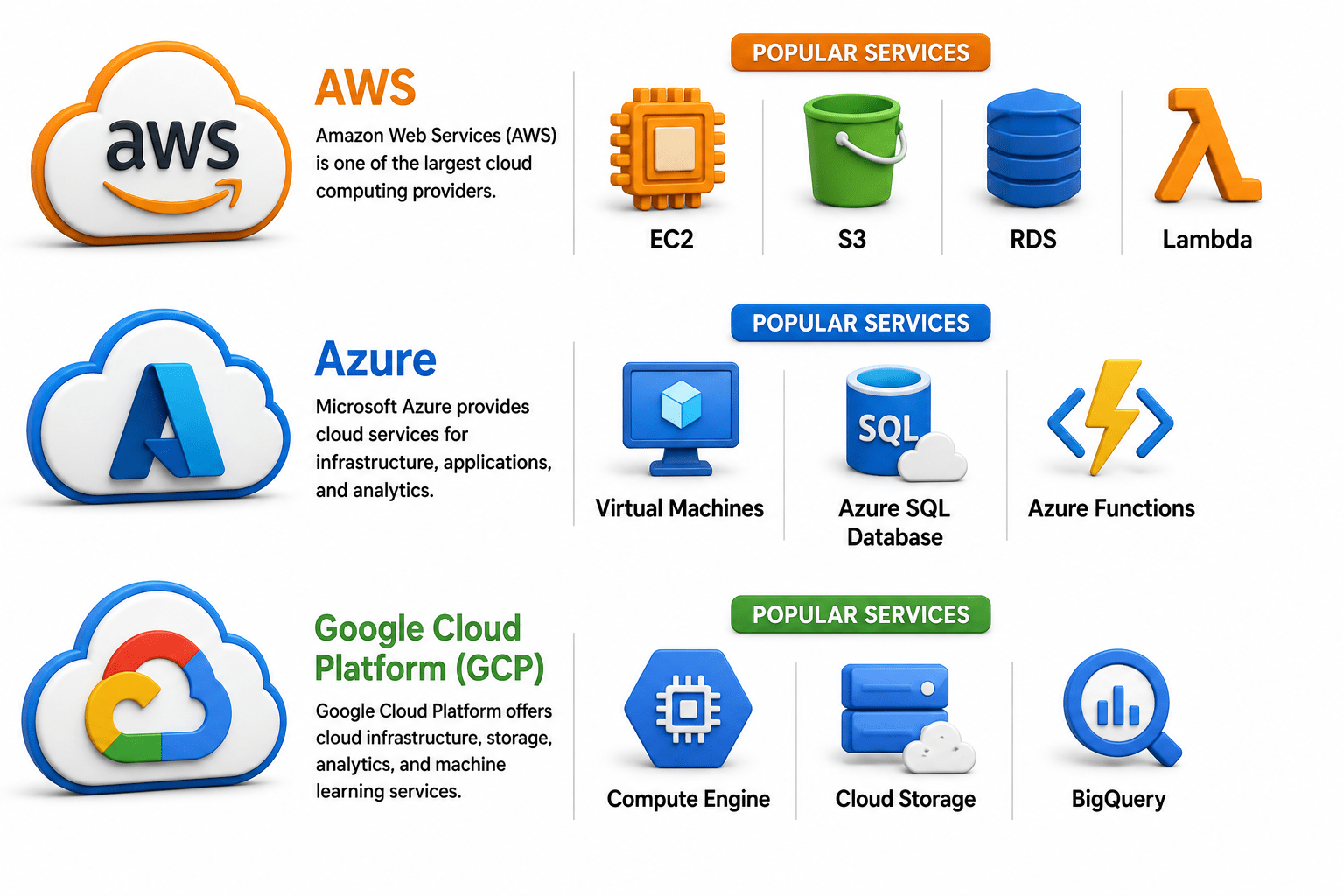
Major Cloud Providers
AWS
Amazon Web Services (AWS) is one of the largest cloud computing providers.
Azure
Microsoft Azure provides cloud services for infrastructure, applications, and analytics.
Google Cloud Platform (GCP)
Google Cloud Platform offers cloud infrastructure, storage, analytics, and machine learning services.
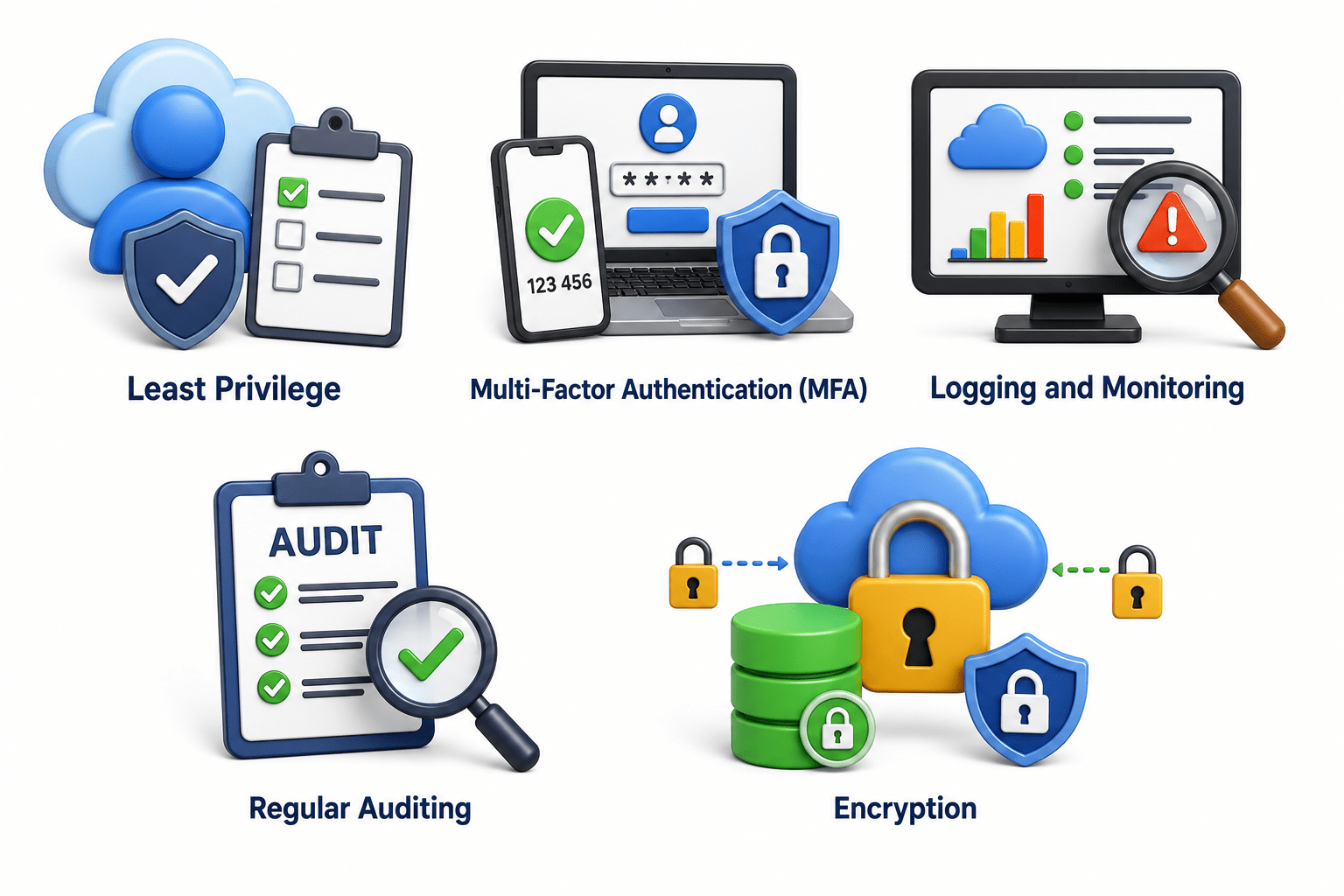
Security Best Practices
Least Privilege:-
Grant only required permissions.
Multi-Factor Authentication (MFA):-
Use multiple verification methods.
Logging & Monitoring: Track activities and detect threats.
Regular Auditing:-
Review security and permissions regularly.
Encryption:-
Encrypt data at rest and in transit.
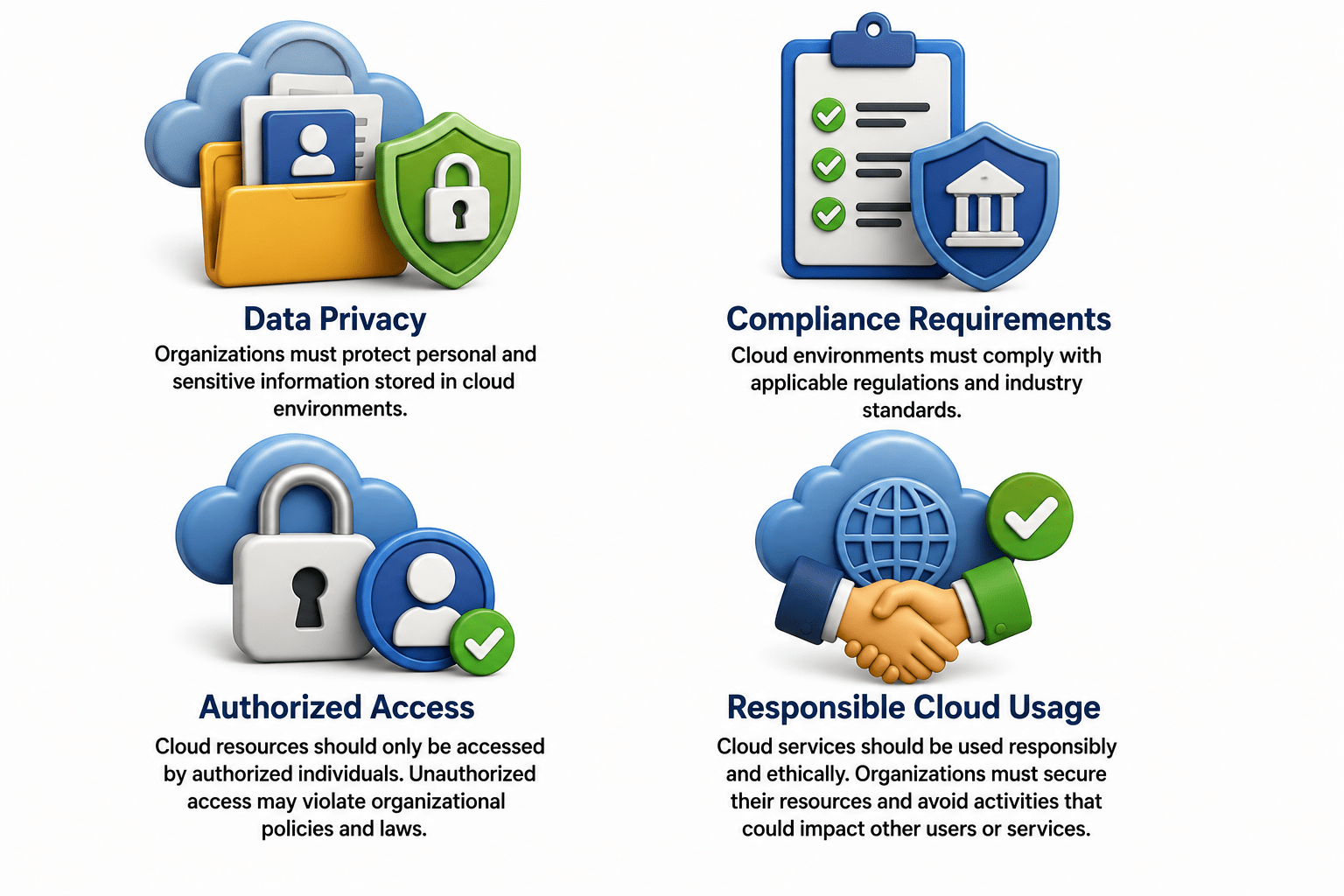
Data Privacy:- Protect personal and sensitive cloud data.
Compliance:- Follow regulations and standards.
Authorized Access:- Only authorized users should access cloud resources.
Responsible Cloud Usage :- Cloud services should be used responsibly and ethically.
Ethical and Legal Considerations
Summary
5
Best practices: MFA, least privilege, encryption, monitoring.
4
Common risks: Misconfiguration, weak authentication
3
Deployment models: Public, Private, Hybrid, Multi-Cloud.
2
Key concepts: Virtualization, Scalability, Elasticity.
1
Cloud computing delivers resources over the internet.
Quiz
Which cloud concept allows multiple virtual
systems to run on one physical server?
A. Encryption
B. Virtualization
C. Scalability
D. Auditing
Which cloud concept allows multiple virtual
systems to run on one physical server?
A. Encryption
B. Virtualization
C. Scalability
D. Auditing
Quiz-Answer
By Content ITV