













Content ITV PRO
This is Itvedant Content department
Learning Outcome
5
Recognize the importance of strong data controls.
4
Understand their impact on financial operations.
3
Identify key static data attributes.
2
Describe Maker-Checker Controls for risk reduction.
1
Explain Data Governance for accurate security data.
What is Data Governance?
Data governance is the overall framework of policies, ownership, and controls that ensures data, particularly security and static data is accurate, complete, consistent, and properly maintained across its entire lifecycle, from creation to amendment to retirement.
What is Maker-Checker Control?
Maker-checker is a control principle requiring that any data entry or change made by one person (the "maker") is independently reviewed and approved by a second, authorised person (the "checker") before it takes effect. This prevents a single individual from creating or altering critical data unchecked.
Key Static Data Attributes of a Security:
1. Security Name
Meaning: The full descriptive name of the instrument as it appears in the market.
Real Example: Indian Government Securities are named in a way that embeds two attributes directly — coupon and maturity year — for instance "6.36% GS 2031".
|
PRESS CLIPPING RBI to auction Rs 32,000 crore government bonds on Friday ANI, 6 July 2026 The report on the Reserve Bank's bond auction referred to the two re-issued securities simply by their names, 6.36 per cent GS 2031 and 7.71 per cent GS 2066, without needing to separately spell out the coupon or maturity for readers. |
2. ISIN
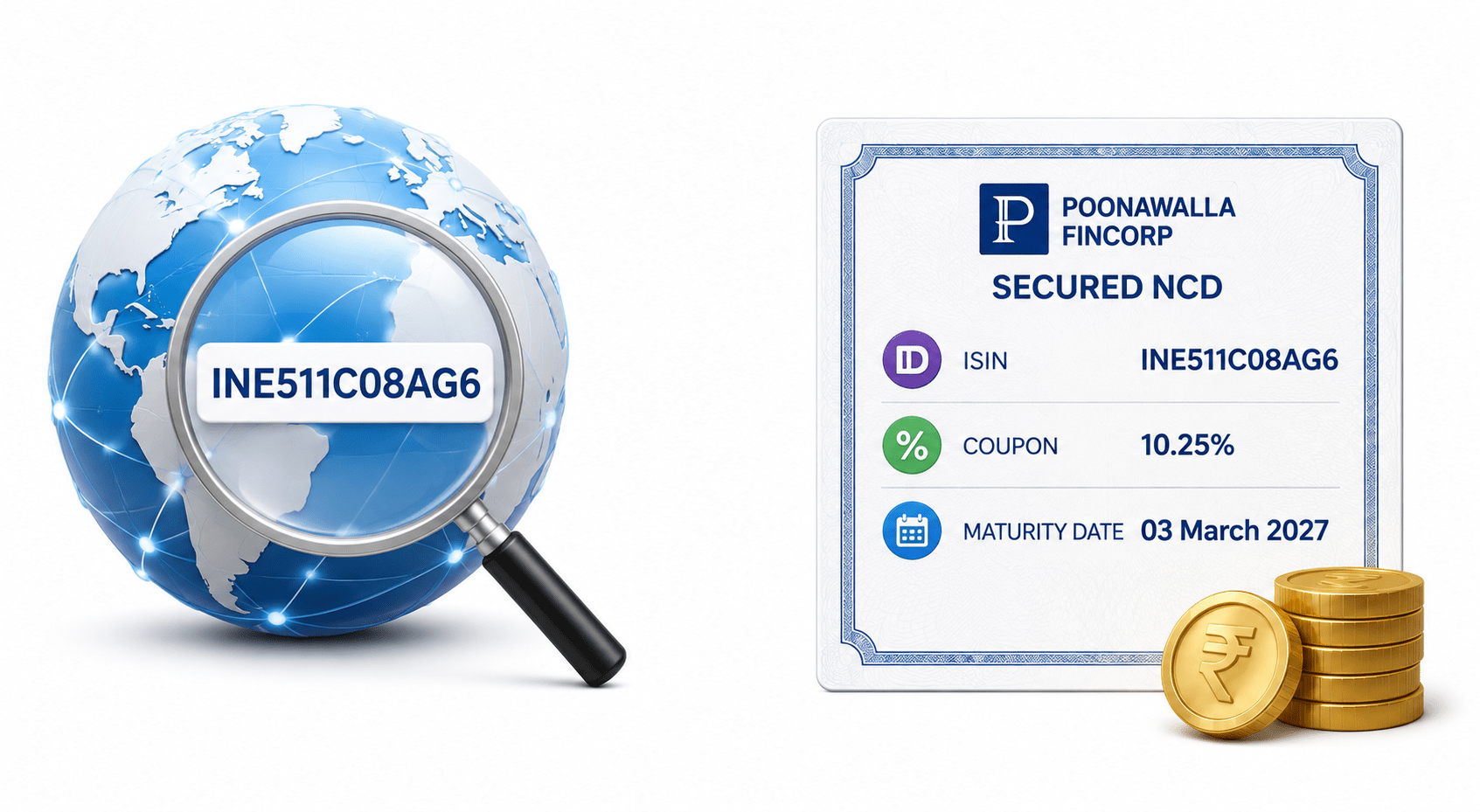
Meaning: A unique 12-character alphanumeric code identifying a specific security globally.
Real Example: A Poonawalla Fincorp secured NCD carries the ISIN INE511C08AG6, distinct from its coupon (10.25%) or maturity date (03 March 2027).
|
PRESS CLIPPING Best Corporate Bonds in India 2026 – High Yield Picks 5paisa, 10 April 2026 The article listed several corporate bonds side by side, and used the ISIN field specifically to distinguish each bond precisely, separate from the issuer name, coupon, or rating mentioned alongside it. |
3. Asset Class
Meaning: The category the instrument belongs to (equity, government bond, corporate bond, money market, derivative).
Real Example: SEBI's 2026 mutual fund reforms now let equity schemes place a portion of assets into an entirely different asset class — gold, silver, or debt.
|
PRESS CLIPPING SEBI Mutual Fund Reforms 2026: Equity Funds Allowed 35% Allocation to Gold, Silver, InvITs and Debt Angel One, 2 March 2026 The report explained that SEBI's revised categorisation rules permit equity mutual funds to invest up to 35 per cent of their non-core allocation across other asset classes, directly illustrating how the asset-class tag on a holding governs what a fund is allowed to do with it. |
4. Currency
Meaning: The currency in which the security is denominated and settled.
Real Example: ICICI Bank's five-year bond raised in July 2026 was denominated in US dollars, not rupees, its first public dollar bond since 2017.
|
PRESS CLIPPING ICICI Bank raises $1 billion through 5-year USD bonds at T+100 bps Business Standard, 23 July 2026 The report described a senior unsecured bond priced at a coupon of 5.46 per cent, explicitly denominated in US dollars rather than rupees — underlining that currency is set at issuance and carries its own settlement and FX implications distinct from the coupon or rating. |
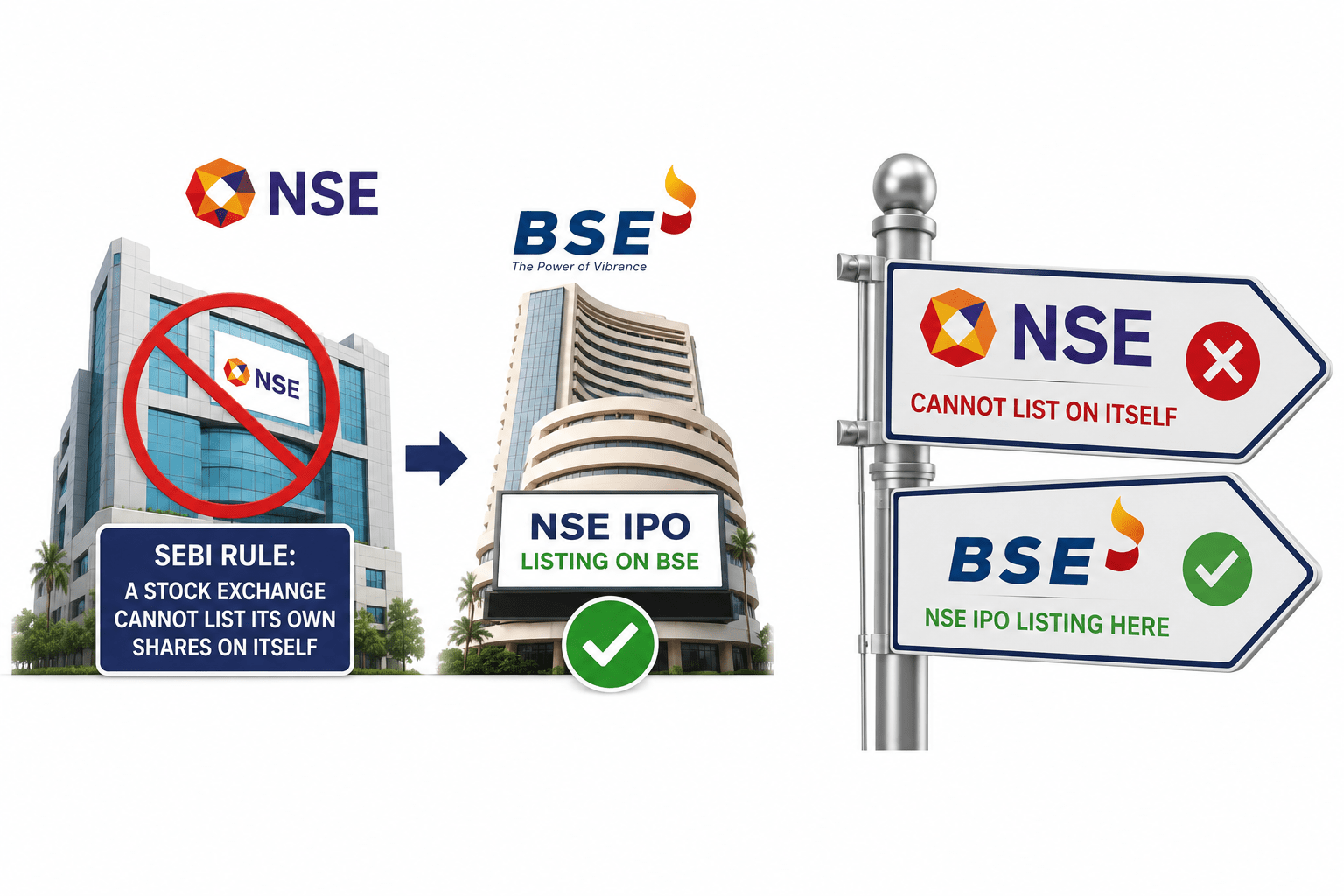
Meaning: The exchange or trading venue where the security is listed or traded.
Real Example: SEBI rules do not allow a stock exchange to list its own shares on itself, so NSE's own IPO shares are set to list on BSE's platform instead.
PRESS CLIPPING
National Stock Exchange (NSE) IPO: Expected Date, Price, Size, Details, Review
Kotak Securities, July 2026
Coverage of NSE's IPO filing noted that because a stock exchange cannot self-list, its shares would have to be listed on a different exchange altogether — a clear illustration that the exchange field is a distinct, sometimes counter-intuitive, attribute of a security.
5. Exchange
6. Face Value
Meaning: The nominal (par) value of the security, used as the basis for interest and redemption calculations.
Real Example: Tembo Global Industries approved subdividing its equity face value from Rs 10 to Re 1 in July 2026, multiplying its share count tenfold.
|
PRESS CLIPPING 1:10 Stock Split: Tembo Global Industries to Split Face Value from ₹10 to ₹1 Trade Brains, July 2026 The report explained that shareholders approved subdividing each existing share of face value Rs 10 into ten shares of face value Re 1, with the company's total market value unaffected — showing how a change to a single static-data field, face value, mechanically resets share count and price. |
7. Coupon
Meaning: The interest rate paid by the issuer on a debt security, and its payment frequency.
Real Example: Power Finance Corporation's dollar bond carried a fixed coupon of 3.35% per annum, set at issuance and unchanged for the life of the bond.
|
PRESS CLIPPING PFC raises $500 million in India's longest-tenure issue of USD bonds Business Standard (archived report) The report specified the bond's fixed coupon rate separately from its currency and maturity fields, noting strong investor demand for the issue — showing the coupon as the specific field that drives the interest an investor actually receives. |
8. Maturity Date
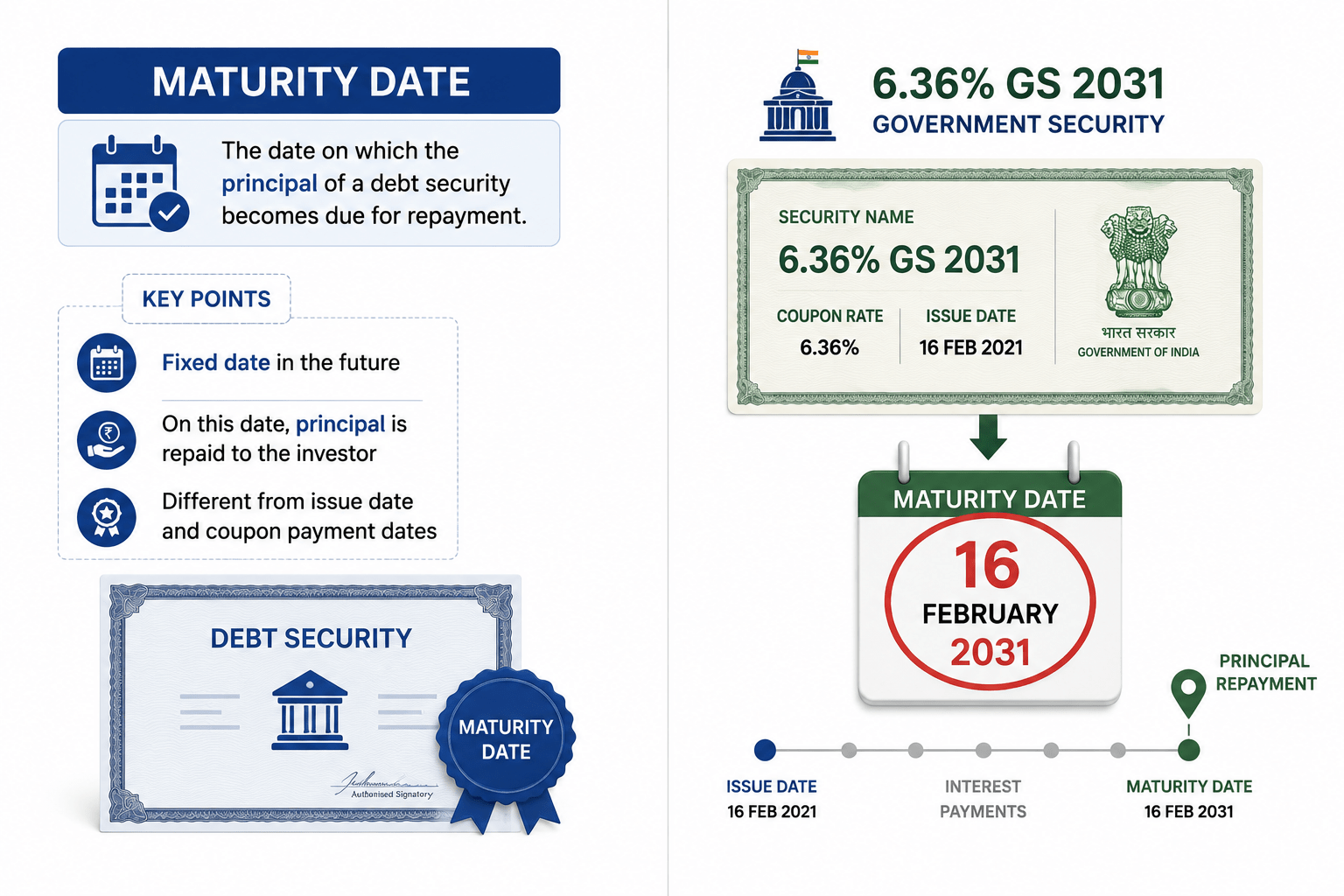
Meaning: The date on which the principal of a debt security becomes due for repayment.
Real Example: The same "6.36% GS 2031" government security matures on 16 February 2031 — a specific date distinct from just the year embedded in its name.
|
PRESS CLIPPING RBI to auction Rs 32,000 crore government bonds on Friday ANI, 6 July 2026 The report specified the exact maturity date of the re-issued security, 16 February 2031, separately from its coupon and issue size — the kind of precision a security name alone ("GS 2031") cannot fully convey. |
Importance of the attributes:
1. Ensures accurate matching
ISIN, Security Name, and Currency together confirm that the fund's internal holdings are being matched against the correct security in custodian and broker records, so reconciliation does not throw up false breaks or match the wrong instrument.
2. Locks in the correct valuation methodology
Asset Class and Exchange determine which pricing approach and price feed source are applied during NAV calculation, ensuring every holding is valued using the right method.
3. Forms the foundation of accurate NAV
Face Value and Coupon together drive principal and accrued interest calculations, which directly determine the correctness of the fund's NAV.
Importance of the attributes:
4. Keeps cash flow and redemption timing correct
Maturity Date ensures that valuation and redemption processing happen on the right date, so cash flows are discounted correctly and redemptions are not missed or mistimed.
5. Prevents error propagation through maker-checker
Independent verification of every attribute by a checker ensures a single incorrect entry cannot silently flow through into trades, reconciliation, or NAV — fulfilling the core purpose of data governance.
Summary
5
Strong controls prevent downstream errors.
4
Correct data supports accurate financial operations.
3
Static data attributes uniquely define securities.
2
Maker-Checker Controls ensure independent approval.
1
Data Governance ensures accurate & consistent security data.
Quiz
Which static data attribute determines when the principal of a bond is repaid?
A. Coupon
B. Exchange
C. ISIN
D. Maturity Date
Quiz-Answer
Which static data attribute determines when the principal of a bond is repaid?
A. Coupon
B. Exchange
C. ISIN
D. Maturity Date
By Content ITV