









Content ITV PRO
This is Itvedant Content department
Learning Outcome
5
Understand Amazon ECR
4
Deploy applications on AWS Fargate
3
Configure and create an EKS cluster
2
Identify key benefits of EKS
1
Understand what Amazon EKS is
Topic Name-Recall(Slide3)
Hook/Story/Analogy(Slide 4)
Transition from Analogy to Technical Concept(Slide 5)
What is EKS?
EKS is a fully managed Kubernetes service
provided by Amazon Web Services
It allows you to run Kubernetes without managing control plane infrastructure
AWS handles:
Control plane
Security patches
Scaling
High availability
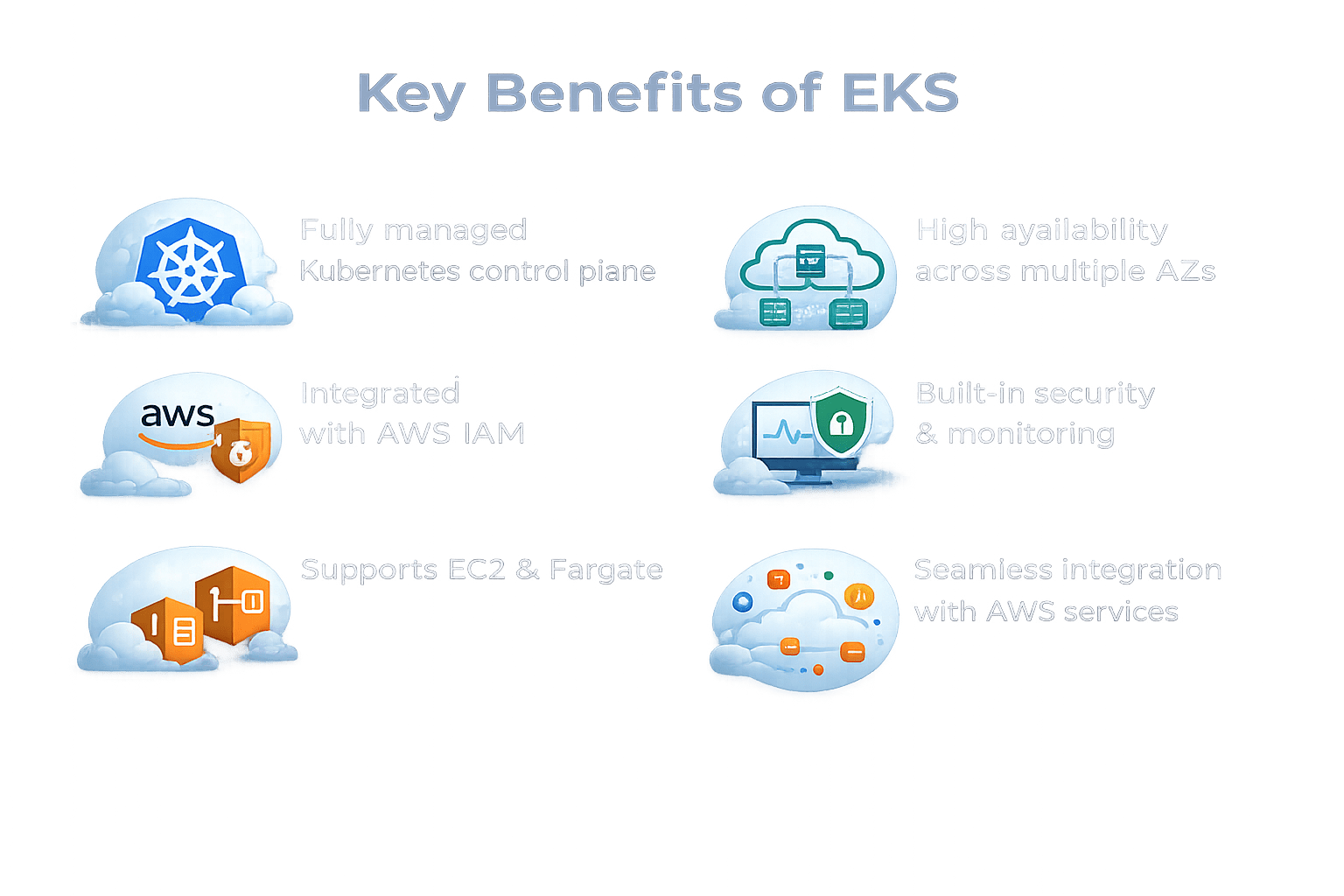
Key Benefits of EKS
Fully managed Kubernetes control plane
High availability across multiple AZs
Integrated with AWS IAM
Built-in security & monitoring
Supports EC2 & Fargate
Seamless integration with AWS services
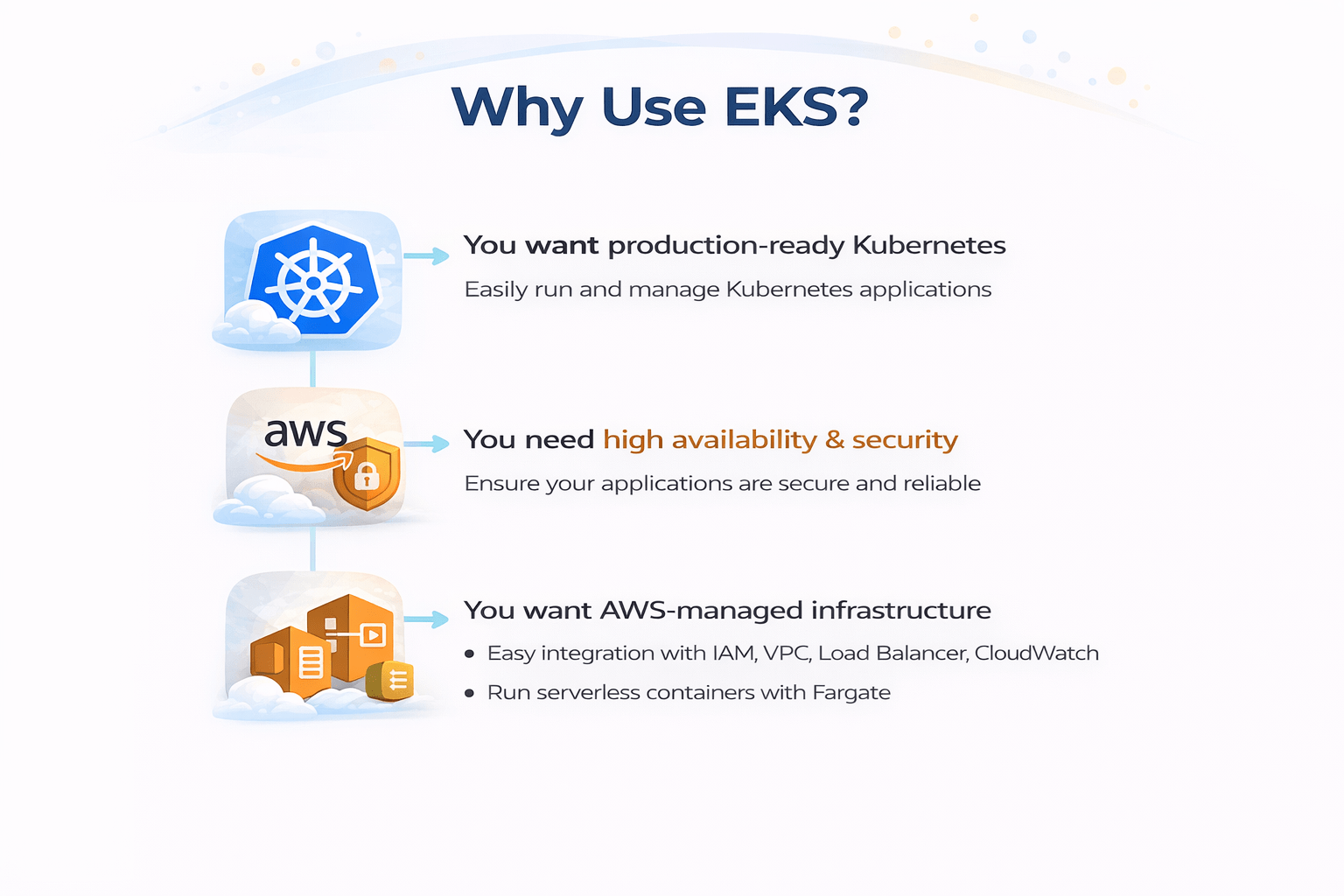
Why Use EKS?
You want production-ready Kubernetes
Easily run and manage kubernetes application
You need high availability & security
Ensure your applications are secure and reliable
You want AWS-managed infrastructure
Run serverless container using Fargate
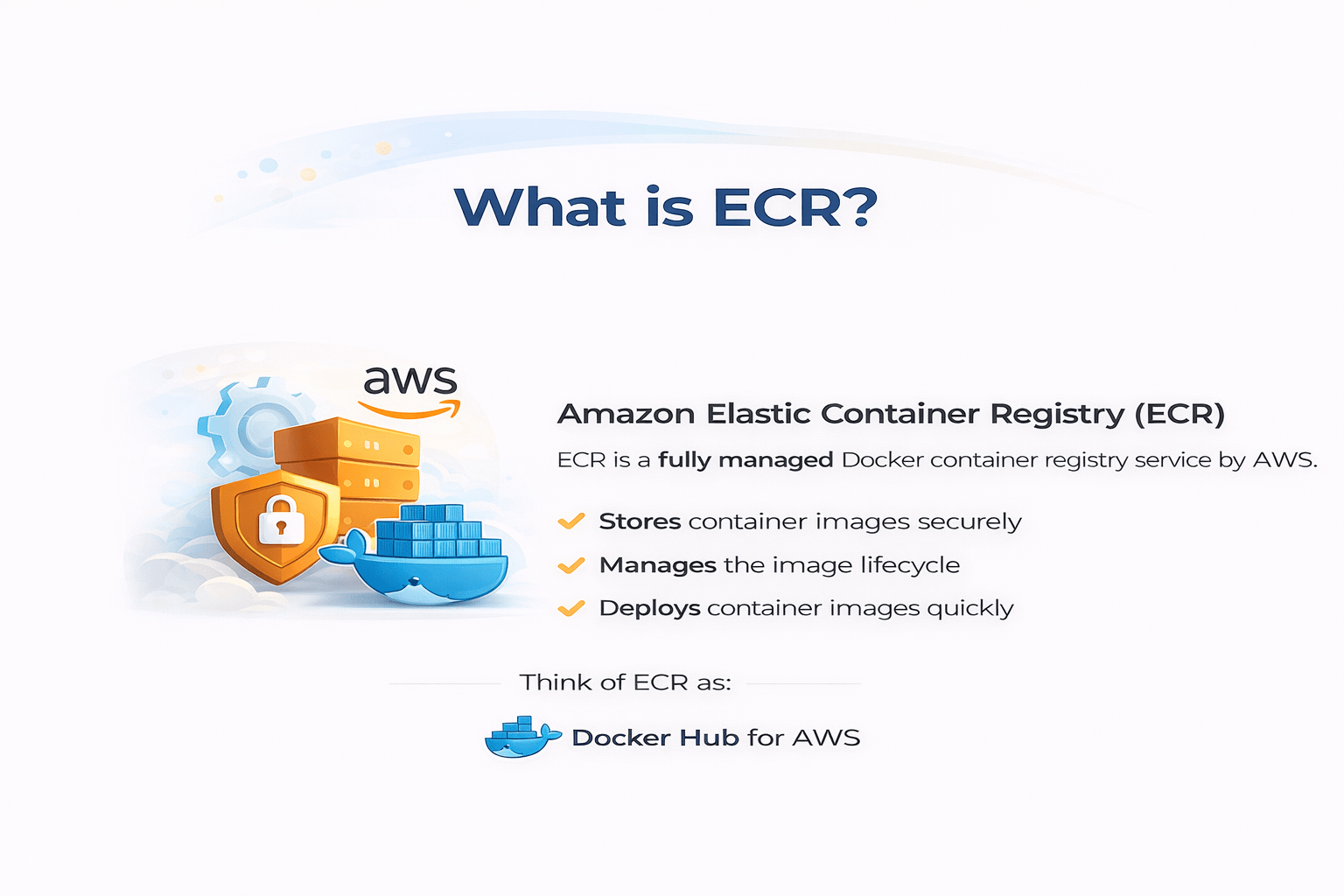
What is ECR?
Think of ECR as:
Docker Hub for AWS
Amazon Elastic Container Registry (ECR)
ECR is a fully managed Docker container registry service by AWS
Stores container images securely
It:
Manages the image lifecycle
Deploys container images quickly
Difference Between EKS and ECR
Amazon Elastic Container Registry
Stores container images
Container Registry
Docker Images
Docker Hub
Storing application images
Runs Kubernetes clusters
Compute/Orchestration
Pods, Services, Deployments
Kubernetes Cluster
Running applications
Amazon Elastic Kubernetes Service
EKS runs containers
ECR stores container images
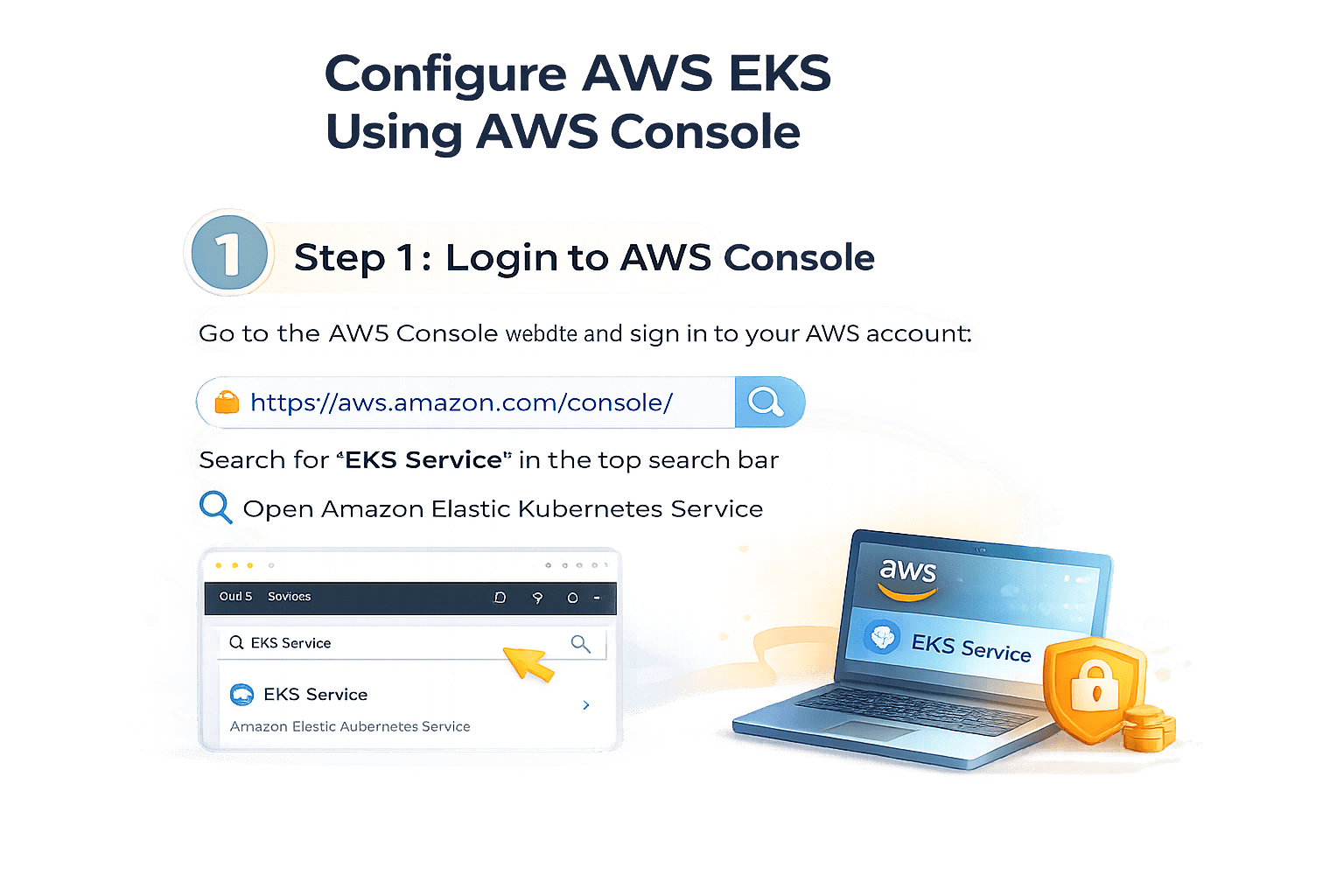
Configure AWS EKS (Using AWS Console)
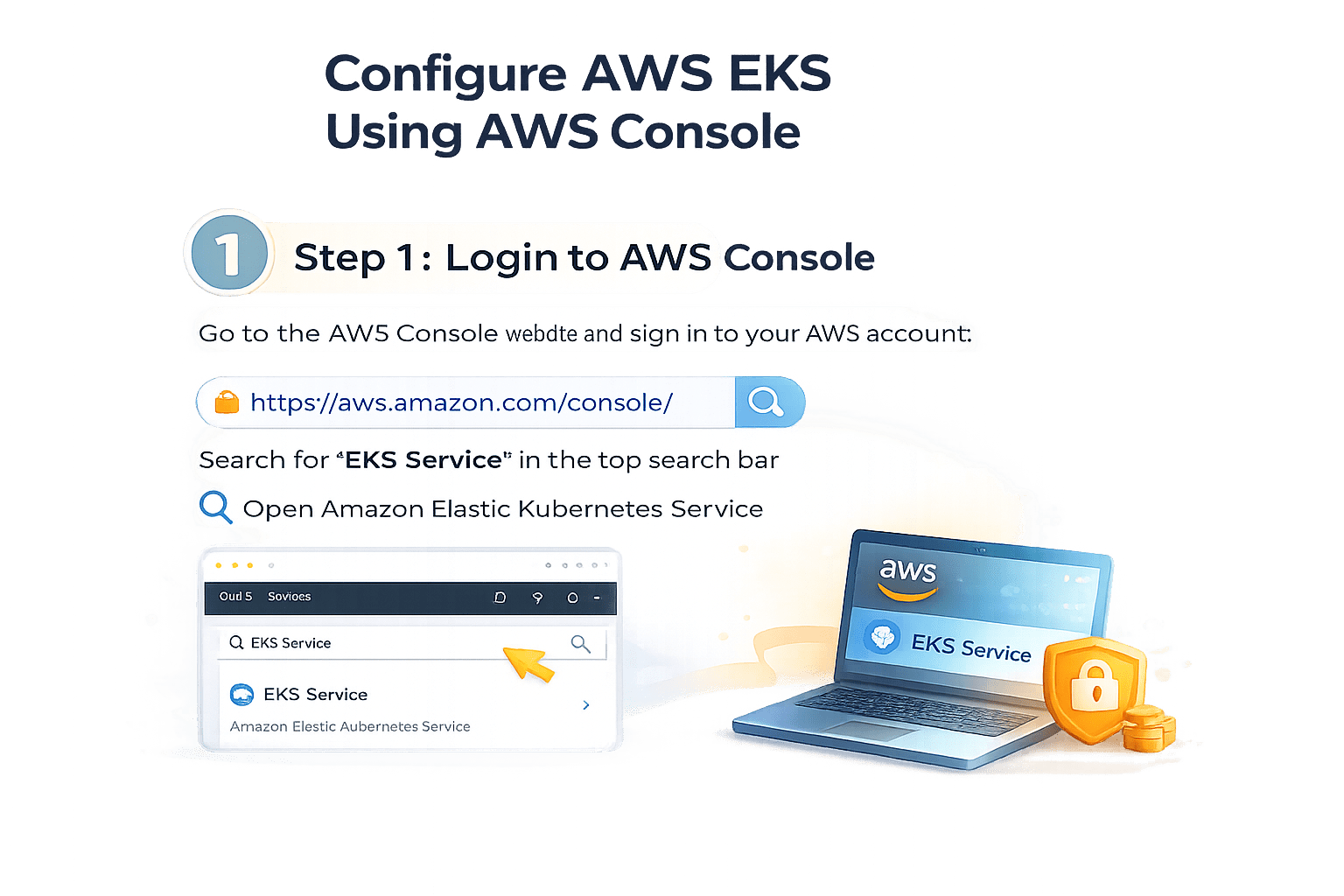
Step 1 – Login to AWS Console
Go to: https://aws.amazon.com/console/
Sign in to your AWS account.
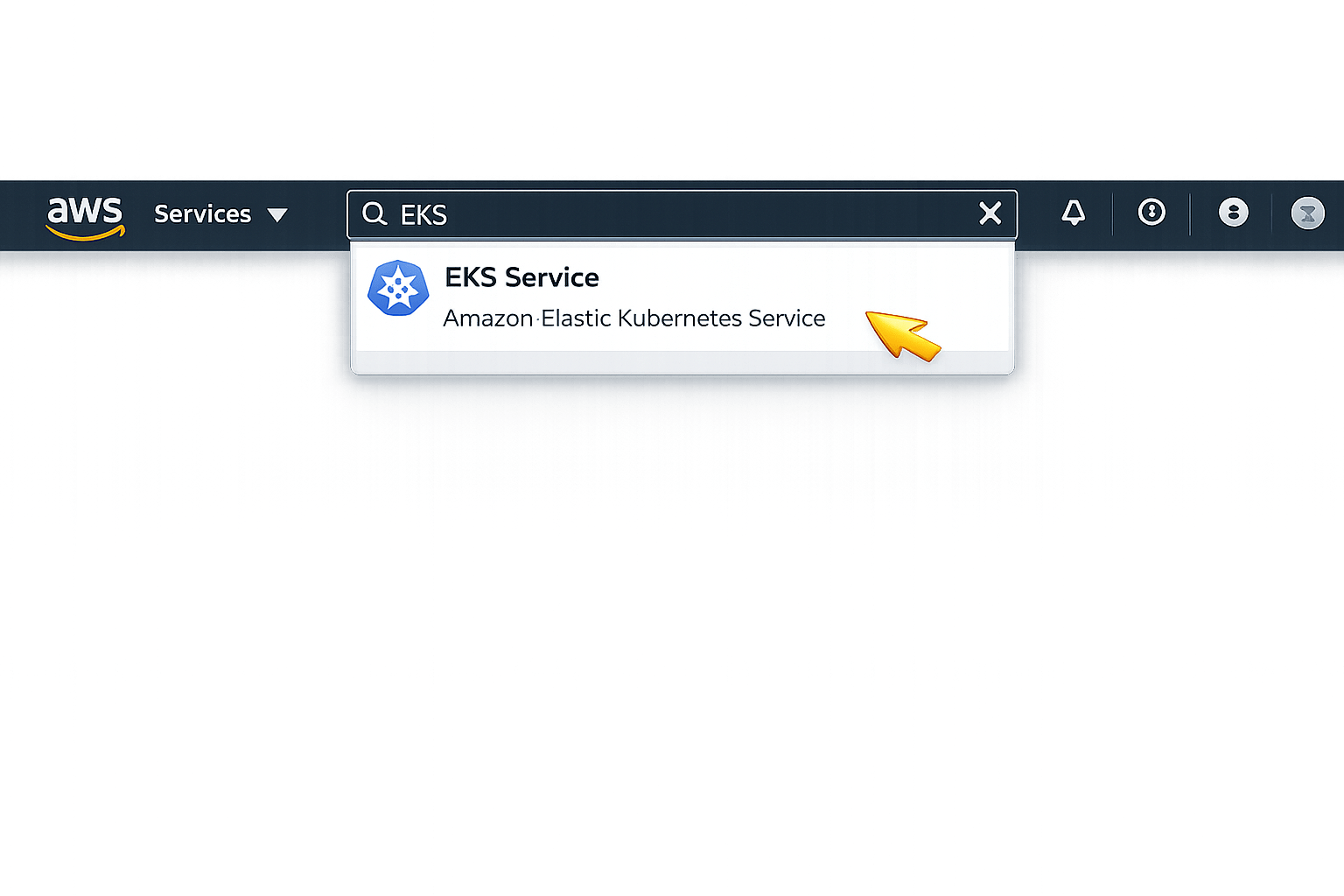
Search for EKS Service in the top search bar
Configure AWS EKS (Using AWS Console)
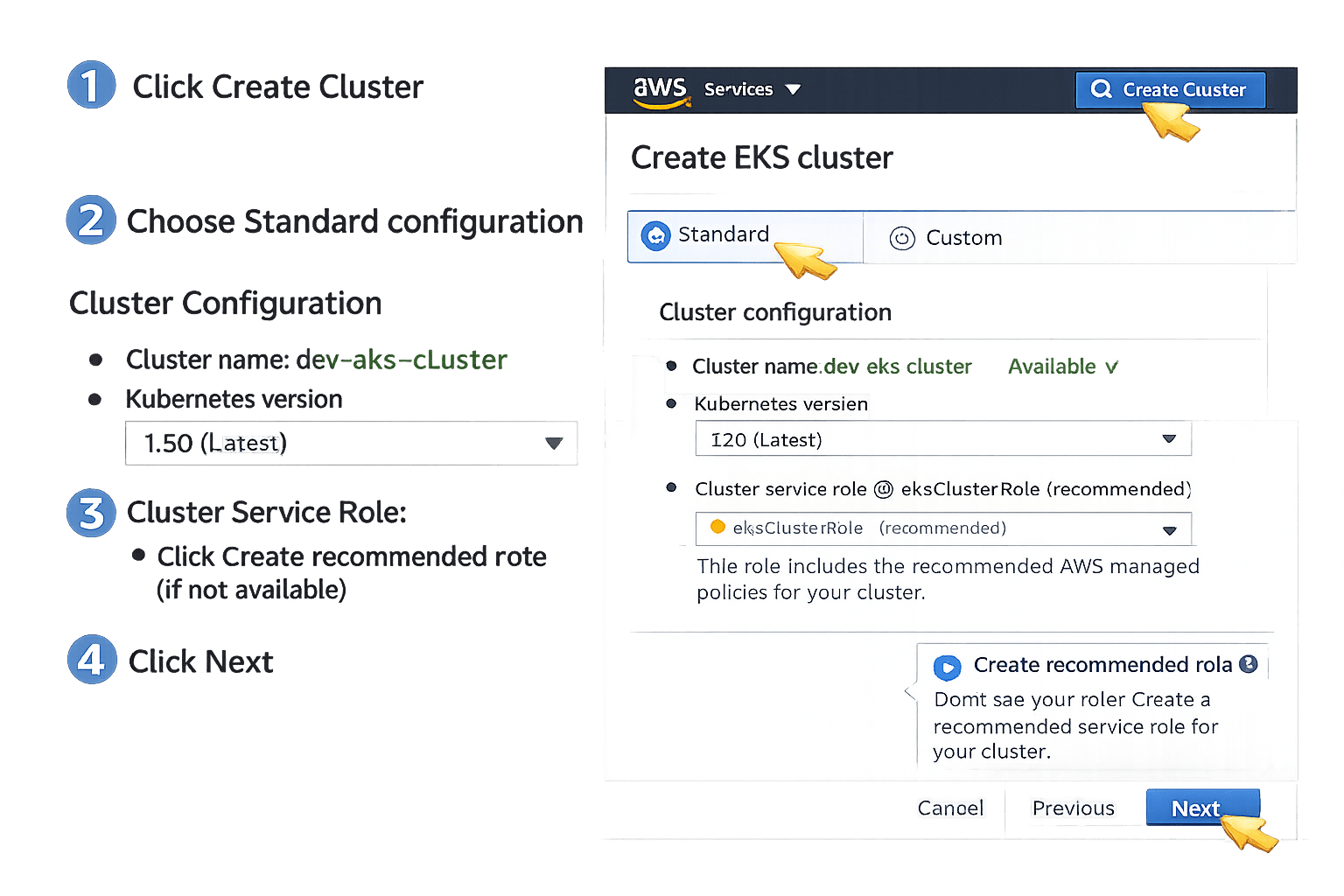
Step 2 – Create EKS Cluster
1.Click Create Cluster
2.Choose Standard configuration
3. Click Next
Cluster name: dev-eks-cluster
Kubernetes version: Select latest stable
Cluster Service Role:
Click Create recommended role (if not available)
Core Concepts (Slide 7)
Core Concepts (.....Slide N-3)
Summary
5
Build strong branding
4
Use different marketing channels
3
Target the right audience
2
Create and communicate value
1
Understand customer needs
Quiz
Which platform is mainly used for professional networking and B2B marketing ?
A. Facebook
B. Instagram
C. LinkedIn
D. Snapchat
Quiz-Answer
Which platform is mainly used for professional networking and B2B marketing ?
A. Facebook
B. Instagram
C. LinkedIn
D. Snapchat
By Content ITV