











































Content ITV PRO
This is Itvedant Content department
Learning Outcome
5
Apply the concept to real-world networking scenarios
4
Describe how routing decisions change dynamically
3
Explain how routers choose the best path
2
Differentiate between types like RIP, OSPF, and BGP
1
Understand what a routing protocol is and why it is needed
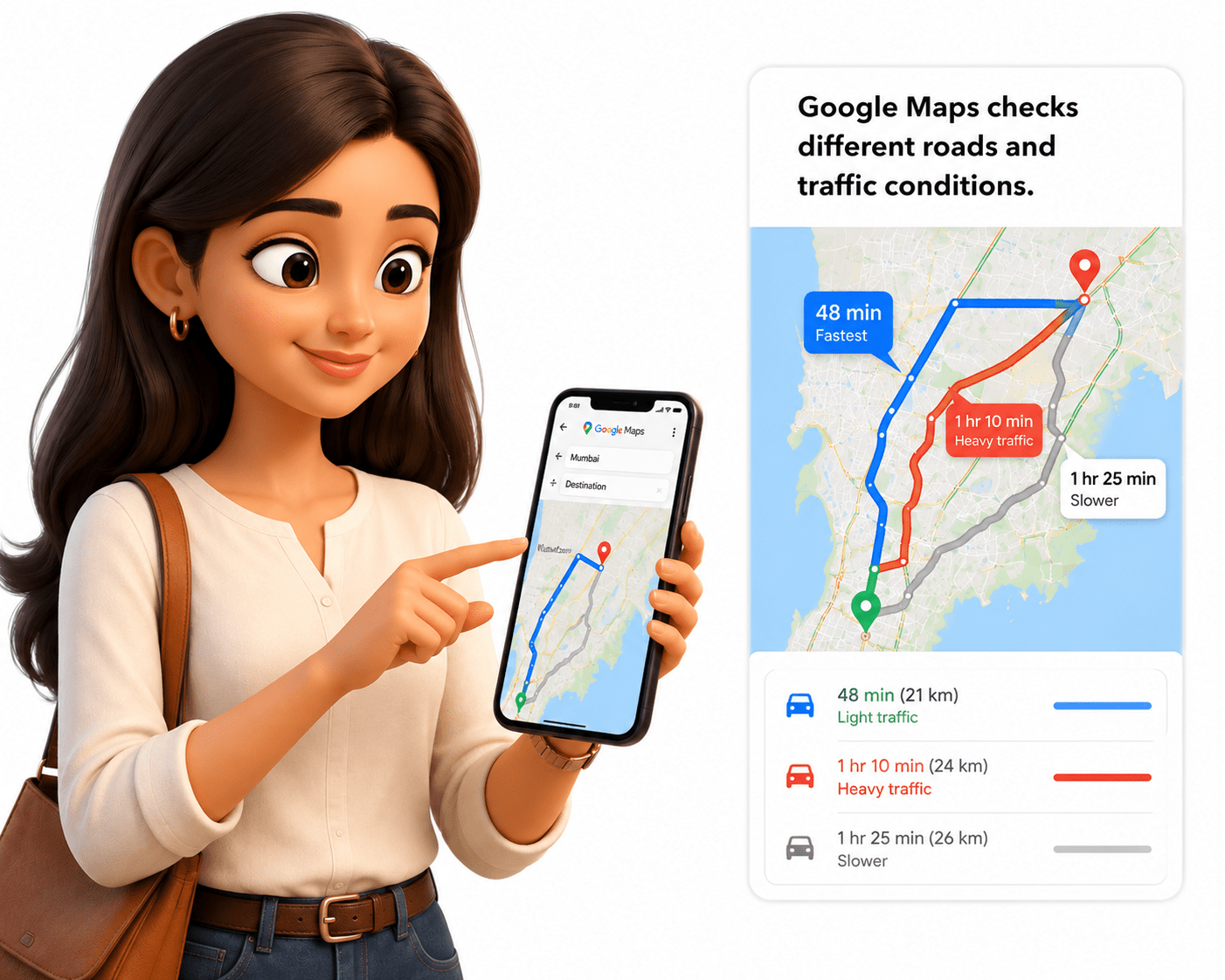
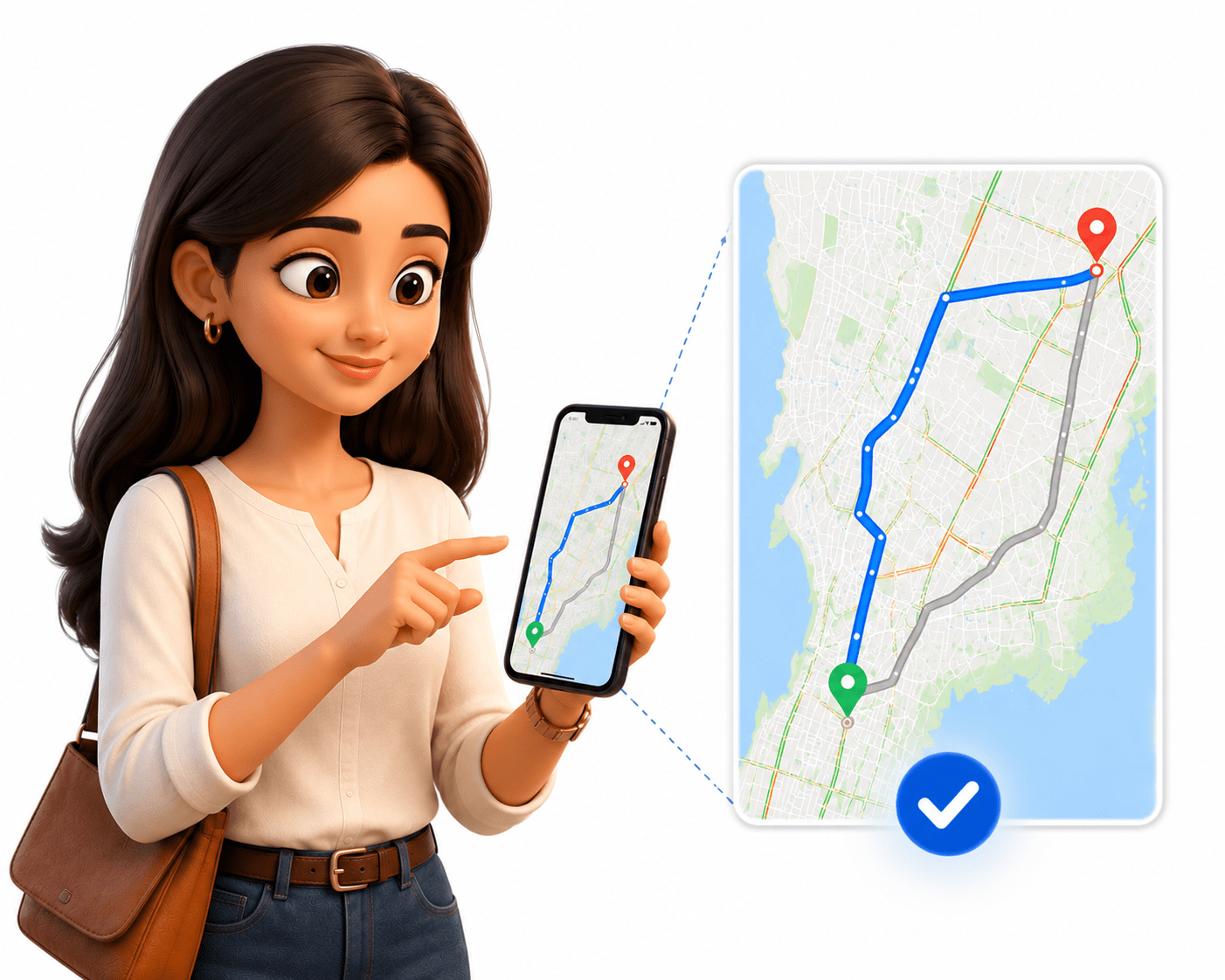
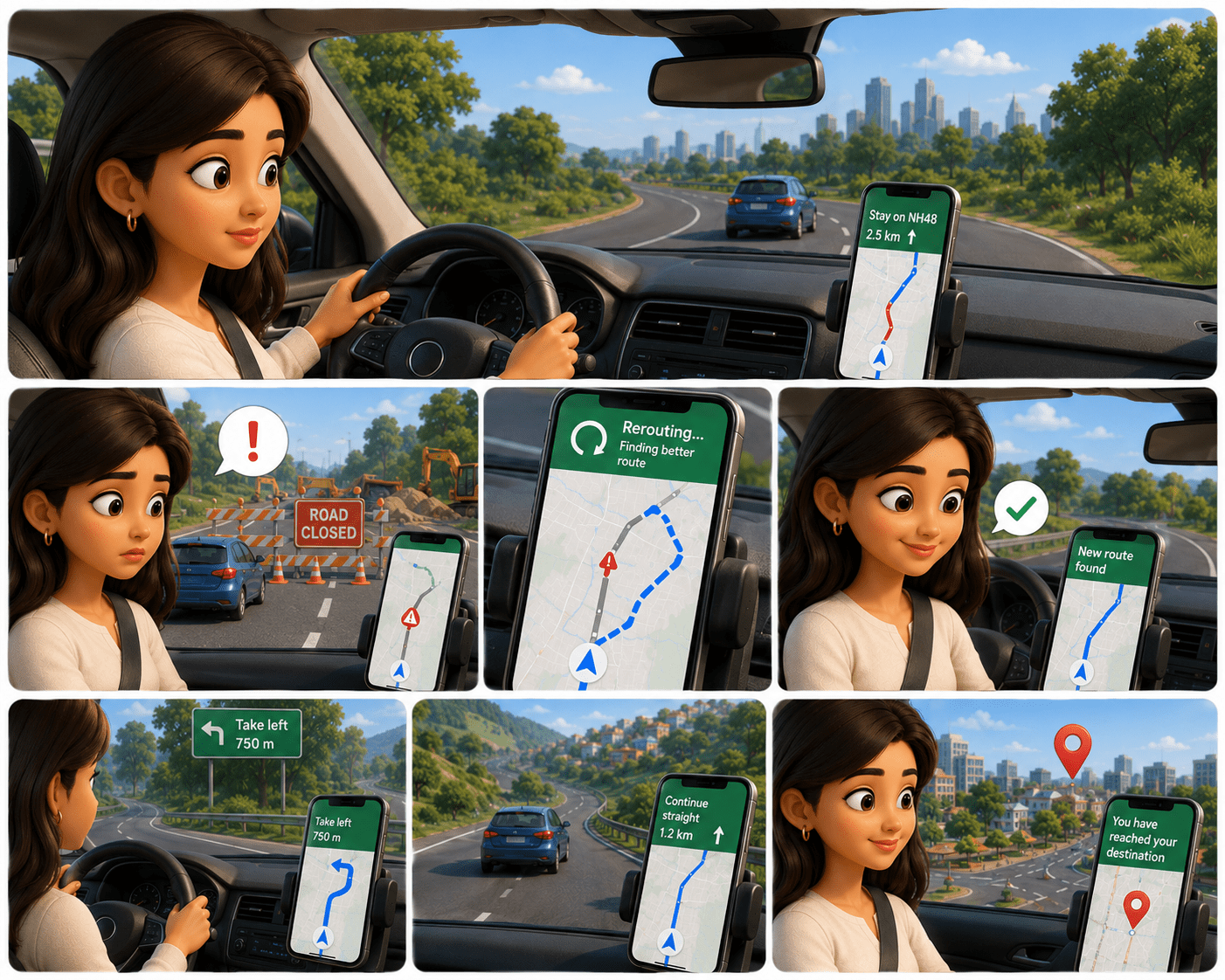
A person in Mumbai opens Google Maps to reach a destination.
Google Maps checks different roads and traffic conditions.
Similarly Routers check different network paths available for data.
A user can sends data from Mumbai to a server in the US.
The traveler passes through many roads and cities.
Google Maps selects the fastest and safest route.
Routing protocols choose the best path for data transfer.
The data travels through multiple routers across networks.
If a road is blocked, Google Maps finds another route.
At every turn, Google Maps guides the traveler.
At every router, routing protocols decide where to send the data next.
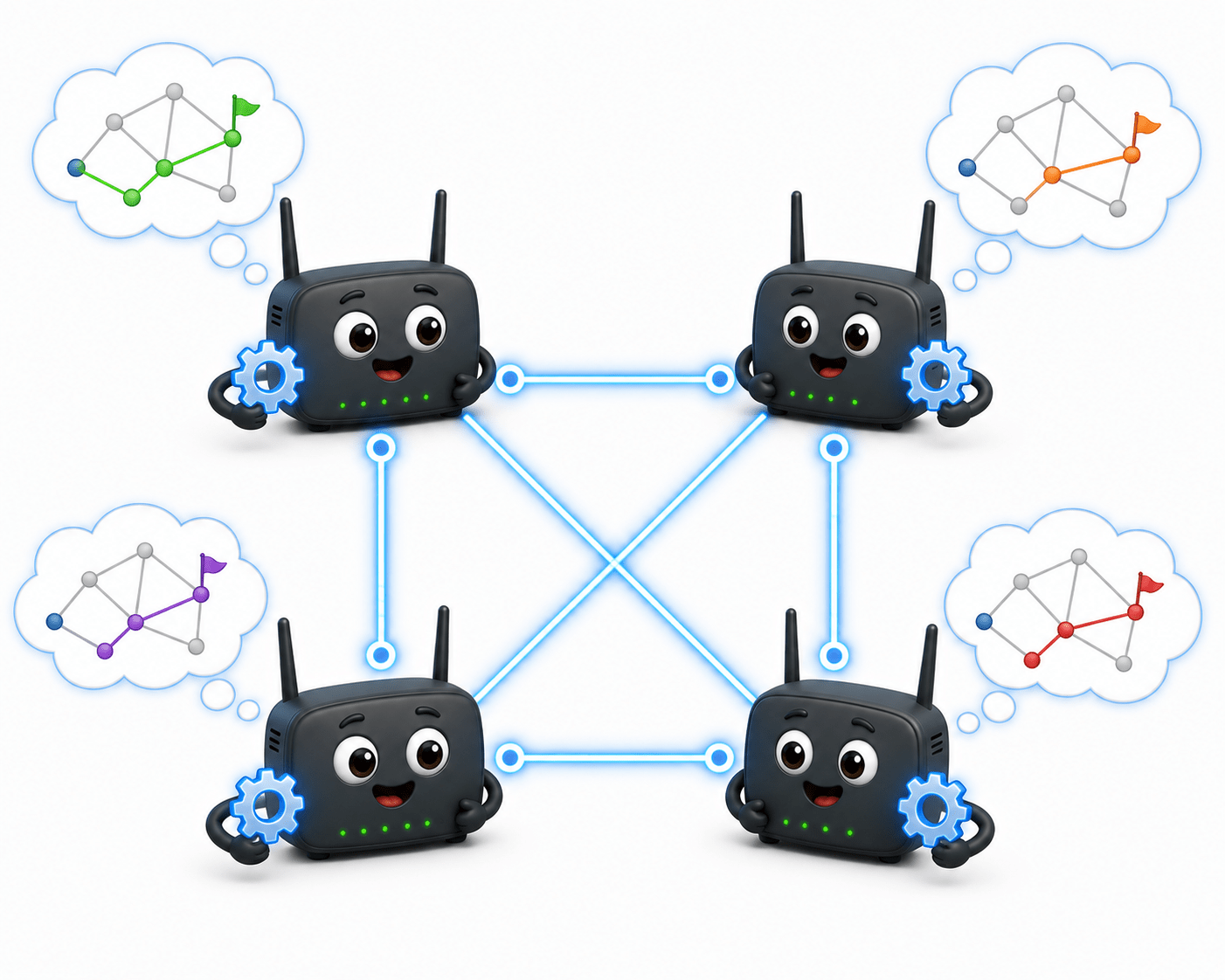
If a network path fails, routing protocols automatically choose a new path.
The traveler safely reaches the destination.
Finally, the data successfully reaches the US server.
What are Routing Protocols?
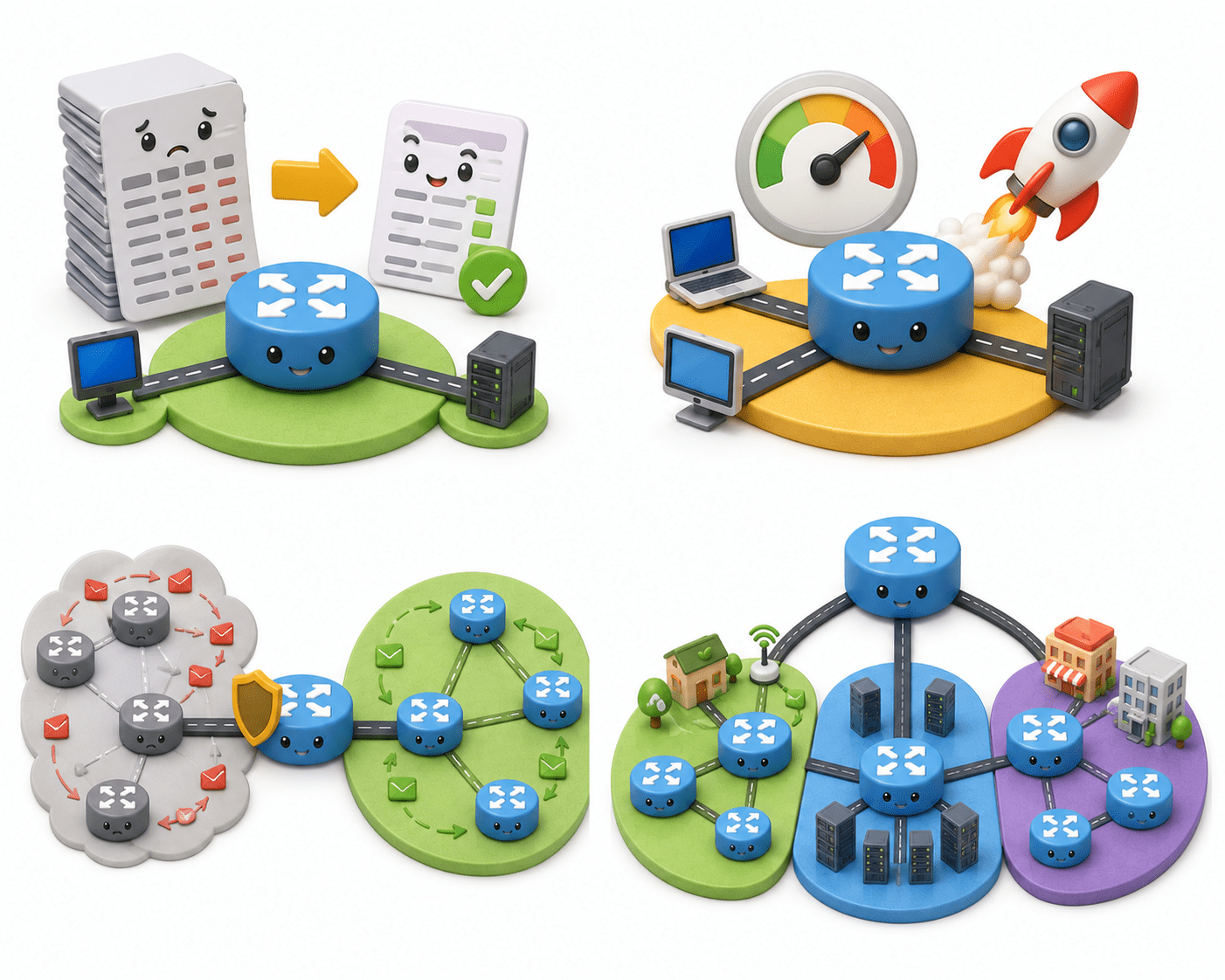
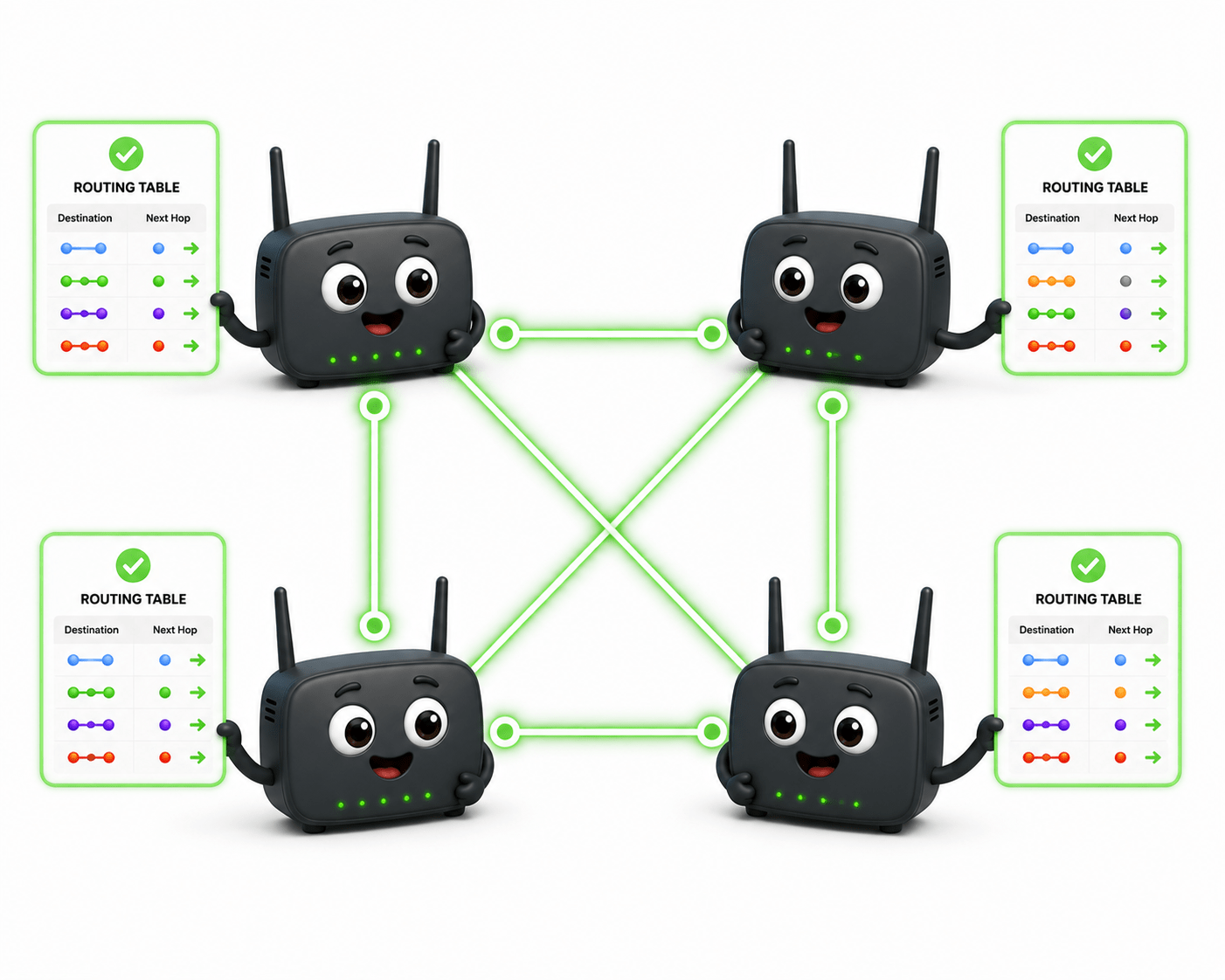
A routing protocol enables routers to determine the most efficient path for forwarding data across a network. When a router receives a packet, it uses these protocols to decide the best route to reach the destination, ensuring data is delivered quickly and reliably. By dynamically managing routes, routing protocols help prevent issues like routing loops, where packets circulate endlessly and cause network congestion and delays.
Static vs Dynamic Routing
There are two ways to configure network routers to forward traffic: static or dynamic routing.
Static Routing
Static routing is a method where routes are manually configured by a network administrator and do not change automatically.
Routes are manually configured by a network administrator
Does not change automatically if the network changes
Suitable for small, simple networks
Less overhead (no protocol traffic)
No automatic updates
Low CPU and bandwidth usage
Requires manual maintenance
Not scalable
Dynamic Routing
Dynamic routing uses routing protocols to automatically learn and update routes based on current network conditions.
Routes are learned automatically using routing protocols
Adjusts automatically when network changes occur
Suitable for large and complex networks
Requires more CPU and bandwidth
Adapts to network failures
Uses algorithms to find best path
More scalable than static routing
Interior Gateway Protocol (IGP) vs Exterior Gateway Protocol (EGP)
There are two types of routing protocols: interior and exterior.
Interior Gateway Protocol (IGP)
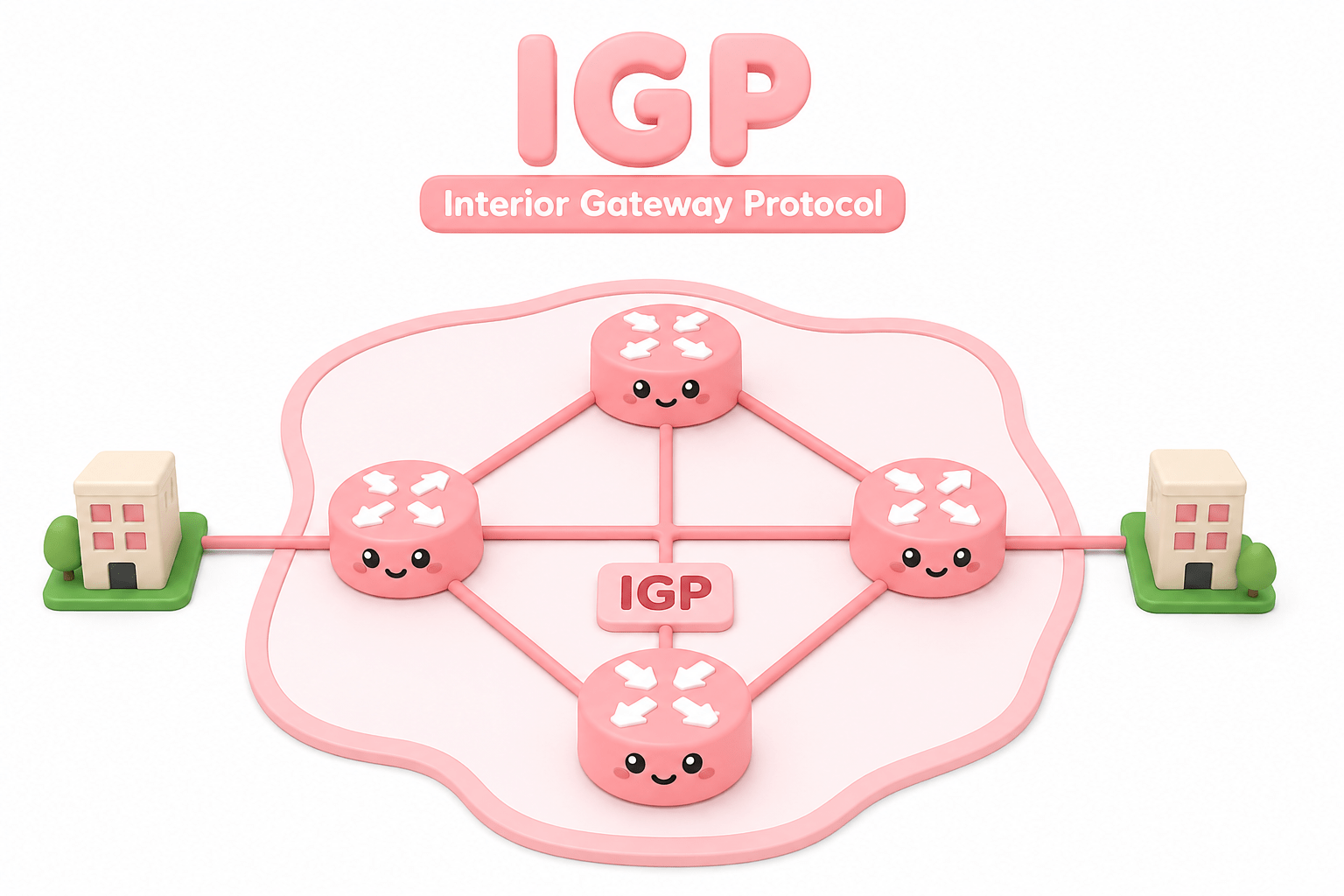
IGPs are routing protocols used to exchange routing information within a single autonomous system (AS).
Used within a single network (Autonomous System.
Faster and optimized for internal routing
Examples:
Exterior Gateway Protocol (EGP)
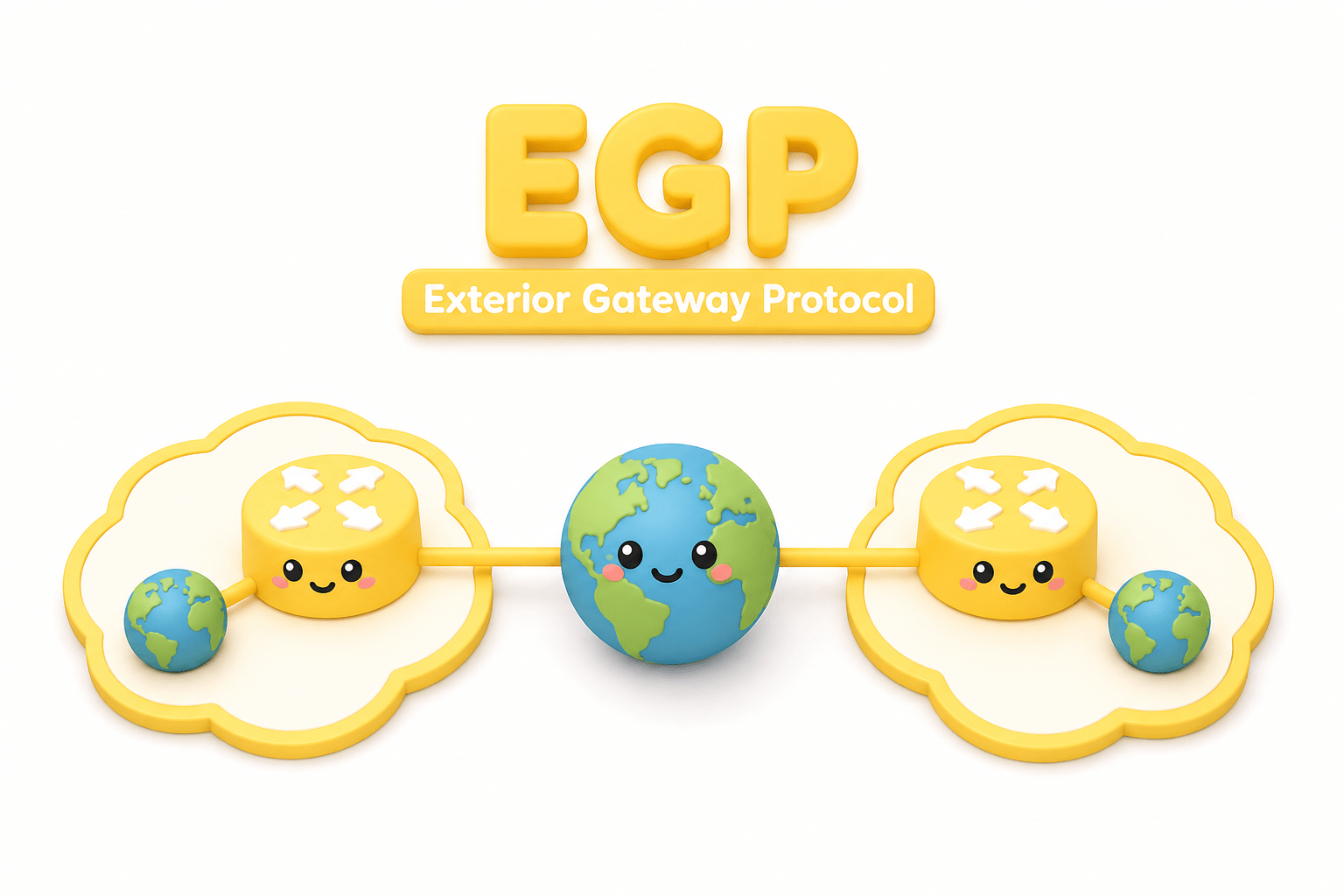
Exterior Gateway Protocols (EGP) instead run on routers that belong to different organizations, or Autonomous Systems.
Used between different networks (Autonomous Systems)
Handles routing on the internet scale
Example: BGP
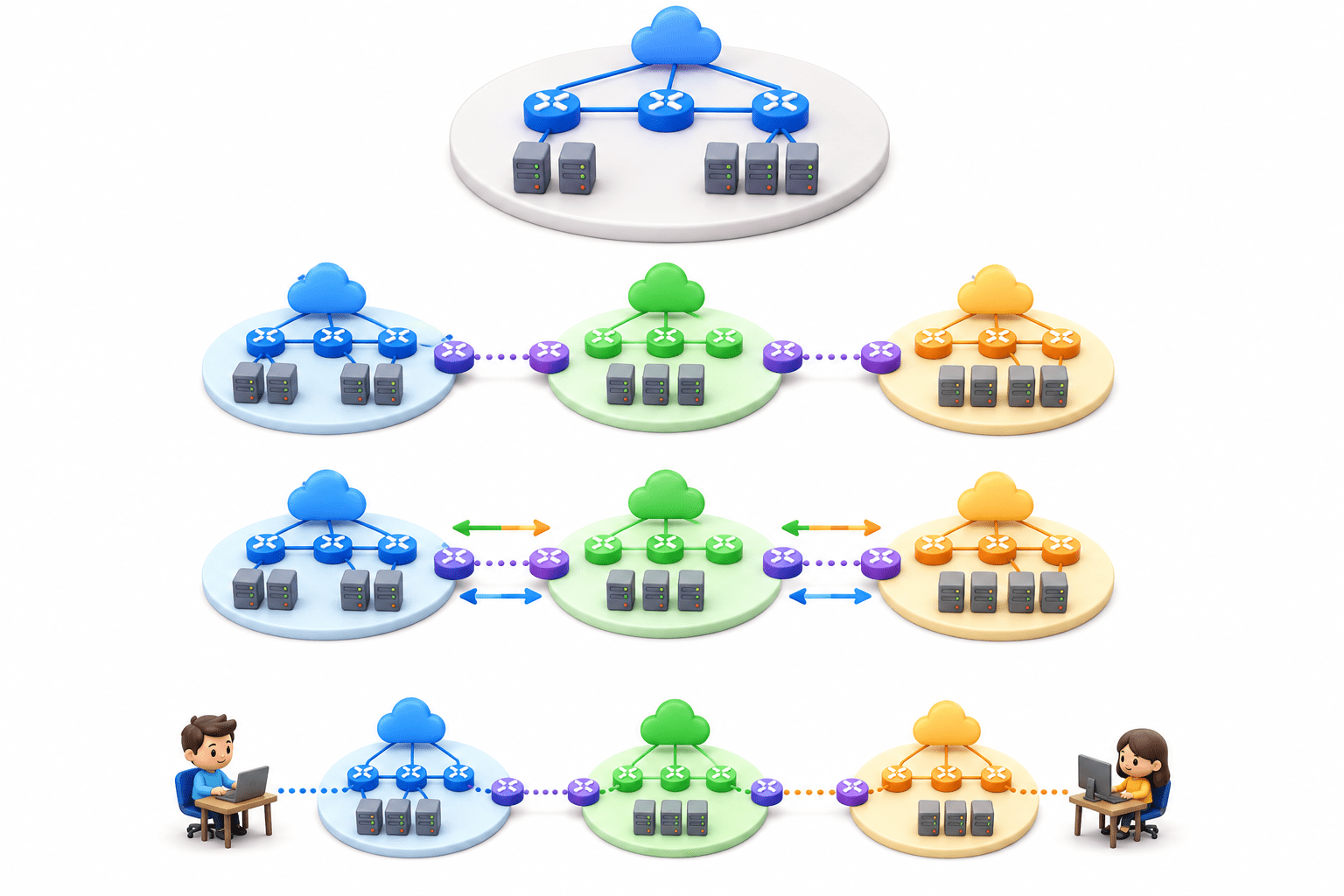
Each network (called an Autonomous System – AS) has its own routing
EGP shares route information between these AS
How it Works?
Routers decide the best path based on:
Policies
Path information
Data travels across multiple networks to reach its destination
Distance Vector vs Link State Protocols
Distance Vector
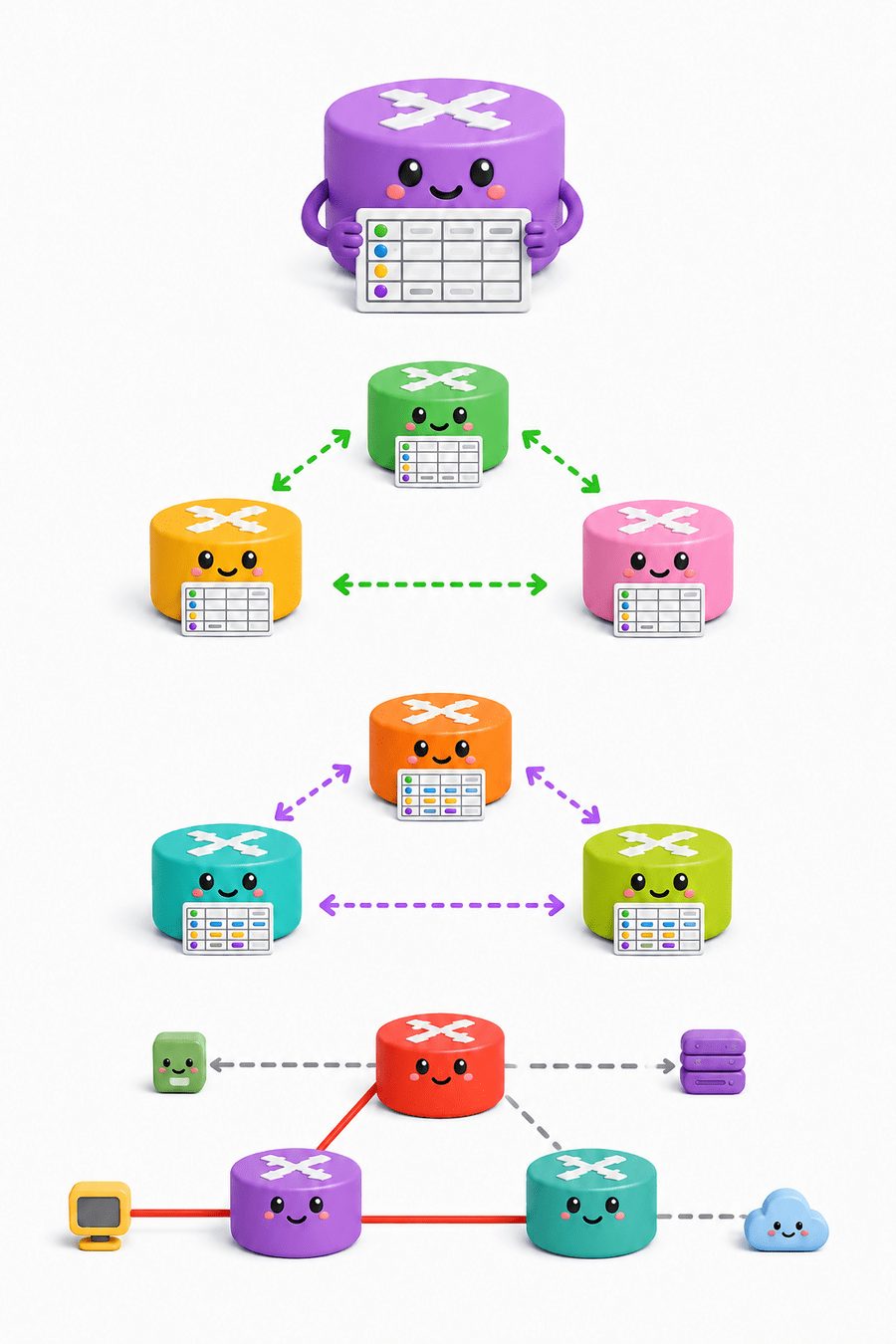
A routing method where routers share their routing tables with neighbors and choose paths based on distance (hop count).
Routers share routing information only with their immediate neighbors
Each router knows limited information (next hop and distance)
Updates are sent periodically
Slower and can sometimes create routing loops
Link State Protocol
A routing method where routers build a complete map of the network and calculate the best path using algorithms.
Routers share information with all routers in the network
Each router builds a full network map (topology)
Updates are sent only when changes occur
Faster and more accurate
Introduction to BGP
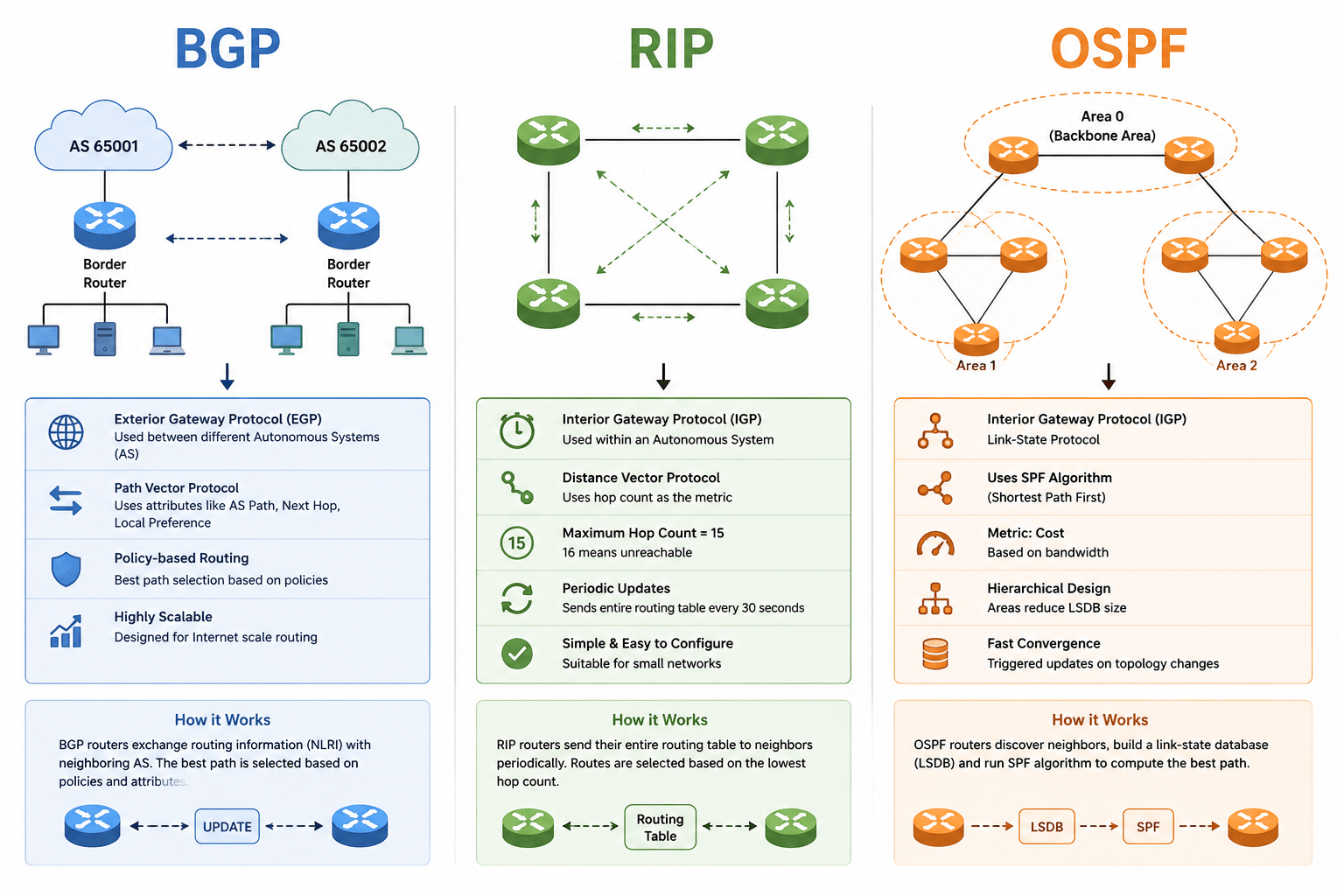
BGP is a dynamic routing protocol used to exchange routing information between different networks on the Internet. It is known as the “backbone of the Internet” because it connects large networks like ISPs.
BGP (Border Gateway Protocol) is a path vector routing protocol used to exchange routing information between different networks on the internet.
It is the main routing protocol of the internet, responsible for deciding how data travels between large networks.
Path Vector Concept
The Path Vector Concept is a routing method where the entire path to a destination network is stored and shared and used by BGP where each route includes the complete path (list of Autonomous Systems - AS) that data must travel through.
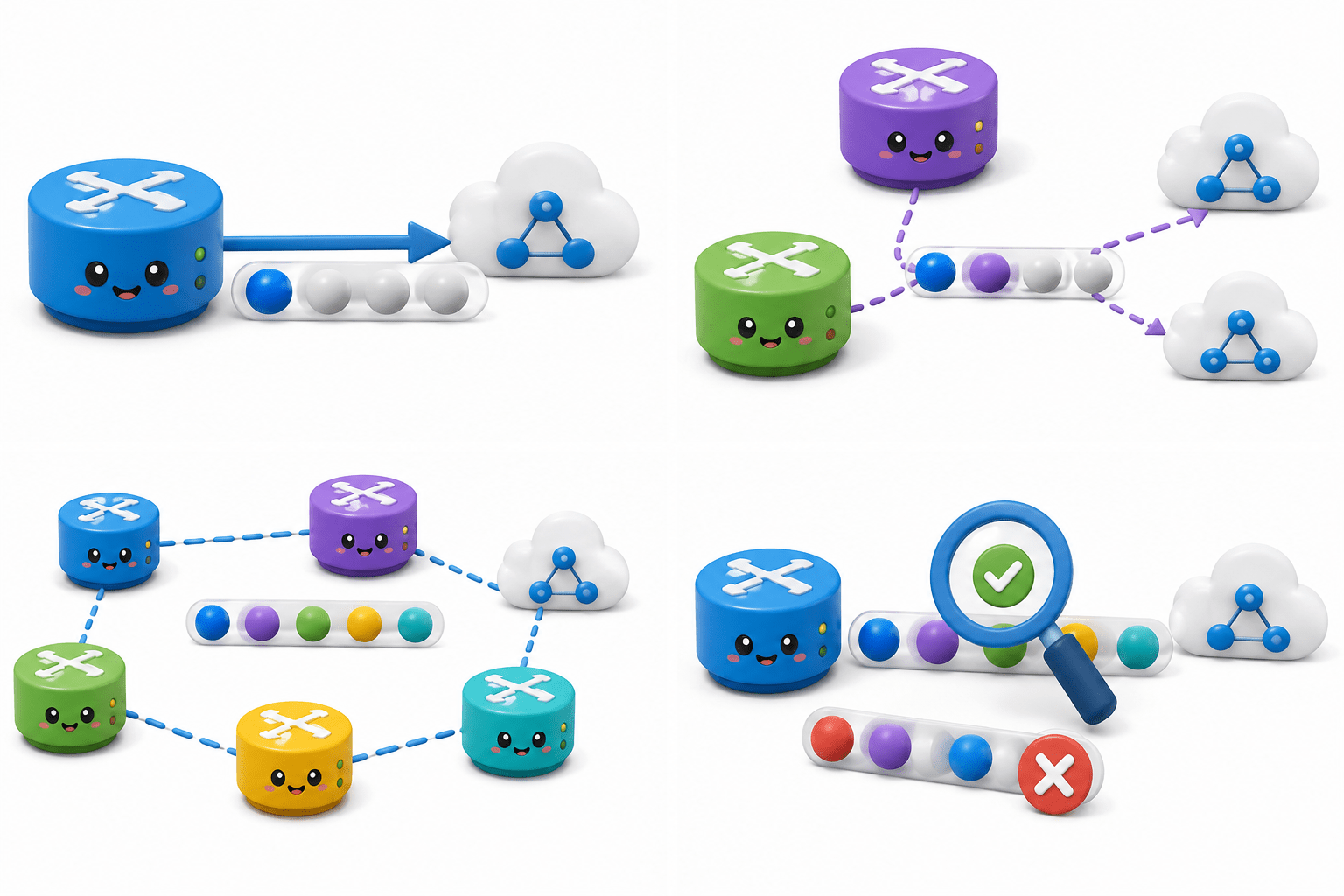
Instead of using only distance or cost, BGP includes a list of Autonomous Systems (AS) that the data must pass through. This helps routers make better decisions and avoid routing loops.
Routers check the AS path list to: Choose the best path, avoid loops
How it Works?
A BGP router advertises a route with its AS number
The route is passed along to other AS
Routers check the AS path list to: Choose the best path, avoid loops
Autonomous System (AS) in BGP
An Autonomous System (AS) is a group of networks and routers that are managed by a single organization and follow a common routing policy. Each AS is identified by a unique number called an Autonomous System Number (ASN).
In BGP, AS is the basic unit of routing on the Internet.
BGP uses these AS numbers to exchange routing information between different networks.
One AS = one administrative control (like an ISP or large company)
Each AS has a unique ASN
BGP uses AS numbers to track and manage routing paths
Why AS is Important in BGP?
Helps organize the internet into manageable sections
Allows routing decisions based on policies and rules
Prevents routing loops using AS path checking
AS Number (ASN)
Every AS is identified by a unique AS Number (ASN).
Types:
Private ASN: Used inside organizations
Public ASN: Used on the Internet (assigned globally)
How BGP Controls Internet Routing
BGP controls internet routing by exchanging network paths between Autonomous Systems (AS) and selecting the best route based on policies and path attributes, not just distance. Unlike other protocols, BGP focuses on policy-based routing, not just the shortest path.
Establishing Connections (Peering)
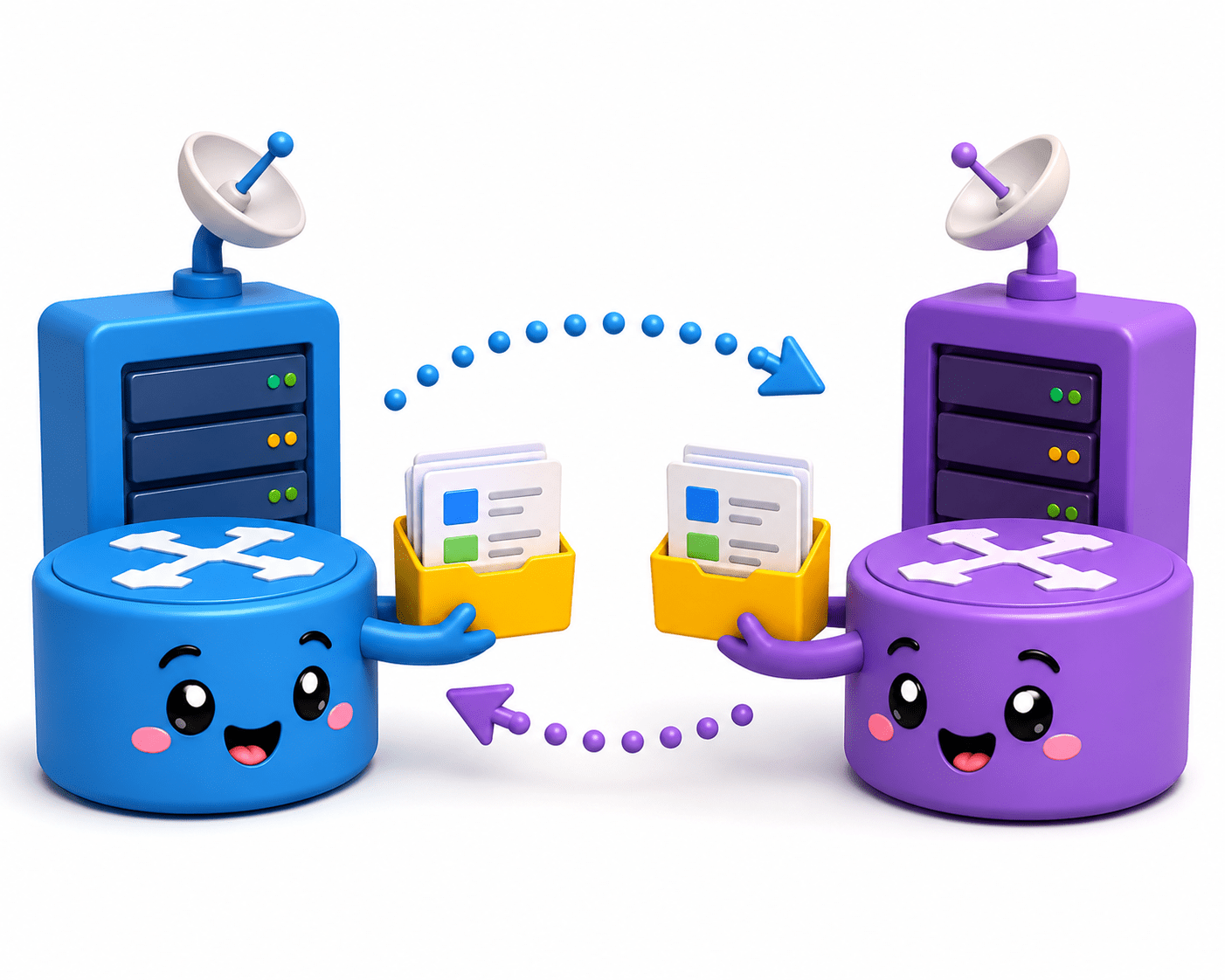
BGP routers connect with other BGP routers (called peers)
These connections are formed between different AS (eBGP) or within the same AS (iBGP)
Exchange of Routing Information
Routers share available network paths along with AS path information
Each route includes attributes like:
AS Path
Next Hop
Origin
Storing Multiple Paths
A BGP router can store multiple routes to the same destination
This gives flexibility in choosing the best path
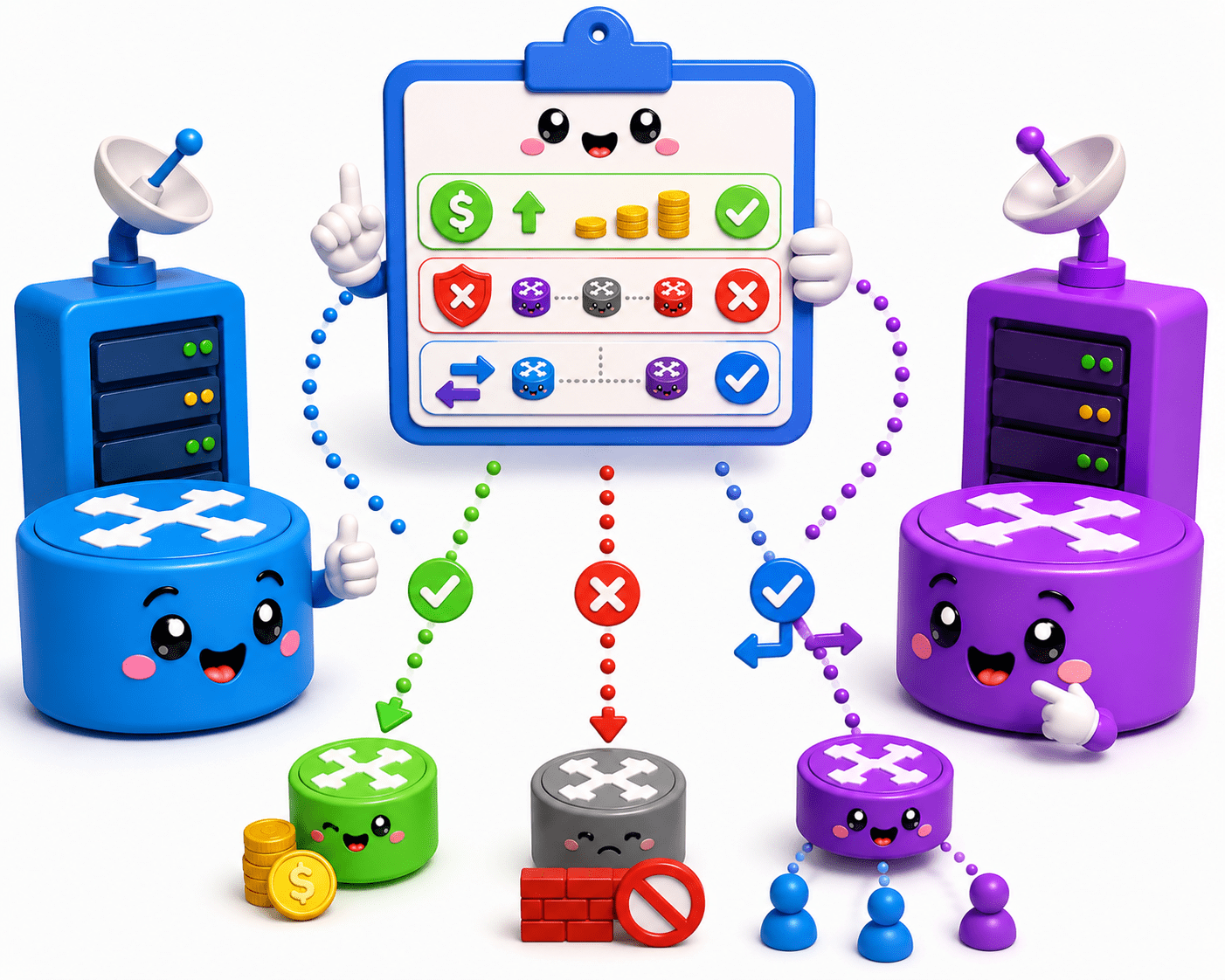
Routing policies (admin rules)
Path attributes
Applying Policies (Control Mechanism)
Network administrators can control routing using policies
Best Path Selection
Example:
Prefer cheaper routes
Avoid certain networks
Control incoming/outgoing traffic
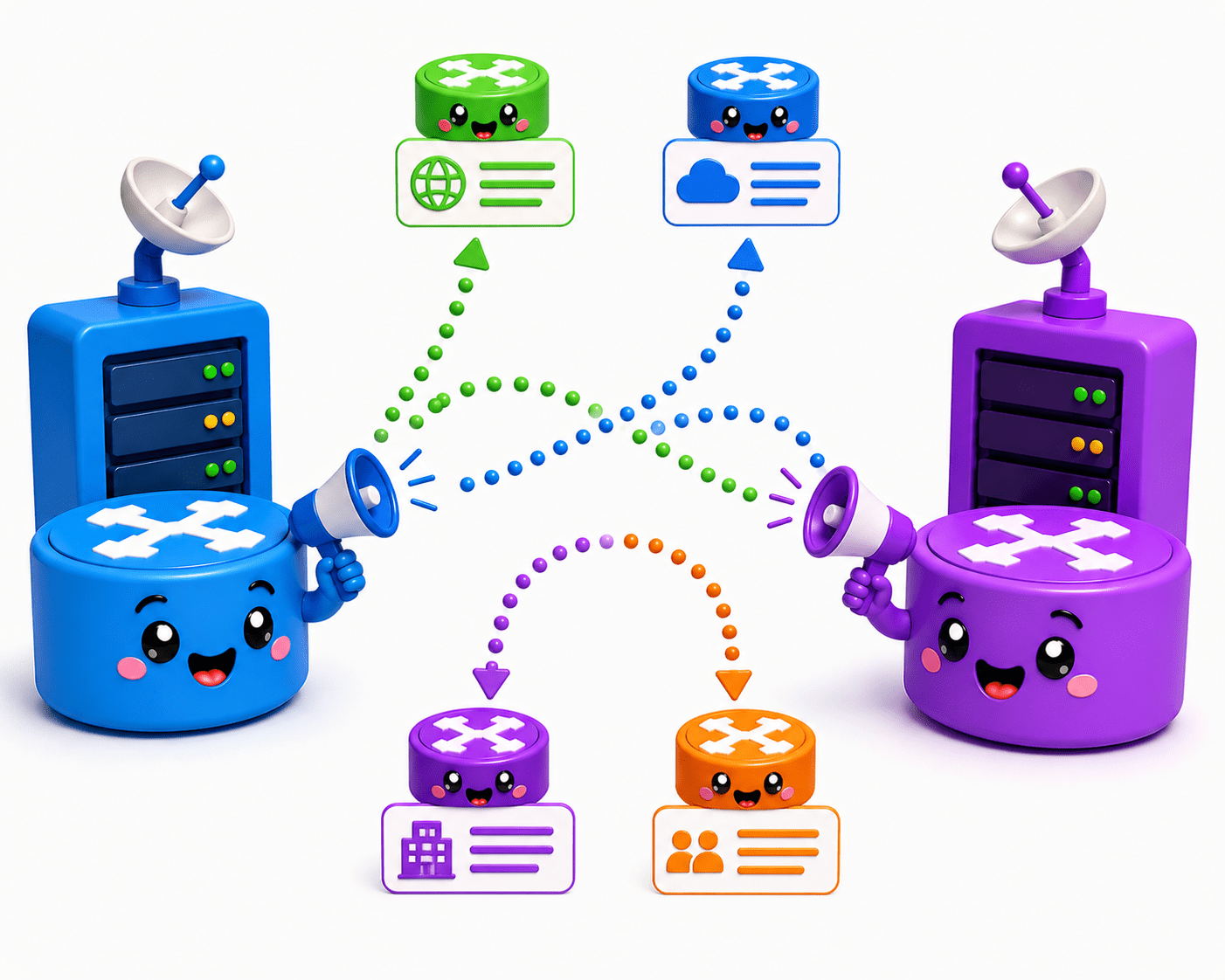
Route Advertisement
Basic Working Idea of BGP
BGP works by connecting different networks (Autonomous Systems) and exchanging routing information to decide the best path for data.
Routers communicate with each other, share available routes, and select the most suitable one based on rules and path attributes.
It ensures data travels efficiently across the internet between multiple networks.
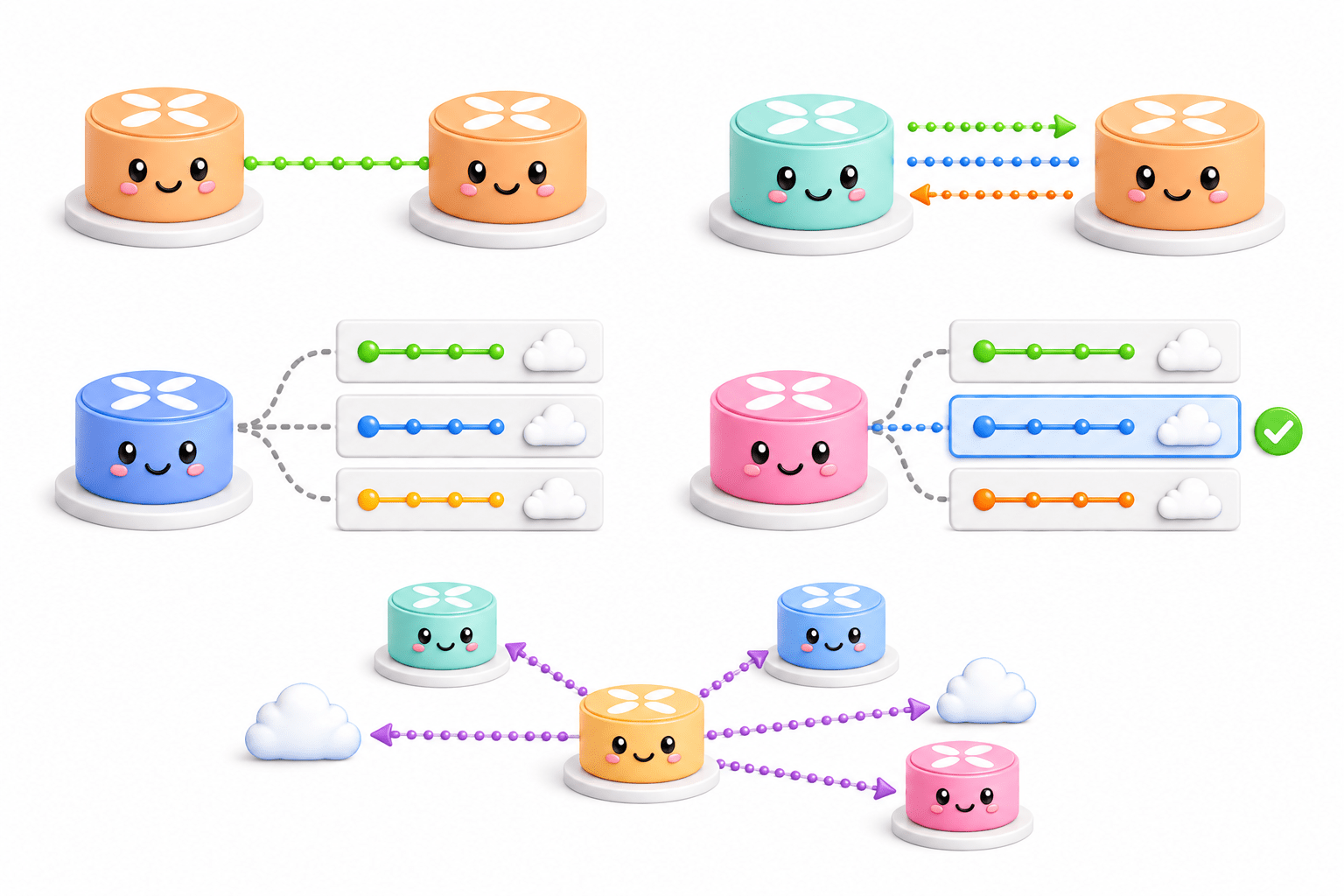
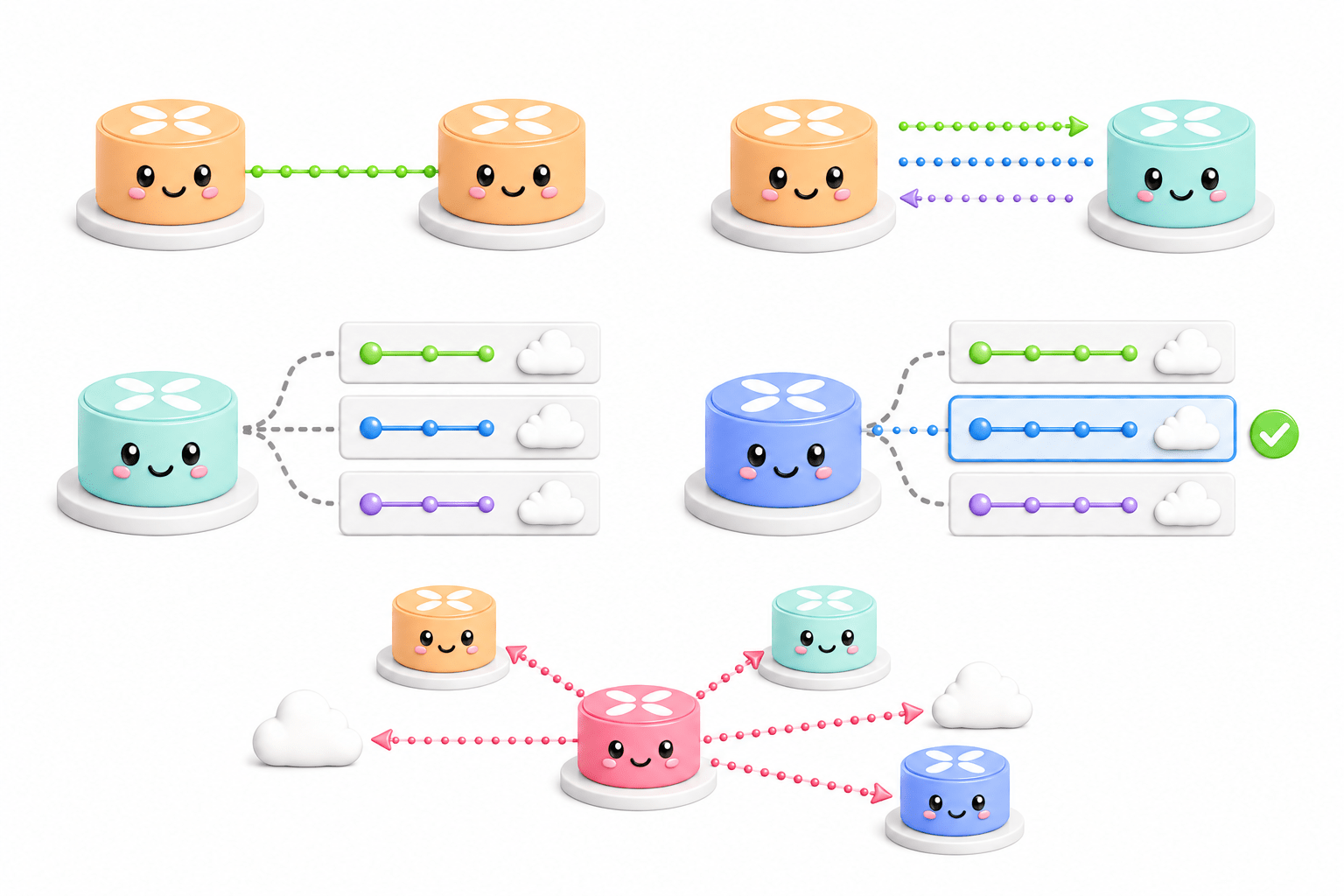
Neighbor Connection (Peering)
BGP routers first establish a connection with other routers (called peers)
Route Exchange
Routers share information about the networks they can reach
This includes the AS path and other attributes
Path Storage
A router may receive multiple paths to the same destination
It stores all possible routes
Best Path Selection
The router selects the best path based on:
AS path length
Policies (rules set by admin)
Other attributes
Route Advertisement
The selected best route is shared with other routers
This spreads routing information across networks
Introduction to OSPF
OSPF (Open Shortest Path First) is a dynamic routing protocol used to find the best path in a network. It uses a more advanced method than RIP and is suitable for large and complex networks. OSPF is a link-state routing protocol used to find the most efficient path for data in a network.
It calculates the best path using an algorithm called Shortest Path First (SPF)
Works within a single organization (Interior Gateway Protocol)
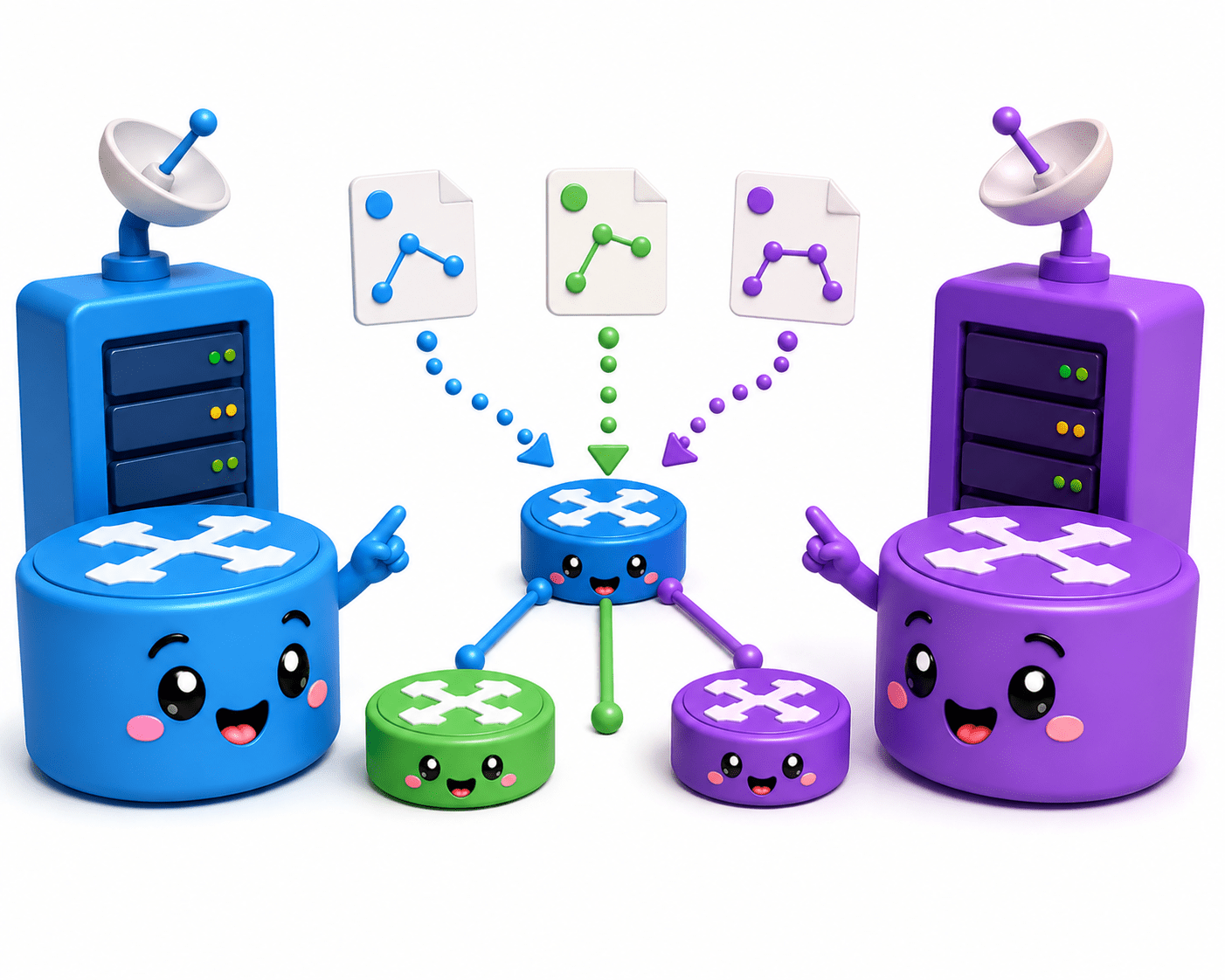
A Link State Protocol is a routing method where each router builds a complete view of the network topology. Routers share information about their directly connected links with all other routers in the network.
Using this shared data, every router independently calculates the best path using the shortest path algorithm.
In OSPF, routers do not blindly trust neighbors like RIP does.
Each router creates a map of the entire network (called Link-State Database)
Routers share information about their direct connections (links)
All routers independently calculate the best path using the same data
Link State Protocol Concept
A cost metric is a numerical value used by routing protocols to determine the best path for data transmission. It represents how “expensive” or “efficient” a path is between source and destination.
The path with the lowest cost value is selected as the best path.
Cost Metric
Cost Metric in OSPF
In OSPF, cost is not random. It’s calculated based on bandwidth.
Cost is inversely proportional to bandwidth
(Higher bandwidth → Lower cost → Better path)
Standard formula used: Cost = Reference Bandwidth / Interface Bandwidth
Default reference bandwidth = 100 Mbps (can be changed)
Areas in OSPF
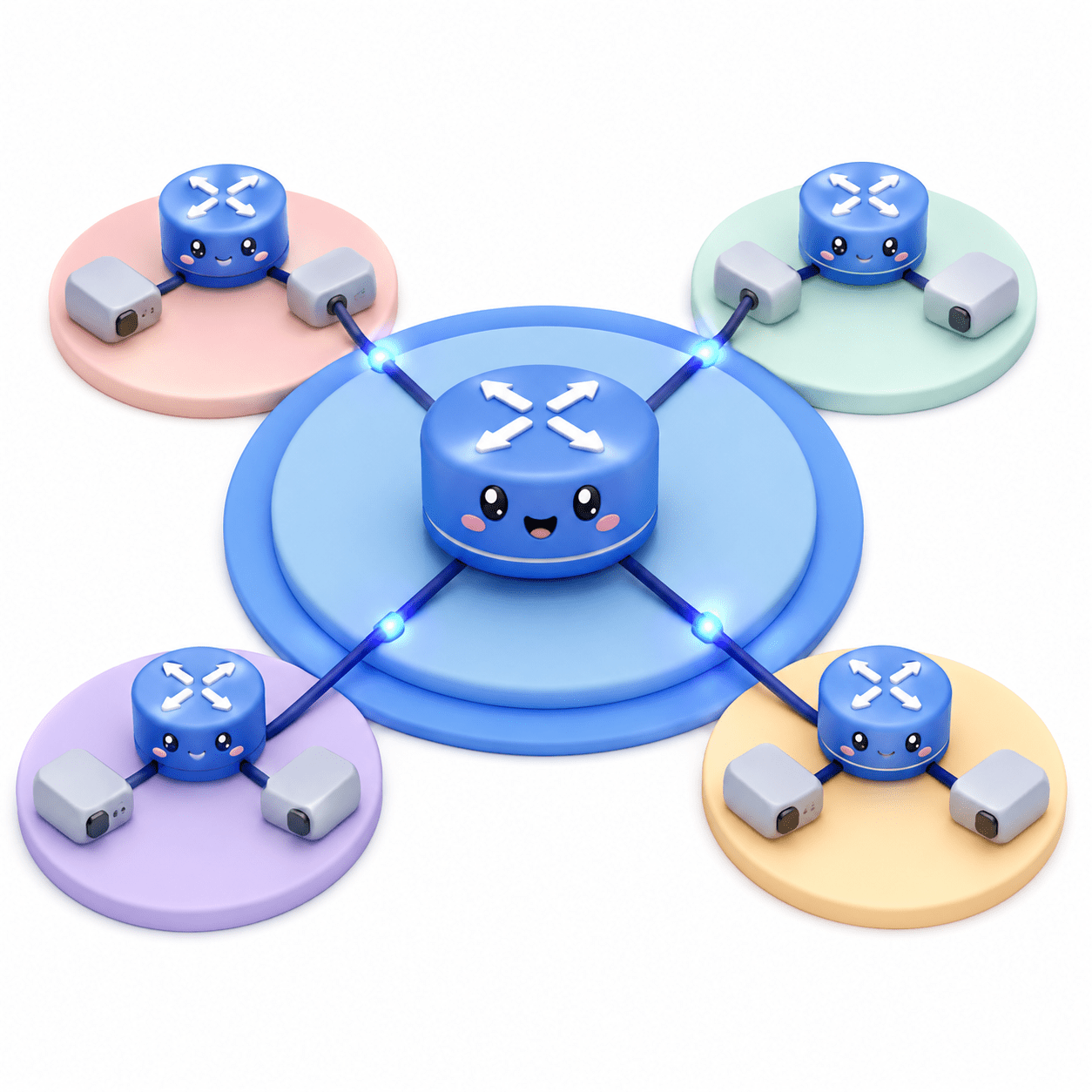
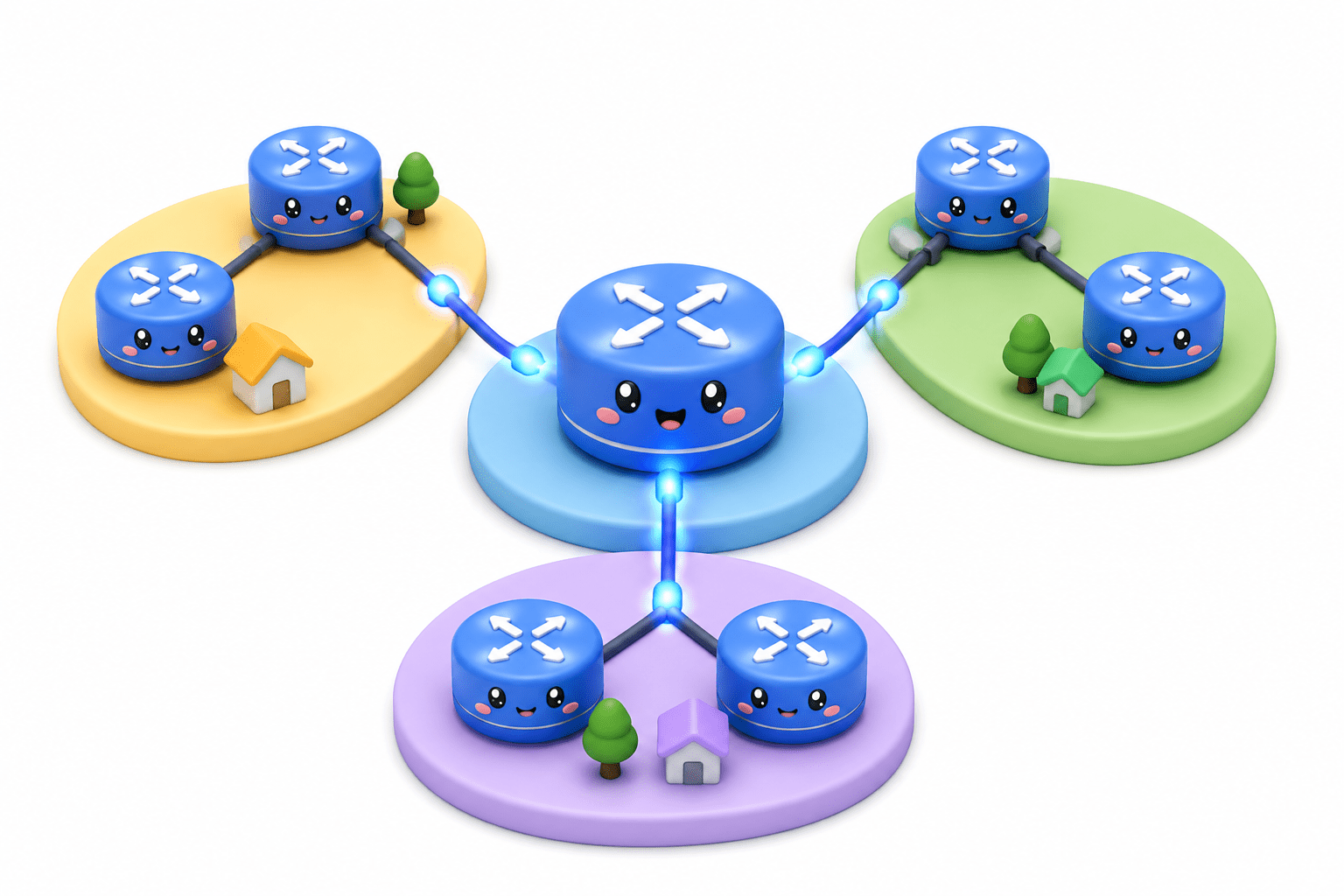
An OSPF Area is a logical grouping of routers within a network used to divide and organize large networks. It helps reduce routing overhead by limiting the amount of information each router must process.
Each area maintains its own link-state information while still being connected to the overall network.
Why Areas Are Used?
To reduce routing table size
To improve network performance
To limit the spread of updates
To make large networks more manageable and scalable
OSPF Hierarchy
OSPF uses a hierarchical design with multiple areas connected together.
Backbone Area (Area 0)
If Area 0 breaks, the whole OSPF network starts having an identity crisis.
Other Areas (Non-Backbone Areas)
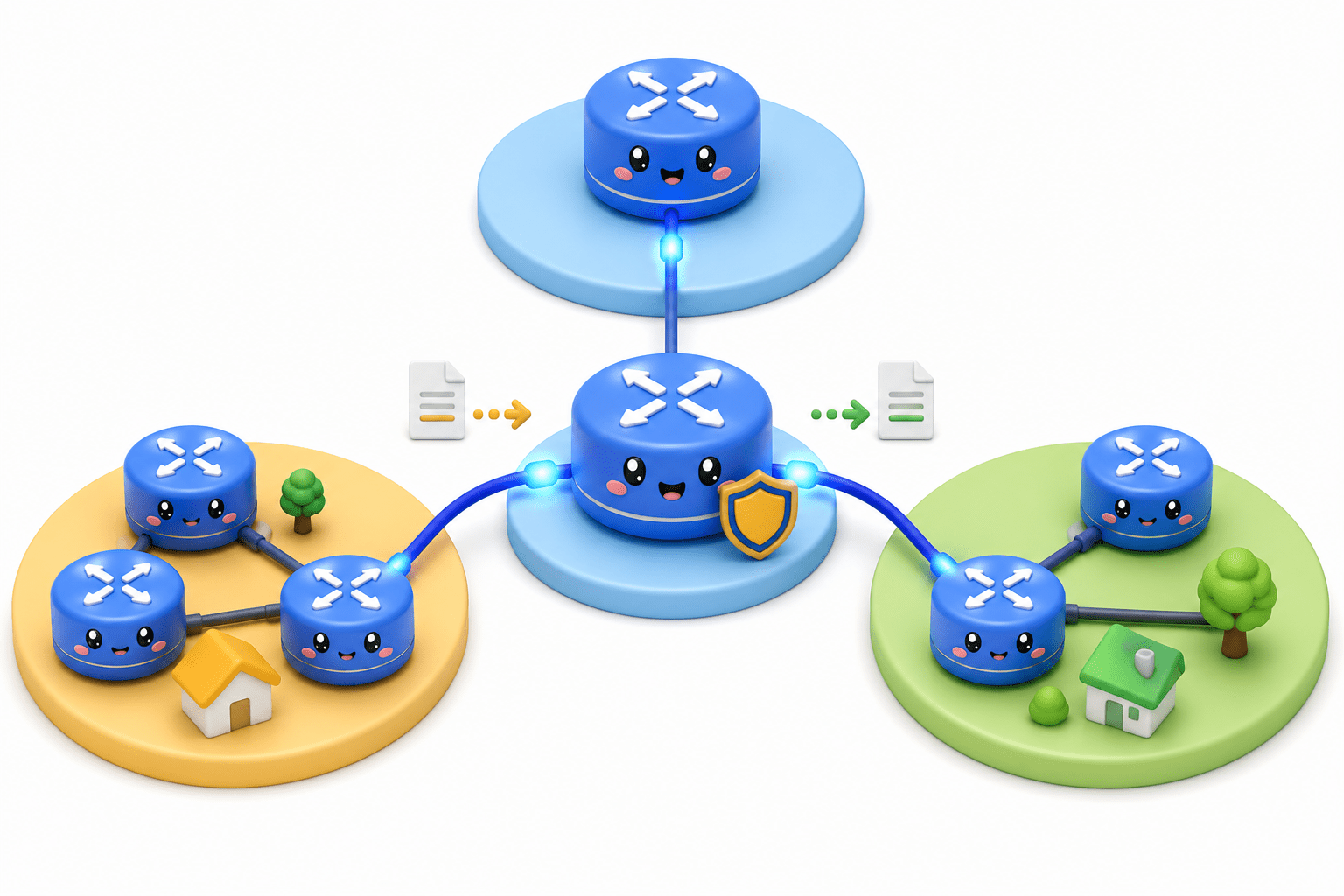
Area Border Router (ABR)
A router that connects Area 0 with other areas
Maintains separate routing information for each area
Transfers summarized routing information between areas
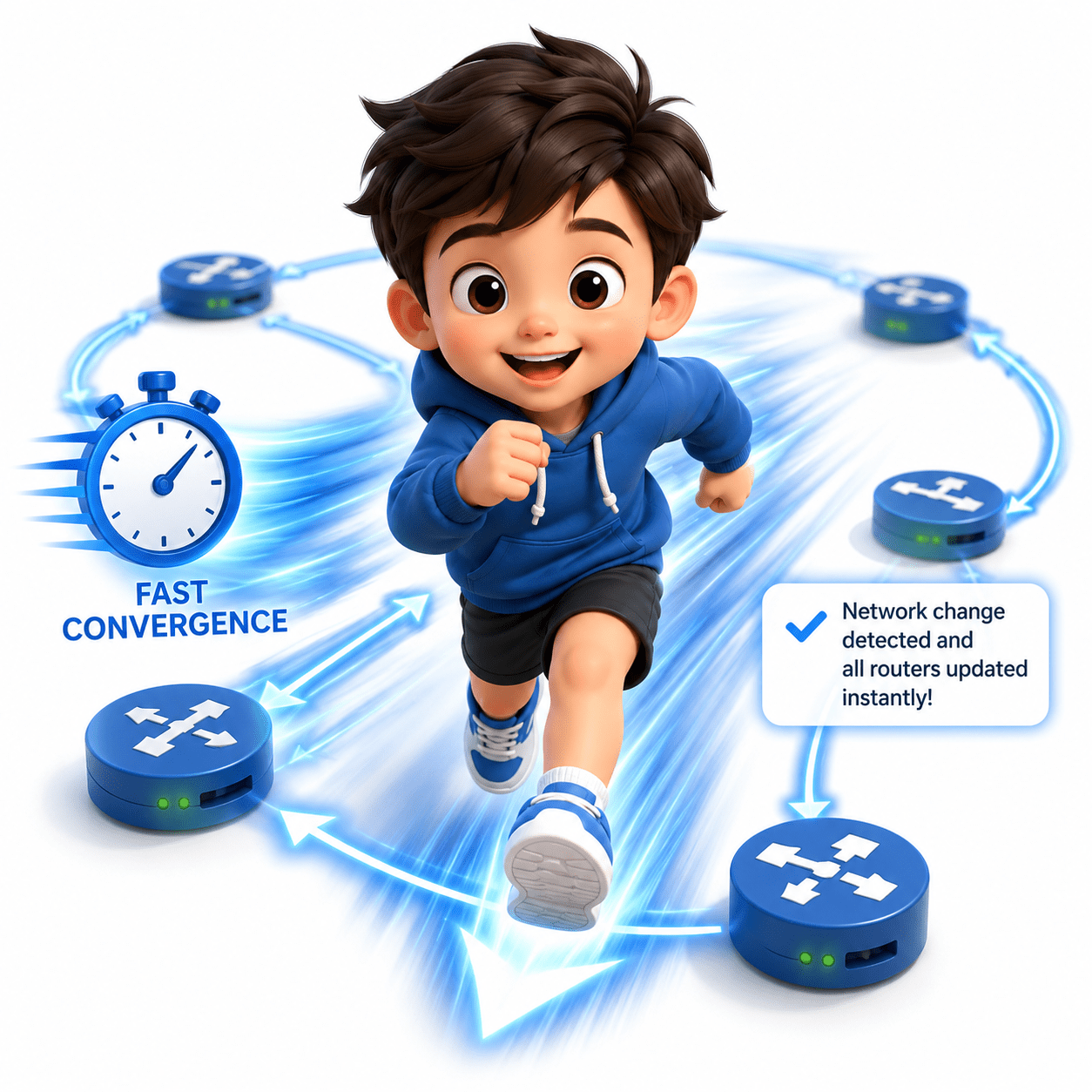
Fast Convergence
Fast convergence means how quickly a routing protocol can detect a network change and update all routers with the new best path.
In OSPF, convergence happens very quickly, minimizing downtime and data loss.
When a link goes down or a new route appears, OSPF routers:
Detect the change almost immediately
Share updated information with other routers
Recalculate the best path using the SPF algorithm
What Happens During Convergence?
When a network change occurs (like a link failure):
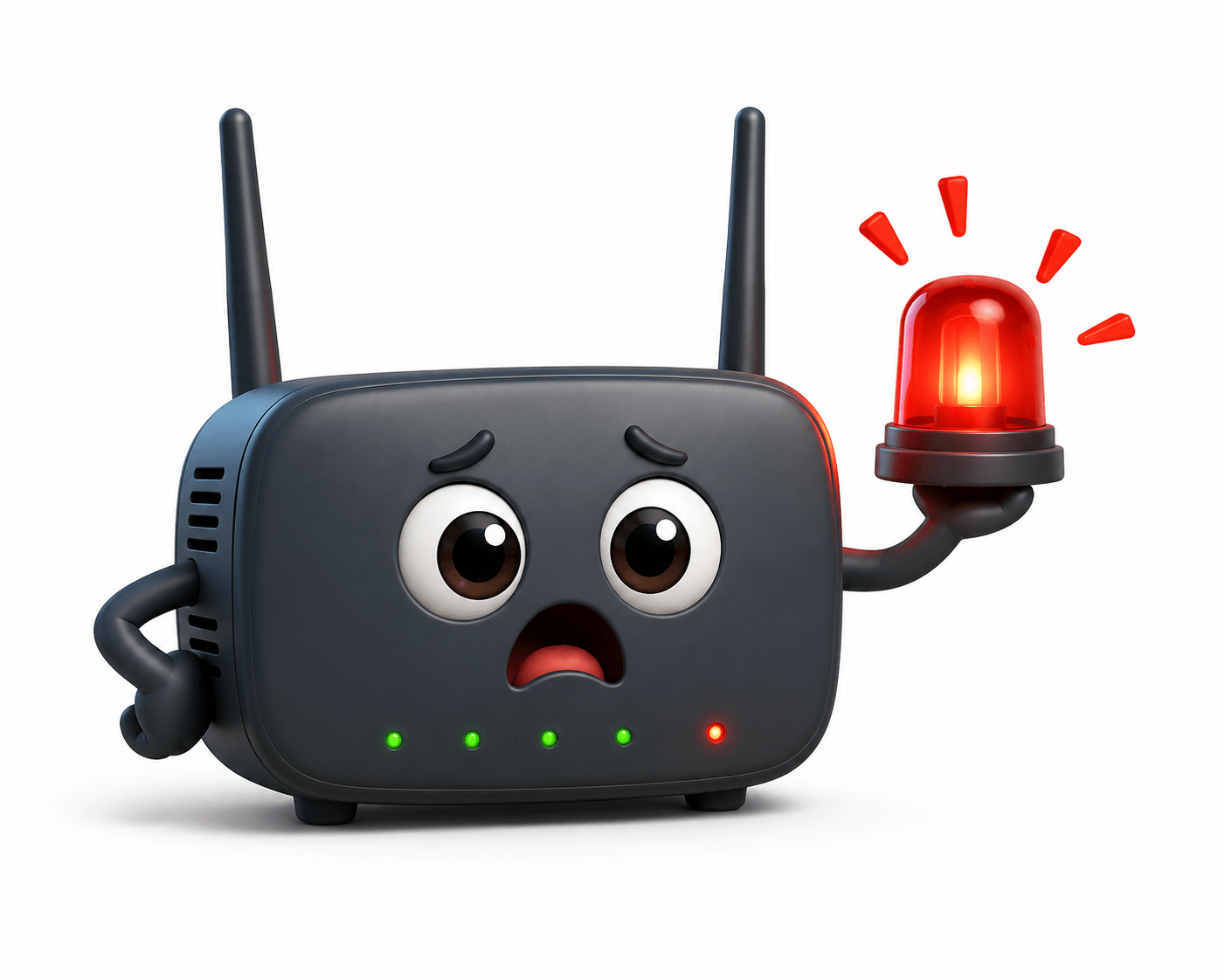
Router detects the failure immediately
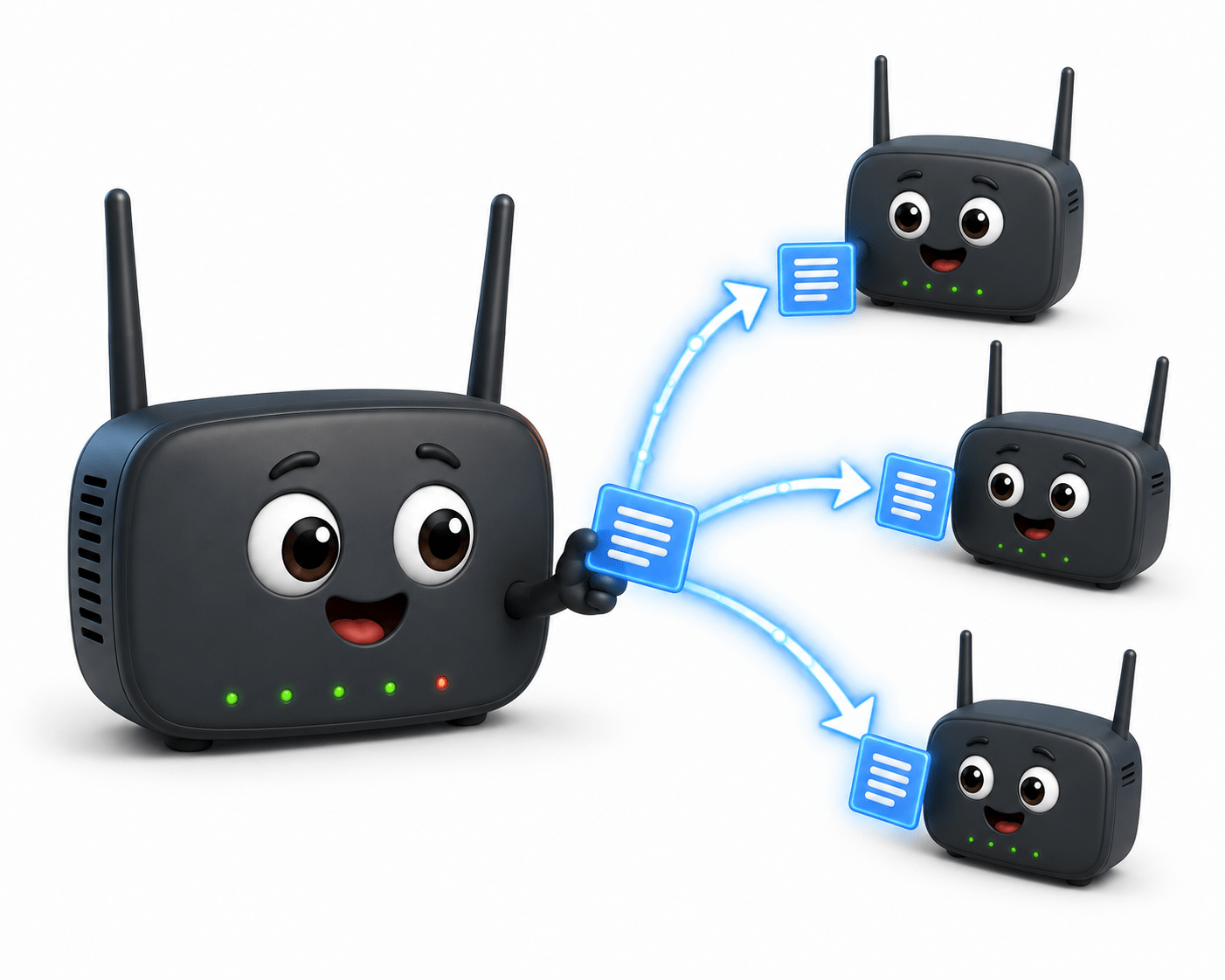
Sends update (LSA – Link State Advertisement) to neighbors
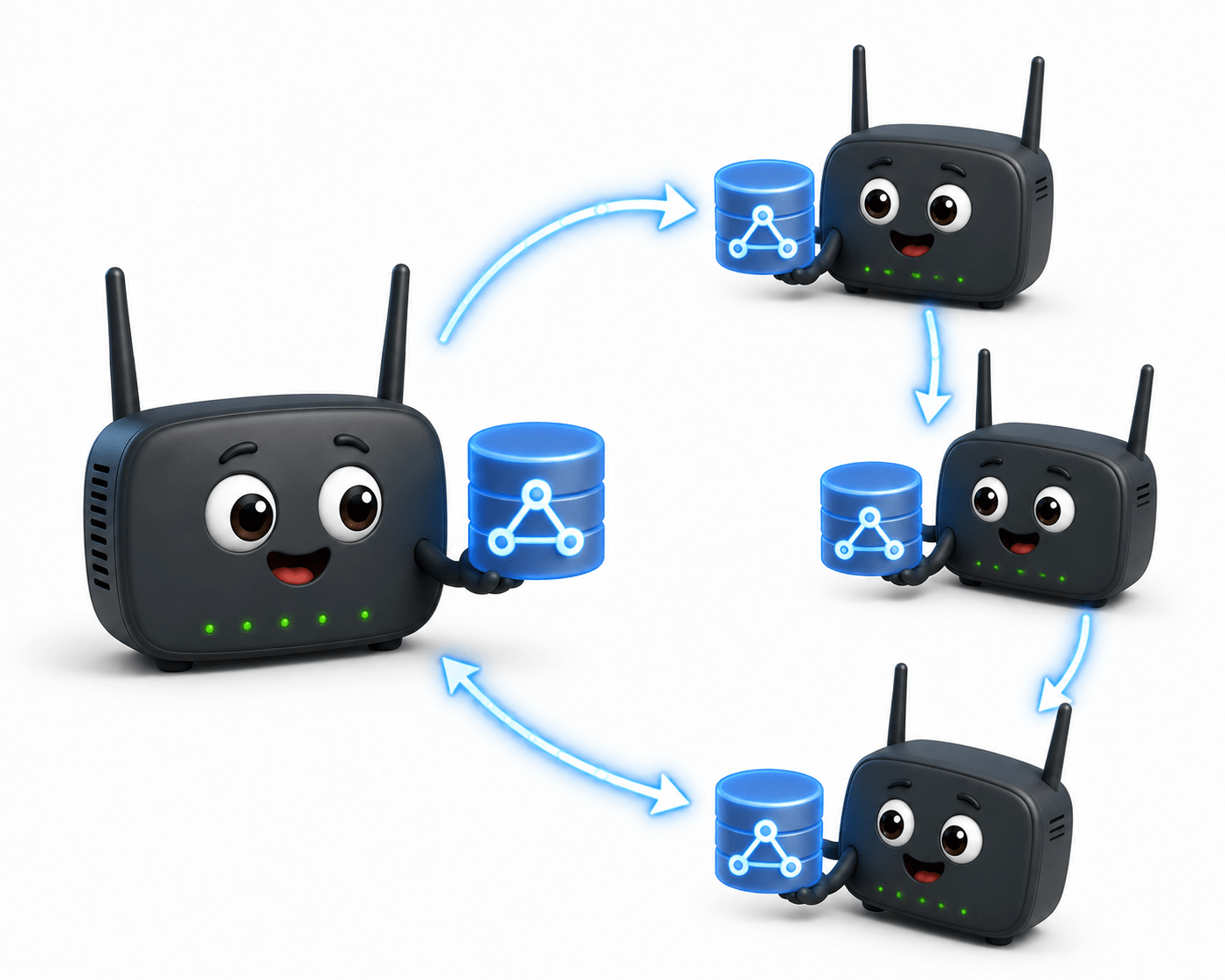
All routers update their Link State Database (LSDB)
Each router recalculates the best path using an algorithm
New routes are installed in the routing table
Advantages of OSPF over RIP
Faster Convergence
OSPF reacts immediately to network changes using triggered updates.
RIP waits for periodic updates (30 sec), so it takes longer to adjust routes.
No Hop Count Limitation
OSPF has no fixed hop limit, so it can support very large networks.
RIP is limited to 15 hops, making it unsuitable for big networks.
Better Path Selection (Uses Cost)
OSPF uses bandwidth-based cost, choosing faster and more efficient paths.
RIP uses only hop count, which may select slower routes.
Supports Hierarchical Design (Areas)
OSPF divides networks into areas, improving scalability and management.
RIP has a flat structure, which becomes inefficient as the network grows.
Efficient Use of Bandwidth
OSPF sends updates only when changes occur (event-driven).
RIP sends full routing tables every 30 seconds, wasting bandwidth.
Loop Prevention Mechanism
OSPF uses a complete network topology and SPF algorithm, reducing chances of loops.
RIP can suffer from routing loops, even though it uses basic prevention techniques.
Supports Large and Complex Networks
OSPF is designed for enterprise-level networks with many routers and paths.
RIP is suitable only for small and simple networks.
More Accurate and Reliable Routing
OSPF considers multiple factors (like bandwidth) for smarter decisions.
RIP’s simple logic can lead to less optimal routing paths.
Introduction to RIP
RIP (Routing Information Protocol) is a dynamic routing protocol used by routers to automatically share information about network paths. It helps routers decide the best path to send data by exchanging routing tables with neighboring routers.
RIP belongs to the Distance Vector routing protocol category and is one of the oldest routing protocols used in networking.
Distance Vector Concept
The Distance Vector concept is a routing method used by routers to find the best path to a destination network.
It is based on two simple ideas:
Distance → How far the destination is (measured using a metric like hop count)
Vector → The direction or next router to send data to
How it Works?
Each router keeps a routing table
It shares this table with its neighboring routers regularly
Routers update their tables based on the information received
The path with the shortest distance is selected as the best path
Hop Count Metric
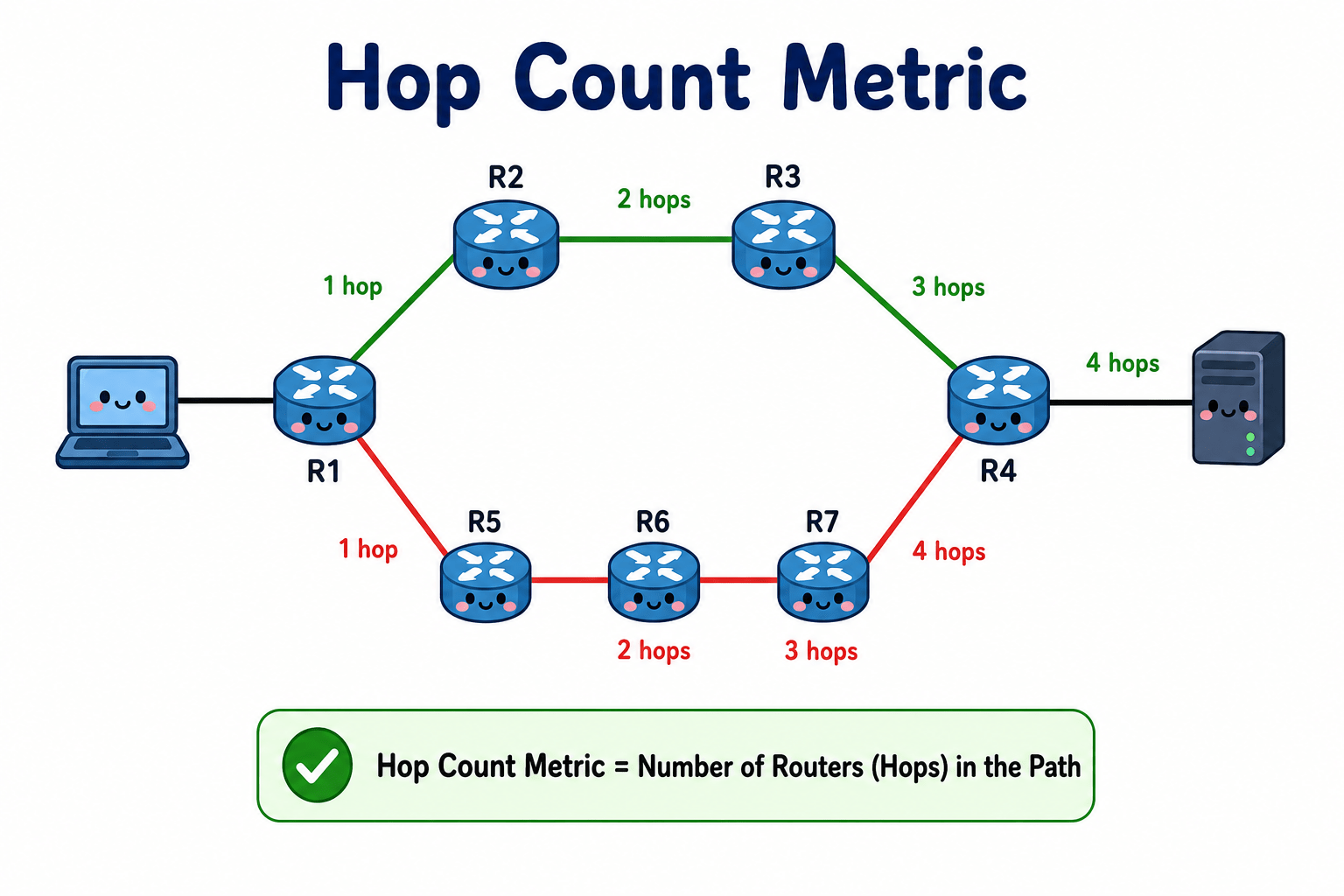
The hop count metric is a method used by routing protocols (like RIP) to measure the distance between a source and a destination network. RIP uses hop count as its metric to determine the best path.
A hop means one router
Every time data passes through a router, the hop count increases by 1
The path with the lowest hop count is chosen as the best path
Maximum Hop Limit (15)
The Maximum Hop Limit in RIP is the highest number of hops (routers) a packet is allowed to pass through to reach a destination. RIP has a maximum limit of 15 hops.
Maximum valid hops = 15
Hop count = 16 → considered unreachable (infinite distance)
What It Means?
If a destination network is within 15 hops, RIP considers it reachable
If it requires more than 15 hops, RIP assumes the network is too far or unreachable
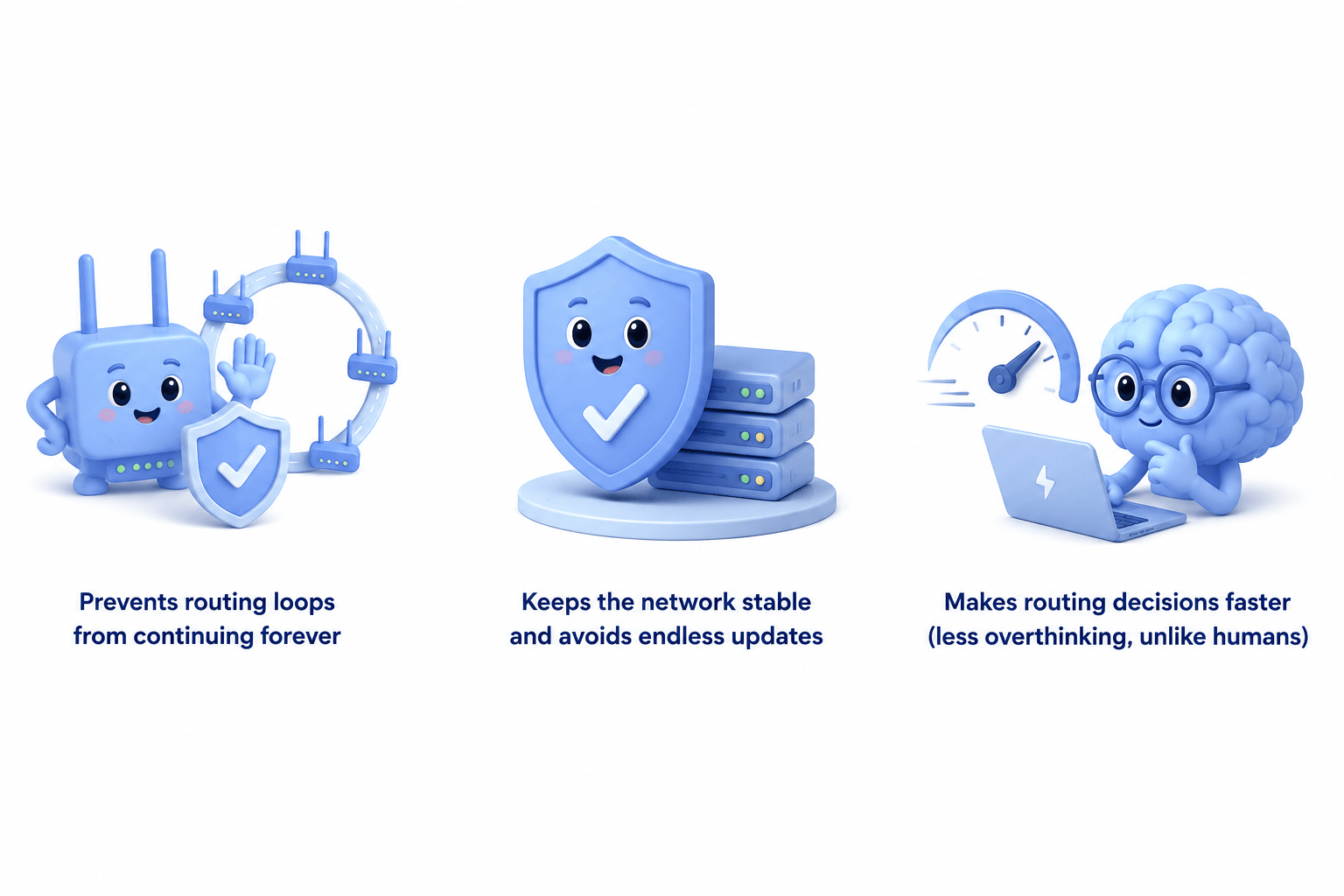
Why This Limit Exists?
Makes routing decisions faster (less overthinking, unlike humans).
Prevents routing loops from continuing forever.
Keeps the network stable and avoids endless updates.
Advantages
Simple Configuration
RIP is very easy to configure and understand, making it ideal for beginners learning routing concepts
Low Resource Usage
It uses very little CPU and memory, so it works well even on low-performance routers
Automatic Updates
Routers automatically exchange routing tables at regular intervals without manual intervention
Widely Supported
RIP is supported by most networking devices and vendors, allowing easy compatibility
Easy Troubleshooting
Its simple working mechanism makes it easier to identify and fix network issues
Load Balancing
RIP can use multiple paths with equal hop count to distribute network traffic efficiently
Limitations
Hop Limit (15)
RIP cannot support large networks because it allows a maximum of only 15 hops
Slow Convergence
It takes more time to update routing information when network changes occur
Weak Metric System
RIP only considers hop count and ignores important factors like bandwidth and delay
Routing Loops
There is a risk of routing loops where data packets circulate unnecessarily in the network
Periodic Updates
RIP sends full routing updates every 30 seconds, which can waste bandwidth
Not Scalable
It does not perform well in large and complex networks
Security Limitations
RIP provides only basic authentication, which is not very secure
Summary
5
OSPF is fast and scalable; RIP is slower and limited to 15 hops.
4
BGP controls routing between large internet networks.
3
RIP uses hop count; OSPF uses a full network map.
2
Static routing is manual; dynamic routing adjusts automatically.
1
Routing protocols find the best path and avoid loops.
Quiz
What does BGP exchange between networks?
A. Files
B. Packets
C. Routing information
D. Passwords
Quiz-Answer
C. Routing information
What does BGP exchange between networks?
A. Files
B. Packets
D. Passwords
By Content ITV