Performing the Body, Performing the State
Darja Filippova
Dep. of Comparative Literature
COM Works in Progress. November 2020
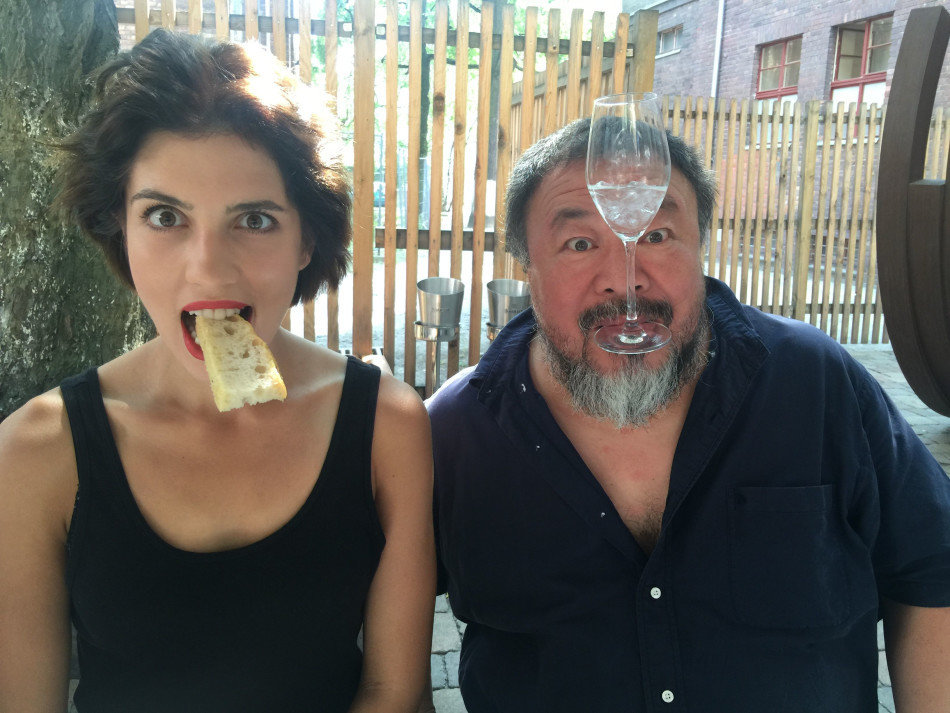
Ai WeiWei hanging out with Nadya Tolokno (Pussy Riot). Instagram.

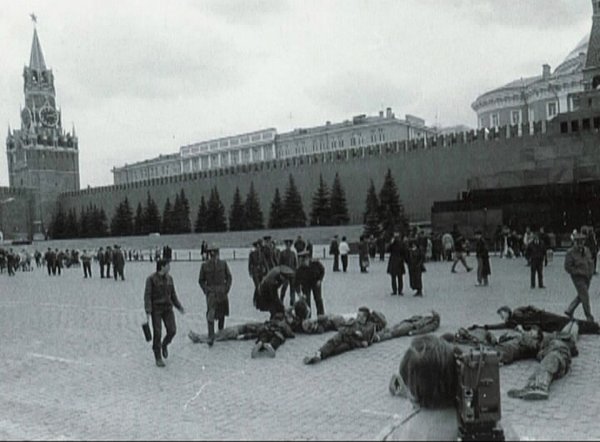
“Dick on Red Square,” 1991. ETI performance action documentation. Images: Anatoly Osmolovsky online archive.
Where is the performance?
Richard Schechner’s 1988 “Performance Studies: The Broad Spectrum Approach” proposes that performance itself is an exterior, imposed frame:
“To treat something as a performance is to investigate what it does, and how it interacts with other objects. Performance exists only in actions, interactions, relations.”
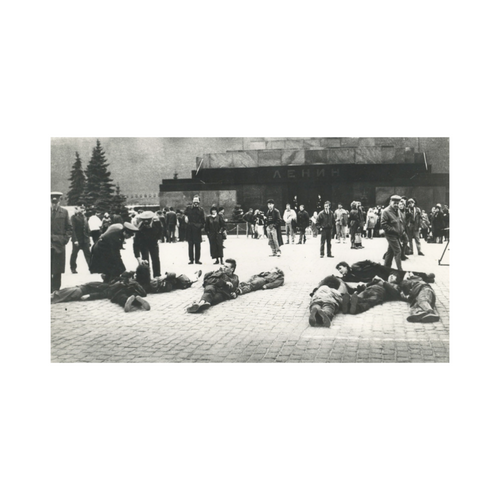
“Dick on Red Square,” 1991. ETI performance action documentation. Images: Anatoly Osmolovsky online archive.
Performance is mediated by the photograph, producing it as an event
"When understood in its full open-endedness, live performance makes this contingency the intersubjectivity of the interpretive exchange, highly pronounced and obvious since the body’s actions can be interfered with and realigned according to spectatorial bodies /subjects on the register of the action itself ; documents of the body-in-performance are just as clearly contingent, however, in that the meaning that accrues to this action , and the body-in-performance is fully dependent on the ways the image is contextualized and interpreted.”
Amelia Jones. Performing the Body/Performing the Text.
Who is the addressee of this performance?
To whom is the “dick” exposed?
Where is the post-socialism?
It is in the imaginary presence of the gaze of the state.
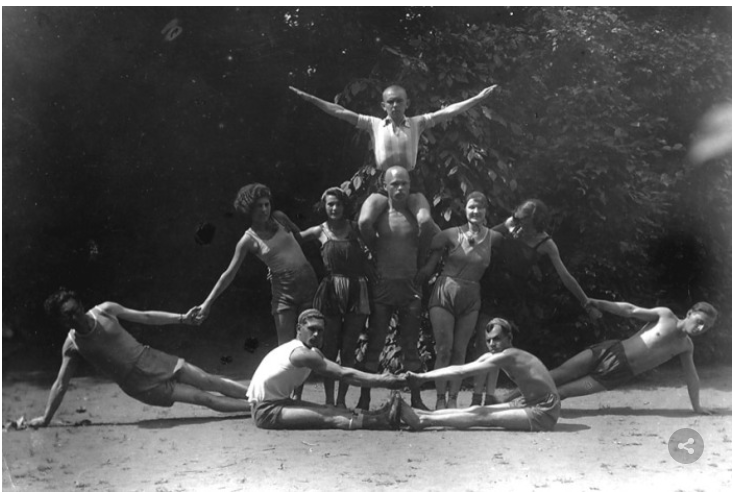
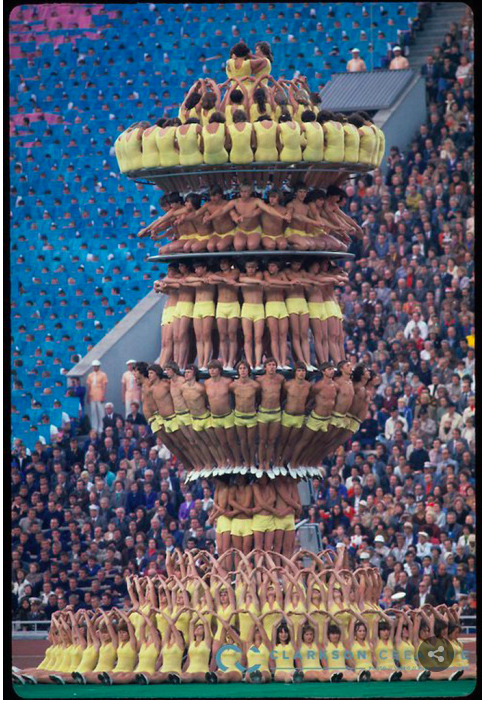
Popular Soviet practice of human sculpture-tower. Image: a summer camp (1939) and 1980's Russian Olympics Opening ceremony.
A socialist theory of the body and performance?
“Dick on Red Square,” 1991. ETI performance action documentation. Images: Anatoly Osmolovsky online archive.
The socialist body performed socialism. What is it's inheritance in the post-socialist performance?
This dissertation comparatively examines a selection of Russian and Chinese visual art practices that take the human body as the primary medium of expression, created during the period of transition from state socialism - a period that is conventionally called “post-socialist” (Russia after 1991 and China after 1979) - and through the present day. I argue that these artists inherit a socialist conception of the body as a reflective surface that is performing for the imaginary gaze of state, and that the changing relationship between the performing body and the post-socialist state can be traced through the use of personal optic recording technologies by these artists. Through the use of personal recording devices - such as the photocamera, handheld V8 camera, and a virtual reality headset – the artists move from a concept of the body as an exterior surface for inscription and performance to an aesthetic of inward gazing, performing the reclaiming of the body’s interiority as the home of the subject. The move from exteriority to interiority of the body, that I argue to take place in this period of vast socio-economic transition and rupture in categories of everyday life, as opposed to connoting a disappearance of the gaze of the state and an appropriation of the artist’s agency in self-representation, is examined as an incorporation of the imaginary gaze of the state by means of personal recording devices.
What of socialism remains in the present?
Chapter I, Incorporations
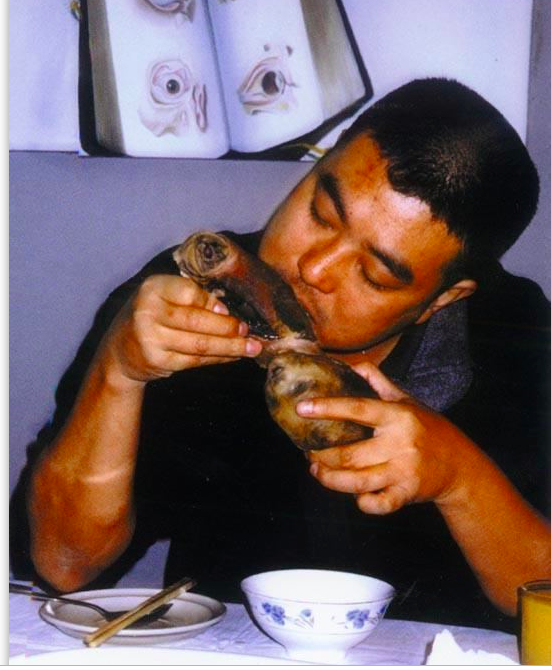
In Chapter II, The Explicit Body
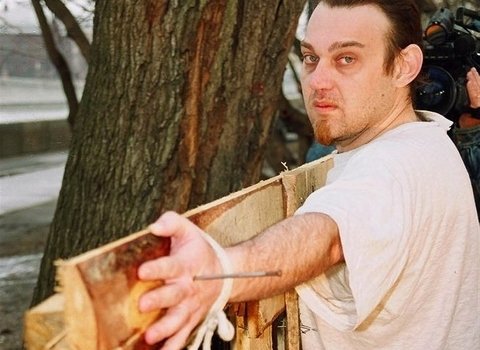
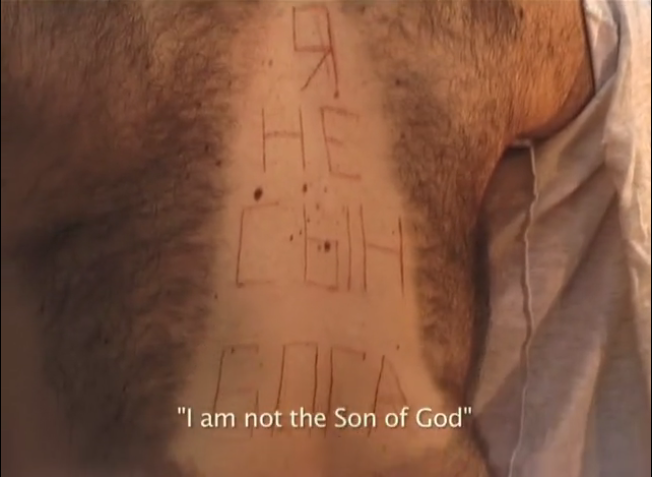
Oleg Mavromatti. Do Not Believe Your Eyes. 2000
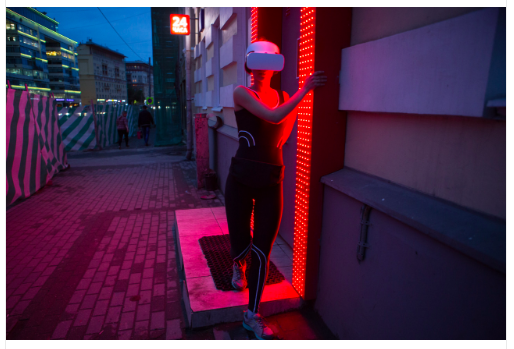
In chapter 3, Inverse Visuality

Li Hong. Out of Phoenix Bridge. 1997. Video (color, sound), 120 min
Katrin Nenasheva. Between Here and There. 2017. Tumblr.
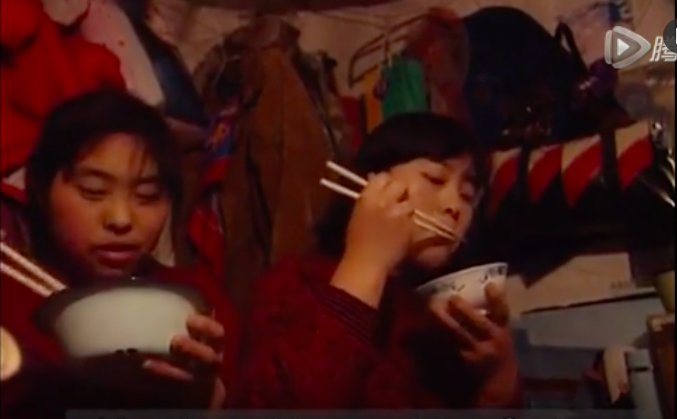

Li Hong. Out of Phoenix Bridge. 1997. Video (color, sound), 120 min
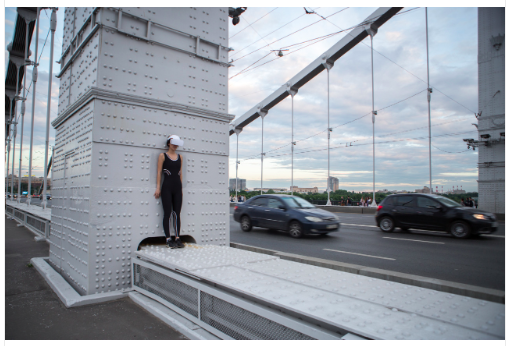
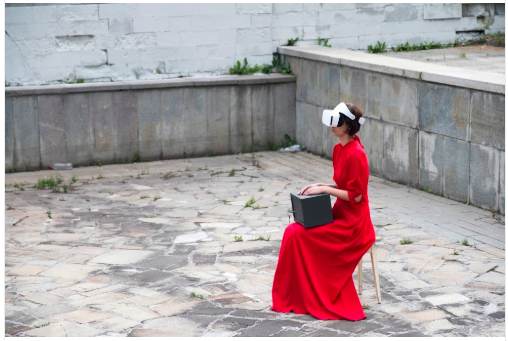
Katrin Nenasheva. Between Here and There. 2017. Tumblr.
Performing the Body,
Performing The State
“I don’t have an exterior point to see myself from, I don’t have access to my own inner representation. From my eyes look someone else’s eyes.” Mikhail Bakhtin. “Man by the mirror,” Author and Hero.
‘What size do you want to be?’ it asked.
‘Oh, I’m not particular as to size,’ Alice hastily replied; ‘only one doesn’t like changing so often, you know.’ - Lewis Carroll. Alice's Adventures in Wonderland
Performing the Body, Performing the State
By Dasha Filippova