Agile A.I.
Bridging the Gap Between Product Management and Data Science
About Me
Garrett Eastham


edgecase
Founder & Chief Data Scientist
AI & Ecommerce Focus
CS @ Stanford
Background in Web Analytics
Career in Product Management
Prior: Bazaarvoice, RetailMeNot
Today's Talk
The Gap as it Exists Today
Conducting Agile Data Science
Running an AI Playbook
Example: Customer Service Optimization
The Gap
Defining Machine Intelligence
Machine Intelligence (n): the power of a machine to copy intelligent human behavior.
Theory
Reality
Machine Intelligence (n): enabling digital experiences to leverage trained and/or derived statistical models for the purpose of extending an existing or new value proposition in manners not possible prior.
Where is the Gap?
Product Management
Data Science
Data & Market Opp.
Delivered Value to Customer
?
Two Types of People


Data Scientist
Product Manager
- Customer-focused
- Abstract value from implementation
- Data-focused
- Work requires extreme focus to detail
Common Stakeholder Questions
"We have lots of data, but I have no idea how to make use of it - or if it's even worth it."
"I've heard great things about AI, but I have no idea what's even possible for us."
"How do we get to an understanding of cost and scope for something no one understands."
Conducting Agile Data Science
What Makes it Agile?
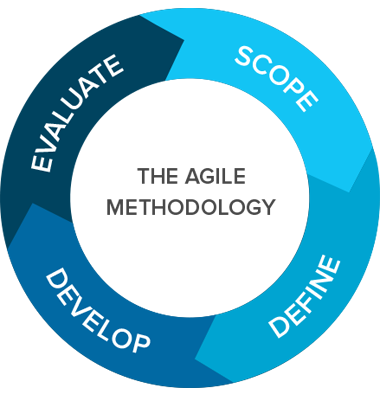
Individuals and Interactions
over processes and tools
Working Software
over comprehensive documentation
Customer Collaboration
over contract negotiation
Responding to Change
over following a plan
The Agile AI Framework
Goal: Optimize the necessary cross-functional collaboration and coordinated output of product teams attempting to create value through machine intelligence
Front-load "necessary" data plumbing activities to enable use case exploration
Allow value-propositions to be rooted in actual data without sacrificing creativity
Enable non-technical stakeholders to participate at all phases of development
The Agile AI Framework
Business Development
Subject Matter Expertise
Data Science & Engineering
User Experience
Product Realization
Non-Linear Collaboration
Linear Output
The Agile AI Framework
Business Development
User Experience
Subject Matter Expertise
Product Realization
Data Science & Engineering
Data Plumbing & Exploration
Model Development
Model Scaling & Packaging
ROI Analysis
Customer Engagement
Use Case Ideation
AI Playbook Development
AI Play Pruning
QA & Testing
Phase 1
Phase 2
Phase 3
Agile AI - Feasibility Exploration
Data Plumbing & Exploration
Use Case Ideation
AI Playbook Development
Phase 1
- Business team is responsible for sourcing problems from across the organization
- Problem statements are best if they can have dollar impact (estimated) assigned to them
- SME's and DS practitioners collaborate to start developing different ways of framing emerging problem statements into optimization language
- Regardless of problem / solution identification, data team should start immediately working to identify potential data sources, data schema and developing necessary data stores and ETL logic
- Initial, lightweight data analysis and exploration can help guide ETL activities as well as feed back up to use case identification
Agile AI - Value Selection
Model Development
ROI Analysis
AI Play Pruning
Phase 2
- Using cost inputs and feasibility assessments from data team, business team should work to prioritize initiatives based on overall ROI
- Feedback from data team should guide aggressive elimination of options
- PM's and SME's should work to update cost estimates for full product realization
- Data team should begin iterating towards initial, local models for first set of use cases to explore
- Models should use sample of data and research is focused on validating assumptions about predictive power against assumed use case
Agile AI - Model Operationalization
Model Scaling & Packaging
Customer Engagement
QA & Testing
Phase 3
- Business team should take emerging solutions / offerings and bring them to customers to guide final investment decisions (MVP and roadmap planning)
- SME's should be collaborating with product realization team to test Alpha / Beta versions against proposed intelligent value statement
- As scope is honed in and non-fruitful research swim lanes are cut, work moves from model development to model realization
- Data science team's focus is on "packaging" up models (exporting trained weights, moving script code into version controlled libraries, etc.)
Running an AI Playbook
Use-Case Driven Discussions
Problem
Framing
Framing
S
S
S
S
Possible Solutions
(Management) Science
(Data) Science
Creative Art
Research Swim Lanes
Framing the Learning Problem
Problem
"We need to improve our search click-through rate by at least 10%"
Framing
Re-frame problem into two parts - content selection and content ranking.
1
2
Content Selection
Content Ranking
- More traditional IR problem
- Focus on recall vs precision
- Ample literature for review
- Varied ML tasks - classification, regression, matrix factorization
Optimizing Research Progress
Minimal Viable Model
Problem
Framing
1
2
Time to Value
Resource Constraints
Hard vs Soft Science
VS

Hard Science
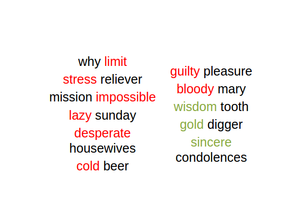

Soft Science
Bag of Words for Sentiment Classification
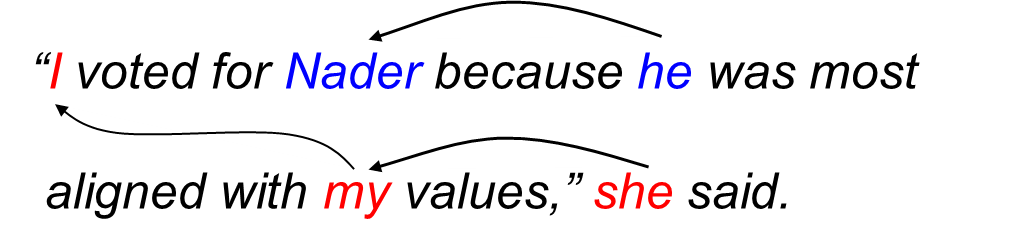
Entity Coreference Resolution
- Simple implementation / debugging
- Pre-existing libraries
- Known prior art
- Active research / state-of-art (in literature)
- No extensive feature engineering
Example: Customer Service Optimization
The Customer Service Challenge

Customer Service Operations
- Typically an organizations largest source of (non-skilled) labor cost
- Despite advances in automation, majority of consumers still prefer human interaction
- Historical approaches have focused on reducing the variable labor cost (i.e. - outsourcing support)
Re-Framing the Challenge
Problem
"Reduce total customer service cost by at least 25%."
Framing
Cost = Total Minutes x Cost / Minute
1
2
Remove Demand
Improve Rep Support Efficiency
- Identify common customer scenarios and automate
- Pre-qualify customer via questions or CRM
- Develop / iterate methods for exposing to service rep
Minimize Average Time / Rep
3
Pre-Educate Customer
- Add chatbot self-education capabilities during hold
Potential Solutions Emerge
1
2
Remove Demand
Improve Rep Support Efficiency
- Leverage unsupervised NLP methods to group common "problems" together
- Use small taxonomy team to seed a "customer service" ontology
- Match text to labels of ontology
- Conduct interviews with support staff to identify customer info needs
- Research, ETL and connect inbound customer to CRM
3
Pre-Educate Customer
- Identify common "information" needs in support transcripts
- Prototype chatbot interaction (single script)
How to Contact Me
garrett@dataexhaust.io
- Follow up questions
- Model development / implementation
- Product team training
- Moral support
Thank you!
Agile AI
By Garrett Eastham