Bandwidth & Go
Agenda
- Why Go
- First Revisions
- Getting feedback
- Rolling in feedback
- Real world example
Why Go

Go & Communications
- High concurrency
- Fast
- Low Latency
- Strongly Typed

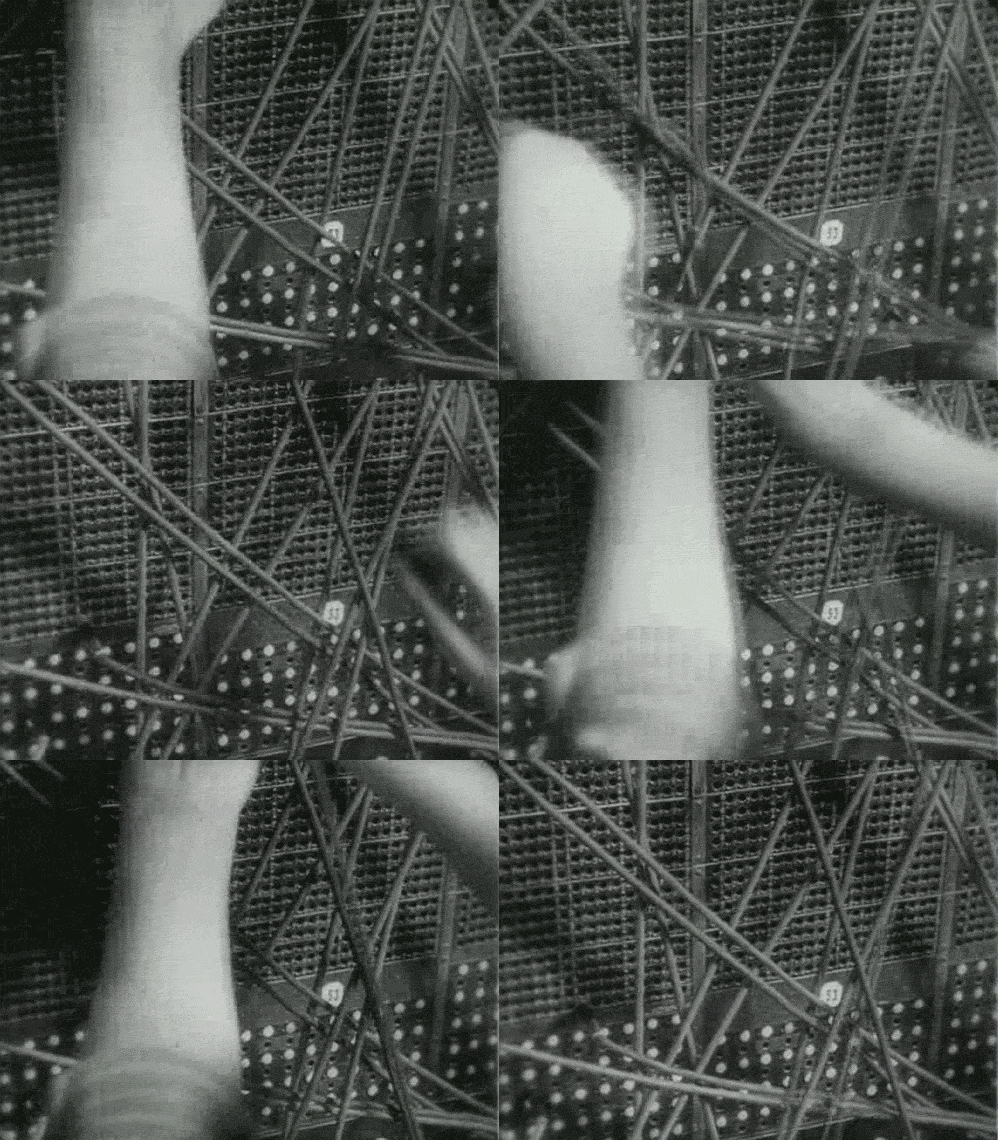
Concurrency
Fast

First Draft
Goals
- Copy popular SDK Design
- Idiomatic
- High API Coverage
Design Patterns
// CreateMessage sends a message (SMS/MMS)
// It returns ID of created message or error
func (api *Client) CreateMessage(data interface{}) (string, error) {
  _, headers, err := api.makeRequest(http.MethodPost, api.concatUserPath(messagesPath), nil, data)
  if err != nil {
    return "", err
  }
  return getIDFromLocationHeader(headers), nil
}
Getting Feedback
To Reddit!

Feedback
...I'm a bit wary of every response being returned map[string]interface{}. Usually they're marshaled into a struct...
have exported structs that we can use and avoid map[string]interface{}.
...look at the Stripe Go SDK for examples of how you can export your API responses as a struct. look at card.go and you'll see they have a struct with types for each field and they use tags to define how it marshals/unmarshals to json.
OK... v2.0
Design Patterns
// CreateMessageData struct
type CreateMessageData struct {
	From               string   `json:"from,omitempty"`
	To                 string   `json:"to,omitempty"`
	Text               string   `json:"text,omitempty"`
	Media              []string `json:"media,omitempty"`
	CallbackURL        string   `json:"callbackUrl,omitempty"`
	CallbackHTTPMethod string   `json:"callbackHttpMethod,omitempty"`
	FallbackURL        string   `json:"fallbackUrl,omitempty"`
	CallbackTimeout    int      `json:"callbackTimeout,omitempty"`
	ReceiptRequested   string   `json:"receiptRequested,omitempty"`
	Tag                string   `json:"tag,omitempty"`
}

// CreateMessage sends a message (SMS/MMS)
// It returns ID of created message or error
func (api *Client) CreateMessage(data *CreateMessageData) (string, error) {
  _, headers, err := api.makeRequest(http.MethodPost, api.concatUserPath(messagesPath), nil, data)
  if err != nil {
    return "", err
  }
  return getIDFromLocationHeader(headers), nil
}
Examples
  statuses, error := api.CreateMessages(
      &bandwidth.CreateMessageData{From: "+19195551212", To: "+191955512141", Text:"Test1"},
      &bandwidth.CreateMessageData{From: "+19195551212", To: "+191955512142", Text:"Test2"})
api.CreateCall(&bandwidth.CreateCallData{From: "+19195551212", To: "+191955512142"})
Lessons Learned
- Go != Node
- Structs > interface
- Reddit actually good
- Maintainability?
- Swagger...
Putting it all together
Updating Call
api.UpdateCall(form.CallID, &bandwidth.UpdateCallData{
    State:            "transferring",
    TransferTo:       user.SIPURI,
    TransferCallerID: callerID,
})
Order Phone Number
numbers, err := api.client.GetAndOrderAvailableNumbers(bandwidth.AvailableNumberTypeLocal,
		&bandwidth.GetAvailableNumberQuery{AreaCode: areaCode, Quantity: 1})
        if err != nil {
	    return "", err
        }
	err = api.client.UpdatePhoneNumber(numbers[0].ID,
            &bandwidth.UpdatePhoneNumberData{
                ApplicationID: applicationID
        })
github.com/bandwidthcom/go-bandwidth
github.com/BandwidthExamples/go-voice-reference-app
Questions?

Bandwidth & Go
By Daniel Tolbert
Bandwidth & Go
Slides for Go meetup in atlanta