The basics of Block chain
It's actually very simple, It's a public Ledger of Transactions
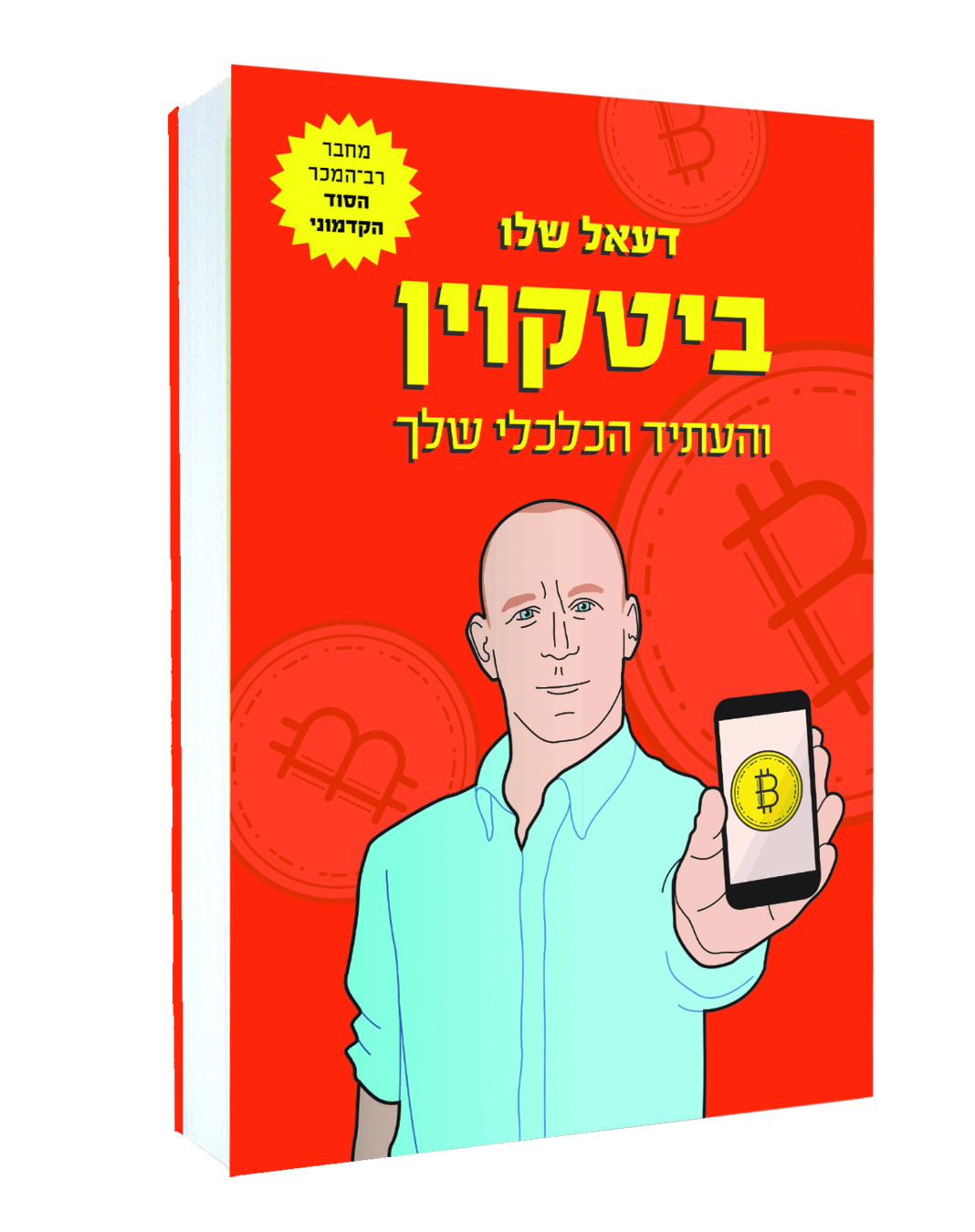
Based on a Book By Dael Shalev
For a real lecture about Bitcoin...go elsewhere

Tech stuff
- Each person has a public key (pKey) and a private/secret key (sKey)
- Each message has a 256 bits Signature
- Each message is encrypted with a sign function
-
signFn(message, sKey) = signature;
-
- You can verify each message with a Verify function
-
verifyFn(message, signature, pKey) = true/false;
-

You don't need to understand the math, just accept that it works
More tech stuff
- The only way to guess the signature is to guess it via brute force
- It's much fun...
- There are 2^256 possibilities
- It's beyond astronomical number...
- 115 quattuorvigintillion (that’s a 78 digit number)
- This number is bigger than the number of atoms in the perceivable universe. And not by just a little bit either. Exponentially bigger.
115792089237316195423570985008687907853269984665640564039457584007913129639936
You already know what this title is
- SHA256
- Each transaction is written on a ledger. Each entry has its own signature - this helps to bring trust to the system - this is a key point. This ledger is shared across all nodes and verified by them all. There is no one location that keeps the ledger. This means that we have removed the trust from a single location.
- A cryptocurrency is actually the ledger - the list of all transactions. Coins don't move around - the balance is calculated on all of the transactions
So if you have a ledger, and you need to accept or reject other transactions - how to make sure that everybody will do the same - what is this special protocol?
Blockchain

Blockchain principles
- We do this with hashing and proof of work
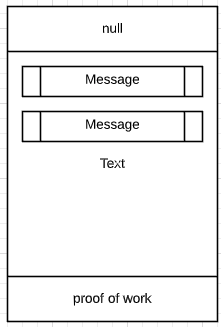
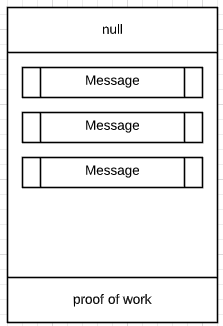
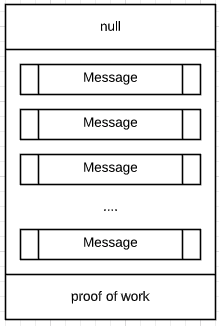
- The items (messages) are stored in Blocks
- Each block is 1M
- Each block contains transactions (sign/verify)
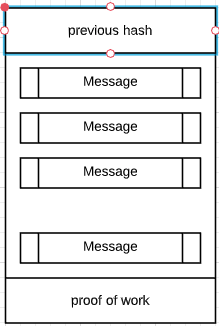
- The blocks are aligned - meaning each is connected to the next and previous one via a hash
- This way you cannot insert a block in the middle and temper with the chain's integrity

- What happens when we have a conflict
- We differ to the longer chain
- What happens when they are equal in length?
- We wait for the next block, and see who verifies it the first
These are some of the ways by which we have a Trust in computational work, and NOT a central authority like banks or governments - this is called a decentralized conscious
...and this is way this tech is so kewl
So, after all of this:
- Not going to talk about how many coins have been mined already, and why
- Not going to talk about the time it takes to mine
- Not going to talk about mining rewards
- It's much more complicated than this - read about it - it's interesting
Read more
Let's code us a blockchain
The basics of Blockchain
By Eyal Mrejen
The basics of Blockchain
This is NOT a bitcoin presentation.