A Survey on Feasibility and Suitability of Blockchain Techniques for the E-Voting Systems
International Journal of Advanced Research in Computer and Communication Engineering
Introduction
-
Recent major technical challenges
-
Anonymous vote-casting
- Ballot casting verifiability by (and only by) the voter
-
Secure digital identity management
-
Any potential voter should have been enrolled
-
-
Individualized ballot processes
-
hashed, encrypted etc...
-
-
Introduction
Introduction
-
common problems of current e-voting applications
-
High initial setup costs
-
Lack of transparency and trust
-
Voting delays or inefficiencies related to remote/absentee voting
-
Increasing security problems
-
Double-voting or voters from the other region
-
Introduction
Implementations and Design Decisions
-
Proof of Identity
-
ID cards, digital residence code, ...
-
-
User Interface
-
Token
-
defined as a type of digital asset
-
used to fulfill all the functions of that service
-
-
Ledger
-
Programming Languages
-
Open Source
Introduction > Implementations and Design Decisions
Introduction > Implementations and Design Decisions
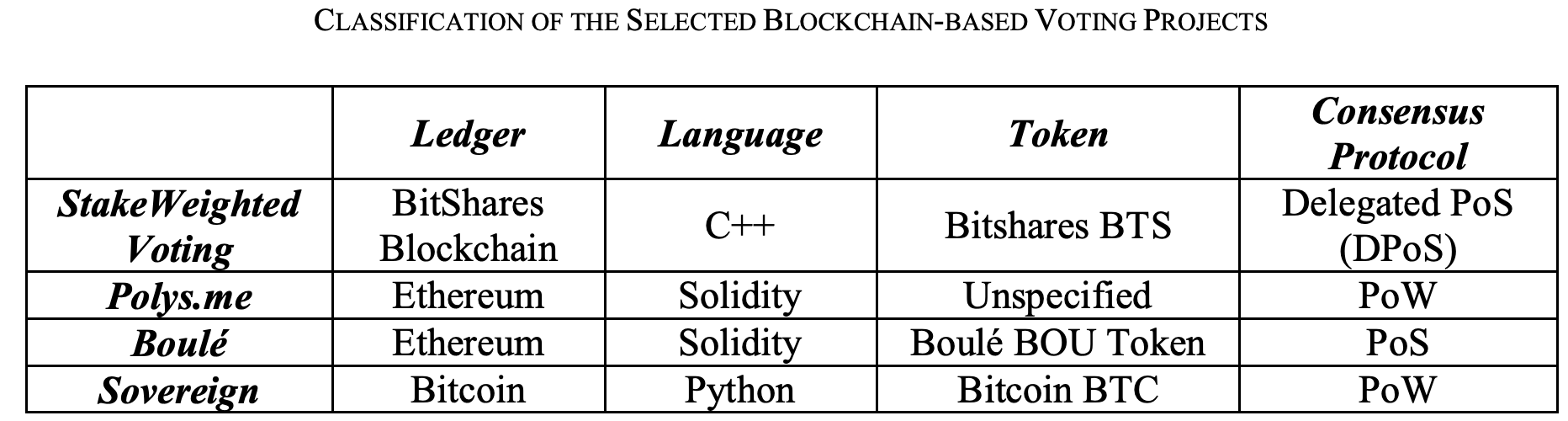
Implementations and Design Decisions
Feasibility Analysis
-
feasibility
-
cost-effective, scalable, secure, and easy-to-deploy system
-
-
how to measure?
-
considered some thresholds or factors in order to determine whether it is feasible to replace the existing (and prospective) structures with their blockchain-based counterparts, or not.
-
Feasibility Analysis
Feasibility Analysis
-
Constraint
-
Any blockchain-based solution should be (noticeably) cheaper
-
3-years period with at least 1 elections per year
-
may need to support millions of people
-
-
The security level should not be lower than non-blockchain solutions
-
Feasibility Analysis
Feasibility Analysis
-
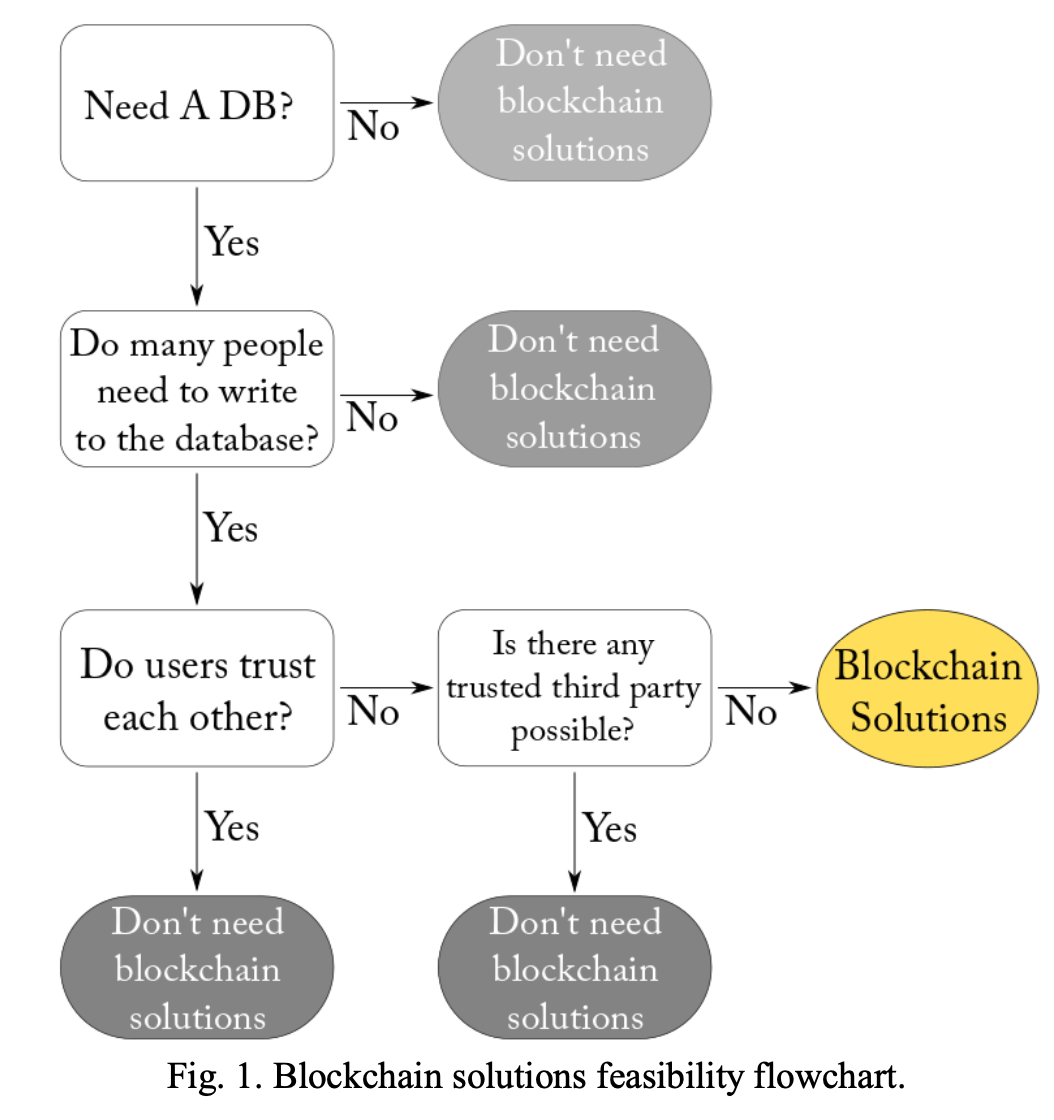
Blockchain solutions are suitable, when the following characteristics are present in the legacy subject systems
-
Shared data
-
Multiple parties
-
Low trust
-
No trusted third party
-
Auditability
-
If we want the records to be immutable
-
-
Feasibility Analysis
Feasibility Analysis
Feasibility Analysis
Blockchain Fundamentals
-
Blockchain solutions are suitable, when the following characteristics are present in the legacy subject systems
-
Shared data
-
Multiple parties
-
Low trust
-
No trusted third party
-
Auditability
-
If we want the records to be immutable
-
-
Feasibility Analysis > Blockchain Fundamentals
Social Aspects
-
Several studies showed that the trust in e-vote are considerably low (or at least not high as the traditional systems)
-
Estonia still holds both traditional and online elections together
-
-
popular cryptocurrency like Bitcoin may strengthen the perception of trust
-
If the software is open source public opinion and trust will even be higher
Feasibility Analysis > Social Aspects
Financial Aspects
-
lower the administrative costs in the long term despite of higher initial costs
-
cost from the point of view of the voters is analyzed in another work in Estonia
-
who live at least 30 minutes distance from their voting centers are more likely to prefer voting online
-
Feasibility Analysis > Financial Aspects
Security and Reliability
Feasibility Analysis > Security and Reliability
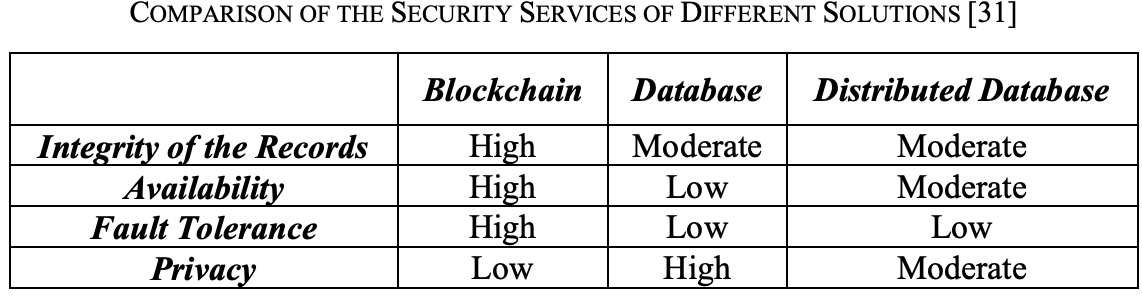
Security and Reliability
-
authentication is implemented by asymmetric cryptology in crypto coins
-
ensures the integrity and authentication of the user/voter accounts
-
authenticating the users themselves remains as an open problem
-
Feasibility Analysis > Security and Reliability
Comparison with Alternatives
-
compared the distributed model with centralized solutions
-
relational database vs blockchain
-
Requirements
-
voters’ identities must not have any kind of relation with their casted votes
-
duplicate voting must be prevented
-
voters should be able to verify their ballots
-
vote storage/counting phases should be time trackable.
-
-
Feasibility Analysis > Comparison with Alternatives
Comparison with Alternatives
-
=> Providing all these features at the same time is very hard with the classical relational databases
-
Conversely, these can be implemented easily with a blockchain based system
Feasibility Analysis > Comparison with Alternatives
Comparison with Alternatives
-
scalability
-
highly implementation and consensus protocol dependent
-
transaction rate may vary from 30 per second up to many more
-
speed and security is trade-off
-
Feasibility Analysis > Comparison with Alternatives
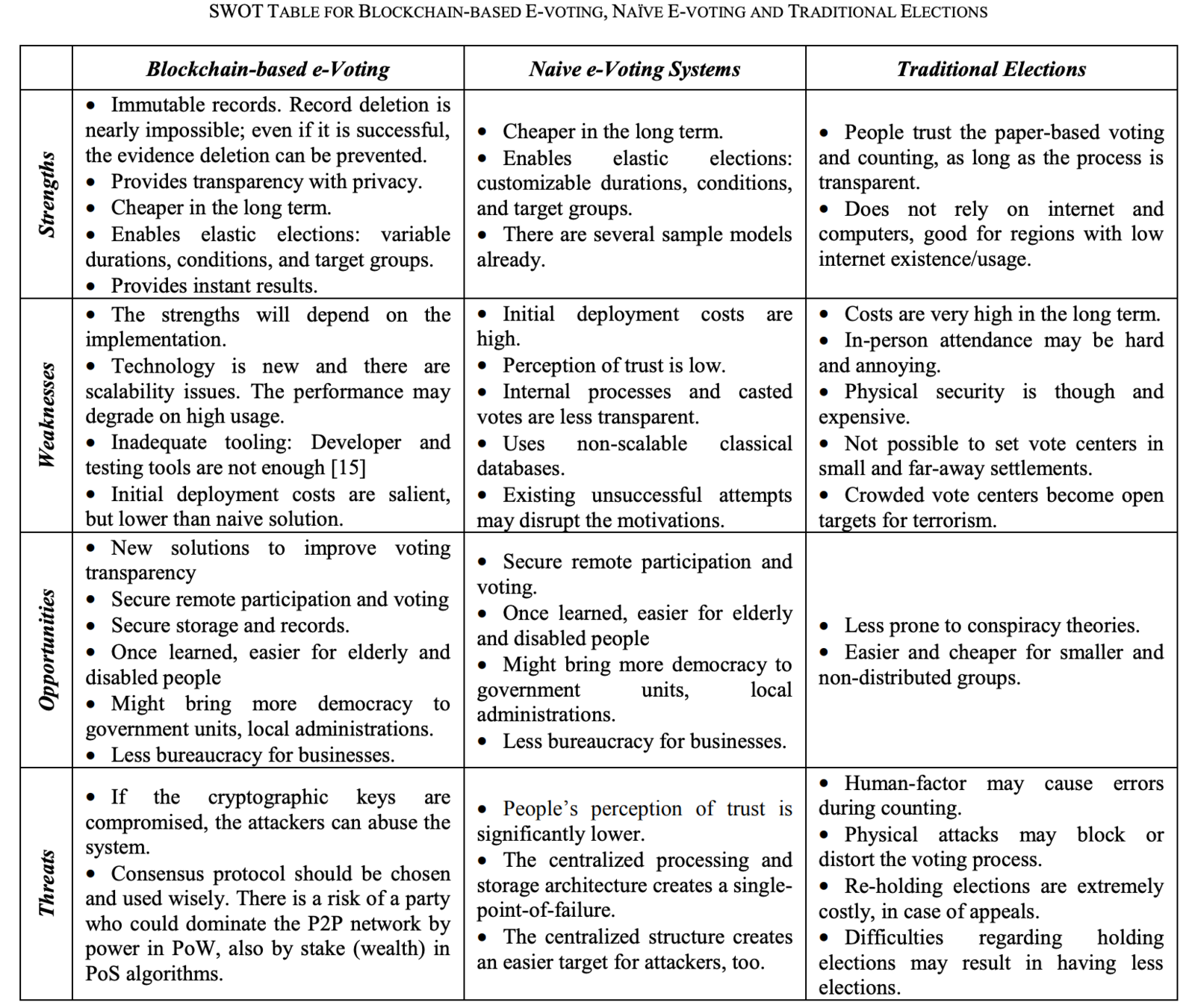
SWOT Analysis
-
Our analysis showed that, the potential gains of holding blockchain-based online elections are significant and worth developing
Feasibility Analysis > SWOT Analysis
SWOT Analysis
Feasibility Analysis > SWOT Analysis
Conclusion
-
Blockchain may seem perfect, but we are not yet fully aware of all the risks regarding security and scalability, as blockchain-based e-voting systems are still on the testing phase
-
remote participation does not seem to be secure enough with the current technology
-
risks regarding the personal ID authentication
-
Conclusion
A Survey on Feasibility and Suitability of Blockchain Techniques for the E-Voting Systems
By mmnk