Electricity and magnetism
COULOMB's Law
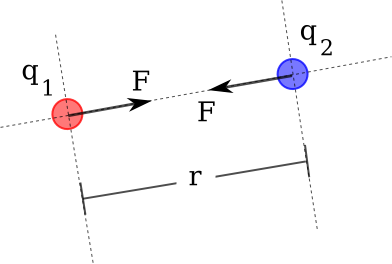
\[ F_{\mathrm{el}} = k \frac{q_{1}q_{2}}{r^{2}}; \; k = \frac{1}{4 \pi \varepsilon_{0}} \]
\[ F_{\mathrm{el}} = \frac{1}{4 \pi \varepsilon_{0}} \cdot \frac{q_{1}q_{2}}{r^{2}} \]
\[ q \Rightarrow Coulomb \, [C] \]
\[ e = 1.6 \cdot 10^{-19} (C) \]
electric field
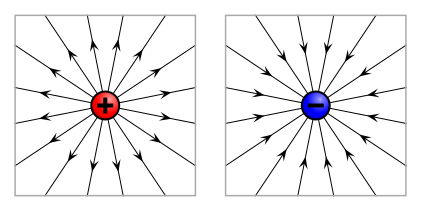
\[ \vec{F}_{\mathrm{el}} = \frac{1}{4 \pi \varepsilon_{0}} \cdot \frac{q_{0}q}{r^{2}} \vec{u}_{r} \]
\[ \vec{E} = \frac{\vec{F}_{\mathrm{el}}}{q_{0}} = \frac{1}{4 \pi \varepsilon_{0}} \cdot \frac{q}{r^{2}} \vec{u}_{r} \]
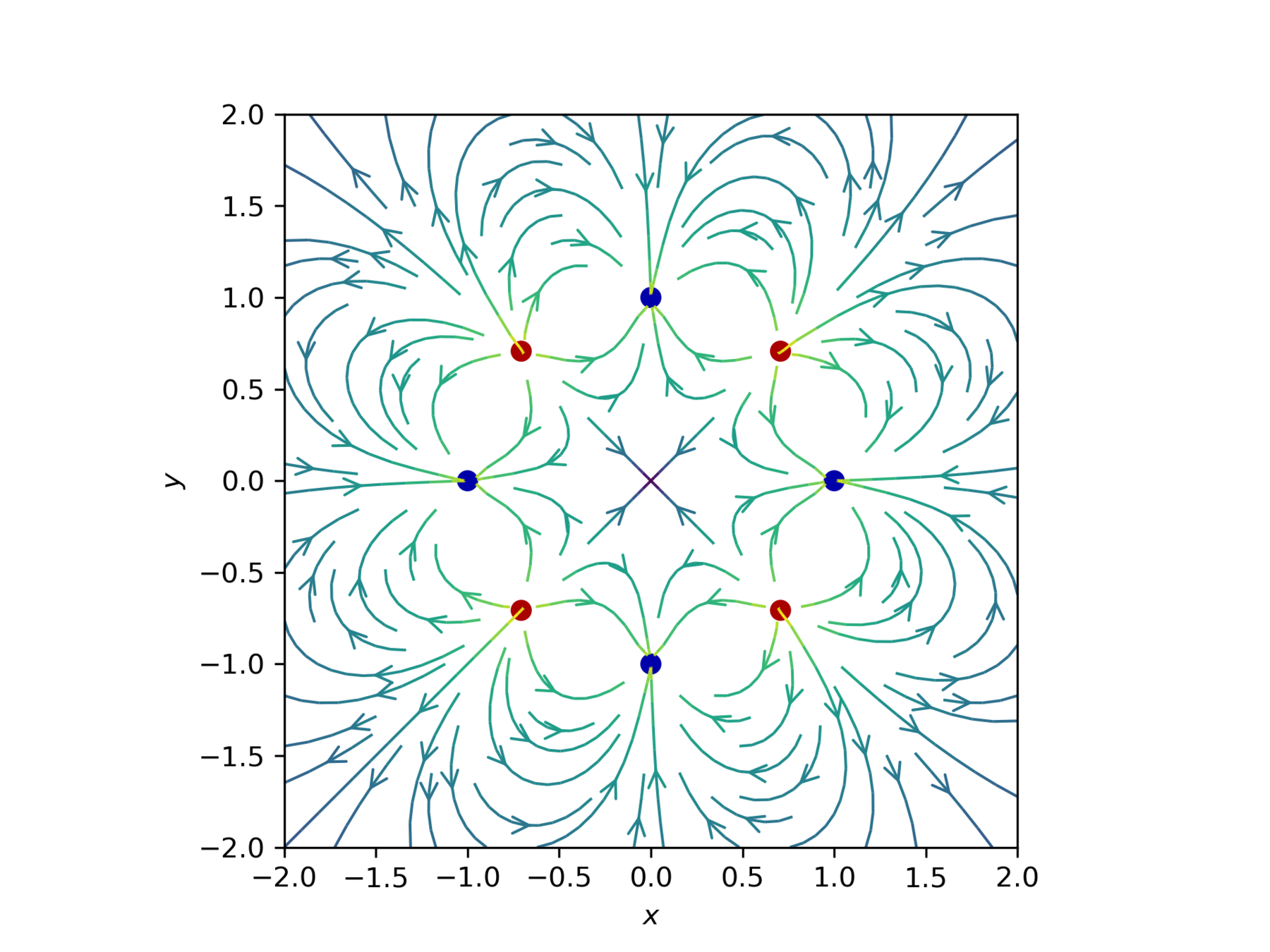
electric field lines: 1
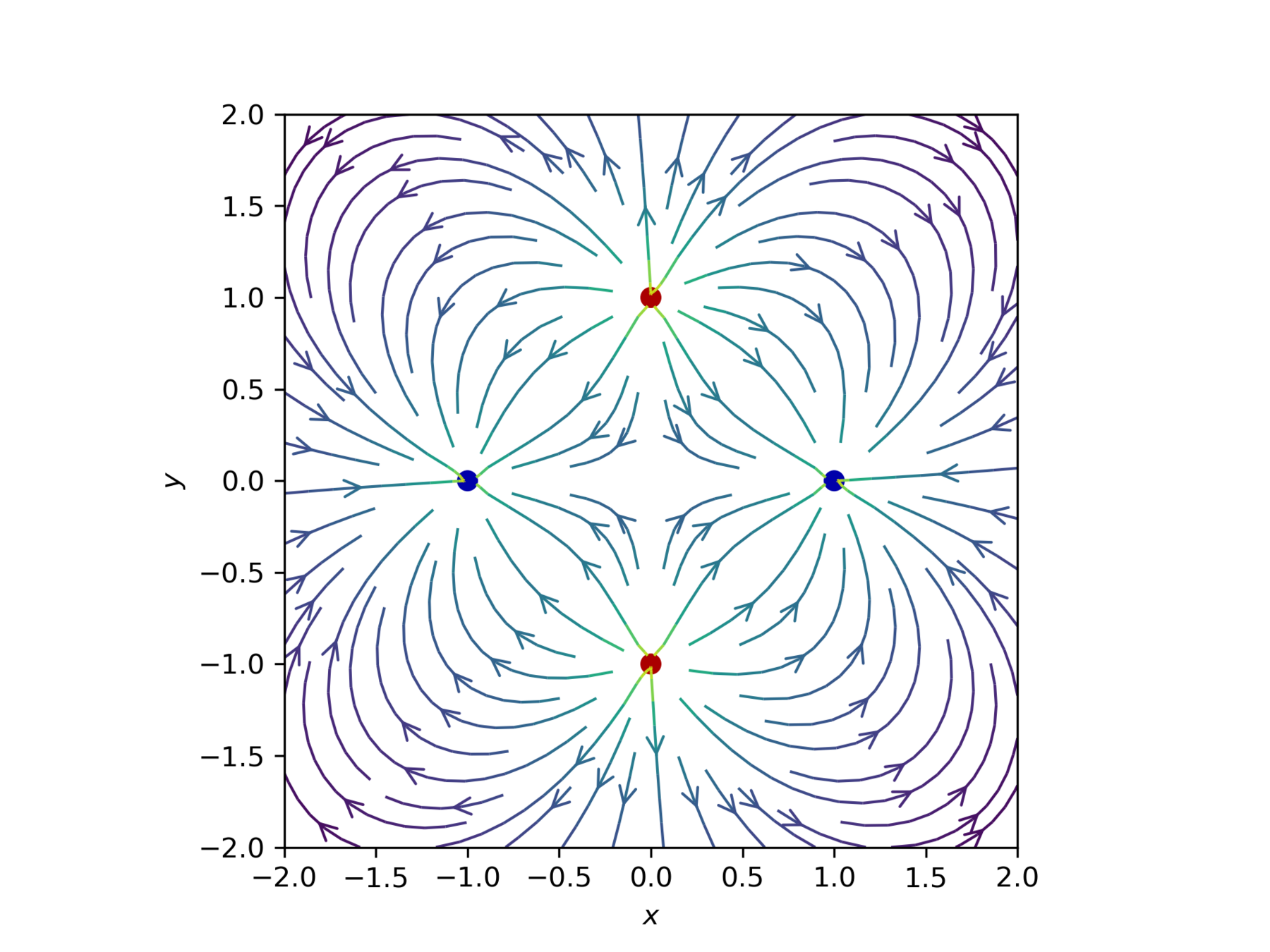
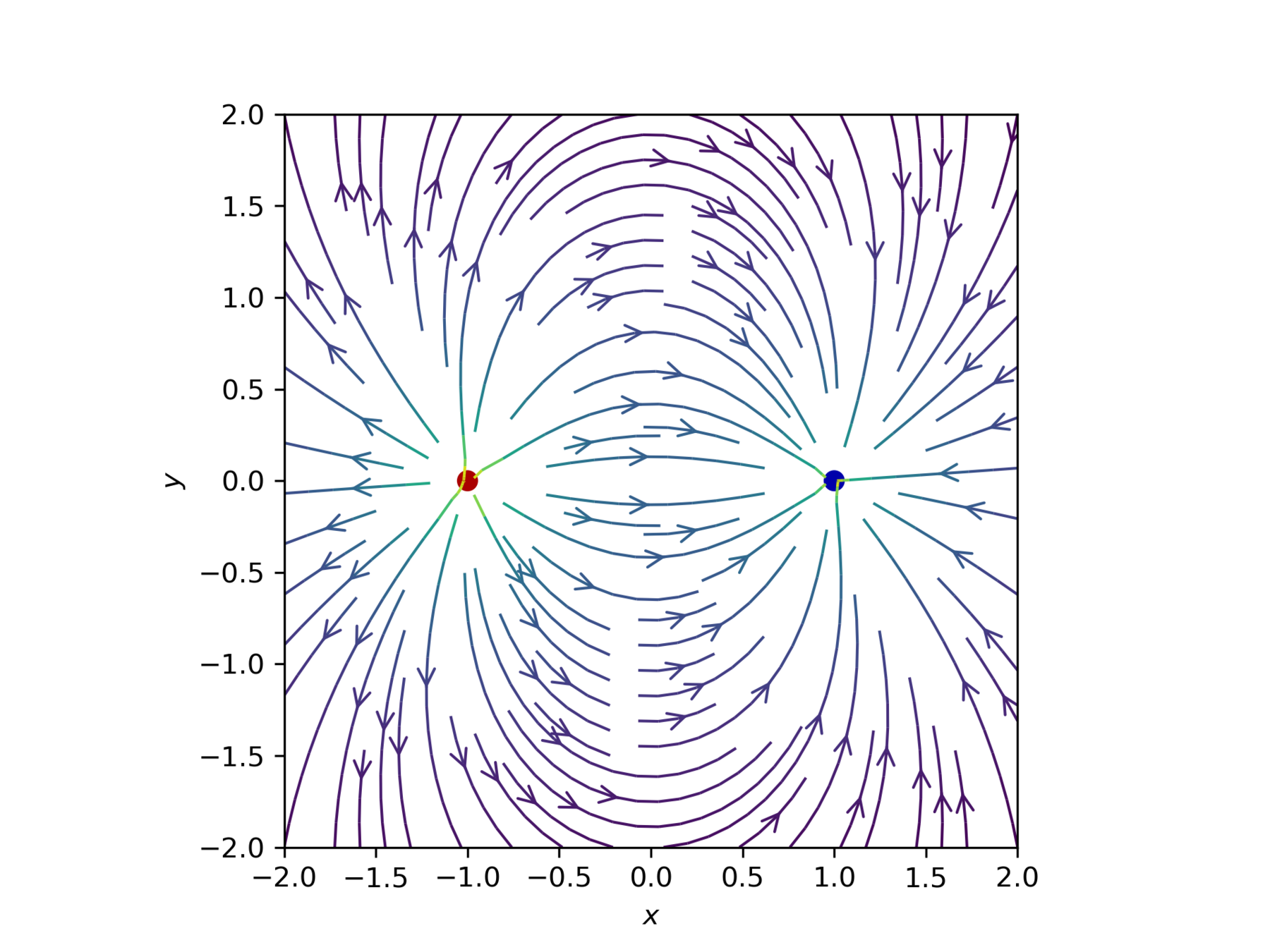
electric dipole
electric quadrupole
electric octupole
ELECTRIC FIELD LINES: 2
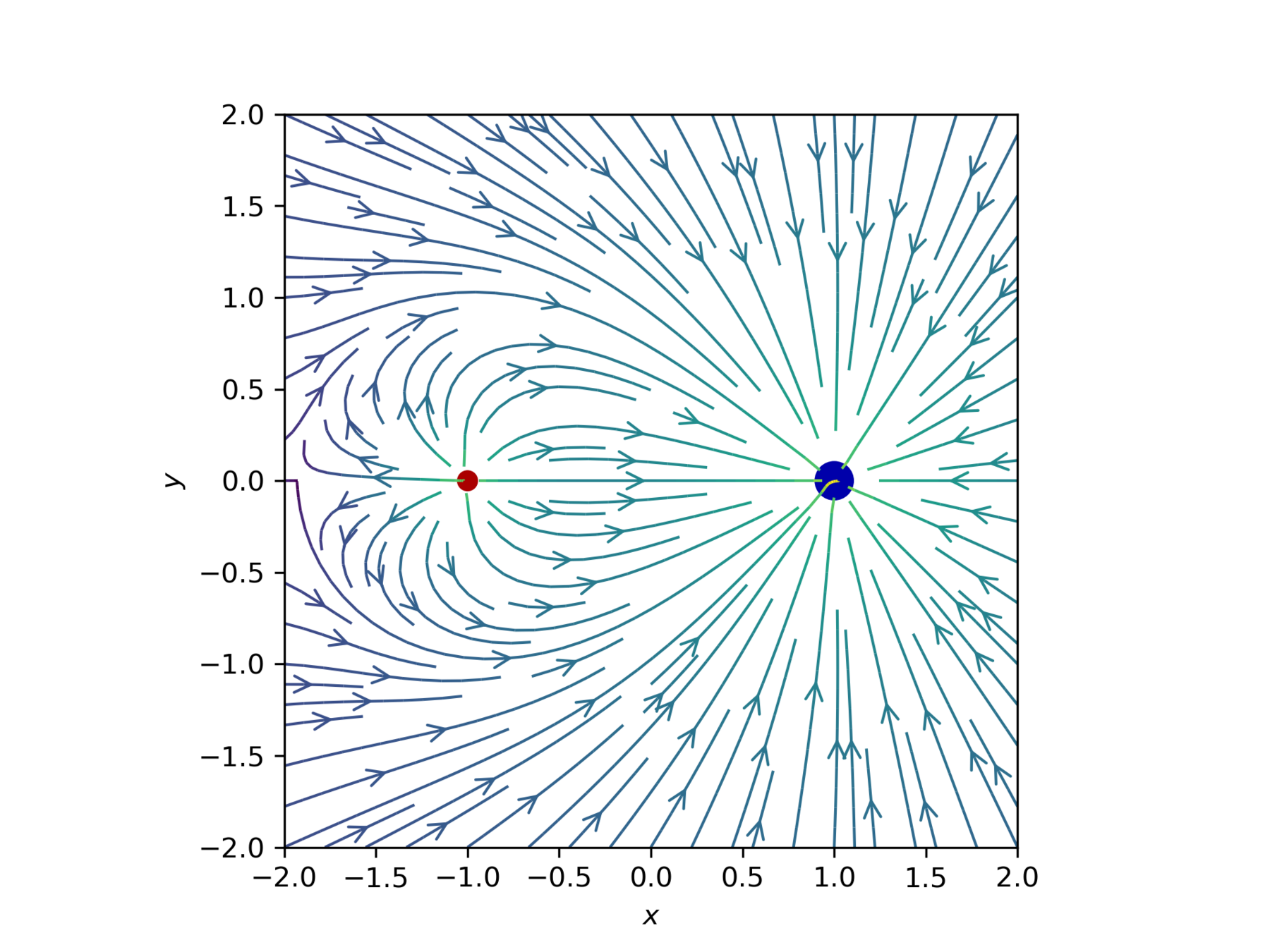
symmetric dipole
asymmetric dipole
ELECTRIC FIELD LINES: 3
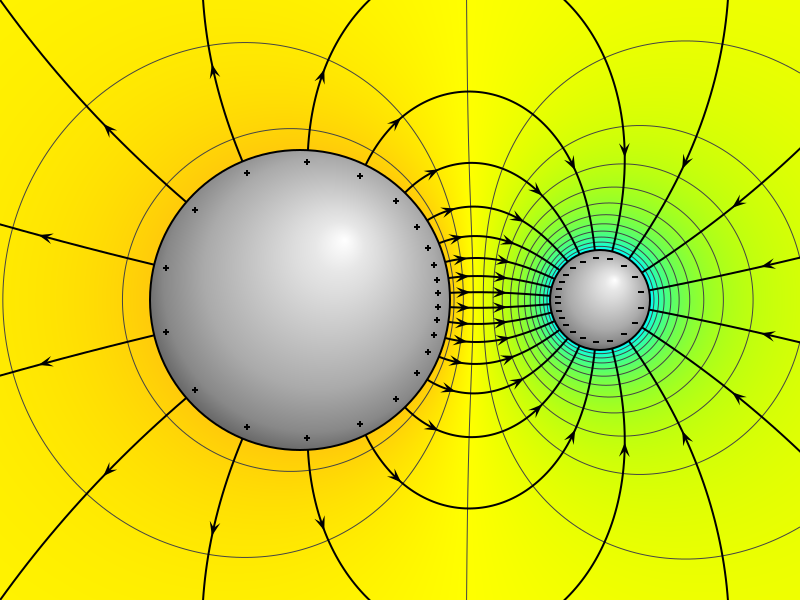
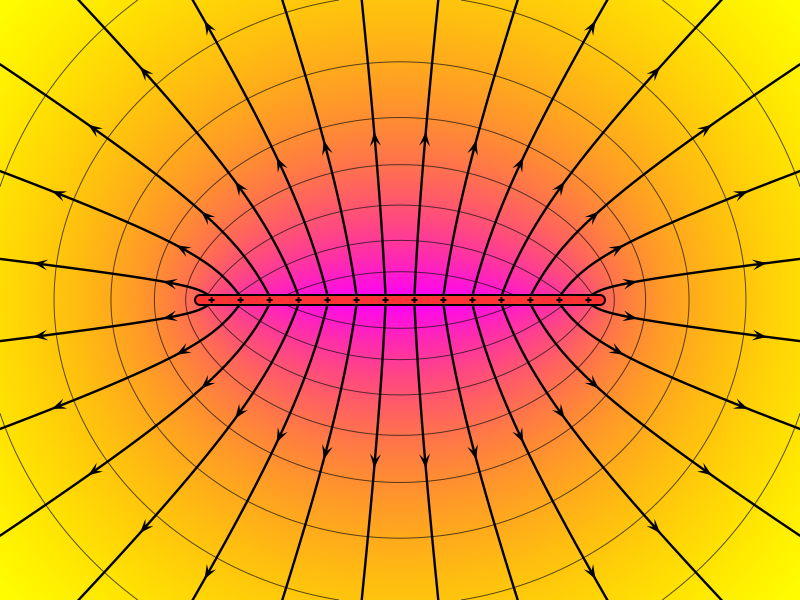
CONTINUOUS distributions of charges
chared plates
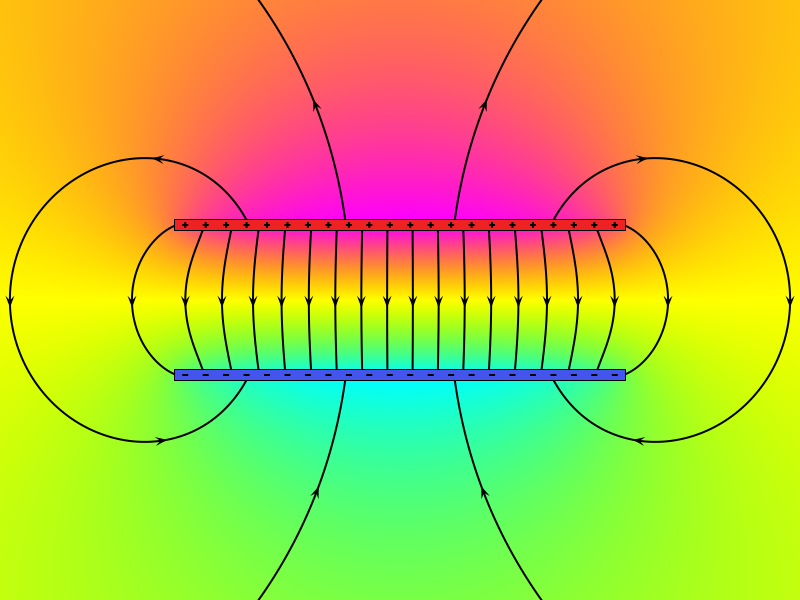
\[ | \vec{E} | \approx constants \]
\[ \vec{a} = \frac{\vec{F}}{m} = \frac{q \vec{E}}{m} \]
facing charged plates
moto in un campo elettrico tra due armature cariche
flux of a vectorial field
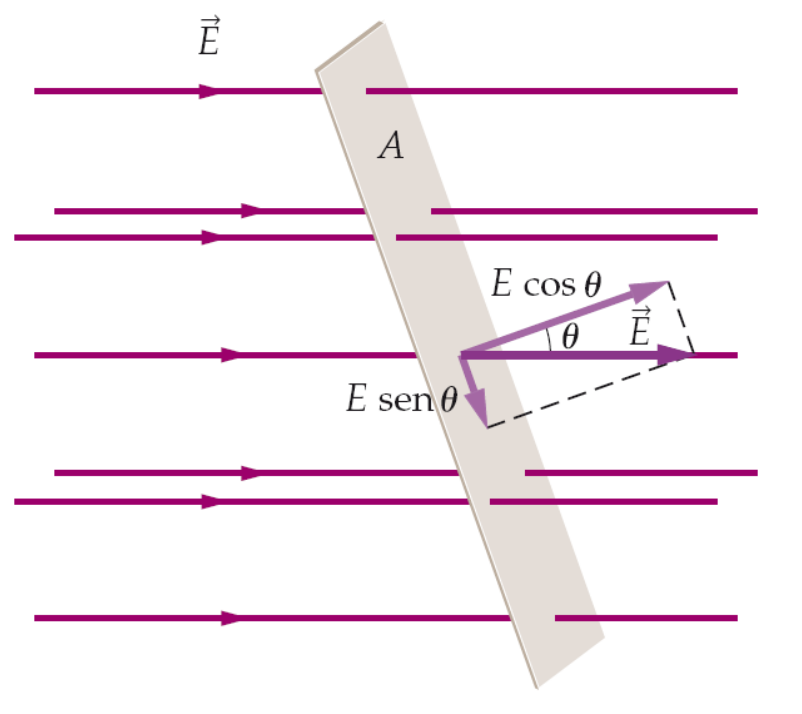
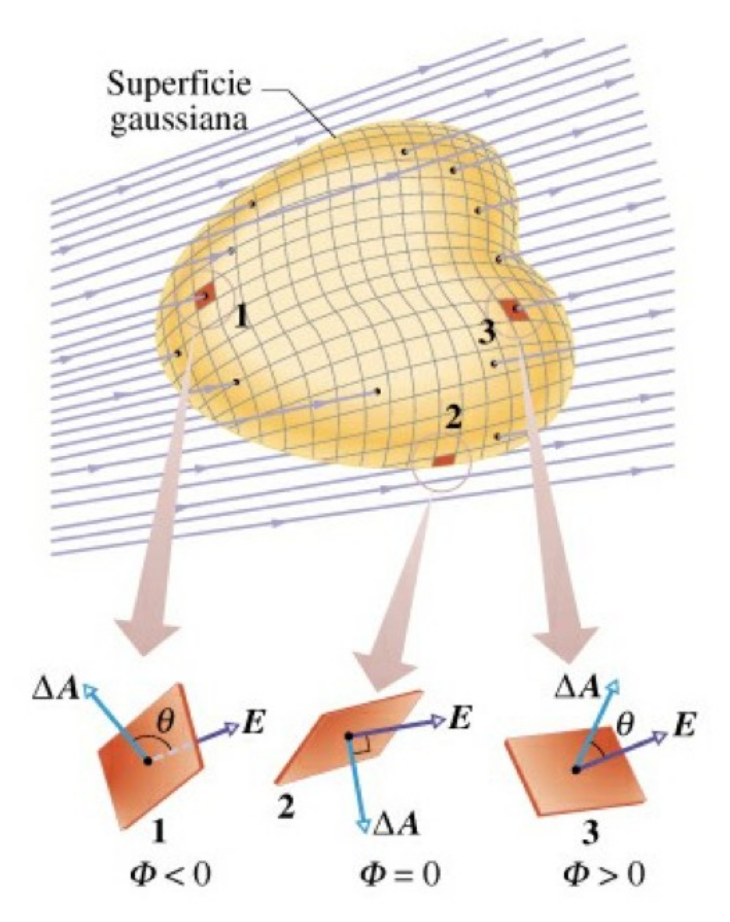
\[ \Phi = \vec{E} \cdot \vec{A} = E \, A \, cos(\theta) \]
\[ \Phi = \sum_{i} \vec{E}_{i} \cdot \Delta \vec{A}_{i} \Rightarrow \Phi = \int_{A} \vec{E} \cdot d\vec{A} \]
gauss's LAW
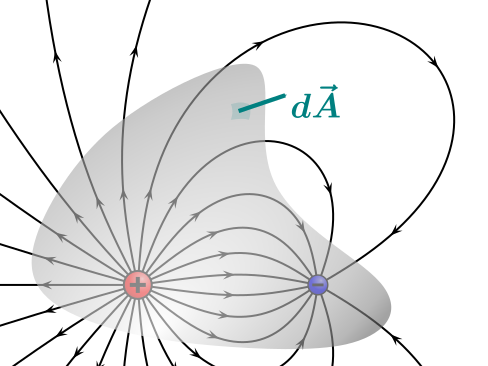
"The net electric flux through a closed surface is proportional net electric charge enclosed within that closed surface"
\[ \Phi_{E} = \int_{A} \vec{E} \cdot d\vec{A} = \frac{q_{tot}}{\varepsilon_{0}} \]
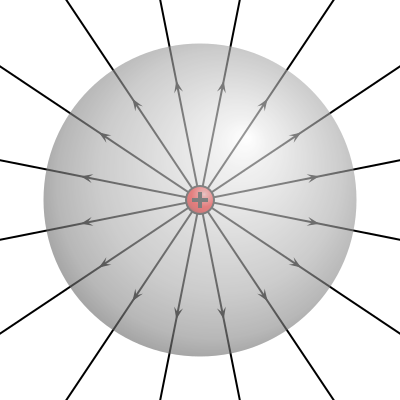
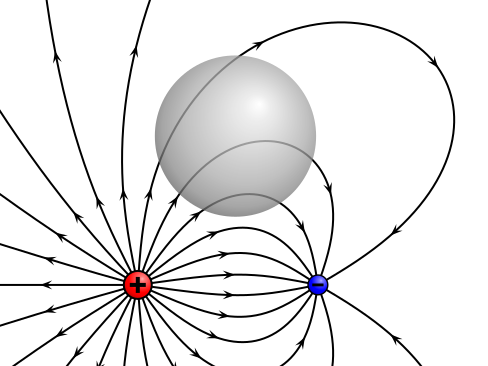
gauss'S law examples
electric potential
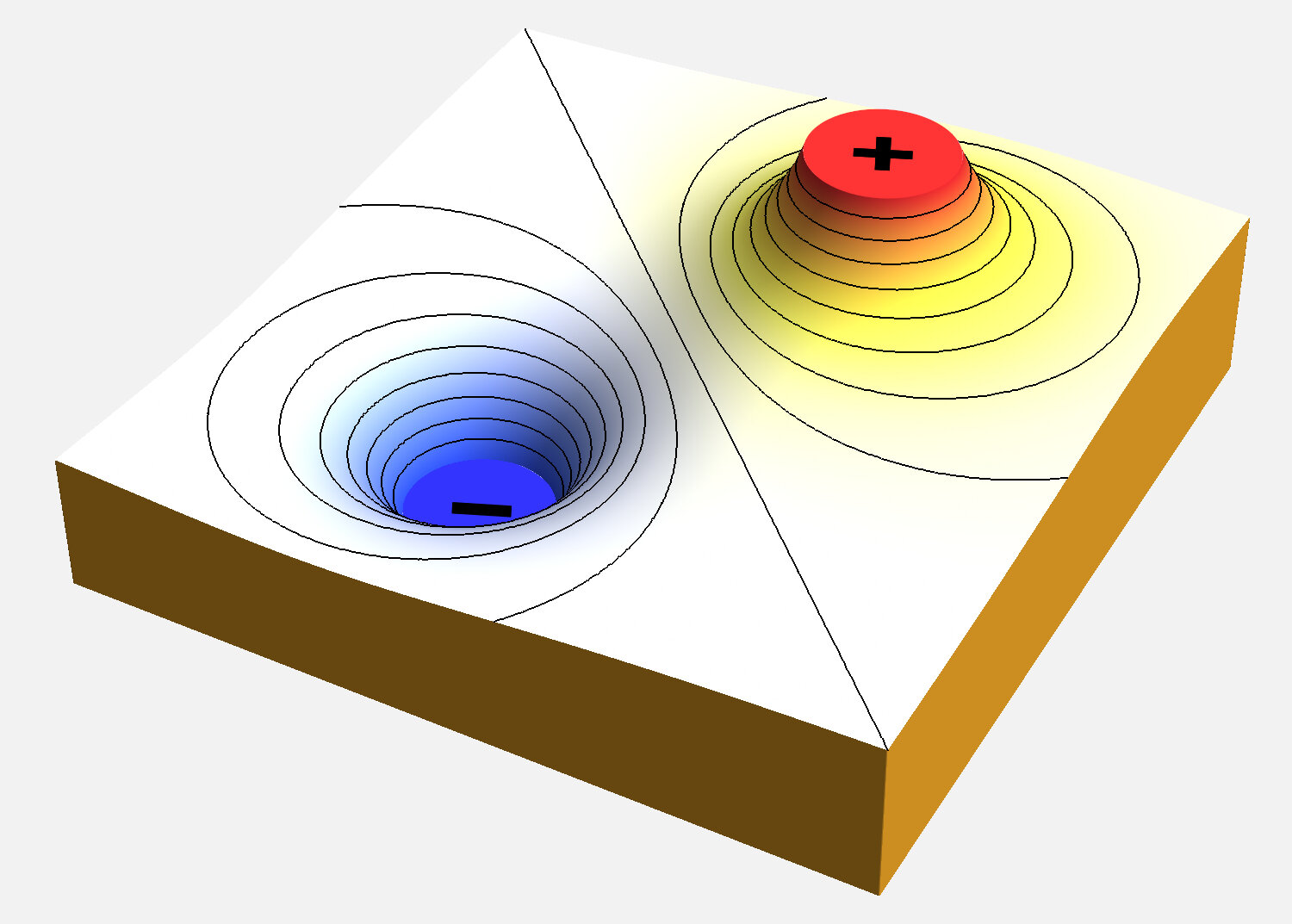
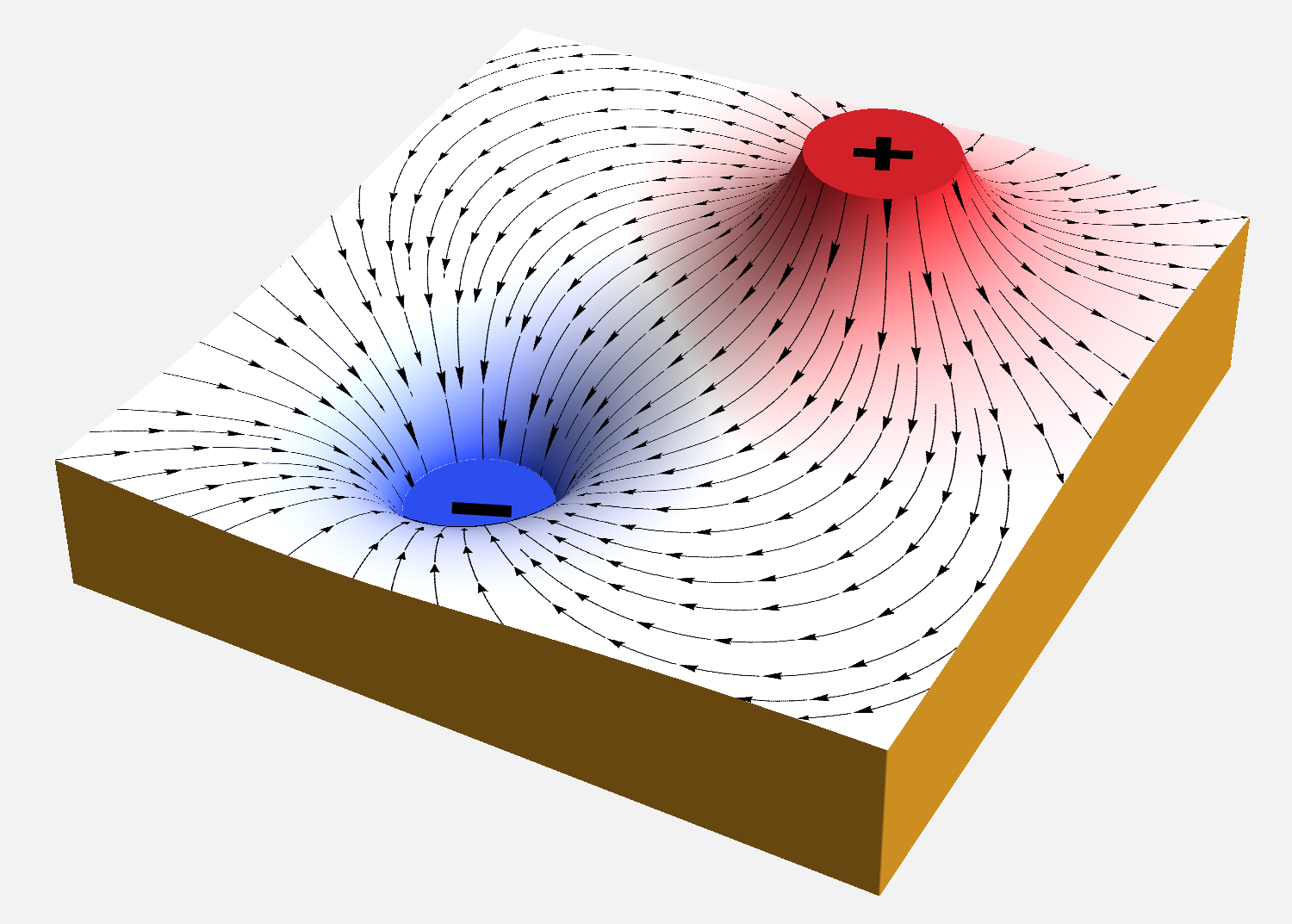
"The electrostatic force is a conservative force, therefore its work can be expressed through a variation of potential energy"
\[ L^{el}_{A \to B} = \int_{A}^{B} \vec{F}_{el} \cdot d \vec{s} = -(U_{e}(B) - U_{e}(A)) = - \Delta U_{e} \]
\[ \frac{L^{el}_{A \to B}}{q} = \int_{A}^{B}\vec{E}_{el} \cdot d \vec{s} = -(V(B) - V(A)) = - \Delta V \]
\[ \Delta U_{e}= q \Delta V \]
\[ U_{e} \to [J] \; \Rightarrow \; V \to \left[ \frac{J}{C} \right] ;\; [Volt] \]
potential of a positive charge
potential of a negative charge
potential of a charge distribution
electrical current
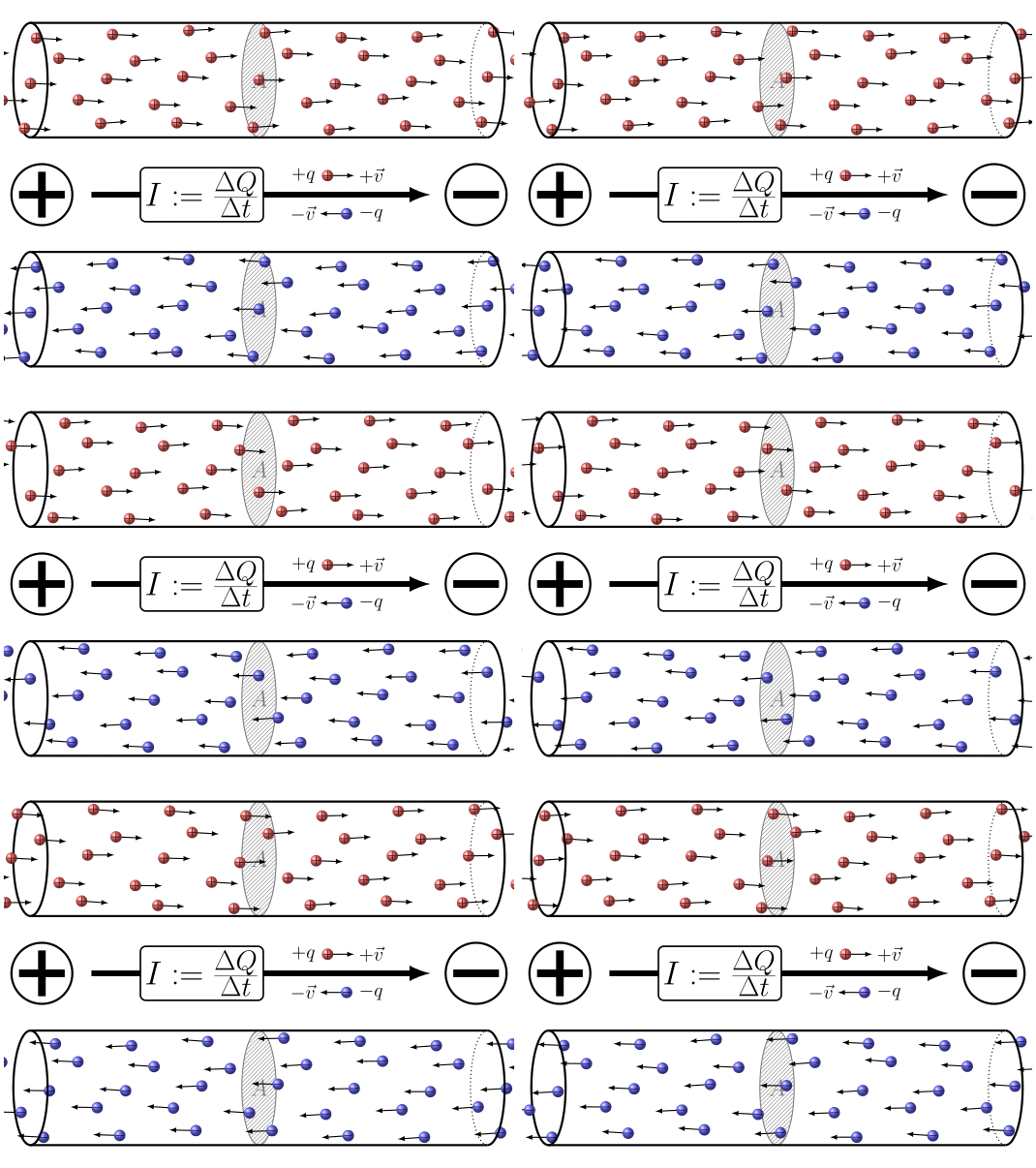
\[ I = \lim_{\Delta t \to 0} \frac{\Delta q}{\Delta t} = \frac{dq}{dt} \]
\[ Ampere \, [A] \Rightarrow \left[ \frac{C}{s} \right] \]
electrical current: microscopic interpretation
\[ I = q \,n \, A \, v_{d} \]
- \( q = carrier \, charge \, [C] \)
- \( n = free \, carriers \, for \, unit \, volume\, [m^{-3}] \)
- \( A = conductor \, cross \, section \, [m^{2}] \)
- \( v_{d} = drift \, velocity \, [m/s]; \, v_{d} \propto \Delta V \)
\[ J = \frac{I}{A} = q \, n \, v_{d} = current \, density \]
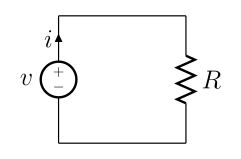
ohm's law:
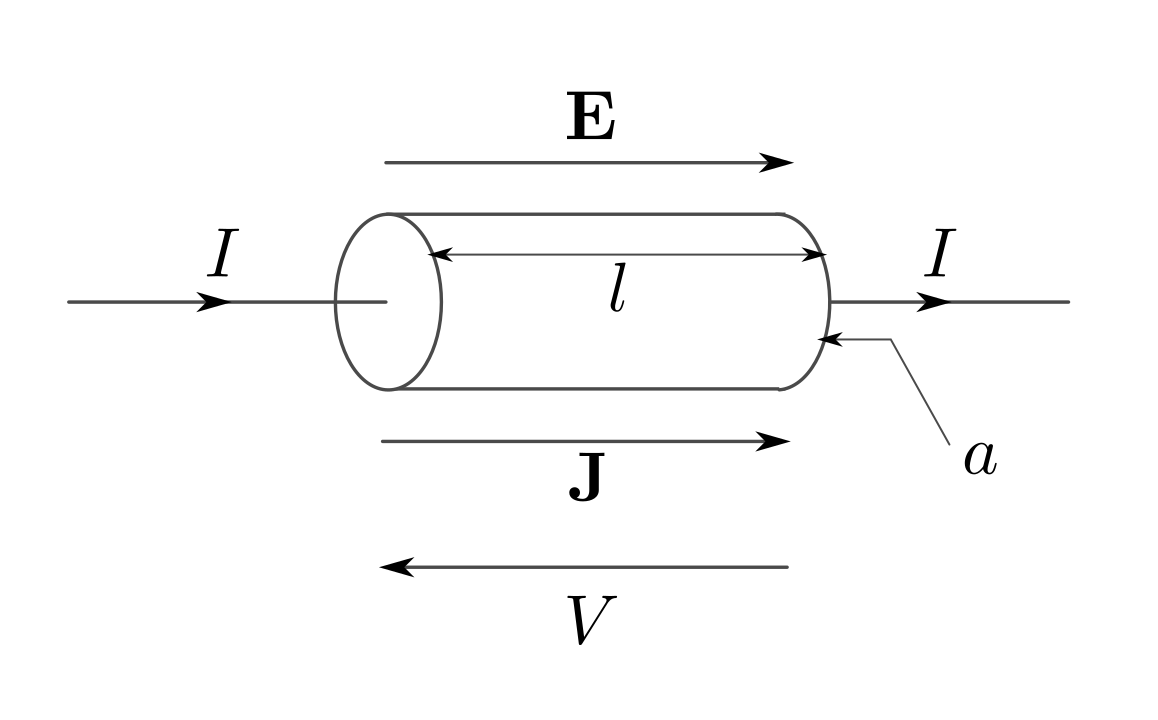
RESISTANCE, RESISTIVITY, CONDUCTIVITY AND MOBILITY
\begin{cases}
R = \rho \frac{L}{A}, \\
\sigma=\frac{1}{\rho} \\
\sigma=q n \mu \\
\end{cases}
\begin{cases}
V = IR \\
\vec{E}=\rho \vec{J} \\
\vec{J}=\sigma \vec{E} \\
\vec{v_d} = \mu \vec{E}
\end{cases}
\begin{cases}
R = resistance \Rightarrow Ohm \, [\Omega] = \left[ \frac{V}{A} \right] \\
\rho = resistivity \Rightarrow \left[ \frac{\Omega}{m} \right] \\
\sigma = conductivity \Rightarrow \left[ \frac{m}{\Omega} \right] \\
\mu = mobility \Rightarrow \left[ \frac{m^2 s^{-2}}{V} \right] \\
\end{cases}
magnetism
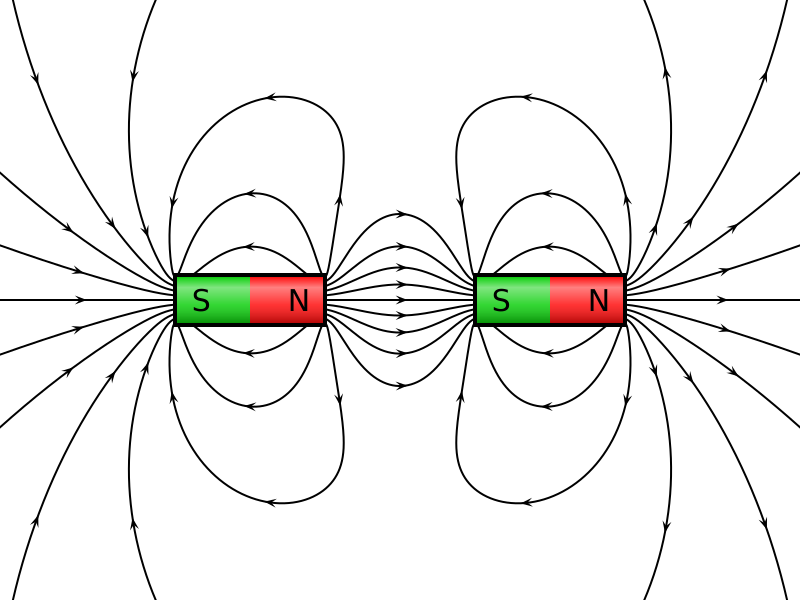
comparing electric and magnetic field
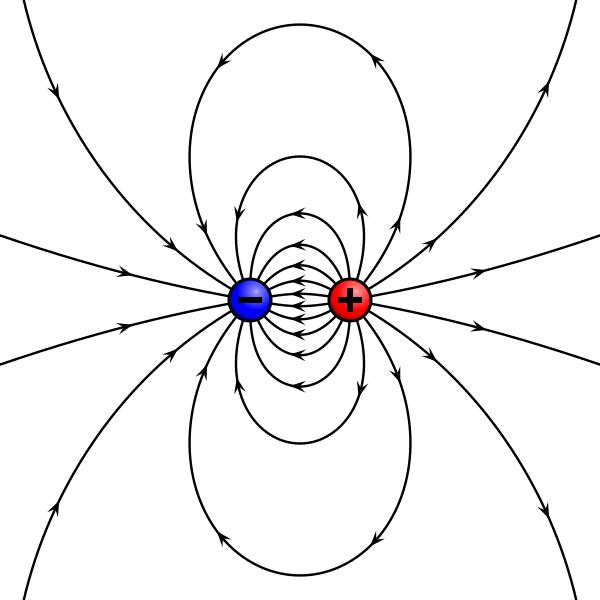
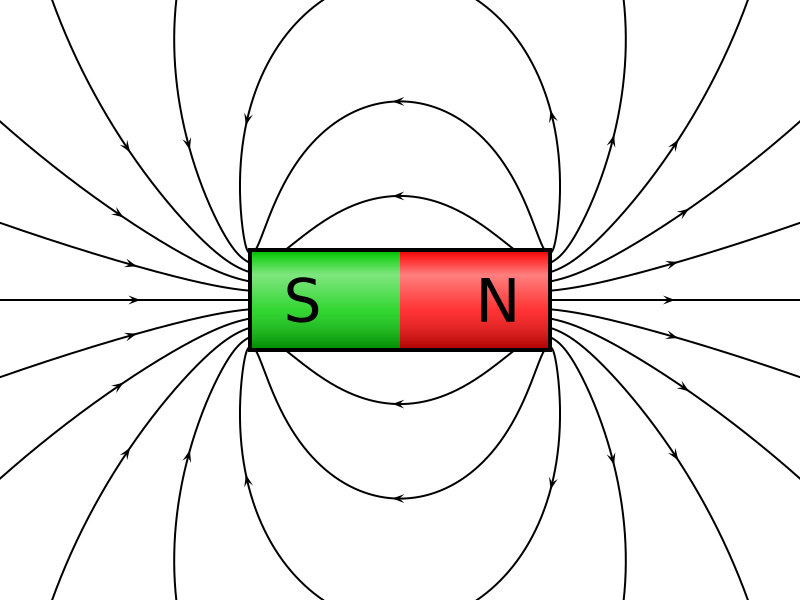
\[\vec{F}_{el} = q \vec{E} \]
\[ \vec{F}_{mag} = q \, (\vec{v} \times \vec{B}) \]
biot-savart's law
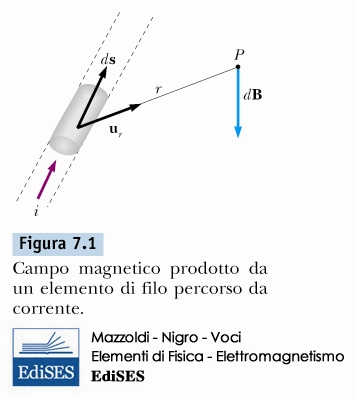
\[ d \vec{B} = \frac{\mu_{0}}{4 \pi} \frac{i \, d \vec{s} \times \vec{u}_{r} }{r^{2}} \]
ampere's law
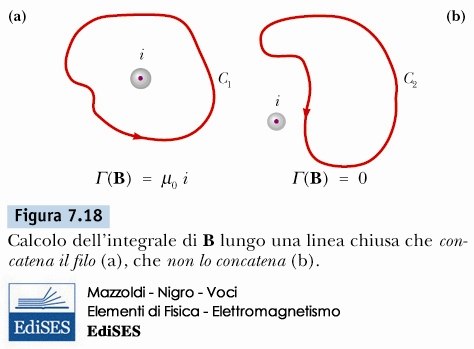
\[ \oint_S \vec{B} \cdot d \vec{s} = \mu_{0} i \]
Materials and Platforms for AI: Electricity and Magnetism
By Giovanni Pellegrini