




Ishanu Chattopadhyay PRO
ML | Data Science Biomedical Informatics | Social Science | Assistant Professor
Ishanu Chattopadhyay
University of Chicago
CCTS 40500 / CCTS 20500 / BIOS 29208
Winter 2023
Lecture 2
Performance Metrics
Diagnostic Tests
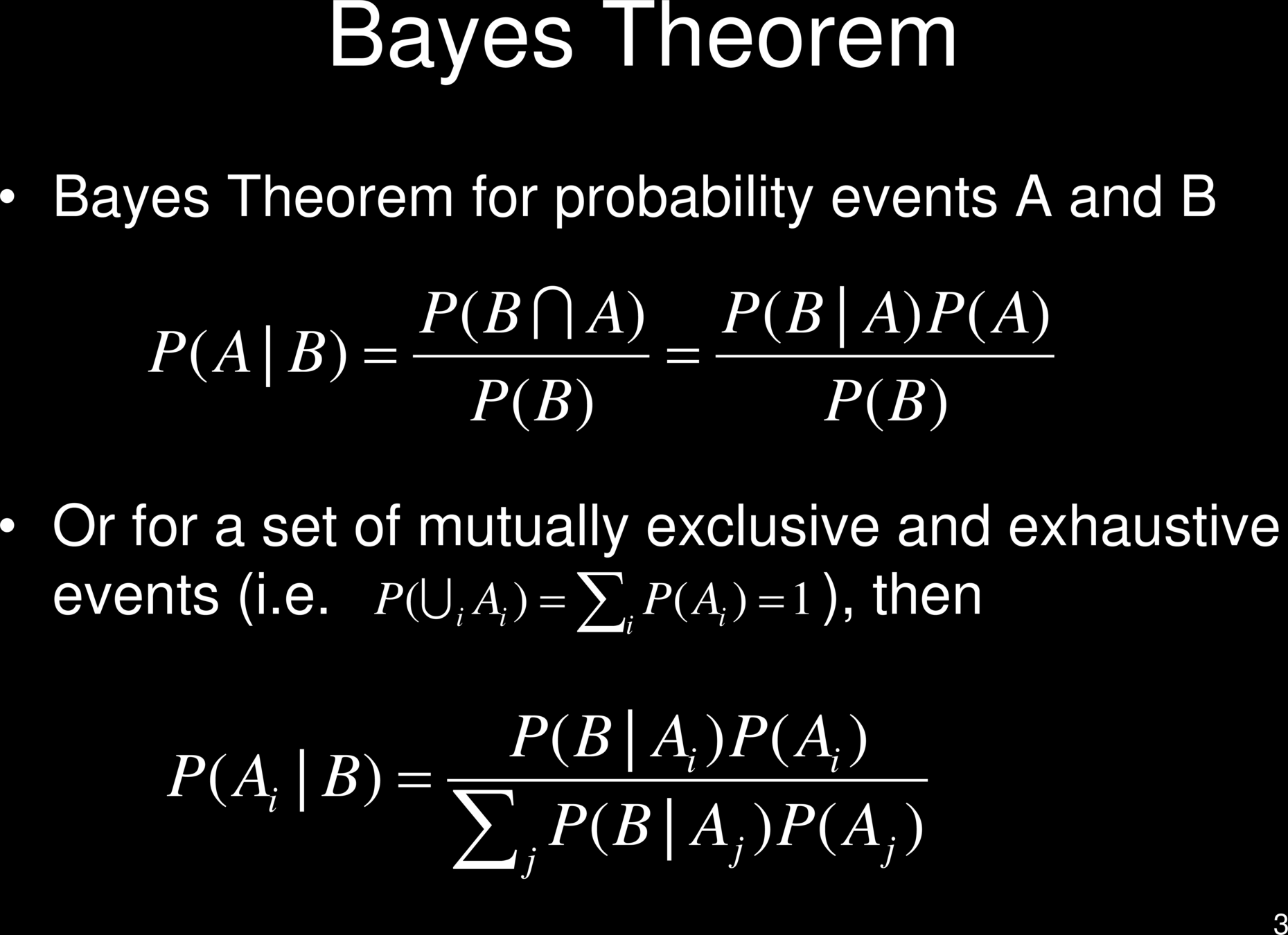
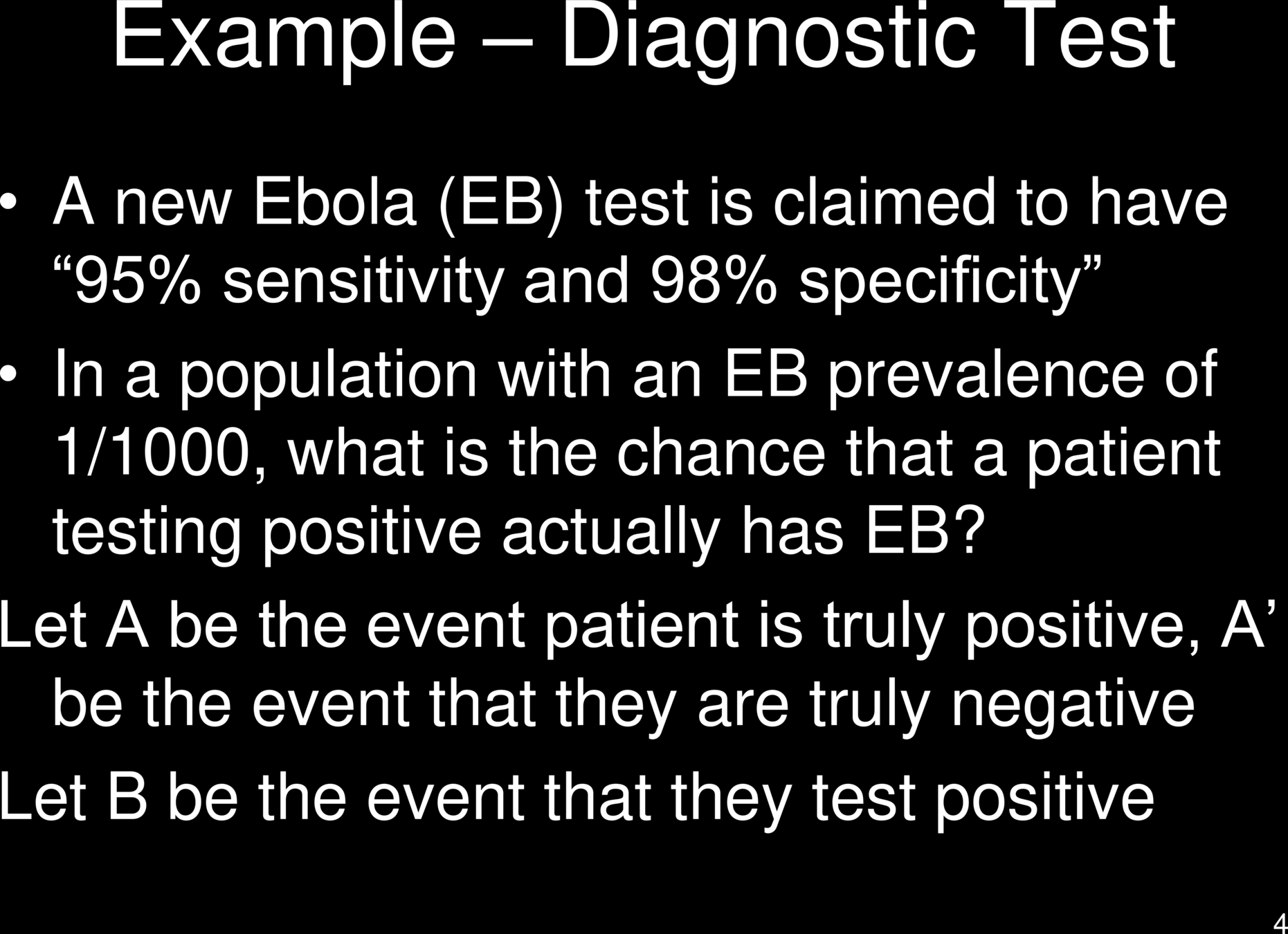
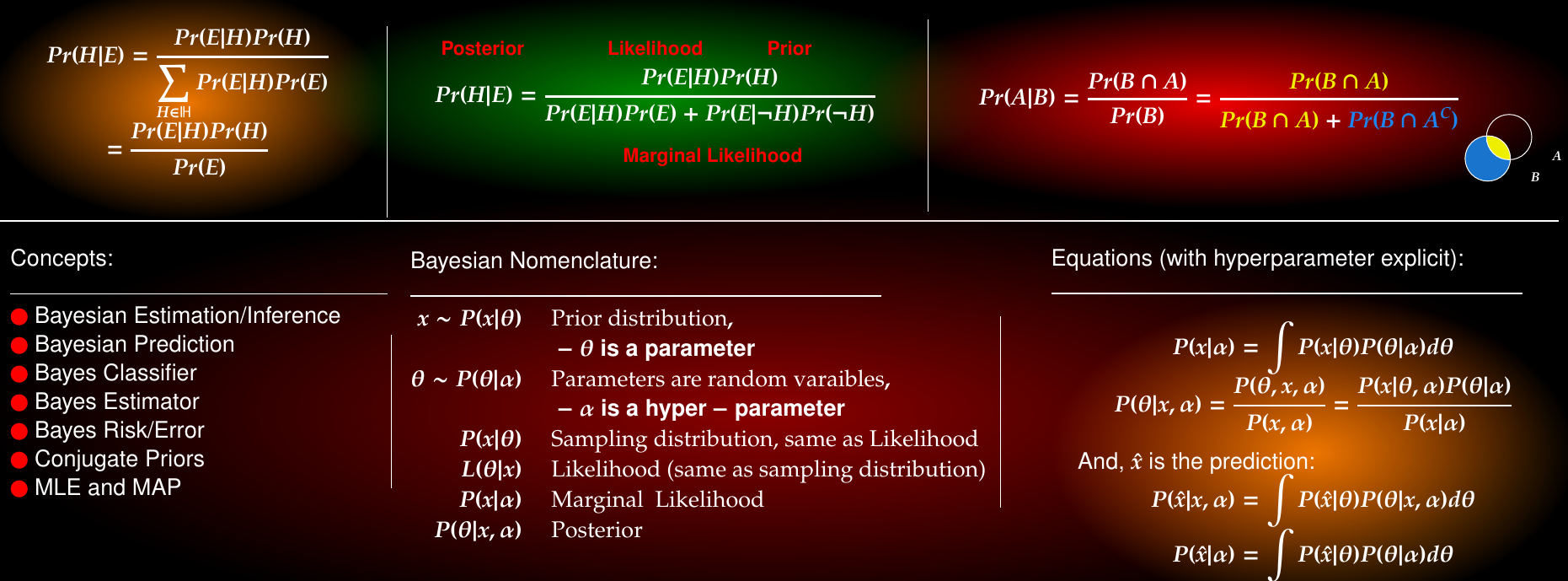
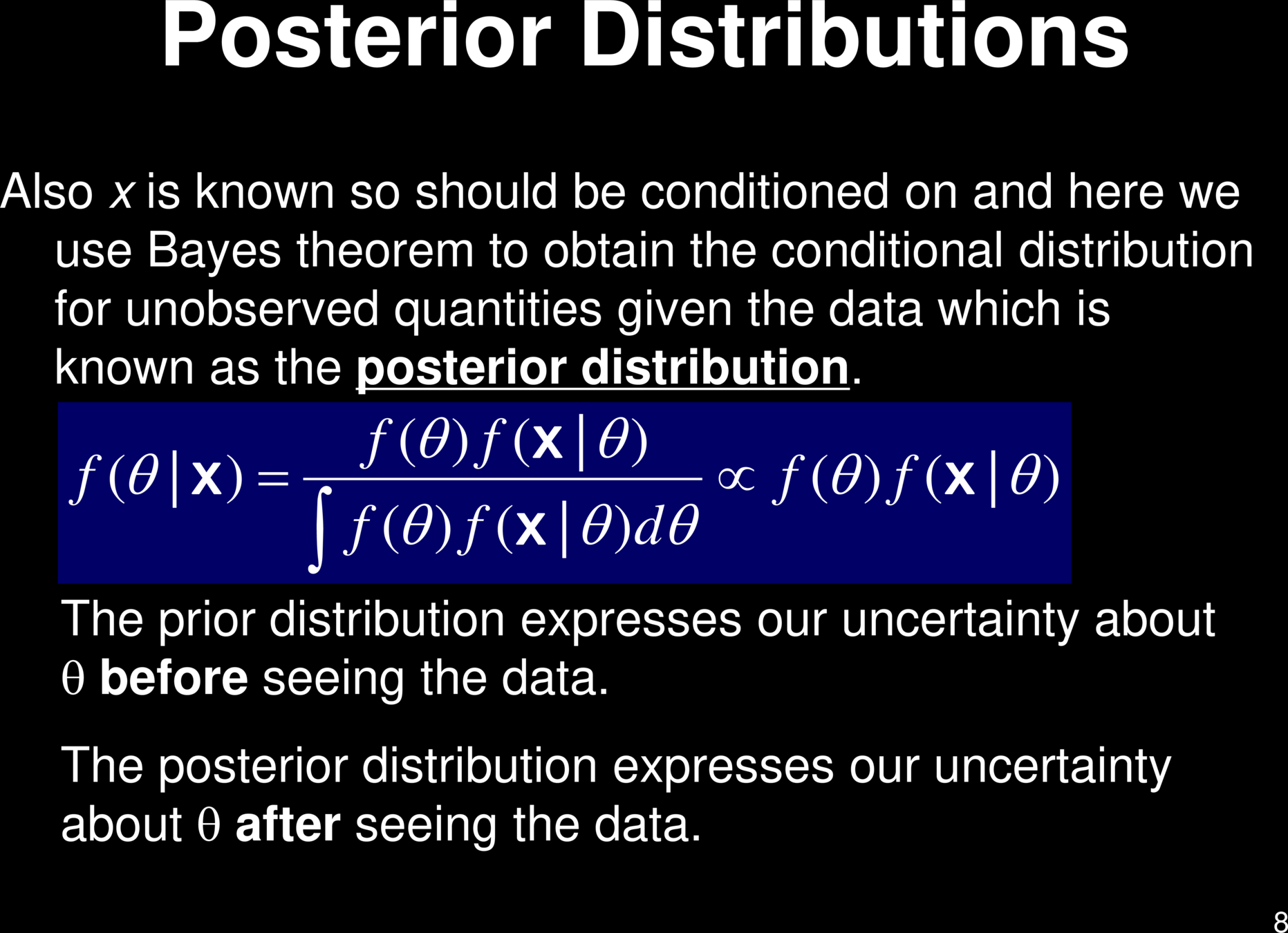
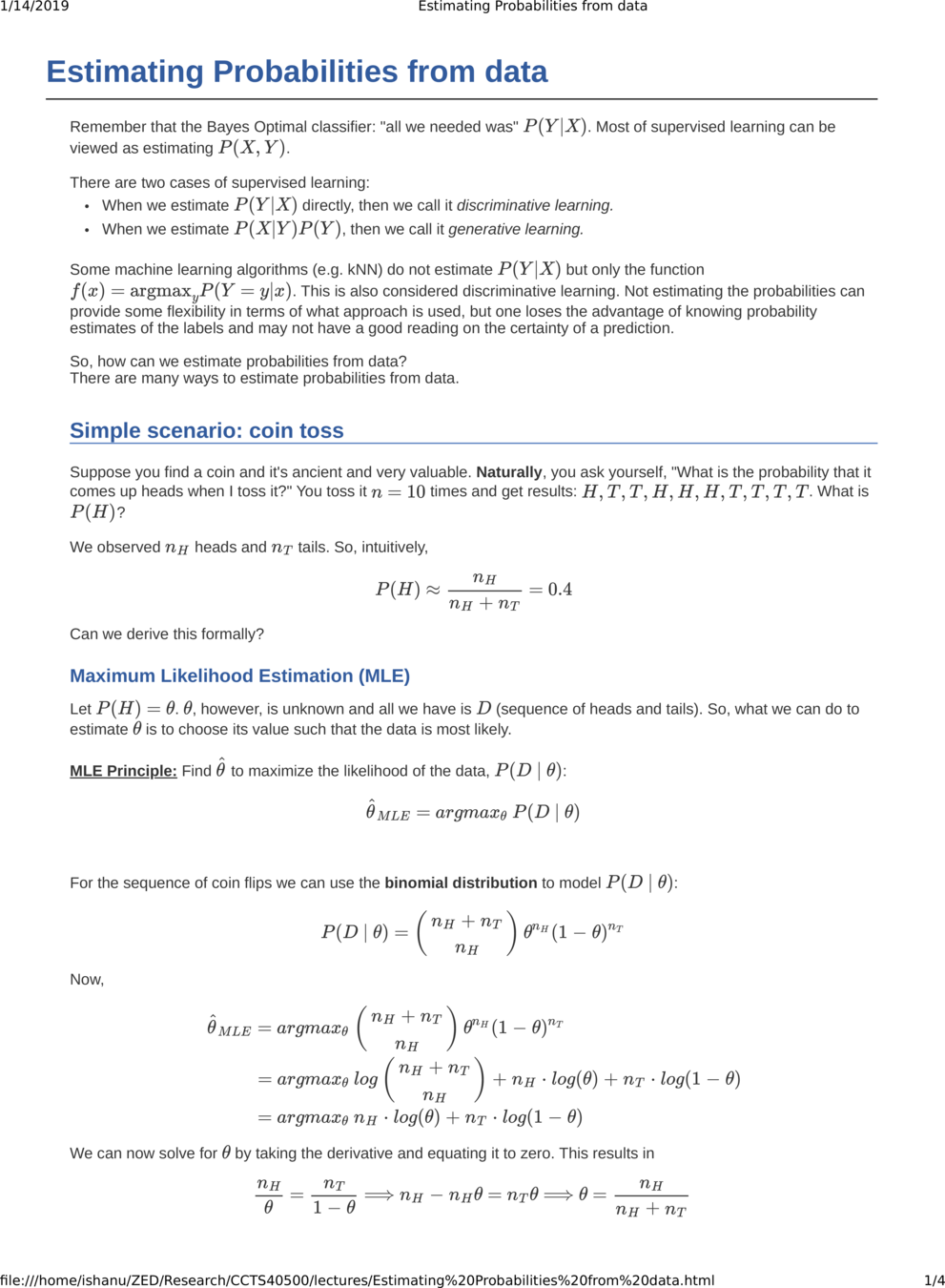
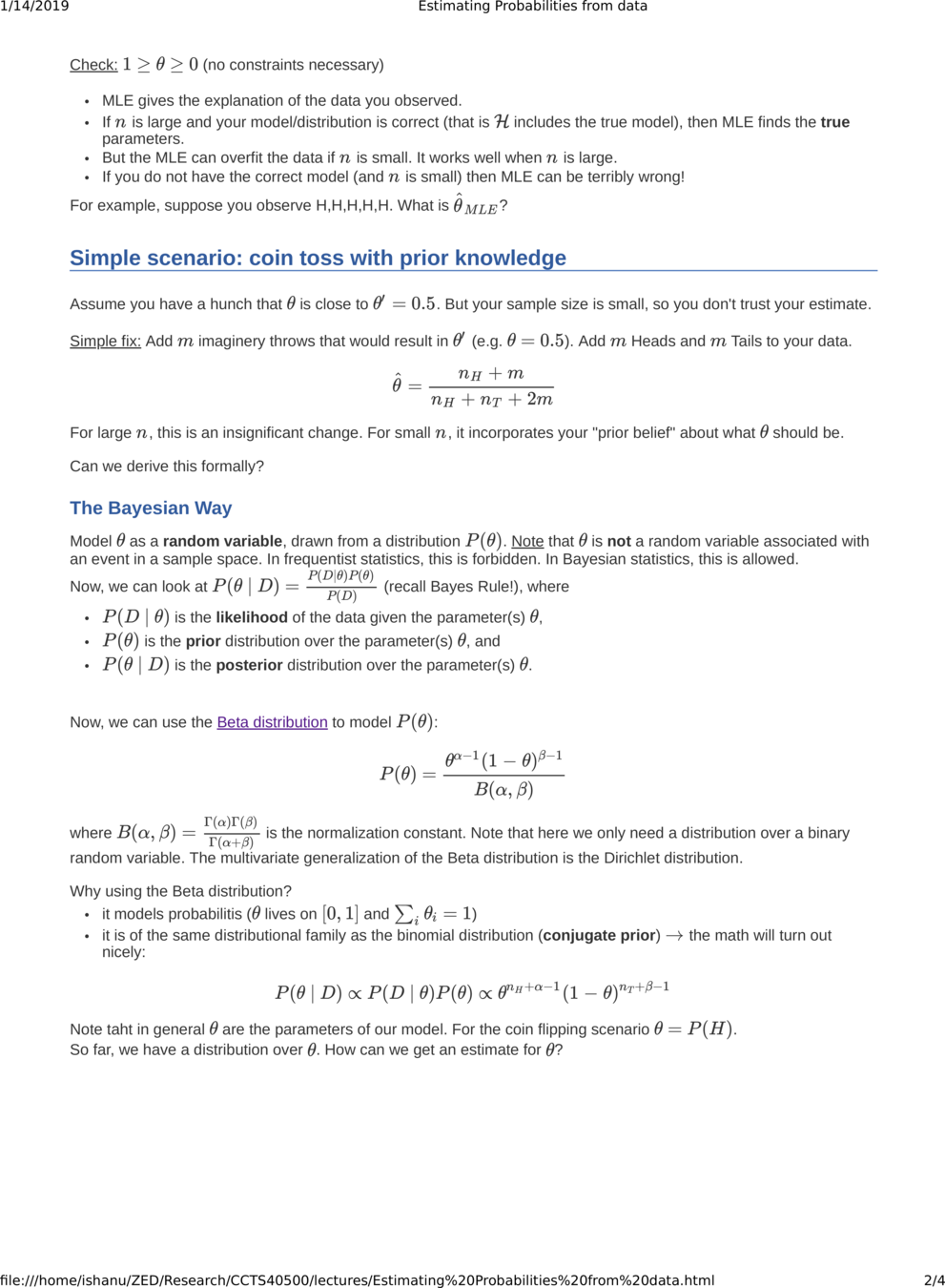
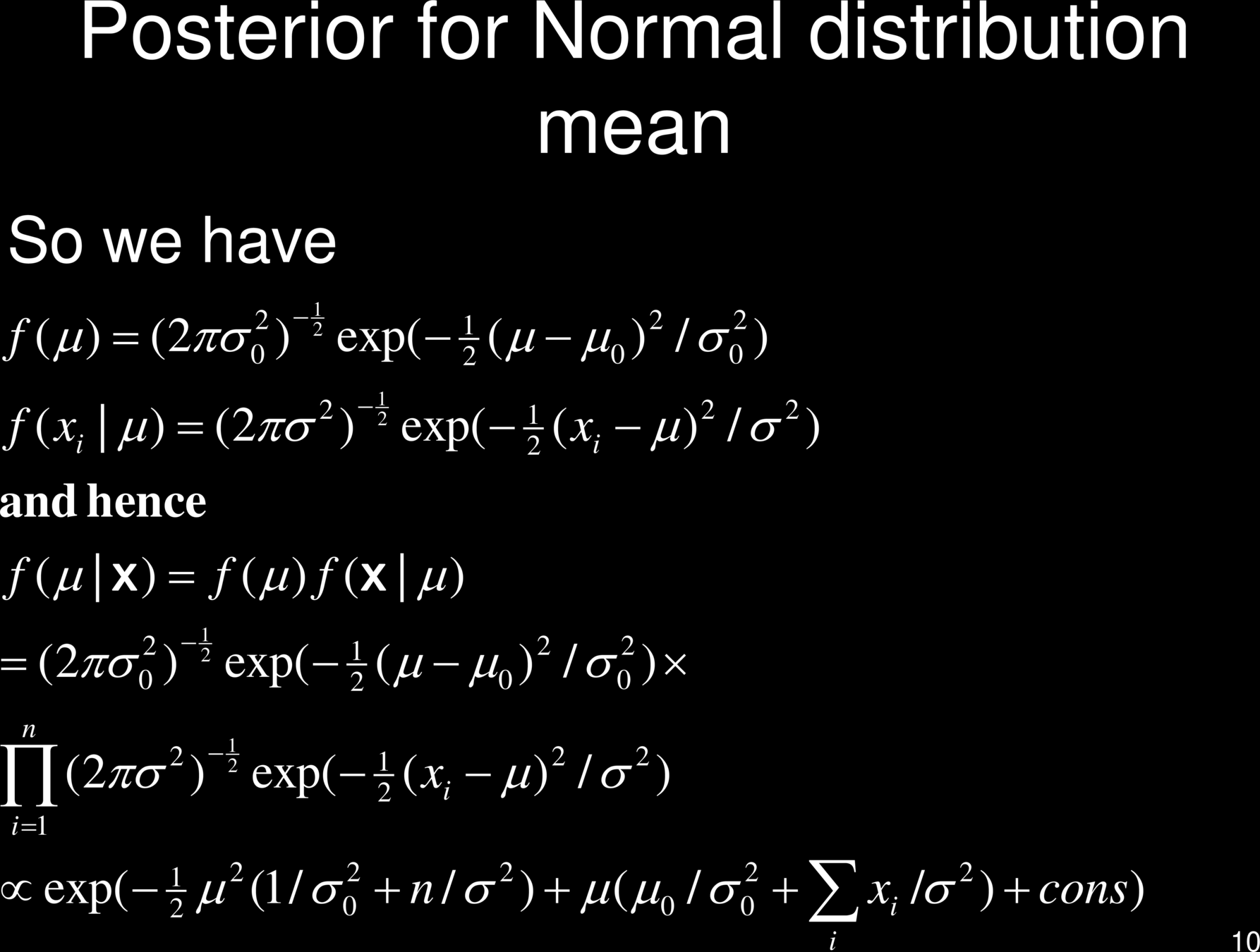
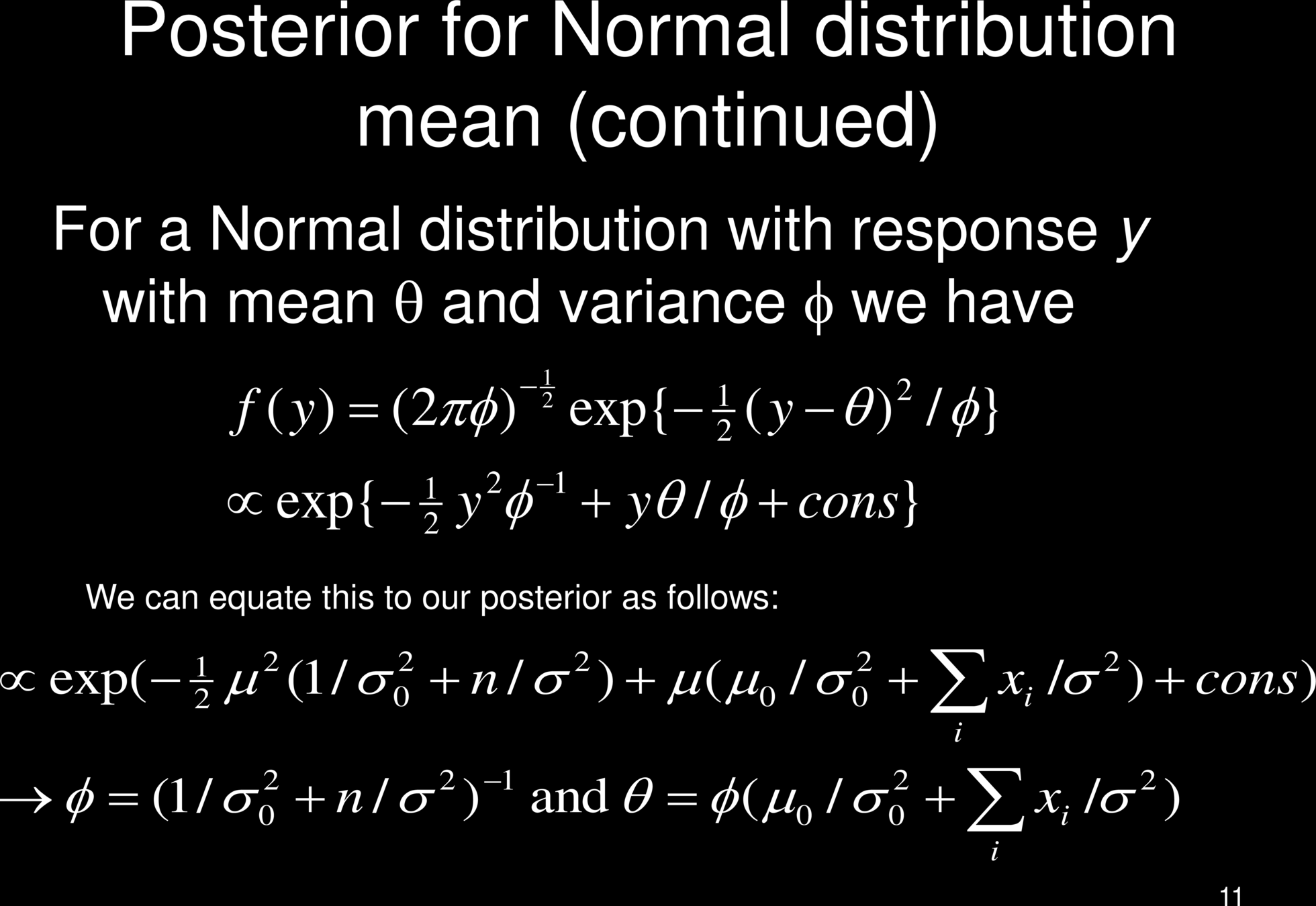
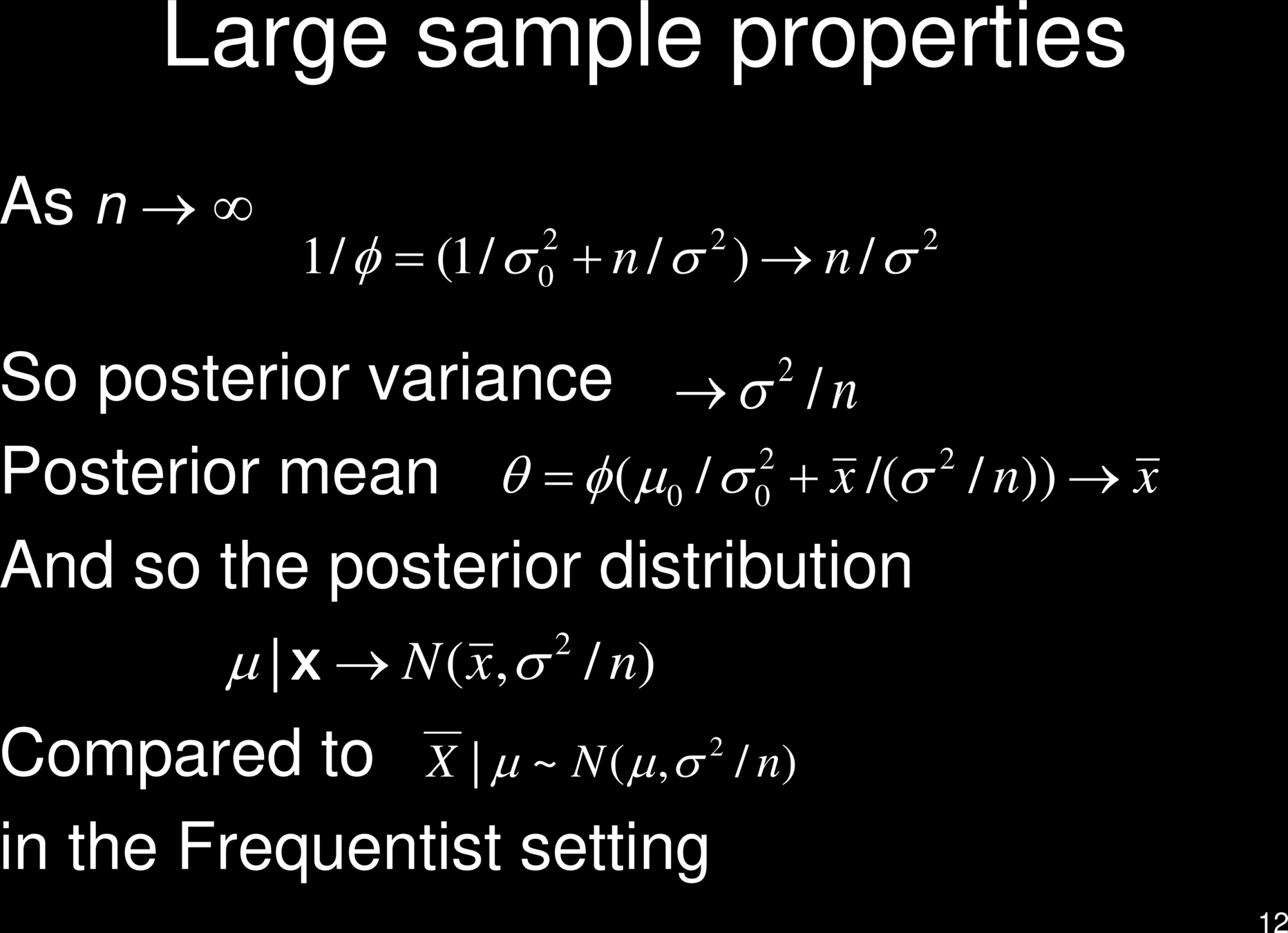
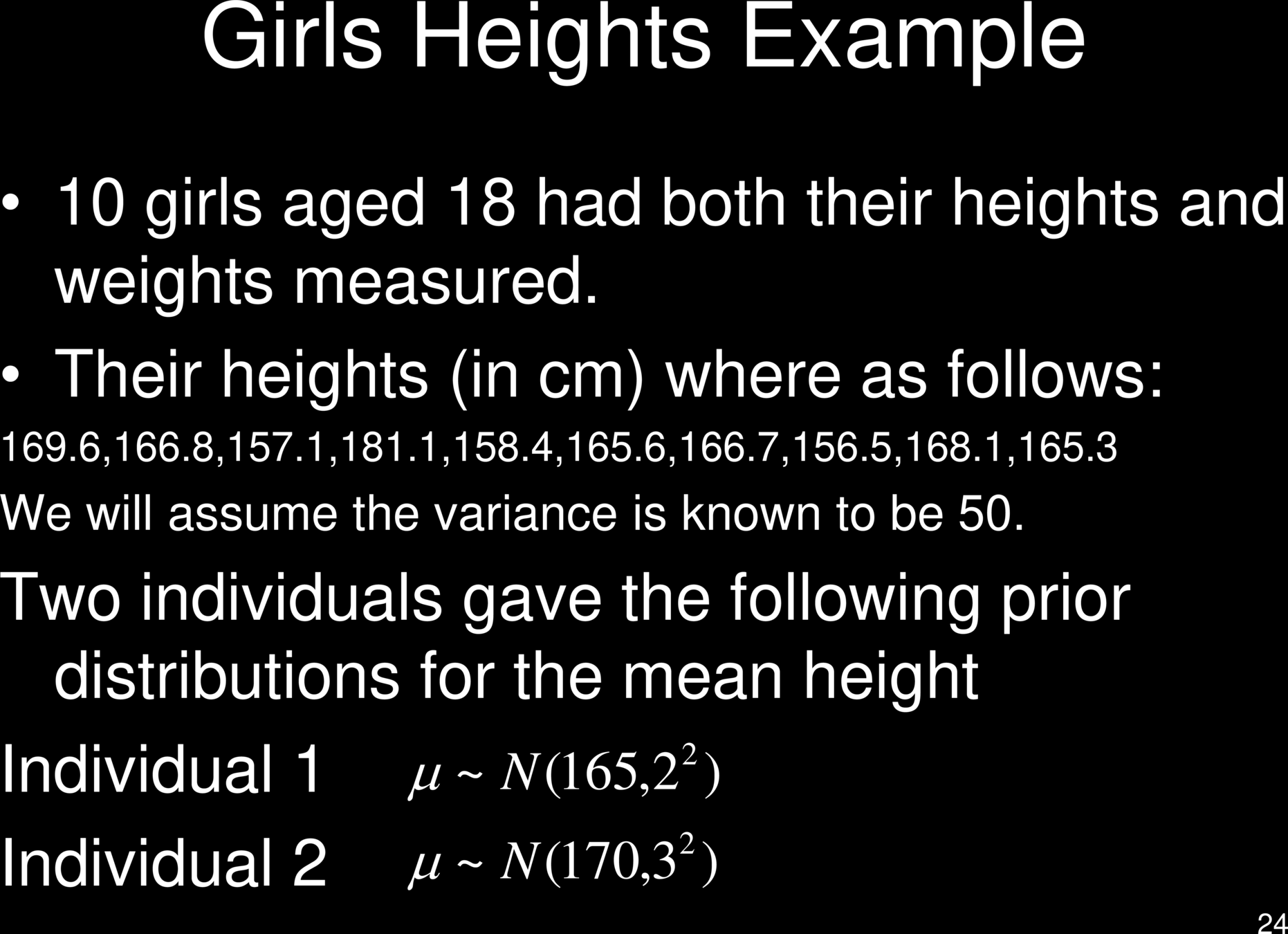
Bayesian Statistics
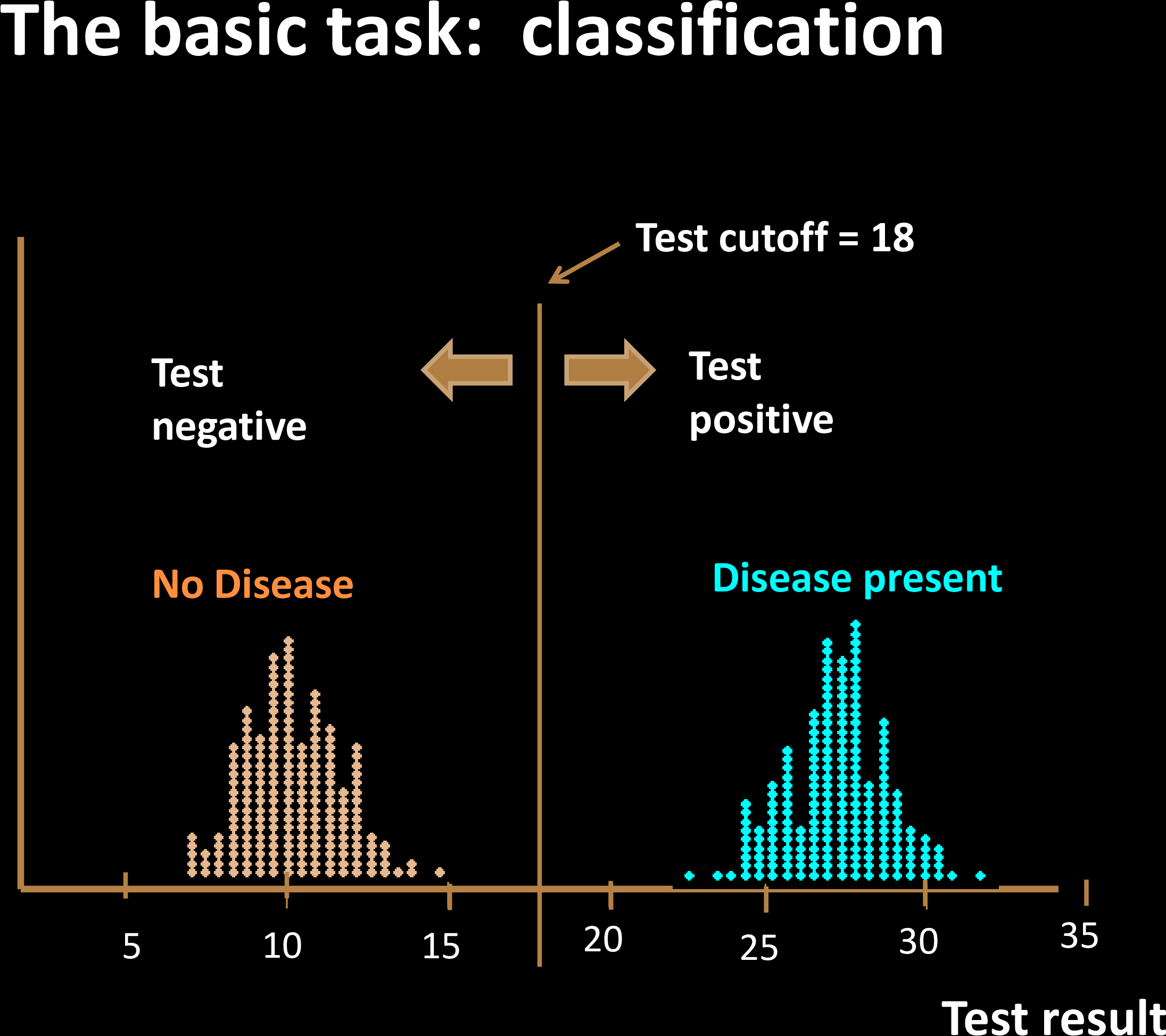
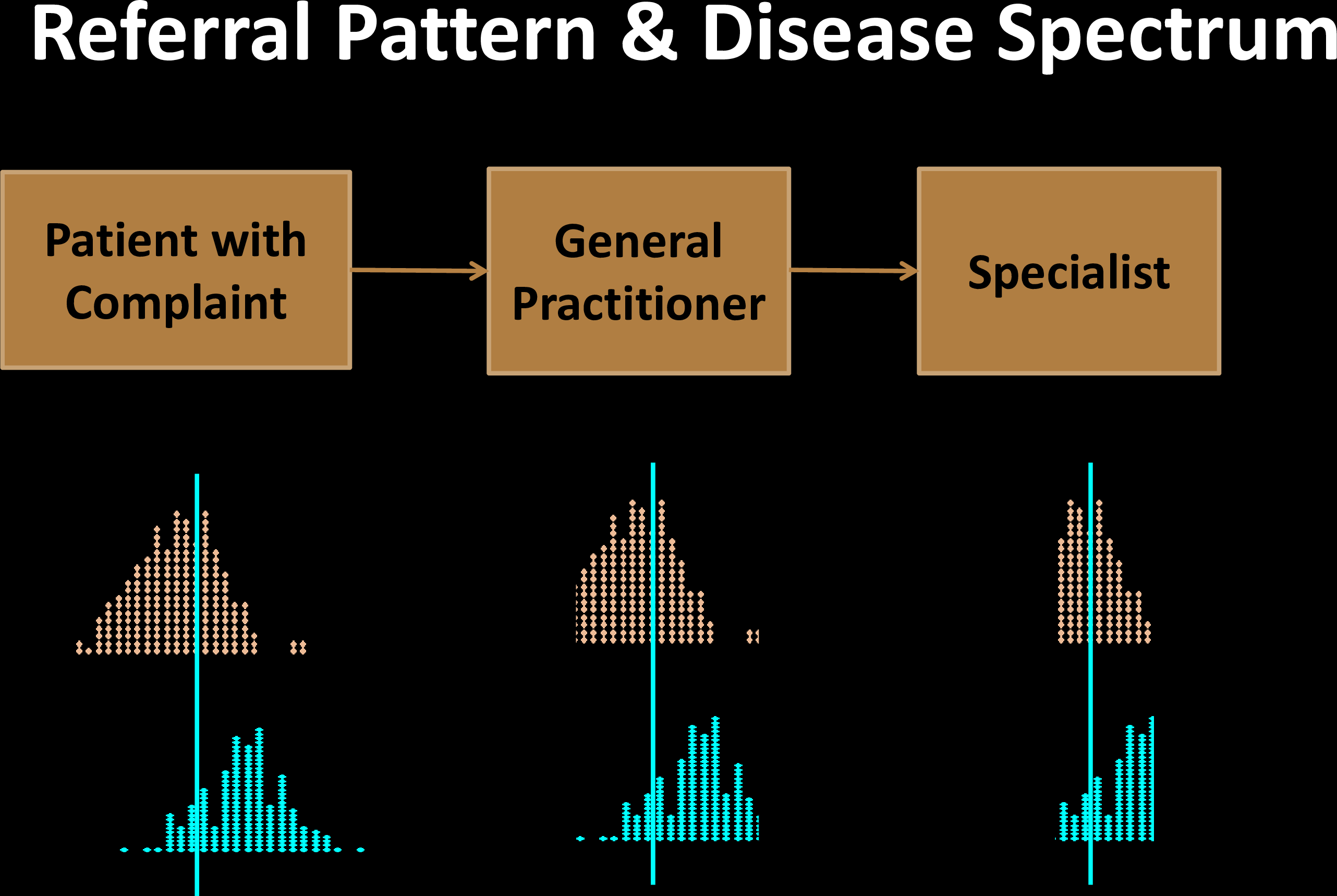
Does the patient have the disorder?
Not Always Obvious
autism
dementia
Does the patient have risk of the disorder ?
Not Always Obvious
autism
dementia
How do we quantify risk?
How do we map risk to severity?
prevalence is intrinsic property of the disease
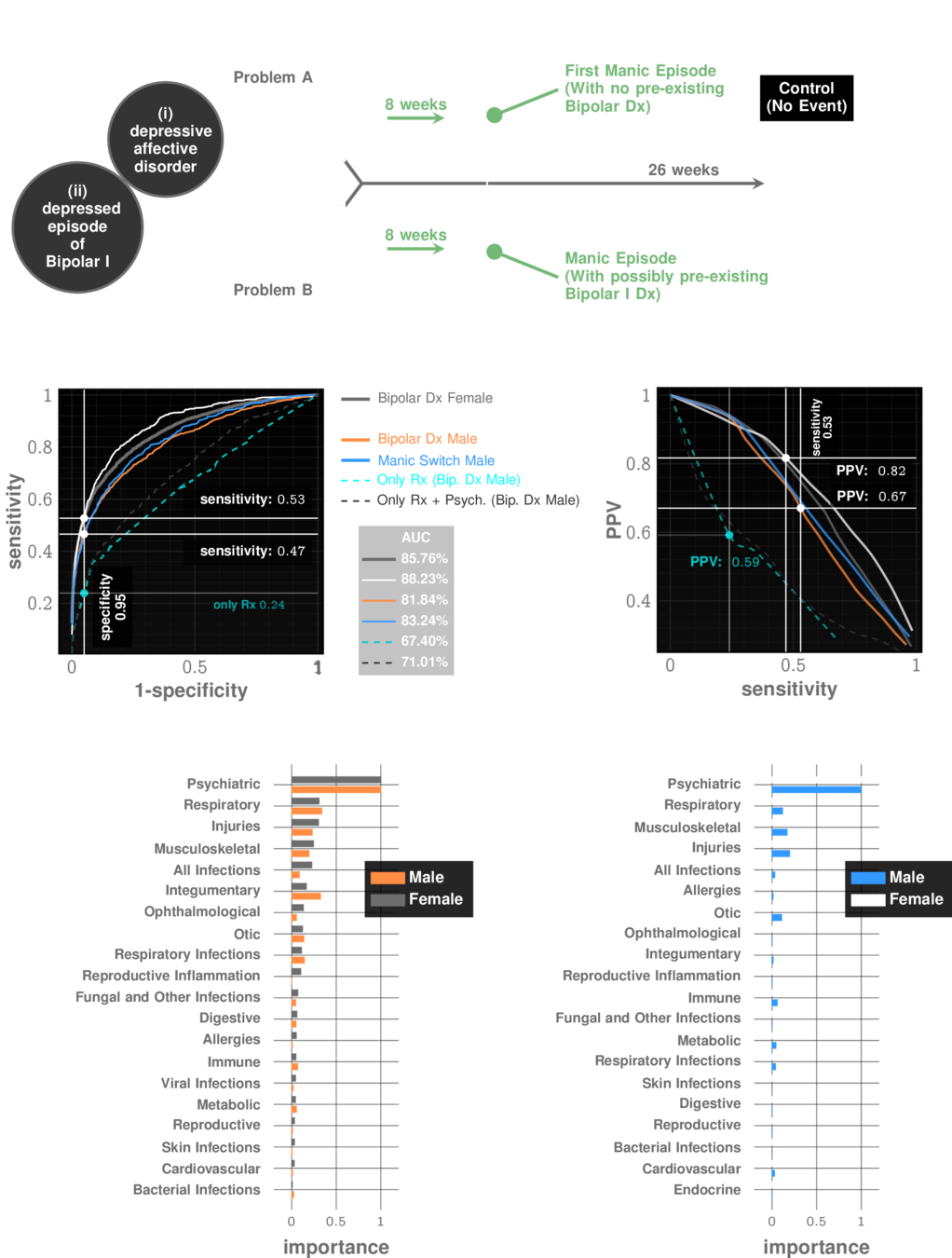
Manic Episode with no Bipolar history
prevalence: ~10%
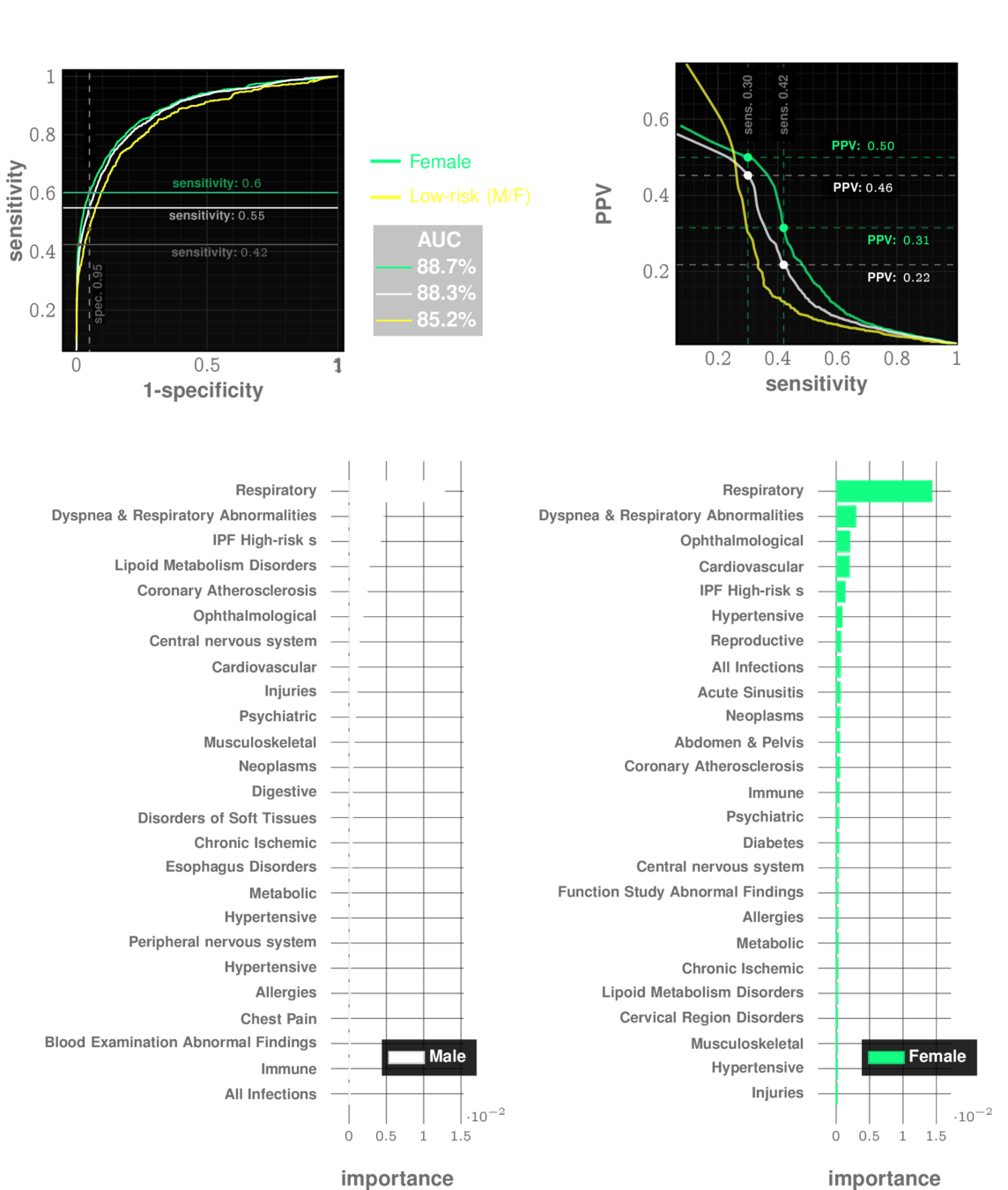
Idiopathic Pulmonary Fibrosis
prevalence: ~0.5%
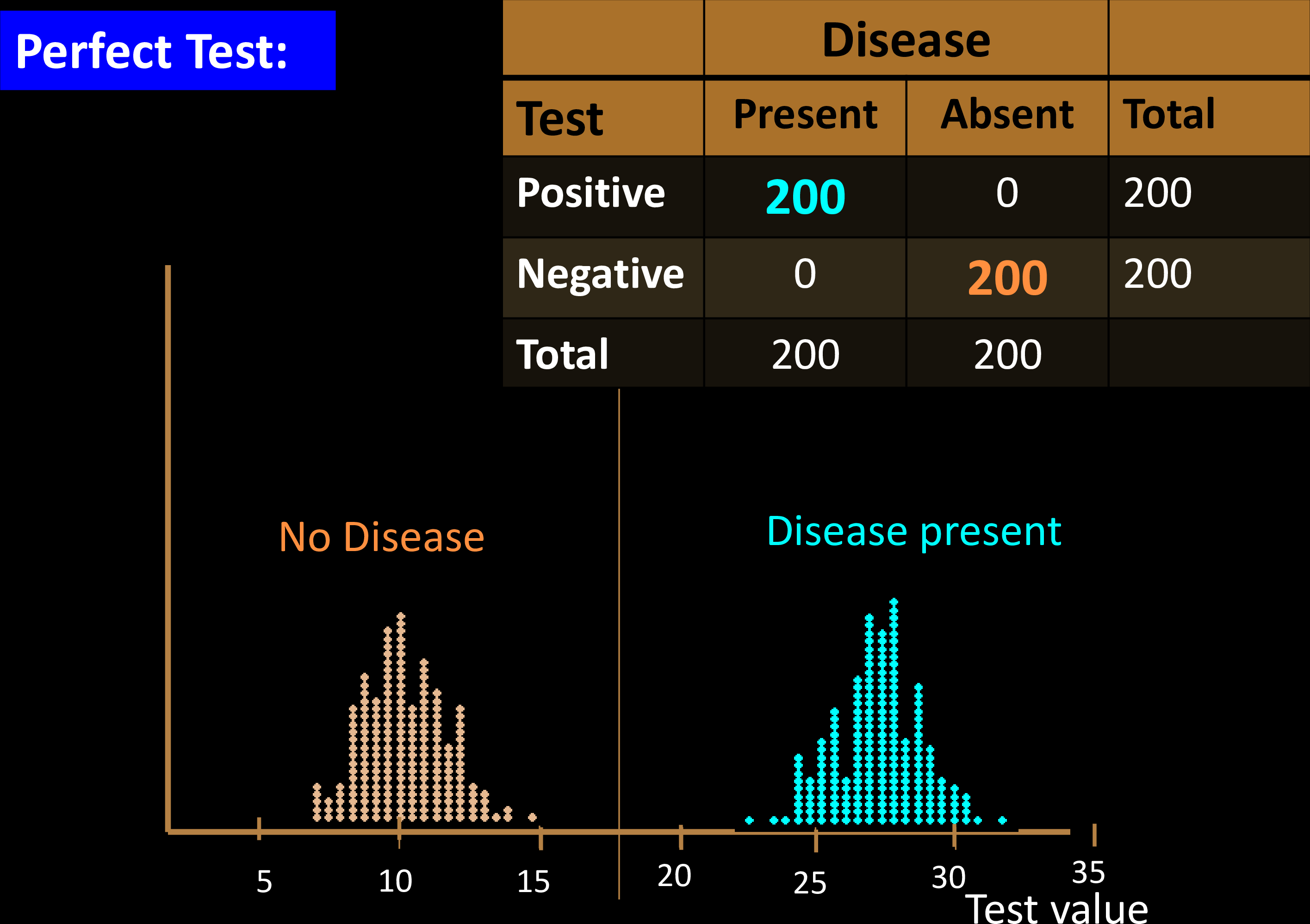
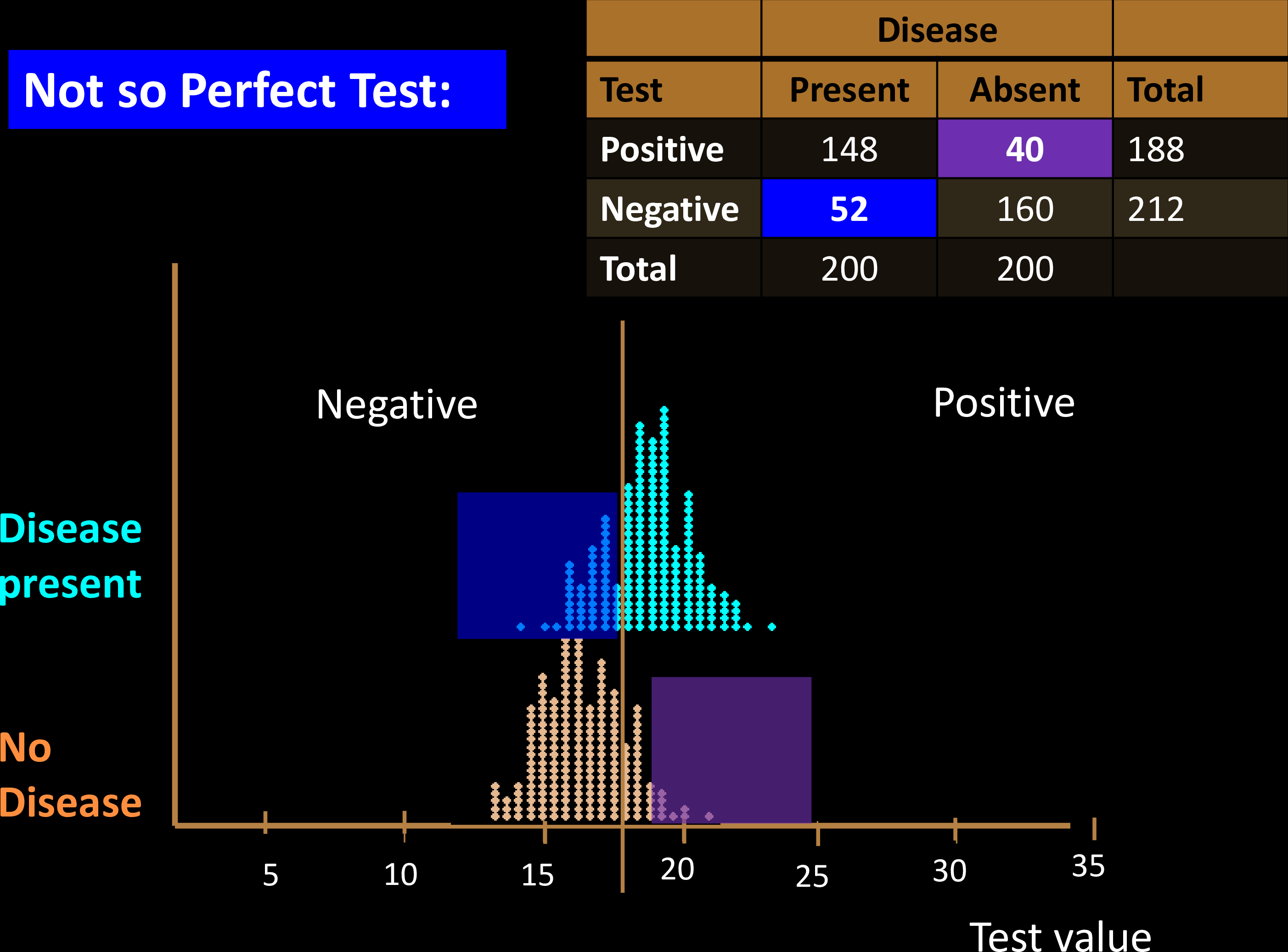
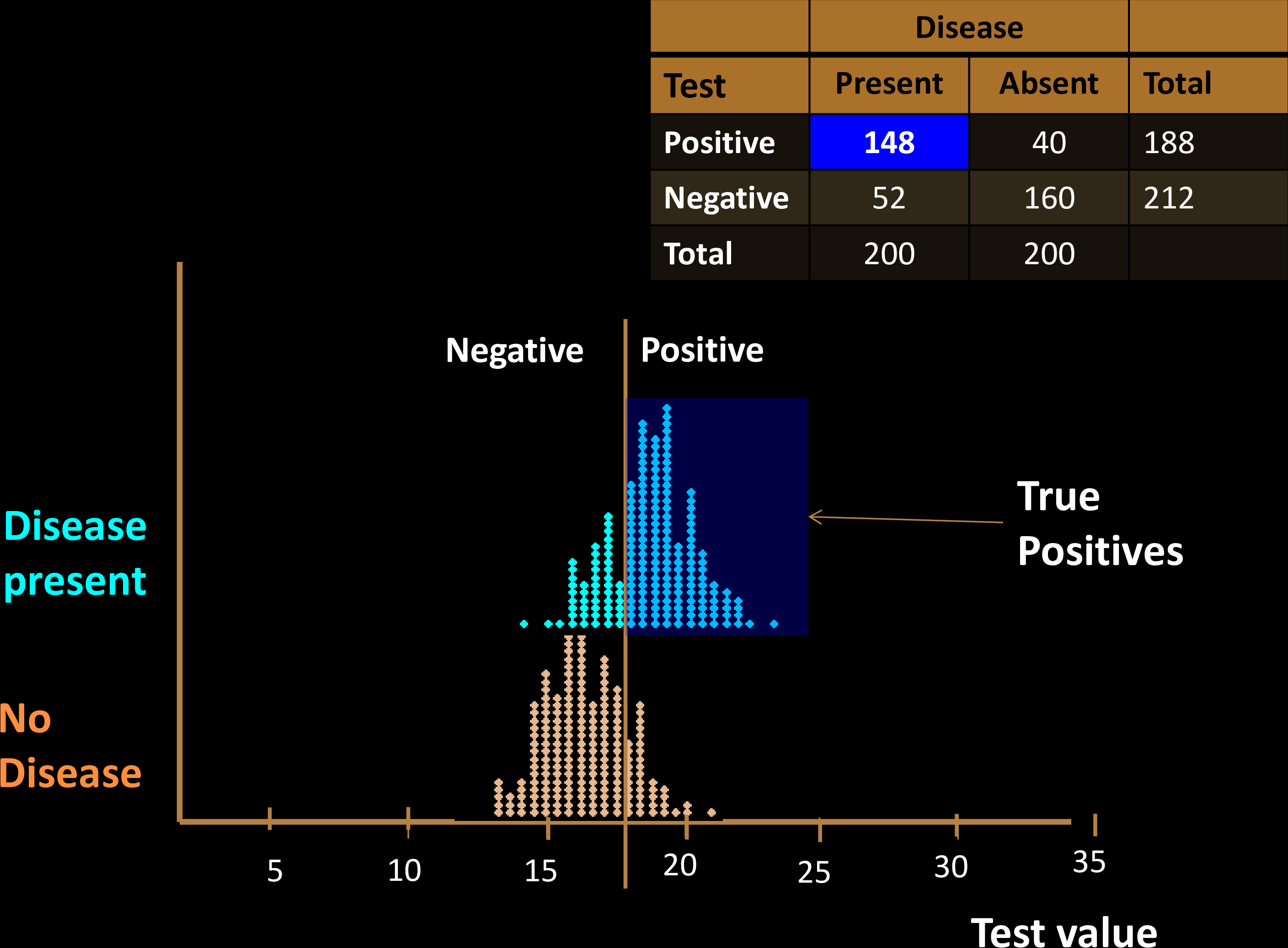
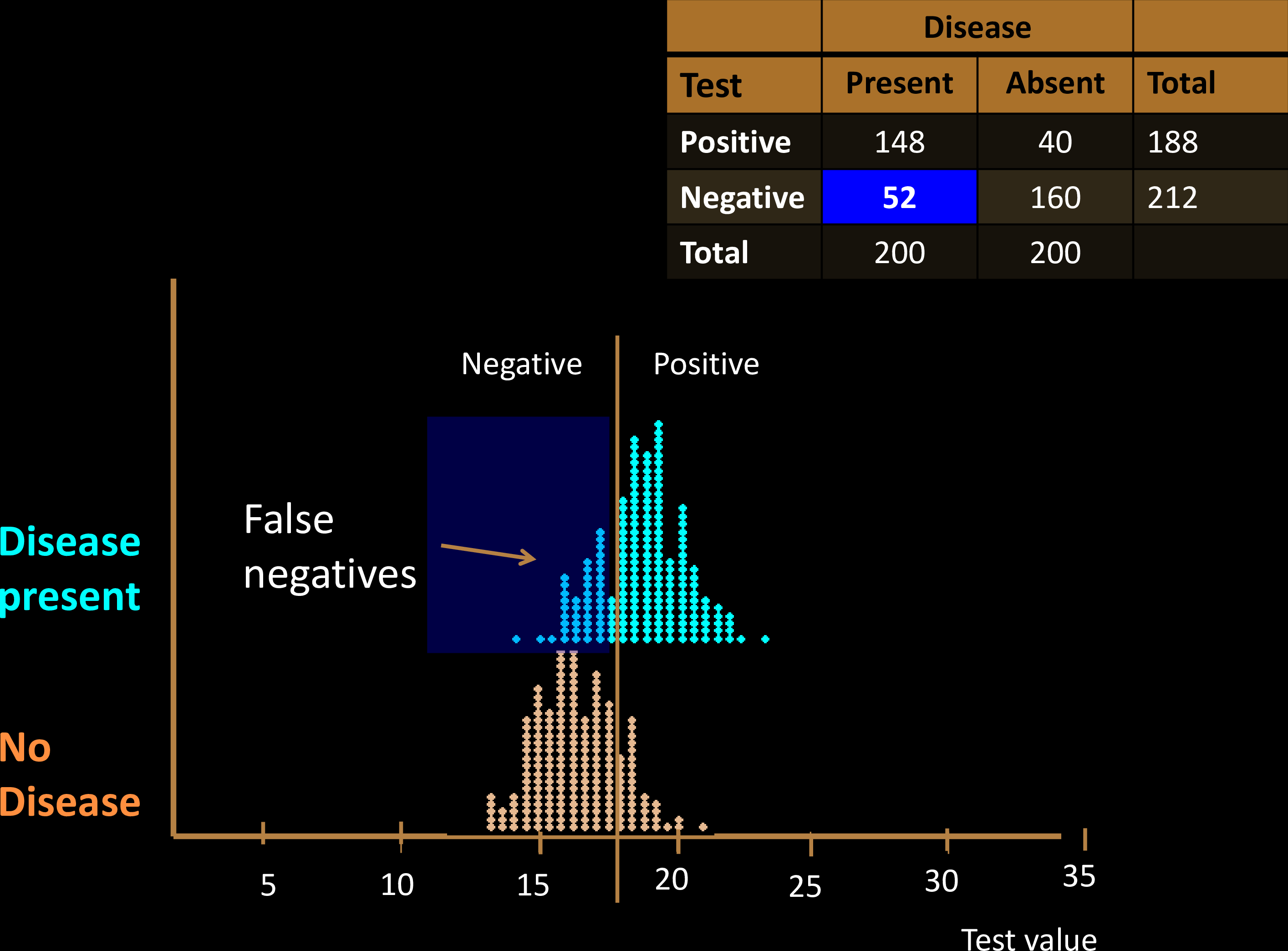
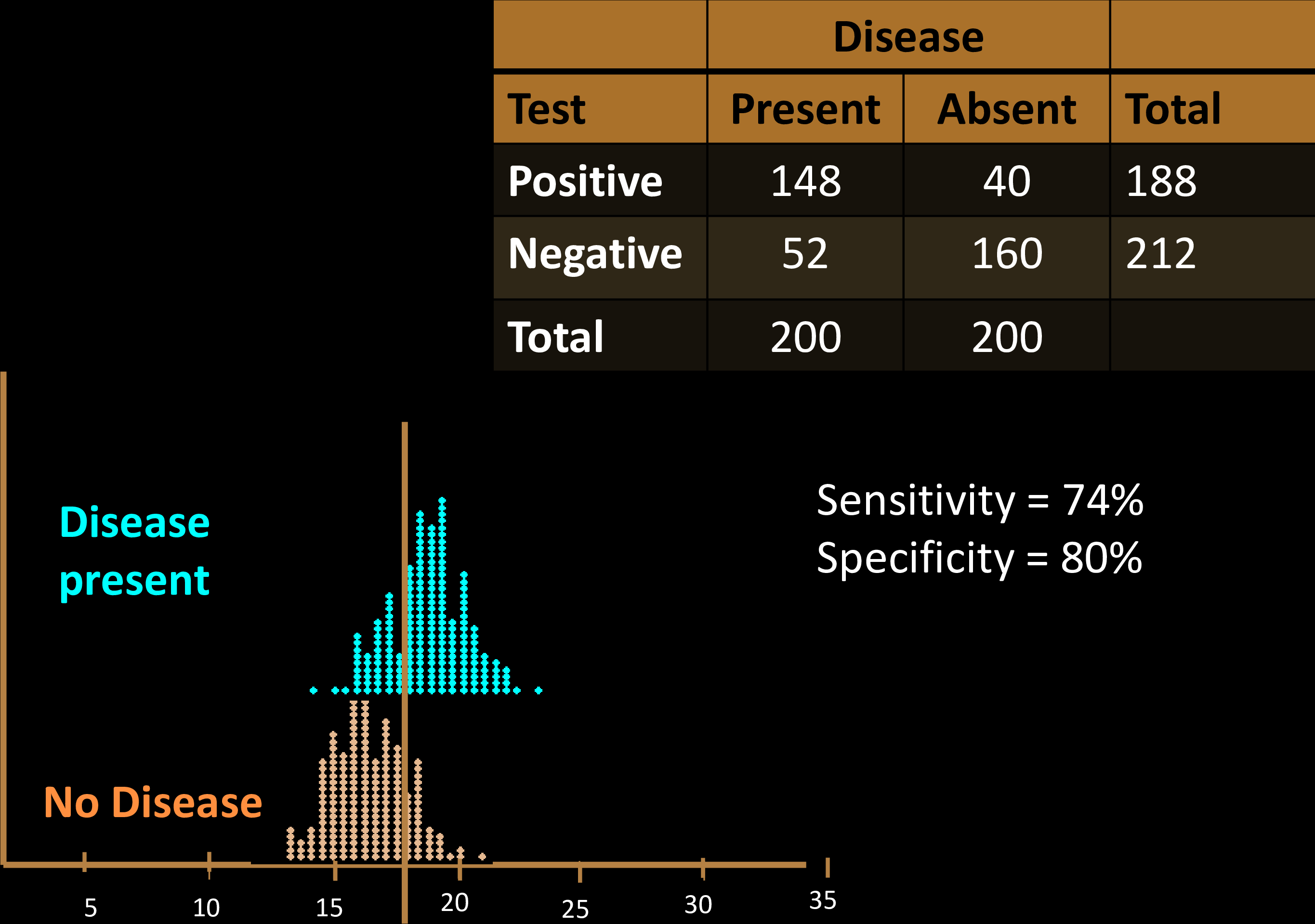
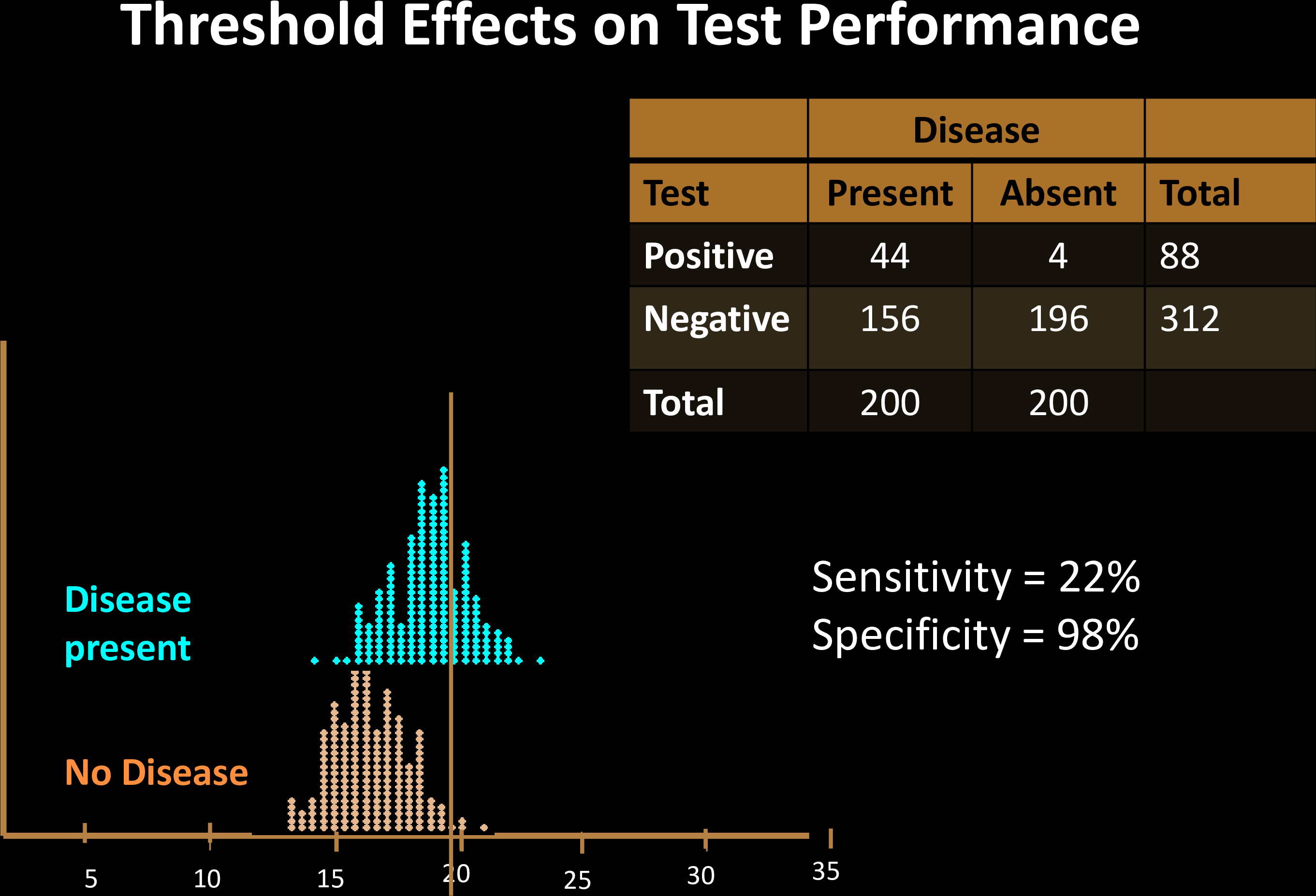
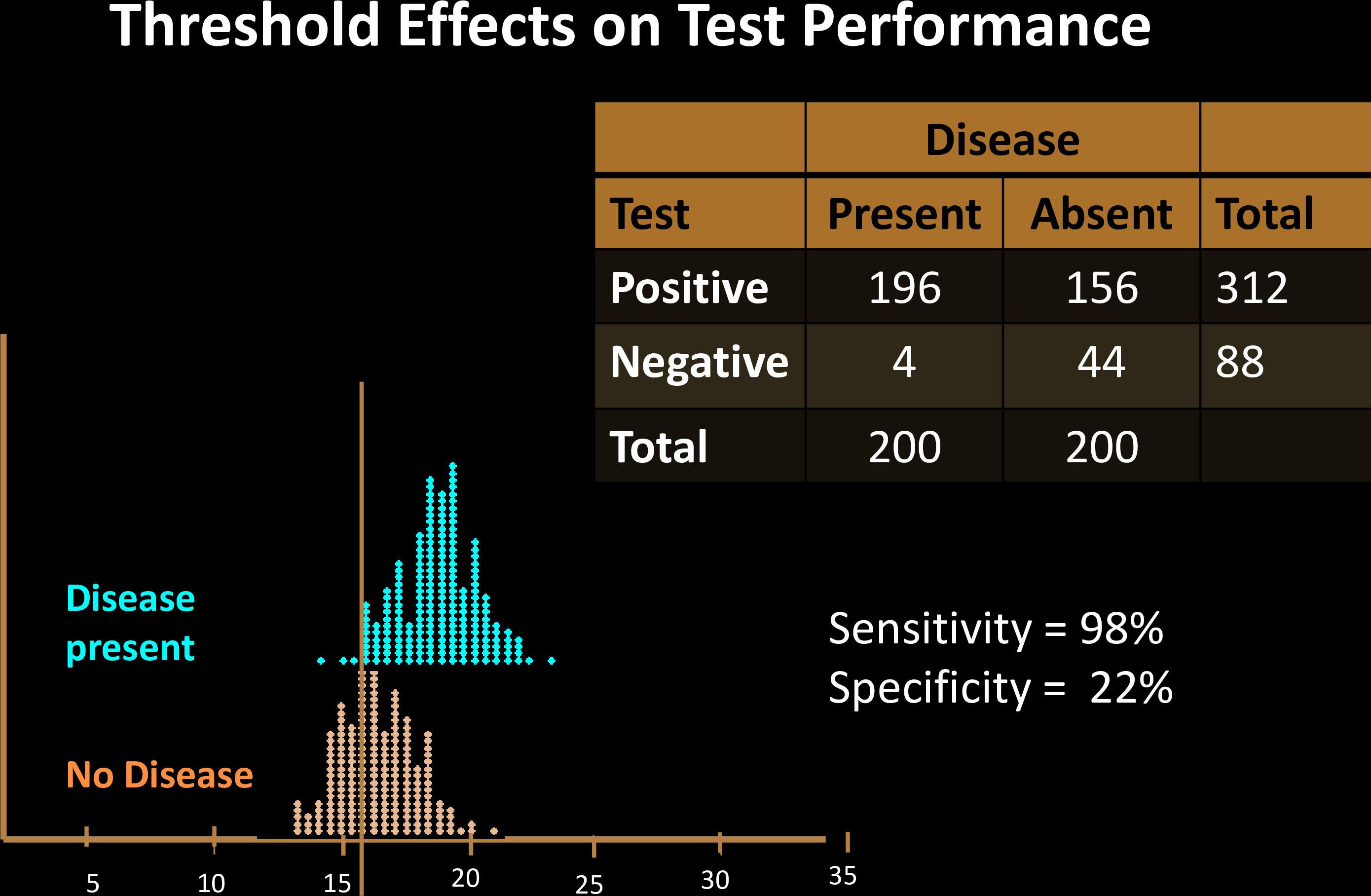
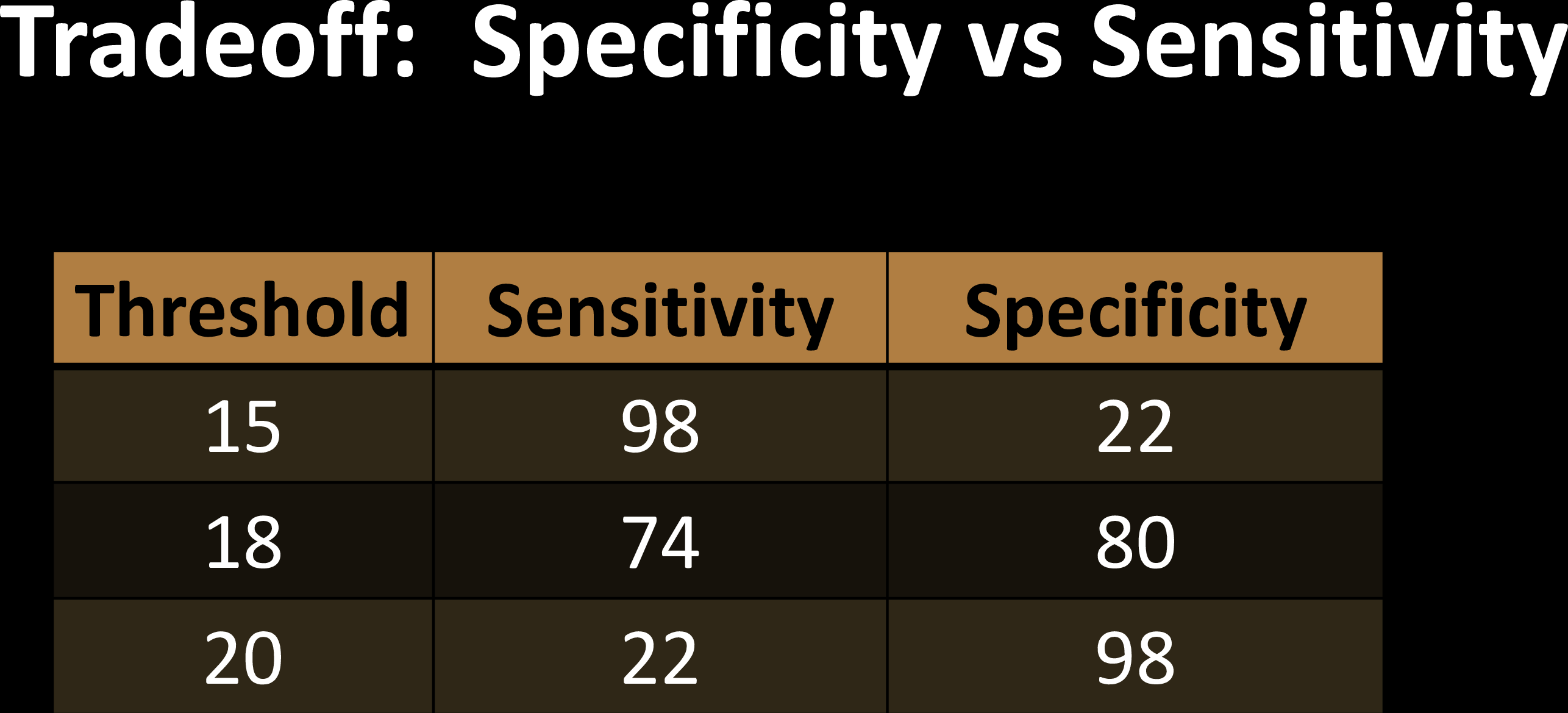
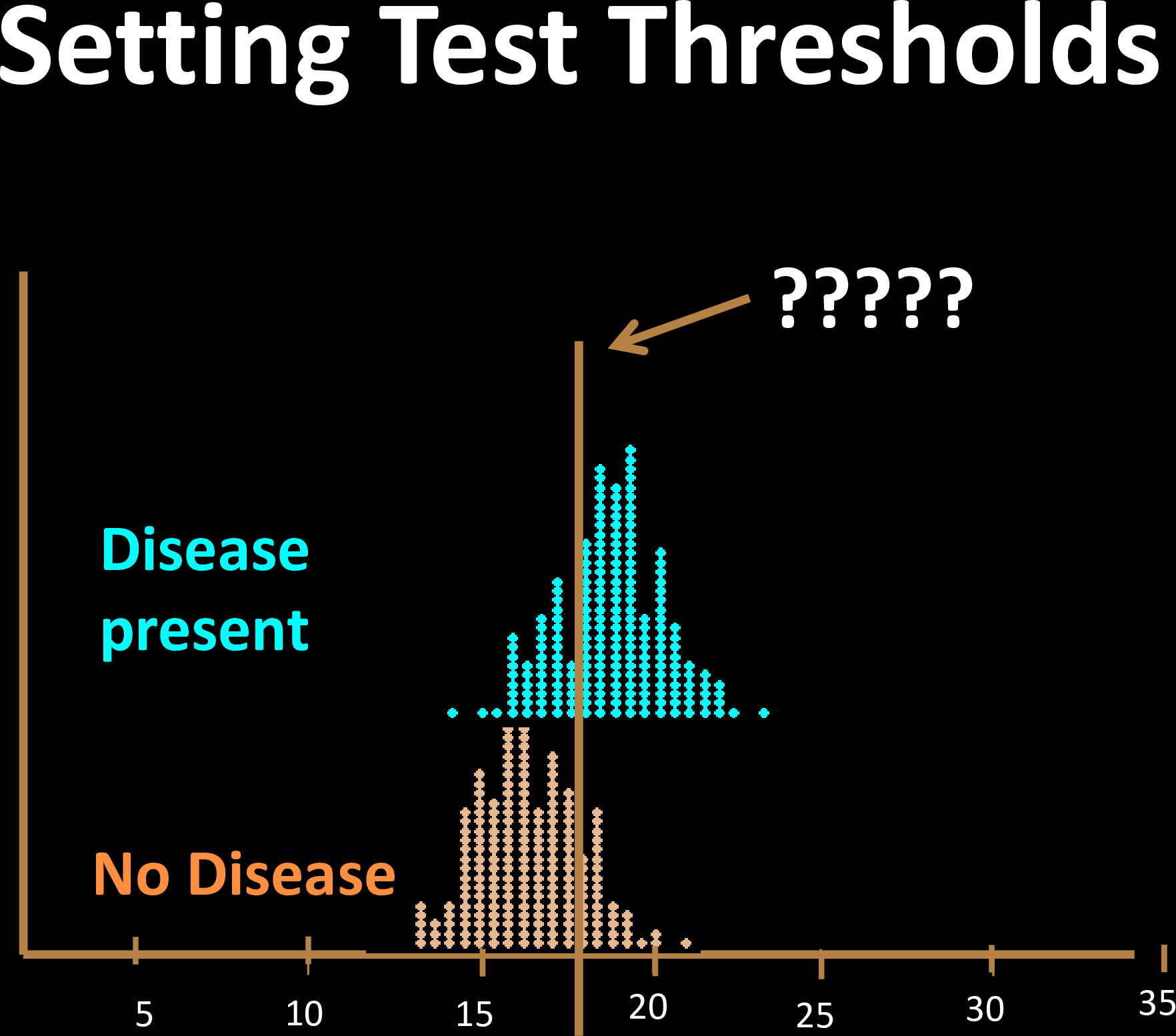
The decision threshold is upto us to decide
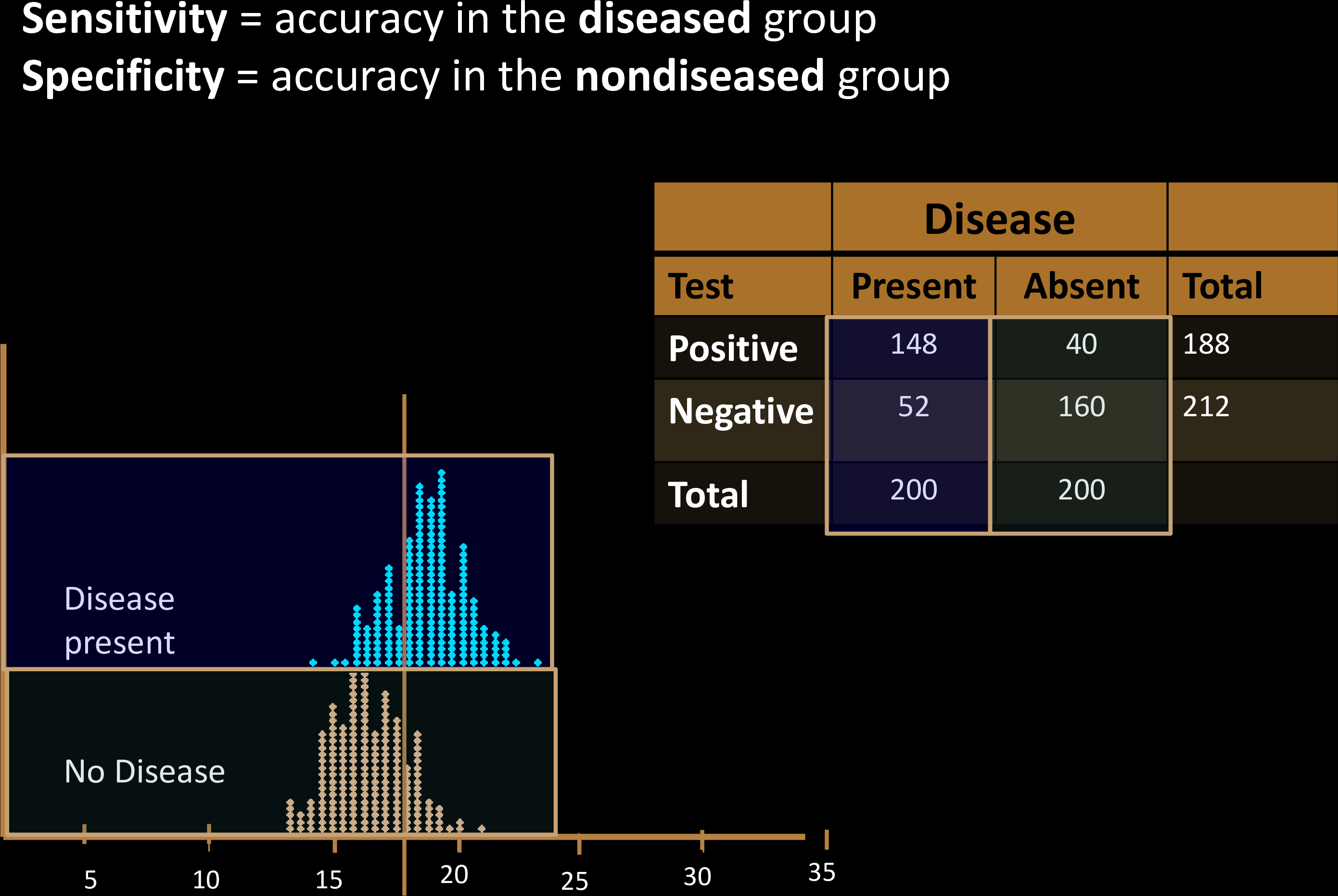
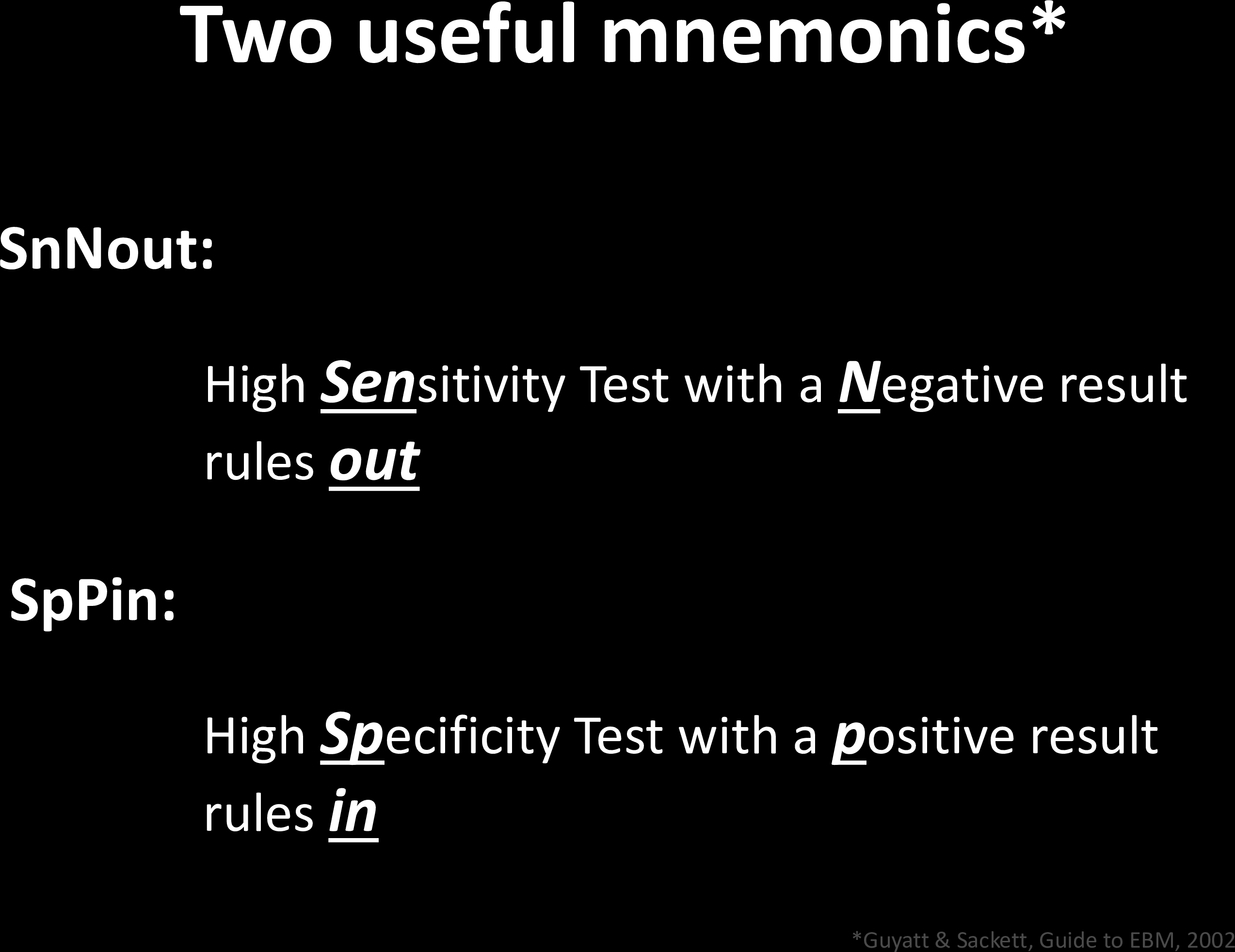
Impacts sensitivity & specificity
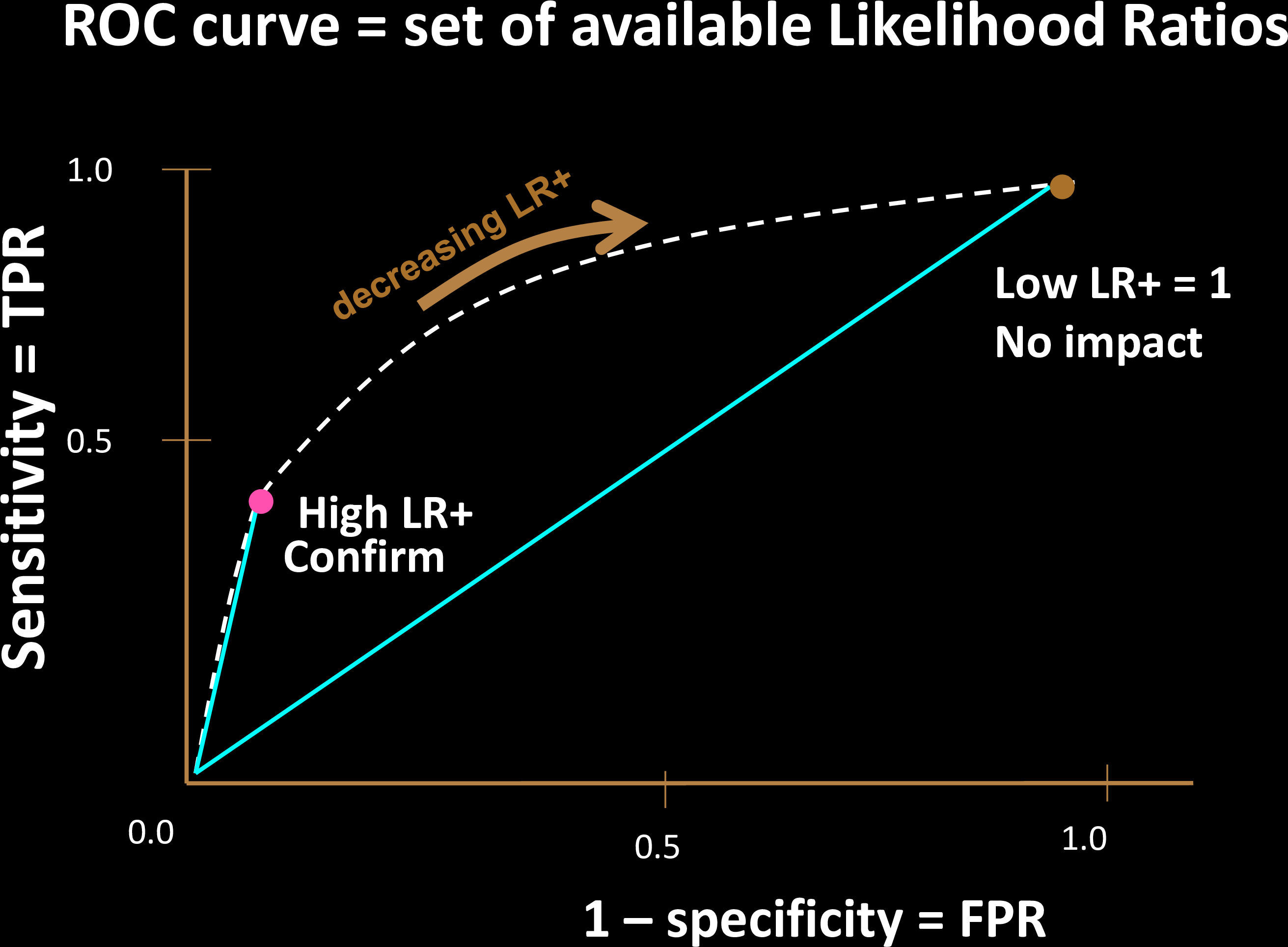
Each choice of a threshold produces a different test
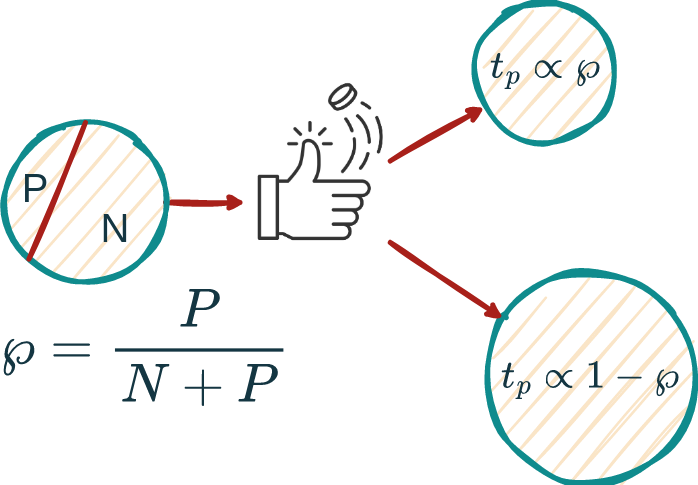
Let sensitivity be \(s\), specificity be \(c\), and prevalence P/(N+P) be \(\wp\).
Then:
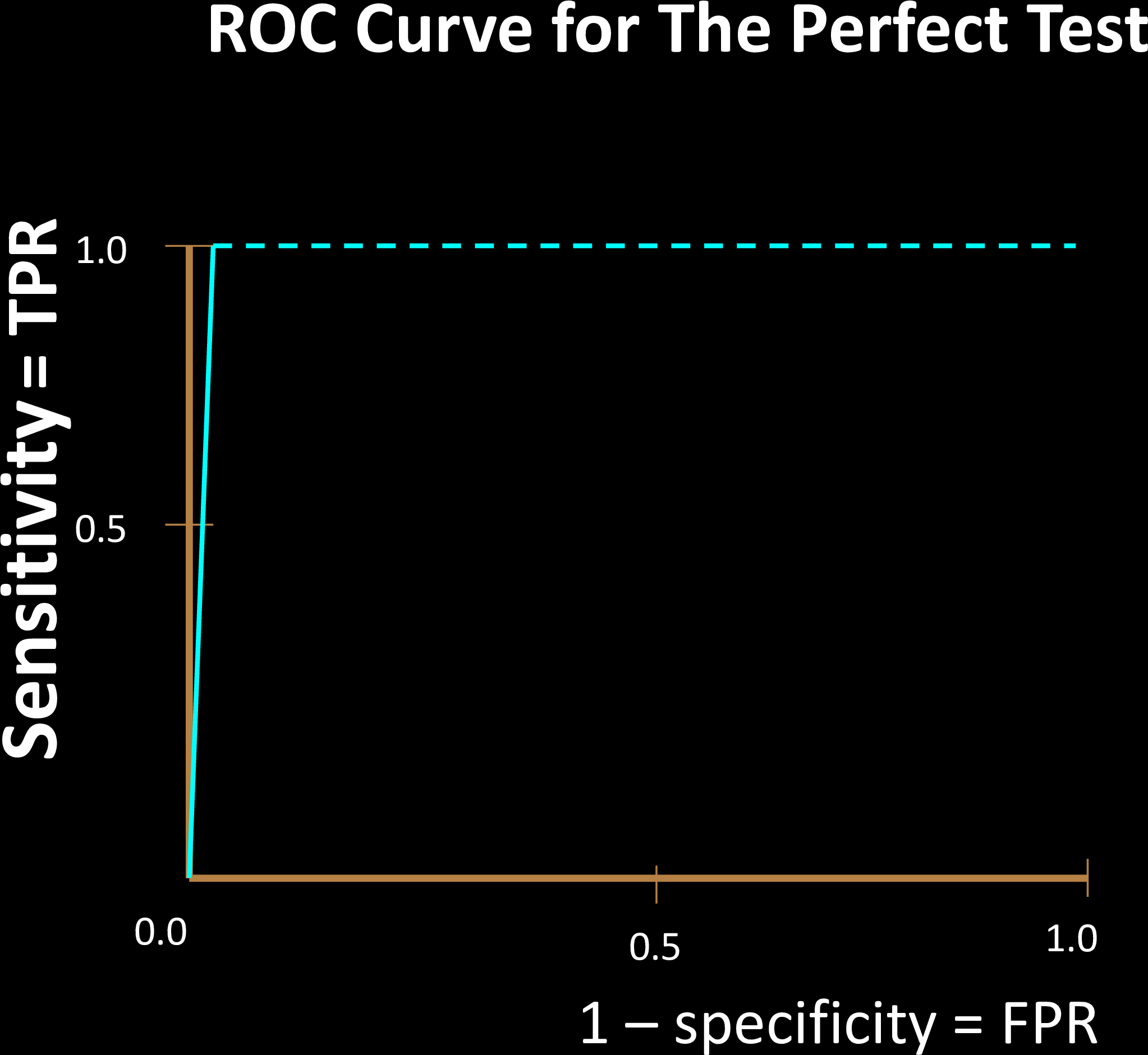
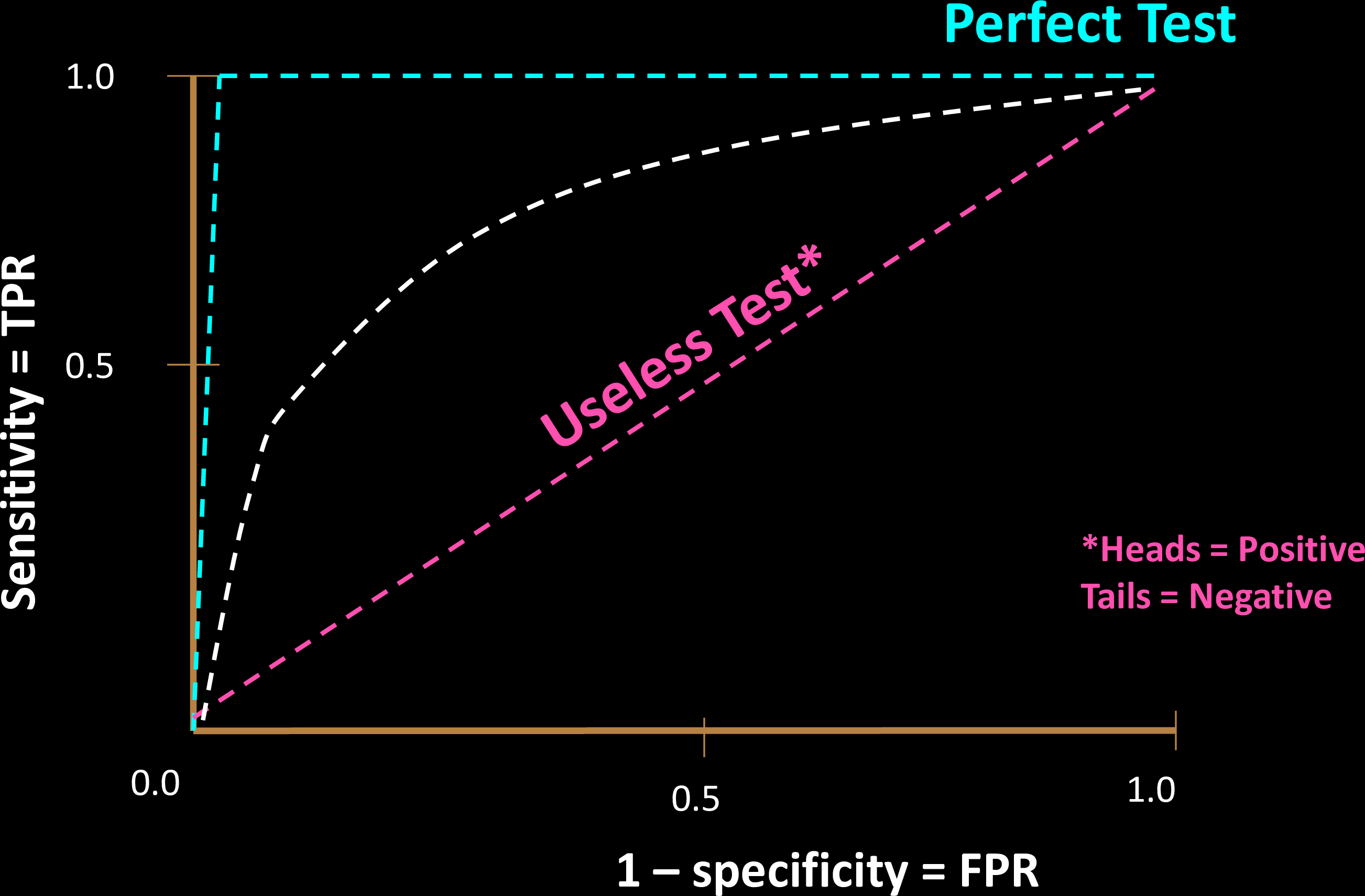
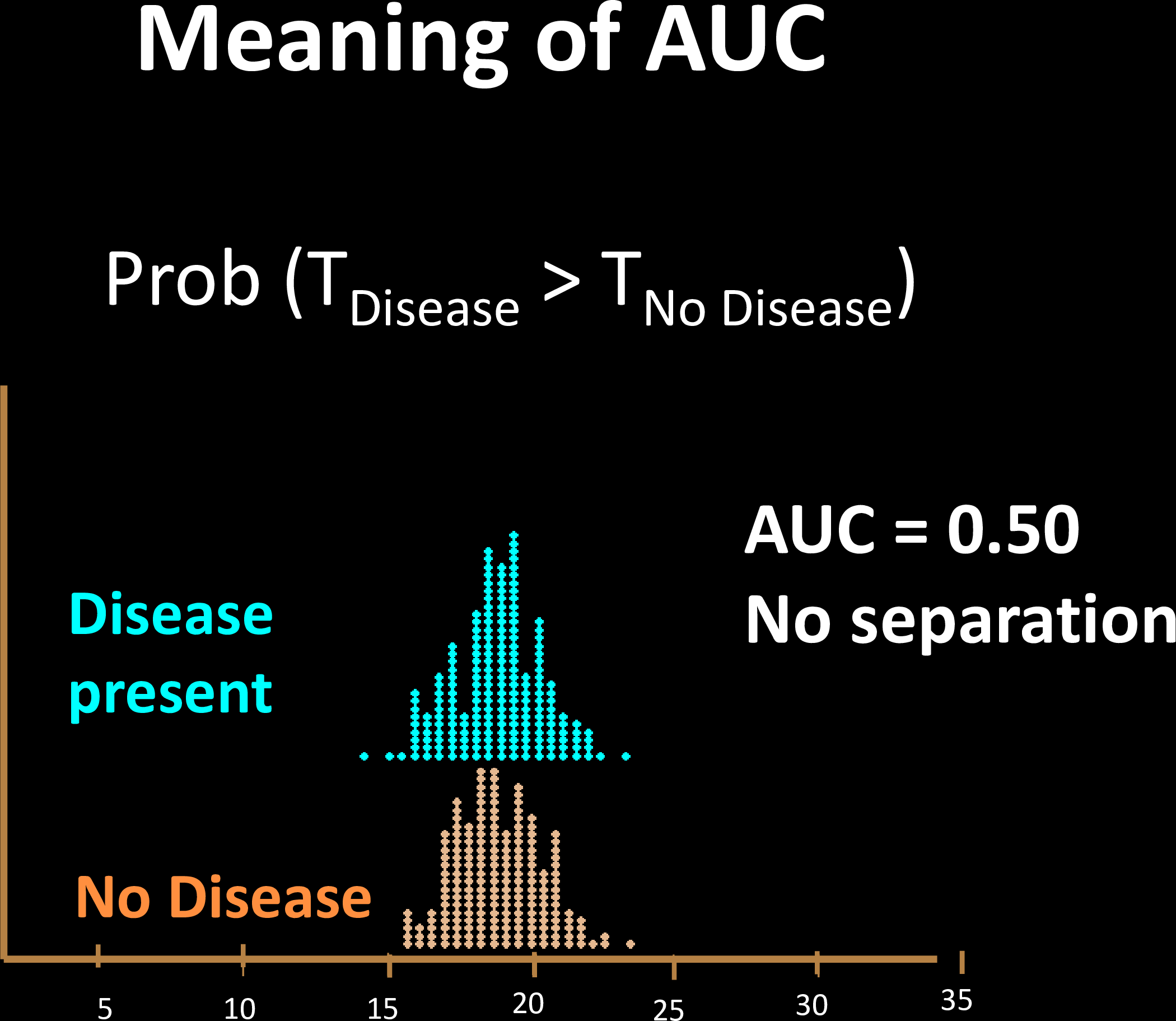
Hence, s=c is NO BETTER than a coin toss!
HW.
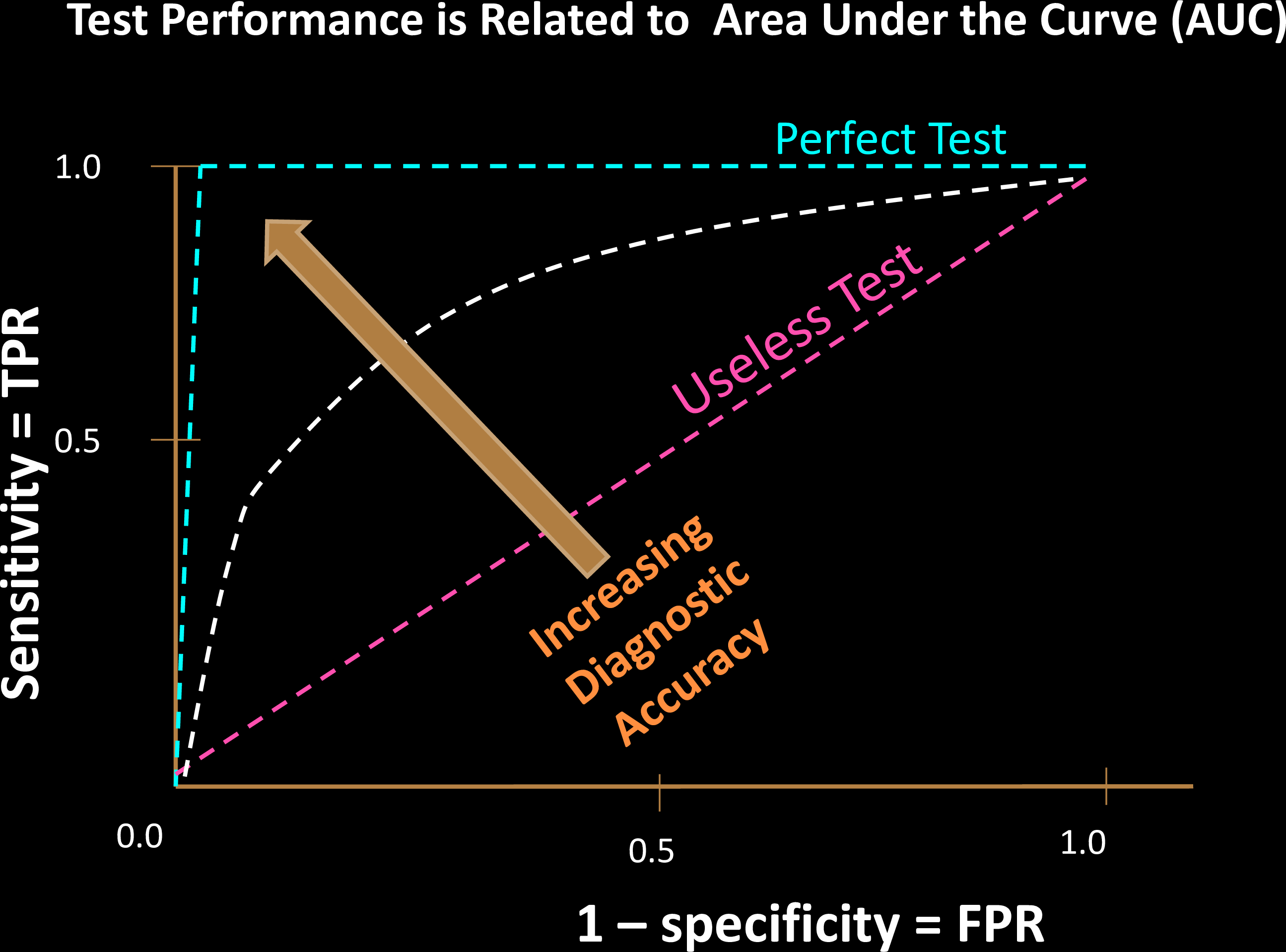
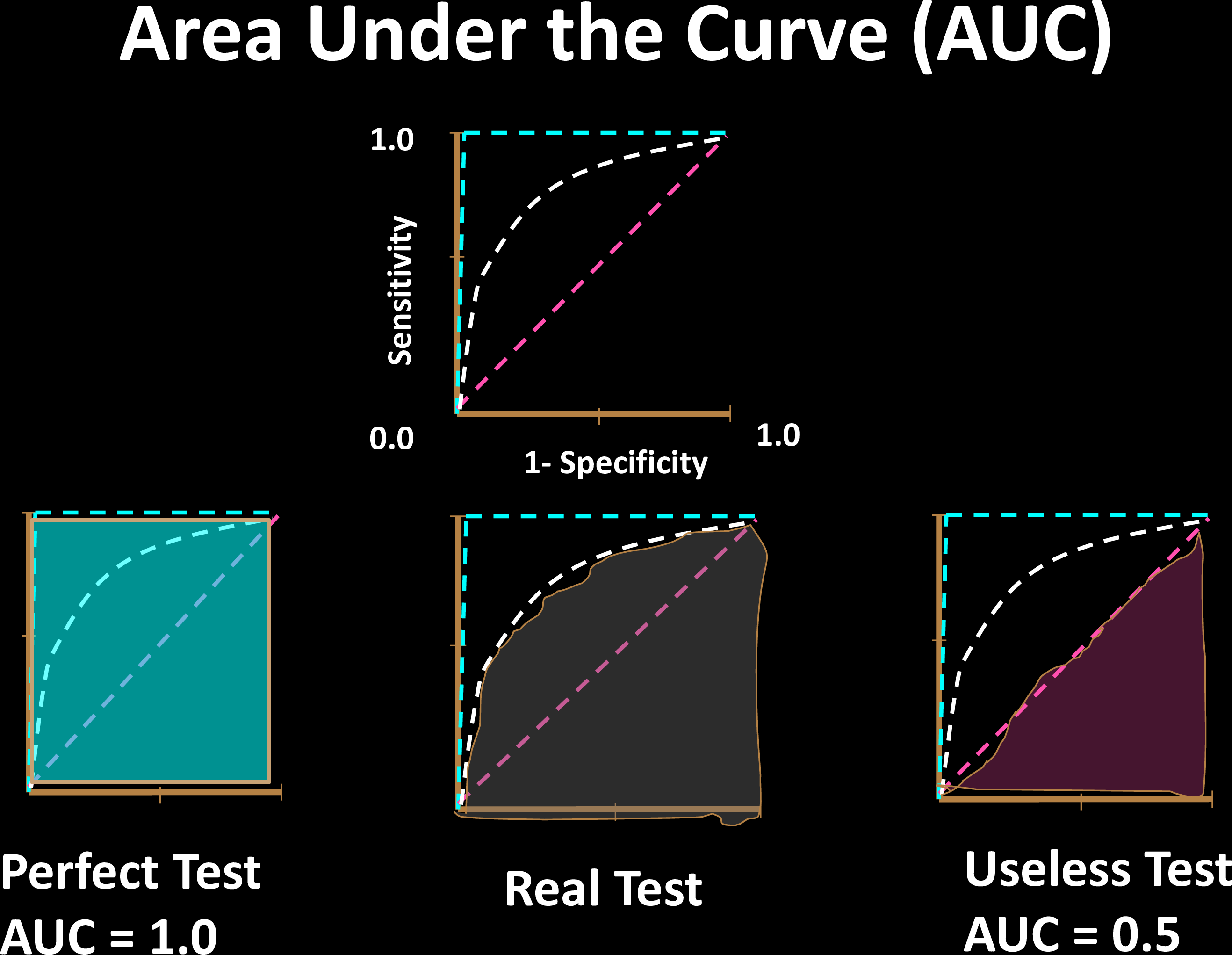
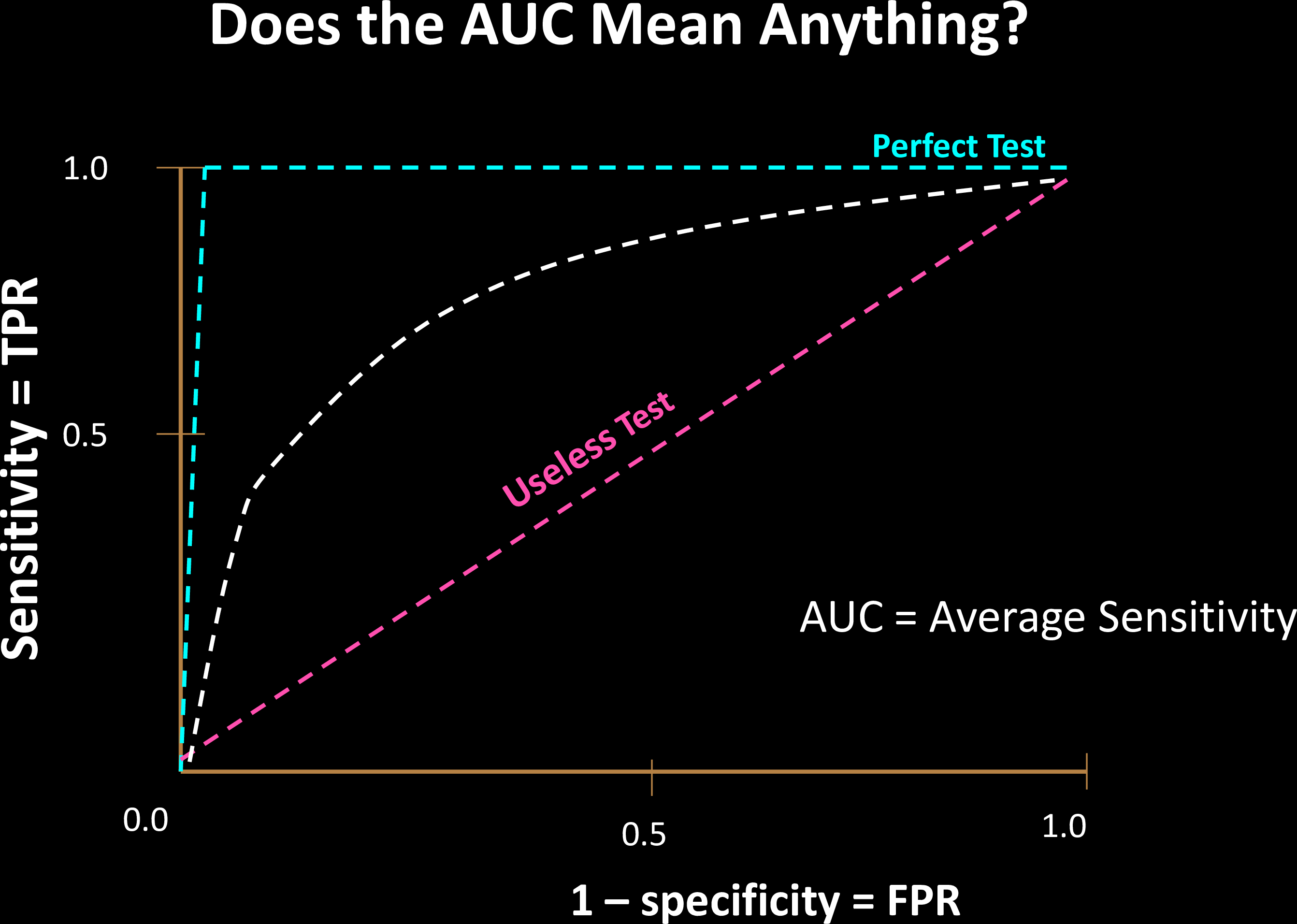
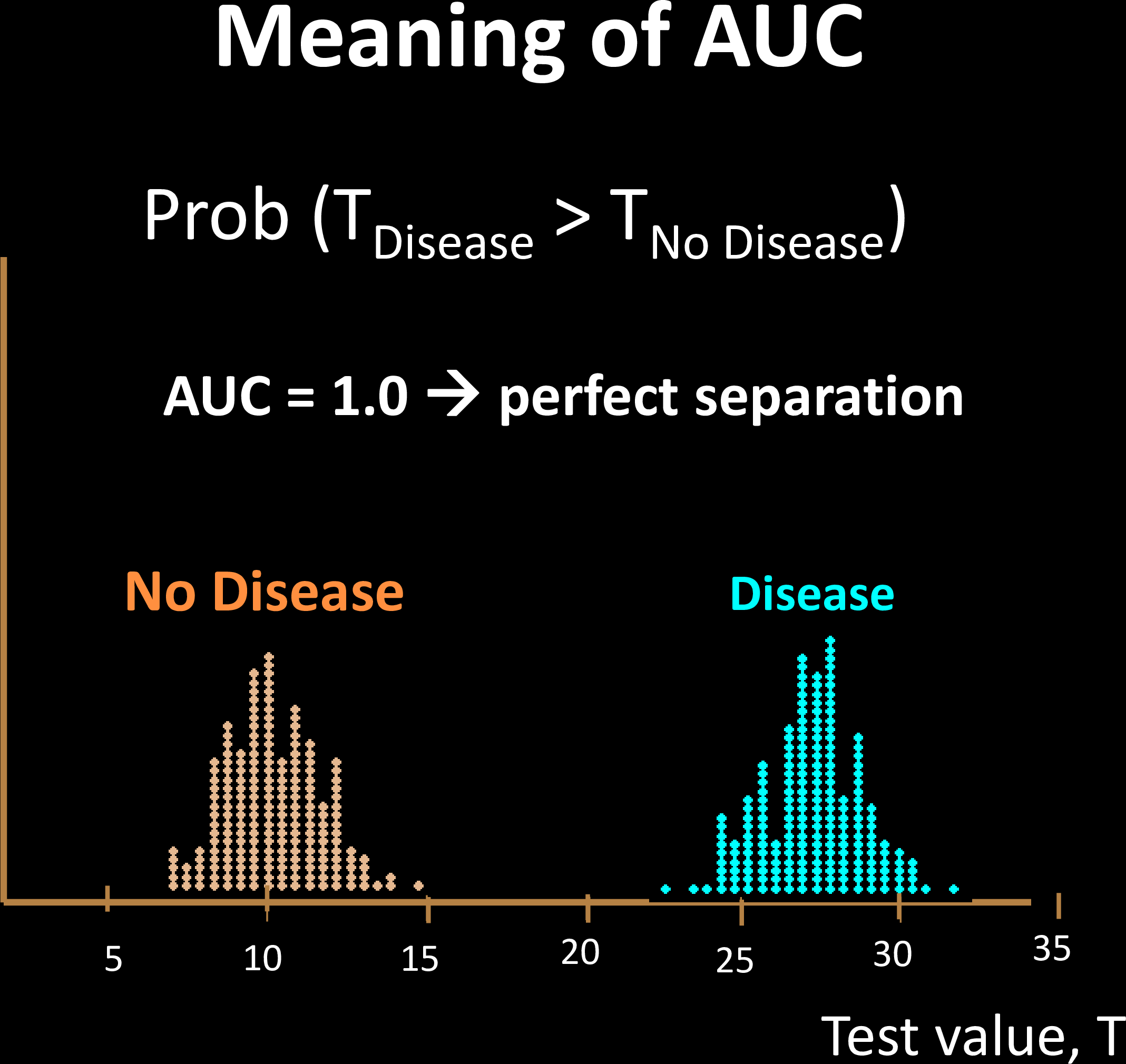
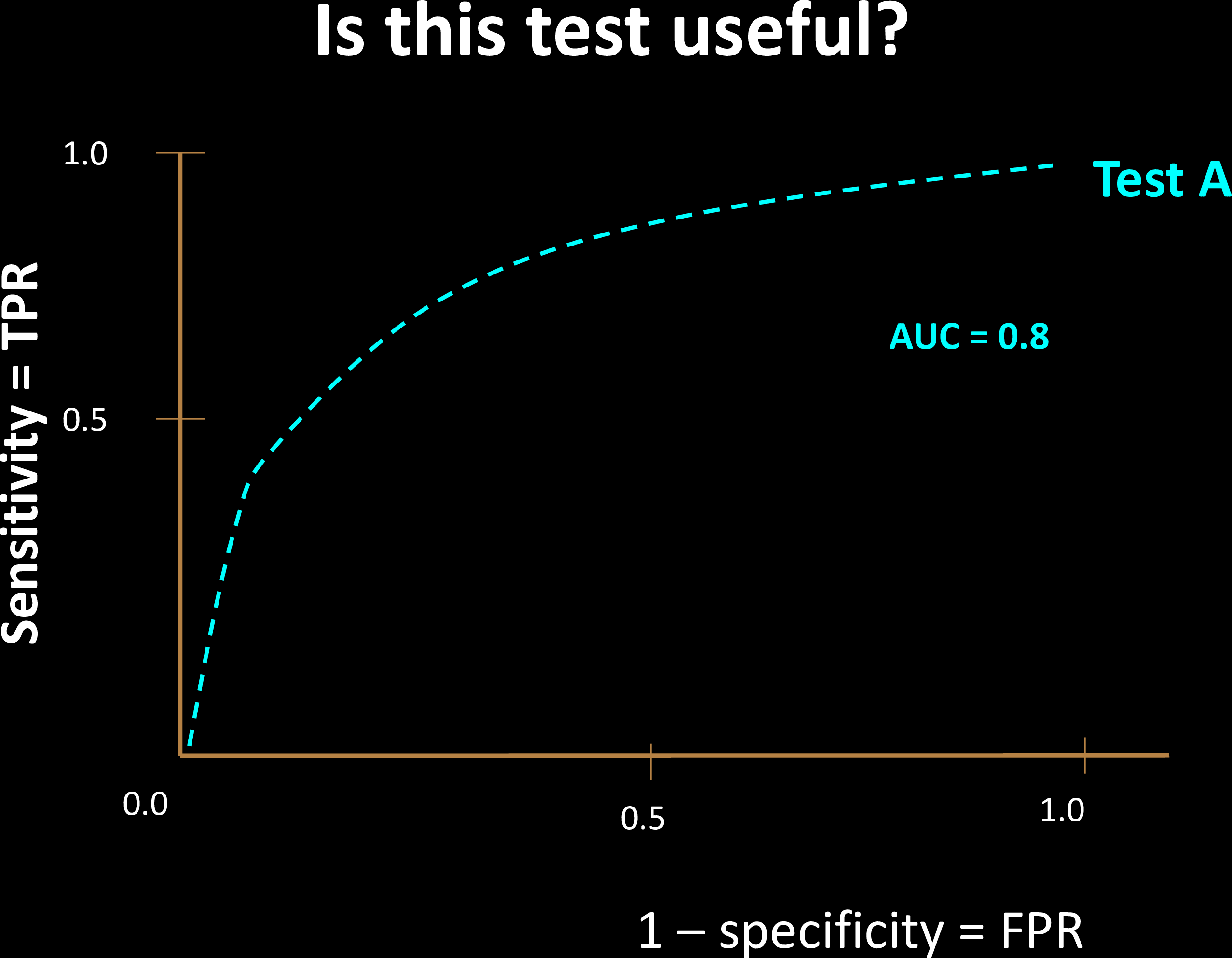
For 2 random samples, AUC is the probability that the positive sample is ranked higher than the negative one
Prove this using Bayes' Theorem
$$t_p/f_p$$
$$\frac{\rho}{1-\rho}$$
| Cost | Positive | Negative |
|---|---|---|
| Test Positive | $0 | $x |
| Test Negative | $y | $0 |
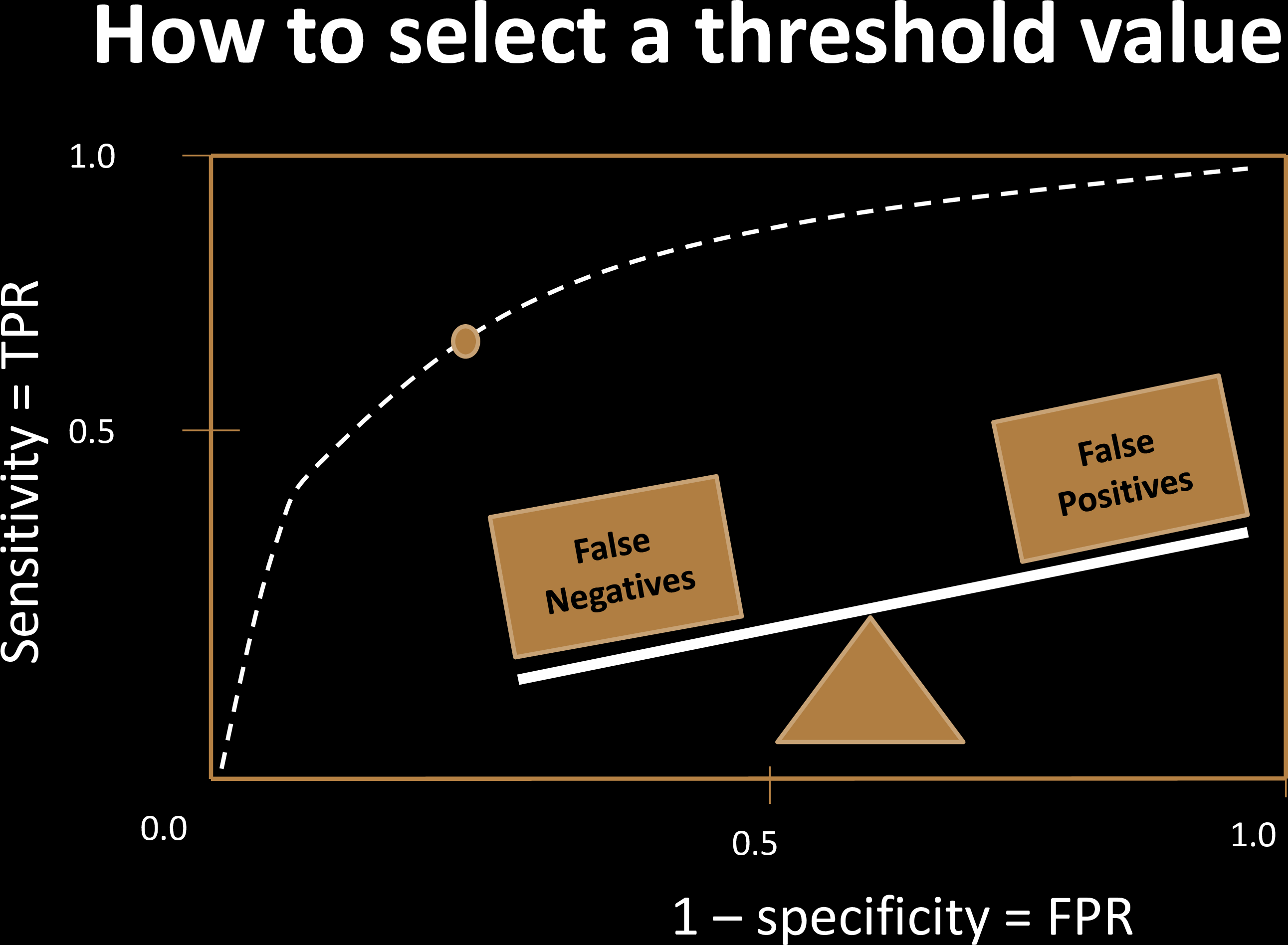
Cost Optimization to choose operating point
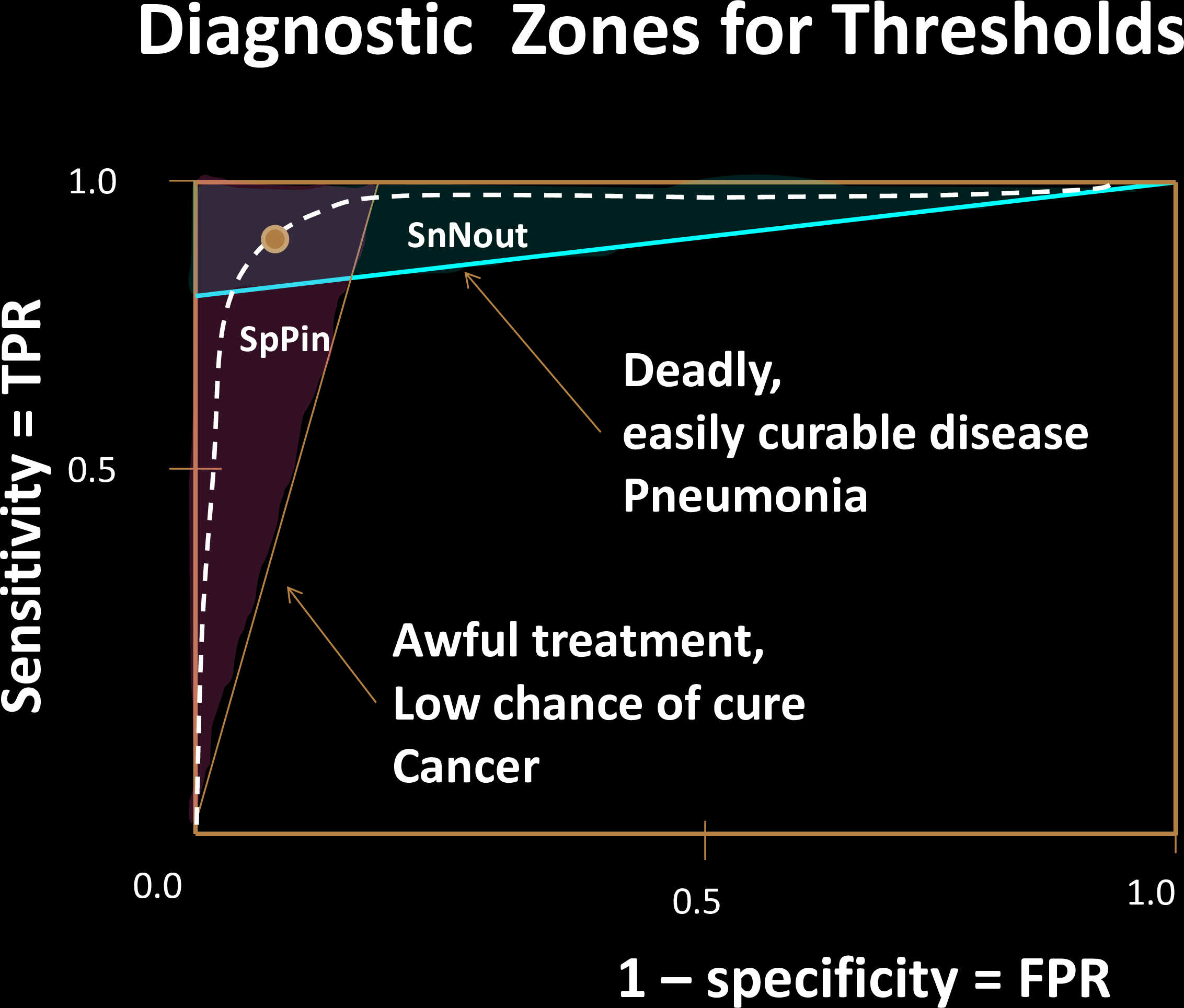
Criminal Justice: $$C(f_n) = 0 $$
Healthcare (Covid test?)
$$C(f_p) = 0 $$
naive dichotomy
Covid tests are similar
What happens if we test again?
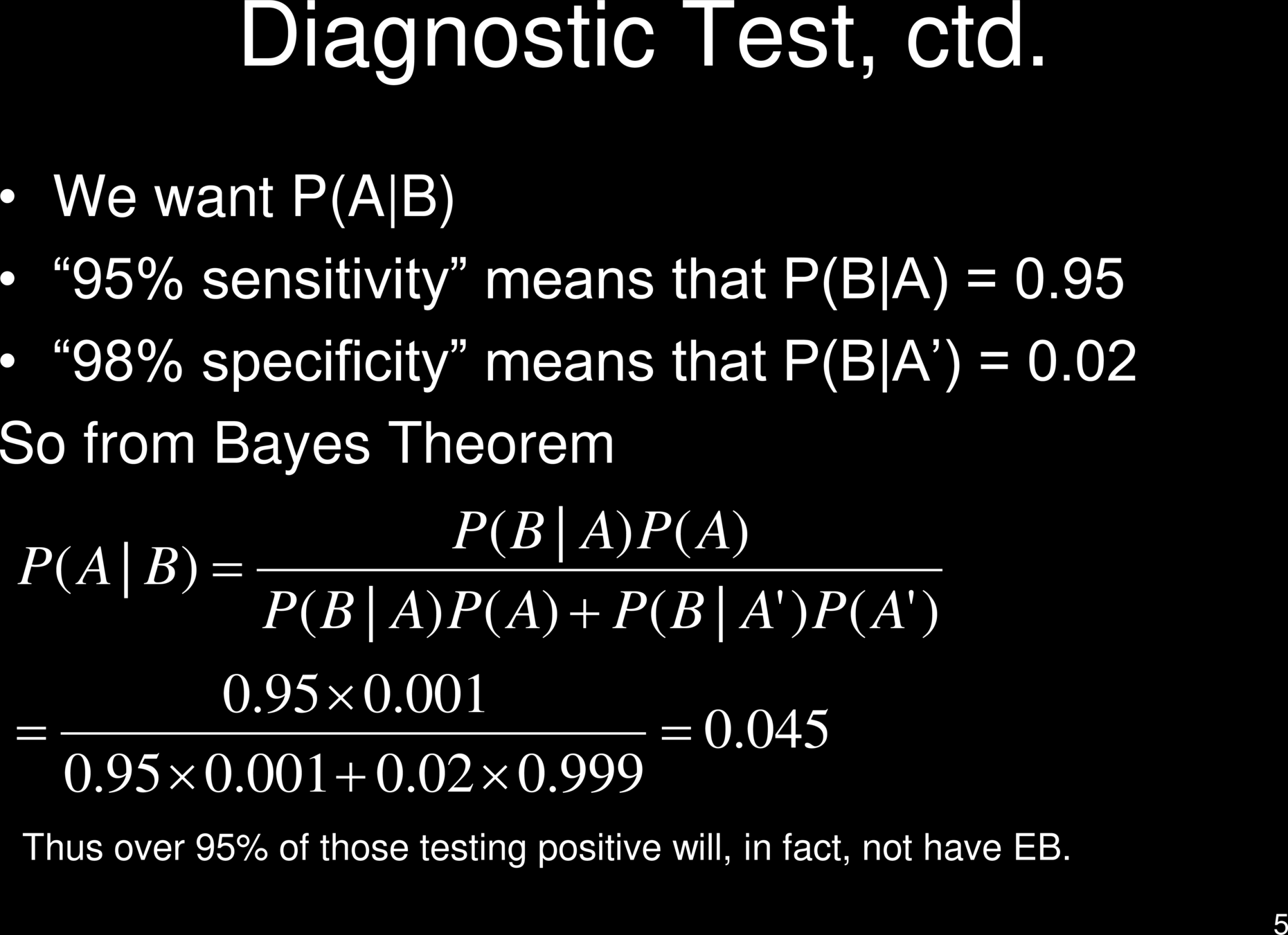
0.045
0.045
1-0.045
0.69
But confirmatory tests might not be always feasible
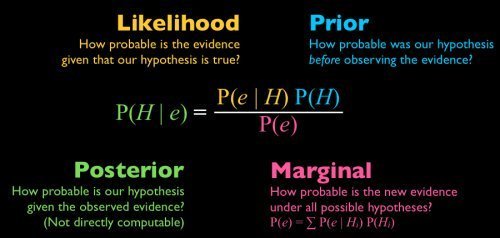
(H)
HW: Show that the second expression is true
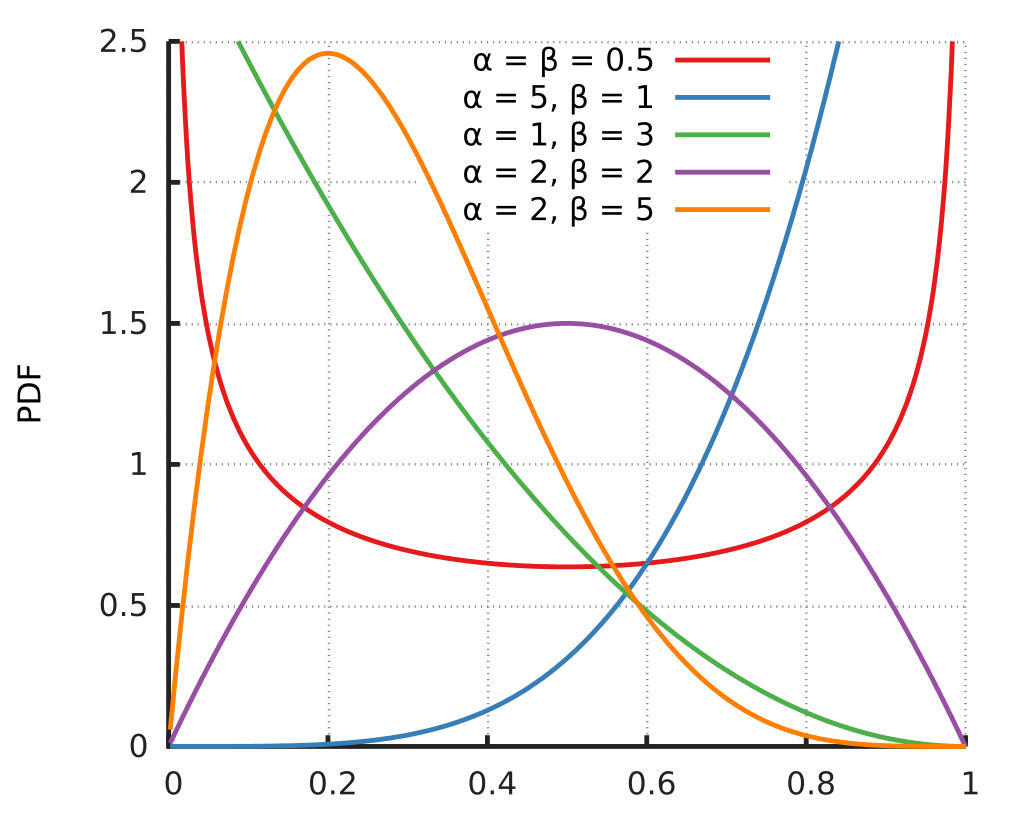
Note on beta distribution:
The Universal Metric
Also not computable
HW will be posted on canvas.
By Ishanu Chattopadhyay
Machine Learning for Biomedicine