Grounded in a reading of speech act theory, Butler's work explores the possibility that gender, rather than being conceived in a modernist fashion as the social interpretation of sexed bodies, is best understood in terms of collective practices that produce perceptions of fixed sexes and genders as performative effects. (Stone, p. 14)
Why talk about this:
- The Bible continues to impact how we understand and relate to each other in western cultures.
- Many view the Bible as an objective revelation containing proper morality, ethics, and even social-political organization.
- That runs the risk of being oppressive of differences.
- But if we reject objectivity, must we also disregard the Bible?
- Or should we look for new ways of interpreting an entrenched symbol?
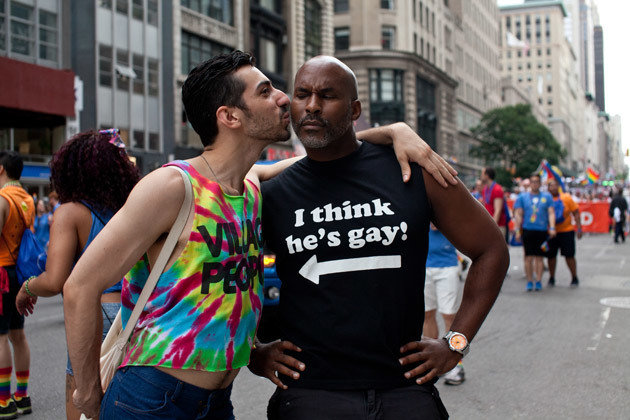
In our culture, there is still prejudice and oppression of LGBT+ individuals. They are not yet afforded the same range of rights that heterosexual citizens are. The Bible has been at the center of this issue in many ways.
According to Stone and others, change requires understanding how the Bible has had an impact and that we be capable of having responses demonstrating an awareness of how the bible is best understood.
Regarding a bill permitting refusal to issue marriage licenses to same-sex couples due to religious ideology.
Are "man" and "woman" political categories?
According to Monique Wittig, they are binary categories that constitute the foundation upon which is based the imperative for sexual reproduction, the heterosexualization of society, and the subordination of women and minorities. (Taken from Stone, p. 17)
I have the capability of defining myself to myself and to you. I am not restricted to biological category and what culture (or God, for some) dictates to be (dichotomized) roles based on that biology.
---
Or am I?
Stone's argument is based much on Judith Butler's theory on gender as a performance.
Other scholars have built upon this as well: E. Sedgwick, for instance, coined the phrase "queer performativity."
Stone argues for a similar concept of "Bible performativity."
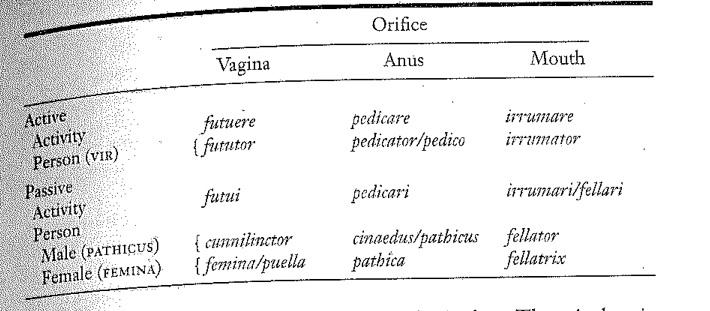
Historical Roman Sexuality
A plurality of Bibles and a Plurality of Genders
By Jeremiah Cataldo