A conceptual resources approach to quantum interpretations
Rachel E. Scherr and Jer Steeger


A conceptual resources approach to quantum interpretations
1. Moving from 'shut up' to 'slow down'
2. A role for philosophy: conceptual resources
3. Two-state systems, two ways
1. For some physics, measurement doesn't matter

\psi
3. Two-state systems, two ways
\psi
[...] you have to prepare a whole ensemble of particles, each in the same state \( \psi \) [to measure expectation values].
Griffiths (2005, p. 15)
1. For some physics, measurement doesn't matter
Although we believe that after [measurement] we know the state completely, nevertheless, only statistical statements can be made on the values of the physical quantities involved.
von Neumann (1955, p. 207)
1. Moving from 'shut up' to 'slow down'
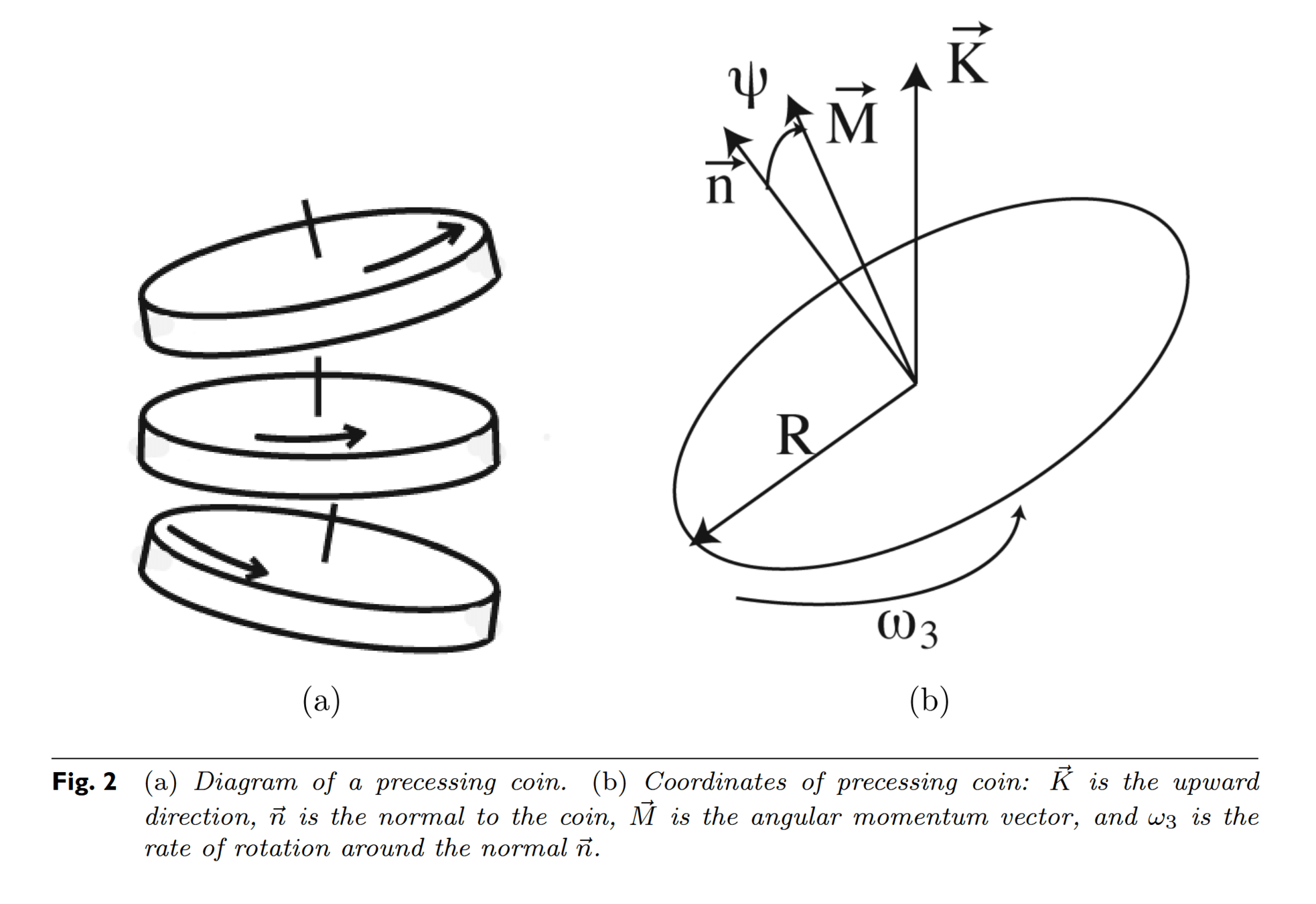
On this approach, Schrödinger's cat is no weirder than a coin.
Q: When do the details of a measurement of a single particle not matter for the physics?
A: When we only care about the statistics of measurement outcomes.
3. Two-state systems, two ways
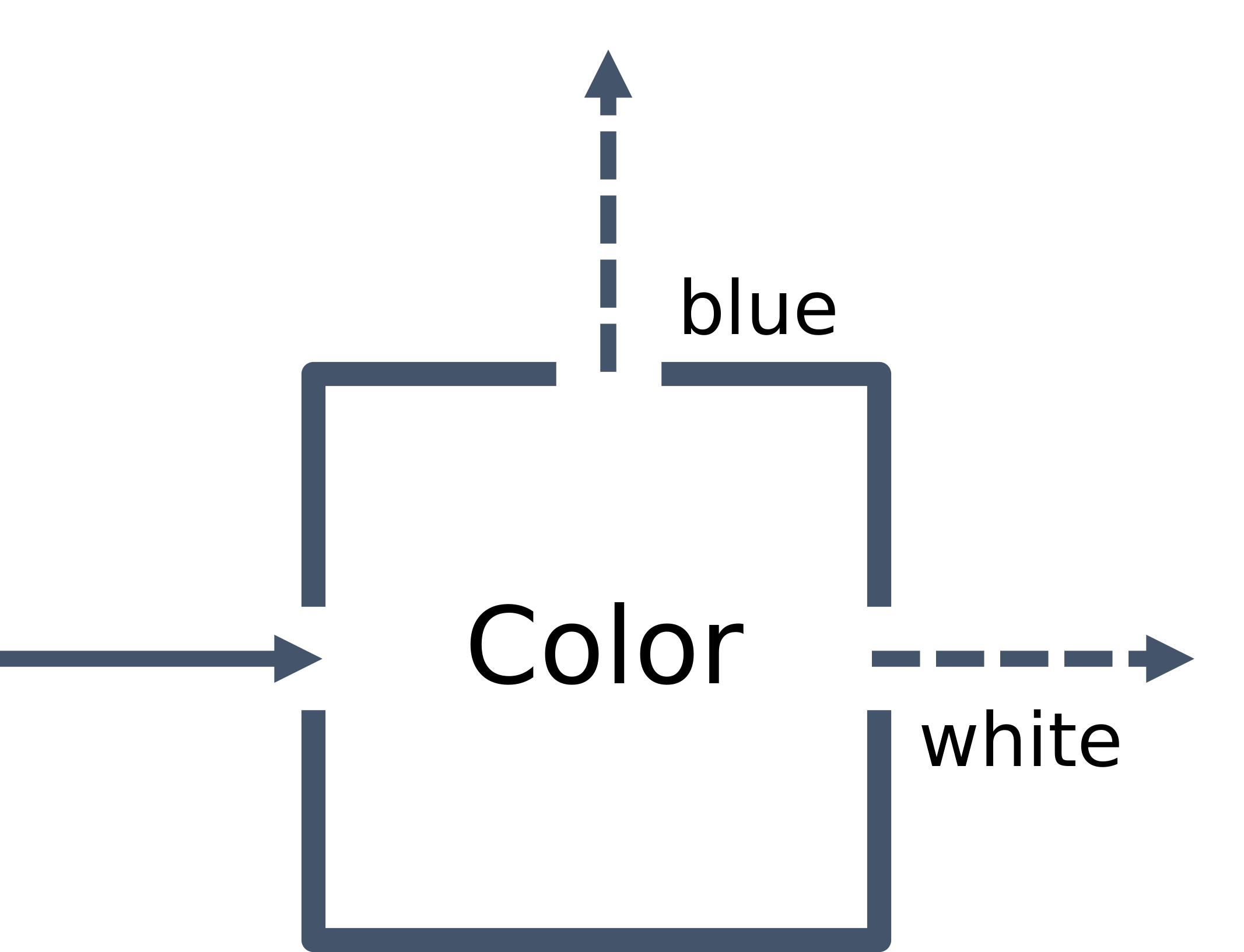
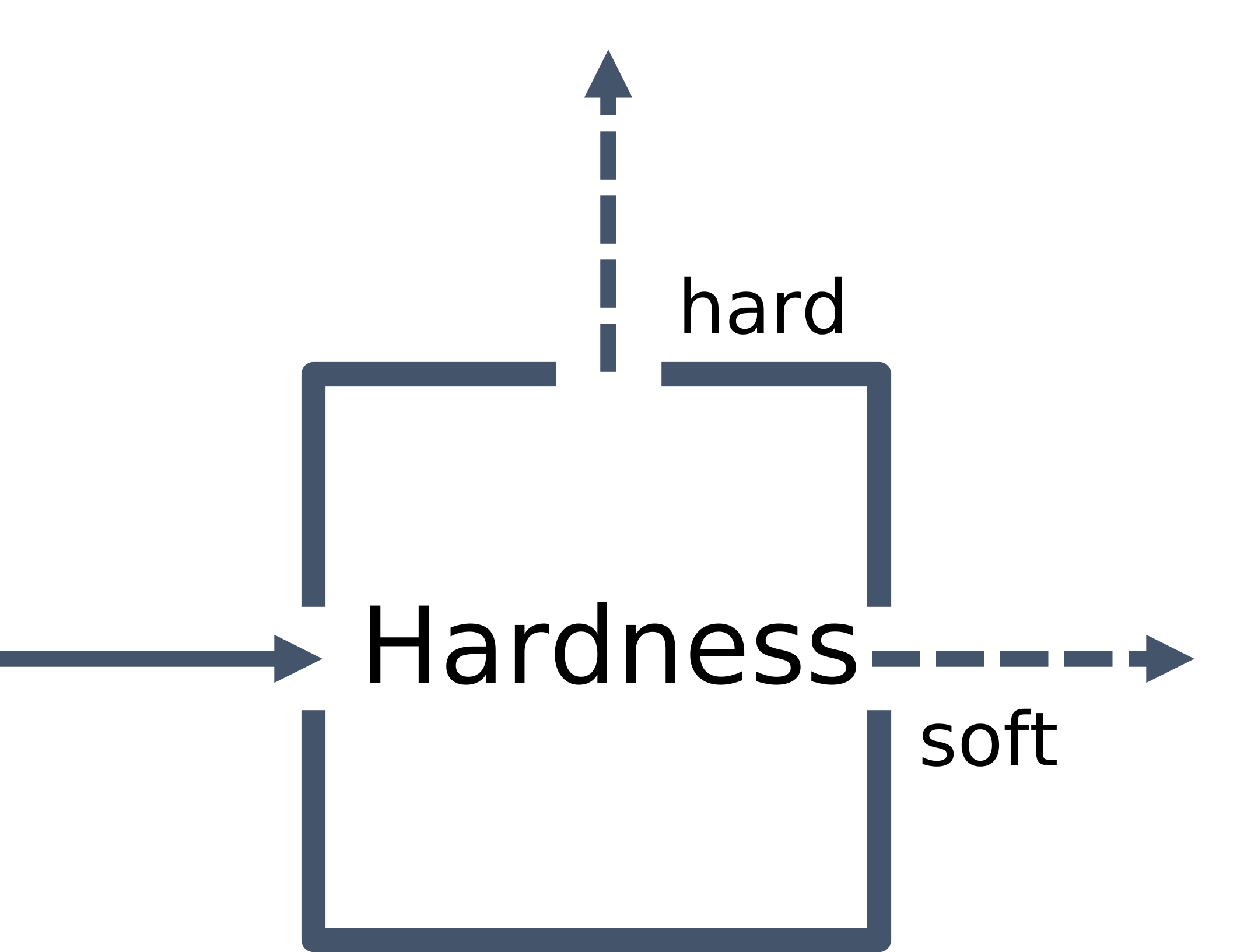
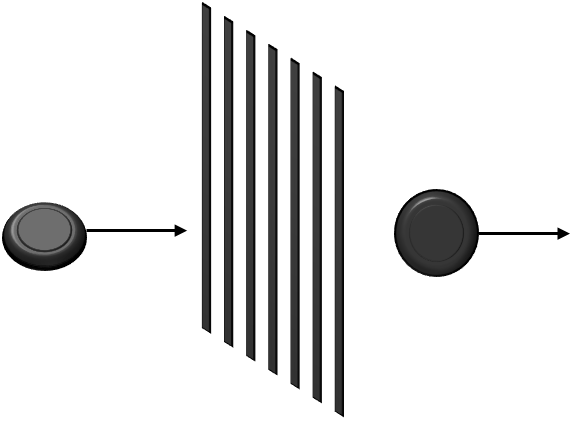
- Polarization is orientation. Each photon is oriented (“polarized”) in a direction that matters for its interaction with a polarizer.
- Transmission is probabilistic. Each photon is transmitted or blocked by the polarizer probabilistically depending on its orientation.
- An aligned photon is transmitted, a perpendicular photon is blocked, and a photon at a 45-degree angle has a 50-50 chance of being transmitted or blocked.
1. For some physics, measurement doesn't matter


1. For some physics, measurement doesn't matter
But talking about the measurement of a single particle has generated useful physics—even for folks taking von Neumann's approach!
Why not talk about measurement?
1. For some physics, measurement doesn't matter
2. Talking about measurement has led to new physics
3. It might help students learn that new physics
2. Talking about measurement has led to new physics
2. Talking about measurement has led to new physics
2.0. The coin

\longrightarrow


+
+
2. Talking about measurement has led to new physics
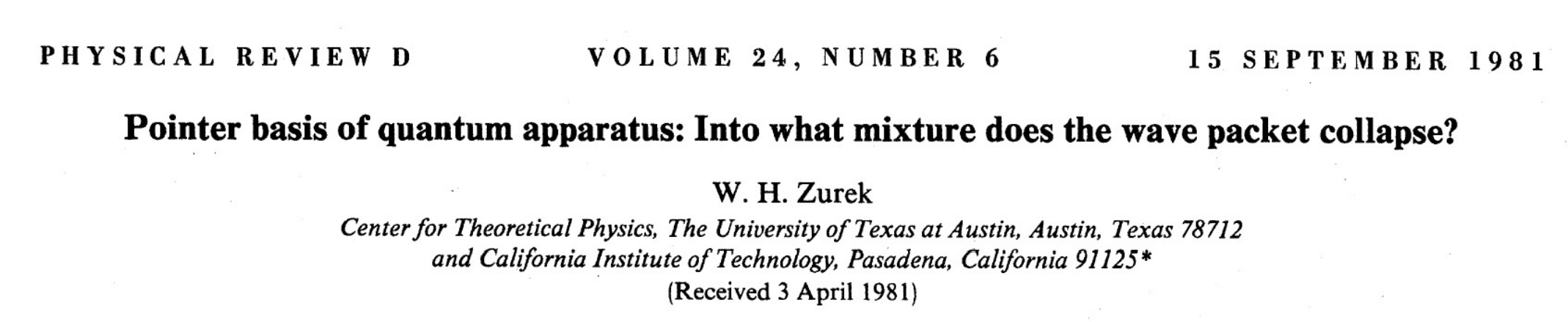
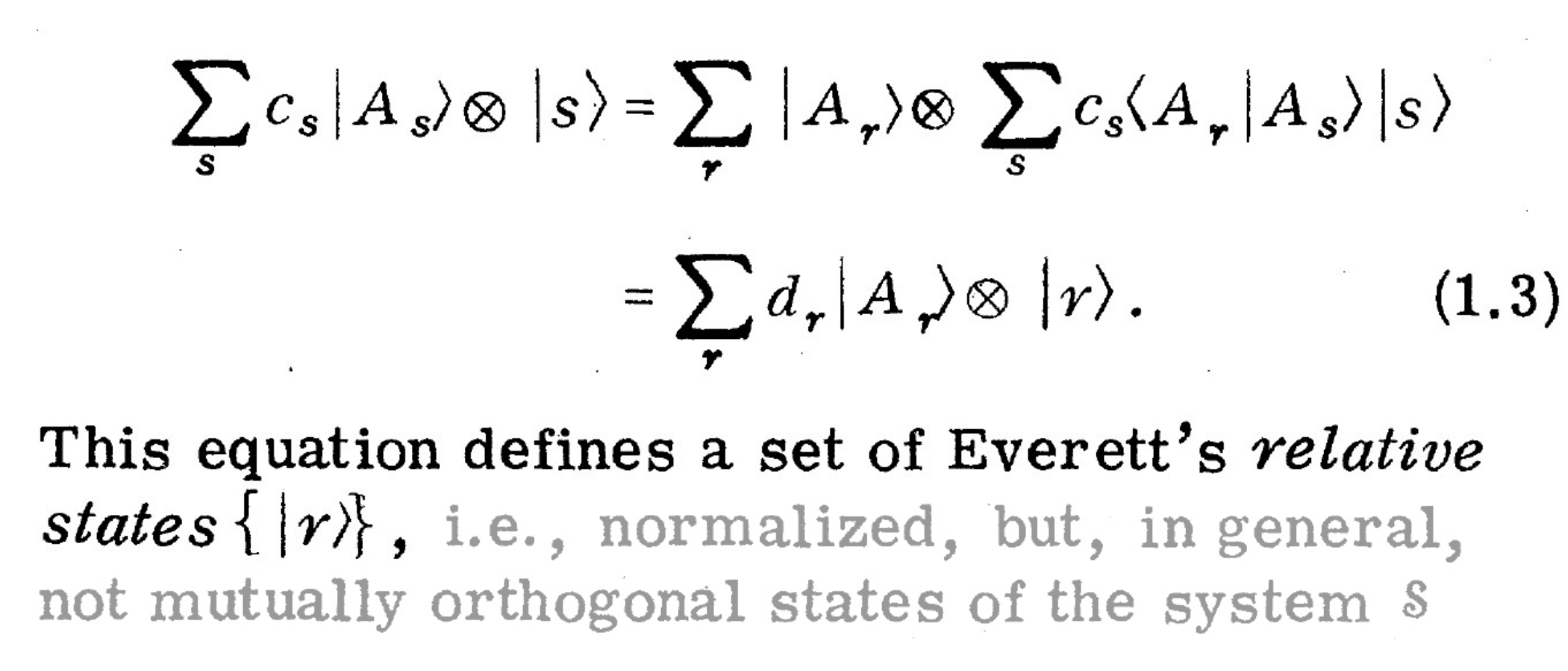
2.1. Decoherence
2. Talking about measurement has led to new physics
2.1. Decoherence
2. Talking about measurement has led to new physics
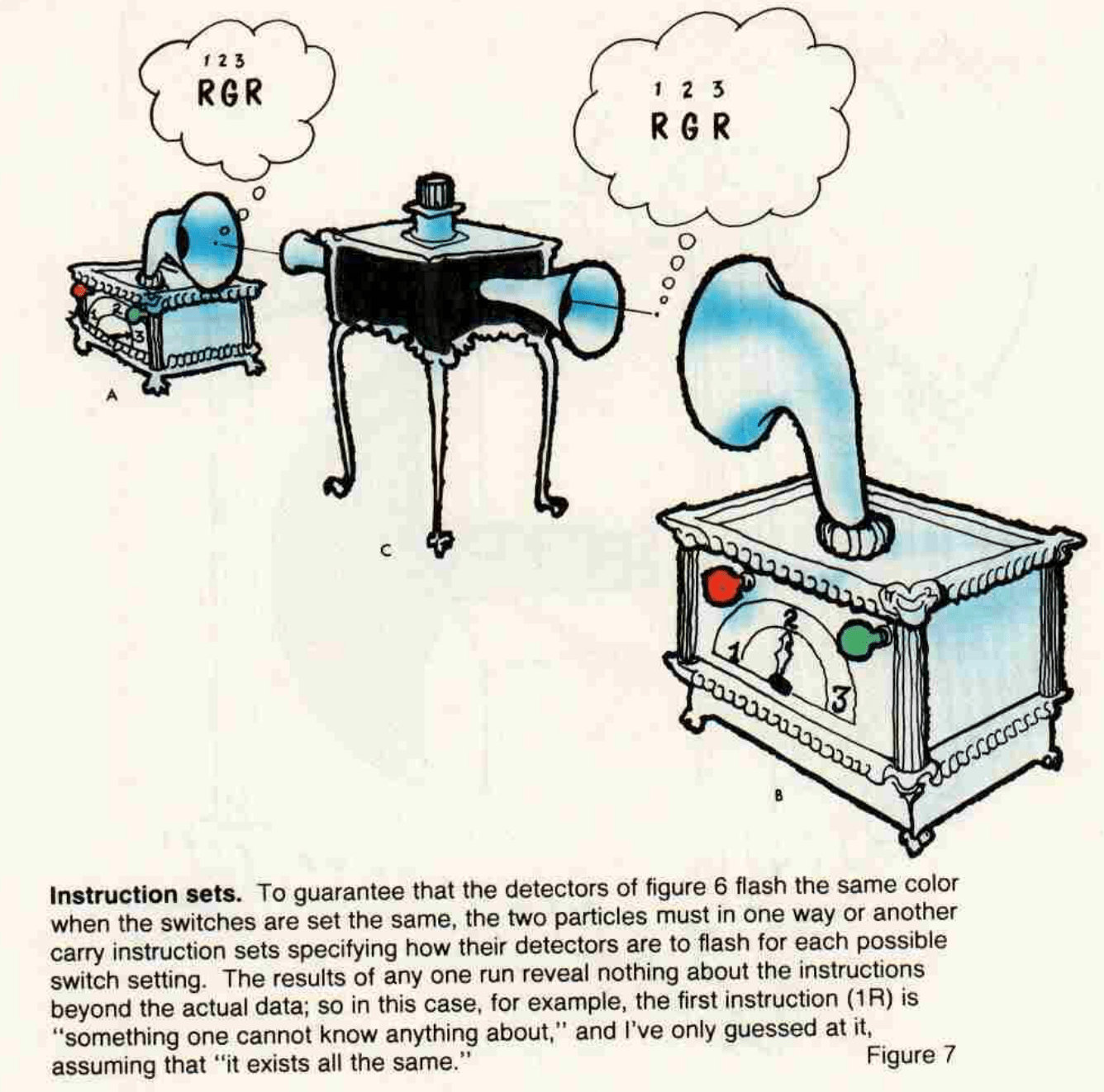
2.2. Bell inequalities
2. Talking about measurement has led to new physics
2.2. Bell inequalities
2. Talking about measurement has led to new physics
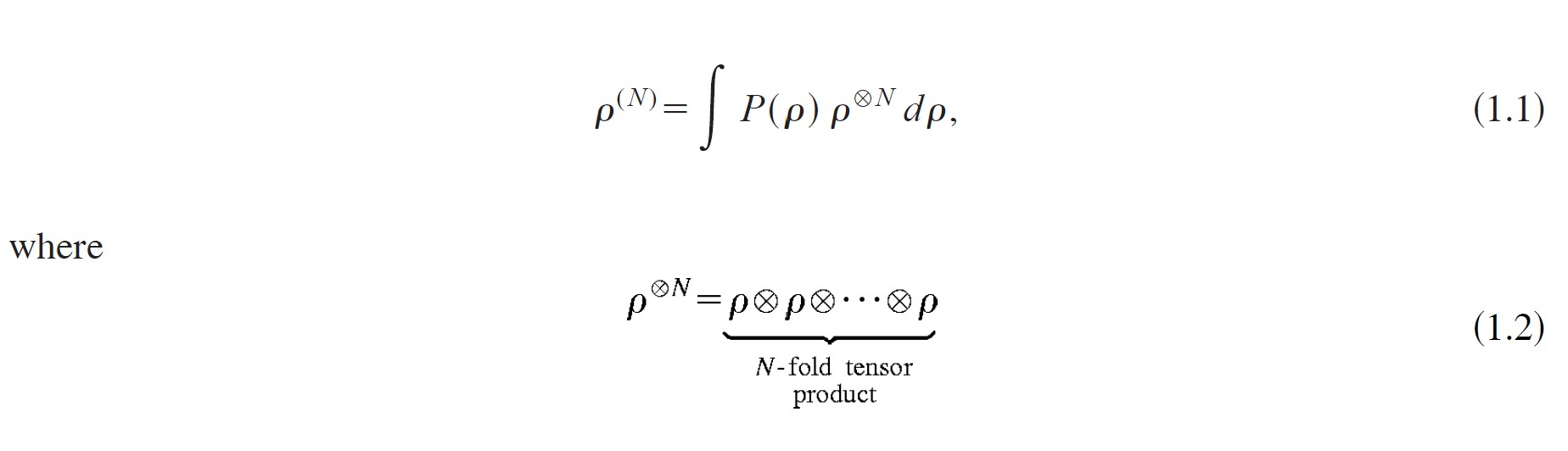
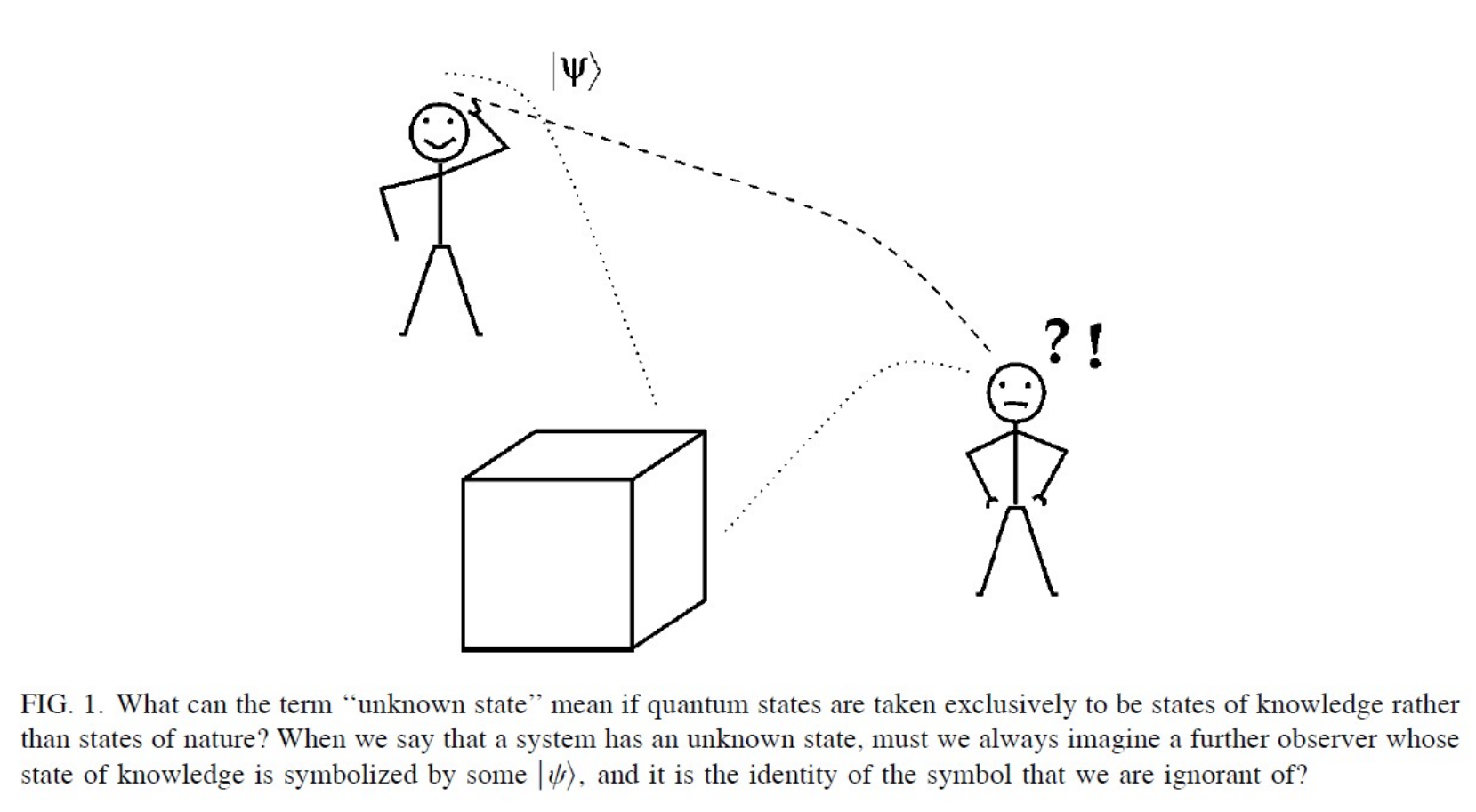
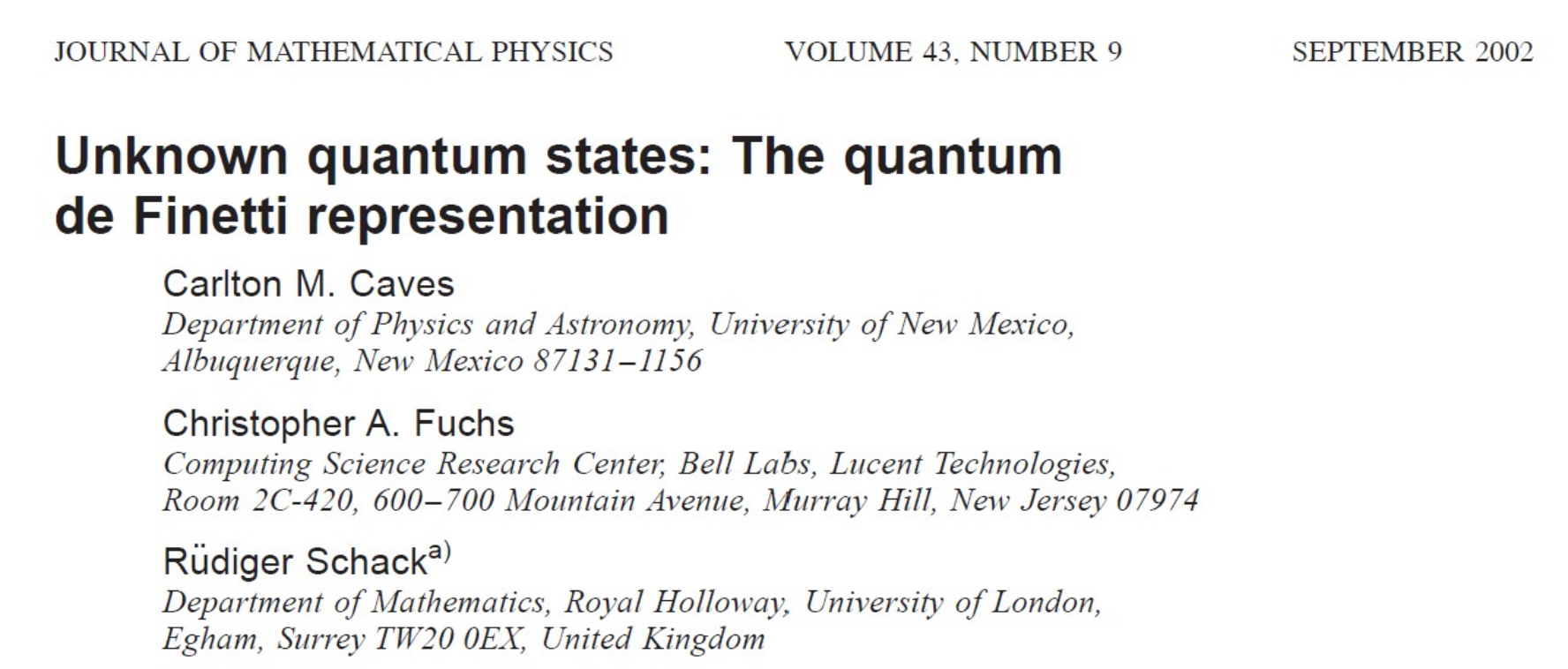
2.3. State estimation
\psi?
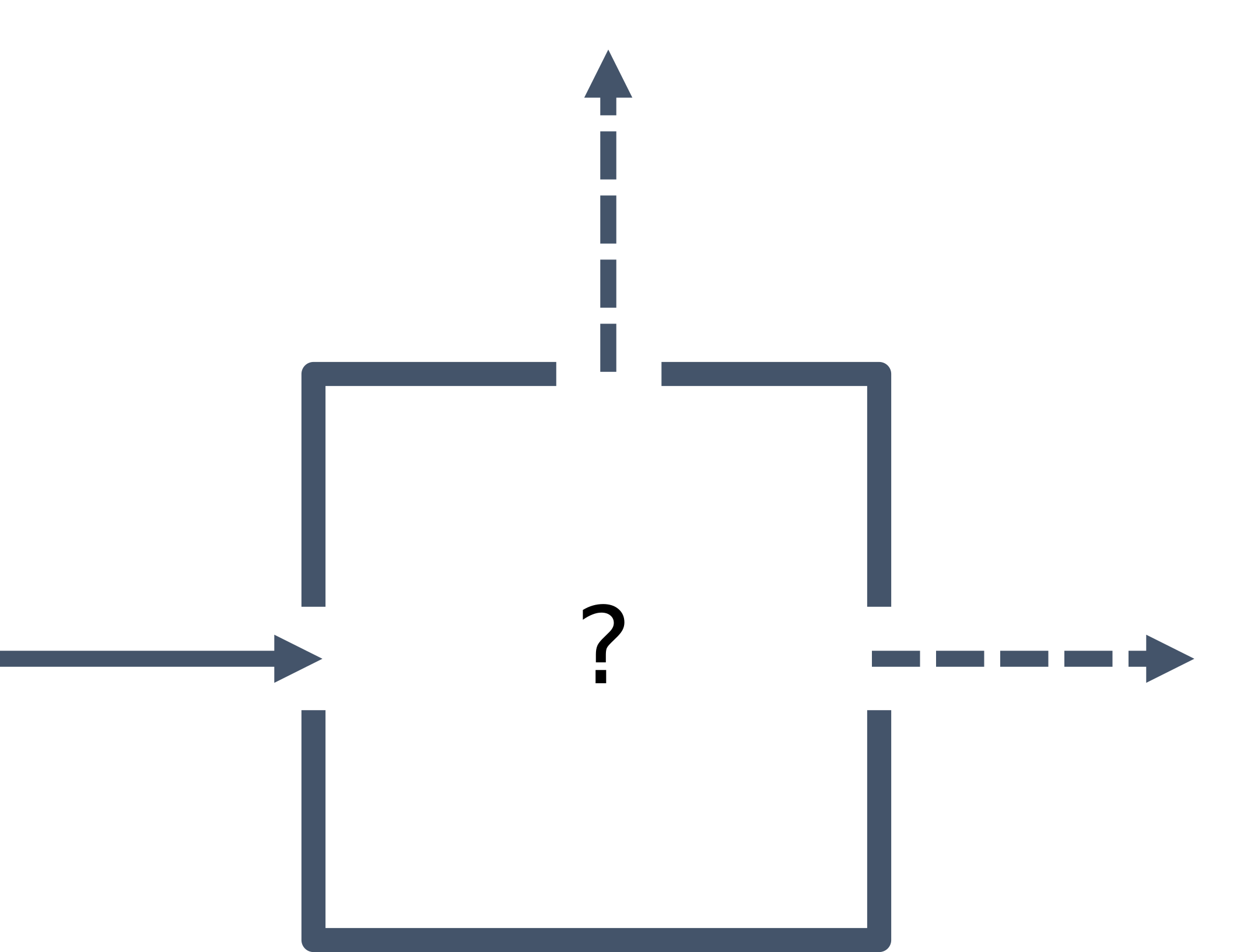
2. Talking about measurement has led to new physics
2.3. State estimation (ask me if interested!)
2. Talking about measurement has led to new physics
Historical claims:
- Many worlds resources helped physicists do decoherence.
- Hidden variable resources helped physicists do Bell inequalities.
- Epistemic resources helped physicists do state estimation.
Why not talk about measurement?
1. For some physics, measurement doesn't matter
2. Talking about measurement has led to new physics
3. It might help students learn that new physics
3. It might help students learn that new physics
Pedagogical hypotheses:
- Many worlds resources help students learn decoherence.
- Hidden variable resources help students learn Bell inequalities.
- Epistemic resources help students learn state estimation.
Historically-grounded and constructivist-friendly.
Historical claims:
- Many worlds resources helped physicists do decoherence.
- Hidden variable resources helped physicists do Bell inequalities.
- Epistemic resources helped physicists do state estimation.
We should start testing them!
3. It might help students learn that new physics

Resources for teaching
A conceptual resources approach to quantum interpretations
By Jer Steeger
A conceptual resources approach to quantum interpretations
Quantum mechanics is usually taught with some version of the Copenhagen interpretation, even though only a minority of quantum physicists working today endorse this interpretation. We suggest that integrating a variety of quantum interpretations into undergraduate quantum education (including Copenhagen, epistemic/information-based, pilot-wave, and many-worlds interpretations) might better support learning of modern topics in quantum mechanics and bring students’ epistemologies closer to those of experts. We offer a conceptual resources perspective, in which ideas consist of flexibly combinable pieces of knowledge that may be activated independently or in networks, and whose activation may change depending on the situation. We describe the most popular quantum interpretations and begin the work of identifying conceptual resources that support them. Finally, we share preliminary instructional tasks that are designed to activate these conceptual resources, along with preliminary observations of how students interact with them.