Working with teammates
Introduction
- Programming in FRC for 3 years
- Creator of ATALibJ, Gordian, Scouting13, etc.
- Ran a team in 2014 and running 4 teams in 2015
- Feel free to interrupt!
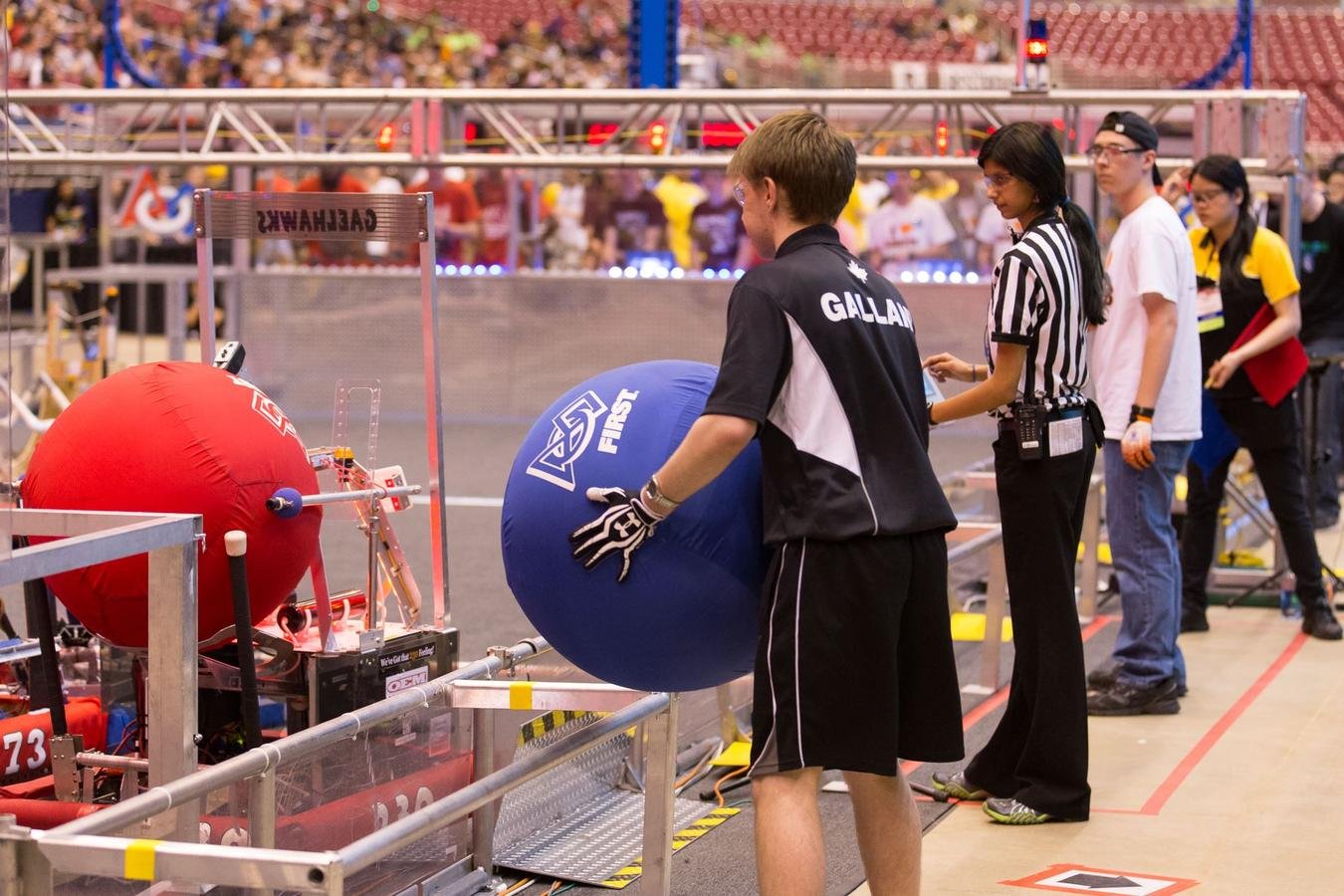
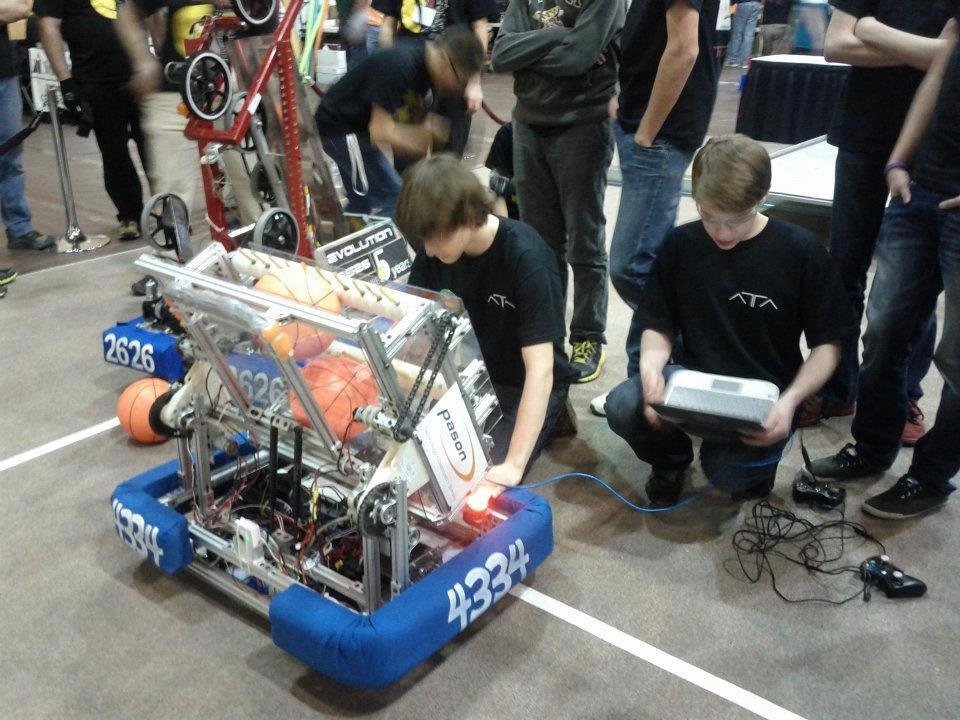
Why teamwork?
Advantages of cooperating
Why?
It's easy to say teamwork is useful - hard to see the real outcomes. In essence, things get done faster, better, and with more redundancy. And you avoid burning people out.
Teamwork
There is more to it than just "working together". Very hard to quantify, but very easy to see in the final product.
The effects
- High quality work
- More manhours
- Consistent effort across sections
- Creative solutions
- Faster iteration
Technical merits
In a technical field, the benefits of teamwork are apparent
- Balancing workloads
- Less ego involved
- More oversight
This all formulates into one key outcome; less mistakes.
Your work becomes higher quality and iterates on its success.
Being part of a team encourages accountability
Plan
Work
Execute
Plan
The underrated part of being with a team is having a plan.
Ask yourself, when was the last time you planned something completely on a project you did by yourself?
Other people being involved adds a need for a central direction and plan - a guiding vision is by definition implemented.
Work
- Balanced workloads
- "Shifting" - allows you to take breaks
- Higher quality work happens with reasonable hours/energy
- People take responsibility for their actions
Working in a team of 5 doesn't only increase your potential by 5 times
Execution
Some things are too difficult for one person to do.
Execution of a plan requires coordination, flexibility and communication.
Overhead and guidance are under-appreciated.
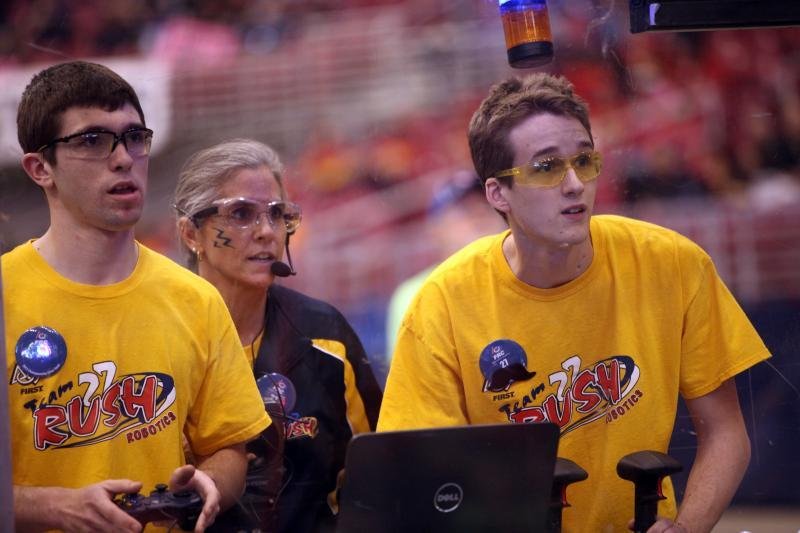
Your strategy
- Work cohesively
- Avoid conflict
- Create advantages for your team-mates
- Push in the direction of the project, not your own goals
- Communicate thoroughly
- Have confidence in others
Success is a combination of planning, working and execution of ideas
Your team

Organizing your own team
Subteam structure
- Technical
- Electrical
- Programming
- Design / CAD
- Construction / Fabrication / Assembly
- Non-Technical
- Business
- Public Relations
Decision Tree
- Who decides what?
- When do they make decisions?
- What happens to complete those goals?
How does your team make decisions?
Every team will be different, but one thing is clear: know how to make decisions before you do.
Being unclear is much worse than being strict.
- Does everyone get a vote?
- When do you vote, how?
- Who decides on options?
- What to do as a backup?
Schedule
People want direction - they need to know when and where they're planned to be used.
Great way to lose interest = not being given a task to do
Communication is key for scheduling; nobody will be able to follow the team without a concise place to put plans.
Requirements of a schedule
- Backup days
- What is happening
- Where it is happening
- Sufficient time for project completion
Adjusting
- Mistakes
- Unplanned situations
- "Hit with a bus" theory
Mistakes
Everyone will make mistakes through build season.
The key is not to define your future by your past. "Holding a grudge" helps nobody other than your own ego.
Remember iteration! "Failures are data points - they tell you what doesn't work"
Someone was hit by a bus!
What's your plan?
This is one of the biggest failures on teams. They don't have redundancy plans for the unexpected.
- Train many people who are familiar with the robot
- Have space to use "just in case" (basement, etc.)
- Slush fund
- Insurance
Improving teamwork
Evaluate
Everyone could improve their ability to work as a team.
How does your team struggle?
What mistakes have you made in the past?
What led to those mistakes?
Improve
Don't dwell on the past. Find out how you can:
- Avoid the same mistakes
- Improve capabilities year-to-year
- Become better at spotting issues as they happen
Just like a sport, club or team activity, teams need to practice
You can't expect change without changing something!
Finding a balance
Control structures are important to define so you don't create conflict
Don't overcomplicate things where you don't need to
Everyone should be happy
.jpg)

As with many things, your team is unique and will do things in your own way
Defining success
Defining
Defining what success looks like is a crucial element of being on a team.
Imagine being a new student and not even knowing what you're trying to do as a team.
Find out what you want to accomplish - what is your vision?
Understanding
Understand that
- You don't know the future
- There are things you can't control
- People are complex and don't always behave as expected
- Success is not often quantifiable
Set goals
- For competition
- Schedule wise
- Personal goals
- Technical goals
- Organization wise
- Budgets
Your goals
How well do you want to do in competition?
When do you want to complete the robot?
What is your role on the team?
What do you want to do on the robot? (pneumatics, etc.)
What is your ideal budget?
Activity
- Find one person you don't know
- 3 challenges you've set for yourself this year
- 1 difficulty you've faced in the past (robotics or otherwise)
- 1 biggest lesson you've learnt about being on a team
Communication activity
Back-to-Back Drawing
Groups of 2. Person 1 gets a drawing. They cannot show person 2. They must describe this drawing well enough for person 2 to replicate it on a blank piece of paper. Person 2 cannot ask questions.
Important skill! Explaining your concepts and designs without CADing/drawing can be extremely valuable.
Brainstorming activity
- Groups of 4
- Create a fake FRC game, with max 2 objectives (10 mins)
- Give that game to a different group, with 1 member to explain further details
- Groups of 3 are to analyse that game and create a strategy (not design!)
Evaluation
- Who talked the most?
- How did you come to conclusions?
- Was the process inclusive?
- Were discussions efficient?
Story writing
- Groups of 2 (no talking!)
- Plan a storyline (30 seconds)
- Person 1 writes one sentence down
- Person 2 writes second sentence
- Do it 4 times - should be a coherent story by the end
FRC Schedule Activity
- Write down your ideal FRC schedule (groups of 1)
- Find a partner and share your schedule (what, why and how)
- Combine your ideas into a single schedule that takes advice from both
- Combine with another group (groups of 4 now)
- Do so until only one big group remains, share that schedule
Define success
Write on paper:
- What is success for you?
- What is success for your team?
- How do you contribute to success?
Break
Explaining concepts is critical
- Each person gets one topic to study for 2 minutes
- Find another person, and explain in full detail that topic (no cheating!)
- Repeat 3 times, only using words
- Last person to explain that concept to the group
Principles to live by
- Build within your means
- Involve the people that would most greatly benefit
- Push to improve yourself and the team each day
- Find a way to quantify success
- On the field
- Student experience
- Amount of people
Questions / Comments
Find me
joelg236.github.io


/joelg236
Working with teammates
By Joel Gallant
Working with teammates
Cooperation, management and your team dynamics. Evaluate how to best work within a team and its affect on your productivity.